1 free read left. Create a free account for unlimited reading + AI research.
Create free account
Re-Inventing LiveOps Strategy: Adapting to the new Norm - Yeshas Nakshathri & Jonathan Garrity.
Key insights
6 takeaways- 01Mobile game developers can mitigate the 30% impact of recent iOS and Android ad revenue changes by adopting a centralized LiveOps system that enables event management without constant engineering support.
- 02Effective LiveOps strategies rely on 'templatizing' event components—such as push notifications, rich media, and reward logic—to allow for rapid A/B testing and scaling across multiple game titles.
- 03Successful LiveOps teams prioritize a 'rinse and repeat' model, where successful event structures are quickly adapted for new themes or holidays to maximize efficiency and player retention.
- 04Mobilityware increased revenue and engagement by 5% in their initial campaign by using a modular, template-based dashboard to build and iterate on in-game events rather than relying on custom developer builds.
- 05Advanced event orchestration allows for 'tests within tests' by using scripting tools like Jinja to introduce randomness and personalized rewards, which helps turn casual gameplay into a habit-forming experience.
- 06Moving from basic demographic segmentation to behavioral-triggered in-app messaging can double the average revenue per user (ARPU) in mobile games.
Ask AI about this video
Transcript
foreign [Music] [Applause] to the stage from clevertap who's going to be talking about Reinventing live up strategy uh and adapting to the new Norm so before I start I know it's been you know too many sessions after sessions and everything so I thought let me start off with it so who's ready to play a small mini game before we start with the boring presentation okay so for this I want everybody to stand up okay okay okay so I'm standing up some nuts
I'm not okay now this is how you run a live off events okay this is how it is so if you say a game every comes in that's the live Ops even game so just kidding so the game is like this for the next questions which come in if it applies to you you stand up if it doesn't you sit down okay how many of you get these looks when you ask for more engineers most of them some of them know okay okay let's see are you not running enough events oh some of them are running enough events okay the next one how many of you running very personalized events ah okay now you can all settle down this was the whole game about it okay hello everyone um my name is yashas and this is John with me so let me start off with myself and let John introduce himself so I'm yeshis as I said I lead the technology Partnerships here at lean Plum uh now
swallowed up by clevertap sorry acquired by clevertop I shouldn't have said that um so I come from a gaming background I don't know if you know there was this company called machine Zone if you know that I used to run a UA there and pro start I just went across the whole from the gaming industry to the whole mobile attribution side of things and now at lead Plum um and yeah John do you want to introduce yourself sure oh the mic's on hey everyone I'm John Garrity Solutions engineer here at lean Plum clevertap I'm very happy to be here so people are thinking what does lean Plum right so most of it will come like hey is the numbers here the thing so no no I don't want to start do that so what I want to do is like I want to say what is lean Plum and I wanted to say what would a client say what is lean Plum right most of it say hey I'm using this tool but why using this tool so we asked one of the customers and we asked them what do you think lean Plum is and the code from them was they are a full player Management Solutions for mobile games and this was the whole thing I'm just going to read it's like the
implements all all in one platform for player management The Only Solution on the market that combines lifecycle marketing and live Automotion with the ability to control live Ops events and sales were remote configuration built on common Foundation of segmentation testing well too much words for me sorry this is what it is okay for anybody who's visualization this is what lean Plum is so we help in touching the full player management and the True full player management and this is something which you came across when how many of you were here for the product Madness um uh session any of you who was there oh yeah a couple of you so you saw how they showed across some of the things and if you can recall something was life cycle marketing about how you touch upon the lifecycle marketing side of things how you can touch upon the uh you know live off events and how you can run everything remotely right some of the events and things like that so that is what lean Plum does enough of about it but what I'm here is we are talking about the whole thing is what is the new Norm right so we had this whole bold
dialogue like it's Reinventing the live up strategy in a new Norm but what is a new Norm um does anybody know what is the new thing that is happening in liveops or what is the old thing that is happening in live Ops great crowd um so I'll just say that the new Norm is nothing but a single system that allows you to do everything that you want in efficient manner without the need of engineering if you recall some of the things everybody who comes across and says hey you need to work more with data analytics you need to do more machine learning you need to do more you have to run more events you probably need to work more closely with your engineering and product site to know what is happening but this is what it is basically you can you need to do all of that when you get that data when you when you get everything how do you run across efficiently in one system rather than running around live off people your time is very precious you're working 24.7 sometimes you guys work more than
the president of USA I know that okay and for that you need to be more efficient enough how you can run more events in a more efficient manner what makes it much more easier and some of the things that makes it easier is you know creating content you want to create more content which is relevant enough you want to orchestrate campaigns which is much more easier drag and drop rather than likes doing it in the old style you also want to review your results in an instant manner that you can take to impact on on the next campaigns that you want to run and best of it you want to do Test new ideas so everybody has new ideas you go to a live Ops Team the best thing was so from my experience right when I was at machines and that was like a Visa that at all point I don't know how many remember that we had a 24 hour live Ops Team so everybody used to come at like eight hour ships and I used to work 24 hours and basically I lived in the office so I used to go and talk to the morning side of them and they had a different idea you go to the afternoon team and they had a different idea and
then and the whole night team they had a different idea but end of the day the goal was still the same how can we run more events that increases the revenue and reduces the cost and make sure that we all make it a successful game and these are the things testing it out some of them couldn't test it out and that's what we want to do around here so before I move across and say what we want to do we just want to tell a story right and not from us but from one of our customers but for that I think I'll tell you a better Storyteller there's a sales engineer guy they always they do this for life so I'll hand it over to John will do it thanks yashas Um well hey everyone I'm John first I just wanted to say I'm really happy to be here believe it or not I do work with some customers outside of gaming but I much prefer when we're talking to our studio customers you folks are are more more analytical more technically Savvy have a sense of humor which kind of
resonates with me and uh and push us you know push our platform to be better and me to be better professionally so um we actually have a gaming customer Advisory Board which is pretty cool it's it's a whole bunch of um smart folks who kind of approach our tool as a game to be hacked and defeated um and they do pretty well against that mobilityware um kind of in the face of what probably a lot of you folks are facing um oh nice uh you know trying to find ways to um to to innovate to stay relevant in a changing landscape especially with with some of the fun stuff coming from IOS really needed to be to be more efficient as far as how they set up events um how they how they learn from them and and scale them to to other other titles um so destination Solitaire missing the image there's usually an image there um anyways uh so destination Solitaire is is one example of it was kind of their their Bellwether um where they uh they wanted the ability to
um they're running events it was it was really time consuming costly required develop developer resources to to build in the first place to apply the segmentation um the the customization of of various rewards sliders that sort of thing but also to learn and iterate on that um so let's see we're missing the image so we'll go to the next one um the three the three things you know long story short that that mobilityware was able to do um with regards to their their live Ops program um was able to to quickly and easily build events um to to test and learn and actually um measure the results from from the events the lift that they had in terms of uh in terms of Revenue uh and engagement and then scale them um and and what that what that did was that led to an increase you know logically an increase in revenue and increased engagement for solitaire the most important part was just getting uh the K the key kpi was is getting the the puzzle start um but you also have you know obviously
revenue is the bottom line and they were able to do this um with click as as all events right you just need to do twice why can't we just do easily ones I'm stuck on the intro screen um so so yeah and able to do this really really efficiently um and to the point where once once they actually set up the program they could hand over the keys to an intern and iterate from from that uh from that side of things so um when we just keep clicking um when we when we think about what are the what are the key components there's actually quite a bit of complexity um which I'll only introduce but but at a high level um the core components for for any event at least that that uh that mobilityware is running we have customers of course who have um uh quite different components and structures so this is not a one size fit all um this is just the the approach that that is working really well for them um first introduce the event what is the event how do you play how do you win um what's the objective uh secondly you actually play the minigame
um you complete that core Loop and thirdly you get the reward um it won't spoil the reward um and yeah and so as I mentioned being able to do this through a dashboard with with off the off-the-shelf tools um really allowed them to uh you know they started small with just those three screens and actually adding all sorts of of complexity um tying in the introducing Randomness uh well I'll get to that later um so here's a look under the hood as far as what that that event actually looks like now so starting from those those three core uh messages to what's much much more complex a much more complex uh setup where each each event has the potential of having uh three push notifications rich media uh eight in-app messages uh for for those you know different variations of those those three screens I mentioned and then thirdly custom actions for those rewards now this this screen itself there's a lot going on not time
to explain every single thing but this gets into the the modularization or the templatization of every every message itself so so to go back to the concept of of Lego blocks um there's in my mind there's there's kind of layers to that concept itself every every event in itself has has different components different building blocks there's there's the notifications uh the various messages at the micro level every every single one of these messages has its own components you know its own atoms or something like that that includes you know different sliders the different images videos that they'll slide in and out different multipliers for bonuses things that they can apply a segmentation to to specify who gets what things they can use Jinja to introduce Randomness to to just run their own tests within a test within a test so that's at the micro level then at the at the macro level each one of these these these events in itself plays together with you know they can rinse it basically do a hard rinse
and and change the creative change the the rewards change the yeah the sticker that you'll get we'll see what the sticker is it's very exciting um so change all that stuff and and do another event in in a month in a few weeks and actually then lastly expand this to the other titles so so there's these are you know at the at the molecular level yeah there's a little piece of code that they put in for for each message but this has enabled them to to not only build a really um efficient program for Destination solitaire but also expand that to jigsaw puzzle um and various other other titles um so this is the this is the the walkthrough for ourselves first you know what's the event what's the event here's the intro screen um first and you know just a anyone can code anything yourselves but what's what's super useful is is all of these these the the text um the the uh the progress bar in the bottom these are all elements that they can they can adjust they can switch in
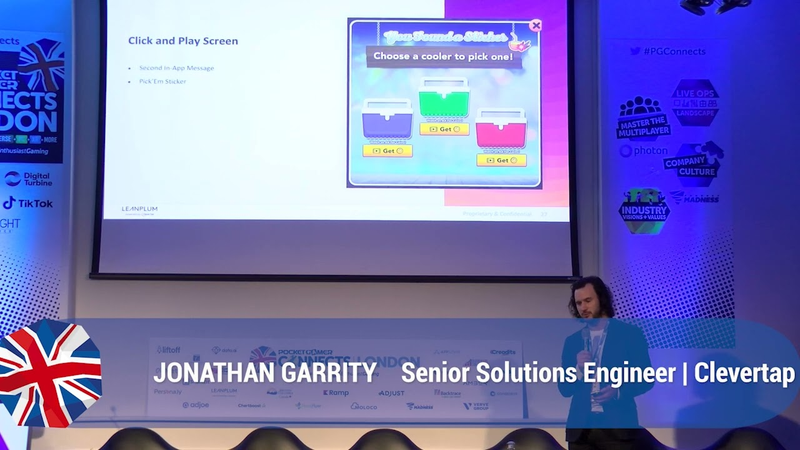
Creative just from the dashboard so you know what's the event awesome key background image progress meter um and then of course when you play for free making sure you're going to the correct mini game I'll click and play so this is actually after you complete the game then you're brought to uh you know kind of yeah they like to test within the test there's there's a randomized reward behind each one of these coolers and so then if you watch the video you can get uh get a different reward more usually more coins and then lastly you'll see the sticker reward screen congratulations we got a surfboard or two surfboards so we can ride with a friend and you get the reward prize and then lastly you know as as I mentioned this this formula um it's it's it's lightweight in terms of setting it up and the level of effort required to use it the the impact um and being able to to get um you know the first iteration I think was was a a roughly five percent increase on revenue for that first that first campaign five percent interview uh
increase in engagement but then being able to scale that to to jigsaw puzzle to other titles and also just repeat rinse and repeat um for you know we're not always going surfing sometimes there's some other holidays um Chinese New Year big one right now so so you know in conclusion on this part um it's it's not it's not rocket science but putting in um you know being able to look around and see what tools you have available to to build uh and expand this uh you know expand your live hops program um having something repeatable and something where you can actually learn from that and iterate really quickly without having to to leverage developer resources can be quite impactful yeah so so that was it but the question is does it work for all though right so this was one customer who did this on their own but how about for everybody else so we did this data science report okay on gaming customers we we took around like we we saw like eighteen
thousand eighteen hundred plus campaigns and 670 million messages and everything so you can go through there is you can get to a website and everything can download and all of that I'm just gonna summarize into it I'm not going into details uh the point is pretty simple when it comes to when we looked into that we looked into these campaigns one data is important this second thing is how you utilize the data that is more important now say for example you do get a lot of data you have the analytics team you work with your analytics team and all of that that data comes in but you're not running the right campaigns or you're not personalizing and at What stages then that might be a big effect just to go across we had this um you know three four different types of segmentation and then in-app messaging and personalization and everything the top personalization the message content personalization only like three percent of them are used to something but the revenue that they saw was three-fourths
even I think it was more than double where it was so if there was um so unfortunately it's not here I didn't I didn't put it across but just to show across for example the average rpu for somebody who did basic demographic segmentation everything was around like a dollar and it went when it went all the way up just to behavioral segmentation it was double and then for the third part when you Behavior triggered and in that messaging for example anybody who does an event right we all are different and we act in different ways like for example I play my games in my toilet whereas the a child would pay somewhere else so those are different and you know how a behavior triggers and based on that if you run events with the data that you have then that will uh ensure that you'll have a much more double range because you're more invested end of the day our whole point is to make sure that the game becomes a habit when it becomes a habit for someone then most likely you
will have somebody who will be your paying users more retained users and end of the day you will make your game more successful um so that is what basically we want to say around with this um we try to finish it much more quicker probably if we spoke faster something we'll leave around for a little more questions but I just want to say across what they say like climbing up the personalization ladder is is really important especially around if you want to see a jump in revenue and then retention and everything else but most importantly it's also about using your own intuition and and what you want to do and sometimes running those intuitions like some of the ones examples which um you know with John showcase across that also did not result in one trade they did a lot of a b testing they did a lot of other testing so sometimes you fail sometimes you win but without testing you will always fail so try to utilize that in the system and then I'm pretty sure that we all will have a successful campaign somewhere else um yeah and with that we'll open up if anybody has some questions we still have
oh two minutes 45 seconds left um or we'll give you again to stand up oh yeah yeah questions please yep should I have a microphone on yeah I think you know hi hi Eric here from an ordinal we do multiple technology and we I wonder what we need from here is it possible to integrate that late stage for game Studio this is still working or is it better if you integrated earlier and sent to the game design around it yeah you can take it out you can certainly integrate later and we work with titles that are mature and others that are just starting out um I think I think it's a different conversation from the implementation standpoint simply because there's with with mature titles there's there's just more that we want to make sure um runs as is but there are various tools event handlers and so forth to make sure that the back end remains authoritative if that's if that's a concern and there's there's also um you don't need to to integrate every
aspect of your messaging there's we can certainly run nicely alongside um components you've built already um I just want to so I'm not sure uh when it comes when it comes we talk about ease of use and I think showing the the end result um what I you know what we usually do is actually show the platform itself and how you can you know have have different um uh you know for personalized essentially the CRM is right there so being able to to put the Assets in handle message delivery segmentation and also the personalization of those messages with essentially a drag and drop Builder um that's kind of what we're talking about so if anyone wants to take a look later I'd be happy to give you a tour yeah we have G20 on the on the top floor right next to the meeting room one um and yeah we have these guys in the front some of them he'll be roaming around so if you want to talk you can always talk yeah any more questions anything that we can answer yeah we have time for one more questions don't just ask invite to the party but yeah
[Music] [Applause]
Summary
The mobile gaming industry is currently navigating a significant shift in monetization strategy, driven by a decline in ad revenue of up to 30% following recent platform policy changes. To adapt, studios are increasingly prioritizing free-to-play models and sophisticated LiveOps strategies. The core thesis is that studios can maintain growth and engagement without relying on infinite developer resources by adopting modular, remote-configuration platforms that allow non-technical teams to prototype, test, and deploy personalized in-game events.
The methodology for this approach centers on "player management" systems that treat LiveOps as a series of repeatable, templatized building blocks. By utilizing drag-and-drop interfaces and remote configuration, studios can decouple event creation from the core game code. This enables rapid A/B testing of rewards, messaging, and event mechanics. Data from over 1,800 campaigns and 670 million messages indicates that while basic demographic segmentation is common, advanced behavioral segmentation and personalized in-app messaging can more than double revenue per user.
Case studies, such as those involving MobilityWare’s Destination Solitaire, demonstrate that implementing these modular systems allows studios to scale successful event frameworks across multiple titles. By shifting from hard-coded events to a flexible, data-driven architecture, studios can empower non-engineering staff to manage the full lifecycle of player engagement. The findings suggest that climbing the "personalization ladder"—moving from basic segmentation to behavior-triggered, personalized interactions—is the most effective way to turn casual players into retained, paying users. Ultimately, the ability to iterate quickly through testing is presented as the primary competitive advantage in an increasingly complex mobile landscape.