Market Analysis reports and market data
Documents

Monetizer: RAID HQ
RAID HQ, a portrait-oriented, card-based shoot-'em-up developed by the UK-based studio Eight Pixels Square, serves as a case study in the integration of Asian-market free-to-play monetization and retention mechanics into a Western mobile game.
- RAID HQ by Eight Pixels Square integrates Asian-market monetization strategies, such as VIP tier systems and Gacha-style card collection, into a Western-style shoot-'em-up framework.
- The game employs a VIP tier system that provides permanent account benefits, including increased card yields and ad removal, to drive consistent player spending.
- Progression is gated by a complex system of randomized rewards, resource-based color-coding, and time-limited tasks that allow for hard-currency bypasses.
In Defense of Short Games - Worth Every Dollar - Extra Credits
The gaming industry frequently undervalues short-form titles, often subjecting them to negative reviews and refund requests based solely on their limited playtime.
- The industry-wide reliance on a dollar-per-hour metric to determine game value incentivizes developers to artificially inflate playtime, which often dilutes narrative quality and mechanical integrity.
- Forcing a game to expand from a concise four-hour experience to a fourteen-hour duration frequently compromises the creator's original vision without providing a superior product.
- The consumer habit of returning short games after completion or relying on Let’s Plays creates a hostile financial environment that discourages the development of brief, high-impact titles.
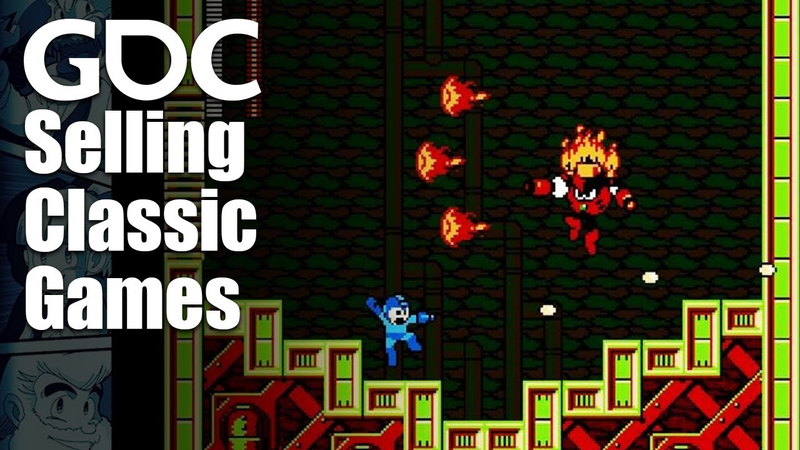
"It's Just Emulation!": The Challenge of Selling Old Games
Video game preservation remains a critical yet neglected necessity, with a significant portion of early interactive software history at risk of permanent loss.
- The gaming industry’s conflation of emulation with piracy acts as a primary barrier to preserving software, preventing companies from using it as a cost-effective, standardized tool for republishing back catalogs.
- Reframing emulation as a functional codec rather than a threat allows developers to bypass the high costs and technical risks associated with traditional porting.
- The industry is currently failing to monetize its heritage by trapping titles in legal limbo or replacing them with derivative remakes, despite proven consumer demand for authentic vintage experiences.
The Casual/Core Fallacy - Designing for Depth - Extra Credits
The traditional game design dichotomy that categorizes players as either casual or core is an outdated framework that hinders modern development.
- The traditional binary classification of players as either 'casual' or 'core' is an outdated framework that fails to reflect the reality of modern gaming habits.
- Developers must decouple a player's desire for mechanical depth from the total amount of time they have available to play.
- Gating complex systems behind hours of simplistic, repetitive gameplay leads to poor player retention among both time-constrained enthusiasts and dedicated core players.

My failure to run a guild in Star Wars: Galaxy of Heroes
The introduction of guild systems in Star Wars: Galaxy of Heroes serves as a critical mechanism for long-term player retention and monetization within the free-to-play mobile gaming landscape.
- Guild systems are essential for long-term player retention and monetization in free-to-play mobile games by incentivizing daily engagement through collective goals.
- Social structures like guilds allow developers to gate exclusive content, such as unique character shards for units like Han Solo, behind collaborative raid events.
- The transition to guild-based play was a strategic evolution for Star Wars: Galaxy of Heroes, which had already achieved top-ten grossing status in the U.S. prior to their implementation.

Who were the secret App Store winners of 2015?
The analysis of 2015 App Store performance identifies the market’s "hidden winners" by comparing top-grossing rankings against download rankings.
- Publicly traded companies dominate the mobile gaming market, owning 59% of the top 100 grossing titles in the U.S. iPhone market.
- The most profitable games, termed 'hidden winners,' prioritize high monetization efficiency and player retention over the high download volumes seen in mainstream hits like Clash of Clans.
- Slots and Asian-style RPGs are the primary genres that achieve high grossing rankings despite lower install rates, driven by superior average revenue per daily active user.

3 User Acquisition Mega Trends for 2016
The mobile gaming industry in 2016 is defined by a shift toward video-centric advertising, the consolidation of walled gardens, and the professionalization of user acquisition (UA) strategies.
- Video advertising is the dominant growth format, projected to capture nearly 50% of all mobile ad spend by 2018.
- The user acquisition landscape is bifurcating, as high costs for advanced analytics and attribution tools create significant barriers for mid-market developers.
- Walled-garden platforms are increasingly controlling both inventory and measurement, forcing developers to rely on their deterministic tracking capabilities to avoid inefficient spending.


Market Study: Video Games Services in Canada
This 2016 market study, prepared with an export-oriented lens for Chilean developers, examines the video game services industry in Canada and assesses its potential as a destination for Chilean video game companies.
- Canada's video game sector generated over CAN$3 billion in 2015 and ranks among the world's top ten producers, with active studios rising from 329 in 2013 to 472 in 2015.
- Full-time employment in Canada's video game industry reached an estimated 36,500 by 2015, a 26% increase over 2013, though most of these jobs are concentrated in large studios.
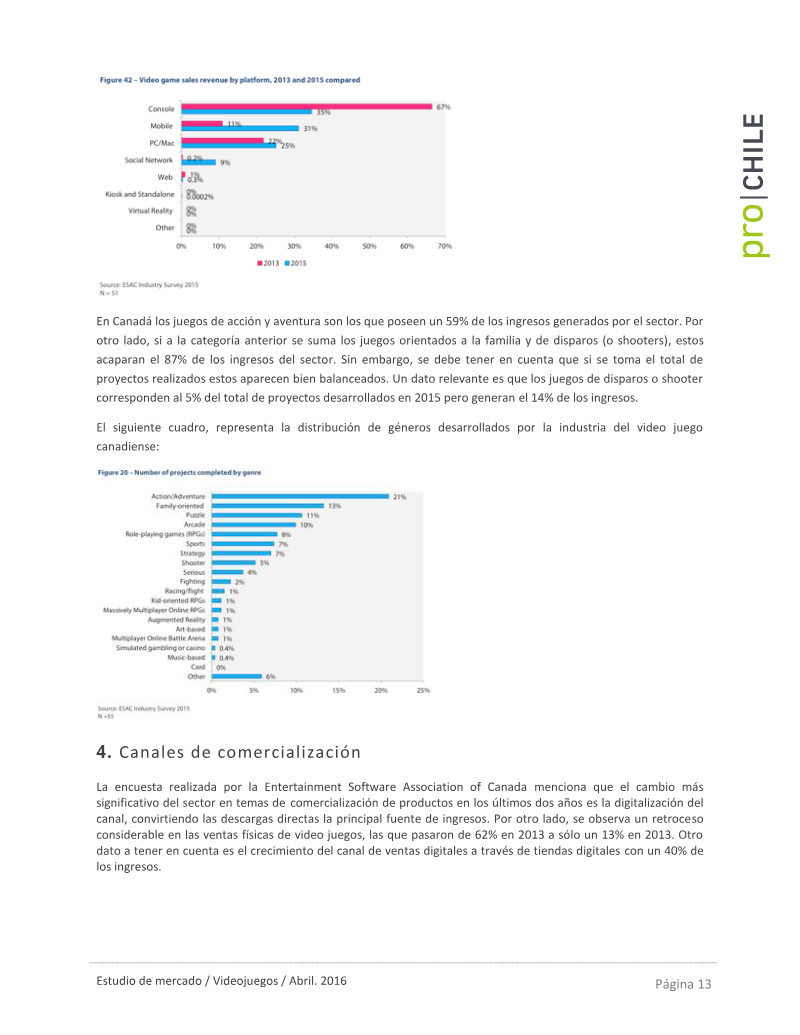
- Mobile platforms dominate production, accounting for 66% of the roughly 1,280 projects completed in 2015 and 31% of revenue, while consoles still generate 35% of revenue despite a 32% decline from 2013 levels.

Why VCs like IPC Ventures want to invest in teams not products
IPC Ventures prioritizes investments in cohesive, high-growth teams and sustainable corporate entities over individual game projects or single intellectual properties.
- IPC Ventures prioritizes investment in scalable, high-growth studios over individual game projects or single intellectual properties.
- Venture capital is intended for building sustainable corporate entities rather than serving as a mechanism for project financing, debt relief, or salary subsidization.
- Investors differentiate between 'lifestyle businesses' that are cash-flow positive and 'scalable ventures' that possess the necessary trajectory for significant market impact.
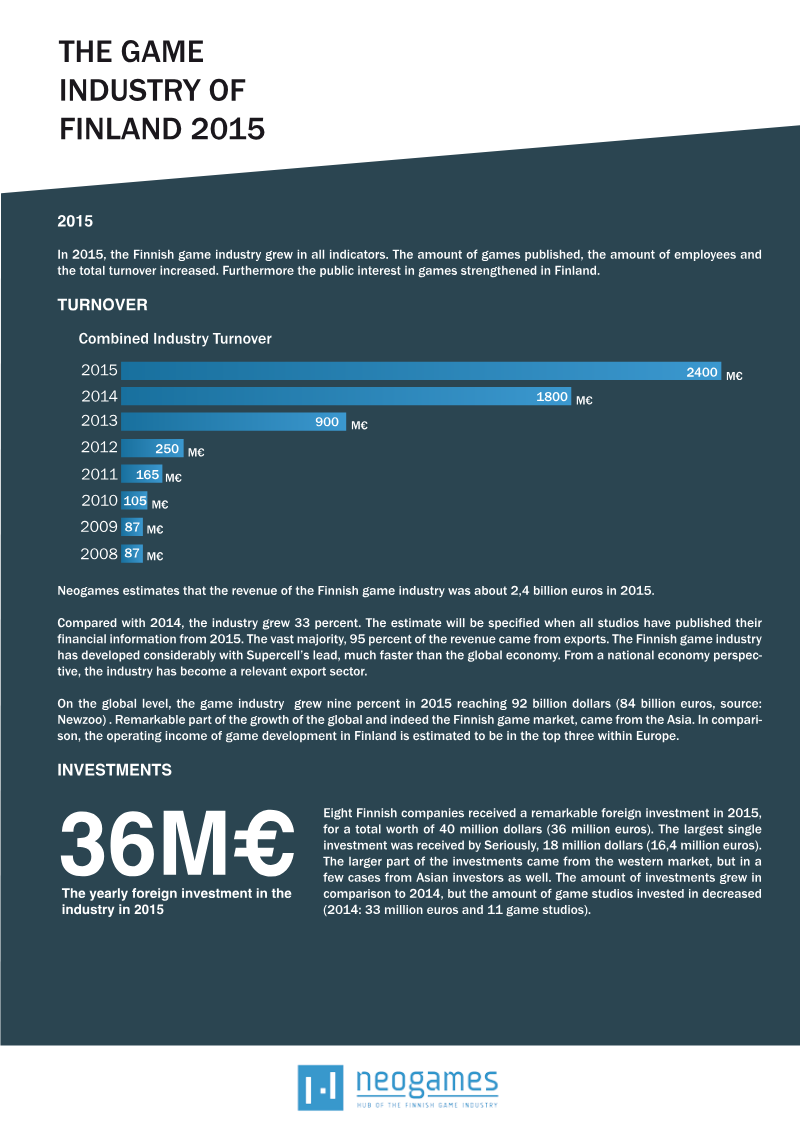
The Game Industry of Finland 2015
The Finnish game industry experienced significant growth across all indicators in 2015, with increased turnover, employment, and game publications.
- The Finnish game industry generated 2.4 billion euros in turnover in 2015, marking a 33 percent year-over-year growth that solidified the country as a top-three European hub for game development.
- Exports are the primary economic driver for the sector, accounting for 95 percent of total industry revenue.
- The industry employed 2,700 professionals across 290 active companies, with the majority of talent and operations concentrated in the Helsinki metropolitan area.
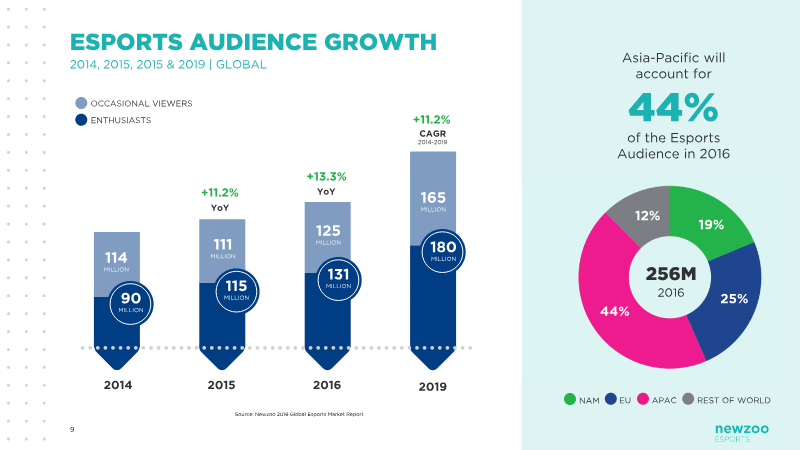
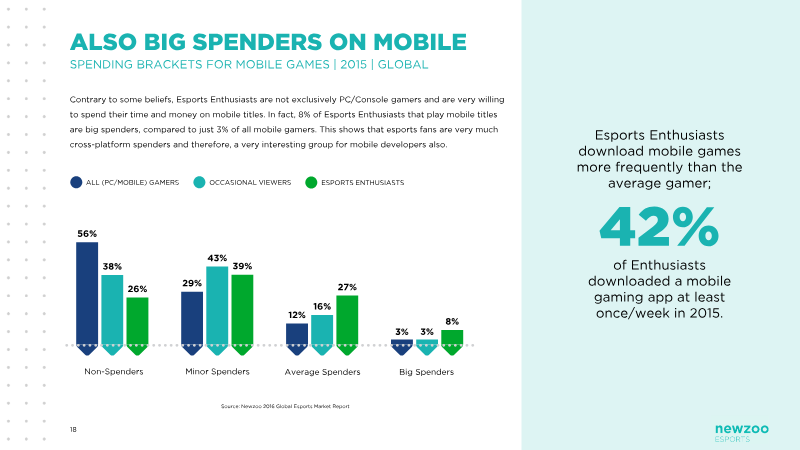

2016 Global Esports Market Report: An Overview of the Esports Market & Its Valuable Audience
The 2016 Global Esports Market Report provides a comprehensive overview of the esports market, its growth trends, and the valuable audience it attracts.
- The global esports economy reached $325 million in 2015, with projections indicating continued rapid acceleration.
- The esports enthusiast audience grew by 13.3% year-over-year, signaling a shift in gaming from a personal activity to a spectator sport.
- Revenue per enthusiast is projected to rise from $2.20 in 2014 to $6.00 by 2019.

Why Are There No Good Video Game Movies? - Extra Credits
The lack of high-quality film adaptations of video games is primarily attributed to a cultural and generational gap between the film industry’s decision-makers and the gaming medium.
- The primary barrier to high-quality video game adaptations is a generational and cultural gap, as current film studio executives lack firsthand experience with the gaming medium.
- Hollywood historically prioritizes short-lived fads over established franchises because decision-making is driven by superficial sales data rather than a deep understanding of the source material.
- The trajectory of video game films mirrors early comic book adaptations, which only reached a creative and commercial peak once a generation raised on the medium ascended to leadership roles.