Market Analysis reports and market data
Documents

Is there life for Glu Mobile after Kim Kardashian?
Glu Mobile’s 2015 financial performance highlights the volatility of the celebrity-driven mobile gaming model.
- Glu Mobile’s 2015 revenue stagnated at $250 million, a marginal 1% increase, highlighting the volatility of a business model heavily dependent on celebrity-driven titles.
- Revenue concentration remains a critical risk, with 'Kim Kardashian: Hollywood' and 'Racing Rivals' accounting for 47% of the company's total annual revenue.
- The commercial failure of 'Katy Perry Pop' and 'James Bond: World of Espionage' forced an organizational restructuring and a leadership change to address lapses in internal quality control.

IAP Inspector: Path of War
Path of War, a mobile strategy title developed by Envision Entertainment and published by Nexon M, attempts to differentiate itself within the crowded mobile strategy market through a unique base-movement mechanic and a column-based combat system.
- Path of War, developed by Envision Entertainment and published by Nexon M, features a restrictive monetization model that creates significant friction for both free-to-play and paying users.
- The game utilizes a dual-resource constraint system where energy is required for both map movement and combat, while command points limit the deployment of full unit rosters.
- Progression is bottlenecked by a building system that restricts concurrent upgrades to a single slot unless players purchase additional, expensive crane capacity.

Puzzle & Dragons did $1B in 2015, but is now in decline
GungHo Online Entertainment maintains a dominant position in the global mobile gaming market, anchored by the sustained performance of its flagship title, Puzzle & Dragons.
- Puzzle & Dragons generated $1.3 billion in 2015, yet it accounted for 89% of GungHo Online Entertainment's total revenue, highlighting a dangerous lack of product diversification.
- GungHo is experiencing a clear financial contraction, with 2015 year-over-year sales falling 11% and operating profit dropping 23%.
- The company's heavy reliance on the Japanese market has limited global growth, as evidenced by the failure of Puzzle & Dragons to replicate its domestic success in North America despite nine million downloads.

What to Look for in 2016 - Industry Developments to Watch - Extra Credits
The gaming industry in 2016 faces several pivotal shifts that, while not immediately transformative, serve as indicators for long-term structural changes.
- The gaming industry faces a potential acquisition bubble, as multi-billion dollar valuations for assets like Minecraft and King are being tested against the standards of major entertainment franchises like Marvel and Lucasfilm.
- The performance of high-profile acquisitions in 2016 will determine if the industry faces a market correction that could significantly tighten future venture capital and funding opportunities.
- Chinese capital is shifting from an initial 'gold rush' phase of acquisitions toward a more strategic, measured approach regarding the management and integration of Western developers.
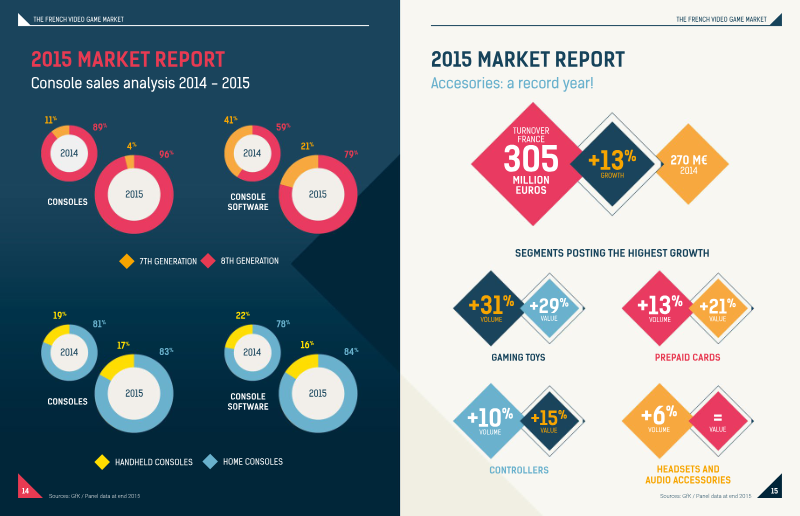
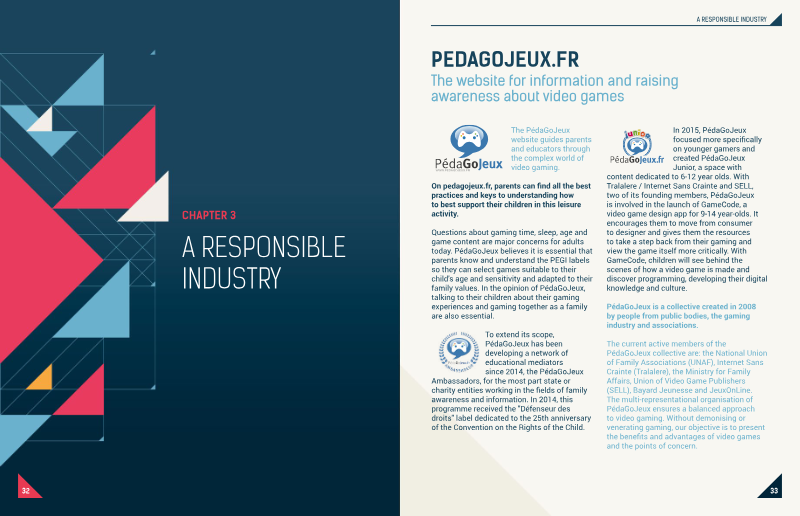
Essential Video Game News: Market, Consumption, Use – France (February 2016)
This document, "Essential Video Game News: Market, Consumption, Use – France (February 2016)," provides a comprehensive overview of the French video game market in 2015, highlighting key trends, consumer behavior, and industry initiatives.
- The French video game market grew by 6% in 2015 to a total value of €2.8 billion, marking its second consecutive year of positive performance.
- Software sales reached €1.6 billion (up 7%), while accessory sales hit a record €300 million, representing a 13% increase.
- The transition to 8th-generation consoles drove market vitality, with 1.57 million units sold during 2015.
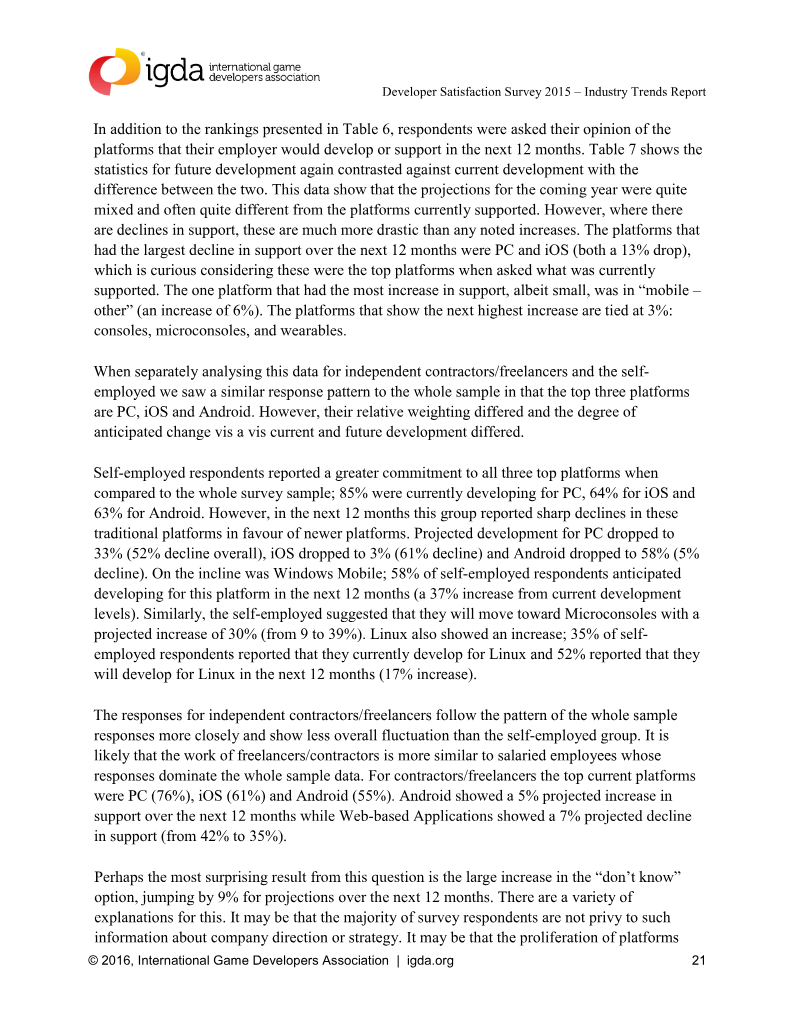
Developer Satisfaction Survey 2015: Industry Trends and Future Outlook Report
The 2015 IGDA Developer Satisfaction Survey, drawing on nearly 3,000 respondents, primarily aimed to assess the quality of life, job satisfaction, and prevailing trends within the global game development industry.
- Over 50% of the nearly 3,000 surveyed professionals believe the public views the game industry negatively due to high-profile controversies regarding sexism, racism, and toxic workplace conditions.
- Female and transgender developers report a significantly higher awareness of and exposure to discriminatory practices within both the workforce and game content.
- Despite cultural concerns, the industry maintains a stable growth trajectory with developers expressing optimism for technological innovation and career prospects.
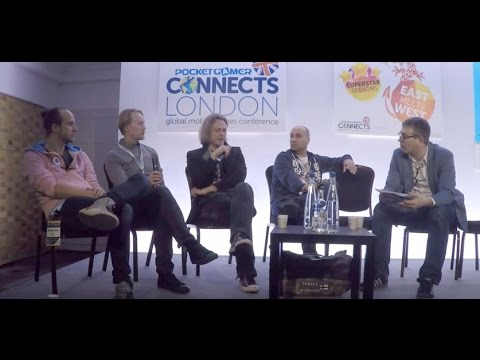
Is Helsinki still a great location to set up a games company?
Helsinki maintains its status as a premier global hub for game development, driven primarily by an unparalleled concentration of high-level technical and creative talent.
- Helsinki remains a premier global hub for game development, primarily due to an unmatched concentration of high-level technical and creative talent.
- The Finnish ecosystem provides a sustainable competitive advantage through deep professional expertise that is difficult for other international markets to replicate.
- The region's industry infrastructure is built on a proven track record of success, significantly influenced by the global impact of companies like Supercell.
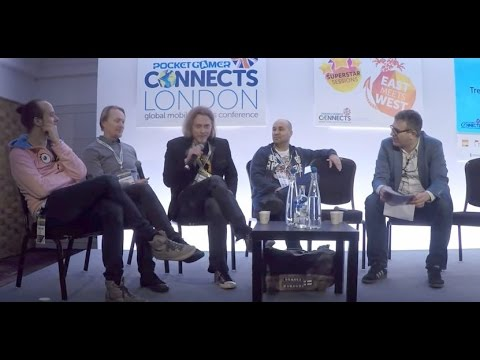
Why is Finland so successful when it comes to mobile games?
Finland maintains a position as the most successful region globally for mobile game production on a per capita basis.
- Finland leads the world in mobile game production on a per capita basis due to a unique convergence of historical industrial influence and a robust educational system.
- The decline of Nokia acted as a primary catalyst for the industry, releasing a large pool of skilled technical talent and established business networks into the mobile gaming sector.
- Finland’s mobile gaming expertise is rooted in a long-standing technological foundation that dates back to the 1980s, including early mobile innovations like Snake.
Why you should be releasing mobile games in Brazil and Mexico
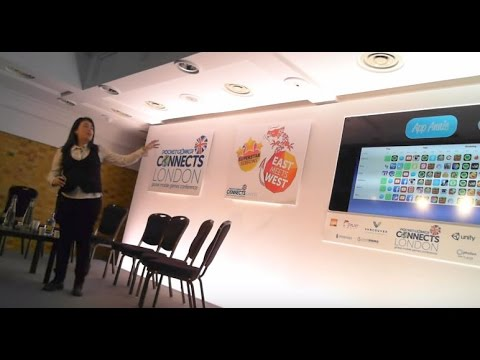
The Latin American mobile gaming market represents a significant growth opportunity for global developers, characterized by high engagement and a rapidly expanding user base.
- Brazil and Mexico are major mobile gaming hubs, ranking 11th ($1.5 billion) and 13th ($1.2 billion) in global annual revenue, respectively.
- Latin America represents 10 percent of the global gaming population and 5 percent of total global game revenue, indicating significant untapped market potential.
- Monetization in the region relies heavily on rewarded video advertisements, with 56 percent of Brazilian gamers and 62 percent of Mexican gamers reporting spending money on games.

Is Supercell's success good or bad for the Finnish game industry?
The rise of Supercell has served as a primary catalyst for the Finnish mobile gaming industry, acting as a source of inspiration rather than a disruptive economic force.
- Supercell’s lean organizational model has prevented labor market overheating and wage hyper-inflation, allowing small-scale independent studios to remain economically viable.
- The success of major firms like Supercell has established Finland as a premier global hub for mobile game development, significantly improving the local investment climate and access to capital.
- The Finnish gaming industry maintains a sustainable ecosystem where global leaders and independent developers coexist, rather than the former displacing the latter.
Still Skeptical of V.R. - Five Challenges for Virtual Reality - Extra Credits
The primary thesis regarding the viability of virtual reality (VR) in the gaming industry is that significant structural and economic challenges threaten its path to mass-market adoption.
- VR faces a 'death spiral' of market fragmentation because it remains an optional peripheral rather than a standard hardware requirement, forcing developers to split resources between niche VR users and the established console/PC base.
- The lack of hardware standardization across competing manufacturers creates a development environment similar to the fragmented Android ecosystem, complicating production and distribution.
- High costs of entry act as a significant barrier to global market penetration, limiting the potential user base needed to justify large-scale development investments.
NetEase explains the Chinese mobile games market
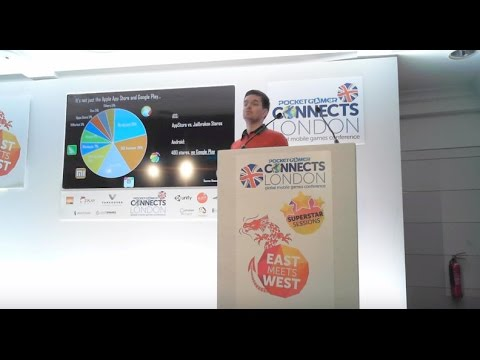
The Chinese mobile gaming market has undergone a significant transformation between 2010 and 2015, evolving from a nascent sector into a multi-billion dollar industry.
- The Chinese mobile games market is highly concentrated, with the top 10 companies capturing approximately 50% of the total revenue.
- Market trends show a significant shift toward MMO-style games, which grew from a 14% market share in 2014 to one-third of the market by Q4 2015.
- Android distribution in China is extremely fragmented, with no Google Play presence and a reliance on various third-party stores that often charge 50% to 60% of revenue, though direct downloads via QR codes can bypass these fees.