1 free read left. Create a free account for unlimited reading + AI research.
Create free account
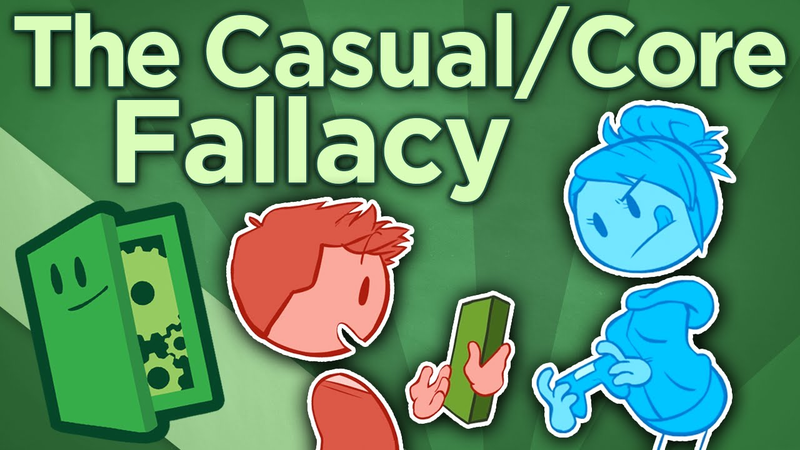
The Casual/Core Fallacy - Designing for Depth - Extra Credits
Key insights
6 takeaways- 01Moving beyond the casual-core fallacy allows for more inclusive design that respects the intelligence and time limitations of a diverse, contemporary audience.
- 02The traditional binary classification of players as either 'casual' or 'core' is an outdated framework that fails to reflect the reality of modern gaming habits.
- 03Gating complex systems behind hours of simplistic, repetitive gameplay leads to poor player retention among both time-constrained enthusiasts and dedicated core players.
- 04Modern players expect to engage with a game's core mechanics and meaningful decision-making early in the experience due to the high volume of competing entertainment options.
- 05Designers should integrate depth into the early stages of a game by rewarding efficient play and providing immediate opportunities for complex interaction.
- 06Developers must decouple a player's desire for mechanical depth from the total amount of time they have available to play.
Ask AI about this video
Transcript
Only a few weeks ago, while working on a consulting gig, did it dawn on James that he's heard the same fallacy, the same false dichotomy a thousand times while working on games, and even today he still hears it said. The idea that we can split our audience into casual and core. And I know that any decent designer doesn't honestly believe that that's all their audience boils down to. Usually, we all just use those terms as a convenient shorthand. And I mean, it's not a great shorthand to begin with. It's holding our design thinking back, and ultimately causing more harm than good. But when he thought about it, the thing that shocked James most was the realization that we're even using the shorthand wrong. As many of you probably know, we game industry folks often think of the gaming market as being split into what we call casual and core audiences. But perhaps more importantly, we also refer to the players of any individual game as casual and core when we're thinking about design decisions. Casual and core have slightly different meanings in this context than when referring to the market as a whole. When
looking at an individual game, your casual players are the ones who only take a passing interest in your game, who don't play it for very long, and who don't play it very deeply. They don't plumb the depths of the mechanics and the systems. They're the ones who are just there for a brief good time, and then they're going to move on. Whereas your core player is going to invest a ton of hours into your game and try to play it to its fullest. They want mastery, and they respect expert play. They want to play the game well. And so we make decisions with those definitions in mind. Like we'll make sure that there's an awesome cutscene early on to capture the casual players' attention, or add some fun silly abilities for them to goof around with. After all, you want them to feel like they've enjoyed the game, that it's something worth buying the sequel to, even if they only played for a few minutes. Whereas for the core players, we'll create complex interlocking systems. We'll bury Easter eggs and add a punishingly hard new game plus mode. And while I think this simple reductionist way of looking at our player base is limiting, that it doesn't account for the whole spectrum of play styles in between, I won't deny that there is utility in looking at things this way. After all, it's impossible to
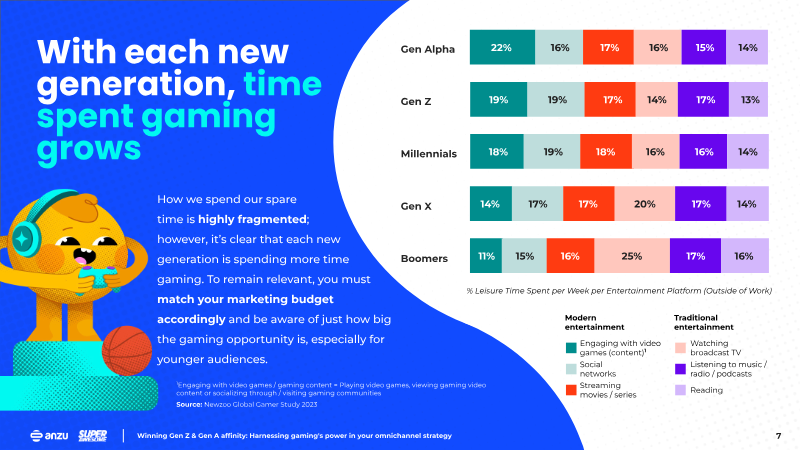
account for every type of player when making design decisions. At some point, you just got to lump your player base into simplistic buckets just to give yourself somewhere to go. But even with the vast generalizations these buckets create, I think we might be making a mistake. Because let's look at those definitions again. Casual players don't play for long, don't care for depth, and are just looking for an easy good time. Core players spend forever on the game. They want all the depth, and they want to play it well. Right there is the problem. In the modern world where players have millions of games to play, where the average player age is increasing, and many people have jobs or families, we're still assuming that if you aren't pouring hours and hours into a game, you must not be looking for depth or be all that interested in playing the game well. And without a doubt, players who invest the most time in a game will often be the ones who can dig the furthest into the systems. But our old approach of keeping the beginning of our games as flashy and simplistic as possible may no longer hold water. Now, I'm not saying that means you don't need an excellent tutorial. In fact, it probably means we need great tutorials now more than ever.
Because if we're no longer equating time played to the player's desire for depth, it means we need to enable players to play our game deeply with a sense of expertise earlier on. And this idea of wanting depth early is true not only for the players who want to satisfying play experience but don't have as much gaming time as they used to, but also for our traditional core players, too. I know plenty of hardcore players who you will lose completely if you don't show them some gameplay depth in the first half hour of play. There are more games coming out right now than we know what to do with. Players have no reason to slog through hours of your game just to get to the depth they're craving. How many games have you played where the interesting depth doesn't surface until you're halfway through the thing? Or maybe the game just doesn't give you a reason to make use of the depth underneath until you're hours in. In part, that comes from this false dichotomy of casual and core. RPGs are the obvious example. We have all played an RPG where you just spam the fight button to win every battle for the first five hours of play. You don't make any choices, you don't feel like you're making use of the mechanics, or that the game is rewarding you for good play, or
for demonstrating a solid understanding of the systems. So, how could we take that example and fix it? Introduce some of that depth earlier. Well, we will still want to have that easy, flashy opening that doesn't require too much of the player. After all, there are players out there who do fit that traditional description of casual, and you still want to grab their interest. But, imagine this. What if this RPG from the very beginning rewarded you a little bit based on how many rounds it took you to complete a fight? Suddenly, this poses an interesting problem to those looking for depth, because you've told them that there's a way to play better by understanding and utilizing the systems, and you've given them an incentive to do so. Now, even if the early fights are still easy, finding the best way to win them becomes an interesting puzzle, and allows players to enjoy your game's depth early on. And this not only benefits your core audience, but also the players who simply won't ever actually have time to finish the game. Even if they only see the game's opening hours, they will find that portion even richer because they got to enjoy the game's depth from the very beginning. And this isn't just true for the
mechanics, it's true of whatever the core of your game experience might be. If your game is about exploration, don't hide all of that wonderful exploring behind an hour of linear levels. I mean, sure, present a linear path that's easy to follow, but expose players to some of those exploratory options early on. Or, even if your game is about making complex choices on how you interrelate with characters, don't bury all of those moments just because the player hasn't had time to get comfortable with the cast yet. Provide some opportunities for that interaction, even if those early opportunities don't have a dramatic effect on how the game plays out. My point is, even if we don't immediately do away with that false dichotomy of our players being either casual or core, let's at least uncouple that idea from equating play time with desire for depth. It's a really easy trap to fall into, and it's even easier to say that we can't design a {quote} casual play path and provide opportunities to engage in the depth of our game at the same time. That is rarely the case. Besides, in a world where core players have many gaming options and many of your other players want to experience the depth of your game, but don't have the time to
commit hours and hours to it, thinking in terms of that outdated casual core dichotomy may lose you sales and fans and prevent many people from ever coming to understand just why they might actually love your game. See you next week.
Summary
The traditional game design dichotomy that categorizes players as either casual or core is an outdated framework that hinders modern development. This binary classification assumes that casual players seek only superficial experiences while core players are the only ones interested in mechanical depth and mastery. However, this perspective fails to account for the reality of the contemporary gaming landscape, where even highly dedicated players often have limited time due to professional and personal commitments. Consequently, the industry’s tendency to gatekeep complex systems behind hours of simplistic gameplay is increasingly detrimental to player retention.
The primary argument is that developers must decouple the amount of time a player spends in a game from their desire for depth. Because the market is saturated with options, players—regardless of their total available playtime—expect to engage with a game’s core mechanics and systems early on. When developers delay the introduction of meaningful choices or complex interactions, they risk losing both time-constrained enthusiasts and traditional core players who are unwilling to endure long, repetitive introductory phases.
To address this, designers should integrate depth into the early stages of a game without sacrificing accessibility. By providing incentives for mastery—such as rewarding efficient play or offering early opportunities for exploration and complex decision-making—developers can create a richer experience for all users. This approach ensures that even those who only play for a short duration can appreciate the game's design, while simultaneously respecting the time and intelligence of the broader audience. Ultimately, moving beyond the casual-core fallacy allows for more inclusive and engaging design that better aligns with the habits and expectations of today’s diverse player base.