Global reports and market data
Documents



The Take-Two Diaspora: Why Alumni Win Big in Mobile, Not AAA
The document analyzes investment trends in gaming studios founded by alumni of Take-Two Interactive and its subsidiaries between 2020 and 2025 year-to-date.
- Former Take-Two senior executives founded 23 startups between 2020 and 2025, securing $1.2 billion in capital across 43 deals.
- Dream Games, a prominent alumni-led studio, achieved a $2.5 billion exit in July 2025, highlighting the high valuation potential of these ventures.
- Alumni-led firms significantly outperform industry benchmarks, with a 60% rate of raising a second funding round within one year compared to the 20% industry average.
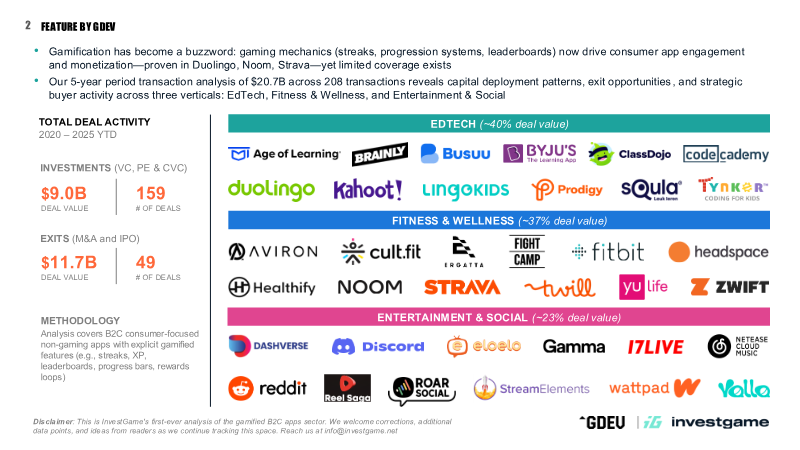


Beyond the Game: How Gamification is Becoming Mainstream
This analysis examines the mainstreaming of gamification in B2C consumer-focused non-gaming apps, covering transaction activity from 2020 to Q2 2025 YTD.
- Gamified non-gaming apps have surpassed mobile games in net revenue, generating $21.2 billion in Q2 2025 compared to $19.8 billion for games.
- Gamified apps are driving a 24% year-over-year growth in mobile consumer spending, while traditional mobile gaming revenue has stagnated.
- EdTech, Fitness & Wellness, and Entertainment & Social account for $20.7 billion in transaction value, with EdTech dominating deal volume (43%) and exit activity (45%).

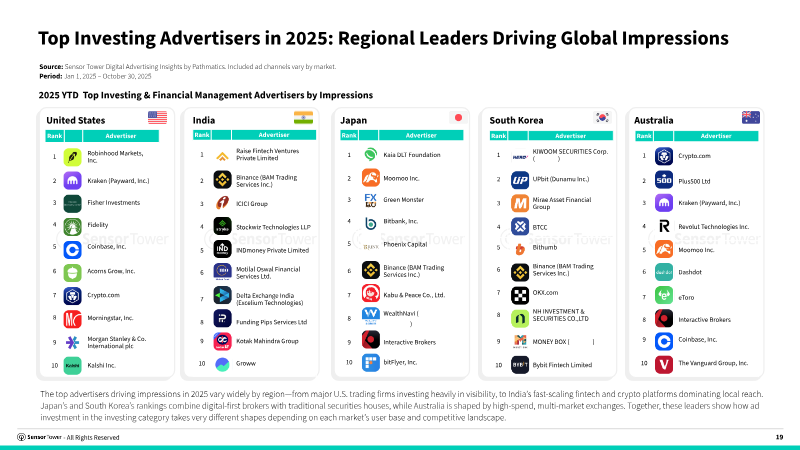

Investing and Financial Management App Market and Advertising Trends 2025
The investment and financial management app market is undergoing significant expansion, primarily fueled by the rise of mobile-first trading and cryptocurrency platforms.
- Global downloads for investment and crypto trading apps rose 12% in 2025, reaching approximately five billion total downloads.
- User demographics are heavily male-skewed, with crypto apps reaching over 90% male users and emerging markets like India and Vietnam reporting only 13–17% female participation.
- Market preferences are geographically fragmented: U.S. and Japanese users favor established brokerages, while consumers in India and Southeast Asia prioritize local, mobile-centric platforms.


1H 2025 Amazon Retail Media: An Inside Look at How Brands Are Showing Up
This report analyzes Amazon's retail media landscape during the first half of 2025, leveraging data from Sensor Tower's Retail Media Insights.
- Amazon Retail Media dominated the market in 1H 2025 with $618 million in ad spend, significantly outpacing Walmart ($236 million) and Chewy ($105 million).
- Amazon’s advertiser base is nine times larger than Walmart’s, hosting 9,542 unique advertisers compared to Walmart’s 1,076.
- Samsung, Unilever, and L’Oréal were the top spenders in 1H 2025, contributing $7.1 million, $5.7 million, and $5.3 million respectively.

State of Mobile 2025: Why Community Wins on Mobile
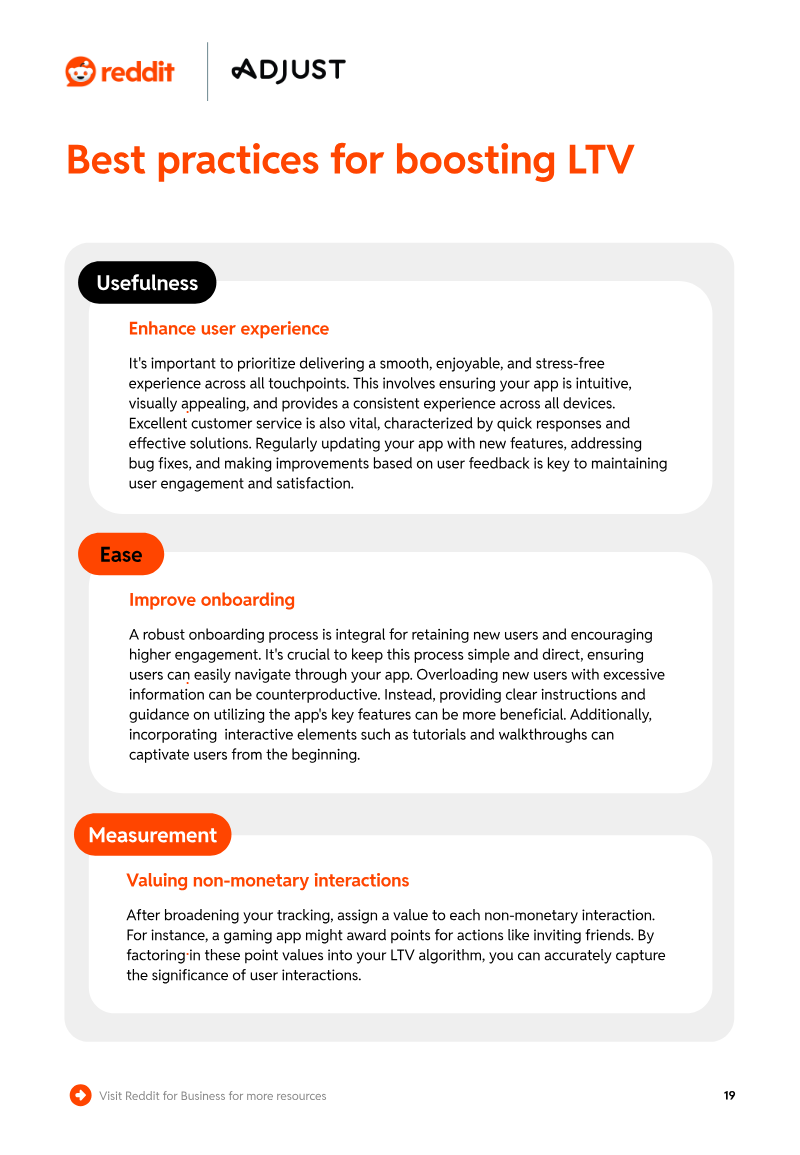
The "State of Mobile 2025: Why Community Wins on Mobile" report, developed in collaboration with Reddit, Adjust, and Sensor Tower, examines the current mobile app landscape and emphasizes the critical role of community in driving long-term app growth.
- Reddit-acquired users demonstrate significantly higher lifetime value, with 41% higher Day-1 spend than other social platforms and 159% higher than digital media.
- Reddit users exhibit superior long-term retention and engagement, spending 55% more time in-app on Day 1 and 103% more by Day 30 compared to other channels.
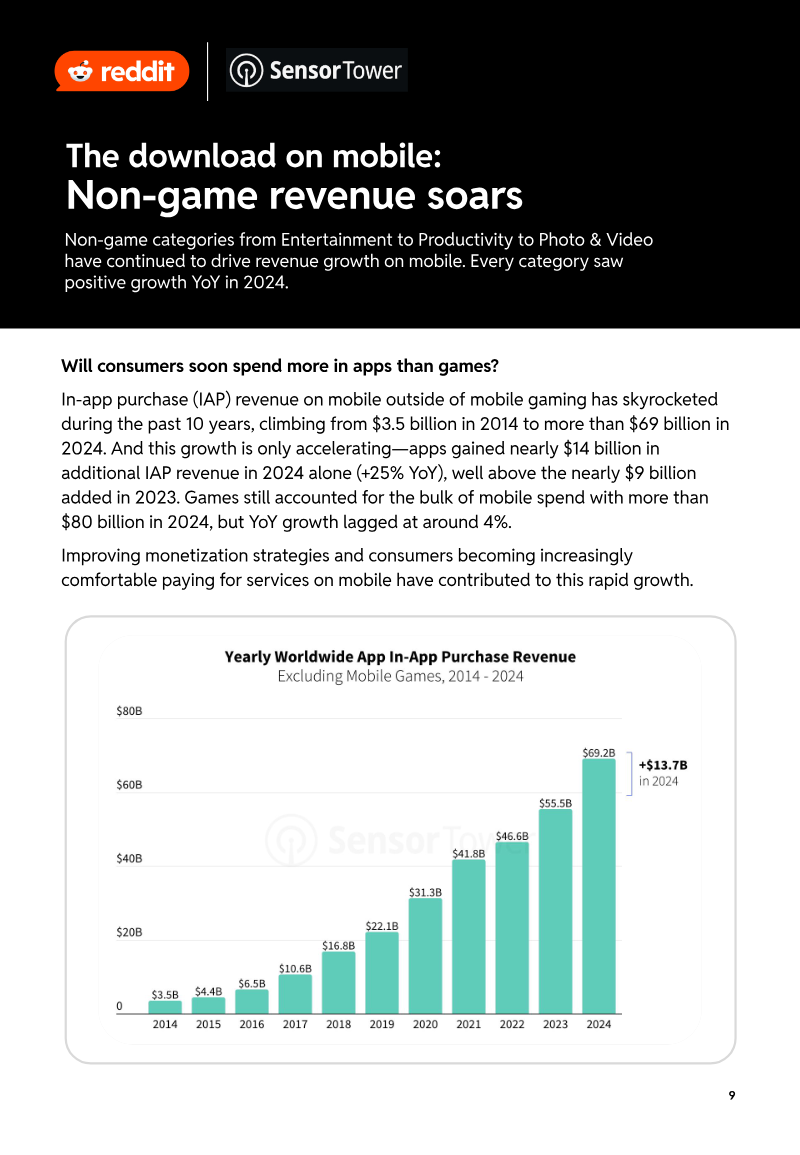
- Global mobile in-app purchase revenue reached $150 billion in 2024, representing a 13% year-over-year increase, while total usage hit 4.2 trillion hours.


Where the UGC Dollars Flow: Mapping $9B Investments in Creator Economy
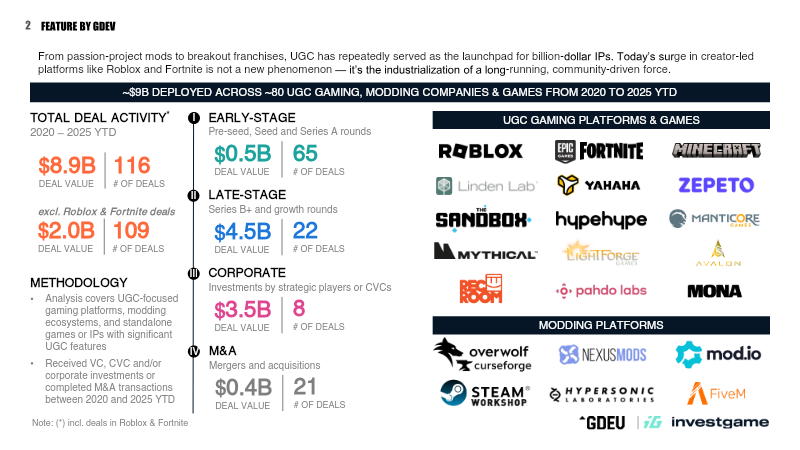
The document analyzes approximately $9 billion in investments across 80 User-Generated Content (UGC) gaming and modding companies and games from 2020 to 2025 YTD.
- The UGC gaming sector attracted $9 billion in total investment between 2020 and 2025, with $8.9 billion concentrated in late-stage and corporate deals.
- Strategic investment from industry incumbents is a primary driver, highlighted by Sony/Kirkbi’s $2 billion commitment in 2022 and Disney’s $1.5 billion investment in 2024.
- Creator monetization is scaling rapidly, with Roblox and Fortnite collectively disbursing approximately $1.5 billion to developers in 2024 and reporting a 38% quarterly earnings increase between Q2 and Q3 2023.

Game Data: Building vs Buying
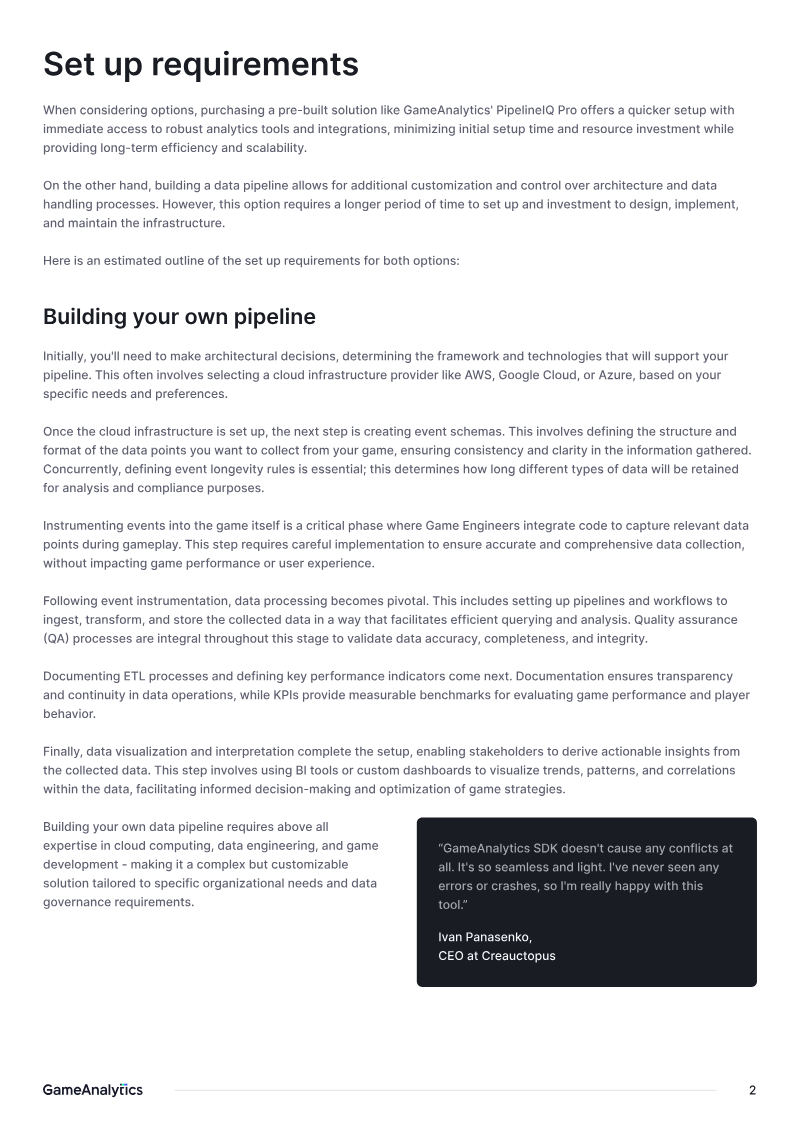
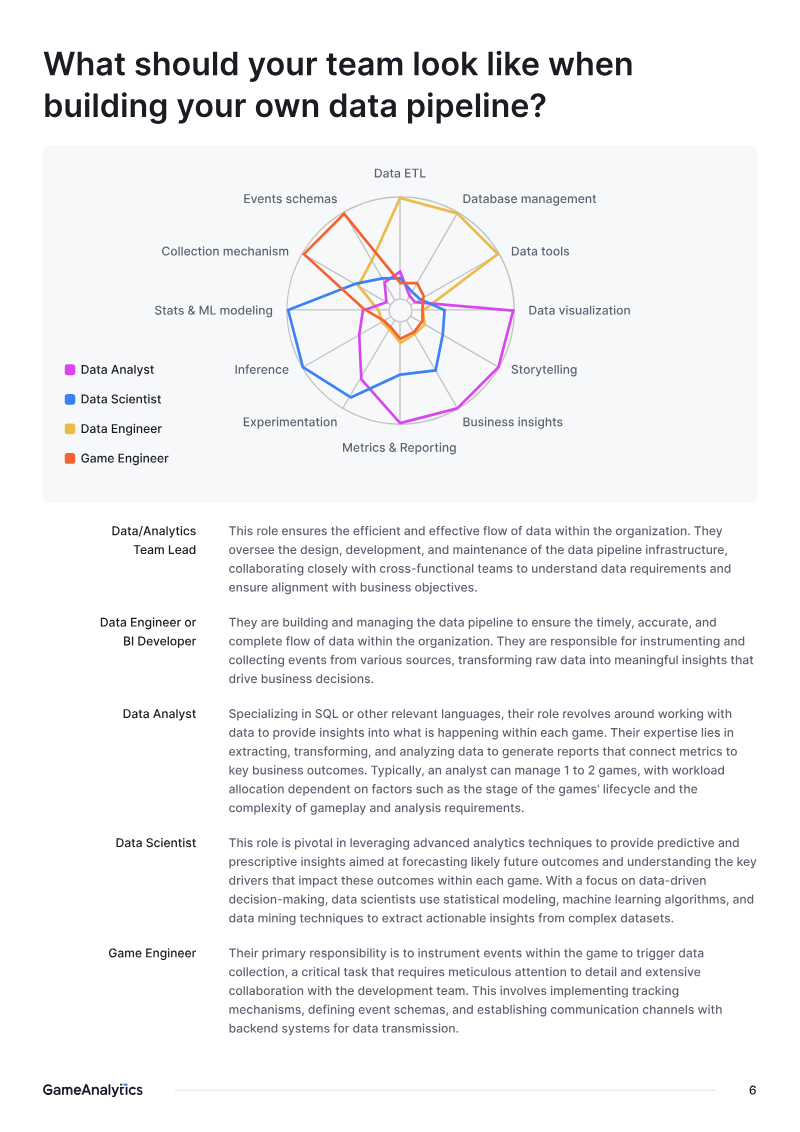
The document analyzes the strategic decision for game studios and publishers regarding whether to build an in-house data pipeline or purchase a third-party solution.
- Building an in-house data pipeline for a studio with 5 million MAU costs approximately $50,000 per month, compared to $5,900 per month for a third-party solution like GameAnalytics’ PipelineIQ Pro.
- Human capital is the primary cost driver for both approaches, accounting for 89% of the budget for in-house builds and 78% for vendor-managed pipelines.
- Third-party solutions offer significantly faster deployment timelines, ranging from hours to days, whereas custom in-house pipelines typically require months to implement.
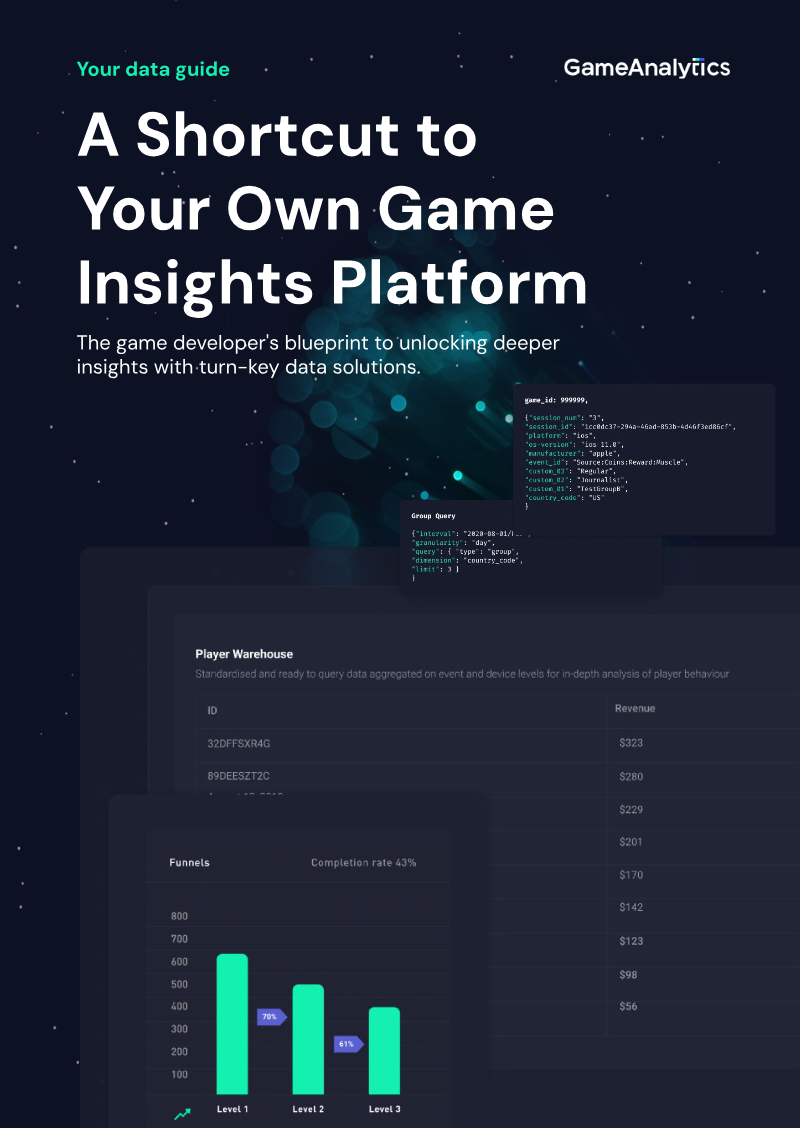
A Shortcut to Your Own Game Insights Platform
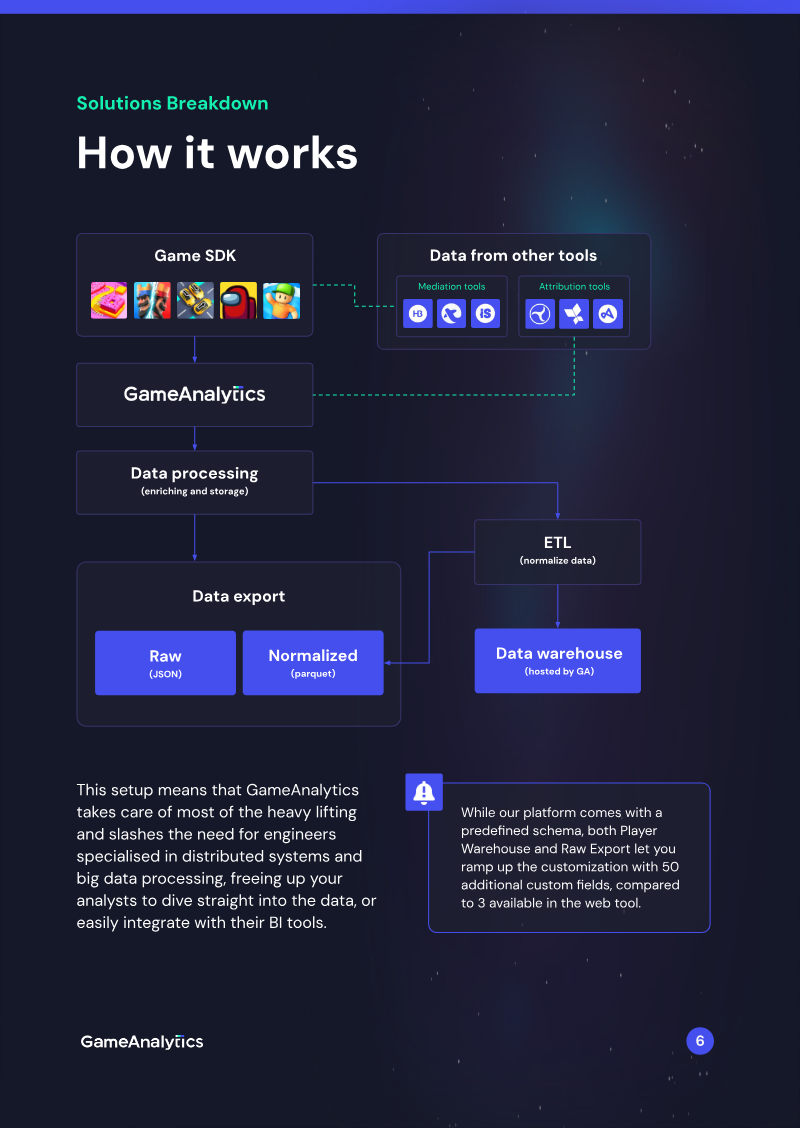
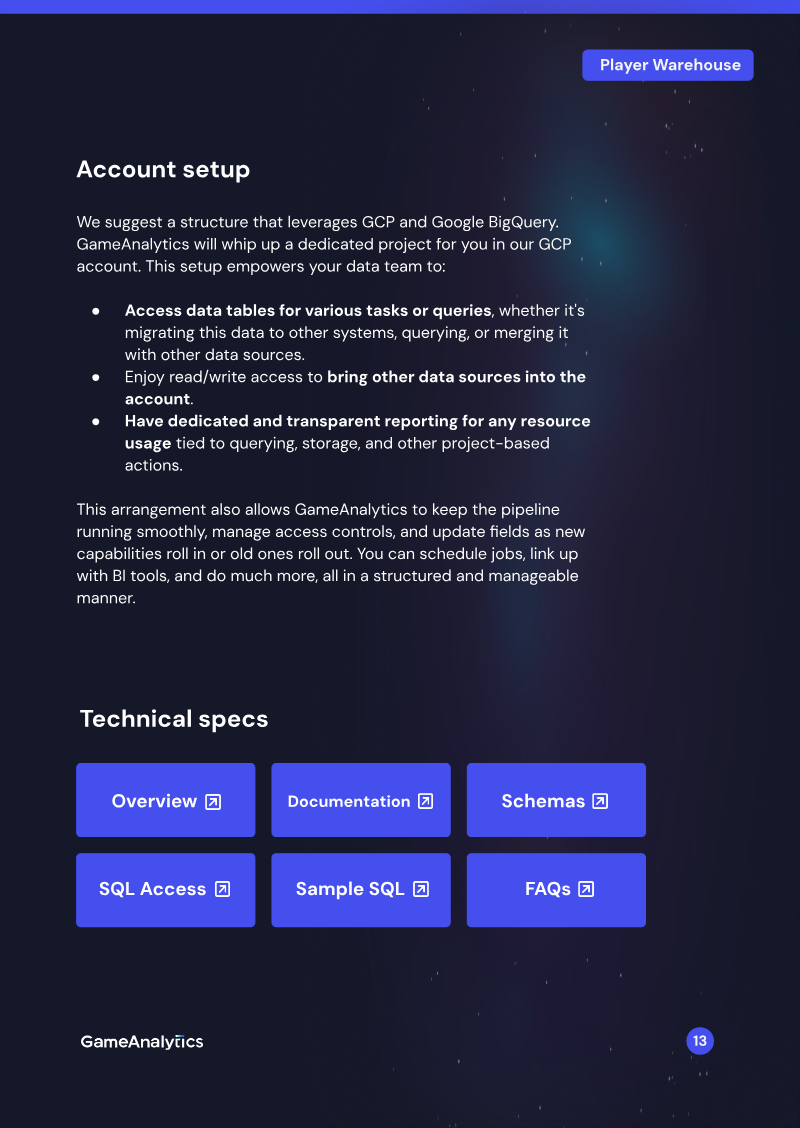
This document outlines GameAnalytics' turn-key data solutions, "Player Warehouse" and "Raw Export," designed to provide game developers with deeper, more flexible access to their game data.
- GameAnalytics provides a turnkey data pipeline that eliminates the need for custom ETL development, proprietary SDKs, and ongoing infrastructure maintenance.
- The platform offers two primary data delivery methods: Player Warehouse for daily refreshed, SQL-ready event tables and Raw Export for real-time JSON streaming.
- A publisher utilizing Raw Export achieved a 50% increase in lifetime value (LTV) across 19 titles, while a VR MMO leveraged Player Warehouse to improve player engagement.

Your Data Tracking Plan: A Step-by-Step Guide for GameAnalytics
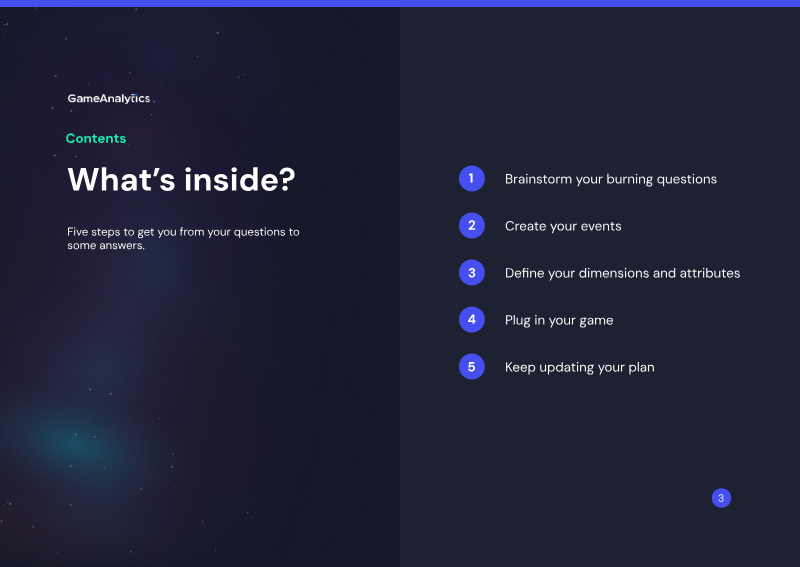
This guide outlines a five-step process for developing a robust data tracking plan within GameAnalytics, emphasizing the importance of a structured approach to ensure valuable and actionable data.
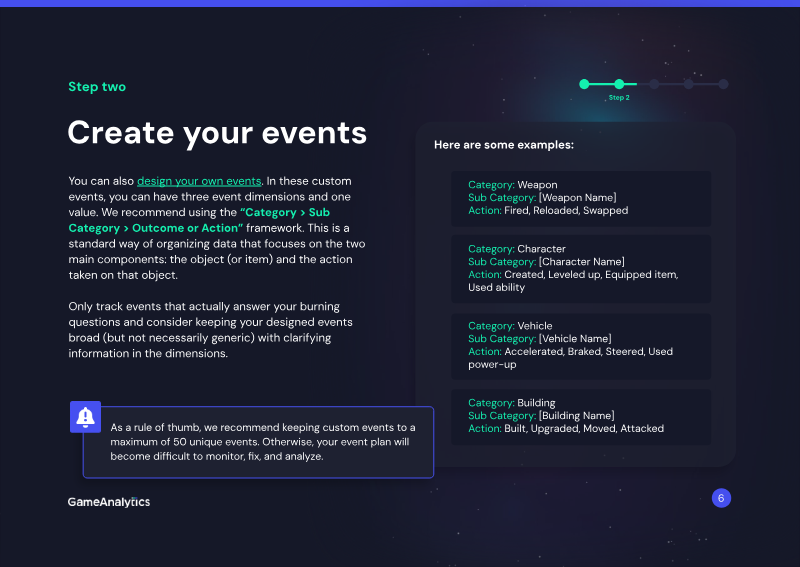
- Establish a structured tracking plan by aligning business objectives and player behavior questions with seven predefined event categories: Session, Business, Resource, Progression, Error, Ads, and Impression.
- Limit custom events to a maximum of 50 unique identifiers to maintain data integrity and prevent system clutter.
- Adopt a consistent Category > Sub-Action naming framework to ensure clarity and prevent redundant or misleading data collection.
East vs. West: Monetization Trends
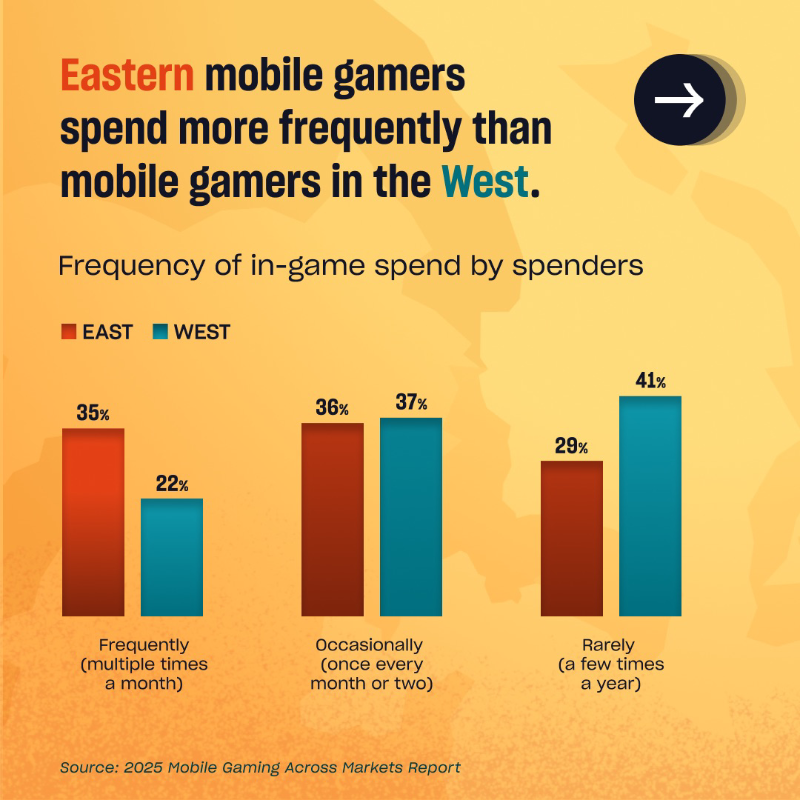
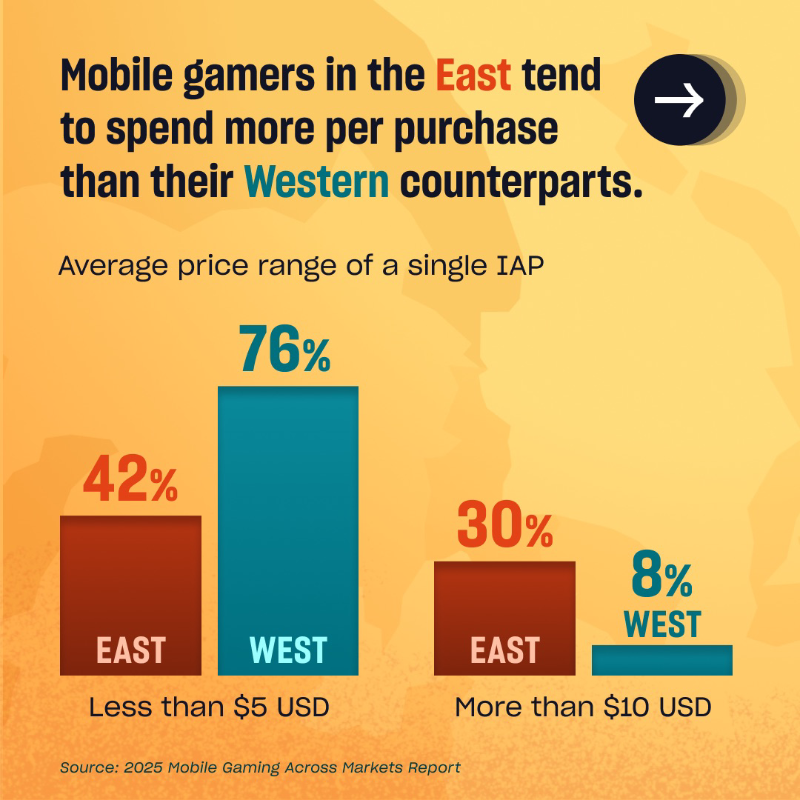
Mobile gamers in Eastern markets demonstrate higher spending frequency and larger average purchase amounts compared to their Western counterparts.
- Eastern mobile gamers demonstrate a significantly higher propensity for large transactions, with 76% of purchases exceeding $10 compared to only 42% in Western markets.
- Western mobile gamers are more likely to make small-scale purchases, with 8% of spenders in the West opting for transactions under $5, contrasted with 30% in the East.
- Monetization strategies in the West should prioritize value-based bundles, as these resonate more effectively with the purchasing preferences of Western players.



Oświadczenie dotyczące zrównoważonego rozwoju: Polska 2025
The "Oświadczenie dotyczące zrównoważonego rozwoju: Polska 2025" outlines MTG's comprehensive sustainability practices, business operations, and their impact on people and the environment, prepared under ESRS and EU Taxonomy regulations.
- MTG has committed to a 46.2% reduction in Scope 1–2 greenhouse gas emissions by 2031, with a 2030 target of a 40% cut in Scopes 1–2 and 25% in Scope 3 against a 2024 baseline.
- Executive accountability is reinforced by linking 5% of executive pay to ESG performance outcomes, overseen by a board committee with 29% female representation.
- The company aims to increase its S&P Global CSA score by 20 points by 2027 while aligning its decarbonization roadmap with the EU Fit for 55 framework.

AI in MTG: Moving Beyond Theory
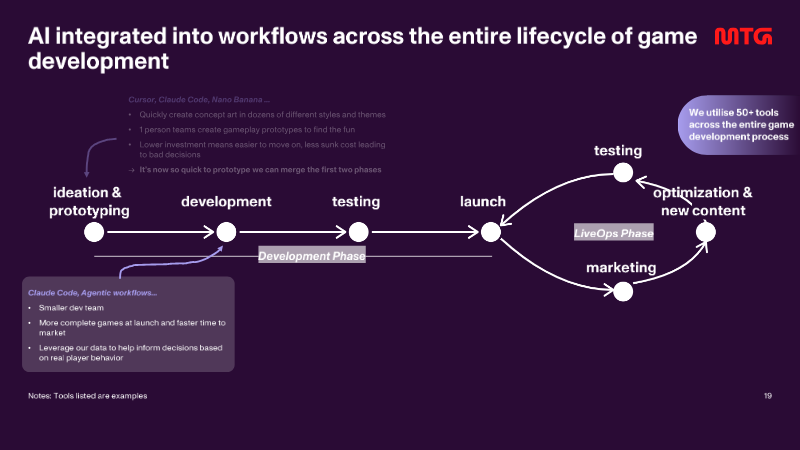
The document, "AI in MTG: Moving Beyond Theory," outlines a strategic integration of AI across the entire game development lifecycle, emphasizing its role in enhancing efficiency, reducing costs, and accelerating content delivery.
- Adopting an 'AI-first' development approach enabled the launch of five new mobile games in 2026, facilitating rapid iteration and simultaneous production of specialized content.
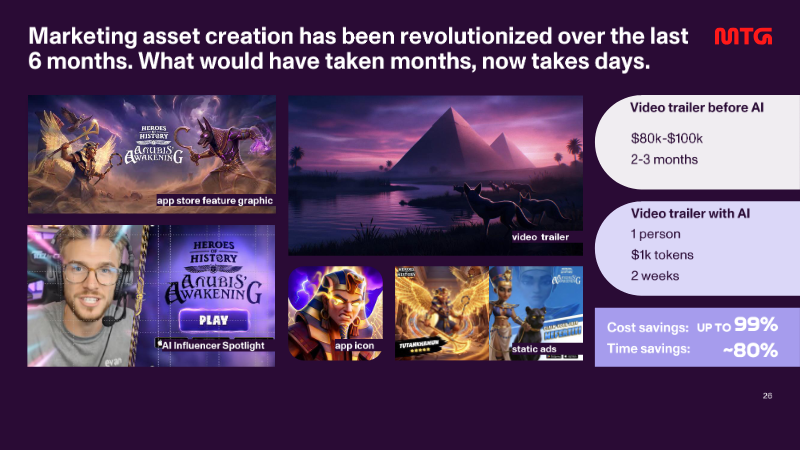
- AI integration has achieved significant operational efficiencies, including a 99% reduction in marketing asset costs and an 80% time saving on influencer spotlight production.
- Data analysis turnaround times have been reduced by 75% by utilizing AI agents to query large-scale datasets, allowing analysts to focus on high-level strategy.