9 documents matching your filters
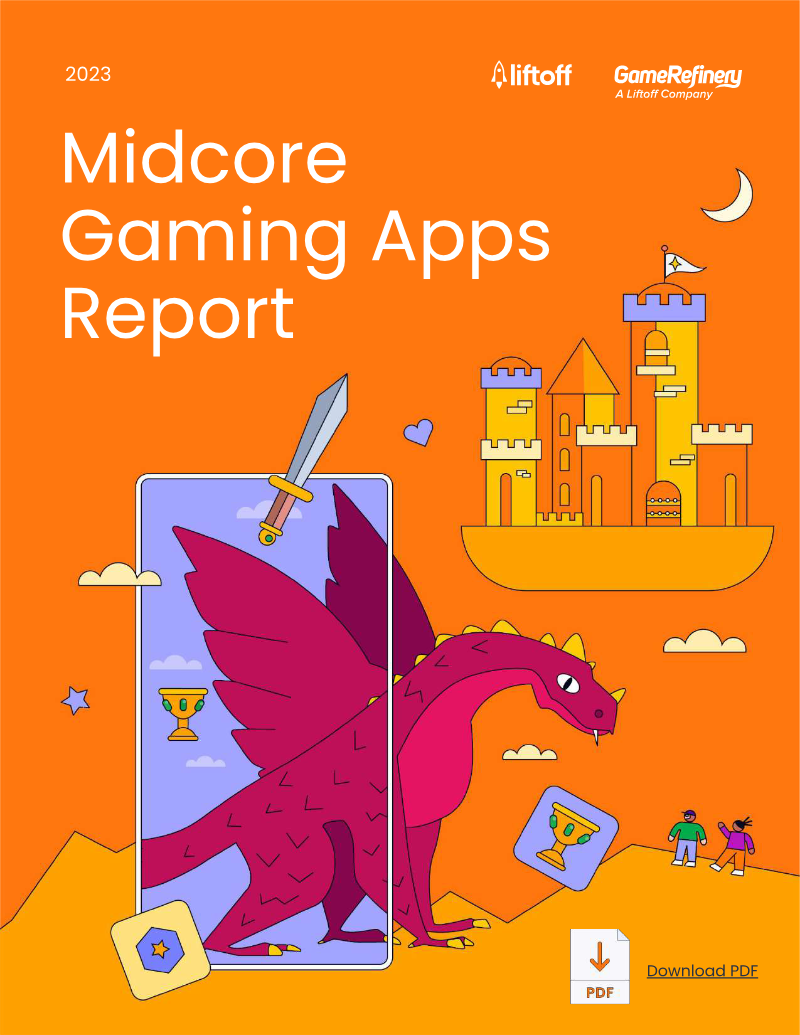
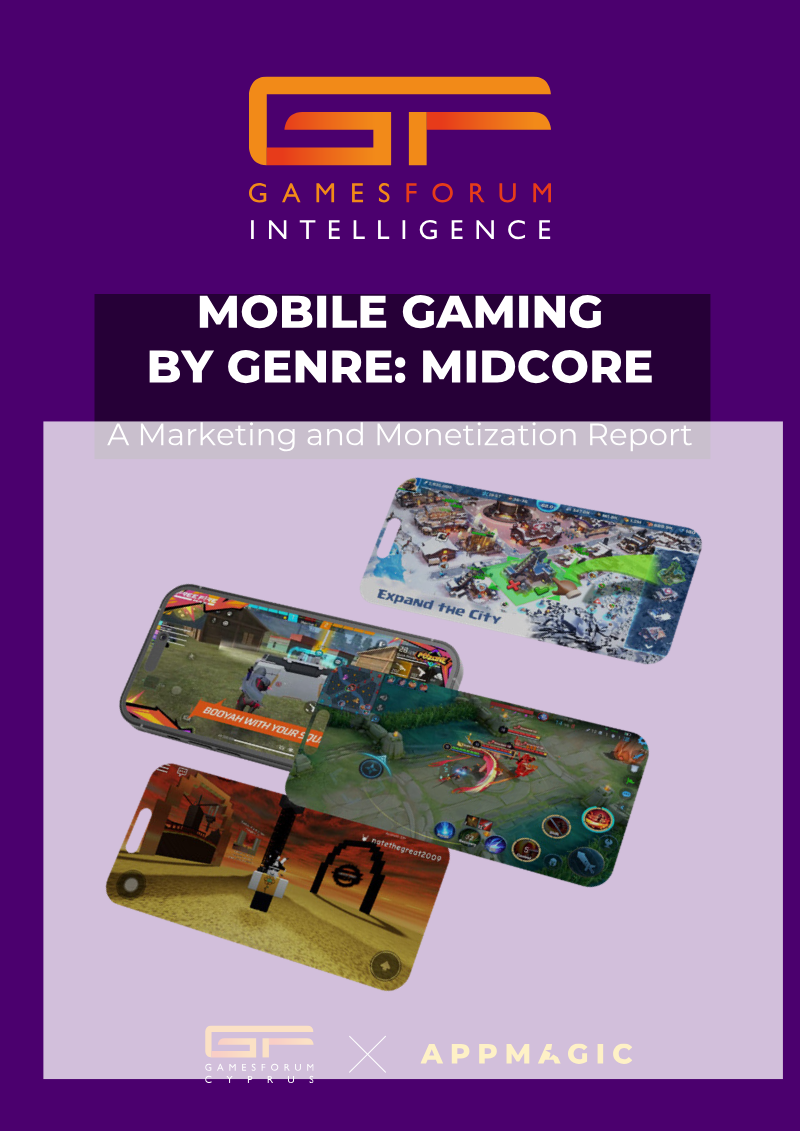
The midcore mobile gaming market is undergoing a significant expansion as players increasingly migrate from hyper-casual titles toward games offering greater depth and complexity. Currently accounting for 35% of total US iOS gaming revenue, the midcore segment is defined by its high player retention and diverse monetization strategies. While these games face higher user acquisition costs than casual titles—averaging a $2 cost-per-install (CPI)—they leverage sophisticated LiveOps and multi-layered Battle Pass systems to drive long-term profitability. Strategy and RPG genres lead the market, while emerging trends like extraction shooters and season-based gameplay loops further solidify the segment's dominance. Data from 2022 to 2023 highlights stark contrasts in performance across platforms and regions. Android remains the more cost-effective platform for developers, offering a $0.73 CPI compared to $3.86 on iOS, while also delivering nearly double the Day-7 return on ad spend (ROAS) at 6.1%. Geographically, North America represents the most expensive market with a $5.45 CPI, yet it maintains a strong 4.5% ROAS. Conversely, the EMEA region provides the best overall value, balancing a low $0.80 CPI with a competitive 4.4% ROAS. Genre-specific analysis shows that Shooters require the highest acquisition investment at $7.47 but yield the highest early returns, whereas RPGs offer the lowest entry cost at $0.60. To maximize revenue and bypass traditional platform fees, midcore developers are increasingly adopting external web stores and aggressive LiveOps schedules, often running an average of 15 simultaneous active events. This shift toward complex, service-based ecosystems is supported by specialized growth acceleration platforms that provide the infrastructure for large-scale app marketing and monetization. By utilizing programmatic exchanges and targeted advertising solutions, developers can navigate the high-cost landscape of midcore gaming to secure a dedicated and high-value audience.
The midcore mobile gaming market in 2023 is defined by a strategic pivot toward deeper gameplay mechanics and diversified monetization streams, now commanding 35% of total iOS gaming revenue in the United States. While North America remains the most lucrative region with a 4.5% Day-7 return on ad spend, significant performance disparities exist between platforms. Android offers a more cost-effective environment for user acquisition compared to iOS, though the shooter genre remains the most expensive and rewarding category, commanding a $7.47 cost per install alongside a leading 6% Day-7 return on ad spend. Market longevity favors midcore titles over casual alternatives, as evidenced by midcore games being twice as likely to maintain a top-200 grossing position over a twelve-month period. The strategy genre, particularly 4X and "Build & Battle" subgenres, continues to dominate revenue charts. To sustain this momentum, developers are increasingly adopting sophisticated engagement models such as extraction shooter mechanics, multi-layered Battle Passes with dedicated storefronts, and seasonal progression resets designed to prevent late-game stagnation. Operational strategies have shifted toward aggressive LiveOps and the circumvention of traditional platform fees. Top-performing titles typically manage fifteen simultaneous unique events and fifteen limited-time gachas to drive consistent monetization. Furthermore, publishers are leveraging legal shifts to direct players toward external web stores, offering better value while avoiding app store commissions. Competitive social structures remain the backbone of retention, with 88% of leading midcore games utilizing permanent PvP seasons and over half incorporating guild-based competitions to foster long-term player commitment.
Midcore mobile games now represent roughly one‑third of U.S. iOS gaming revenue, a share that has expanded thanks to higher player engagement and diversified monetization streams. The average cost per install on iOS is about $2, roughly double the figure for casual titles, while Android users cost only $0.73 per install. Despite higher acquisition costs, day‑seven return on ad spend averages 4.3 % overall, with shooters and EMEA markets achieving the highest returns (6 % and 4.4 %, respectively). These figures underscore the importance of sustained LiveOps to maintain high lifetime value among midcore players. Genre analysis shows that strategy games—particularly 4X‑build and battle titles—dominate the top‑grossing segment, accounting for seven of the ten highest‑earning iOS midcore games. Shooter titles such as Call of Duty: Mobile and PUBG Mobile anchor the shooter category, while Genshin Impact remains the sole RPG in the top‑ten. New releases that remain within the top 200 over a full year are almost exclusively midcore, highlighting their longer‑term engagement and monetization potential. Publishers increasingly bypass Apple and Google storefronts, directing players to external web stores after the Epic‑Apple lawsuit opened that possibility. Leading titles—including Game of Thrones: Conquest, Clash of Clans, Star Wars: Galaxy of Heroes and Star Trek Fleet Command—use these sites to offer better‑priced bundles. Concurrently, top midcore games maintain high LiveOps activity, running an average of 15 simultaneous events such as PvP seasons and guild competitions to drive engagement and in‑app purchase revenue.
The midcore mobile gaming sector is experiencing a significant shift as AAA developers successfully port major PC and console franchises to mobile devices. Between Q1 2021 and Q1 2022, midcore games represented the only category to see market share growth, accounting for nearly 37% of US iOS mobile game revenue. This trend is further evidenced by the fact that nine midcore titles released in the past year remain in the top-200 grossing charts in the US, compared to only three casual titles. The success of these high-performing midcore games is attributed to three essential design pillars: sophisticated control systems, diversified monetization, and high content cadence. Leading titles like Diablo Immortal and Genshin Impact have moved away from traditional mobile autoplay mechanics, instead favoring precision-based manual controls and immersive storytelling that mirror premium console experiences. These games effectively cater to player motivations centered on mastery and the adrenaline rush of reaction-based skills. Monetization strategies in the midcore space have become increasingly complex. Top-performing games are significantly more likely to utilize Battle Passes, with 75% of the top 20% grossing midcore games employing the feature compared to just 25% of lower-ranking titles. Furthermore, gacha systems remain a dominant revenue driver; over 65% of top midcore games feature more than five different gachas. To maximize margins, a emerging trend shows publishers establishing external web stores to bypass standard app store commission fees. Finally, maintaining a massive content cadence is critical for retention. Approximately 80% of top midcore games utilize special live event currencies to create temporary economic sinks and drive daily engagement. By combining frequent limited-time events with a steady stream of cosmetic updates and new gameplay modes, successful developers ensure long-term player interest in an increasingly competitive AAA mobile landscape.
The midcore mobile gaming sector is experiencing a significant shift as AAA developers and high-fidelity titles increasingly challenge the historical dominance of casual and hyper-casual games. Analysis of the US iOS market between Q1 2021 and Q1 2022 reveals that midcore was the only category to achieve revenue growth, currently accounting for 36.73% of total mobile game revenue. This trend is further evidenced by the fact that nine midcore titles released in the past year remain in the top 200 grossing chart, compared to only three casual titles. The success of these games, such as Diablo Immortal, Genshin Impact, and Apex Legends Mobile, is attributed to three essential design pillars: sophisticated control systems, diversified monetization, and high content cadence. Top-performing midcore games differentiate themselves by offering precise, console-like manual controls and minimizing reliance on autoplay. Furthermore, they utilize complex monetization strategies; 75% of top-grossing midcore games employ Battle Pass systems, and over 63% feature five or more distinct gacha mechanics. Live operations and player engagement are equally critical, with 100% of top-tier midcore games utilizing recurring live events. A notable 80% of these titles implement special event-specific currencies to manage game economies and drive temporary sinks. Additionally, a burgeoning trend involves publishers establishing external web stores to bypass standard app store commission fees. Data for this analysis was sourced from the GameRefinery SaaS platform, focusing on feature adoption and revenue performance within the US iOS market to identify the specific mechanics that separate market leaders from the broader competitive field.
This analysis explores the significant growth and evolving landscape of midcore mobile games, particularly in the United States market as of mid-2022. While casual and hyper-casual titles historically dominated the mobile space, midcore games—often high-quality AAA experiences ported from PC and console franchises—are increasingly capturing market share. Data indicates that midcore titles accounted for nearly 37% of US iOS mobile game revenue in Q1 2022, representing the only category to see year-over-year growth during that period. The findings highlight a clear performance gap between top-tier midcore games and their competitors. In a 365-day sample, nine midcore titles maintained positions in the top-200 grossing US charts, compared to only three casual titles. Success in this segment is driven by three primary pillars: sophisticated control systems that emulate the precision of console gaming, massive content cadence through live events, and diversified monetization strategies. Notably, 75% of top-grossing midcore games utilize Battle Passes, and over 65% feature five or more distinct gacha mechanics. The scope of the research focuses on the US iOS market, utilizing a proprietary three-layered taxonomy to analyze genre-specific trends. Key case studies include Diablo Immortal, Apex Legends Mobile, and Genshin Impact, which are cited for their ability to balance core gameplay depth with mobile-specific monetization. Additionally, the analysis identifies an emerging trend of publishers implementing external web stores to bypass traditional app store commission fees. The methodology relies on data-driven analysis from the GameRefinery SaaS platform, incorporating feature-level comparisons and revenue tracking to distinguish the design elements that define market leaders.
The analysis set out to pinpoint the highest‑grossing mobile games of the second quarter of 2022, evaluating performance across Android and iOS markets. Data were drawn exclusively from Apptica’s Top Apps section, covering 37 countries between 1 April and 30 June 2022, and were segmented into casual, casino and mid‑core categories without supplementation from other analytics services. Across both platforms, mid‑core titles generated the greatest revenue, with “Rise of Kingdoms” leading the chart at $179.5 million. Other top earners included “Candy Crush Saga” ($122 million), “Coin Master” ($99.2 million) and “Roblox” ($68.1 million). Casual games such as “Homescapes,” “Gardenscapes” and “Royal Match” each surpassed $20 million, while casino titles like “Slotomania” and “Jackpot Party” contributed between $10 million and $30 million. Organic traffic dominated most titles, typically accounting for 70‑95 % of user acquisition, with paid channels playing a smaller role. Publisher analysis showed King as the highest‑grossing publisher with over $264 million from four leading titles, followed closely by Lilith Games ($254.6 million) and Playrix ($182.8 million). Playrix and Playtica each appeared in 16.2 % of top‑10 slots, while Supercell and King accounted for 10.8 % each, and Lilith Games 8.1 %. Studios headquartered in the United States held the most positions (17), with Finland, Singapore, Hong Kong and Israel also featuring prominently. The study concludes that mid‑core games dominate revenue in Q2 2022, “Rise of Kingdoms” stands as the single biggest earner, and a relatively small group of publishers and studios capture the bulk of market share, underscoring the concentration of financial success within a few leading developers and regions.
This analysis examines the highest-grossing mobile games across iOS and Android platforms during the second quarter of 2022. Utilizing data from the Apptica platform across 37 countries, the study focuses on three primary industry segments: casual, casino, and mid-core games. The central thesis highlights the continued dominance of established franchises and the significant revenue-generating power of mid-core titles, which emerged as the highest-grossing genre during this period. Key findings indicate that Rise of Kingdoms by Lilith Games was the top-earning individual title, generating over $179.5 million on iOS alone. On the Android platform, Candy Crush Saga led with revenues exceeding $122 million. When aggregating performance across multiple top-charting titles, King emerged as the highest-grossing publisher with over $264 million in revenue, followed closely by Lilith Games at $254.6 million and Playrix at $182.8 million. The data also reveals a high reliance on organic traffic for top-tier games; mid-core titles on iOS averaged 91% organic traffic, while casual games on Android maintained a lower average of 70%. Geographically, the United States remains the primary hub for mobile game development, hosting 28.8% of the top-performing publishers' headquarters. Ireland and Israel follow as significant secondary hubs. In terms of market presence, Playrix and Playtika were the most frequent leaders in the charts, each accounting for 16.2% of the games appearing in the top-10 rankings. The analysis concludes that while the market is competitive, a small group of global publishers and established mid-core titles continue to capture the majority of mobile gaming revenue.
The Q4 2025 investor presentation details a period of record financial performance for the company, characterized by significant revenue growth and successful strategic integration. The primary thesis centers on the company’s transformative year, highlighted by the successful consolidation of Plarium and a shift toward a midcore gaming focus. For the fourth quarter of 2025, the company achieved net sales of SEK 3,123 million, representing an 8% organic growth rate and a 108% increase in constant currency year-over-year. Adjusted EBITDA reached SEK 717 million, maintaining a 23% margin, while unlevered free cash flow totaled SEK 878 million with a 66% conversion rate. The scope of the report covers the global gaming operations of the company throughout the 2025 fiscal year, with specific emphasis on the fourth quarter. Key operational findings indicate that user acquisition (UA) spending rose to 38% of revenue in Q4, a 98% year-over-year increase in constant currency, largely driven by the integration of Plarium and the scaling of casual and racing franchises. Revenue streams showed a notable shift, with direct-to-consumer contributions rising 600 basis points to 32% of the total. Franchise performance was bolstered by strong results in the racing and word game segments, which saw year-over-year growth of 43% and 28%, respectively. Methodologically, the financial data is presented on a reported basis, with constant currency adjustments applied to isolate organic growth trends. The report incorporates full-year 2025 figures and highlights the impact of the Plarium acquisition, which was integrated into the group starting in February 2025. Looking ahead, the company concludes the period with a stable leverage ratio and a new organizational structure, positioning itself for continued midcore expansion and the potential public offering of its PlaySimple division.