Global reports and market data
Documents

User acquisition – can robots do it better?
Industry-academia partnerships serve as a critical engine for innovation within the gaming sector, bridging the gap between theoretical research and commercial application.
- Industry-academia partnerships enable the integration of AI-driven performance capture, which can reduce manual labor requirements in game development by up to 80 percent.
- Collaborations are most effective when following a structured Theory-Research-Development-Application process, which prevents research goals from becoming diluted by overly broad agendas.
- Strategic partnerships serve as a long-term mechanism for high-risk innovation and the recruitment of specialized talent, providing companies with early access to highly skilled graduates.
How to take your creativity to the next level
The presentation outlines a professional journey from client-based commercial art to independent game development, emphasizing the importance of creative experimentation and structured production workflows.
- Financial stability for creative projects is best achieved by balancing experimental passion projects with the production of standardized, monetizable puzzle games.
- A successful puzzle title can provide significant studio support, as evidenced by a recent release that achieved 500,000 downloads on the Android market within six months.
- Elevating creative output requires stepping outside traditional industry constraints by engaging in multidisciplinary work such as theater and installation art.
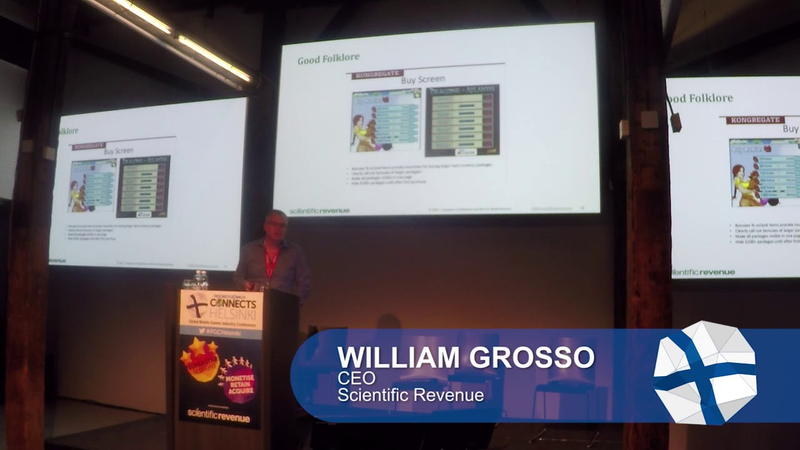
What makes a price a “good price” in a mobile game?
Effective mobile game pricing requires moving beyond standard industry practices by integrating behavioral economics and rigorous data measurement.
- Redesigning payment walls and offer structures based on behavioral economics can drive revenue growth exceeding 20%, even when conversion rates remain volatile.
- Pricing should be treated as an empirical science that tracks specific metrics, including repeat conversion rates and the time users spend evaluating purchase options.
- Developers should leverage the 'left-digit effect' by using standard price endings like 99 cents and avoiding 'weird' price points that create cognitive friction and increase abandonment.

Analyzing Player Networks in Destiny
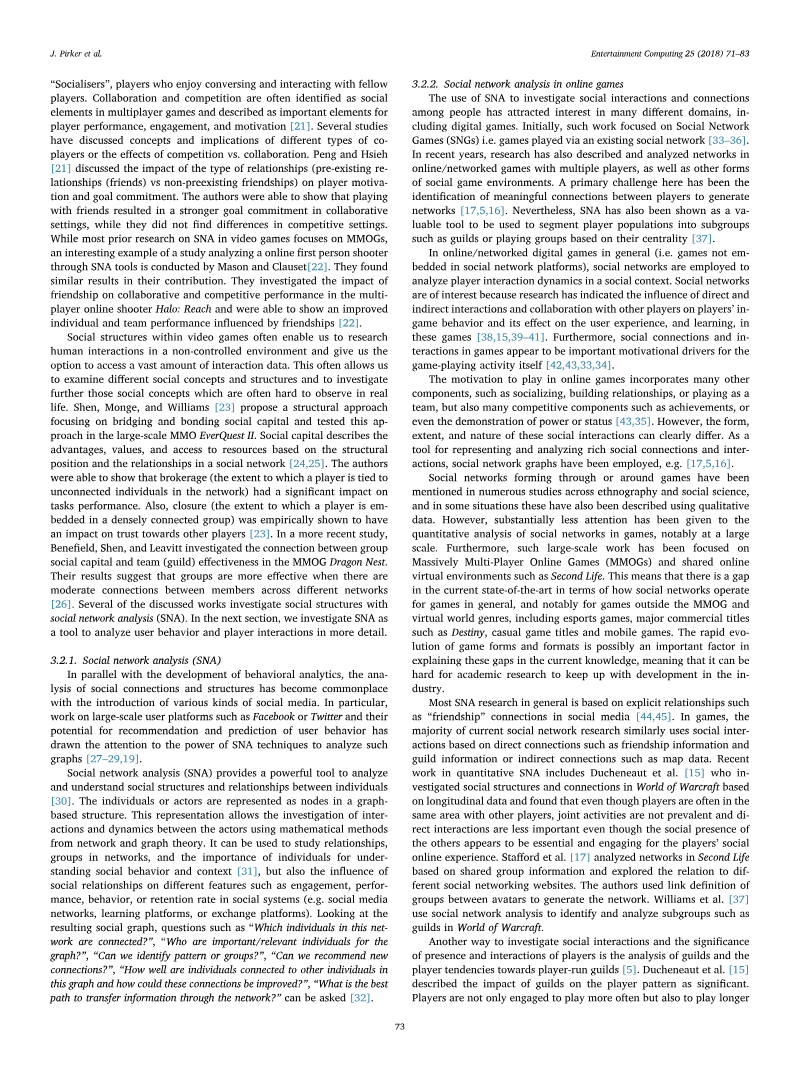
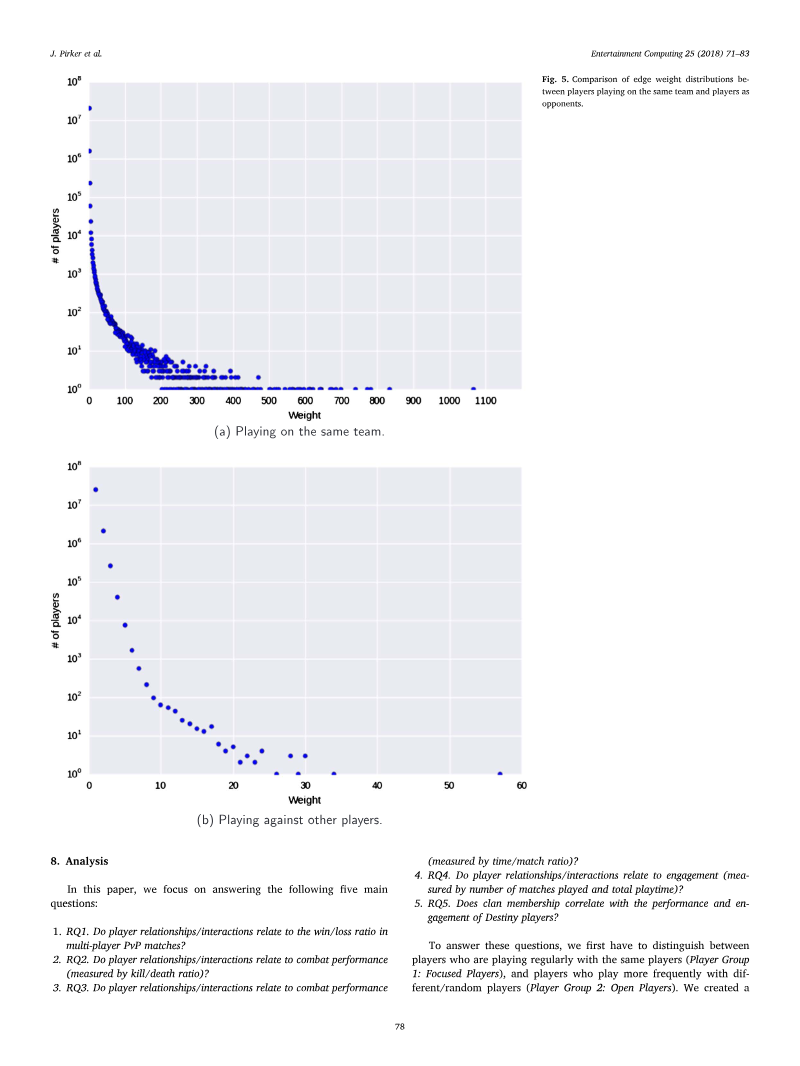
Pirker, Rattinger, Drachen and Sifa analyze player networks in Destiny, a hybrid online shooter developed by Bungie and published by Activision in September 2014.
- Players who repeatedly play with the same people had a higher average win rate than players who mostly play with random groups, 0.559 versus 0.501.
- Focused players had a higher average kill/death ratio than open players, 1.167 compared with 1.034.
- Clan members had a significantly higher kill/death ratio and win rate than players without a clan.
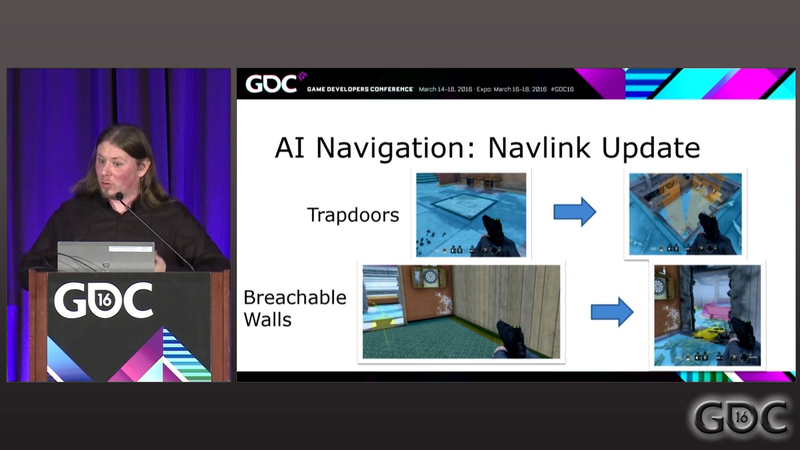
The Art of Destruction in Rainbow Six: Siege
The Realblast engine serves as the foundational architecture for Rainbow Six: Siege, shifting environmental destruction from a scripted visual effect to a core tactical mechanic.
- Destruction in Rainbow Six: Siege is a core gameplay mechanic that functions as a tactical tool, allowing players to create new paths, sightlines, and murder holes while enabling defenders to reinforce walls to funnel attackers.
- The development team utilized a custom-built solution called 'Realblast' to manage environmental destruction, which relies on a graph-based model where connections between objects are broken to create independent, destructible fragments.
- To maintain performance, the team implemented 'surface destruction' for planar objects, using 2D convex hulls to represent holes rather than costly full-geometry simulations.

Losing Player Trust - The Data Dilemma - Extra Credits
The gaming industry’s heavy reliance on absolute metrics—such as revenue, play time, and review scores—often masks long-term declines in product quality and consumer sentiment.
- The gaming industry’s over-reliance on absolute metrics like revenue and play time obscures long-term declines in product quality and consumer sentiment.
- Short-term financial gains from aggressive monetization often mask the erosion of brand equity, creating a cycle where the loss of a loyal player base eventually outweighs the benefits of marketing spend.
- Developers should integrate 'soft data'—such as relative, positional, or ordinal scales—to track subjective qualities like player trust that absolute numerical values fail to capture.

Innovation on Demand: Paradox Interactive's Strategic Initiatives Division
Paradox Interactive established the Strategic Initiatives division to preserve a grassroots, collaborative culture while navigating the complexities of rapid organizational scaling.
- Paradox Interactive created the Strategic Initiatives division to bypass hierarchical bottlenecks and maintain a grassroots, collaborative culture during periods of rapid organizational scaling.
- The division operates on a lean model that hands off successful projects to permanent departments, preventing internal bloat and ensuring creative momentum remains fluid.
- Performance metrics for the division show a 30 percent success rate, 30 percent mixed results, and 40 percent of initiatives remaining unexecuted.
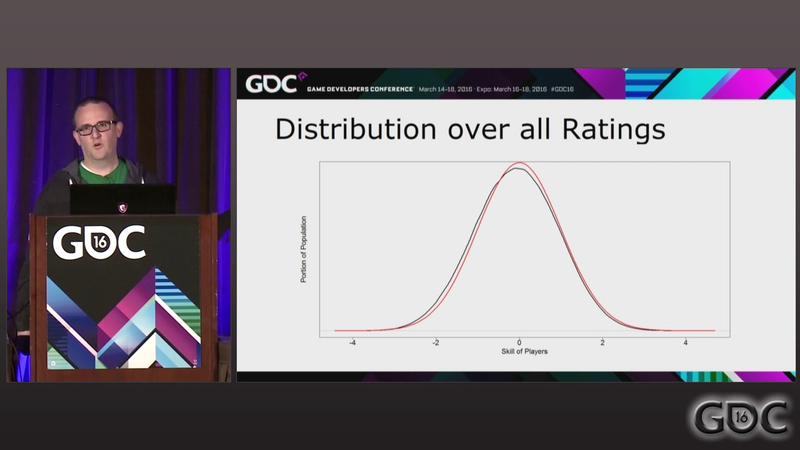
Skill, Matchmaking, and Ranking Systems Design
Effective matchmaking and ranking systems require a cohesive design strategy that treats skill assessment, match construction, and progression as distinct yet interconnected components.
- Effective matchmaking relies on a foundational Bayesian ranking system and normal distribution modeling to accurately calculate win probabilities and maintain competitive balance.
- To maximize match quality, developers should prioritize technical constraints like latency and social connectivity while avoiding player base fragmentation caused by excessive game modes.
- Designers should treat party skill as a unified metric and utilize global server pools to ensure the largest possible player population for balanced matchmaking.
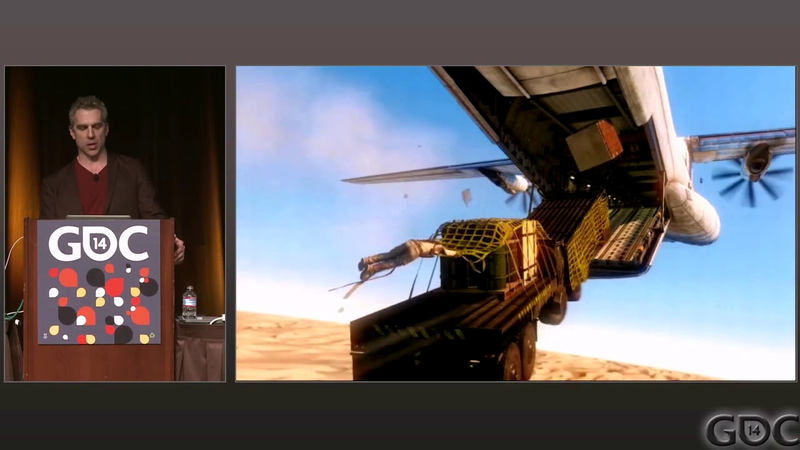
Make Things Worse: Enabling Setbacks for Consequential Play
Traditional game design often relies on binary failure states that force players to restart after a loss, a practice that frequently results in wasted time and diminished narrative continuity.
- Replace binary failure states that force restarts with systemic setbacks, which act as survivable disruptions that require players to adapt strategies without halting overall progress.
- Define setbacks as unexpected shifts in immediate objectives that force a re-evaluation of the current game state rather than a complete reset.
- Implement dual-tension economies that combine resource management with time constraints to discourage save-scumming and force tactical recalibration.
Animating the Spy Fantasy in Splinter Cell: Blacklist
The development of Splinter Cell: Blacklist centered on the dual pillars of Panther-style surgical precision and grounded realism to deliver an immersive spy fantasy.
- The development team successfully reduced animation memory usage from 40MB to 23MB while maintaining high-quality character movement.
- Engineers implemented dynamic animation bundles that loaded assets based on specific map requirements to optimize memory usage.
- The team utilized mirroring techniques for cover animations and animation layering to eliminate redundant animation sets.
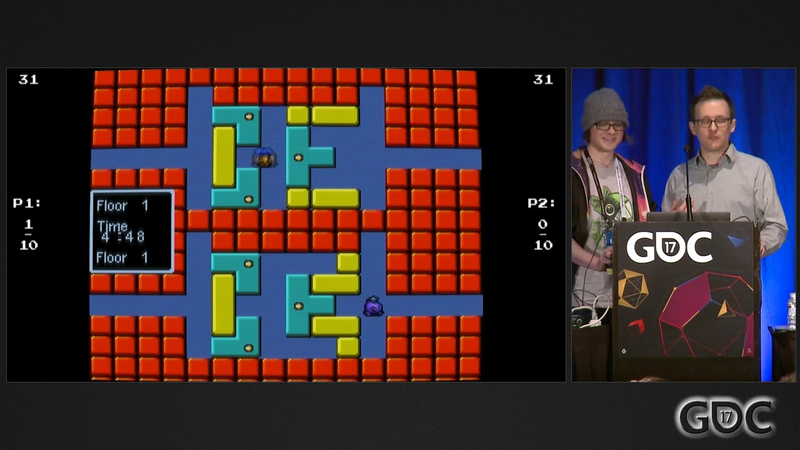
The 2017 Experimental Gameplay Workshop
The 2017 Experimental Gameplay Workshop serves as a vital forum for exploring the boundaries of interactive design, emphasizing that innovation often arises from rejecting established genre tropes in favor of unconventional mechanics.
- Innovation in game design is driven by rejecting established genre tropes and standard UI conventions in favor of unconventional mechanics that create unique, untranslatable experiences.
- The 2017 Experimental Gameplay Workshop demonstrates that games can effectively communicate complex emotional themes, such as long-distance relationships in 'A Fold Apart', by using metaphorical mechanics like paper-folding.
- Game design methodologies are expanding to include diverse platforms and physical interactions, ranging from asymmetrical VR titles like 'Panoptic' to edible games that leverage social rituals.

OpenXR News: Converging on a Widely Accepted VR API Standard
The OpenXR initiative, spearheaded by the Khronos Group, seeks to resolve the persistent fragmentation within the virtual and augmented reality sectors by establishing a universal, vendor-agnostic application programming interface.
- The Khronos Group's OpenXR initiative establishes a universal, vendor-agnostic API to eliminate the need for developers to build custom integrations for every individual VR/AR hardware platform.
- Major industry stakeholders, including Valve, Oculus, Google, and Epic Games, are collaborating to ensure content compatibility across diverse runtimes and hardware configurations.
- The 1.0 release utilizes a core feature set supplemented by an extension-based model, allowing for vendor-specific innovations like gesture recognition while maintaining a unified standard.
Writers
Games and companies
Games