1 free read left. Create a free account for unlimited reading + AI research.
Create free account
User acquisition – can robots do it better?
Key insights
6 takeaways- 01Industry-academia partnerships enable the integration of AI-driven performance capture, which can reduce manual labor requirements in game development by up to 80 percent.
- 02Strategic partnerships serve as a long-term mechanism for high-risk innovation and the recruitment of specialized talent, providing companies with early access to highly skilled graduates.
- 03Gaming firms can maintain a competitive edge in an increasingly automated market by prioritizing direct socialization between industry leaders and academic researchers.
- 04Successful integration requires mutual value creation, where companies provide practical application environments while universities contribute objective expertise in fields like behavioral psychology and data management.
- 05Collaborations are most effective when following a structured Theory-Research-Development-Application process, which prevents research goals from becoming diluted by overly broad agendas.
- 06Finland serves as a successful model for this collaborative approach, having effectively exported gaming-sector competencies in AI, IoT, and data management to broader industrial sectors.
Ask AI about this video
Transcript
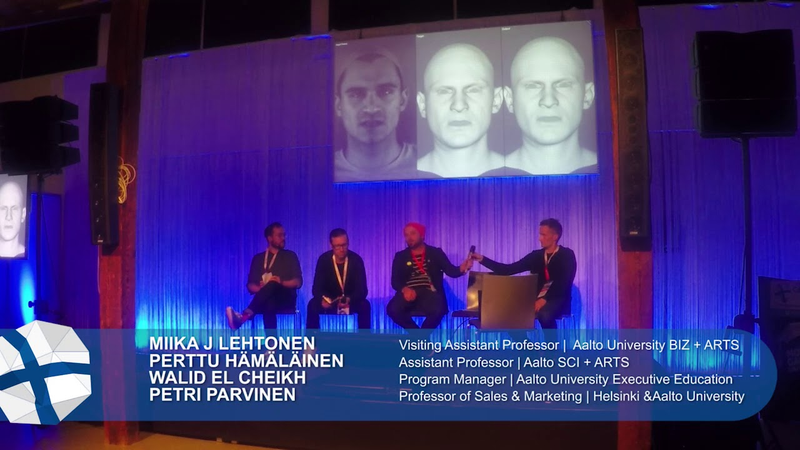
[Music] [Music] alright thanks for joining this panel discussion my name is Michael Esther and from multi-university visiting assistant professor in design business and design business management so what we have here today during the next 30 minutes or so we have an all-star team and I'm not overselling this so we have paired to Himalayan an assistant professor from outer University Valley oil shake program manager from alter University executive education and then last but not least Petri part villain who is a professor of sales and marketing in University of Helsinki and all the
university so what we're going to talk about today is we're gonna shed light on some cases that my colleagues have done with regards to industry and academia collaboration and then afterwards we're gonna have a discussion of like where do we go next and you know how to get you guys excited about working with us or our colleagues so enjoy the ride and yeah okay first of all it's great that we have some people here because when you think about university context is a bit funny or boring but we think it's very very important I think the presentation before this one was a good example that education is important to move forward and so on so the way we do it we do it in many ways in alter University so I will explain how we do it a little bit we had the game executive program so if you think about executive education you the first thing that comes to your mind is for example
MBA or Executive MBA the game executive is is a small open enrollment program which is one week and it's aimed for managers directors executives in the gaming industry and it's been running since 2014 and we wouldn't be able to do it without the support of the industry in Finland without IgD nao games game openes even even service providers like legal firms so when it comes to me later I will explain in whatever way I can how we we work with them and how important is their role in the industry for example they we have speakers from the industry we have company visits and the impact in the industry we don't measure it but we we have almost 90 people who have been in the program who are registered in the program so I think it's working well so that's my part
hey I'm Patrick so I have a mixed role between altar Helsinki this is some of our people in the virtual and augmented reality research group that we have with the user experience and testing I guess what we do is that we're trying to combine sales psychology in games and then kick game taught technology for for e-commerce we're mixing these two areas together which is a really nice area of research as well yeah I had a couple of things that I wanted to say about what I think University is good for and I think the first thing is a lot of people are developer types are they like development they like R&D to hire them for a company permanently or get them to take the leap of working for your company alone might be a bit of a struggle but to get to know them in the university context is somewhere where they're in their conference owner so I think people are looking into doing that are good why don't you show the next one
as well we do a lot of algorithm development so whether it's algorithms on how to import real things into virtual reality environments or do augmented virtuality or that we do these trading algorithms so we bring in this is medium machine is a good example of a spin-off company that just optimizes budgets across different sales and marketing channels but the applications that we have for the gaming industry and the kind of work that we do is that we bring in the newest things in e-commerce and then are able to sort of implement those into immersive environments and and you know business business environments that there are in in gaming companies okay and I represent the kind of technical visual computing research I'm showing two example cases from our research the first one is this that you might have spotted in the media quite
recently and this is actually although that headline was about remedy on Nvidia it's actually a collaboration between Nvidia Alta and remedy so this is a work of my close ecology are collecting and who unfortunately couldn't come to this panel himself and there's a research paper and I would say this project is a kind of classic example of research helping to solve industry problems and explore new technologies such as AI that games game studio doesn't have enough experience about over the risks and rewards are so uncertain that the studio canidius commit resources so in this case there's on the Left there's the kind of reference actor in the middle is remedies old performance capture pipeline and at the right is the new AI based automatic performance capture so
the middle version requires a lot of manual cleaning work and the camera with multiple cameras but after a few minutes of training these neural nets or training them with few minutes of data they can automate and save up to 80% of the manpower so several many years on the project on a scale of quantum break so on besides solving problems of existing companies I must also note that another important role of research at the universities is to feed the startup ecosystem and contribute to new companies and product categories so this video shows the open declining wall that started as a research project in my group and now it's also a start-up and the system can be found in over 30 countries yeah this is what I had to say so Mika go thank you yeah yeah thank you
gentlemen could you act like you so you showcased some of these projects you've done with the Buddha industry could you start could you describe a bit like how did you start like how does the collaboration start I actually have a good example when we decided to do the game executive in the beginning we knew nothing about the industry we just thought that we have this skill in Finland we are good at education and we what we what we did first is we talked we started emailing people and and we got the best people to help us from the industry to build a program for the industry so we we didn't claim that we know everything we actually did a lot of research and we were lucky that everyone who read the email actually well most of them replied and helped us so so the answer your question we actually approached people if we have some something very cool but sometimes they approach us when they have something that they would like to explore one good
example now I talked today with Arya Martha Kenan who was actually speaking or here and she we talked about product management in games that's it's a very important topic and we're thinking to do a new program or a spin-off program just focus on that and we know how important it is for the industry in a way so that's how it goes for the companies it's really important to know what you're looking for inside of university or the universities are big places and people in there don't know what they're doing themselves and I mean they could be very I mean the university people have so many roles and they're mixed up in so many different kind of scenes and it's important for the companies to know what they look if I listed some things that I think are useful for companies to turn to universe is about I think the first is ethics I think a lot of gaming companies need a little bit of support in getting the ethics right and a lot of gaming companies with really healthy exits have been you know so trying to try to be good corporate citizens and
try to be good individual citizens after that made knowing that they earned a lot of money bye-bye addiction so I think that helps a lot so you can you can hire university people to take care of your ethics for you in a in an objective way I guess psychology there's a lot of cool psychology out there that's unused by anything and I think the gaming industry is something that could use a lot more of the psychology top-notch psychologists that universities have then I mentioned the developer people so access to the kinds of people who don't want to work for any company and not even a gaming company one thing is that you can fetch out and look for an entrepreneur if you want to put together a founding team or you want to reinforce your core team with somebody who's really trained to be a successful scalable entrepreneur guy a girl somebody who takes care that the business management side of things we do educate them now so I guess there are many examples in the gaming industry where there's somebody who's not that
game but takes off a lot of load and stress and still is spirited it's not in a sort of an industry or business educated person necessarily but it's a venturing person comes out of school with those skills money there are different kinds of money you know a venture capital money private equity money around universities and they that money is affiliated and wants to be directed through their universities so if you have a hard time getting money then get affiliated with a university to try to get your money that way loads of deals and big deals that are going through university channels and social channels there and then cutting-edge stuff right like looking into whatever is really cool at the universities and thinking oh how could you build on that cuz 99% or the the coolest stuff at universities nobody uses and it's many times the researchers give it up for free just that somebody somebody would be you know unprejudiced enough to use it you know I went to the University of Helsinki and I started touring some of the cutting-edge research teams and you
know man the kind of things that they do you know gene manipulation you know algorithm development you know cancer medicine all kinds of weird things are you know you couldn't like you make spare parts for humans like dudes and dudettes it's like crazy and obviously not all of them are related but I think if you're willing to incorporate some of the super high-tech high-end research stuff into your gaming company I think a lot of other companies wouldn't and they go all you know IPR and licensing and property rights and all that gaming companies don't need to do that everything's rolling forward much faster you know researchers would like gaming gaming companies to use their cutting-edge stuff that they're developing researching right now so you know I think that could be a good thing if I might add one basic tool is basically the master's thesis so pretty
often the industry collaborations simply start by somebody calling me and saying that hey I had this problem and often they might think that it's actually a bigger problem but then actually things have moved on and there's new technology so that it's actually the right size for a master's thesis so what I do then I try to find a new good student make the match and then supervise the thesis and that's that's how we roll that's for like a hobby ya project and you make the gaming company do you do the gaming industry or service because we know that from an HR perspective whatever industry you do your thesis for that likelihood of you staying and working in staying that industry is very high so just get somebody hoaxed it gaming kind of a master's thesis and then that person will the likelihood of that person working for some gaming company would be very high actually yeah of course I also try to kind of go to conferences and
participate in roundtables and listen to people's problems like what does the animation industry right right now need and that sort of stuff we go to we go to Hawaii to a conference called Hawaiian international conference to system sciences which a university run thing that's been going on for over 50 years that's an I applied IT conference super interesting the gamification track is the largest now that even though it doesn't have anything to do with games such because it's a gamification thing I think a lot of the industries that are present at that Applied Sciences conferences are well aware the the possibilities of importing games into those industries so I see a lot of potential there and it's a fun place to go to so some academic conferences are worth the visit and not enough companies go there strictly as scholars you go and you participate like the paper that you showed you're like do participate then you go to a conference you have a great time you meet some new people you get some new ideas maybe
they're slightly different from the industry conferences that you have but they might actually give you some some things that don't have a price tag on them or or some new ideas or new people if a conference coming up on human-computer interaction in place all kind of new game mechanics and that sort of stuff in Amsterdam in October it's called CAI play so check that out okay did everyone make a note on that mystic here but just to cover this what kind of collaboration does not work like have you has anyone approached you and you know so I have a very good answer for that the collaboration that doesn't provide value to one party doesn't work we need to provide value for both of
course we need to think about how we can do it for us but we also want to that it provide value for the other party that we're working with for example wouldn't when we go visit a company with the game executive we I always think or try to think how can they benefit from it why would they want to organize it why would they want to host us in a way so I always talk openly and try to really create value for them and also for us in a way so value is very important I have two examples of projects that don't work so one is consortium so you get too many companies and more than one university together many EU projects are like this a lot of a lot of research finance people prefer larger consortium sort of this interdisciplinary thing in between different universities what have you and then the separate universities just do their thing and there's no real collaboration ever you know that that's
very common that's very common so I'd be very critical towards companies no university research teams and consort er asking for money they just want to show that they have industry contacts and then they promise something and then they just do their own thing that's very common and I think should not should not be and the other thing maybe is that if you're looking for if somebody's not concentrated on something and it's always a bad sign I I guess very sort of multi spearheaded research projects to me have a very low chance of success and I always try to say at the universities ultimately you know T Rd a so a theory research development application there needs to be an idea on how theory research development application goes all through that process and if the people can't answer your question about you know what's gonna what's the T behind this R or what's the D after these are or what's the a at the end of
this T you know the it's not not gonna happen so it many times this is very explorative exploratory things are not not very productive from you know spending money on your kind of thing I'm not saying that basic research that doesn't know what where it's going it's not needed you know of course it is in a modern civil society but if you want to spend your money wisely then make sure that your research partners understand t RDA that's that's something you can actually tweet it's treatable high high degree of tweet ability to D do you have anything to add on I don't really have much there is only good success No well on my part I think there haven't haven't been clear failures what does happen with technological research is that getting the new technology into products will
take longer than anticipated it takes more computing than anticipated and so on but even though those projects have had benefits for example educating new people so those students that there did their thesis in those ended up as ancient programmers at remedy for example and so yeah but I pretty much agree with what with what you said about consortium and so on and I have one thing to add is that in out for example we we do want to collaborate with companies but we are also picky we do say no sometimes to unreasonable or unrealistic projects especially like in a project that is supposed to be a research like betty was saying but it's focused on marketing we want to have a market research or something like that especially in product development we have a course which is amazing for we've been running it for twenty years PDP and its product development project and it's it's very focused they do say
no to a lot of companies and these companies actually pay us so we actually say no to money but because it doesn't fit it has to fit and it goes back to the value that the projects have to be something that we our students will benefit from in a way I forgot what I was supposed to so like what what forms of collaboration does not work well ultimately I think one of the one of the key things is that when you hire a person for like anybody who's in in there just try to get them socialized I think that's very important to spend some face time with those people and just make sure that you drink beer or play games or you know hang out in the same feed or or you know anything that you just get socialized on an indie label of the individual that's very important because the organization's rarely do anything you know between each
other so I think that's that's what was the last thing you said you said I was supposed to take it up from from what you mentioned about yeah oh yeah yeah there's nothing wrong with failing that's right so if the thing that you're actually doing something focused and developing a technology or you're trying to get you know a thing tested and then you fail that's that's fine like it is in the gaming industry that's totally fine just like having a set up that the set up actually fails that sucks now you just have a multi kind of a mix set up which is doomed to fail that's not okay but then failure as such you're just being too early or something like that you know you're being able to get I don't know 10% benefit instead of getting 200 percent that's fine no problem with that people people can cope without really well and didn't just move on and it's research yeah exactly that's why we get government subsidy so that we can take more risk it implies we will
fail also but yeah so we are here to help companies take more risk with for example the funding shared by the Tagus and so on I think a lot of one one thing for gaming companies depends a lot on what level of proficiency or size you're at but I think the the PR that University Relations get these days is amazing and I was at the University of Helsinki new sort of office which is downtown and there was a queue people's gonna who are these people 50 people like taking a tour and they're all communications people University of Helsinki has 50 communications people 5-0 the Parliament has 19 they got to do something right so they just turned out a lot they they organized a lot of events there they send a lot of press releases they they blog a lot its lucky you know so all these 40 50 you know PR and
communications people they need to have something to write about so whenever there's something exciting going on they will they're yours so if you get hooked up with these people it's a very easy and an objective ish kind of a way to get more publicity for your technology for your people for your games for your companies for your financing round for your recruitment needs and and stuff like that just yeah come up with an angle and then use the sort of massive headquarter functions that the universities have is this time for everything do we didn't need to leave time for questions all right I really want to ask this because I we don't have enough time to hang out like face to face what kind of topics are you guys like really really excited about right now like within games research okay I'm really excited
about everybody sounds like when we do a lot of research in VR and AR and AV I always like how is this better than an amazing video it needs to be more touching it needs to be more storytelling needs to be more captivating it needs to be easier to use which is the hard part then an amazing video I just did a Netflix quality production value kind of a online course on when was it like last Monday and Tuesday a guy flew over from Houston we had a crew of 13 people makeup artists and cam you know everybody grip people and we're filming is like a Netflix level of a video online video kind of thing for education and I think combining that kind of high-end video production quality with with with games it hasn't been seen yet I mean it it
needs to be somehow embedded or something that's that's some super excited because I I think a lot of times just 3d VR a are just can't beat video me first so my I'm biased but I would say louder erv let us talk yesterday really moved me so I'm really interested in educational games and educational games that are fun and that will change the world but this has nothing to do with game executive but it's just on a personal level I'm super possibilities of AI so for example this but also because I've had this kind of two tracks animation technology then XO games so EXA games are about finding new ways to make people move and be more healthy with technology and now it seems that the AI is kind of ripe enough for
exploiting utilizing in this context so right now we for example have a new project started about AI virtual coaches for Excel games and sports so because with this kind of bodily similar so basically it's about biomechanical simulation and AI so we can give this embodied physically based kind of both bodies to the orbitals so that they understand what it feels in in your body when you move and they can customize movements and design game levels for you based on that knowledge and so on thank you gentlemen don't be shy so we open for questions now yes and can we actually oh excuse me so when Betty was mentioning about numbers like 50 50 40 19 no one leaves
before we have 51 questions from the audience please ask them we have five minutes for questions hi hi Amelia so I'm from an investment firm and we're interested in what we can do to help get some of the amazing research that happens all around the place out in more digestible format for an audience that might be interested but I'm curious as to what resources already exist in that rain so you know where are the best place that you know of where we can find out about the amazing research and amazing work that's going on but not in papers that are quite difficult for regular people like me to read but in an accessible way so in what area specifically or generally yeah so media
and entertainment background I think you need to know a little bit what you're looking for like would you be interested in psychology would you be interested in medicine and what have you and when you do know that then you can contact the same communications people at the University and not try to reach the professor's because they're not very good at picking up the phone but they will know that the University Communications who's good but then you need to have some kind of headline you go like like do you have a neural psychology like who's your top notch psychiatrist for example you know that kind of as a question if you answer ask they'll be able to answer so I would go through I mean Finland in particular I don't know but a lot of other well you go to the US it's very different you go to London it's very similar actually you can actually contact the head offices of a university as long as you have a pinpoint of questions the BBC rings up London School of Economics they'll they'll you know
do a lot of work for BBC to get a hold of the right person to be able to answer the right questions on live TV and I think it's very similar here if you have but then you need to have a sort of a fairly pinpointed thing if you don't have any specific like topic in mind that you can pinpoint then I guess coming down and spending some time is it it's the only way because otherwise just with the kinds of webpages the people have just absolutely suck and that the best people are the worst that's doing anything online is this the people who try to sort of prove that there's something that have great webpages yeah I disagree a bit I tend to answer the phone I never answer email so please call me instead of emailing if it's important this might not apply to gaming as such I'm thinking of other areas that could be then related to more remotely
related neo games have a list of all the education Institute's that are involved in games so neo gamestop fi so subscribe because yeah that's a product you can find them all in Finland just don't kill them neo games yeah that's right what about econometrics are there collaborations econometrics econometrics between academia and games yeah that's I you know basically much of the sort of business algorithm development is modern economics it is replacing the kind of econometrics like regression modeling linear regression ideology you know people shouldn't be taught arithmetic to begin with it should be taught algorithm and logic at school to be able to come up so that's my answer you know basically I see so many
application areas that are linked to AI and and you know sort of more computer science than non-business science related fields where the application areas business science we do a lot of work with pricing for example it's great it works brilliantly like yeah floating prices to pay what you want price is dynamic pricing individualized pricing value-based pricing it's all based on you know human-computer interaction studies say I related dynamic Bayesian learning algorithms and stuff like that so any other question if not I have one I used teaching the University here in Finland and my question is did you find a lot of resistance by working with the companies not from the company themselves but for your from your colleagues at the universities okay I noticed that there are quite a lot of professors that have been working for a
very long time in the university and they they kind of have a fear of the change and how how that would affect their work here for gaming no for sales psychology sure in the US definitely you go to Stanford do you say your sales professor and they look I go like that's not possible you know I'm a I'm a marketing ethics professor Oh and and you know then then they they go off campus at 2 p.m. and they all work for Google and Facebook for the rest of the day so yes but here no problem I people that people appreciate the gaming industry and you know and I think a lot of like supercells guys have been really good open about talking about making billions with addiction then giving back and stuff like that so it's a low power distance economy in small country here very few problems I worked here so it's
not like that ok I have worked with few professors who have never taught the gaming industry but they are so enthusiastic about learning about it and they have done some extra work they have done maybe the thousand hours in the last three four years just to learn about the industry they met with experts they did joint sessions or joint content like co-creation together with people who know about for example entrepreneurship or strategy or monetization and that is the coolest thing I think your question is very interesting because I think something happened when Rovio and supercell really succeeded in Finland like and they created a revolution and it's it's it's a good revolution I think there's still more to come and people are excited to do this the gaming education in Finland I don't know why but I think we have the biggest density of Institute's who are focused on teaching game-like versus the population and and all that so it's it's
a it's super super interesting in my opinion ok and at least a couple of topics that are were sort of outside of the you know the scope of heavy business-to-business industry five years ago but are in the Nexus right now data management so big big data management a ilt AI VR when you go to the Federation of the business the business industries right not far far away from here they're all going like we are investing in these things so it's actually changed a lot during the past two years how the heavy industry is looking at the competencies that the gaming industries do I remember it five years ago when there go like games these sand games that let's all make paper and pop up in paper and in the middles and stuff like that but I think it's changed a lot because they realize that they need to have that to be able to succeed and some of the heavy industry companies are actually
pretty good at IO T globally which which helps a lot with automated thing we have to finish just last comment we're so in the last NGS in Kyani there have been so many people coming from all over the world in a small place like Kyani it's it's it's in the middle of nowhere I've never been there and I've been in Finland eleven years but I would have never gone there without the conference so this shows how interesting this case is thank you [Music] [Music] [Music]
Summary
Industry-academia partnerships serve as a critical engine for innovation within the gaming sector, bridging the gap between theoretical research and commercial application. By integrating academic rigor with industry-specific challenges, companies gain access to specialized talent pipelines and cutting-edge technological advancements, such as AI-driven performance capture that can reduce manual labor requirements by up to 80 percent. These collaborations function most effectively when they follow a structured Theory-Research-Development-Application process, ensuring that research goals remain focused rather than diluted by overly broad, multi-disciplinary agendas.
The strategic value of these relationships extends beyond immediate technological gains, acting as a vital mechanism for long-term talent acquisition and high-risk innovation. While the timeline for commercializing academic research can be lengthy, the benefits of early engagement include the recruitment of highly skilled graduates and the development of proprietary tools that enhance operational efficiency. Successful integration requires a commitment to mutual value creation, where companies provide practical environments for students while universities offer objective expertise in complex fields like behavioral psychology and data management.
Geographically, this collaborative model has found significant success in Finland, where the gaming industry has effectively exported its competencies in AI, IoT, and data management to broader industrial sectors. Despite occasional academic resistance in other regions, the trend toward cross-sector knowledge transfer is accelerating. By prioritizing direct socialization between industry leaders and researchers, and by leveraging university resources for both technical development and public relations, gaming firms can maintain a competitive edge in an increasingly automated market, ultimately proving that the synergy between scholarly inquiry and business application is essential for sustainable growth.


















Comments