1 free read left. Create a free account for unlimited reading + AI research.
Create free account
How to take your creativity to the next level
Key insights
6 takeaways- 01Elevating creative output requires stepping outside traditional industry constraints by engaging in multidisciplinary work such as theater and installation art.
- 02Financial stability for creative projects is best achieved by balancing experimental passion projects with the production of standardized, monetizable puzzle games.
- 03The recommended asset creation workflow involves a transition from hand-drawn line art to 3D modeling in Blender, texture painting in Photoshop, and ambient occlusion baking for final polish.
- 04Rapid prototyping tools like Envision should be utilized to test game concepts quickly before committing to full-scale production.
- 05Long-term success in the game industry depends on effective communication, collaboration with publishers, and the discipline to maintain a consistent creative practice outside of primary development tasks.
- 06A successful puzzle title can provide significant studio support, as evidenced by a recent release that achieved 500,000 downloads on the Android market within six months.
Ask AI about this video
Transcript
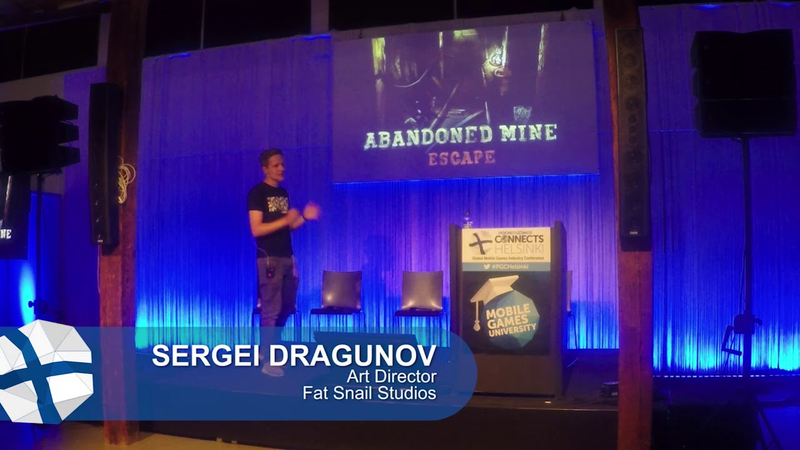
[Music] oh that's me all right this is the first page actually so I'm an art director artist and designer last ten years I think in any kind of directions from the illustrations to the game development and my talk would name oops change somebody change the slides okay but I will try to change my mind so my background is the studio were we able to work with the remedy by where the wargaming is super cell on the projects like Alan Wake the Star Wars the knight
of the Old Republic the the world of tanks and some old projects for the super cell where when they was not so popular I doubt so and between the working days on on all that all sorts companies I I just thought that something I do something wrong I need to do much more than than I do right now and I start doing something by my own I connect with one people from the local theater and we start doing performance actually with the fat Snell studios so this this is how it looks like it was a sin with the floor and the wall I was managed to make 3d mapping on all the
stuff and when we have made all these creations I found that something happened inside me and I found that I start understanding the behavior between the actor and sin actually and mmm from my opinion it was the first step into creative career from me because well my last project was like client works I just do what the clients actually ask me and here I was able to create my own my own stuff to use my own creativity and I just push my boundaries and go beyond the industry so and it was something I don't know pretty amazing feeling when you do something and you have a full of how the audience who just really happy to see all this stuff so
this is another project in theater and after that after all of this being said I found a way how to manage with the museum's and our first project was to create this interesting installation inside the st. Petersburg Museum called errata so it's a sculpture with this 3d mapping on it with a bunch of videos and cats and all sorts of things it was pretty amazing and fun to create all all of these things and when we create these I step forward to the production phase I start understanding how important to manage with your production phase from the pre-production to the production and to post-production at last so after that
when I understanding the production phase phases I decided to make my own animation actually it was 2012 I release its animation called flower man and after we put it on the festivals around the world we start thinking that we can actually manage with gaming why not we start doing the 2d platformer with the funny creatures like that so it was like a runner easy ran your game with the with ability to choose your sneakers to buy it we didn't have so much knowledge in the unity these times but they it's made by unity actually 2012 I think or maybe a little bit later
so and then this project was my next step into the creative path on the game development actually and but once again I was disappointed something miss it here and I start thinking what what I miss and I found that I miss the storytelling actually and I decided to create something with proper storytelling I forgot to say the bad asses so this is all the assets for for the flower man actually I created for for this game with other guys so in this project I was able to be first time as an art director to manage with other artists at all to gain my goals and create all in one style and about the storytelling so the next project was the fisher dog we create a proper story
about the dog who's talking on the island and with your friend little mouse so we spent one year actually on production of the alpha version because it was so hard I I to make a decision to create all the textures are the models from the real objects actually and most of these objects was created from papier-mache and after that I scan it with the mobile phone to have these normal Maps like in the real world so my idea was to integrate this world inside the mobile devices how it should look like if you have real objects like like it made by the hands the handmade objects so and it was pretty pretty hard to make all these things but in and I found that it's
impossible to do how this game with the two guys actually and the next step was to earn money to bring back my towels into this future dog project this is another concepts so on how how I make a decision to make money we start creating the simple puzzle game with integrated in app purchases with there advertising's and all sort of things to just do to earn something because our previous projects was not able to take something from front also and here we decided to make something really standard without any anything many experiments and all sort of things so and I would like to share just some
hints for for those guys who create games in this kind of style so a game design how we start we create the starting point and the finish point and for example the starting point is a tunnel and the finished point is a live insulation for example of insulation pipe so then I shall feed the empty spaces with with the dots with numbers so and for example these dots could be like the levels like you know the clock wrong the another tunnel or I don't anything else and some items on it then we make it transitions between all these dots it's not really matter which
transitions you use because any game engines have their own opportunities to to work with that but I will say that at this moment we still not driving anything which is thinking we spent one week on thinking on creations and after that I'm start doing my my job actually our development I starting from the art DNA for the project in fighting references and I really like Japan our style for example that Suki Tanaka it was my main reference who created this amazing book cannabis work and the second one is the darkest dungeon by Redford studio it
was my second reference for creating all the art assets and how I start by creating a lot of thumbnails which properly explore explanation for the game designer which I gave to him for work on his quests and after that I set up my work in place I make a decision like to create a working place as much possible close to the abandoned mines like how it possible to just drop it inside the game all the objects so it was amazing for me to use my light table from the past years when I just was a fan of animation and drop they keyframe animation as a freelance so this is how look the lineart actually after that I put all the line
art inside Photoshop in the Photoshop I make a textures by the usual paintbrush I usually just adjust the standard paint brushes not using any different so after that I using my skills in 3d to create all this then in 3d and bake the shadows and then I've just merged this the Photoshop I think with the ambient occlusion after that my favorite part is the polishing so after polishing this is the finished - asset for for the for our our puzzle games and now I just will share [Music]
so using blender for modèle all this stuff and even is a metric view because it's a much easier to find a way in perspective [Music] [Laughter] [Music] [Laughter] [Music] something like that so and the last thing at the prototype ik when when are the other asses don't
only then we start creating the prototypes within envision it's actually free service for for developers who create apps you can just put your asset inside the their website and just create these boxes which can be possible if you just want to make a really fast prototype use envision it's the best way believe me so we already gained half a million downloads per half a year actually and it was pretty surprised for us and another thing what I want to say it's it's really important to communicate and collaborate with other peoples for for us it was xscape factory they are our publishers and they helped us a lot to not to go so far from from this style from from the setting of this game for
from the quest at all and another thing which i really want to just hint for all the developers that even if you work on your own product product you spent for example half a year on the assets and you just draw it every day just to achieve your goals but you just should you just should make something else and I just like funny creatures and I create one creature per day not in that quality but this is my favorite ones and I just want to share it with you so this is a hippie girl and this is the fellowship the last thing but I want to say it's much more important to communicate with other people then to use the proper tools actually for create your product so this this think I had stood between
the five years in in the production actually so that's how thank you thank you and do you guys have questions yes just a second hi so do you have a reason why you draw in paper the line drawings did I miss something as I said I just tried to sit up now the working places is aesthetically the closest to the abandoned mines so it's like you just need to be inside your game when you draw it as an artist yeah like this other questions yes
and how your game does perform Ram I mean now functionally financially and did it get some traffic downloads and everything if you can share that information please as I said it's a right now it's about a half a million downloads and installs only on Android Market but right now we I will say that I can actually pay for rent my Studios only only like that yeah not not more [Music]
[Music]
Summary
The presentation outlines a professional journey from client-based commercial art to independent game development, emphasizing the importance of creative experimentation and structured production workflows. The core thesis posits that developers can elevate their creative output by stepping outside traditional industry constraints, engaging in multidisciplinary projects like theater and installation art, and maintaining a rigorous, iterative production process. By balancing experimental passion projects with standardized, monetizable puzzle games, creators can sustain their studios while refining their artistic vision.
Key findings highlight the necessity of integrating storytelling and unique aesthetic identities into game design. The speaker details a specific workflow for asset creation, which involves hand-drawing line art to maintain an immersive connection to the game’s setting, followed by 3D modeling in Blender, texture painting in Photoshop, and baking ambient occlusion for final polish. The importance of rapid prototyping is underscored, with the speaker recommending tools like Envision to test concepts quickly. Data points include the success of a recent puzzle title, which achieved 500,000 downloads on the Android market within six months, providing the financial stability required to support further creative endeavors.
The scope of this experience spans the last decade of the speaker's career, covering work in illustration, 3D mapping, animation, and mobile game development. The methodology relies on personal case studies, illustrating how the transition from client-driven work to self-directed projects—such as the papier-mâché-based project Fisher Dog—fosters professional growth. Ultimately, the speaker concludes that while technical tools are essential, the most critical factor for long-term success in the game industry is effective communication, collaboration with publishers, and the discipline to maintain a consistent creative practice outside of primary development tasks.




















Comments