1 free read left. Create a free account for unlimited reading + AI research.
Create free account
What makes a price a “good price” in a mobile game?
Key insights
7 takeaways- 01Redesigning payment walls and offer structures based on behavioral economics can drive revenue growth exceeding 20%, even when conversion rates remain volatile.
- 02Use 'no-brainer' starter packs with caution to ensure they do not cannibalize long-term revenue or negatively impact the perceived value of higher-tier packages.
- 03Avoid discount-based framing to prevent anchoring the product's value at a lower price point; instead, offer explicit bonuses for larger purchases to satisfy the principle of decreasing marginal utility.
- 04Payment walls must be designed linearly to facilitate easy pairwise comparisons, as forcing users to perform complex mental math leads to disengagement.
- 05Developers should leverage the 'left-digit effect' by using standard price endings like 99 cents and avoiding 'weird' price points that create cognitive friction and increase abandonment.
- 06Pricing should be treated as an empirical science that tracks specific metrics, including repeat conversion rates and the time users spend evaluating purchase options.
- 07Strategic A/B testing should begin with geographic segmentation to account for varying economic conditions and cultural preferences rather than relying on internal assumptions.
Ask AI about this video
Transcript
[Music] [Music] thank you okay so so I want to be very clear on one thing here first before I start there are far too many slides for me to get through the real point of this talk is to convince you that you can do better on your pricing on your own with a little bit of googling and a lot of thinking so this talk is not about my company it's not about what we do it's about how you can do your pricing better typically speaking our customers when they come to us they have you know scientific revenue this machine learning on large-scale games to improve targeting of pricing but our customers
often have suboptimal pricing to start with and so this is an educational talk I'm not gonna get through all the slides I deliberately wrote them too long because you should download them read them take notes etc and if you sit here and you go over who this is all obvious then you know you're in the 1% so what makes the price a good price so it's a because I wrote too many slides I then introduced an introduction so this is a screenshot from us in production you'll notice that the Archdale of the purple line which is redesigned pricing not machine learning just changing price points on payment walls and offers is 24% more it's also got a significantly lower conversion rate twelve percent less conversion that is the teaser by redesigning your prices you can make 20% more period every single game out there that I know of and of course there are games that are doing amazing jobs and so on but generally speaking this is the
basic point and the other basic point is in order to do this you need to measure everything most of the time when we go into customers and we say okay so what is your second purchase rate nobody knows very few people actually measured whether they have repeat conversions and how long the repeat conversions take and so on and so forth so you can get 25% more but you have to measure everything and you have to go outside the gaming literature I'll actually go through each of these papers really super quickly and summarize them but the point is if you went you followed these URLs and you downloaded these PDFs they averaged about 10 pages each and they have about 4 pages of academic bragging that you'll not understand because people are trying to get tenure-track positions and so on but there's always something interesting in there and they have really good indexes because they're citing all the relevant literature and so you wind up sort of going through a bunch of mazes of cross-reference papers and you wind up
understanding how to do pricing and none of these papers were written for games these were all written for retail so you have to go outside you have to measure everything and you have to go outside the gaming literature and there's a bunch of books that are popularization that are really good too the one on the left by Schindler is a undergraduate textbook and it's a really nice summary of the literature circa 2000 predictably irrational famous paradox of choice basically says that when you force people to think they get angry at you and the number sense is really that's what it says Mike yeah if you put one of those payment walls that has 15 choices people say screw it I'm gonna play Angry Birds and the number of cents is a really interesting book about how people actually think about numbers so download the slides read the references so how do we start this well fundamentally you
start with classical economics so classical economics says that people have a utility function it's a mapping into the real numbers and you say ok you know the value of 3 Big Macs is more than the value of two Big Macs but it's not three times the value of one Big Mac because you get full so the idea of a utility function that measures whether people want something and then the idea of decreasing utility because you get full if you buy two bags of cookies it's not worth twice the value of one bag of cookies so that means you need to do volume discounts because if you want people to buy the ten thousand gold coin bag you have to give them a discount because of decreasing marginal utility everyone knew that right okay Oscar did Mike did really when you look at the payment wall and it says 50% more unfought five it's there's actually a reason now the problem is of course so
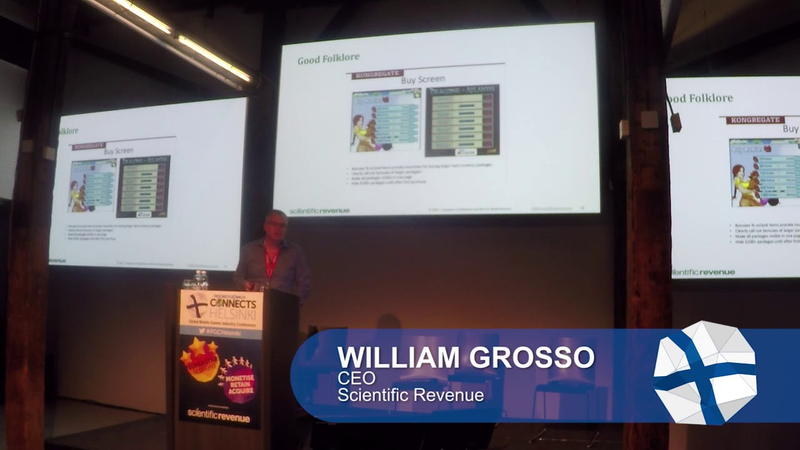
the benefit of volume discount you get people to buy a big bag of coins you have the money it's in your pocket if the user you know has a heart attack you still have the money problem is if you sell a big bag of coins you can sell the entire game and that's in fact what most people do they have that $49 price point and they sell so much for that $49 price point that they never get another conversion and per the earlier talk where Reggie said hey you got 49 bucks you can get more so it's easy to give the way the game and there's not a lot of literature on it and this is the same thing so why did I say go to the pricing literature the marking literature the b-school literature etc it's because the gaming literature is often wrong it's sometimes right so this is a great presentation from congregate circa 2012 and you know the big more important big they learned four things from running hundreds of games on the desktop you know call out the bonuses make all the packages visible in one page don't force
the user to scroll because they won't and don't put a lot of things on the page because you'll hit that paradox of choice moment where you're forcing the user to think and then hide $100 packages until after first purchase absolutely this will be mentioned again later on but if you lead with a hundred dollar package or if it's prominent on the buy wall when the user first goes there users bounce it's noticeable even if you have for price points and you add a fifth one that's $99 the four price point wall will outperform the five price point wall even though the five price point wall has the original four price points the fact of a $99 price point scares away a significant percentage of your users because they go this could be expensive so that makes sense everybody am i speaking too fast no good okay this is a great paper and in general all the presentations by congregate
so go out go to Google type in SlideShare Emily Greer kongregate monetization you'll get a list of 20 or so presentations they're all really good they overlap a lot though so don't print them all out this one's less good this is a very famous aphorism by Nick Laval the no-brainer first dollar it shows up in the design rules for free-to-play games book and it also shows up in the free-to-play toolbox and it can be good but what he's basically saying is shove tons of stuff into a starter pack and make this starter pack so compelling that people have no choice but to buy the dang thing and you'll increase your conversion and that's true but what people generally do is they put so much stuff in the starter pack that that dollar ninety-nine or that no-brainer first dollar winds up being all you ever get from that player and we see this over and over and over again and so what you'll see in a lot of games is they
introduced a starter pack they're following the no-brainer first dollar and then they go home and they remove the starter pack because it cannibalized future revenue to such an extent that it was horrible and so this this rule always introduced the no brainer first dollar and make it compelling know what you should be doing is you should be figuring out who's gonna spend and who's not gonna spend and introduced the no-brainer first dollar for the people who weren't gonna spend and if you can't make that distinction if you don't have the predictive analytics in place to predict spend don't do the no-brainer first dollar it will cannibalize revenue that work okay so how about the academic literature okay so this was and I'm just gonna walk through the papers so Pennywise and pound-foolish basically talks about how people perceive numbers and the end this short version of it is that people store numbers as a single thing not as each
digit separately and your brain really stores a proximate magnitude rather than actual value and your brain starts to do this before it finishes reading the number so if you're in a left-to-right culture English etc your brain reads the first digit reads the second digit reads the third digit reads fourth digit read and in the meantime your brain is starting to store it before it gets to digit number two it's already starting to store an approximate sense of magnitude and before it gets to digit 3 it's already stored the fact of the magnitude and that's really fascinating because what that means is that there's something called the left digit effect so 180 is roughly the same size as 170 because the left digit is the same one and the length is the same 3 so your brain's magnitude storage system basically says they're the same now when you say 200 versus 190 at a
conscious level that's ten different exactly the same as 180 versus 170 but at a brain storage level 200 is vastly bigger than 190 it's almost twice as much it's a 2 on the left instead of a 1 and that's fascinating because you can this has been empirically verified over and over and over again and so now if you want if you will go back to that volume discount scenario and you want to upsell people you should lead with a bigger number in your sizing so so the psychological aspects of price this was done in the 80s and 90s with mail-order catalogs and what they did was they altered the order of presentation you know do you start with the biggest discount which is the most expensive thing or do you start with the base the smallest price which has no discounting and the answer is depends what you want to do descending price presentations generally increase your revenue they decrease your conversion but they increase your revenue so what are you
know the way Las Vegas casinos do it where they have the ninety nine price first and then the forty nine price down to the $0.99 price is the right way to do it if you want to increase your revenue it will however impact your conversion and by the way what I'm doing here is assuming that there's exactly one price for everyone what my company does is we segment out people using machine learning and then do different things for different people exactly the leverage this effect when it makes sense and Oscar's taking lots of photos the slides are available they're already on SlideShare okay so but they are we have tons of slides we'd like to talk about this stuff you know my theory is that by going out and talking about this we wind up in a place where when you come to us as customers you're already doing a lot of things right so culturally dependent use of odd prices turns out that ending in 99 works in the u.s. in Europe you
know incorporating eighths works elsewhere etc etc ending in fives work never end in one so a dollar thirty one is just a bad price in any culture ever in the world okay so there's some theory around it $4.99 is encoded you're in your brain as five dollars and then a little bit of a bonus five dollars and one cent is encoded as five dollars and then you had to pay more and if you know anything about loss aversion the you had to pay more is really bad and then perhaps the most important thing in here or one of the more important things rather never ever ever offer a discount what happens is people read a discount and say AHA that must be the true price so if you have a bag of 100 gold coins and you're trying to sell it for $2.99 and in your starter pack you make it 99 cents you will then spend the rest of the game's lifetime fighting against that discount framing what you should do is you should
offer a bonus so keep the price the real money price the same and explicitly articulate you got more and here's your bonus doing it in a discount methodology will in fact reframe your pricing and yet it's done constantly the academic literature is super clear on this [Applause] okay so whirlwind tour if you download those papers you read them you'll basically come to those summaries but you'll have a really good index in the back to follow up on so far so good okay we're down to five minutes left I'm gonna skip I'm gonna skip over this you can download it and I'm gonna talk a little bit about how people really look at prices and then we'll open it up to questions so when the person looks at a payment wall or a coin store or an offer tab or whatever you're naming for it is they look at the mount they will be spending we look at the overall package they will be getting and they think
about whether it's a good deal and whether it'll meet their needs they don't actually compute exchange rates or unit prices they're aware of unit prices at a subconscious level but that's about it [Applause] the lowest thing you can see immediately has a gatekeeper role if both cheapest price is 499 4999 on the payment wall doesn't matter how good a deal it is you won't get any customers you know on the other hand if the cheapest price is $0.99 people will look more it's important they won't necessarily buy the 99-cent thing but they look more so if your prices are too high people just bounce off people up sell themselves by comparing pairwise after that so they see that 99 cent price point they'd go okay that's okay that's okay that's good and then they look to the thing next to it and they say is that a better deal and if it is a better deal and it's obviously a better deal like at the subconscious level because as soon as people start to think they go play Angry
Birds you know it's measurable and in fact one of the things you should measure going back to that first slide is how much time people spend when they look at a payment wall before they buy so did they spend a quarter of a second and then click a buy button or do they spend three seconds because if you get past the second or two second level you're starting to force people to think and that's like the first derivative of abandonment so so they look to nearby things and if the nearby things are obviously better deals they might upsell themselves they might not if they can't figure out whether the neighboring thing is a better deal without thinking they won't upsell themselves the pairwise comparison between adjacent things on a coin store is super important and it has to be done at a subconscious level and that's why I mentioned the left digit effect earlier so introducing friction forces conscious thinking so weird prices dollar 31 immediately goes to the the foreground and the conscious brain
and says why is it a dollar 31 that's weird making things really close and you know most importantly layouts that don't even facilitate pairwise comparison if you've got a layout that's kind of like in this Z form $0.99 dollar 99 9 9999 people's eyes don't track that you need linear formats and you need everything in the same position each time so here's here's an example payment while this is from a customer which is why there's that tasteful purple gradient covering over customer specific information they go from ten to forty five and ninety nine cents to three ninety-nine okay it's a multiplied by four on the right and a multiplied by four point five on the left it's actually not that good because multiplied by four point five is not something your subconscious brain is good at but it's not bad bad is three to four 125 to 200 and $9.99 to $14.99 I
don't know you know you can do the math and you can say well the right hand side I'm going from 99 to $14.99 so it's 50% more on the left hand side 125 to 200 it turns out that 50% more on 125 gets us to 190 approximately so this actually does give you a little bit of a volume discount but nobody's subconscious is capable of figuring that out the question is three to four a good deal is ow right and it's interestingly out because you know if you made them line for 250 for $14.99 then it's obvious right because now $9.99 is not you know I'm doubling the number of coins I'm getting but I'm not doubling the price okay it is a good deal and you can actually measure how long it takes people to figure out whether it's a good deal or not and if you make number for 250 it's you know it's it's on the order of 100
milliseconds if you make number for 200 it's on the order of seconds and that is actually a noticeable thing so I've got one minute and 51 seconds left I went through those really fast download them follow-up bill at scientific revenue comm we've got a lot of content and we'd love for everyone to be doing their pricing better I think we have a question loads of books out there that I'd recommend my influences another one I'd suggest this there's Jamie and we're gonna go saw some great work on getting gamers there's a list goes on quick question is so game company game team puts out a game what's the in your opinion the priority a be test for price English what's the first thing that every game or most games should be doing first when it comes to what they should learn and experiment with regards to pricing so the first thing you should examine there's a lot of different
things but you know the first thing that people do somewhat you know so step one make sure that pairwise comparisons make sense make sure you're leveraging the left digit effect and so on and so forth step two look at your conversion rate by Geo what you'll see almost all the time is that you know when you're when you first put your prices out there whoever's designing those prices has designed them for people like themselves right and usually that's a software developer who who likes video games and so that's a fairly affluent person who's predisposed to think the content is valuable and so those prices are often a little too high as one size that fits all pricing and the way you'll really see that is if you look across Europe right where you have the Euro if you have Euro based pricing and you look at say Finland which has the highest GDP in Europe versus say Spain which has a reasonably low GDP for Europe and you look at your conversion rates there'll be some cultural factors there different
styles of games are popular in different places but they'll also be a really strong indication of economic effects and that'll tell you whether you've overpriced and that will be one of the first things I would look at hey Bill great I'd like to know how you defend some of the academic literature that actually expects our customers to behave rationally at the margin we've taken a look at app spend in the Amazon App Store customers don't behave rationally at the margin so as most of the work you're doing based on behavioral economics I would say this so none of the papers I did actually have any notion of racks little actors they are empirical studies of behavior in the wild what happens when for example one of them did a test with the lands and catalogs and altering the order of prices one of them tested you know whether 49.99 works better or worse than forty seven dollars and the answer is it did for a particular coat the cheaper price was not better because
not ending in ninety nine is known to have a psychological impact in the United States and in the West so we're not going after classical economics first so yes it's mostly behavioural and empirical a lot of the behavioral economics is questionable as well though so you know if you look at the Revolution over the past thirty years in terms of people are not rational rational choice theory is not entirely well-founded etc unfortunately a lot of the studies of things that people you know so like the William Sonoma bread machine story where the way you increase the price of your high-end bread machine is introducing an even higher end bread machine so that doesn't look so extravagant that has failed to replicate right so there are some anecdotes saying sometimes it works sometimes it doesn't and there's a lot of things like that in the behavioral economics literature that you need to actually test so we've got one more question one checks out quickly
and then we've got some cool time high on your last slide there is there a reason that you wouldn't just do the calculation for the gamer and and so this is the discount you get at each level is there a reason you wouldn't do that are you thirty I mean you were sort of suggesting they would do the maths in their head the what wouldn't you do um because you have limited screen real estate and when you make it really crowded it can be hard also but you can do that especially if you if you work hard at your presentation and then there's a really interesting thing which is once again you need to think about the left digit effect so what people do when they do that is about 3/4 of the time they'll say this is 27% more and you know so 20% more 25% more 30% more right and 20 to 25% ah don't do that what you really want to do is you want to say you want to put the number of coins not the percentage because percentages are inherently closer together and then you want to make sure that the number of coins more leverages the left digit
effect fully so if you can go from 100 coins more to 500 coins more to a thousand coins more that is way more powerful than 18% more 21 percent more 24 percent more so it's matter a lot in that context but it can be effective and I think that's a great place to end I think it makes what we're saying is that human beings are emotional we need to respond to that there's obviously much more complicated discussion we could have that I'm hoping to do some of that in the book I'm writing in psychology of games down with my friend Bernie good is also a psychologist hopefully we'll see where that come up soon ok bill thank you very much thank you very much [Music] [Music]
Summary
Effective mobile game pricing requires moving beyond standard industry practices by integrating behavioral economics and rigorous data measurement. Many developers rely on suboptimal, one-size-fits-all pricing models that fail to account for how consumers perceive value. By redesigning payment walls and offer structures, developers can achieve significant revenue growth—often exceeding 20%—even if conversion rates fluctuate. Success in this area depends on treating pricing as an empirical science rather than an intuitive exercise, necessitating the tracking of metrics like repeat conversion rates and the time users spend evaluating purchase options.
Key psychological principles, such as the left-digit effect, demonstrate that consumers store numerical values as approximate magnitudes rather than precise digits. Consequently, pricing strategies should leverage these cognitive shortcuts. For example, ending prices in 99 cents is standard in Western markets, while avoiding "weird" price points like $1.31 prevents unnecessary cognitive friction that triggers abandonment. Furthermore, developers should avoid discount-based framing, which can anchor the product's value at a lower price point. Instead, offering explicit bonuses for larger purchases maintains the perceived value of the base product while satisfying the economic principle of decreasing marginal utility.
Strategic layout and presentation are equally critical. Payment walls should be linear to facilitate easy pairwise comparisons, as forcing users to perform complex mental math often leads to disengagement. High-value packages should be introduced carefully to avoid scaring off new users, and "no-brainer" starter packs must be used with caution to avoid cannibalizing long-term revenue. Ultimately, developers should prioritize A/B testing, starting with geographic segmentation to account for varying economic conditions and cultural preferences, ensuring that pricing strategies are tailored to the specific behaviors of their player base rather than the assumptions of the development team.




















Comments