Global reports and market data
Documents
Body Horror as Body Shaming: Fatness and Monstrosity in Video Games
This extended abstract, presented at DiGRA 2018 by York University PhD candidate Sarah Stang, examines how video games depict fat bodies as horrific, repulsive, and monstrous.
- The report argues that video games frequently code fat bodies as horrific, repulsive, or monstrous, linking fatness to evil, madness, disability, disease, and body horror, which it contends reinforces the othering of already marginalized groups.
- Fatness is framed as a horror trope in games, and the author positions this framing as severely understudied compared with the widely critiqued sexualization and exoticization of marginalized bodies.
- The study is a qualitative, interpretive analysis that recorded playthroughs of 11 commercially successful and critically acclaimed games, including Dragon Age, God of War II, The Witcher 3, The Last of Us, Silent Hill, and Prey, and categorized characters thematically, narratively, and visually.
Identities, Genre and Design in Game-Making
This extended abstract explores how game-making activities facilitate identity expression among young people and the influence of game design conventions on this process.
- Young people use game-making to experiment with cultural preferences, claim social positions, and reject others, but this expression is negotiated rather than unconstrained, shaped by individual preferences, genre conventions, and technical limits.
- Popular culture strongly shaped the games: themes and custom characters functioned as deliberate cultural statements that participants used to signal how they wished to be read by others.
- Study of two London after-school clubs (a community centre serving Latin American migrants and a primary school), with about ten hours of weekly instruction, involved participants aged 11 to 18 who produced eleven games in MissionMaker, a platform for building 3D games from ready-made assets and simplified scripting.
Make Tents, Not War: Queer Play as Play-That-Critiques
This paper explores the concept of "queer play" as a form of critical engagement with video games, arguing that players can critique games through their actions regardless of designer intent.
- Players can critique a game through play itself, regardless of whether the designer intended critique, shifting focus from designing critical games to the critical capacities of play.
- The paper defines critique broadly, following Dunne and Raby as a gentle refusal or wishful turning away from what exists, so critical play need not be negative in tone.
- Queer play is framed as a practice that rejects the assumptions a game encodes and may pursue forms of interaction not oriented toward fun.
Restricted Affordances: Avatar Models and Capacities for Identity
The document examines how character customization interfaces (CCIs) in digital games restrict player identity, play, and performance, arguing that design choices limit the possibilities for self-representation and enforce normative ways of being online.
- The paper argues that avatar creation tools in games are designed affordances rather than neutral self-expression, channeling players toward normative gender and ethnicity categories and limiting the "sign-equipment" available for faithful self-representation.
- A longitudinal behavioural study of World of Warcraft players found that changing avatar gender, while keeping the player's own gender, significantly influenced in-game behaviour: male-presenting avatars were more likely to engage in player-versus-player combat, and female-presenting avatars were more likely to take healing roles.
- The study that found avatar gender to be mechanically cosmetic is contested by the paper, which holds that social conventions tied to visible identity still shape how players perform.
Avatar-Kinaesthetics as Characterisation Statements in Horizon: Zero Dawn
This study investigates how "avatar-kinaesthetics" function as characterization statements in digital games, using Horizon: Zero Dawn (HZD) as a specific case study.
- The paper proposes that avatar-kinaesthetics in Horizon: Zero Dawn (Guerrilla Games, 2017) act as characterisation statements, meaning controller haptics and avatar movement communicate character traits rather than serving only immersion.
- Specific traits conveyed through player-performed kinaesthetic feedback include Aloy's weight, the difference between her childhood and adult physicality, and her hunting skill, exemplified by fully drawing a bow.
- The authors argue that this kinaesthetic engagement strengthens the prosthetic relationship between player and avatar, drawing on Klevjer's 2007 account.
Meaning Through Performance: Transgressing Boundaries in Shadow of the Colossus
This paper analyzes "Shadow of the Colossus" (SOTC) as a meditation on Essential Boundaries Transgression (EBT), a Japanese cultural theme concerning journeys to the land of the dead.
- The paper argues that videogames can generate meaning through design, mechanics, and interactivity in ways other media cannot, particularly around life, death, trauma, and guilt.
- It frames Shadow of the Colossus (2005) through the Japanese theme of Essential Boundaries Transgression, in which characters journey into the land of the dead, physically or metaphorically.
- The alternation between long, empty "lonely rides" and violent colossus encounters creates ambiguity and reflective space, prompting players to see themselves as aggressors and trespassers while the quest's morality stays unresolved.
Conversation, Discourse and Play: Interaction and Moderation in Twitch.tv Live Streaming
This paper examines the dynamics of interaction and moderation within Twitch.tv live streaming, focusing on the communication between streamers and viewers.
- Twitch.tv is the dominant live-streaming platform for video game content, reportedly drawing over 100 million regular viewers and generating roughly $1 billion in market value.
- Twitch Chat is central to both the economics and social status of streaming, with income coming from donations, subscriptions, sponsorships, and "bits" that depend on real-time streamer-viewer interaction.
- Streamers perform substantial emotional and affective labour, including friendliness, donation solicitation, parasocial intimacy, and humour, which is heavily prepared despite appearing spontaneous.
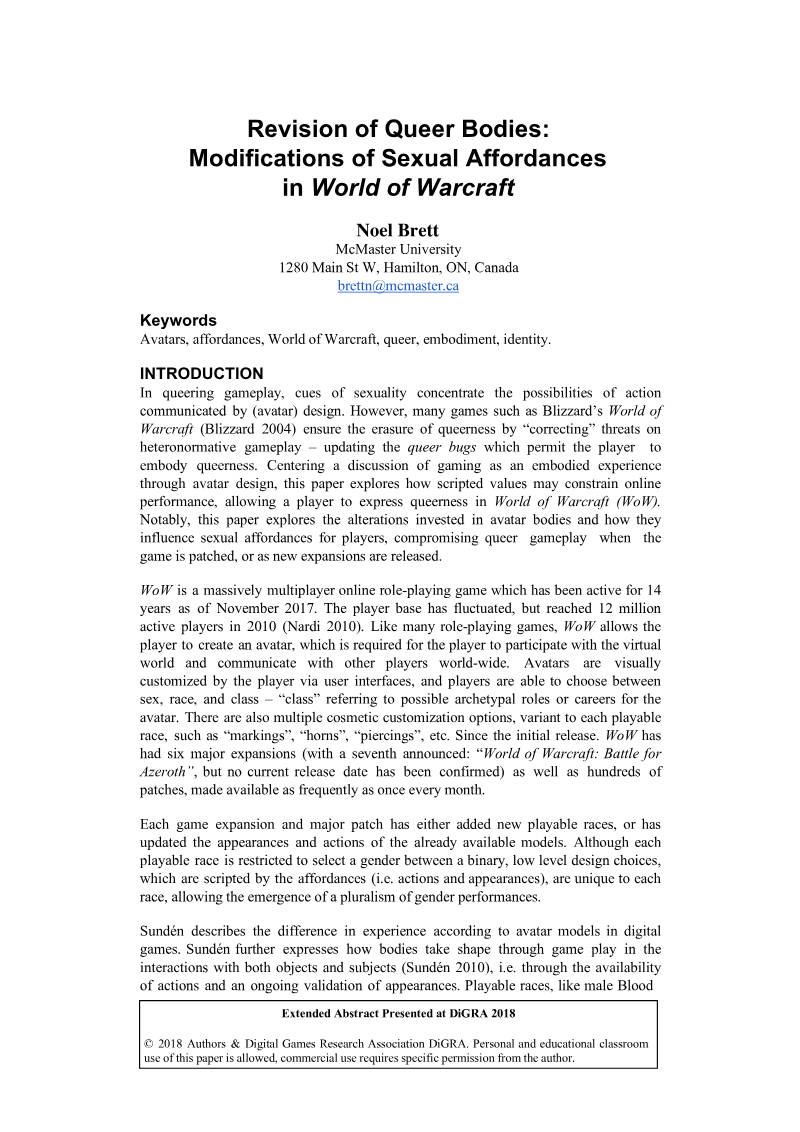
Revision of Queer Bodies: Modifications of Sexual Affordances in World of Warcraft
This paper examines how avatar design in World of Warcraft (WoW) influences sexual affordances for players, specifically focusing on how game patches and expansions compromise queer gameplay by reinforcing heteronormative body standards.
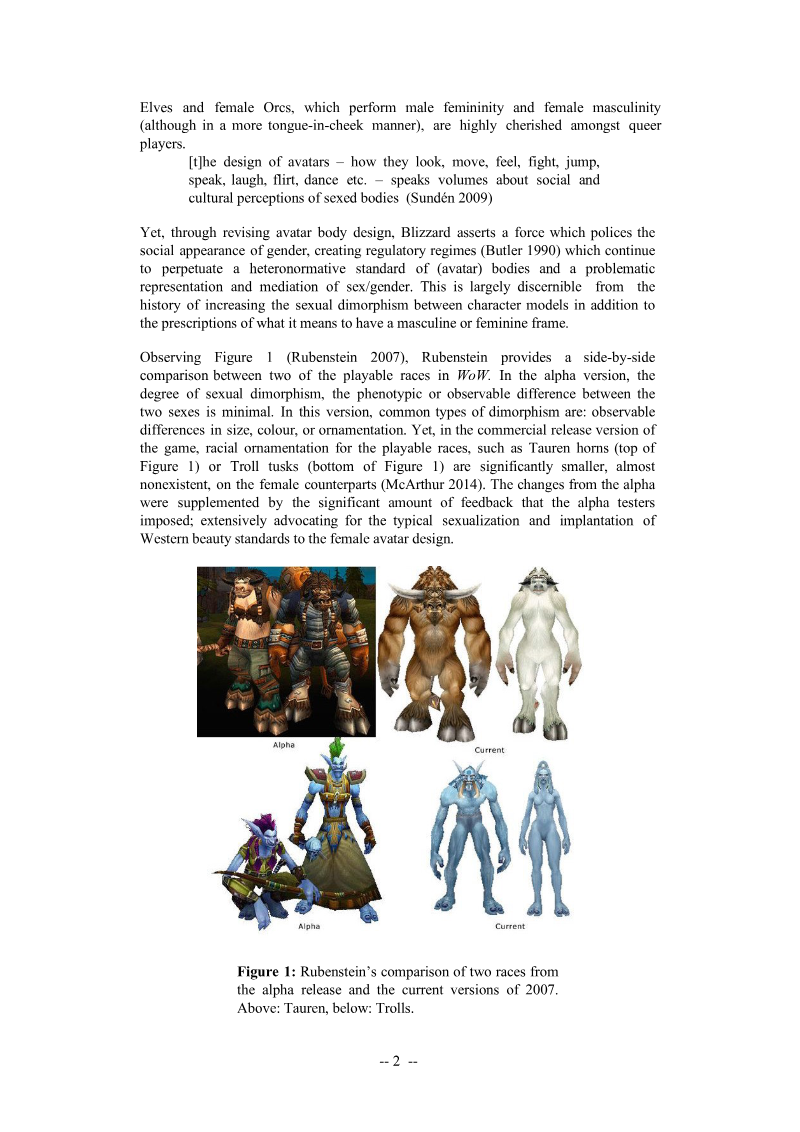
- The paper argues that Blizzard's scripted avatar design in World of Warcraft, including patch and expansion changes, tends to reinforce heteronormative standards for male and female models, even though low-level customization allows some plurality of gender performance.
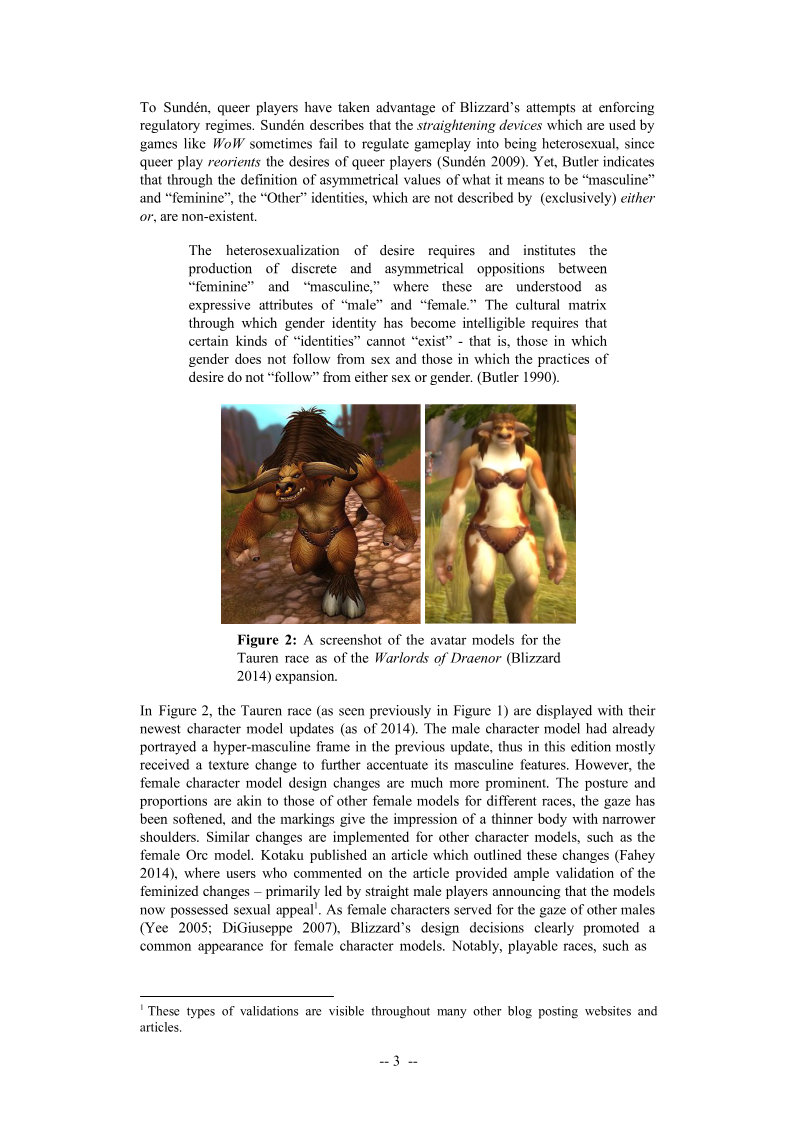
- The central evidence compares early alpha-stage character models with the commercial release and examines the Tauren and Orc models updated in the Warlords of Draenor expansion, finding that racial ornamentation such as horns and tusks was substantially reduced on female counterparts.
- Later model updates reportedly softened gaze, narrowed shoulders, and increased dimorphism between male and female avatars, and alpha tester feedback favored Western beauty standards for female avatars.
Paper Puzzle Games: The Original "Casual Games"
This extended abstract argues that paper puzzle games, such as crosswords and sudoku, are the original "casual games" and have been overlooked in game studies scholarship, which predominantly defines casual games as a contemporary, digital phenomenon.
- The paper argues that paper puzzle games (crosswords, sudoku, kakuro, KenKen, word searches) are the original casual games and have been overlooked by game studies scholarship.
- It contends that existing casual-games research conflates casual video games with casual games in general, leaving a significant gap in the literature.
- The analysis tests six commonly cited traits of casual games (broad appeal, quick access, ease of learning, little expertise required, fast rewards, temporal flexibility) against paper puzzles and their players.
Quilting the Meaning: Gameplay as Catalyst of Signification and Why to Co-op in Game Studies
The document presents a unified theory of meaning-making in digital games, positing that signification primarily emerges from cognitive and interpretive processes embedded within gameplay.
- The paper argues that meaning in digital games arises chiefly through the interpretive work of gameplay, which acts as a hub linking semantics, narrative, aesthetics, interaction, and mechanics.
- Its central thesis is that a gameplay-centered perspective can help consolidate a fragmented game studies field in which many partial and sometimes conflicting theories struggle to engage one another.
- A thought experiment built on Street Fighter II illustrates that changing how players act can alter a game's meaning even when its visuals and rules stay identical.
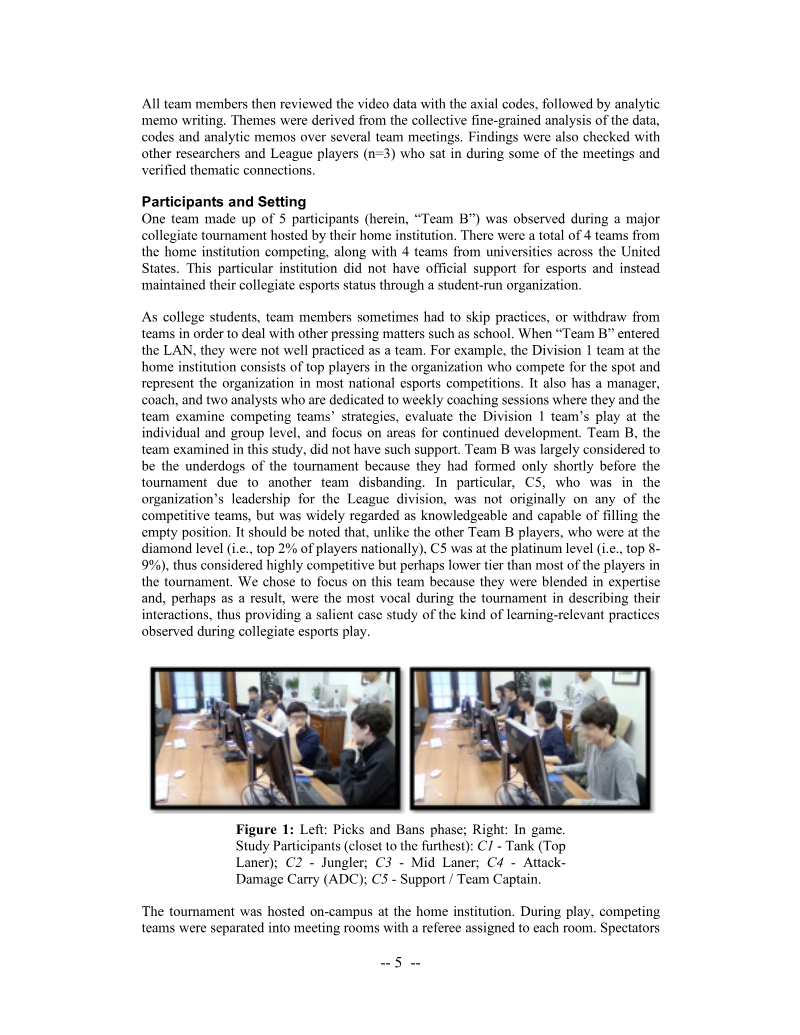
Collegiate eSports as Learning Ecologies: Investigating Collaborative Learning and Cognition During Competitions
The document explores collegiate esports, specifically a League of Legends team ("Team B") during a high-stakes tournament, as a dynamic learning ecology.
- The study is a qualitative, exploratory case study of a single newly formed, mixed-expertise university League of Legends team across one home-institution tournament and a small set of matches, so its findings are illustrative and not generalizable to other teams, games, or institutions.
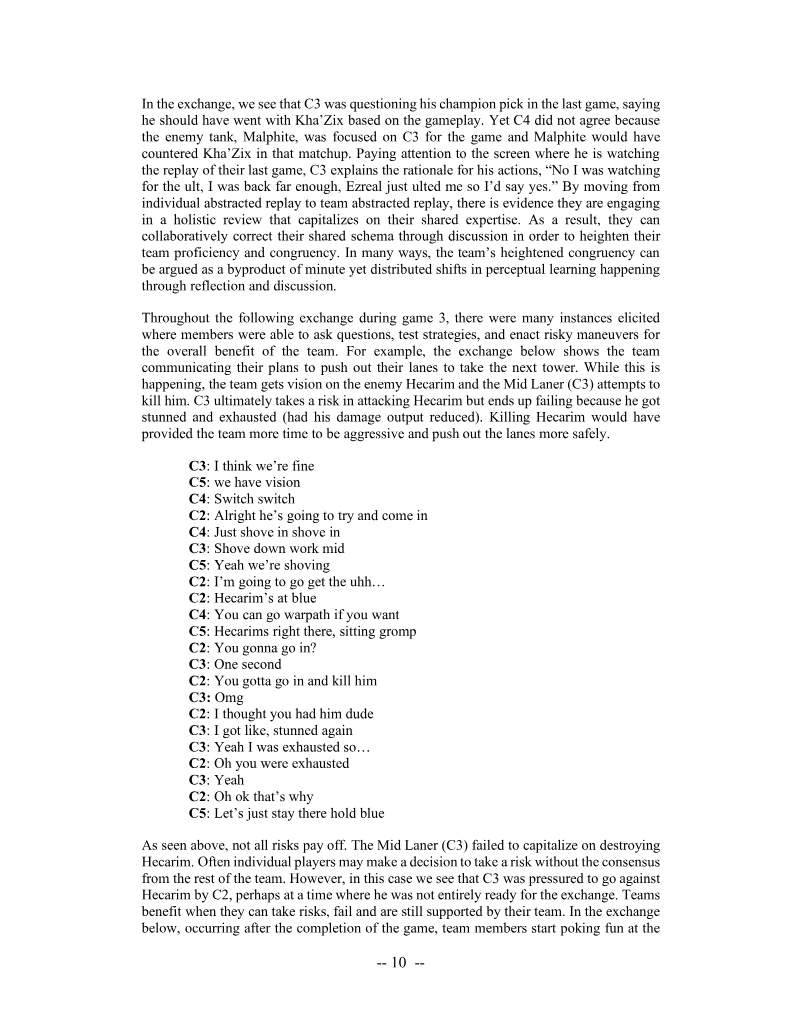
- The team's collaborative learning strengthened over successive games, with members shifting by the third game from individual replay reflection to team-level abstracted replay, which the authors link to higher proficiency, greater play congruency, and more willingness to take strategic risks.
- Not all strategic risks succeeded, but the authors present the recurring pattern of reflection and adjustment after both successes and failures as evidence of reflective learning in action.
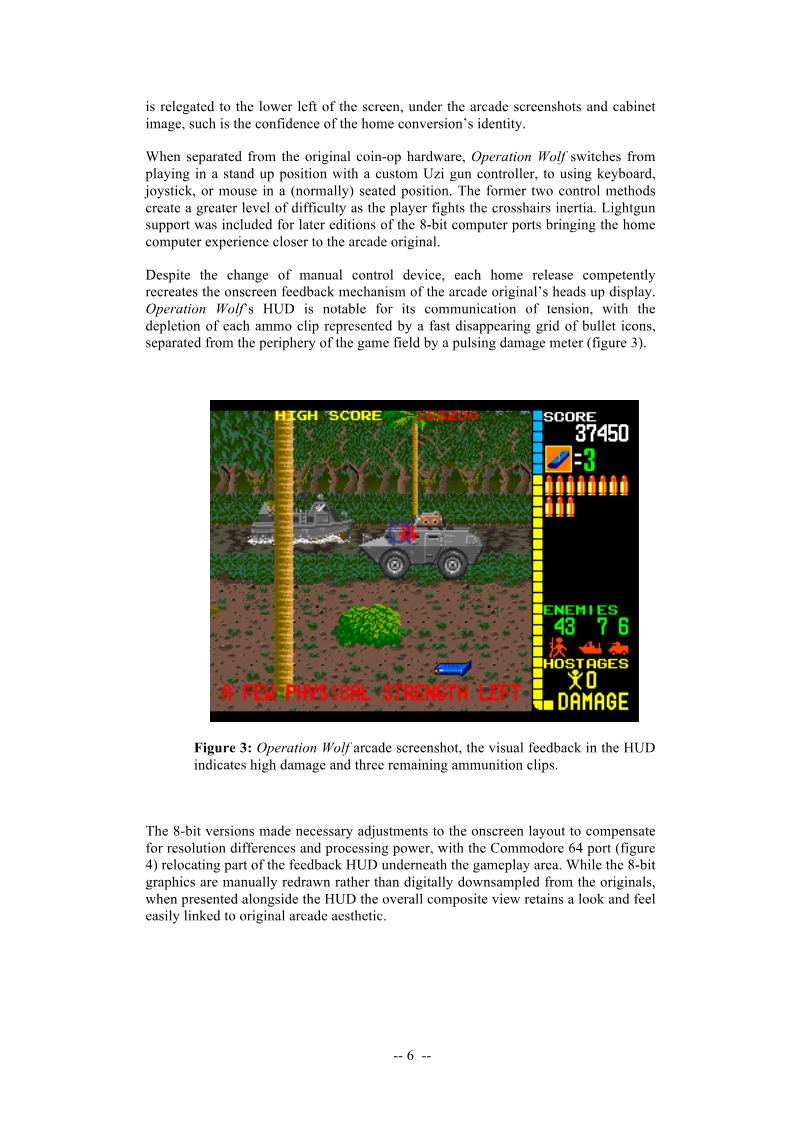
The Human Machine Art Interface: Arcade Port Aesthetics and Production Practices
This analysis investigates the aesthetic characteristics and production methodologies employed in arcade-to-home computer game ports during the 1980s and 1990s.
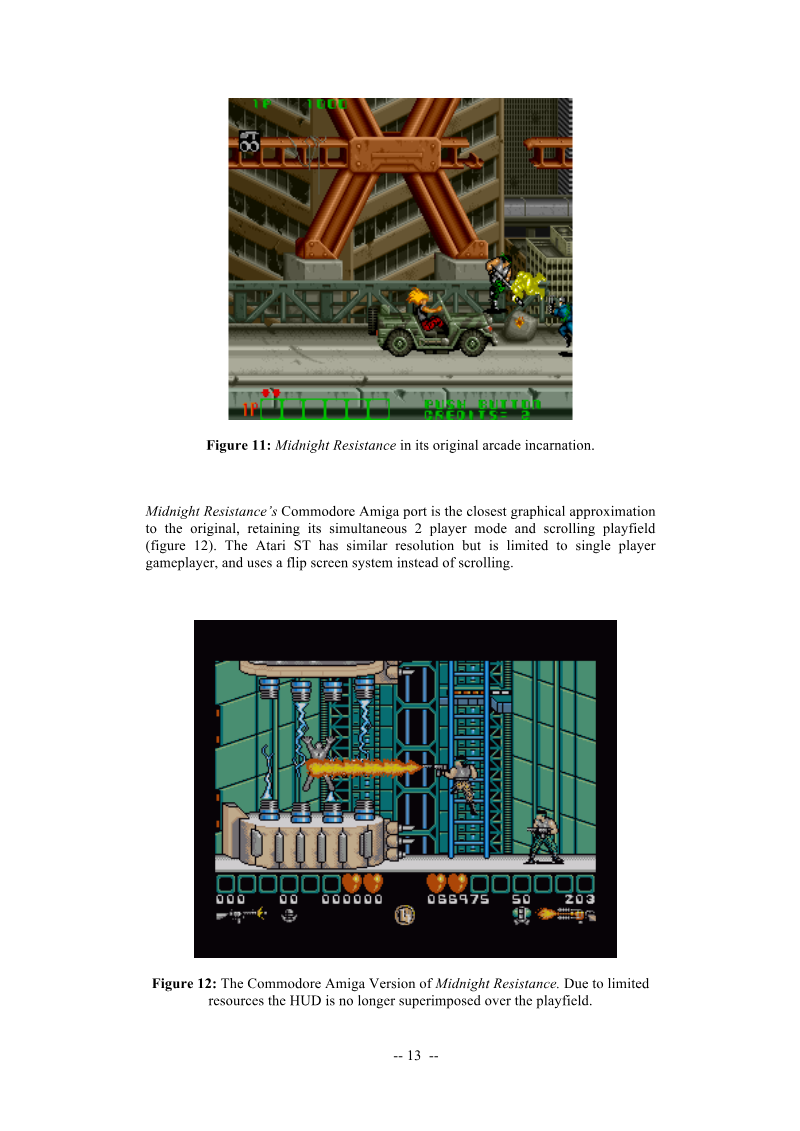
- British conversion teams typically reconstructed arcade graphics, music, and gameplay by capturing video from the cabinets and manually redrawing assets, rather than working from source files, which produced substantial aesthetic departures from the originals.
- The authors argue that these departures were shaped by individual teams' stylistic choices, not by platform constraints alone, reframing the ports as creative adaptations rather than duplications.
- Conversion teams including Arc, Graftgold, Special-FX, Ocean, and Tiertex relied on stippling to simulate extra colours within restricted palettes, custom converter tools to move assets between systems, and one-button joystick control schemes.
Writers
Games and companies
Games