1 free read left. Create a free account for unlimited reading + AI research.
Create free accountWhitepaper DiGRA
1 free read left. Create a free account for unlimited reading + AI research.
Create free accountWhitepaperDiGRA
The paper shifts attention from designing critical games to the critical capacities of play itself. Critique here need not be negative in tone.
This paper examines whether players can engage critically with a game regardless of the designer's intent, shifting attention from the design of critical games to the critical capacities of play itself. It defines critique broadly, drawing on Dunne and Raby's notion of critique as a gentle refusal or wishful turning away from what exists, so that critical play need not be negative in tone. To explore this, the paper adopts a queer lens, framing "queer play" through queer theory and queer game studies as a practice that rejects the assumptions a game encodes and may pursue modes of interaction not oriented toward fun.
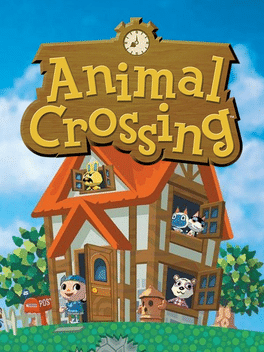
The argument is developed through a mixed-methods approach combining two cases. The first is a speculative "play fiction" set in Nintendo's Animal Crossing: New Leaf, imagining a player who never pays off their first housing loan and instead lives in a tent, thereby stepping outside the game's capitalist logic. The second is a documented case of a pacifist World of Warcraft player, a queer play practice that actually occurred. Both cases are read as rendering the player invisible to the game's operational logics, which in turn exposes the political assumptions embedded in the games' designs.
The paper concludes that queer play practices make visible the effort and sanctions involved in resisting a game's coded normativity, and that these costs can be substantial, sometimes even "no fun" in the sense explored in queer game scholarship. On this basis, the author argues that players are capable of critiquing games through play itself, particularly through queer play. The work is presented as an extended abstract for DiGRA 2018 and situates itself within critical play, play studies, and queer game studies.
DiGRA · 2022
Extra Credits · 2024