1 free read left. Create a free account for unlimited reading + AI research.
Create free accountWhitepaper DiGRA
1 free read left. Create a free account for unlimited reading + AI research.
Create free accountWhitepaperDiGRA
Distilling the key insights…
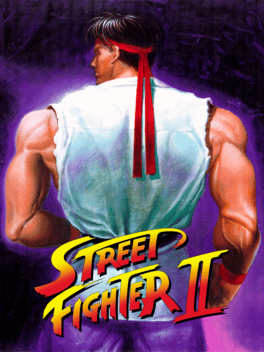
"Quilting the Meaning" argues that meaning in digital games arises chiefly through the cognitive and interpretive work of gameplay, which functions as a hub connecting semantics, narrative, aesthetics, interaction, and mechanics. Its central thesis is that this gameplay-centered perspective can help consolidate a fragmented field of game studies, where many partial and sometimes conflicting theories struggle to speak to one another. To support this, the author builds an argument around the idea that changing how players act can transform the meaning of a game even when visuals and rules remain identical, illustrated through a thought experiment involving Street Fighter II.
The analysis develops through two qualitative case studies, Brothers: A Tale of Two Sons and Papers, Please. In the first, wordless storytelling and asymmetric controls, with a weak and joyful younger brother contrasted against a strong and serious older one, are shown to define the characters' identities and the game's account of brotherhood. In the second, repetitive inspection tasks are argued to convey the dysphoric experience of migration control. Across both cases, the author contends that gameplay mechanics carry thematic content that narrative-focused analyses tend to overlook, and proposes a three-step framework for examining how layers of meaning interact.
The work is explicit about its limitations. The framework entails theoretical tensions, such as combining semiotics with Grodal's critique and proceduralism with Sicart's critique, and it rests largely on theoretical argument and single examples rather than empirical evidence. The author also acknowledges the risk that findings may appear obvious given the shared thematic core of the chosen games. Nonetheless, the study maintains that these weaknesses are not disqualifying, pointing to existing scholarship on phenomena such as ludonarrative dissonance that lacks a unifying framework. The paper ultimately positions its approach as a foundation for interdisciplinary collaboration and a potential source of design insight for game creators.
DiGRA · 2019
DiGRA · 2016