Game Development reports and market data
Documents
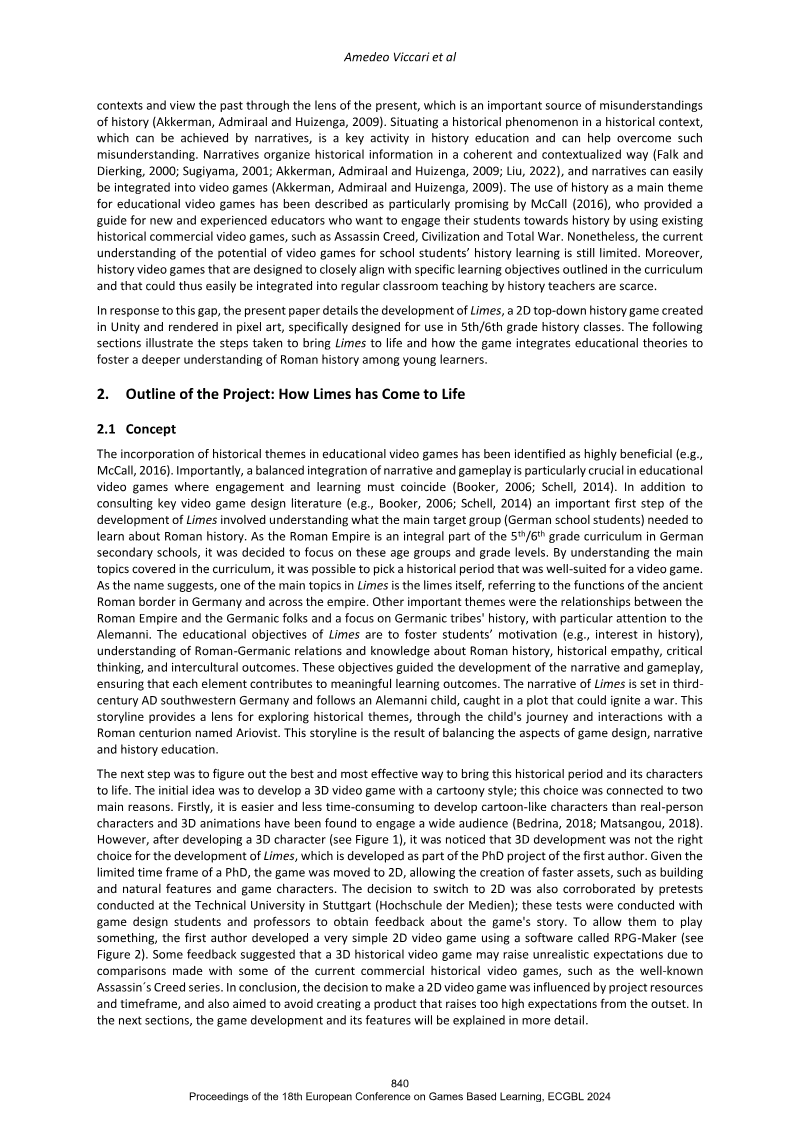
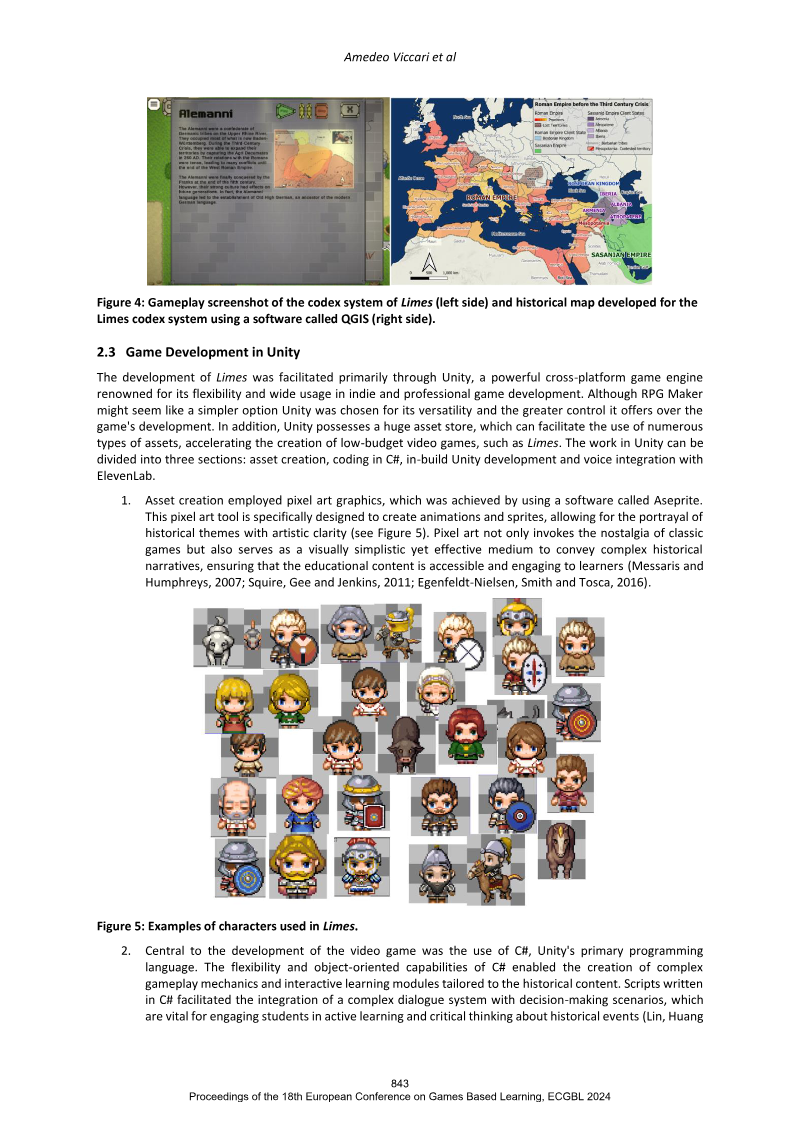
Limes (the Roman Frontier): Developing a Video Game for History Learning
The paper presents the design and development of Limes, a 2D top-down educational video game built in Unity with pixel art graphics, intended for use in 5th and 6th grade German secondary school history classes.
- Limes is a 2D top-down educational game built in Unity with pixel art, designed for 5th and 6th grade German secondary school history classes and aligned with curricular objectives so it can be integrated into classroom teaching.
- The game is set in third-century AD southwestern Germany and follows an Alemanni child who befriends a Roman centurion, Ariovist, amid rising tensions between the two groups, targeting goals such as motivation, Roman-Germanic relations, historical empathy, critical thinking, and intercultural outcomes.
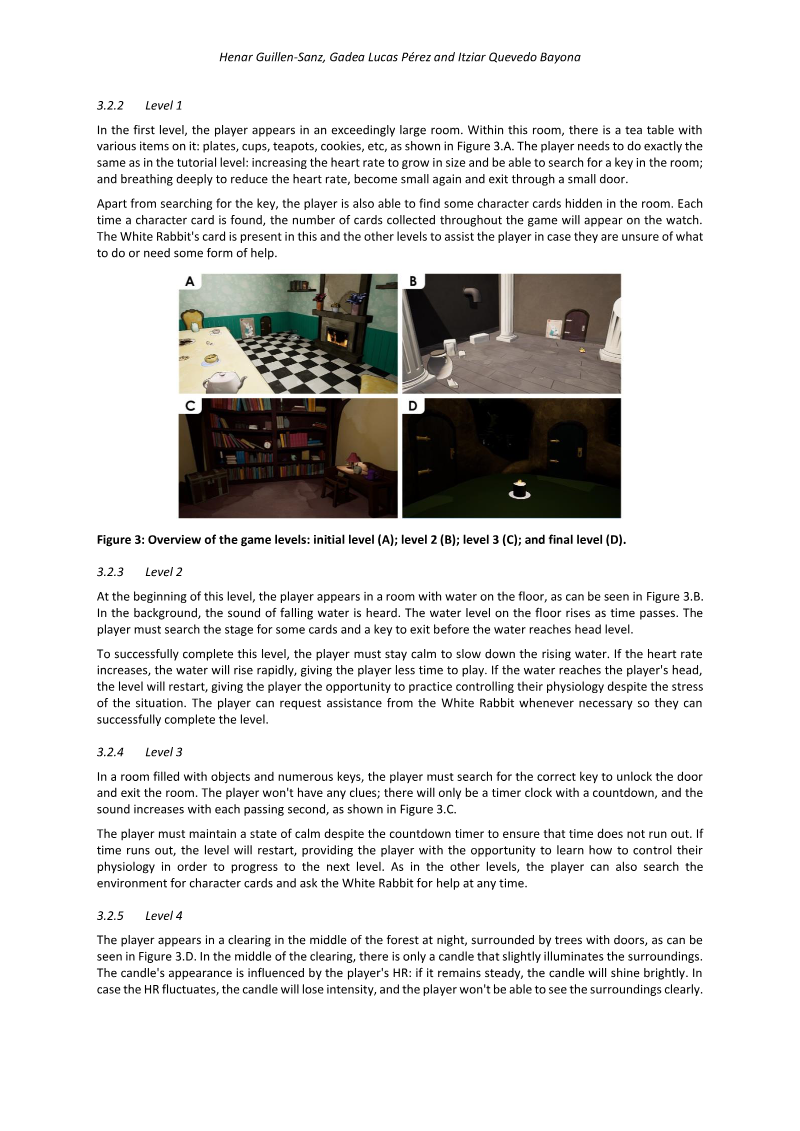
- Gameplay spans five levels, each with a mandatory main mission and an optional secondary mission featuring stealth, combat, puzzles, and horse racing, plus a performance-based star rating.
Design and Development of an Immersive Virtual Reality Serious Game With Biofeedback for Physiological Regulation: Alice, Beyond Reality
This document details the design and development of "Alice, Beyond Reality," an immersive Virtual Reality (iVR) serious game incorporating biofeedback for physiological self-regulation in young adults.
- "Alice, Beyond Reality" is an immersive VR serious game that uses real-time biofeedback to help young adults aged 15 to 20 learn to recognize and voluntarily regulate their heart rate.
- The game is built for the Meta Quest 3 with hand-tracking, using Unreal Engine, and receives heart-rate data from an Empatica E4 wristband sampling blood volume pressure at 64 Hz through a custom C# intermediary.
- A dynamic baseline calibrated during the tutorial determines whether percentage-based physiological goals are met, so game mechanics respond to each player's own heart rate.
Integrating Agile Methodologies and Gamification for Student Engagement and Success
This paper by Cella-Flavia Buciuman, Sabina Potra and Luisa Dungan of Politehnica University of Timisoara, Romania, describes applying Scrum, an agile methodology, through game-like activities in a Computer-Assisted Manufacturing course for 4th-year Economic Engineering students in the Faculty of Management in Production and…
- Average task completion rate rose from 50% in Sprint 1 to 95% in Sprint 7 of the solar power bank project.
- Average quiz scores on agile and renewable energy concepts increased steadily from 50% in Sprint 1 to 95% in Sprint 7.
- Six of eight student teams failed in the first Sprint, which the authors attribute to a lack of understanding that agile is based on an incremental approach.
Educational Gaming and Situational Interest for Higher Education Students
This document outlines the design for a study investigating the impact of educational gaming on situational interest among higher education students.
- The InPraktijk study tests whether a gamified educational mobile game, which simulates a physical therapy practice with intern-role patient conversations and categorization exercises, generates greater situational interest than traditional static case formats among higher education students.
- The planned study involves roughly 200 first-year physical therapy students over about eight weeks in the 2024–2025 academic year, randomly assigned to either a game-based test group or a static online control group.
- Situational interest will be measured at five points using the Situational Interest Scale, supplemented by app telemetry (time played, login attempts, drop-out locations) and semi-structured interviews, with analysis via t-tests and Pearson correlations.
Serious Games for Vocational Training
The research project 'SG4BB' (Serious Games for Vocational Education and Training) developed an integrated platform for the description, search, retrieval, integration, and utilization of educational games, focusing on vocational training in Germany with international correspondence.
- The SG4BB project built an integrated platform for discovering, integrating, and evaluating educational games for vocational education and training, centred on a metadata-driven search system and middleware linking games to learning management systems.
- The platform extends the Serious Games Metadata Format (DIN SPEC 91380), which powers the Serious Games Information Center portal, and uses the xAPI standard to connect games with learning management and learning record stores.
- The platform targets qualification levels 4 to 7 of the European Qualifications Framework, with a German focus and reference to international occupational classifications.
Game Lab Innovations in Education: Insights from a Board Game Design Project
This study investigates the efficacy of game development as a pedagogical tool, specifically through the implementation of the "Game Lab" concept in an educational context.
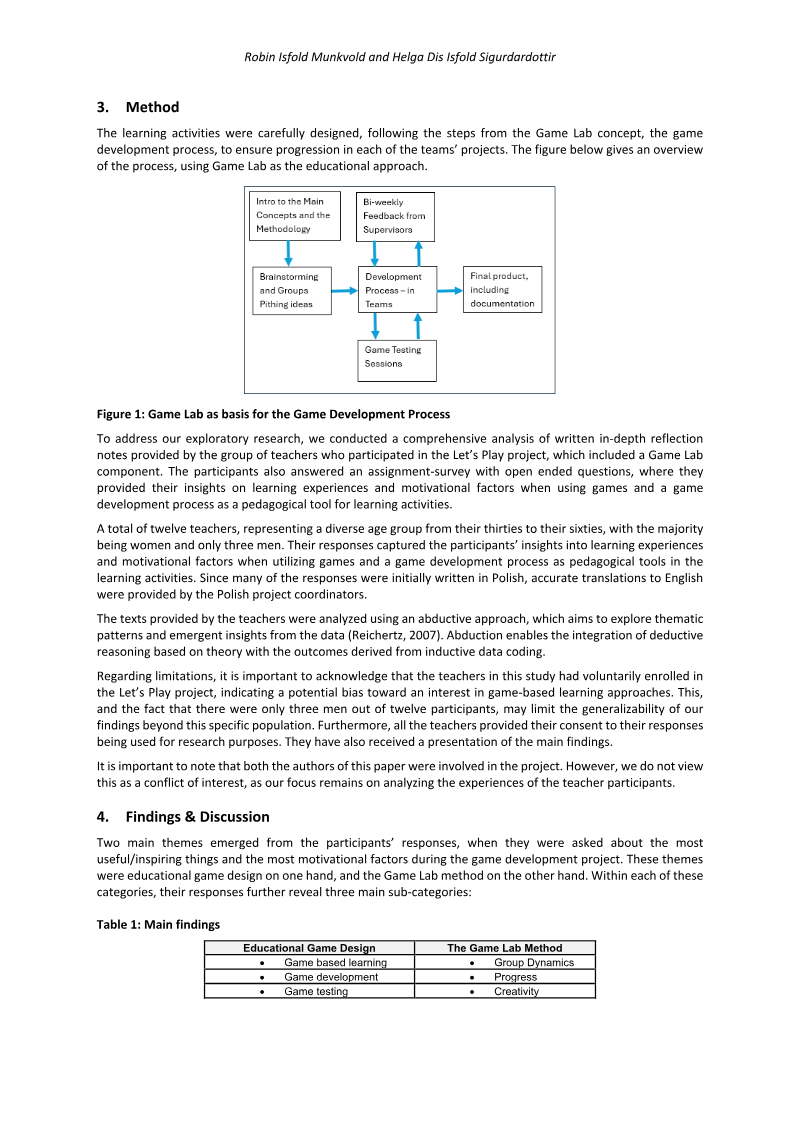
- A year-long international project called Let's Play paired a Norwegian university game development program with twelve practicing teachers from Poland, who completed a two-day seminar and then built analog board games in teams with bi-weekly feedback.
- The Game Lab model organizes development around student teams operating as small game companies, with supervisors acting as clients, and the study examined it as a way to support teacher professional development.
- Analysis of written reflections and open-ended surveys from the twelve teachers (ages roughly thirties to sixties, preschool through upper secondary) yielded two themes: educational game design (game-based learning, game development, game testing) and the Game Lab method (group dynamics, progress, creativity).
Unified Effort: Developing a Mixed Reality Serious Game for Collaborative Crisis Management Training
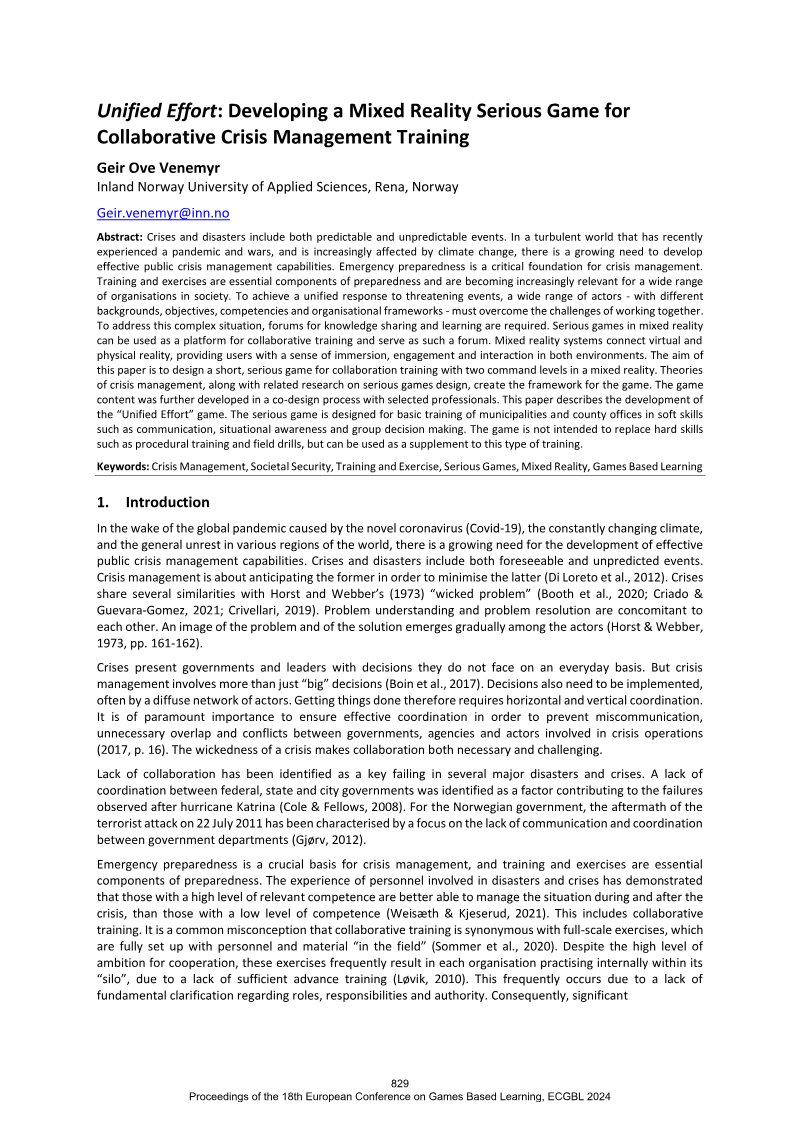
Geir Ove Venemyr of Inland Norway University of Applied Sciences presents the design of "Unified Effort," a short mixed reality serious game for collaborative crisis management training with two command levels, aimed at municipalities and county offices in Norway.
- The author states that the game is designed for basic training of municipalities and county offices in soft skills and is not intended to replace hard skills training such as procedural training and field exercises.
- Citing Løvik (2010), the author notes that full-scale exercises often lead each organisation to practise internally within its silo, due to a lack of sufficient advance training.
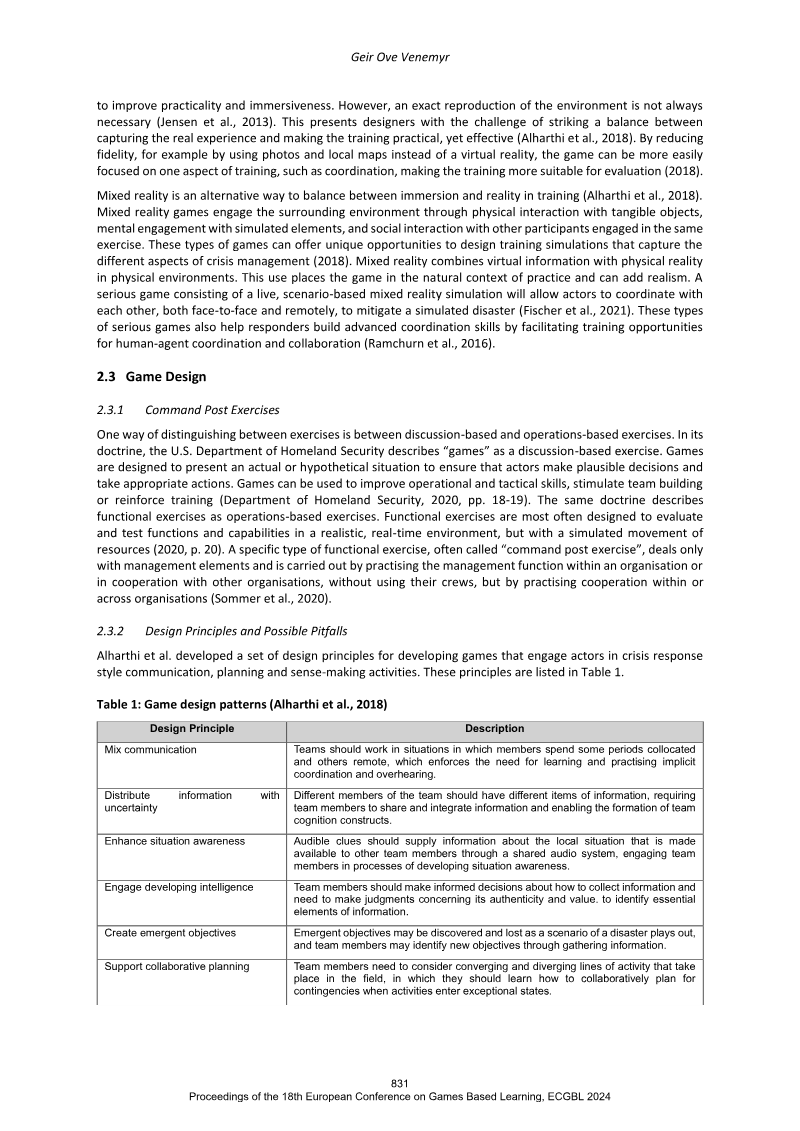
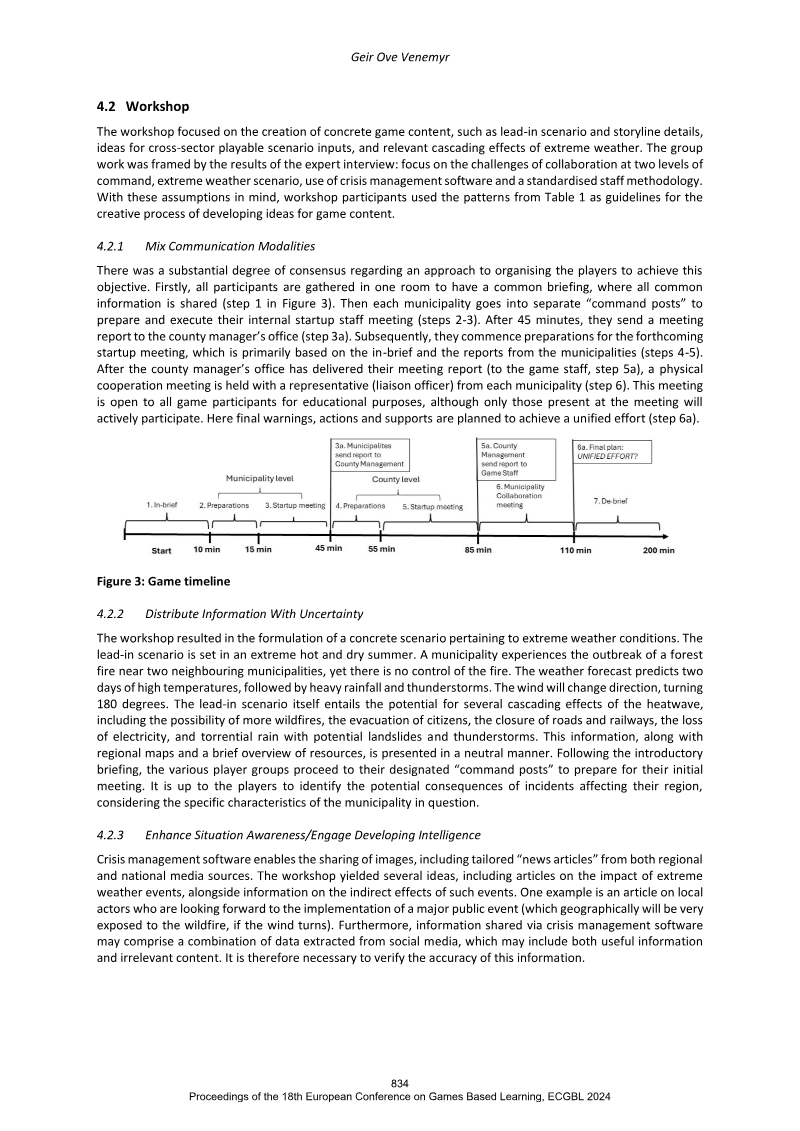
- The experts interviewed concluded that an extreme weather scenario was most suitable for the game because it encompasses a multitude of potential cascading effects.
Cultural Game Jam Model: A Quadruple Helix Intervention
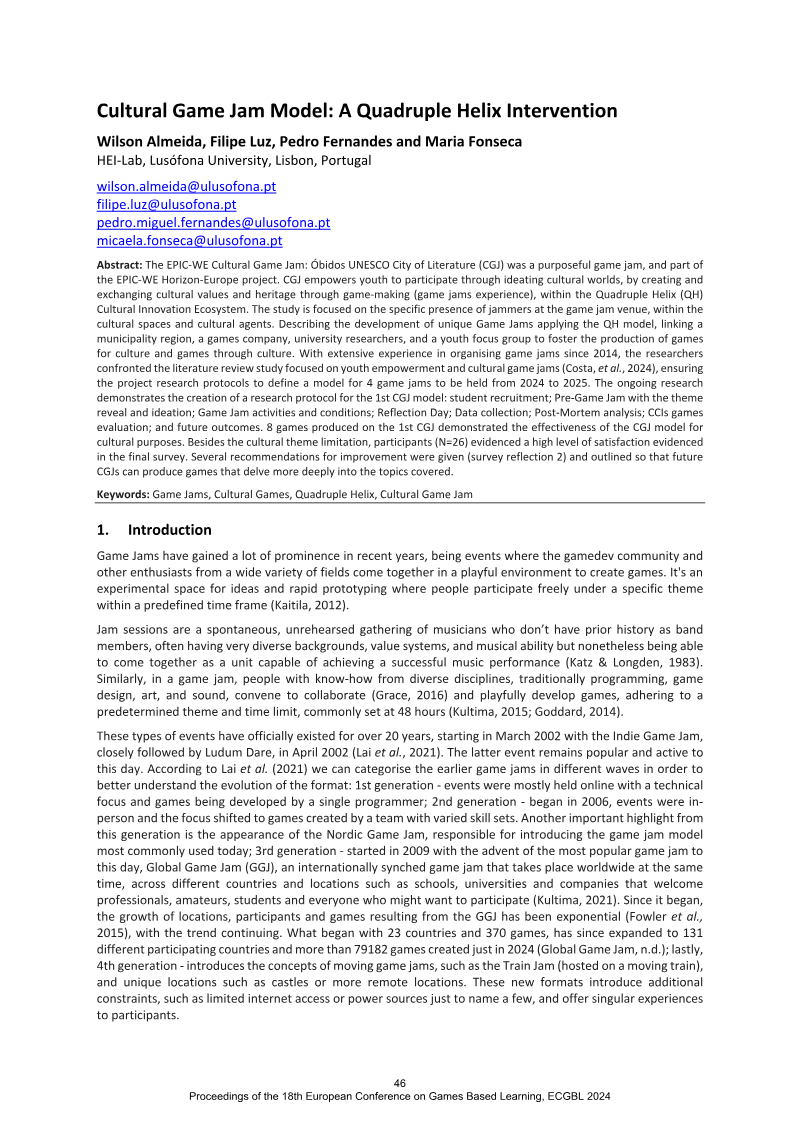
The paper reports on the EPIC-WE Cultural Game Jam: Óbidos UNESCO City of Literature, the first of four cultural game jams planned in the Horizon Europe EPIC-WE project for 2024 to 2025.
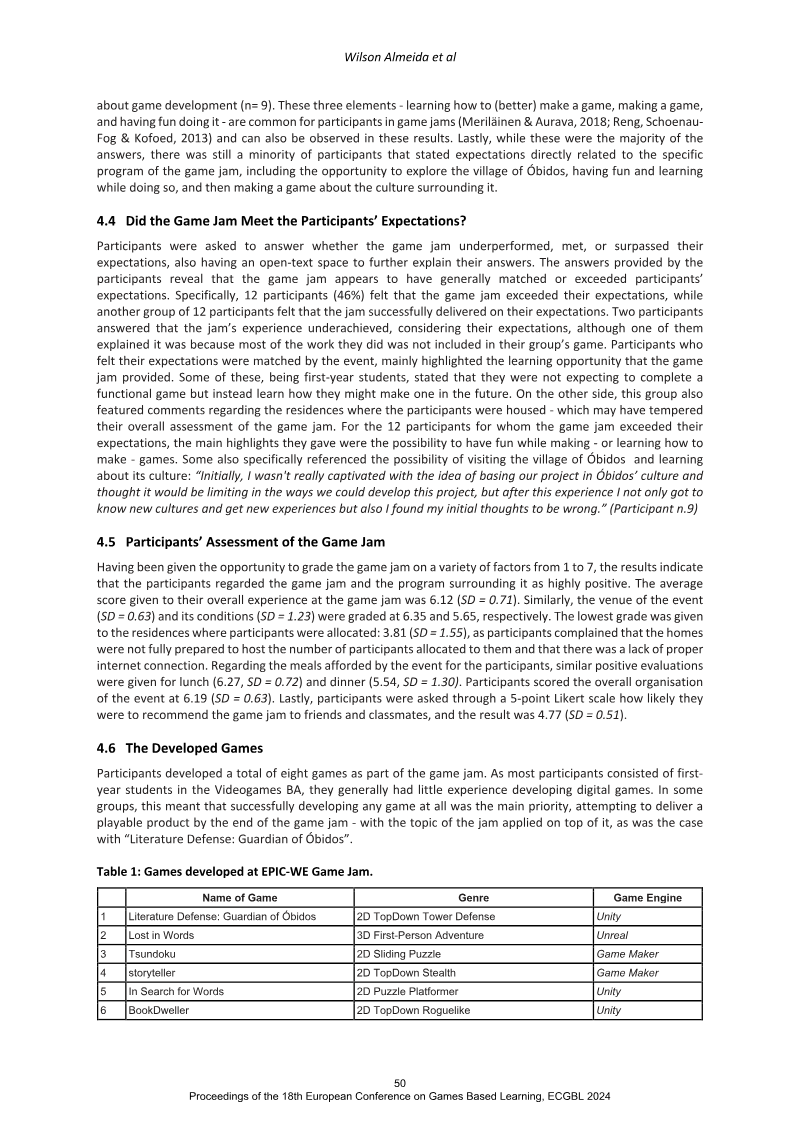
- Participants rated the overall experience at 6.12 on a 1-to-7 scale, with a standard deviation of 0.71.
- Accommodation was the lowest-rated aspect of the jam, with participants complaining that the homes were not fully prepared and lacked proper internet.
- Twelve participants (46%) said the jam exceeded their expectations, while another twelve said it met them.
Digitising a Card Game for Teaching Pragmatic Markers
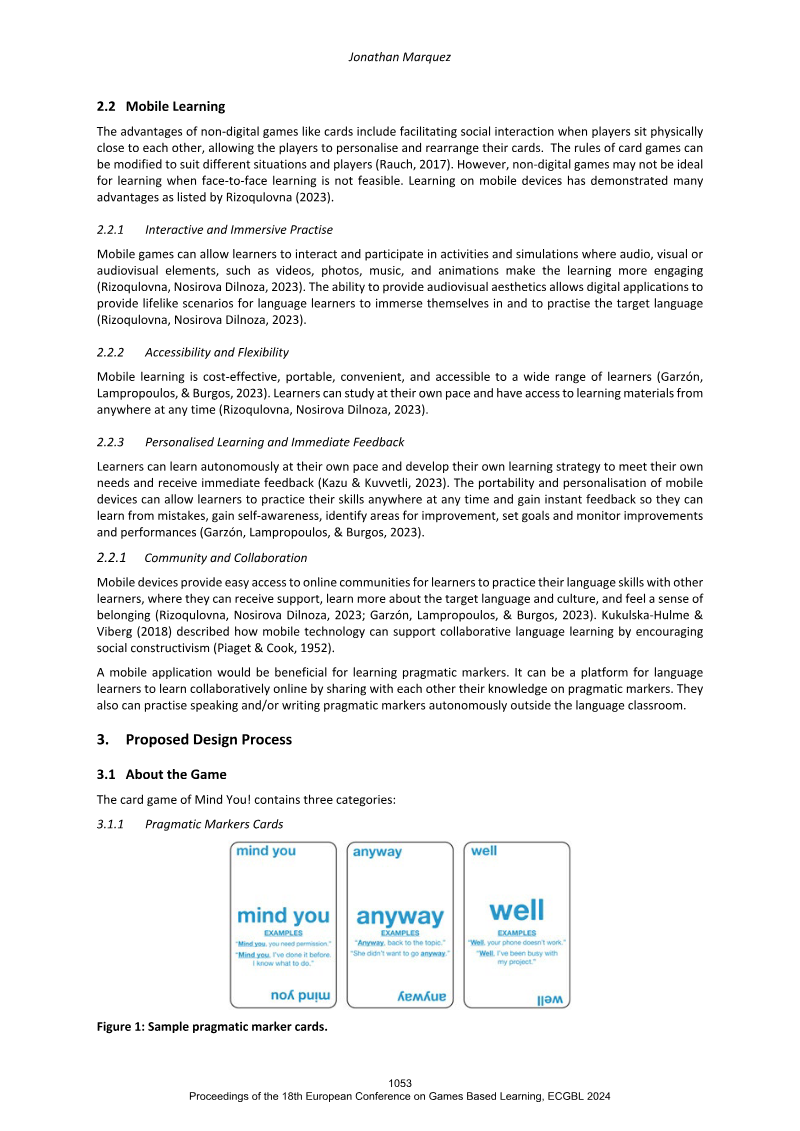
This work-in-progress manuscript outlines the digitization of "Mind You!", an educational card game designed to teach English pragmatic markers to non-native English-speaking international students in Australia, into a mobile application.
- The manuscript proposes digitising Mind You!, a non-digital card game that teaches English pragmatic markers such as well, anyway, and mind you to international students in Australia, arguing that pragmatic competence depends on interpreting context as native speakers do, unlike grammar or vocabulary.
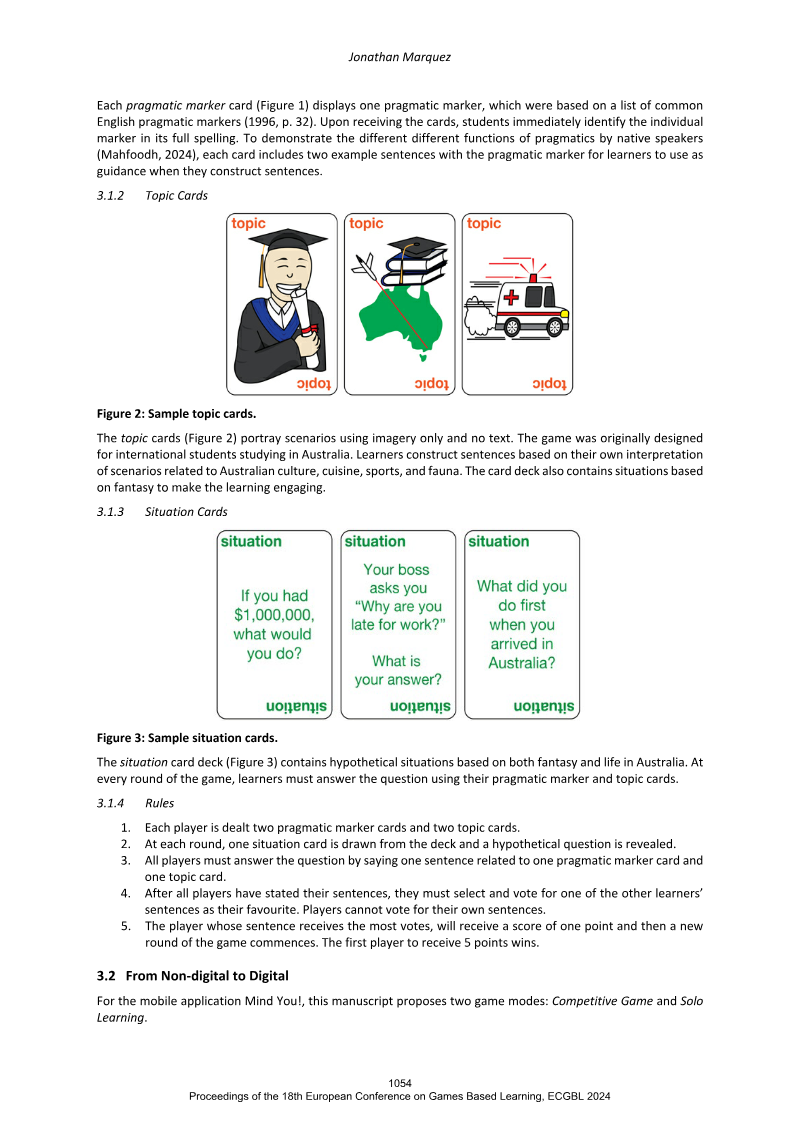
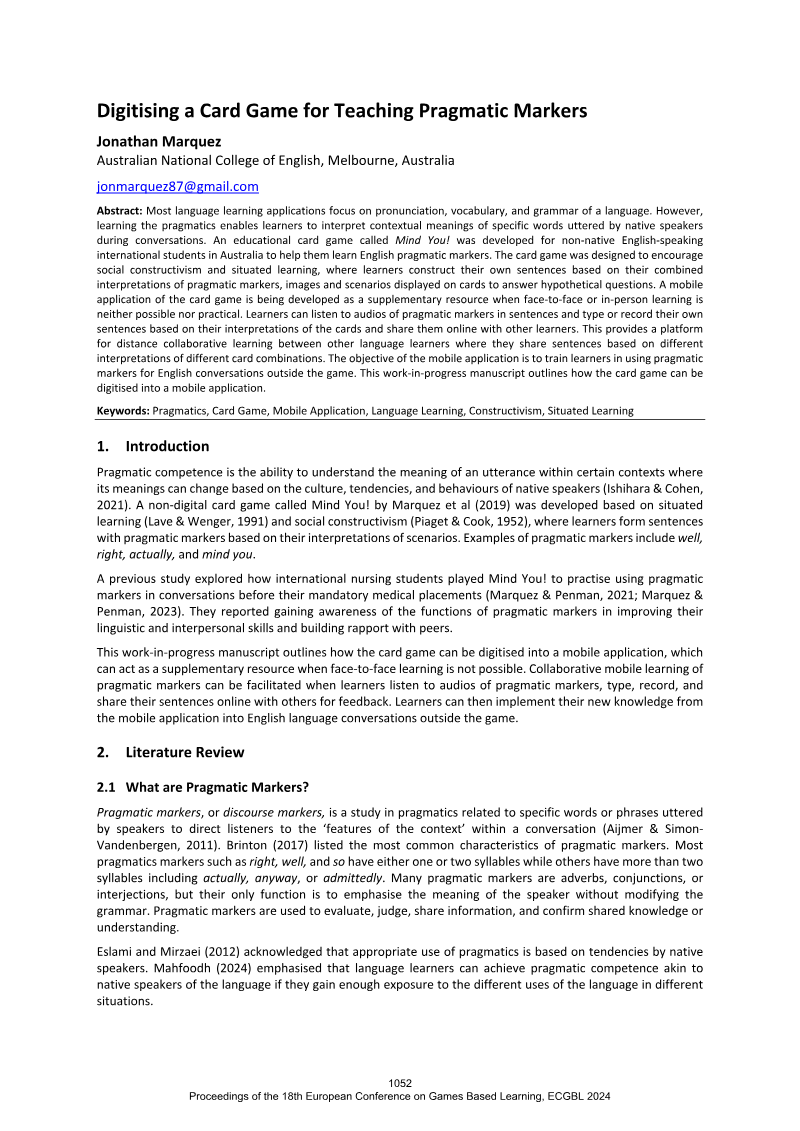
- The game is grounded in situated learning and social constructivism, asking learners to combine a pragmatic marker card, a topic card depicting an Australian or fantasy scenario, and a hypothetical situation card into constructed sentences.
- The proposed mobile app would offer two modes: a Competitive Game for up to five online players who submit and vote on sentences, and a Solo Learning mode with self-paced practice, sentence uploads, peer feedback, and audio support for pronunciation and tone.
4 CRITICAL LESSONS I've Learned (After 10 Years Of Making Indie Games)
Drawing from over a decade of experience in the indie game industry, this analysis outlines four essential strategies for developers aiming to achieve professional success and financial sustainability.
- Prioritize the validation of the first 15 minutes of gameplay to ensure a high-quality experience that elicits a positive emotional response before committing further development resources.
- Scale game development exclusively by expanding upon the validated core segment rather than building out unproven concepts, which prevents the dilution of overall quality.
- Focus narrative and linear game development on the 'bookends' by front-loading rewards to hook players and ensuring a high-value, satisfying conclusion to maintain engagement through potential mid-game grinds.

EA’s Game Plan: Launches, AI, and the Strategic Approach
The AAA gaming sector is currently navigating a period of evolution rather than crisis, driven by shifting player expectations and the necessity for higher quality standards.
- Electronic Arts is shifting from rigid launch models to community-led co-development and early access to better refine gameplay loops based on player motivations.
- The company utilizes a centralized organizational structure to share specialized resources, such as biomechanics and quality verification, across its global development teams.
- AI integration is being used to transition from reactive bug detection to proactive prevention, utilizing automated testing bots and natural language-based tracking to reduce manual overhead.


Game Development Studie 2024: Die wirtschaftliche Bedeutung der österreichischen Spieleentwicklungsbranche, ihre Dynamiken und Einflüsse auf die Gesamtwirtschaft
Die Studie des Industriewissenschaftlichen Instituts (IWI) im Auftrag des Fachverbands UBIT aktualisiert die Erhebung von 2018 und untersucht Struktur, Wirtschaftsleistung und gesamtwirtschaftliche Effekte der österreichischen Spieleentwicklungsbranche.
- Austria’s game development sector has experienced rapid growth since 2017, with turnover increasing 285% to €92.8 million in 2023 and employment rising 128% to 1,080 jobs by 2024.
- The industry generates a total economic impact of €188.7 million in revenue and supports approximately 2,260 jobs across the Austrian economy, reflecting a multiplier effect of 2.0.
- The sector consists of 149 active firms, 81% of which are micro-enterprises with nine or fewer employees, and 54% are concentrated in Vienna.
Writers
Games and companies
Games