Game Development reports and market data
Documents
Sketchar: Supporting Character Design and Illustration Prototyping Using Generative AI
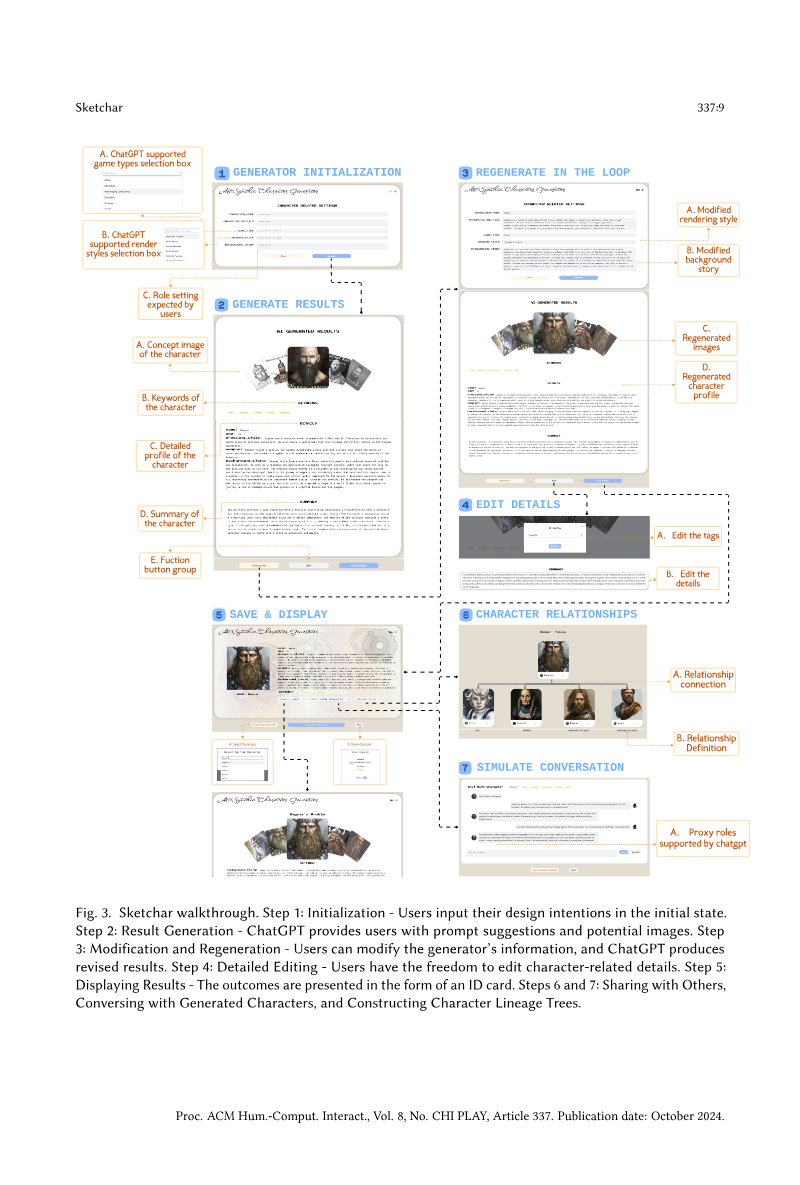
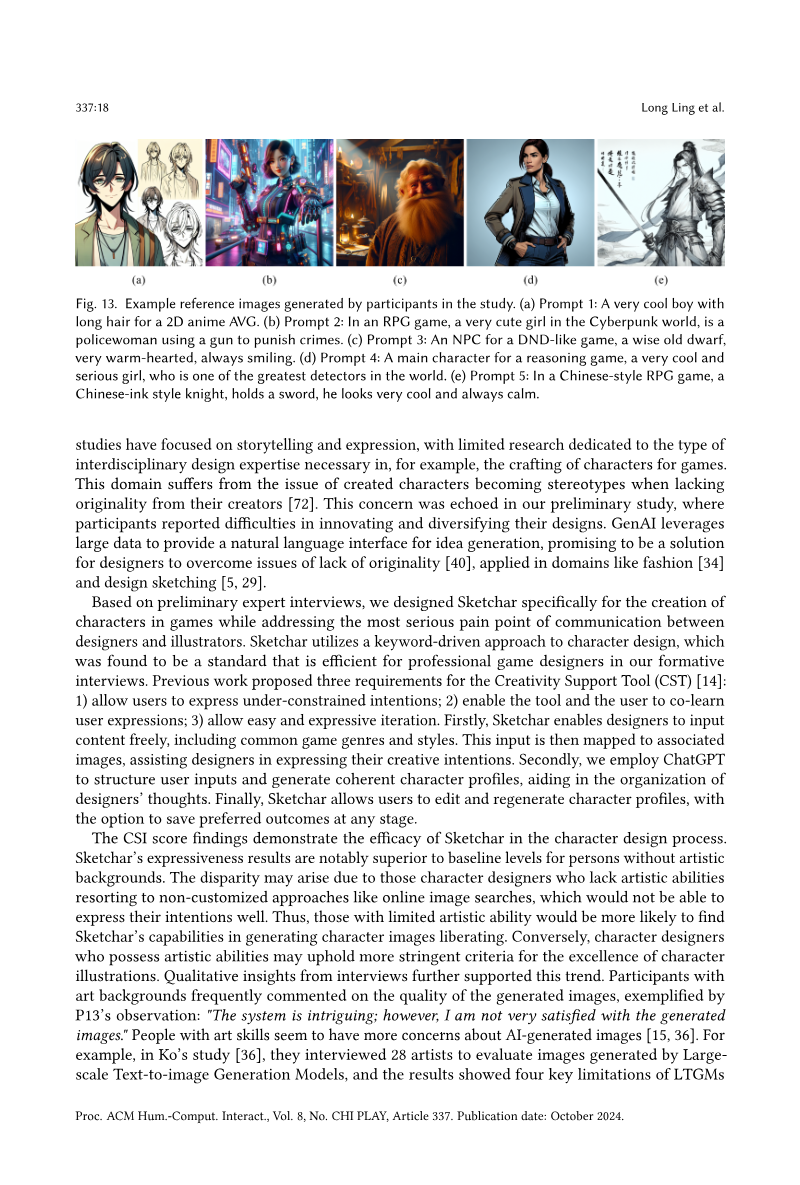
This paper, by Long Ling, Xinyi Chen, Ruoyu Wen, Toby Jia-Jun Li and RAY LC, presents Sketchar, a web-based generative AI tool that helps game designers prototype characters and generate reference images to communicate with illustrators.
- Designers without artistic backgrounds rated Sketchar's workflow more positively than designers with art skills, with the largest gaps in Expressiveness and Results Worth Effort.
- In the quantitative study, the Sketchar condition's CSI score was significantly higher than the sketching-only baseline.
- Collaboration was the CSI dimension where Sketchar scored most clearly above the baseline, and Sketchar scored higher on all dimensions except Enjoyment.
Advancing Mixed Reality Game Development: An Evaluation of a Visual Game Analytics Tool in Action-Adventure and FPS Genres
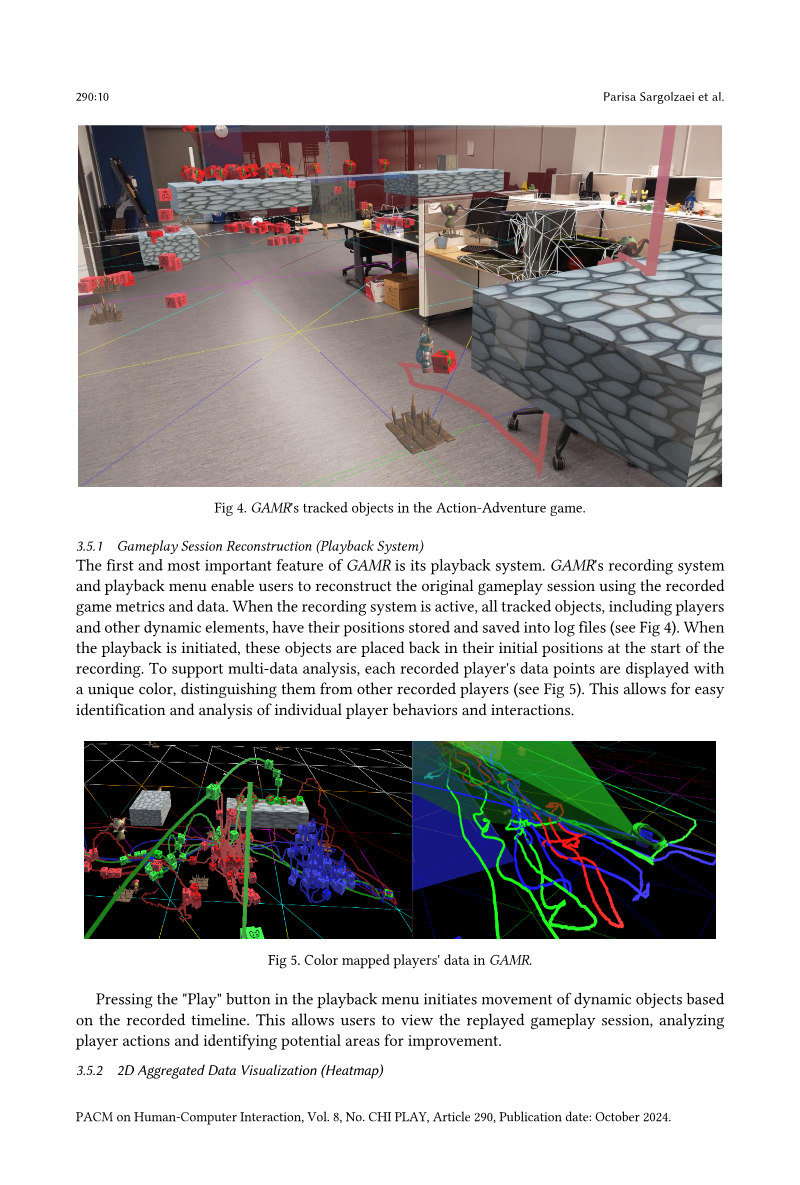
This paper, by Parisa Sargolzaei, Mudit Rastogi, and Loutfouz Zaman, presents GAMR, a visual game analytics tool for Mixed Reality (MR) games built as a Unity plugin for the HoloLens 2 headset.
- GAMR received a mean System Usability Scale score of 72.25, which the authors describe as acceptable.
- Participants rated GAMR as more useful for the Action-Adventure game than for the FPS game, a statistically significant difference.
- Fourteen of the 20 participants favored GAMR for the Action-Adventure game, citing a richer variety of trackable data.
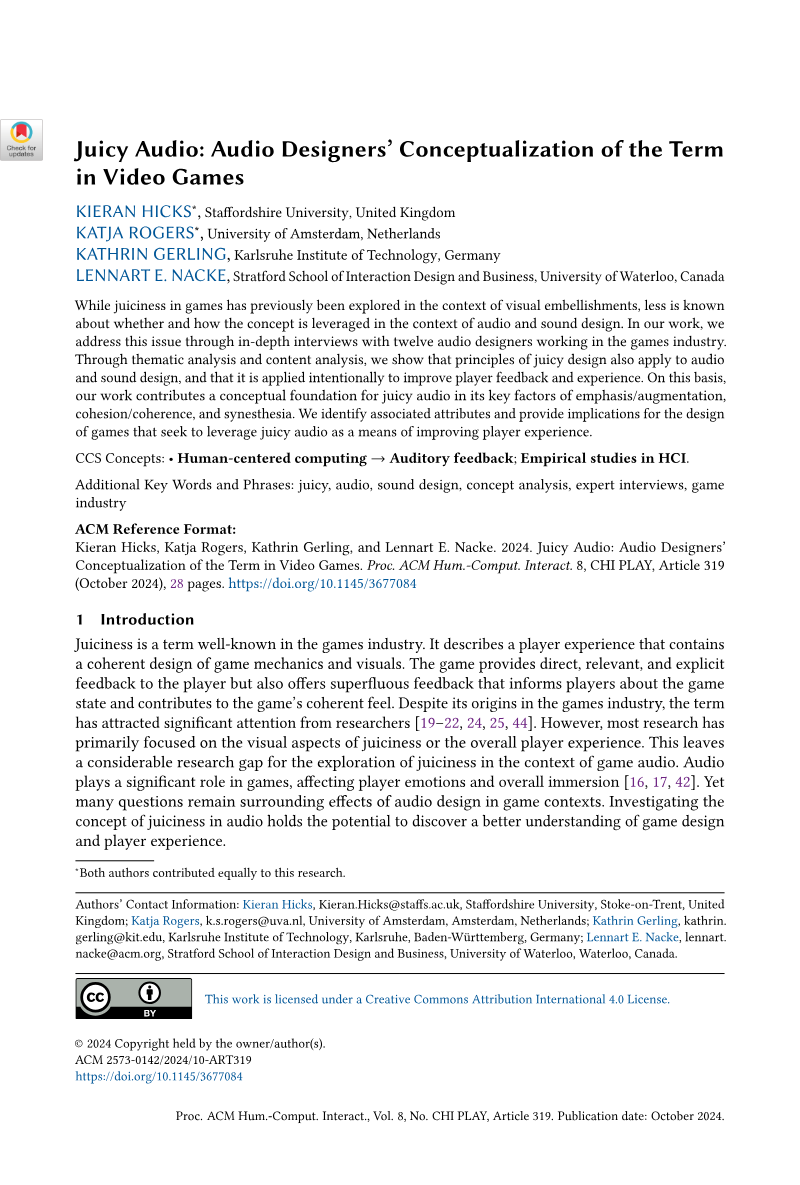
Juicy Audio: Audio Designers' Conceptualization of the Term in Video Games
This CHI PLAY 2024 paper by Kieran Hicks, Katja Rogers, Kathrin Gerling and Lennart E. Nacke examines how audio designers conceptualise "juicy audio", a term from games industry discourse for coherent, feedback-rich design.
- Audio designers consistently linked juicy audio to three factors: emphasis/augmentation, cohesion/coherence, and synesthesia. Every participant described at least one of them when defining the term.
- The technical shape most often associated with juicy audio is a full frequency spectrum with heavy use of bass.
- Participants warned that juicy sounds lose their impact when repeated, so they should be reserved for special moments.
How To Avoid Game Dev Burnout
The primary challenge of indie game development is the inherent unpredictability of the creative process, which often leads developers to prioritize extreme work hours over physical and mental health.
- Chronic, high-stress game development habits—such as skipping meals, sleep deprivation, and prioritizing work hours over health—can lead to severe physical consequences, including life-threatening cardiac events like arrhythmia and heart failure.
- Sustainable game development requires treating physical health, including consistent exercise and proper nutrition, as a non-negotiable priority rather than an optional activity to be sacrificed during crunch periods.
- Game development is inherently stressful because it involves building complex products without a blueprint, leading to constant uncertainty regarding development timelines, technical feasibility, and the ultimate quality of the game.

Making of Thronefall: Final Devlog
The development of the medieval base defense game Thronefall concluded with the release of version 1.0 on Steam and the Nintendo Switch, marking the end of a three-year production cycle.
- Thronefall evolved from a failed turn-based card game prototype into a successful action-oriented strategy title over a three-year development cycle by a two-person team.
- The tower upgrade system was significantly expanded during development, growing from four initial variations to sixteen distinct options.
- The team utilized asset-bashing techniques and iterative level design inspired by historical ruins to maintain a rapid production pace.

TWIG #303 Toxic Positivity, Squad Busters Speculation and Roblox 🔥
Ubisoft faces significant pressure to consider privatization as it grapples with the need for comprehensive management restructuring.
- Ubisoft is facing mounting pressure to consider privatization as it struggles with the need for significant management restructuring.
- Supercell’s Squad Busters illustrates the 'leaky bucket' phenomenon, where massive pre-registration hype fails to convert into long-term retention due to shallow progression and gameplay depth.
- Hindenburg Research has alleged that Roblox inflates its user metrics by up to 42% through bot activity, leading to a decline in the company's stock price.

How To Make Indie Games Full Time (Before Finishing Your Game)
Transitioning to a full-time career in independent game development requires a strategic, multi-stage approach to funding that often necessitates personal financial sacrifice and diversified income streams.
- Julian Ball funded the development of Lens Island through a combination of personal savings, a pre-existing YouTube channel, and a $60,000 Kickstarter campaign.
- Lens Island has achieved significant commercial success, selling approximately 200,000 copies and generating roughly $3 million in gross revenue over three to four years.
- The studio's financial requirements scaled significantly over time, moving from a lean operation supported by personal savings to a peak burn rate of $100,000 per month.
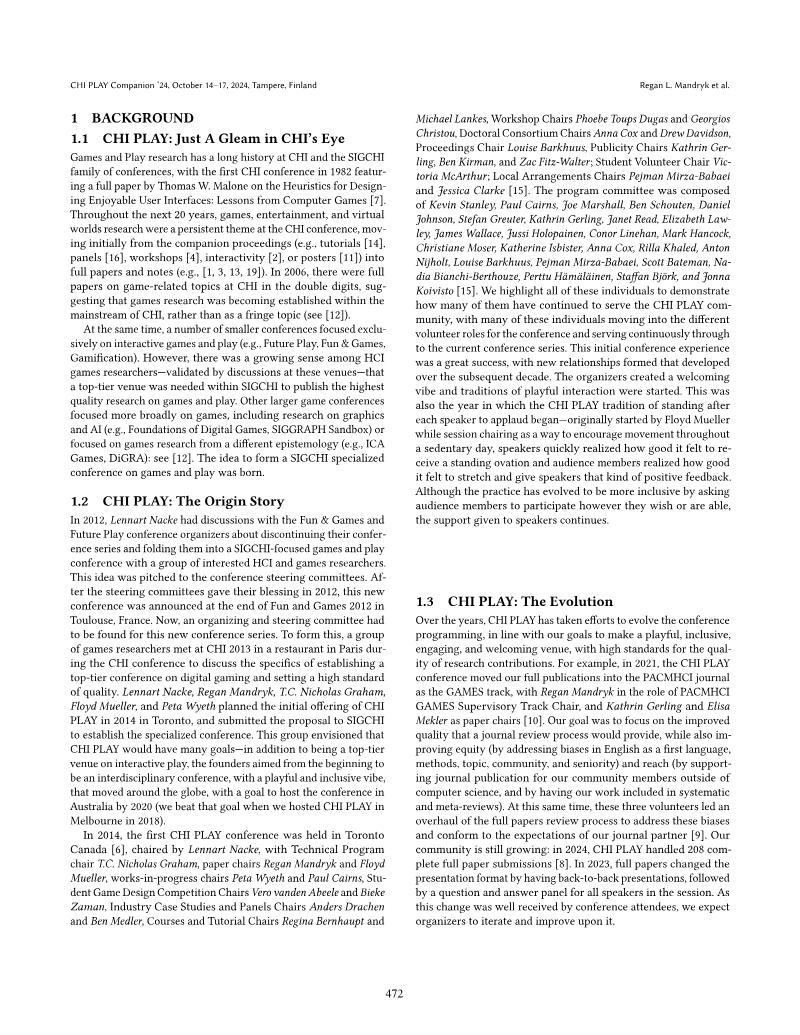
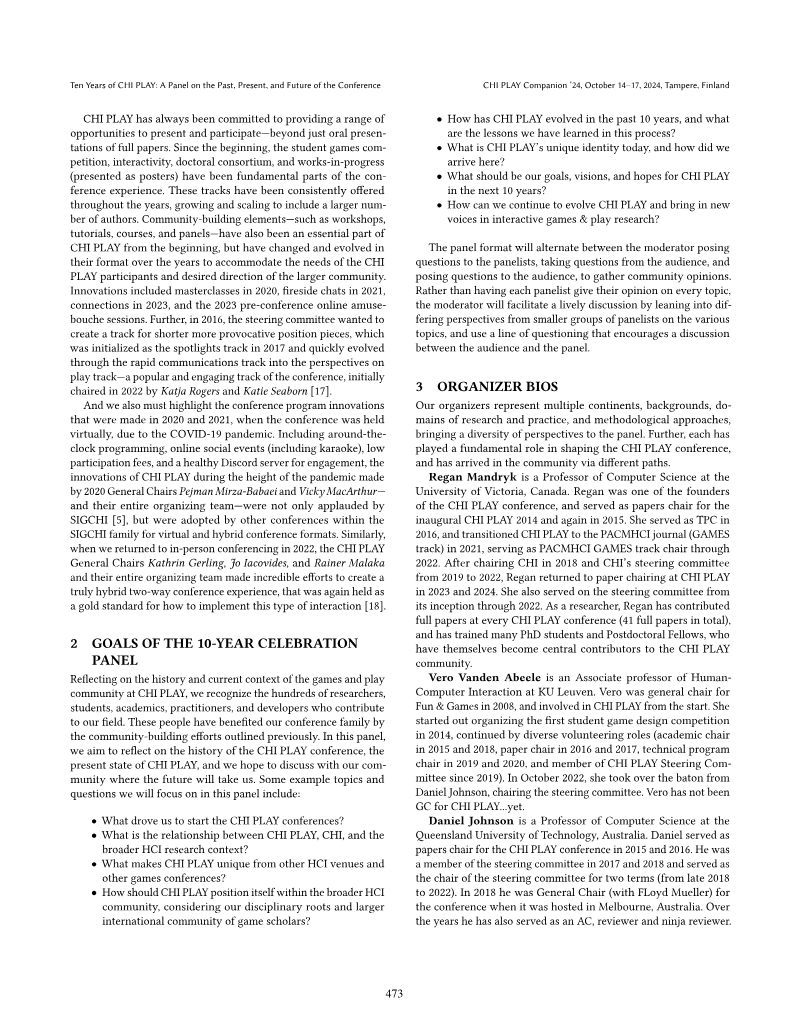
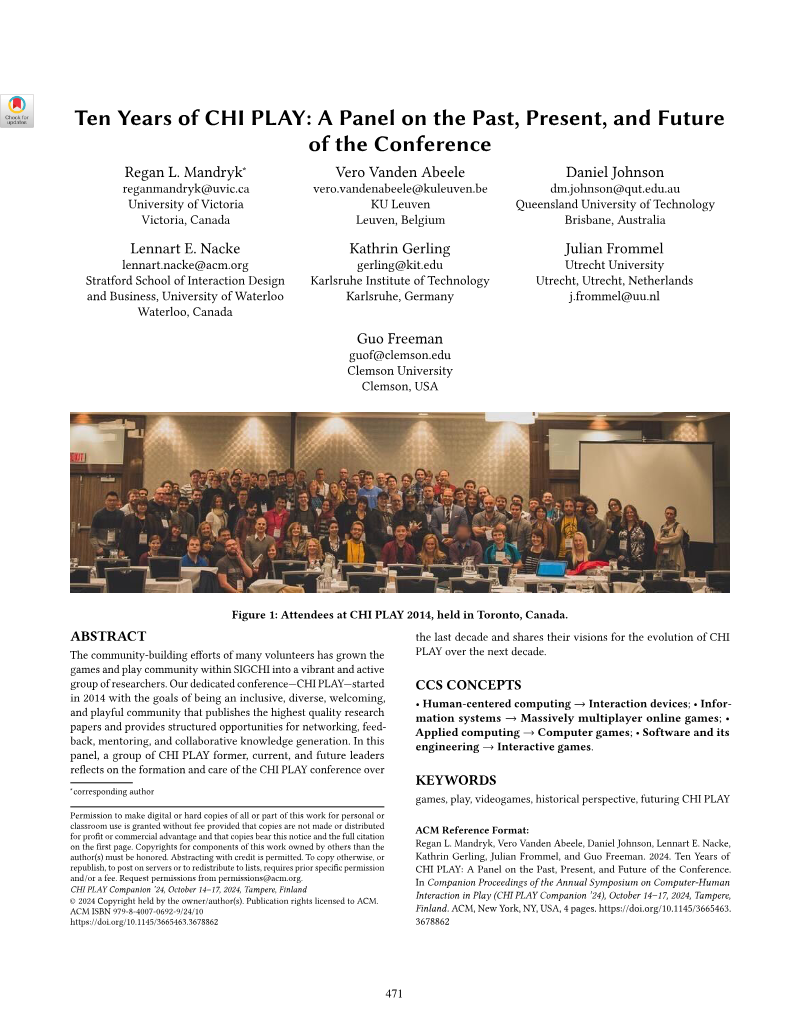
Ten Years of CHI PLAY: A Panel on the Past, Present, and Future of the Conference
The CHI PLAY conference, established in 2014, serves as a premier venue for high-quality research on games and play within the SIGCHI community.
- Established in 2014, CHI PLAY serves as the primary interdisciplinary venue for games and play research within the SIGCHI community.
- In 2021, the conference transitioned its full publications to the PACMHCI journal as the GAMES track to improve research quality and visibility.
- The conference experienced significant growth, reaching 208 full paper submissions by 2024.
Is It Too Late To Make Indie Games?
The indie game industry is not in a state of decline, but rather experiencing a shift in how success is defined and achieved.
- The indie game market is not struggling; rather, the industry's challenges are concentrated within AAA studios and publishers that prioritize risk-averse, uninspired 'solid' games over unique, innovative experiences.
- Indie developers possess a competitive advantage because they are not constrained by corporate structures or shareholder demands, allowing them to take the creative risks necessary to build games with strong, unique hooks.
- Large-scale publishers often impose corporate oversight that can water down an indie developer's original vision, potentially making the final product less competitive in a crowded market of 30,000 annual Steam releases.
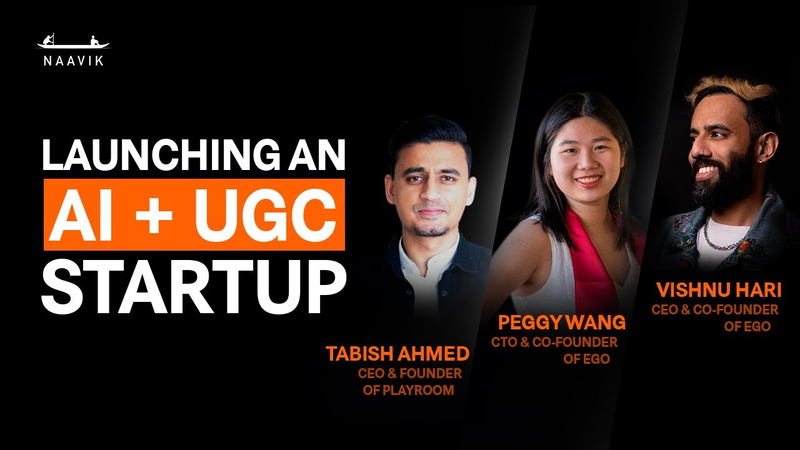
Launching an AI + UGC Startup
The integration of artificial intelligence into user-generated content platforms is fundamentally transforming the barrier to entry for creators, allowing non-technical users to build complex, immersive environments.
- Sustainable growth in UGC platforms relies on a robust base game foundation to drive organic engagement, rather than relying on expensive developer subsidies.
- AI-first development is shifting from simple chatbot integration to autonomous agents capable of perception, reasoning, and direct engine interaction, including self-healing code and procedural world generation.
- Discord currently offers superior discoverability and monetization structures for emerging developers compared to tech-centric platforms like Meta’s Horizon Worlds.
A Conceptual Framework for the Development of Effective Serious Games for Learning
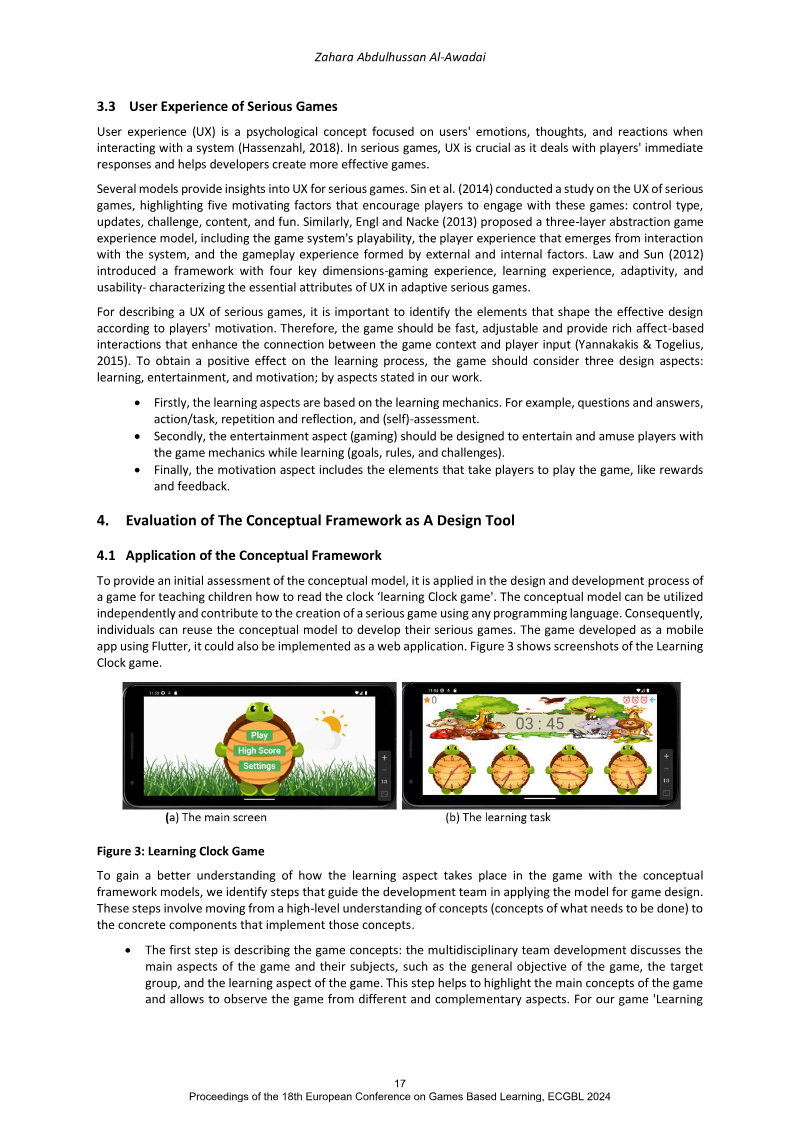
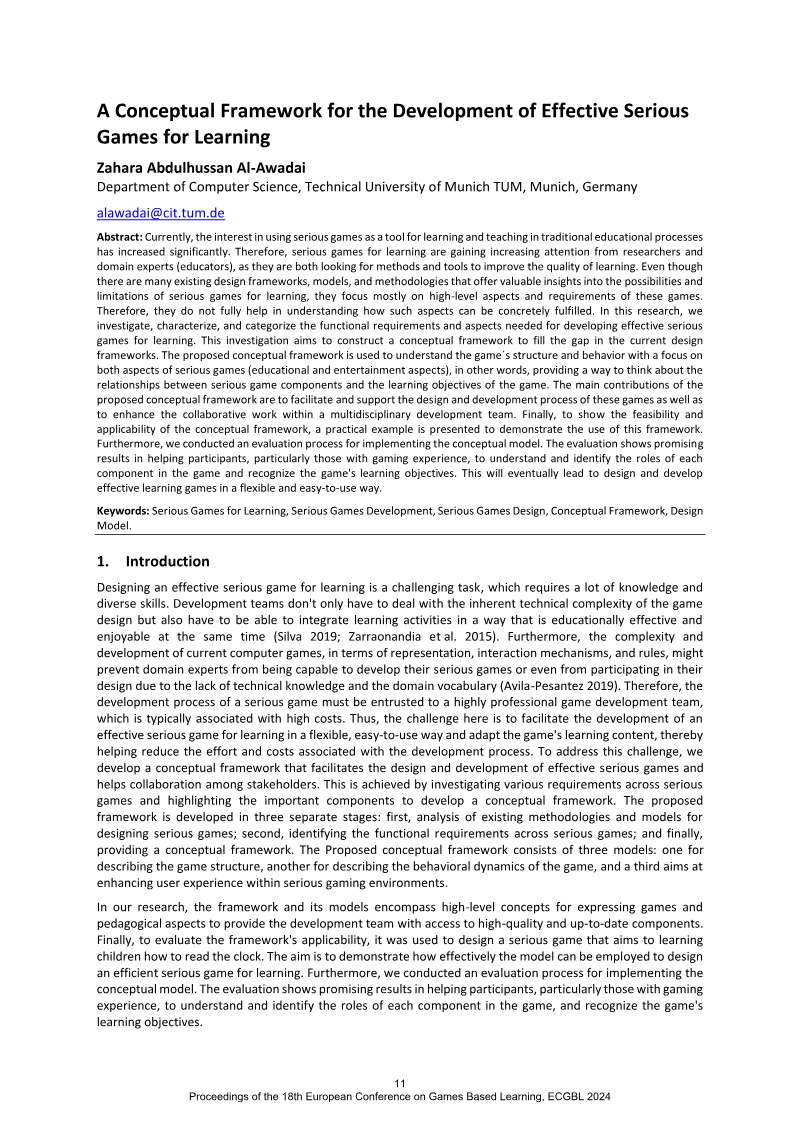
Zahara Abdulhussan Al-Awadai, of the Department of Computer Science at the Technical University of Munich, presents a conceptual framework for designing effective serious games for learning.
- Sixteen of the 17 evaluation participants (94%) reported that the framework was helpful to them.
- The adapted SUS usability score averaged 70.29 across all 17 participants.
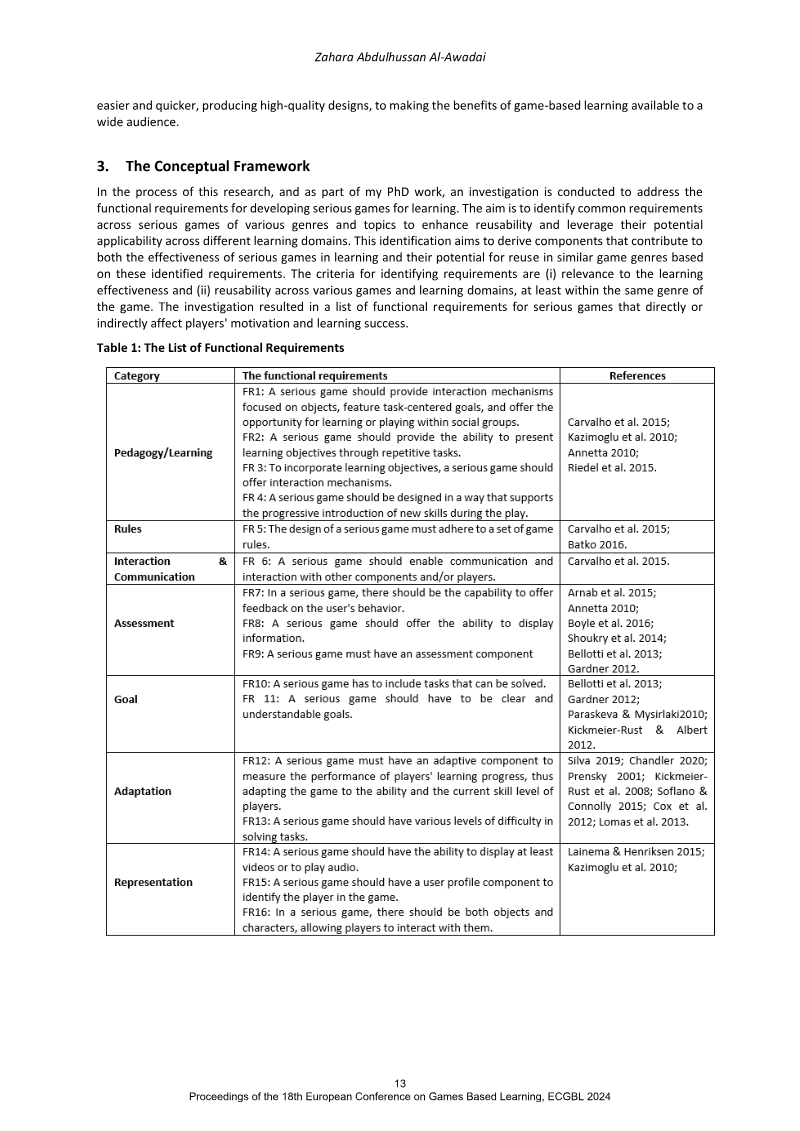
- The framework is based on 16 functional requirements grouped into seven functional categories.

A Pilot Study: Engineering Students Use Generative AI to Support the Development of Playful Educational Technology
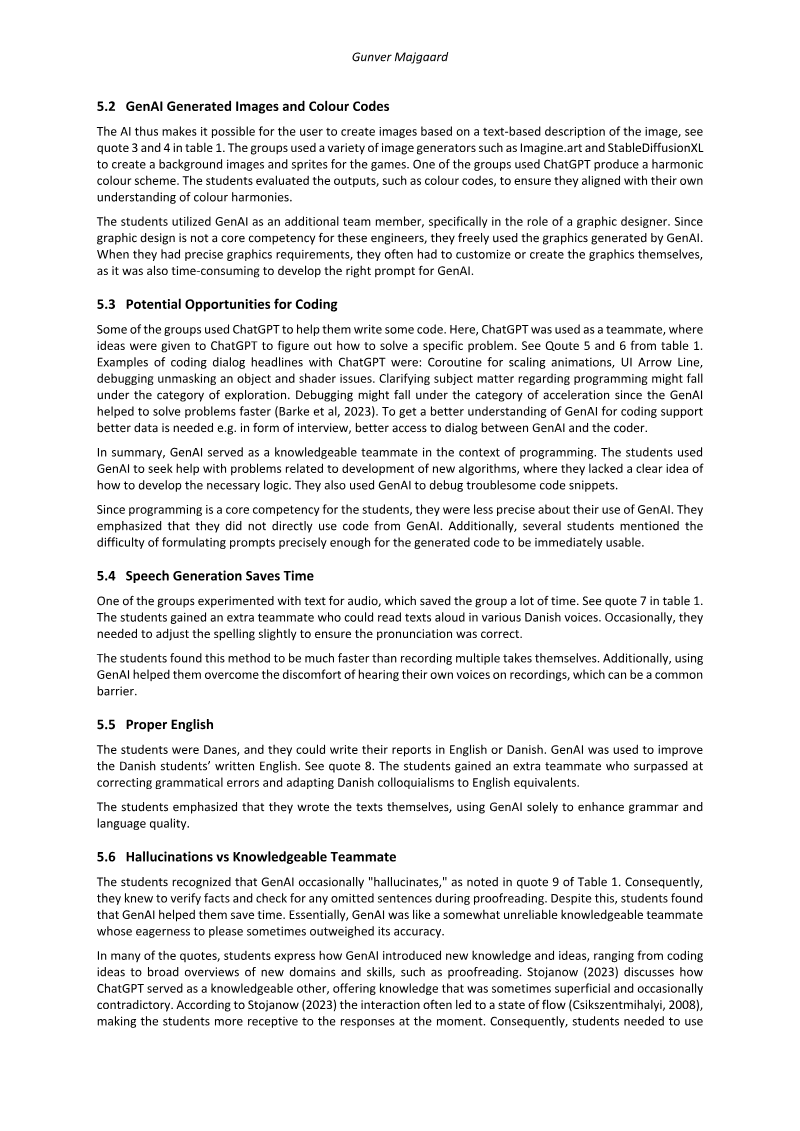
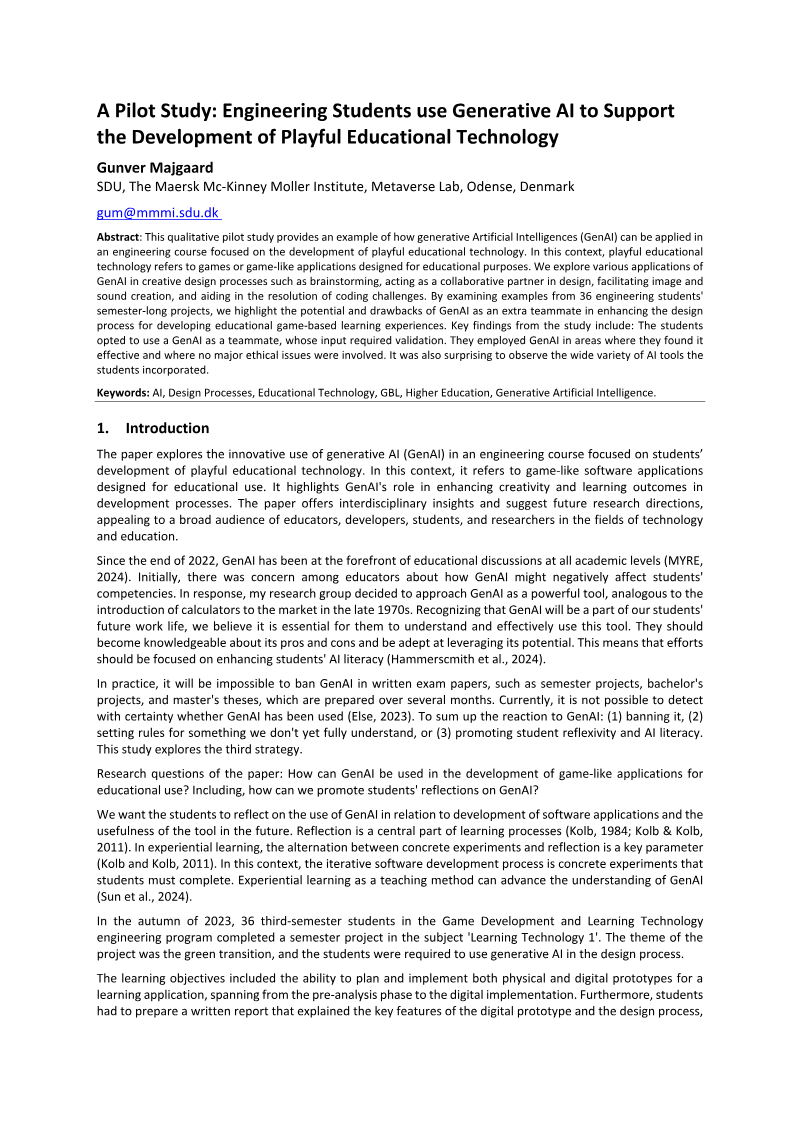
This qualitative pilot study, conducted by Gunver Majgaard at SDU's Maersk Mc-Kinney Moller Institute, examines how generative AI can be applied in an engineering course on developing playful educational technology, meaning game-like applications for educational purposes.
- Students treated GenAI as a teammate whose input had to be validated, and they adapted or discarded much of its output rather than using it directly.
- Students reported that GenAI was effective for brainstorming, and one group used a list of ten AI-generated titles to agree on a game name.
- Students avoided using GenAI in areas they saw as ethically problematic, such as preparing article summaries, generating core code, or writing entire report sections.
Writers
Games and companies
Games