Transcript
Welcome to the Naavik Gaming Podcast, where it is our mission to explore the business and future of video games. We bring together the industry's brightest builders, investors, and thinkers to keep a pulse on current events, dissect emerging trends in games, share lessons learned, and have a great time. This podcast is also part of Naavik's growing ecosystem, which ranges from free and premium research to consulting and advisory services. For more information, visit www.naavik.co. This episode is brought to you by Overwolf. With over 1,500 games supported, 165,000 creators, and 38 million monthly active users, Overwolf is the guild for in-game creators. Whether you're a gamer, creator, or game studio, Overwolf is the ultimate destination for integrating UGC in games. For game studios, Overwolf
offers CurseForge for studios, a white-label solution that lets game makers and publishers easily integrate mods safely and seamlessly into their games, both existing and new, at zero cost. It's battle-tested by AAA studios and games, including Maxis with The Sims 4, Studio Wildcard with ARK, Take-Two Interactive, and others. For creators, Overwolf is the all-in-one platform that enables creators to build, distribute, and monetize in-game apps, mods, and game servers. In 2022, Overwolf paid over $160 million to in-game creators, proving that they truly value the talents and contributions of the gaming community. You can check out everything Overwolf has to offer at overwolf.com or check out the details in the show notes. And with that, let's jump into the episode. Hello, everyone, and welcome to the Naavik Gaming Podcast. I'm your host, Alex TK, and this is the interview and insights segment. So,
Electronic Arts, uh, one of the biggest AAA titans in our industry, market cap of 37 billion at the time of recording. EA has been the market leader across sports games, a host of Star Wars games, critically acclaimed battle royale Apex Legends, and of course, everyone's favorite lifestyle game, The Sims. And over the past 5 years, EA has made a lot of moves, and tons of notable events have occurred. In 2019, the roaring success and acclaim of Jedi Fallen Order. In 2020, the acquisition of Codemasters. In 2021, the Glu acquisition and Playdemic acquisition, with the strategic intent of getting exposure to mobile IP and mobile development expertise. In 2022, the hubbub around the dissolution of the FIFA license, and the birth of EA FC. And in 2023, the cancellations of Apex Legends Mobile and Battlefield Mobile, and a major restructuring that divided the company into EA Sports and EA Entertainment. But as we discussed in our last episode on platform outlook, the games industry is in a bit of an identity crisis, and EA, perhaps not a platform in maybe the same way that we classified Sony was a few weeks ago, still has a huge impact on
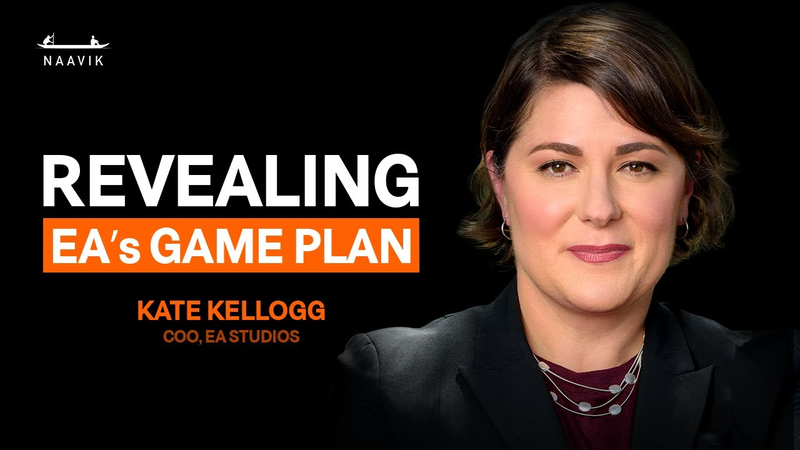
the gaming market, and has some major decisions based on industry movements. And so today, we're here to discuss what 2024 look like for EA, and what does 2025 and onward hold for the company. And so I have none other than Kate Kellogg, the COO of EA Studios, fresh off an investor day summit, joining me on air today. Kate, prior to EA, has background in Irrational, 2K, and Amazon Game Studios. Um, I was lucky enough to hear her keynote at an MIT conference I attended. And so, Kate, it is such an honor to have you on the show. Welcome to the pod. Oh, thanks so much, Alex. It's great to see you again, and thanks for having me. When I hear that run-up on the background, I'm like, yeah, it's been it's been very busy years over here. Yeah, definitely. And so before we get started, Kate, I'd love for you to take some time to tell the audience a little bit about you. Um, I would love to hear about the following three things. First, how did you become the COO of EA Studios? Second, describe your day-to-day of what it means to be the COO of EA Studios? And third, what is
your favorite EA franchise? Ooh, okay. Okay, start nice and easy, and then getting very serious very fast. Um, okay, so let's start at the top. Um, how did I get to be the COO of EA Studios? Well, um, as you noted, I worked at Irrational. I started in video games 20 years ago. Um, previously, I'd been in a number of startup companies, and uh, a friend asked me if I wanted to talk to a video game studio. And I said, "Sure, that sounded pretty interesting." I'd done a variety of things, um, and I was curious. I didn't know anything, anything about video game development. And I walked in the door, and I met the passionate people that were working there, and it was in the first 5 minutes, I knew that was where I wanted to be. And so I joined that company and had the opportunity to learn so many things. In addition to running HR and finance, I was also the manager of physical production. I did some scratch VO. I mean, it was an independent studio. There were not a lot of women there. I occasionally had to pose for concept art. We got it done, and it really set
an expectation for me of what it can be to work in games. And then through the years, I had the opportunity to work with different teams. As you noted, um, I have been incredibly privileged to work on some amazing franchises. And a little over 4 years ago, I had the opportunity to come talk to Electronic Arts. And I I'd taken a bunch of side quests in my journey, like my career was not a linear path. I was not sitting there at 10 years old thinking I wanted to be in games at this level. But I think everything I learned along the way set me up for the opportunity that I have right now. Um, and I have to tell you, every day I get up, and one of the first things I think about is how lucky I am to have this role. Um, when I look at what I get to do, the projects I get to work on, and most importantly, the people I get to talk to every day, it is incredibly inspiring. And that is super important, cuz you asked me about my days, they start very, very early. We are a global company. I have employees in 25 locations. So when
that very O-dark-thirty alarm goes off, I sometimes need to remind myself how fortunate I am. But then once the day starts going, the momentum kind of carries you forward. Um, in my job right now, I would say it's split pretty equally between running a central org, which has many central functions, including quality verification, localization, performance capture, central devops, all these kind of things that support our entire portfolio, amongst others. In addition to my responsibility across the whole portfolio, to always have an up-to-date snapshot of all of our products in the marketplace, and how they're coming up to their launches. So that means I have a ton of meetings. Uh, most of my day is in meetings. I am very familiar. Spend a lot of time on Zoom and various meeting platforms. And I travel a ton. I like to get out and see our teams in person, both teams that directly report into my org, and working a lot hand-in-hand with our game team leadership. Okay. So I talked a lot about that part.
So now you want to hear my my favorite franchise? Like you can The rest of that stuff, that's that is straightforward. Um, so obviously, that's impossible, cuz it's like, "What's your favorite food?" Some people have one, but I'm like, "Uh, it's the mood, it's the company, it's the context." All of those things play into the favorite in the moment. I've definitely spent a lot of hours in our Jedi series. I mean, the passion of the NHL team just blows my mind with the precision of the controls on ice. Um, Sims probably gets the most airplay at my house. And PVZ is a constant travel buddy. Um, but what I could probably answer as well is like, what I'm most excited about that's coming. And unfortunately, I can't get super specific, but I can say what I am most excited about is not publicly playable yet, but it will be at some point soon, and it's just that's one of those things that pulls me forward on those long days. Awesome. Yeah, you guys definitely keeping us in a little bit of suspense here. Um, and I knew that would be a the hard question. You know, everybody asks, "What's your favorite video game?" And
people I tend to break it into genres. I'm like, "Okay, I can give Let's give me it like per genre, I'll answer the question." Um, so appreciate you giving some some color there on your background. And actually, like one of the things that you talked about, you know, what you do every day is informing, you know, one of the things we'll talk about today, which is EA's organization and its structure. Um, so for our audience, the meat of our discussion today is going to center around the following three topics. One, game launches. Two, EA's strategic approach to development and IP. And three, EA's organization. The idea here is to give us an understanding of how EA has been performing, what we should be looking forward to, like as you aptly mentioned, Kate. Um, and how EA is actually doing and staffing its org and its approach to development, um, to to win in the market. Um, and so I'm going to kick us off on topic one, which is game launches. Um, and there's a ton going on here for EA. Um, most recently, the very successful launch of EA Sports College Football, topping the Circana charts in 2024. And I do appreciate that it's not
just the base game, but the bundle that's doing well. Um, go revenue strat team. But before we dive into specifics around a few of those launches, I want to kind of ask you an existential question. Um, there's been a lot of chatter that AAA is in crisis. Is AAA in crisis? And if so, why? And if not, also why? Okay, again, going with very light questions from the jump, Alex. I love it. Let's get like right into it. So, um, absolutely not. Absolutely not. AAA is not in crisis. What AAA is in is a moment of change. But this is one of the things I've seen in my career. There are always changes. There are new platforms, there are new business models, there are new player behaviors we need to be mindful about. I mean, I was working in the industry when we were like, "Oh, has anyone heard of DLC? It seems like it could be very interesting for us. That wasn't actually that long ago. So, part of being in entertainment and
games in particular is being agile in your thinking and constant constantly integrating new information. So, I think one of the things we see and that I'm really mindful about, it's been really well noted that one of the new behaviors we see with players is they're getting really entrenched in games and franchises. Mhm. If you look at the top games, they've been many of them have been there for a long time even with new iterations or new versions. And I think that connects to how fulsome our games have become, our games and broader games in the industry. Like it's not a small thing that you do, it can become part of your lifestyle and even part of your identity. And so, I think that's one of the things that we need to be mindful about as an industry. If you're going to be engaging an experience for multiple years and investing your time and your skill development and your social network in many cases, then folks are going to be pretty connected to that and we need to be thoughtful about that as we might launch new experiences. So, that's what I would say. Like, yes, things are changing and that might make us evaluate different opportunities in a
different way, but absolutely not a crisis because when you make something spectacular, you will find a way to connect to your audience. Like we need to look at things like genre and discipline, but when it comes down to when you make something spectacular, you have an opportunity to find that new audience and bring them with you on the journey. But, I will say the bar continues to get higher, but I love that. Like that that keeps me going to feel the fact that like we always need to find ways to deliver more for our players. Got it. Yeah, and I think to react to your comment about how player expectations have changed, I want to talk about how launch expectations have changed over the past 5 years. Want to double down in the, you know, you say that AAA is not in crisis, right? Um the bar has gotten higher, but so have the budgets have gotten higher, right? But, in your mind, do you think that the bar has nothing to do with the budget? Um because I think that that's been a lot of the reaction is that AAA budgets have ballooned and they're not seeing the necessary commercial success that is
concomitant with the budget that was supplied. So, how does EA start thinking about that conundrum where the bar is still very high, but we're trying, I would say that AAA as a as a has a consensus that budgets need to fall. Well, I think it's about looking at what you expect the return to be and being very realistic and harsh with yourself on what a title can return. When we look at a product, we talk a lot about structural integrity in the idea. Specifically, when you have a multi-year dev cycle, expectations in the marketplace can change. And so, are you continuing to hold structural integrity in the concept of what you're doing in your expected market and finally in the quality you deliver? Like that's really the big thing is like, yes, we do see these big budgets that are delivering incredible quality, but if that's the bar, then we need to be honest with ourselves of can we afford to be in that space to deliver the quality that players need? And I think when we see when we it can be easy to start to feel like you get caught in a trap as a business and I think that's the place where we need to take a breath and step back and look at
all of our assumptions in the equation and say, what could be changed in there to make this concept have structural integrity and be something we're willing to go after. The related point I would say is in different business models, you're going to see different return expectations over time. And when you're building a portfolio company, you need to look at that that return over time. If you look at something like Roblox, it took a long time to get to the place it's at today. We see that in other free-to-play titles. And so, making sure you build in the agility in your business to support something so you can find your audience and really deliver one of those big experiences, I think is a big thing for us to consider. I see. Yeah. And actually like that's a perfect segue into like how EA is, you know, addressing these launch expectations, right? So, we talked about, you know, making sure that the thing that the business that you're building and the game that you're building matches your forecast and your performance expectations for how it lands in the market. How do you think that that's actually changed over the past 5 years? Um and given that, how do
you think EA is going to show up for players given that given those launch expectations have changed? I think to frame that up, I would start with launch expectations are always changing, right? Like they are always growing, they are always evolving and I think sometimes what happens, you have a title come out 6 months before you that changes the bar of what phenomenal looks like. So, to get in front of that, that's a big part of our job as a company at our scale is like, how do we get in front of that? Because we have teams who are envisioning and thinking about where that we want to go, this is where we can lean on some of our central teams to help us have a good understanding and do deep trend analysis. So, first, we tend to start and again, it varies per franchise and per per genre, but one of the things we really focus on is top shelf creative, having a design hypothesis, a pitch, an idea, something that they want to put together based on their experience, whether it's working on a new IP or or something that's known, but trying to put together
a pitch that we can look at and understand. We connect that and look at the intersection with player research, market research as we go forward and look at again, trend analysis is a big thing for us cuz we can't always tell exactly where the market's going to go, but we do know over time that players expect more in terms of depth and breadth of engagement. And that one of the things that's easy to miss is that, you know, I remember in the old days we would look at titles and you'd go down the boxes. Okay, can I do screen caps? Can I have some kind of social engagement? And you just want to check off these boxes. But, there's so many incredible experiences out there now, it's not a box check. Like there has to be something unique in all of this modality that really pulls players in. And so, as we're building out a plan and looking at a design hypothesis, one of that core questions is, what is that core loop or experience that's going to be so amazing, it will pull new players in and hold them tightly? And do we understand that that audience needs very deeply so we can make sure to build that really tight connection and then build
out from there. I think one of those places where we've been really intentional as go we go forward is thinking about that PC marketplace, which is super complex and leading into the critical need to support our PC market players with deep customization ability, right? You have such an incredible variety of rigs and we want people to get the most out of their hardware with our content. And so, making sure we show up for them in that perspective. Mhm. If I if I could give you what even one more specific example, if it's okay, like one of the things that we're doing right now in terms of understanding and thinking about launch expectations, I'd like to call out our skate team cuz they've taken a really innovative approach. With an insider program, which you see in other franchises, but they have leaned in hard with thousands of players getting in game and playing gray box. We tend to be really cautious, right? As a big publisher of having something early out there at such a large scale. But, that's given us the under the opportunity to find that fun, to find those deep engagement loops, particularly in something where it's
open and there's lots of emergent gameplay and social perspective to find where you actually have that like gravity around the experience and lean into that for our different cohorts. And we have just announced that title is going to be early access next year. So, I will say that is going to be a very exciting title and we'll see the results of all of that deep community engagement. Can you talk a little bit about the Skate development process as it pertains to how Skate may have looked different than the way that EA has developed games in the past? You know, you talked about um you know, actually interestingly, I think that there's a there's this push now that games should be less trans sorry, be more transparent than they have been in the past, right? And as you just said, you expressed consternation with we're a big publisher, we would never do that, right? So, can you talk a little bit about, you know, why that choice choice was made and how EA got comfortable with this game team doing that? Um I think that would be really interesting to to discuss because it is about how EA shows up differently than
how they have been in the past. Absolutely. I think one of the things that is maybe, you know, I learned when I came into EA is like, yes, we have this incredible Electronic Arts banner. But, within that frame, there are so many different game teams. And one of the ways we find success and one of the reasons it really drew me to the company is leaning into the differentiation of franchise approaches. So, while we want to be thoughtful about areas where we can provide leverage and power at scale, where there are unique opportunities, we try and lean into game team vision to support what they want to accomplish. So, that Skate team was very intentional. They knew they had this beloved beloved, it's one of our most requested franchises to get back. Like the joy that erupted when we said we were working on this was tremendous. But, that team also knew they had to hold that franchise because it was it is precious to so many people and be thoughtful about what that experience could look like in a modern era. And so, with that kind of thinking, the
team wanted to take this approach of that deep community engagement, even thinking about it as a kind of co-development to lean into that and say, how can we bring people in because we know this is going to be a game that we're going to have a lot of people in to make sure we understand our different cohorts and where they might play in this more modern experience. I can't get into a lot of details because again, we're we're not in early access yet, but that was part of the philosophy about it. And so, as the team was really thoughtful, they put together their design hypothesis, they did research, they looked at their player insights and this is what how they came up with the approach. So, quite frankly, it was the only logical conclusion. So, it is different and it's it's it is different, but it is in service of that fan base and that's our job to show up for our players. And so, that's how when we talk about structural integrity, you have to look at the whole arc, right? Like we don't have an A to Z process in how we do everything. We look at that design hypothesis and take it from there. Mhm. Is there a difference in this Skate game of in the difference of who they are designing for? You know,
you talked a little bit about how this is a beloved franchise, right? Um did the change of who they're designing the game for or the shift of the market, the shift of the player base also inform the way that they went about conducting um development? Cuz I think that that's something that's pretty interesting to explore is, you know, as you know, there's an older generation of gamers who perceives game development to be A way and there's a younger generation of gamers that perceives development to be B way. Um did they think about that when they initially started that process? I mean, absolutely. It's been a long time since there's been a Skate game out there, a new Skate game, and we know that the audience, the potential audience had grown. So, we have a good read on on Skate players of the last version, but I think part of that is understanding who are the players of the future. Who are the players that might want to be in that game? We look at the circles of audience, we talk about like who we would expect and then who we would like to bring in. And so, that has to be a component of how you think about whether it's Skate or any other franchise. I
think that this is actually one of the core challenges. We like we talk about AAA being in crisis and like okay, so I I obviously think like we need to tackle any challenge that gets in front of us and there's always opportunity if you're clever and you bring the right people to the table. But one of the big challenges we need to think about when we have these big franchises that have long-term fans, fans who've invested years at developing skills and understanding lore, is how do you make an experience welcoming and exciting and competitive for them and for your new player who's logging in for the first time today? And that's not unique to EA. Like that's consistent across the industry, but I think that's one of the challenges of how do you have a massive community where people feel welcome and invited and the fact that maybe they weren't there on day one is okay, but also that you get the benefit of having been there for a whole long time. Like there is certain pride in being a veteran and being an old-school person in the game. Like that's very real. So, trying to create supportive environments for that, I quite frankly think about it often is like it's a party and a party can have different
rooms and different spaces and you want to help people find the place in the party where they're going to be the most happy and have the most fun. Yeah. Yeah. And you're right, it's definitely not a challenge that is, you know, intrinsic to only EA. I think at Blizzard um there was we struggled with that a lot and I think every game studio um will struggle with that as they they they find their early adopters and then 10 years down the line, they're like, "Oh my goodness, I need new players. All of our players are now 65." But um you know, Skate actually relates very to another question I want to ask around IP and how IP relates to launch strategy. Um we've talked a lot about how EA should show up for players. EA has a portfolio of licensed IP, in-house IP that's old like the Skate game, and potentially new IP. Um how do you guys think about that balance stay between known IP and new IP? Um and I ask this question mostly because there's a lot of data that is also showing that Gen Z and Gen Alpha don't prefer a lot of older IP
that has resonated with millennials and Gen X for a long time. And so, you know, how do you think that EA is going to take into account this this data point when it comes to new IP versus IP that has a proven track record to perform on the P&L? That's a great question, Alex. I think let's so let's start with with kind of existing IP or known IP. I mean, one of the things I've seen with every development team I've worked with, no matter how big the experience you ship, you have a couple of whiteboards that you refuse to let people erase of ideas you couldn't get in, that you know people will love, but that just for for time or budget or you needed more iterations on it were just not right there. So, when we look at known IP, I think there's no shortage of new experiences or stories you can tell. Even if it's something that has kind of a frame that people expect, our job is always to surprise and delight. We talk about that all the time. Even if it's known, yes, you want to give people invite them into an immersive world, but you're always bringing something new in an experience.
So, it's picking the right things to bring into that experience and then making sure you're very clear with your audience. And this is really critical again for all game companies to be clear with your audience on the intention of what you're making. The places where we see players get frustrated and justifiably so is when how we explain something and then their experience in game don't match. And so, when I talk structural integrity, it's not just for the game and the development, it's for the overall arc in the experience. We need to be clear and consistent with the vision and show up and deliver on that promise. And then even if it's not something you specifically want to play, you can understand that there is value and quality in it. So, that's a little bit of how we think about known IP when we think about expansion. I would also say when you look at these very rich IPs, when we talk about massive online communities, um you can see these experiences where perhaps the original IP that was out 10 years ago, 15 years ago isn't compelling, but is there maybe some new experience within that world that could be compelling? We have lots of projects
going in the space to look at when you have a world that's interesting to people, it may not all be interesting for the same group of people. So, is it possible that there's an experience that may be appealing to a different demographic um and to look at the motivation. And that's one thing we go back to all the time. When we talk about player cohorts, frequently companies start to think about demographics or geographic location and those things matter. But you also need to look very very closely at player motivation, player behaviors. Like why are people playing and how could you connect that to what you have in a known universe? So, when you get to new IP, given what we talked about before, when you have players who've been entrenched for years in big experiences and have social connect social connections and networks they want to continue to explore and enjoy, I think one of the things with new IP is you have to be very crisp about what players you're thinking will want to play your experience and what is their unmet or underserved need. Because one thing we know for sure is nobody in this world who has a screen is sitting around not being entertained.
There is an abundance of entertainment and it's not like there's going to be less anytime soon. So, it's about and there's not like one thing that is the best for everyone. And so, how do you find those people who are underserved by the entertainment that exists and find ways to connect with them in that frame? And then have that overall cohesion around what you're delivering for them. When I say it this way, it's it makes me laugh cuz it sounds like there's a formula. Let's be real, all these things can be true and games still might not work. Entertainment is very challenging. It is elusive and we have to lean both into our analysis, our understanding of the marketplace, but always connect that with our creative visionaries and their insight as to what will be compelling. That's part of what makes it exciting, that's part of what keeps me in the business, and that's part of how I think we think about it across our teams. Got it. I see. Yeah, I think that makes a lot of sense in terms of, you know, tackling those three different tranches of, you know, known IP, licensed IP, and new IP. Um and it is interesting to think about, you know, maybe perhaps the IP doesn't resonate, but there's something inside of it that does. Um
yeah, I'm thinking a lot about like the some of the Harry Potter games that have come out in the past that haven't done well, but then there's this kind of open world kind of Roblox, not exactly Roblox-like, but the idea is a lot of socialization and talking and, you know, MMO-esque behavior and then you have, you know, the Harry Potter game that does do well, right? Um and so, I think like that's an observation that it's more about what do Yeah, what does the younger Gen Z and Gen Alpha want to do on a daily basis in an online community and maybe the skinning of it matters a lot less and maybe, you know, you have in-house properties where, you know, you can you can use that IP. Um and so, you know, this is obviously anchors us on a lot of like what are EA's goals, right? And so, I want to talk about how EA like in terms of its strategic approach like gets us there. Um and I'm going to cheat a little bit here because I had the inside track on your strategic framing um and I had initially thought your EA strategic framing was the following: mobile, cross-platform,
the future of sports, and AI development. Um and it turns out that's not correct. Um and so, Kate, tell me what the four pillars actually are and what they mean to EA. Absolutely. So, this is another place where I just want to acknowledge, yes, we have a huge EA banner that all of us sit within and I'm going to talk about the frames for that, but I want to really emphasize that each franchise and game team will have their own unique expression of this strategy. So, what we think about at large scale, particularly for our massive online communities, are four vectors. We think about play. That's the core. We we you know, we have made games for a long time. We're very proud to make incredible playful experiences for people. We think about creation. How can we put the tools for creation in players' hands? You talk about Sims and I could I could talk about Sims all day on this front. I think Sims has had 1 billion gallery downloads. Like creation in a franchise like that, I think is really compelling. We talk about watch. When we look at the various streaming
platforms, we know we have fans of our franchises that have never touched a keyboard or a controller, but they're interested in the storytelling, in the experience, in the competition. And then we talk about connection. Communities can form around these games and create a richer experience. You know, our sports teams have talked about atomic networks and how much deeper the experience comes when you play our games with your friends, which that seems so obvious, but we see that in game that if we can help people find and connect with their friends and create ways for them to stay connected that they really enjoy and get more benefit from the experience. So, it's play, create, watch, and connect. So, like I said, that doesn't mean everything we're going to put out is going to hit on all of those at the same level because that would mean we were cookie cutters and And not how you make great entertainment. But we use that frame to talk about opportunity. And where we might go with a franchise and for teams to express in a consistent way the different experiences they could bring to audiences and really thinking about those different cohorts cuz you may have groups of people who focus on different areas and you want to figure
out how you support them in that experience. Yeah. Well, I was going to ask you why this is the right strategy for EA in 2024 in the late 2020s market. Um but I think that you mostly explained it. But as framed that way, um why is this the right strategy for EA? Though you did obviously give some segments as to like why play is the core, why watch, why create, why connect, but why EA why is this strategy right for EA um as opposed to just generally games agnostic? Absolutely. Well, I think this is one of the things we went through a deep process as a company building this strategy and really deep soul searching about where we are today and where we want to go in the future. And one of the things I think any company does in a strategic process is you have to look at yourself your strengths. And some of our core strengths are these massive massive player bases who know and love our games and our experiences. And so we started to look at them and then really understand the audience cuz like we said not everybody does the same
thing. People play games in different ways. And so when we understand the different groups of people that might be in an experience then we want to break it up and think about not just the player patterns we have today but where that's leaning forward. Particularly as we talk about new generations or new geographies we want to engage with. And that's why these four vectors help us think about four key areas for us to focus on. I think one of the things that's really important that I think about all the time as we talk about gamers, right? And gamers used to be a word with a capital G like I am a gamer. And so I think Newzoo has reported we're like over 3 billion gamers in the world which is a huge number. But I would say actually the opportunity is much much bigger than that. Because everybody might not want to be in a competitive Battle Royale but if you look at the broadness of play and the different kinds of experiences you start to open the aperture for who might want to engage with your content. And we even see this I think I see this in my children when they like something they
want the breakfast cereal, they want the sheets, they want the socks, they want to play the game, they want to see the movie, they want to draw the pictures. And adults are the same way. All of our players are or are the same about like when something compels you there's no shortage to your ability to like engage with that content. Particularly when we put creation tools in the hands of people who might want to create things or share them. Like it opens up all of these different ways to put players in the driver seat in a way that I think is super compelling. So that's why we focus on it and I think the beauty is the flexibility. Like the beauty in a strategy like this it unites us in a frame, it creates a shared language for progress, but it also allows us to have the space to really support and embrace the unique creative perspective of our teams. And like I can't emphasize that enough. Every place I've worked with that's been successful one of the things that's so critical in making games is finding ways to make sure you really support and appreciate that vision. Got it. And I would love to actually like cuz you used this word earlier like this is our company strategy. You've
just described why it's correct for EA. But every game team has its own uh I think you used the word expression of the strategy. Um and so I'd love to anchor play, watch, create, and connect in a potential franchise. Um you know, uh Laura Miele actually just talked a lot about it about The Sims hub for example. So I was love if we could actually talk about The Sims as it relates to play, watch, create, and connect to kind of um you know, tactically anchor a game to the actual strategic um Absolutely. Yeah, yeah, yeah. That's great. And it's it's really fortuitous that Laura's gone to I can probably touch back on some of those points just to to build it out a little bit on how we think about it. And as Laura noted there is so much exciting stuff happening in The Sims and that game team needs to speak for themselves. That said I can talk a little bit about The Sims today and and how some of this connects to some of the areas where you talk about. So within The Sims itself we have 500 million lifetime players. I'm just going to pause on that number.
I like numbers and that is a really really big number. Those are people who have actively played the game. And when we talk about creation I mentioned before gallery downloads. Well, and I think that's important. You got to look at the quant, you got to look at the numbers. But you also need to look at the stories within those numbers. So there was a story I think it was in the Washington Post this summer about people who were going to start a small bookstore in Idaho and they used The Sims to build out a mock-up cuz they were like oh is this space going to be right? How would we set it up? To build it out and now that bookshop exists. I mean that's amazing. People build their real houses, they have relationships in the game, they play things out. I think it's super interesting. From a watch perspective again looking for The Sims we have 210 million hours watched. And this is really interesting to put the micro for the microphone to be in someone's hand to tell their story to use our unique frame and ideas but to express something unique to them because this is a way that people both understand the world and each other.
Storytelling is the way we can connect across cultures even across language at time. I mean on the connection front one of the other things I really like in The Sims so Sims can be there is a deep deep Sims community. Every piece of news echoes throughout the community and there's lots of feedback and lots of ideas. I was at the doctor's office last week and the assistant saw that I was wearing an EA shirt and was like wait, do you make The Sims? And then I actually don't remember why I was at the doctor cuz we just talked about The Sims for 20 minutes which was like I mean that's incredible. And it's not just real life like you hear about people even learning English from The Sims which is amazing because the majority of the game is in Simlish. But you get prompts in a local language and it's contextual so it actually provides this nice way to get familiar with vernacular. And you find people connecting around different aspects of identity. Not everybody gets to live in a community with people that may have every aspect of their identity. And so games can create a place to connect with people around all different aspects. If you are in an underrepresented group whether
it's your ethnicity, your ability level, your sexuality like The Sims is incredible for people to find others to explore and connect. So I would say those are four aspects of The Sims and you know, we talked a little bit in investor day about where that's going and there's so much more news to come on that front. But that would be one example to anchor that framework. Got it. And I think The Sims it's The Sims happens to be a franchise because it is a life sim that really that seems to fit into that strategy really really well. Um do you think that it's possible? I could potentially see this strategy being a little bit harder to run on a different IP. Um and so are there other games that you guys are working on right now that you believe anchor yourselves to play, watch, create, and connect um and incorporate this strategic approach that are not The Sims? Oh, absolutely. I would say with all of our massive online communities we have the ability and we have intentional long-term plans in this factor. But it's not it's not the same for every
franchise. It's not all equitable like four legs of the table. Mhm. It has to be One is heavier than the other. It or it has to be authentic to the experience. I mean you can look at the hours of FC online. It is tremendous. Look at the amount of connections that happen in Apex Legends. Like these things exist but it's about the game team understanding the audience they have and the audience they think might be interested if we got the invitation just right. And I think that's something I think I go back to this party metaphor all the time. How can we make sure the invitation is part that like really connects with that audience that could be there and will be so delighted when they walk in the door. Got it. Um I want to kind of ask a question about as it relates to play, watch, create, connect. Um there's specific part in there create that I think is becoming a really big deal in today's gaming industry um especially for a lot of younger gamers. Um and also as it relates to create there's a lot of things that are related to AI in create. Oh, yeah. Um how are you guys thinking about creation tools and AI being
incorporated into this strategic approach perhaps even on your own development side or for players? Sure. Um Okay, there's so many things I could say right there. I'm just going to organize my thoughts for a second. Like one of the first things that comes that's come to mind and we've talked about this quite a bit publicly in the college football game that you noted at the jump. A few years ago that game would not have been practically possible at the scale and fidelity and quality that we were able to deliver. And so they used incredible tools around the stadiums using thousands of reference assets, our Gibbs lighting tool, and in particular that 11,000 player name and likeness to actually have that quantity at quality of content. So that is one particular franchise. I'm going to go back and lean into this like it depends on the franchise. So college football had this ambition, they had a design hypothesis, and they went to make sure they had the good the capacity to deliver it. One of the things I think about when we think about quality because I worked so closely with a quality verification team
is yes, you need the game to be clean and polished but it also has to be resonant at the level that's intended. I mean think about 11,000 players. Think about that player who is probably at a smaller school but has worked their whole life to get there. And they're going to be able to show their grandma that they're in a video game. That's an amazing experience but the obligation we felt to get that right so they would be proud is huge. I think that's an incredible example of the kind of thing we can deliver when our internal creators find that path that is so perfect for the audience. And it's also so fortuitous cuz um you know, when I so I played college sports as well and when I was in college, NCAA did not let me use my likeness. So, I was never allowed to be in a video game, sadly. Um There's still time, Alex. There's still time. It's possible. Um but I think yeah, I think that that's an interesting um example there because again, I think
college football is perfect because you have that kind of like there's efficiency to that because you're using so many different likenesses, so many different assets, right? Because there's so so much outer world IP coming into the universe. Um and so it's I think it's an it's an excellent example of of how you guys are trying to do AI in your development. Are there Is there anything else more like maybe on the you know, the game production side that you guys are thinking about in addition to college football? Well, the other thing I'll talk about I mean, this really gets into the weeds of development, but if you would indulge me to talk a little bit about some of our quality approaches, I actually think this is super interesting. It's pretty heavy on the dev side, but bear with me for a second. So, one of our pieces of tech we've had internally for quite a long time are auto players. Now, lots of companies use bots. Auto players are particular internal tech that are heuristic based. They're guided by objectives, and we they're really good for testing stability at scale. So, some of our large-scale games, they allow us to practically test at a way to test stability, so we can have our other quality professionals focusing on experiential quality.
One of the other things we've done is we've seen this we've connected this technology to intuitively searchable databases based on telemetry. So, let's say you are a designer and you're getting bugs on you're getting collision bugs on a character, but it's mixed loadouts, you can't really tell what's going on. Anything that's been played with auto players, you can access. You can use natural language to say, "Show me anytime this happened." and you can see the video to give you a better sense of what's happening in the game. So, from a design perspective, that can really up your iteration speed. Additionally, we actually use a lot of tech to do deduplicating in bug databases. And Alex, I know you've spent your time in a bug database. And so, if you're if for folks who haven't been a developer, this might not seem that exciting. But when we have multi-year development and thousands and thousands of bugs, if we can automatically pull out the dupes, that is so much time that can be devoted to making the game incredible. To focusing on quality of life and polish. It's like all of the sudden Do you remember the days before auto pay on bills when you had to like write checks and put I mean, you may not be old enough to remember that. Put them in the
mail. And I was as an operations person, this is this is wild, but I was terrible. And so, you wouldn't remember, and then you'd be doing this, and then you're like, "Who has stamps? Why do we need stamps?" Nobody has to spend time on that anymore because you just like if you have the opportunity and you're able to, you can auto pay. And so, the money still goes out, but you don't have to devote time and energy to something that really didn't enrich your life. Yeah. Yeah. That's how I think about some aspects of this. There's so many more transformative things. And you know, I think in our investor day, there's some really interesting examples for folks to look at how those things could come together as we continue to explore. I will say as an operations person, I look at some of these aspects that we already have in our pipelines, and we're looking at how we can take them further. Like AI is not new for us. The company is built on a base of strong technology. And so, our teams are continuing to innovate to find ways to create new pipelines and new workflows to better empower our developers. Got it. Yeah, I think the quality assurance part is really interesting. Um actually, a couple months ago, I had on
two founders. Um one with the founder of um Agentech, and the other is a founder of the company called Modal.ai. And they're building very kind of like agents player as a service specifically to attack the quality assurance stack in production. Yeah. Um and it's really interesting about what you can do with unit testing, functional testing, load testing that basically like allows the developer or a small their their clients are typically smaller studios, right? Yeah. But really allows those smaller studios to punch like well above their weight on terms of what they can do. Um so, I actually think it's one of the most like promising parts um again, my opinion Yeah. one of the most promising parts of um how AI can influence and impact um game development in terms of cost and time reduction. Um If I go ahead. Can I say one more thing about quality? Yeah. So, I think one of the other things that's really interesting specifically at EA, but you see this at other companies as well. But I I just I want to speak to the EA experience. You know, sometimes we think about quality verification as testing. And
yes, of course that is an aspect of of the role and the responsibility. But what we really see is when dev teams and quality verification professionals sit together and talk about that long-term goals, it's all about having the space to think about how could we tackle this together? One of the most inspiring like wild things happened to me in an interview here. I was talking to um Maria Radulovic Nastich, who's currently our CTO of game dev. And and she was saying, "Hey, you know what we're really curious about?" Because we always at that time, 2019, we were talking about bug detection. How can it be faster? How can we dog pile? How can we use tech to do that? And she was like, "Hey, what if we focused on bug prevention?" And in 2019, that blew my mind. That was like, "That is a That is um That is what the conversation we need to have." So, when I said in the beginning, when we look at an equation and we start to get stuck in a corner, I think for me, it's all about working with incredible people where you can step back and say, "What are my assumptions? What might we change here? How could we
think about this differently? Particularly as you start to have a multi-year road map and plan, that's when you get the real velocity. And I think that's where you're going to see any of our technological advances really come into play and support that player experience. Awesome. Yeah, that is Yeah, if there were no bugs, we wouldn't need to do any bugs. No bug logging. It would be all play testing, right? Like I mean, that's the that's the how much more fun stuff would happen. Yeah. Yeah. Um before we go to our final topic, EA's organization, basically how you're structured to basically execute all the things you've just talked about. Um and I mean like organizationally structured. Sure. Um I want to ask a question around specifically play and connect Okay. um when it comes to community management and tools for safety and moderation. Yes. Um you know, obviously we talked about Gen Alpha um um and Gen Z, you know, as gamers are starting to play games much younger, Yeah. seven or six. Um How is EA
thinking about play and connect as it relates to kids? Oh, absolutely. So, we prioritize player safety very, very heavily. I would encourage anyone who is curious about this to check out our impact report that was published recently. There are a ton of details on our approach, our frameworks, and how seriously put this at the core of everything we do. So, I can give a little specificity cuz I've worked pretty closely with this team over time. One of the things, you know, we talk about I talk about structural integrity a lot cuz I think that matters. Like you need to have ideas that fit together. And this connects very closely to when we talk about player safety and positive play. We need to have clear policies. We have in-game reminders and proactive content moderation to really create those positive online environments. I mean, there's been tons of research on this. Unity did a report in 2023 that said something like 96% of players are willing to help curb toxicity. And this is really interesting cuz it suggests that players and developers can work together to make that happen. Mhm. So,
we have an innovative suite of moderation tools that we launched in 2023 with real-time text, image, and audio filtering to detect and block offensive content. We also use AI-enhanced moderation and compliance. So, that means our human professionals work hand in hand and guide the AI to make sure we're doing that proactive filtering and making sure we meet player expectations. So, while this is really critical work, like this is not the kind of thing where you're ever like, "Okay, we're done." This is an area where we need to continue to lean in and make sure we're both understanding our community and regulatory expectations and fostering the kind of environment that our players want to be in. This is really critical to us, not just for the health of our business because that's what we put in the world. And making sure if we go back to that party metaphor, like let's make sure it's a safe party. Those are going to be the most fun. Yeah. And then also another example of how you guys are using AI um development process. Yes. But you know, it's it sounds like okay, so that's a huge goal, right? And all of these things you've said are huge goals.
Play, watch, create, connect, um all the things you're doing in AI development, how you want to show up for players. Um and I kind of want to talk a little bit about the organization. How does it staff and organize itself against this approach? And you actually kicked off by talking a little bit about what you do on a day-to-day basis, and a lot of that was about working with a central team. Um So, can you talk a little bit about, you know, and especially now that EA has been restructured into entertainment and sports, how the company is kind of laid out, and sort of how does that how do they functionally coordinate themselves to achieve the goals that we've talked about? Absolutely. So, as noted, we have our sports organization. We have And I'm going to talk about the development side of the house. Um we have lots of other key professional partners, but I think that's really the focus of our conversation. So, we have our EA Sports organization. We have our EA Entertainment organization. And then we have central, inclusive of our technology teams and central development. So, the coordinated and cohesive vision is to inspire the world to play. That's that big banner
that we all sit underneath. One of the things we look at though within all of those teams is that teams are going to have different needs. So, a big part of my role and anyone in the central org is to figure out how we help game teams get the most out of EA. Um I think that's really interesting about thinking about I talk about like leveraging our scale all the time. As a business of our size, we want developers to feel like they have access and resources that they might not have in different situations. At the same time, while supporting those unique development efforts that can create truly spectacular entertainment. So, that's part of the balance we're working all the time. Think one of those other aspects when we talk about leveraging your scale is how do we leverage best practices and insights and share that information across the company. So we have various tools for that and frameworks internally where we work those programs, but that's always something we're working on to make sure people are getting the best out of this incredible company. Got it. Okay, so basically you there's a central org that helps a lot with kind of like the you know the research the
trend analysis you're talking about functional compliance and then the game teams are split into entertainment and sports. Because my understanding is like respawn is on the entertainment side and then you know like the sports franchise is on the sports side. That's good. Yeah. I see and then this and this is basically so your role actually is a lot about making sure that people are able to fulfill the strategy and get the needs that they need to and get the and get the resources they need to um basically build play watch create connect you know maybe that's internal streaming resources or you know like you're saying moderation tools for community management to make connect safer your team mostly does all that work. It's not dispersed necessarily into the game teams. It varies to an extent across the various initiatives but at the end of it that's all of our job is to support that game team vision. Got it. Like that's how what I would hold at the core. Of course there are variations across various tools approaches needs. Like one of the places where we look at large is looking at our broad talent
needs over time and thinking about how those resources both we can internally develop and support our talent. That's one of the things I find really powerful at this company the investment and internal development and also think about what resources and skills might we need in the future that we didn't a few years ago. We have a biomechanist on staff. That is not a role five years ago that I thought we would need and I can tell you the deliverables that come out of that human are incredible and allow us to have the kind of performance capture that is so groundbreaking delivered at scale and at the quality we need. So who is our biomechanist of five years from now? As things continue to grow and as our ambition grows those are the kind of questions we need to ask on a broad scale effort so we think about how we can help develop and create those opportunities. Yeah, that makes sense. That actually brings us to our next because we just we just covered org let's talk about talent. And EA is obviously an older studio you know you just talked about this biomechanist and who will be the biomechanist in the next five years you know EA is a studio with a lot of legacy properties right? How is EA attracting younger and
underrepresented talent those that have maybe grown up in the world of building in Roblox etc. And how does and how do your development processes and your team cultures need to change to integrate these two types of groups of people you know one people who one group of people who may expect a certain game development to occur you know this way and another group of game developers who might be a lot more seasoned a lot more and maybe triple A right? But and perceive game development to happen another way you know what I mean? Well I would actually say it's both more complex and a little bit simpler than that. So let me let me break that down a little bit. Um one of the reasons I personally came to EA is my very modest ambition is to make games for the entire world. I want those 7 billion people to feel they are personally invited into an experience. And if we want to make games for the world and inspire the world to play our workforce has to reflect the world. So
that's a lot more than seasoned developers and folks who might be coming from a different sort of approach right? On all of the beautiful complexity. And this very intentional inclusive culture that we have at the company is a supporting factor of that. That ambition of what we want to accomplish is so crisp that it makes us think about having inclusive cultures both around age but around all kinds of aspects and geography and culture to make sure that we create a space where people can bring their best and their whole selves to work. I think that's really incredible. I heard someone say here once it's not just that we want we don't want people to be tolerated. We want them to understand that what makes them unique is actually critical and part of what we need and how they do their job. That's really powerful right? Like that's really interesting like if something doesn't sit right for an individual we need to bring them to bring that up and talk about it like how an experience could be more accessible or more interesting. Um and so we lean very heavily into that. Now of course
there are different expectations across all of our different groups but what unites us is these broad ambitions because when you're going after something that's so big and so intense you cannot take history for granted. Like we want to be informed by history and be thoughtful about it but always be open for new things. When we talk about technology six years ago I would say that is a really fun sci-fi book and I hope to live to see it and now it's already happened like we see it in games. And so I say all the time to my teams like the one thing we can be assured of the one thing that is a constant is change. And so for people who've been in the industry for a long time I think you have that mentality to be successful over the long term built in. So that means opening the door and learning things actively learning from people who maybe this is their first game job. That's super important they might have a perspective on an audience we want we want to have and bring in and invite. So I think that's how we that's how we think about it. Yeah, I think that's super relevant to the concept of you know we were talking about skate in the beginning right? It's you know building
in public right? It also it might take a different developer who who is of that demo on the developer side and the player side to see the beauty in it. Because I mean I admittedly for example like I grew up in an era where Roblox wasn't popular yet and I don't understand why anybody would do that. I tried. I built my own Roblox game just to see you know what it was kind of all about and I don't get it. I don't get it. And that's totally yeah I'm and so but I I think it's like it's you know in order to design sometimes the best audience is you. And so I think that's like you know where we're kind of going as the games market is shifting you know and the new and there's another generation of developers on the rise. How do some of the older organizations the triple A juggernauts staff that you know to compete with something like Roblox and some of the third party development studios that are on Roblox's platform etc. You know
yeah I I could even well I could go on about talent or I could tell you about a really cool example that I like of of different perspectives in game dev but you're you're the host so you tell me where you want to go. Sure it doesn't yeah if I would love to hear the story the different perspectives in the game dev story that sounds fun. So one of the I was I was kind of reflecting and gathering thoughts before our conversation and I was thinking about some of the launches that I've been really excited about and and then like interrogating myself on what part has been exciting. And one of the titles I was thinking about is Dead Space. And Dead Space is a really the the recent remake is incredible for numerous aspects. The audio is award-winning the storytelling is phenomenal. But one of the other aspects that doesn't always get a lot of airtime but I think actually meaningfully contributes to the play is the accessibility. And our team at Motive in Montreal was so thoughtful. They were like this is a horror game we want to make this so there's um control button remapping of course subtitles menu narration
um what else? Uh they've got numerous different aspects to make the game accessible and inclusive and I think that's really exciting. But the one that really was unexpected is they actually put in a gore toggle. Are you familiar with this? No I am not. Okay. So right? Dead Space incredible strongly encourage people who like horror and really intense space adventure to check it out. It's very graphic. That is a part of the storytelling it's a part of the experience. And so the team was like listen we know a lot of people like suspense but maybe not every player wants to see all the viscera. Maybe not. And so they actually put in a gore toggle so on some of the more intense scenes you can drop a filter if you want to enjoy this incredible suspenseful experience but don't want to be as deep in your enemies. And I think that's really interesting and I think it represents the overall approach of like how do we might invite more people in? Oh like when I go to a monster truck rally I know it's going to
be loud because it's a monster truck rally but for me to enjoy it I have to wear noise canceling headphones or it's too loud and I can't with my headphones I am delighted and having fun. I think it's that opportunity of like how do we invite more people into the experience and what can help them be included that really connects to our philosophy on talent. Got it. Also on Dead Space interesting go to market approach first 90 minutes are free on Steam so Just since we're on the Dead Space train that's something that I really liked about the Dead Space team. There's a paucity of female leadership at the top C-suite in triple A but EA actually seems to be doing better than some of the others with yourself Laura Miele you just mentioned your CTO earlier. Is this simply just a coincidence or do you think there's something intentional or meaningful about the structure of the EA organization that makes it so? I would say I think there's three things that come to mind there. The first and foremost is that EA is an intentionally inclusive culture. That doesn't happen on accident. That is at the core of what we do in wanting to bring more players into
the experience. We have diverse content that is appealing to a broad group of people and we also have global reach. So as someone who's worked in games for a long time all of those things were very compelling to me. We have a lot of mentorship programs internal internally Laura actually co-found or excuse me founded the women's ultimate team which is an ERG for support for women in the company. We have incredible events and speakers. But I think there's something actually that underlies that that really connects and is really core to EA. We are very, very fierce competitors. We want to have the best possible team in every seat, and that means you don't close any doors. You open doors, you think creatively, and that's part of that approach in connection with that intense intensively inclusive culture, but I think that really is a heart of it. If you want to go after the world and inspire them to play, then you need to be really thoughtful about who are sitting in seats and who are having the
privilege of leading this company. Mhm. Yeah, well said. Um Okay, so we're actually on we're we're running up on time, and I want to kind of wrap up with the final these final two concluding questions. Um the first being you know, what is We talked about how EA is doing really well and and all of these amazing strategies that we're attempting to deploy, how we're sort of staffing the organization to win, like you said, very competitive organization. But first question, what is the biggest gap for EA? Like what are the things you absolutely have to get better at? And the second question is um you know, what is your actual like your biggest strength um and why are you in a good position? Okay. First one, whichever one you want to address in whatever order. Okay, well let's take the gap. Um and I really try and take things with a growth mindset, so I absolutely when I use say gap, I hear opportunity. What is our opportunity we should go after? Um and I think one of our opportunities, in some cases it's a strength, but it can be a challenge, is for us to be really thoughtful. Like you look at the breadth of our content. You look at play, watch,
create, connect across all of these vectors, and being really thoughtful about where we invest and prioritizing. Because what we know is that our players deserve excellence and spectacular entertainment. And that means if you're going to do something that's amazing, you have to be really thoughtful and have that structural integrity about what you're going after and be very real real with yourself on the time and resources it's going to take. So prioritizing the areas where we invest is critical for us as a business. Because when I look around, you know, we talk about the whiteboards for game dev, I have literally 10 years of whiteboards of more things that I want to do even with my in my own remit, and I have to be mindful of like what we can actually do well. What we can be thoughtful about, what's going to have the biggest impact for our players and for our teams. And so that I would say is one of the things we have to be mindful of as an opportunity. Um and the strength, there's like there is no two ways. There's absolutely an answer for this. It is the incredible
teams at this company. I have to tell you, in any company you have hard moments, and when I sit at tables and I look around at the people that I get to work with, at the inspirational perspective, I mean it it literally blows my mind. Every day there's something that happens, you know, when you look at a challenge, and and many times you might get challenges, you can use your past experience or go do some analysis, but probably once a day I get some kind of challenge, and my first thought is, wait, I actually I'm not sure what to do with this one. And then if I'm in one of these meetings in a boardroom or in a Zoom meeting, I look around, and odds are very high that there is going to be someone in that room that is smarter than me on that particular topic and is going to have a unique perspective to solve it. Like the willingness of this company to support each other and to leverage unique insights and perspective is a tremendous strength. It is huge, it is inspiring, it pulls me forward every day. And then when you match that with the breadth of IPs and the strength of our central teams, I mean it really just blows the
door off. And now I'm very excited, and now I'm like, now maybe I'll get up 2 hours earlier tomorrow. Well, that's incredible. Um and Kate, like this is a what a what a way to end. I'm glad that you're excited to to wake up 2 hours early tomorrow after being revved up from this podcast. Um Kate, it was such a pleasure having you join us on air um and telling us a little bit about the structure of EA and its goals and its ambitions um and some of the way that it's changing and and how it's showing up for its players. Um there's clearly so much opportunity for EA and very excited to see sort of what EA decides to do in the next um as as we close out 2020s, I think. Yeah. Um but Kate, it was so great having you on. Thank you for coming. Thanks, Alex. Talk to you soon. Really had fun. Awesome. All right. With that, everybody, um we're wrapping up. As always, if you have feedback or ideas, hit me up at [email protected]. I'm always open, and with that, I'm out. See you next time. If you enjoyed today's episode, whether
on YouTube or your favorite podcast app, make sure to like, subscribe, comment, or give a five-star review. And if you want to reach out or provide feedback, shoot us a note at [email protected] or find us on Twitter and LinkedIn. Plus, if you want to learn more about what Navic has to offer, make sure to check out our website www.navic.co. There, you can sign up for the number one games industry newsletter, Navic Digest, or contact us to learn about our wide-ranging consulting and advisory services. Again, that is www.navic.co. Thanks for listening, and we'll catch you in the next episode.
Auto-generated captions from YouTube — names and numbers may be misheard.





















Comments