Game Development reports and market data
Documents
Morphology of the Tetromino-Stacking Game: The Design Evolution of Tetris
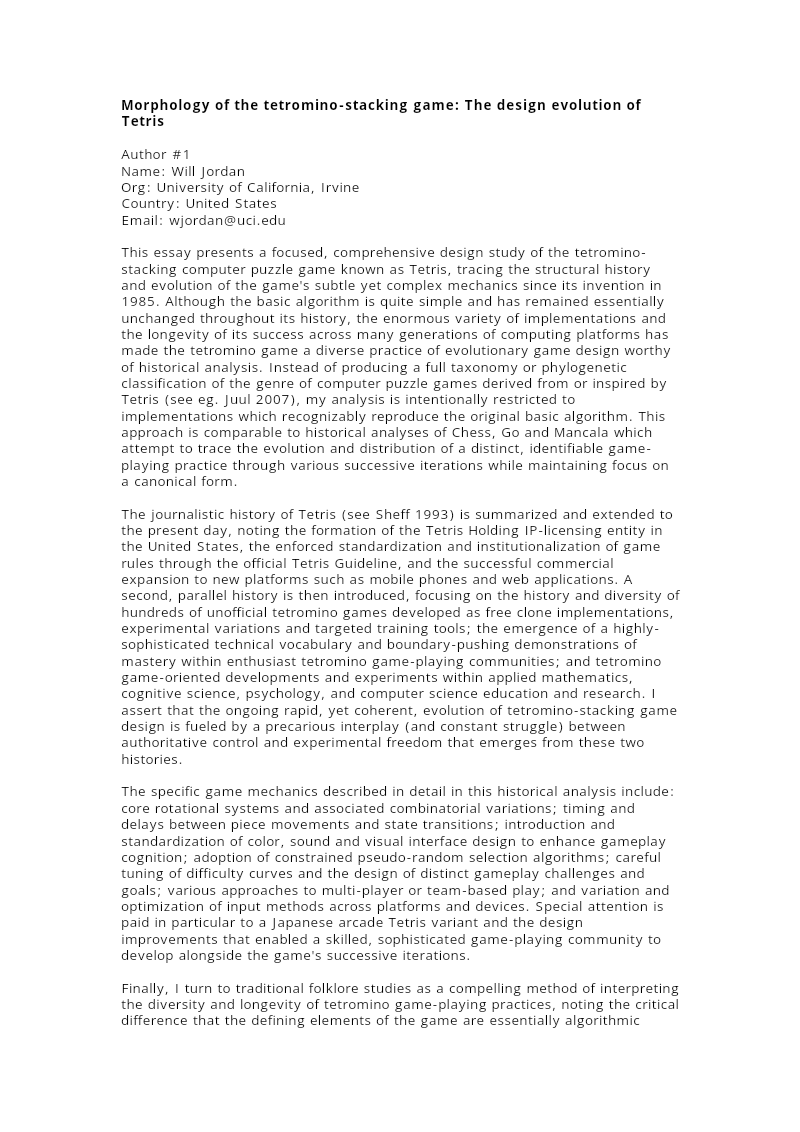
The essay analyzes the design evolution of Tetris, a tetromino-stacking computer puzzle game, from its invention in 1985 to the present day.
- The essay argues Tetris's ongoing coherent evolution comes from a tension between authoritative control (institutional standardization of rules) and experimental freedom (an extensive unofficial lineage of clones, variants, and training tools).
- The study restricts its analysis to implementations that faithfully reproduce the original algorithm, treating Tetris as a canonical form comparable to chess, Go, and mancala, even though its core algorithm has remained essentially constant since its 1985 invention.
- Two parallel histories are traced: the official trajectory, including the formation of the Tetris Holding IP licensing entity, adoption of the official Tetris Guideline, and expansion onto mobile and web platforms, and an unofficial history of hundreds of free clones and variants.
Game Development: A Teaching Challenge
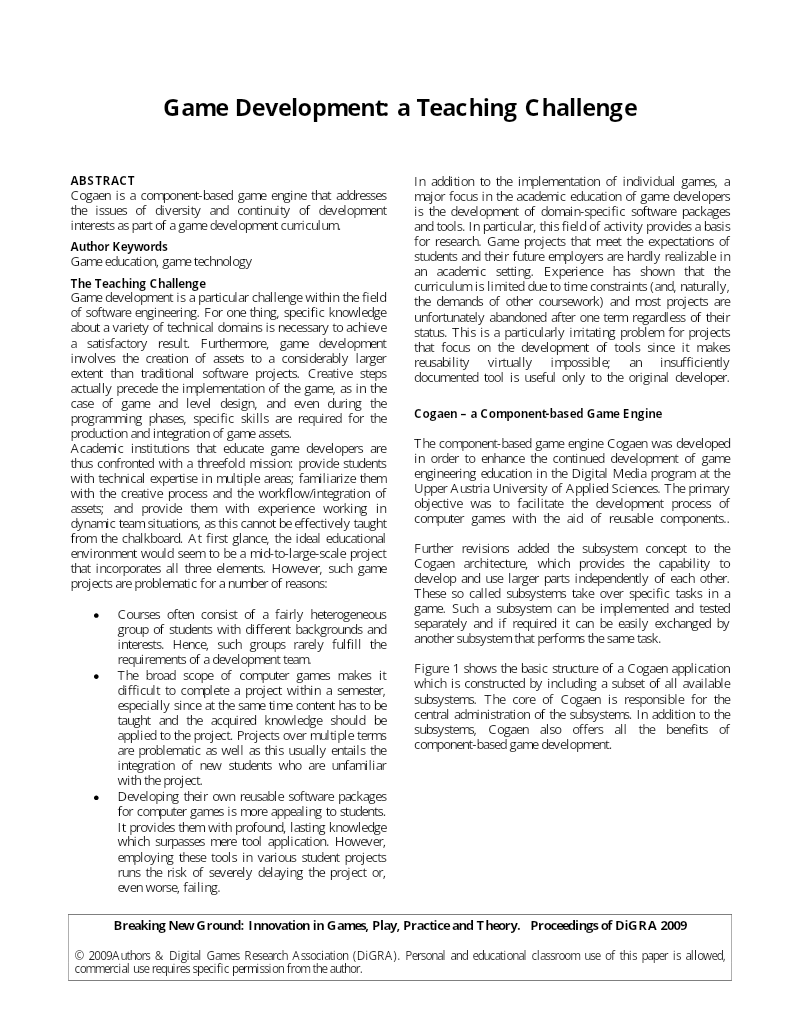
The document "Game Development: A Teaching Challenge" addresses the complexities of educating game developers within an academic setting, particularly focusing on the challenges of integrating diverse technical knowledge, creative processes, and team dynamics into a curriculum.
- Academic game development programs face a threefold mission: teaching technical expertise across multiple domains, familiarizing students with the creative process and asset workflows, and providing experience in collaborative team environments.
- Delivering this mission through a single mid-to-large-scale student project is problematic because course groups are heterogeneous in background, the breadth of game development rarely fits one semester, and multi-term projects suffer continuity problems as new students join.
- Student projects, especially tool-development projects, are often abandoned after one term, which makes their reuse nearly impossible.
Creativity in the Game Design Classroom
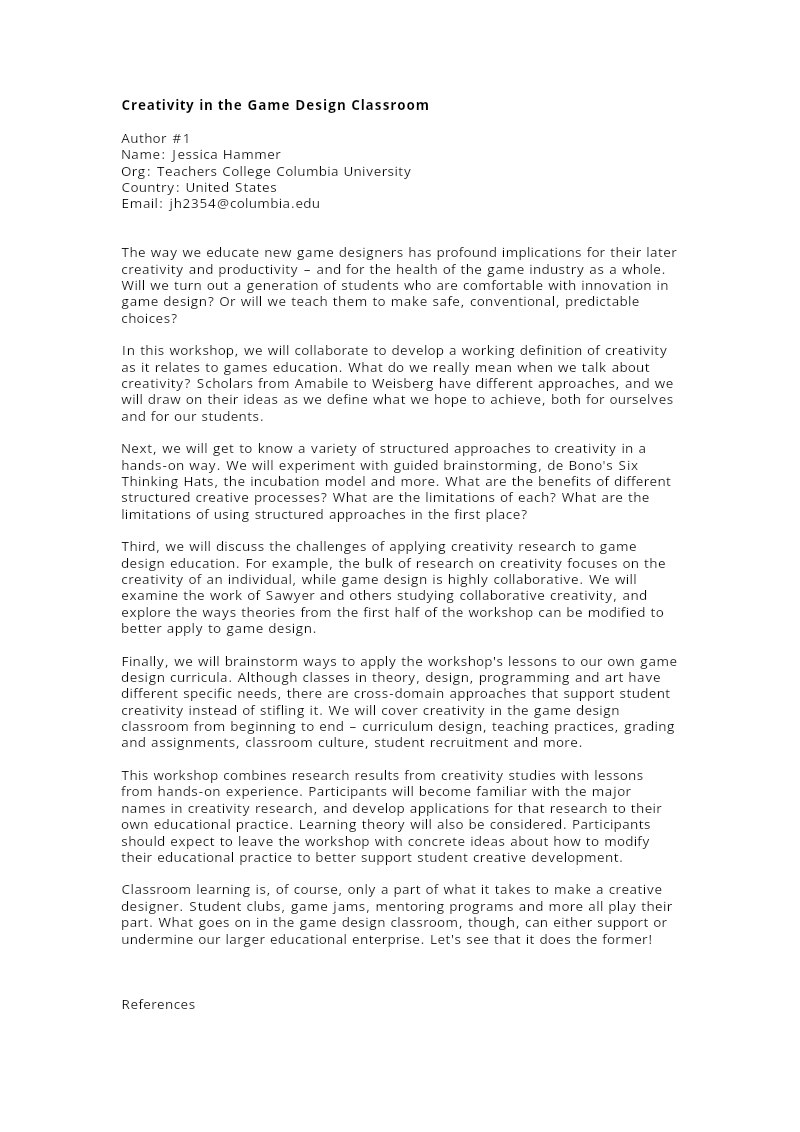
The document outlines a workshop focused on fostering creativity in game design education, emphasizing its critical role in shaping future game designers and the industry's health.
- The central thesis is that how game designers are educated has lasting consequences for their creative capacity and, by extension, the health of the game industry, with the key question being whether graduates are prepared for innovation or default to safe, conventional choices.
- A significant challenge identified is that most creativity research focuses on individual creators, whereas game design is highly collaborative, requiring existing theories to be adapted using research on group creativity.
- Formal classroom instruction is only one component of developing creative designers, alongside student clubs, game jams, and mentoring programs, but classroom practice can either reinforce or undermine these broader efforts.
Levels of Complexity: Cultural Diversity, Politics and Digital Games
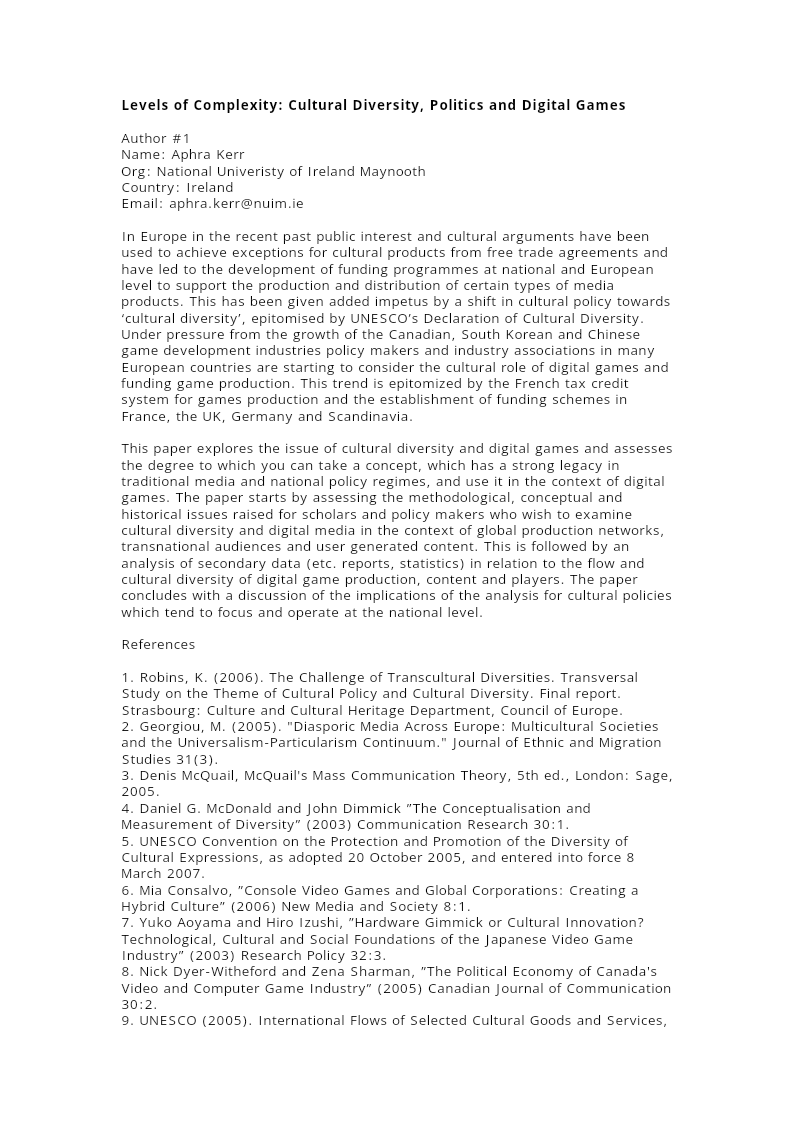
The paper examines the applicability of cultural diversity concepts, traditionally rooted in national media policy, to the digital games sector.
- The paper argues that cultural diversity, a concept rooted in traditional media and national cultural policy, must be rethought for digital games shaped by global production networks, transnational audiences, and user-generated content.
- European policymakers increasingly treat digital games as a cultural industry deserving public support, but the author contends that existing national policy frameworks are poorly matched to how games are produced and consumed.
- Support mechanisms cited include the French tax credit system and dedicated schemes in the United Kingdom, Germany, and Scandinavia, while Canada, South Korea, and China are noted as competitive pressures on European game industries.
Tabletop Augmented Reality Games: Play Outside the Display
This paper explores the emerging genre of tabletop Handheld Augmented Reality (HAR) games, focusing on how these experiences blend physical and virtual realities to create unique play styles and interactions.
- Handheld augmented reality (HAR) games are presented as a new genre, enabled by recent gains in mobile processing and graphics, whose tight coupling of virtual content with physical objects creates distinctive forms of play that existing AR, mobile computing, and game design frameworks do not adequately account for.
- The paper focuses on self-contained, board-game-style "tabletop" HAR games, drawing on surveys, design portfolios, interviews, and playtests of more than a dozen such games created by the authors.
- The authors identify common elements of play and how these applications merge physical and virtual realities, and they propose a design continuum for classifying existing HAR titles and guiding new ones.

What Videogame Making Can Teach Us About Access and Ethics in Participatory Culture
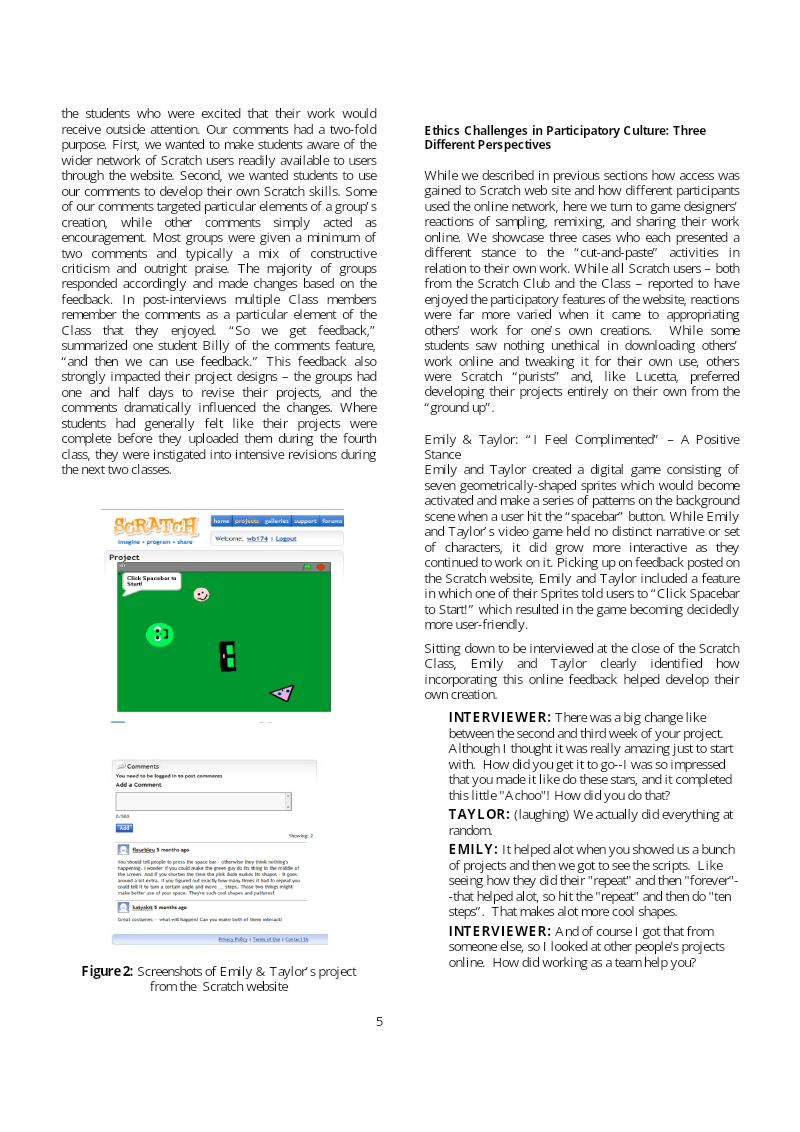
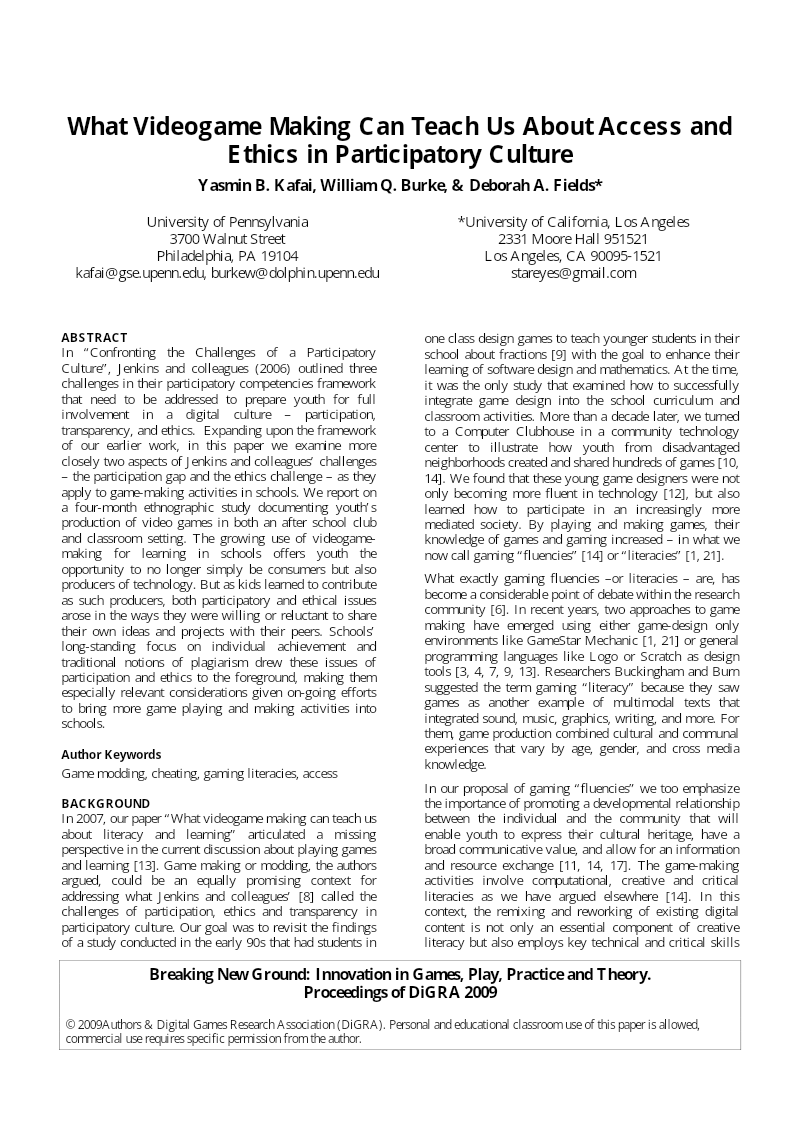
This ethnographic study investigates the "participation gap" and "ethics challenge" inherent in game-making activities among middle-school students, particularly concerning the sharing and remixing of digital content.
- Youth participation in game-making deepened over time: students who initially hesitated to share their work publicly gradually moved from offline tinkering to downloading and remixing others' projects.
- Remix culture raises real ethical tensions around appropriation, since copy-and-paste is easy on platforms like Scratch (which hosted more than 320,000 projects) and MySpace, and students' reactions ranged from valuing shared code for improving their own work to feeling wronged when their creations were reused without credit.
- The study's findings are drawn from a four-month ethnographic investigation of 47 middle-school students aged 10 to 12 in a Scratch after-school club and classroom.
A Platform-Independent Model for Videogame Gameplay Specification
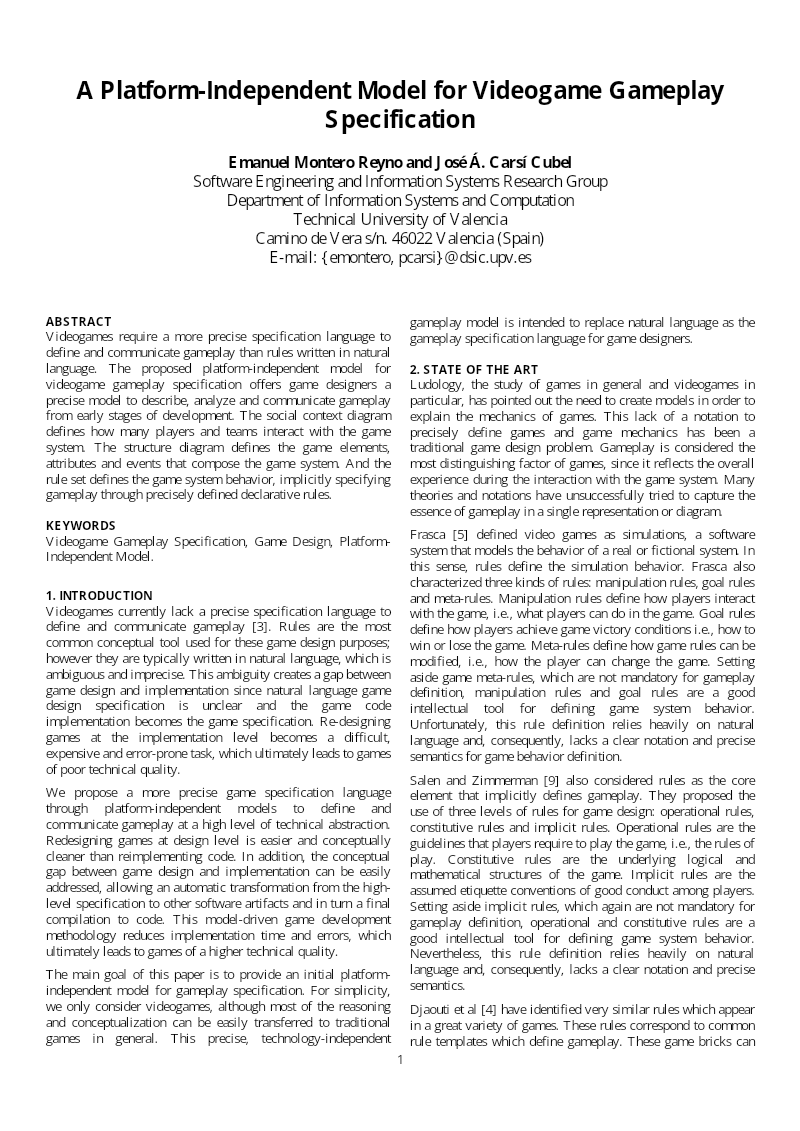
The document proposes a platform-independent model for videogame gameplay specification, aiming to replace ambiguous natural language with a precise, formal language for game designers.
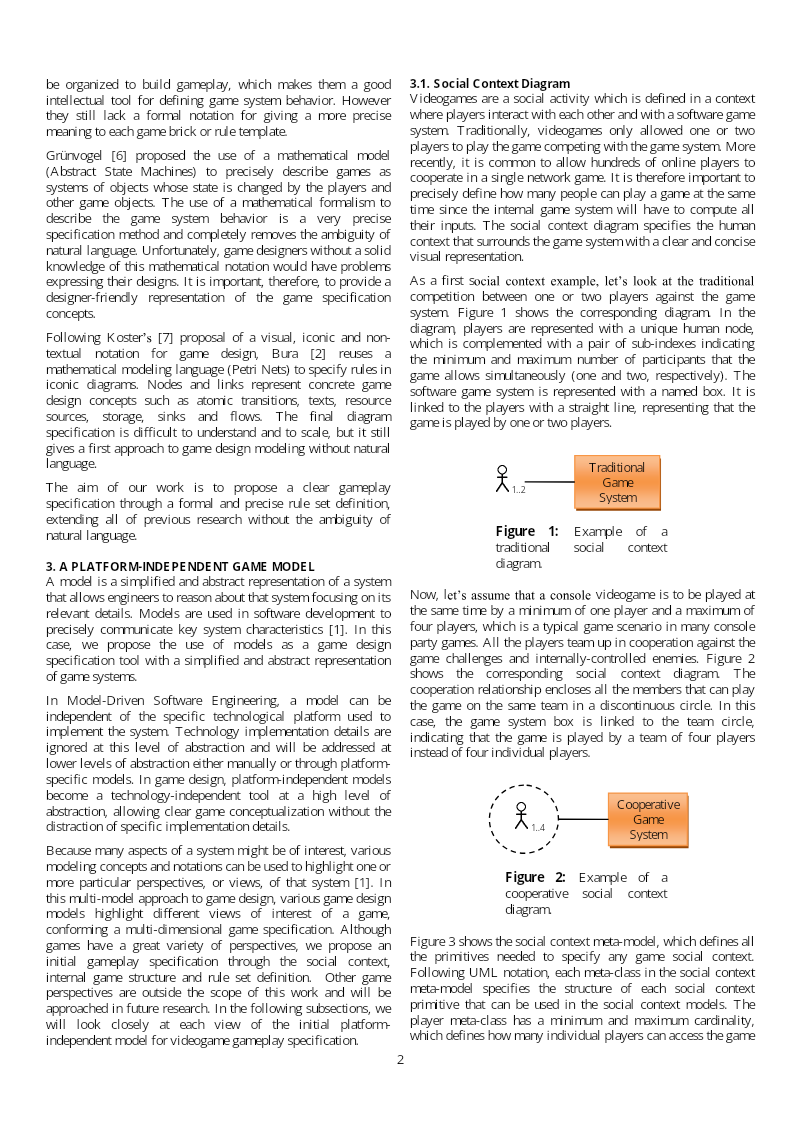
- The paper proposes a platform-independent, model-driven notation for videogame gameplay rules, aiming to replace ambiguous natural-language rule descriptions that hinder the transition from design to implementation.
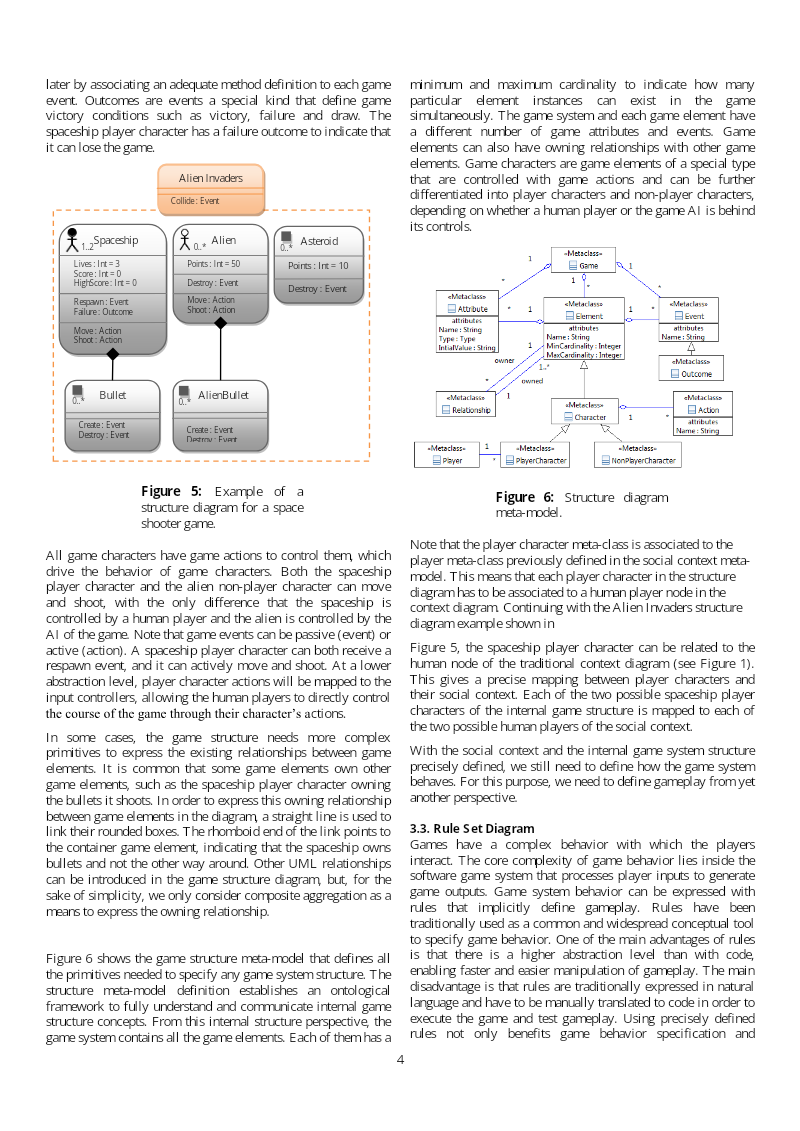
- The model has three complementary views: a social context diagram (player and team cardinality, cooperative or competitive relationships), a structure diagram (attributes, events, actions, ownership, and player vs. non-player characters), and a rule set diagram (pre- and post-condition rules classified as action, internal, or goal rules).
- The framework builds on established ludology work, including Frasca's manipulation, goal, and meta-rule classification and Salen and Zimmerman's operational, constitutive, and implicit rules.
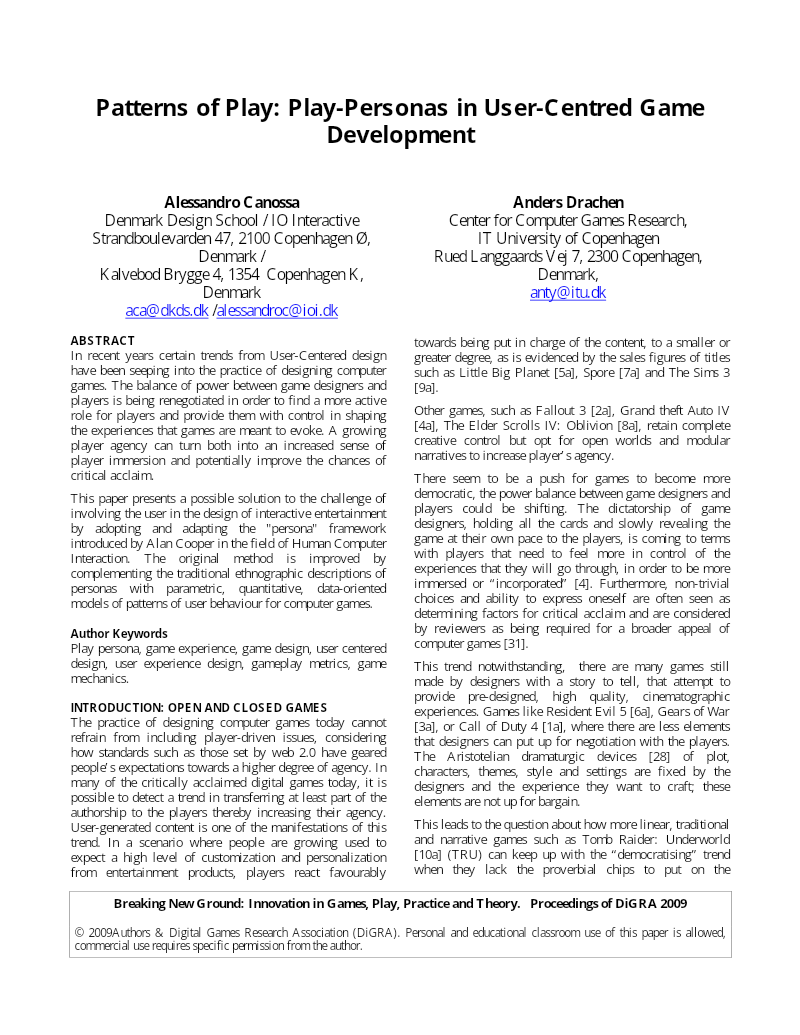
Patterns of Play: Play-Personas in User-Centred Game Development
The document introduces "play-personas" as a novel framework for user-centered game development, adapting Alan Cooper's persona concept to the unique challenges of game design.
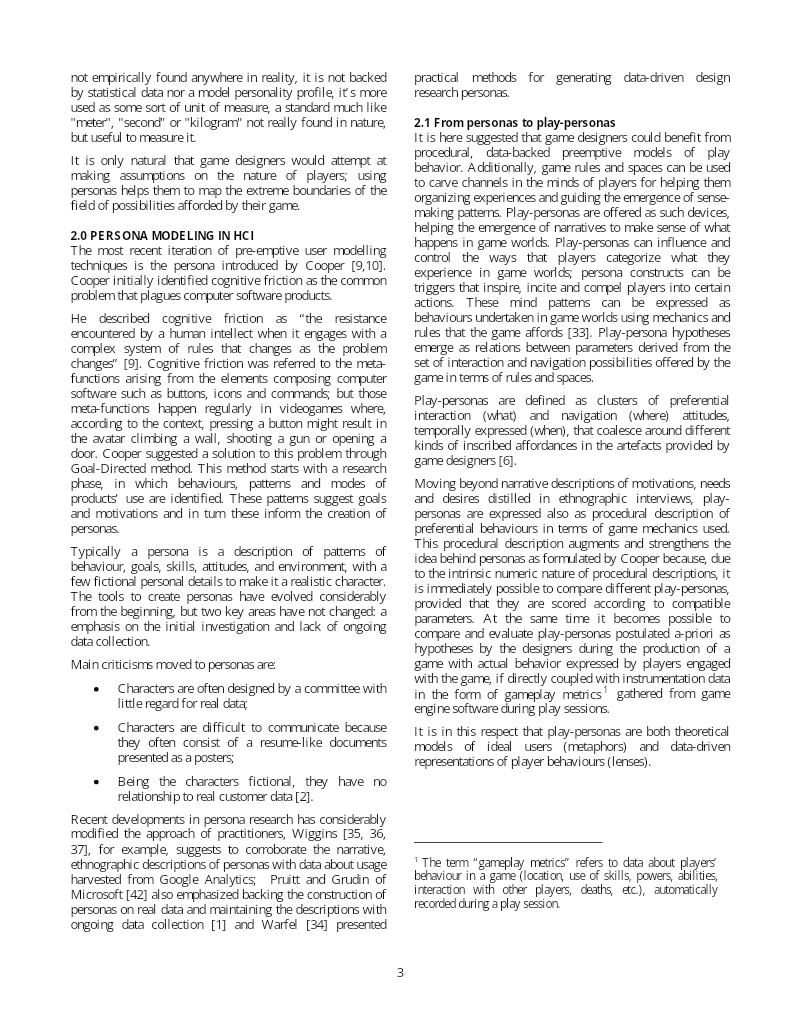
- The report adapts Alan Cooper's HCI persona framework to games by introducing "play-personas," which are clusters of preferred interaction and navigation behaviors that let designers keep authorial control while giving players meaningful agency.
- The authors argue personas should shift from narrative-driven, committee-designed archetypes to data-driven models validated against observed play, justified by cognitive and literary theory such as the pattern-seeking drive and Iser's implied reader.
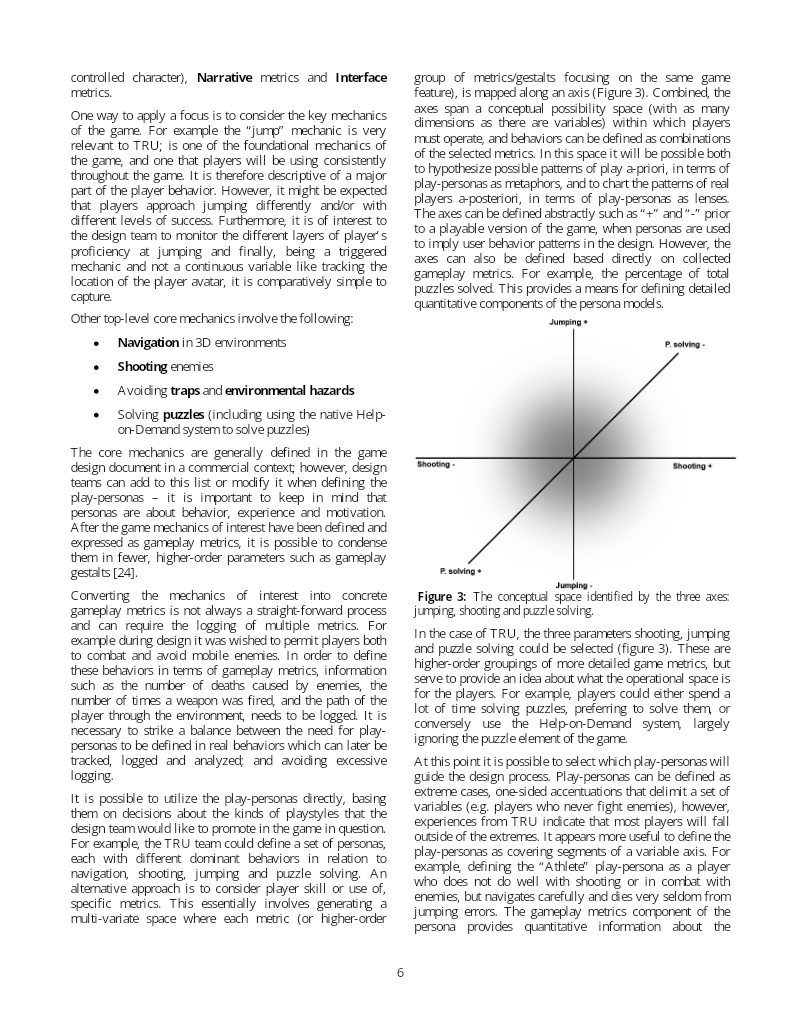
- Play-personas operate both as design metaphors encoding designers' behavioral expectations and as analytical lenses built from high-frequency gameplay metrics.
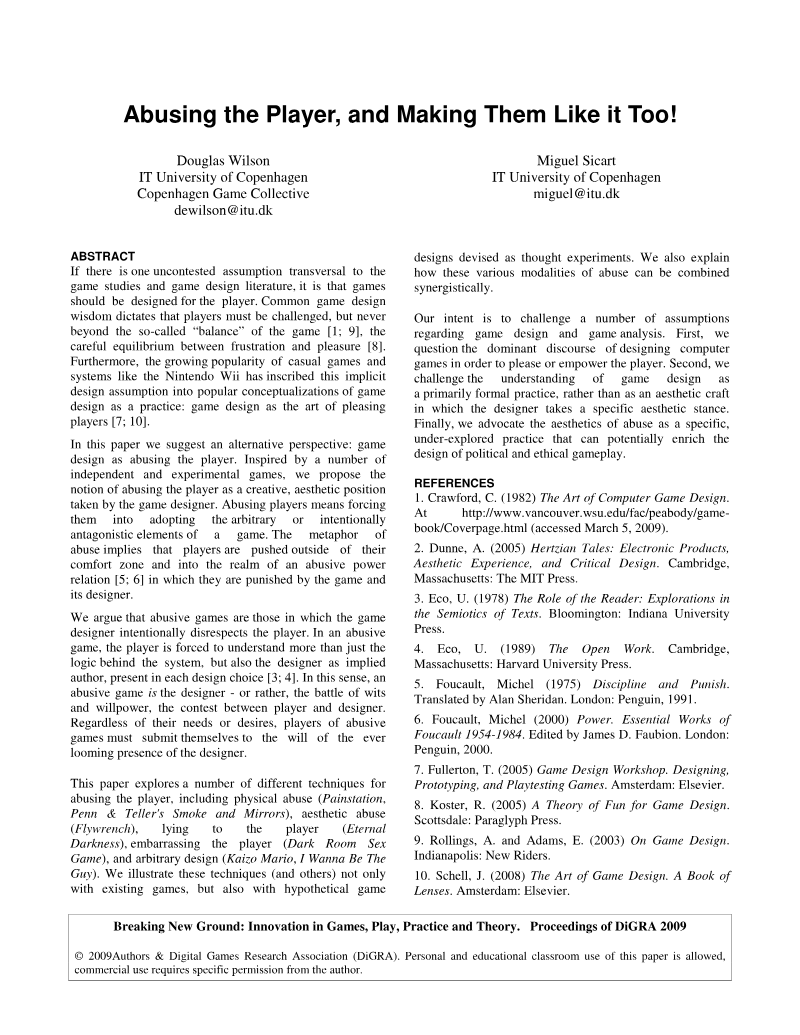
Abusing the Player, and Making Them Like it Too!
The document, "Abusing the Player, and Making Them Like it Too!", challenges the prevailing assumption in game studies and design that games should primarily aim to please or empower the player.
- The paper argues that 'abusing the player' (intentionally disrespecting, antagonizing, or punishing players) is a legitimate, under-explored creative and aesthetic practice that can enrich the political and ethical dimensions of gameplay.
- Authors Douglas Wilson and Miguel Sicart of the IT University of Copenhagen challenge the dominant view that games should be built for player pleasure, empowerment, and comfort, and that design is primarily about balancing frustration and pleasure.
- The authors reframe game design as an aesthetic craft in which the designer becomes a visible implied author whose intent the player must contend with alongside the system's logic.
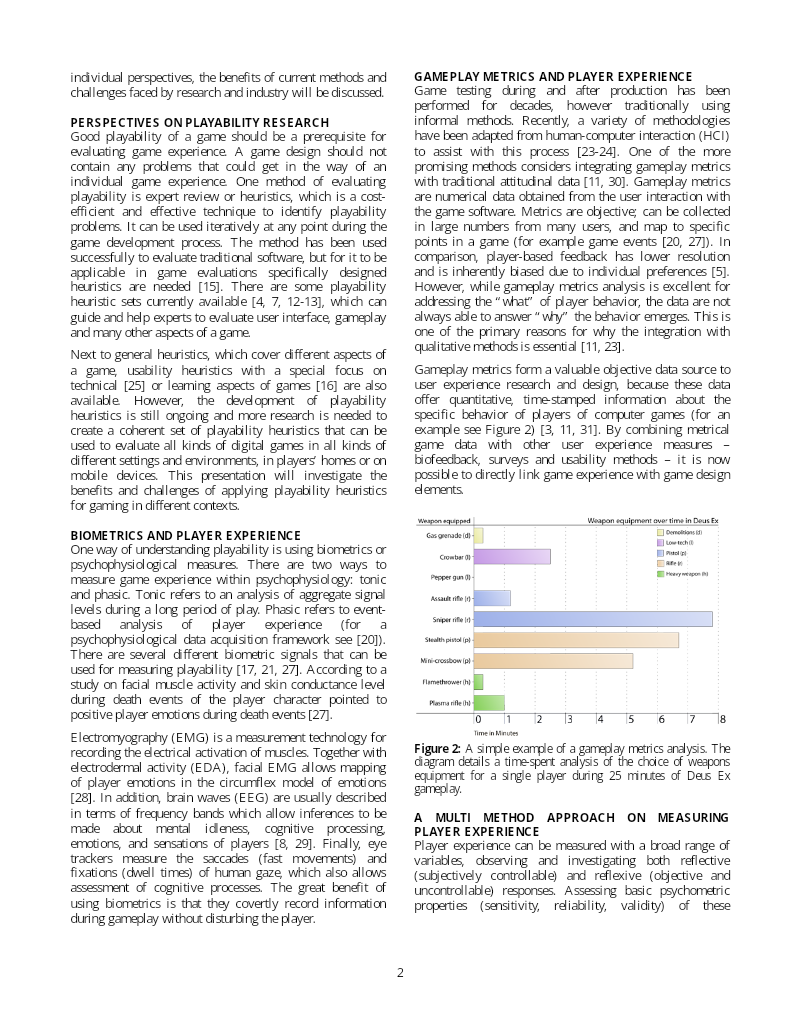
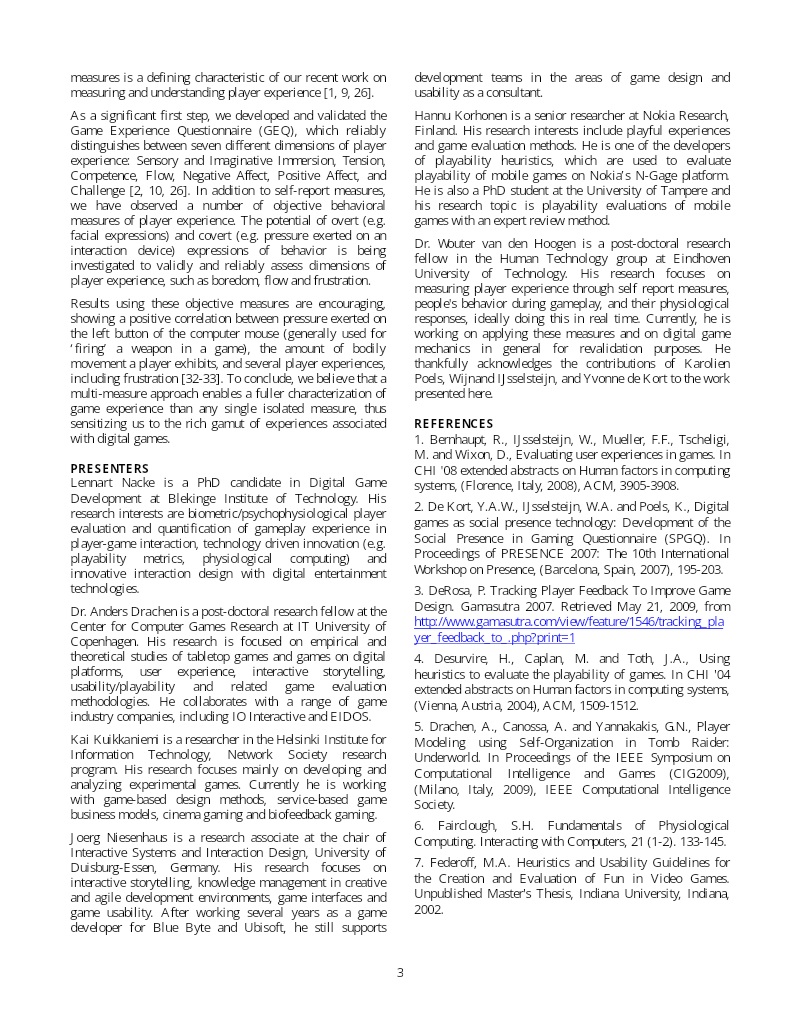
Playability and Player Experience Research
This document outlines a research panel discussion focused on advancing methodologies for analyzing and measuring player experience and playability in the maturing game industry.
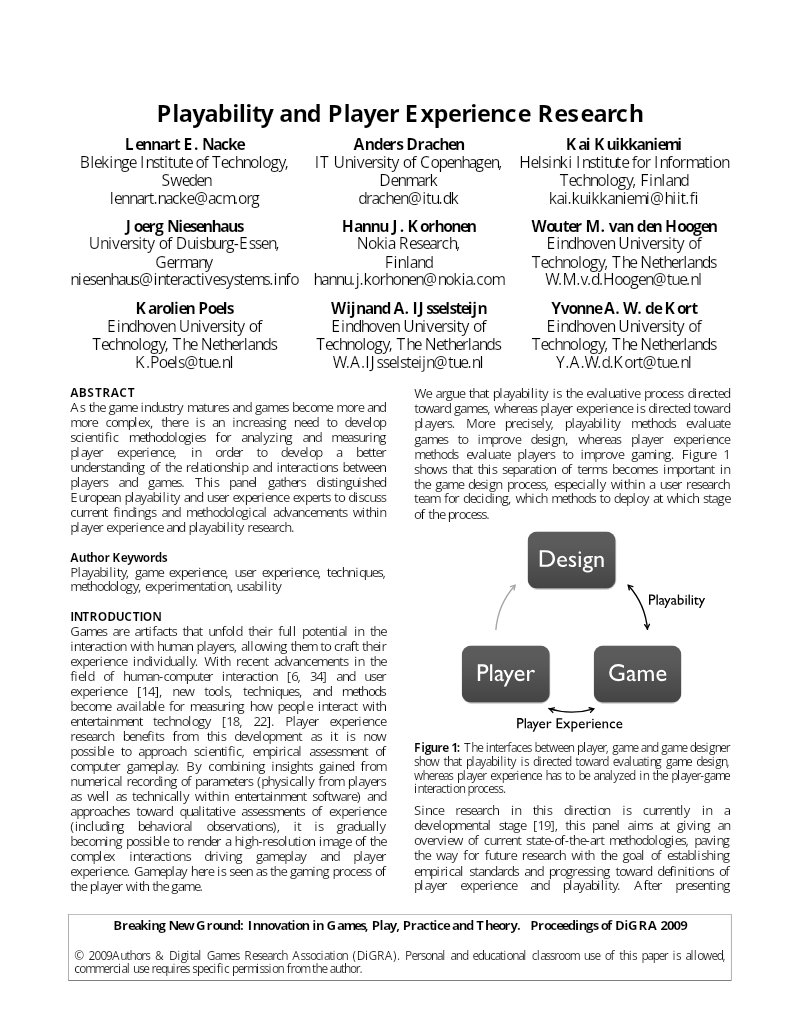
- Playability and player experience are presented as distinct but complementary research domains: playability evaluates the game itself to improve design, while player experience evaluates players to improve gaming.
- The paper frames playability and player experience research as a developmental stage rather than a settled discipline, aiming to move the field toward empirical standards and clearer definitions.
- Expert review and heuristic evaluation are cost-effective, iterative methods for finding playability problems, but general usability heuristics must be adapted with game-specific sets.
A Study on New Gameplay Based on Brain-Computer Interface
This study investigates the potential of Brain-Computer Interface (BCI) devices as a novel input method for video games, approaching the subject from a game design perspective.
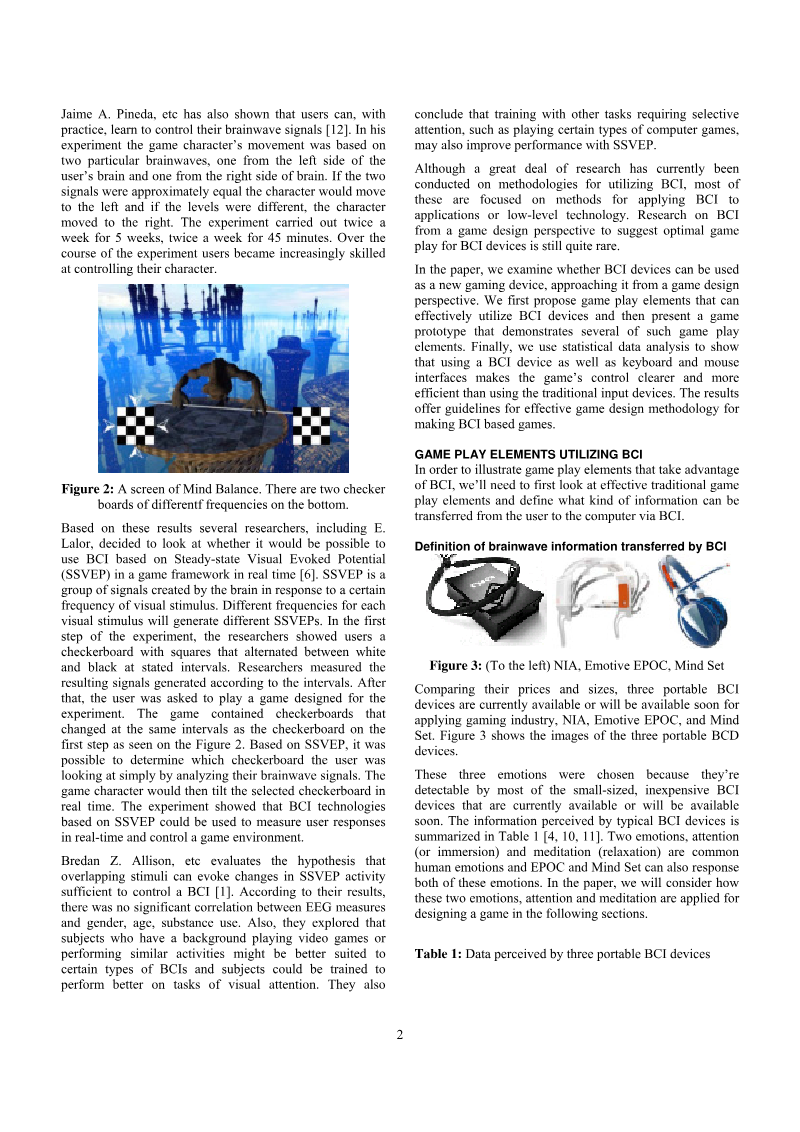
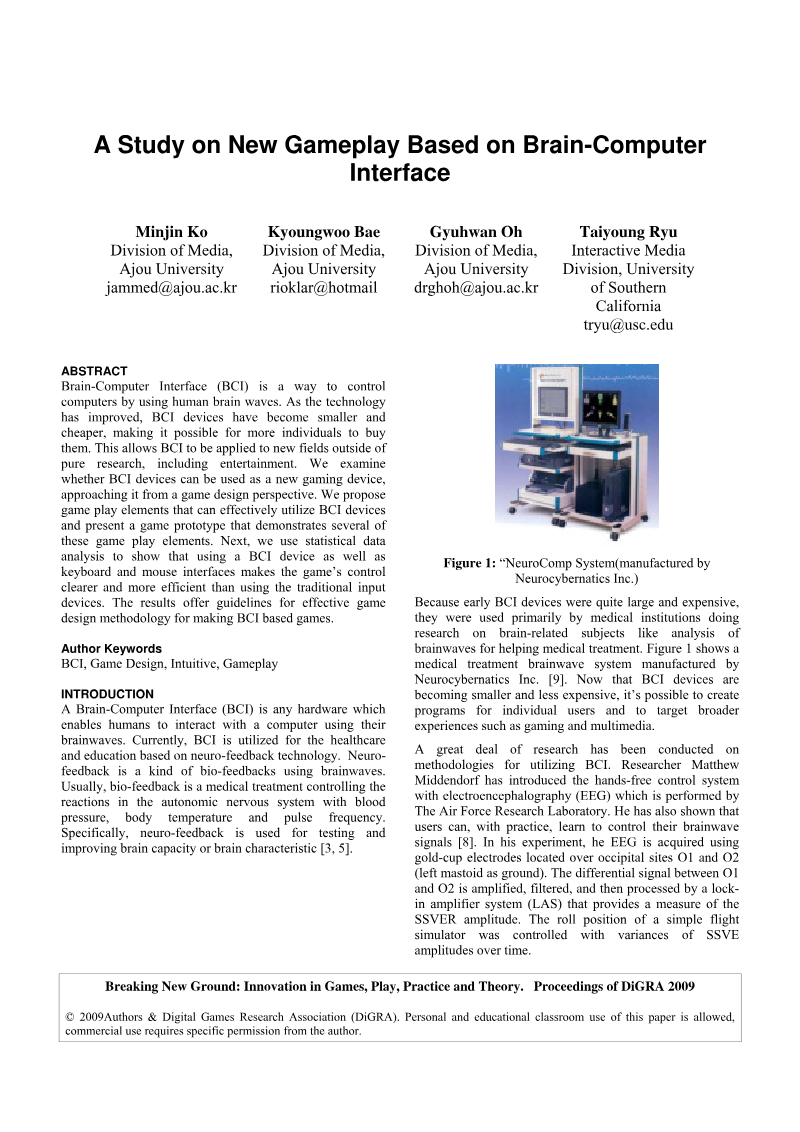
- The study treats brain-computer interface (BCI) input as a game design question rather than a purely technical or medical one, noting that cheaper, smaller consumer BCI hardware has opened it to entertainment while design-oriented BCI game research remains scarce.
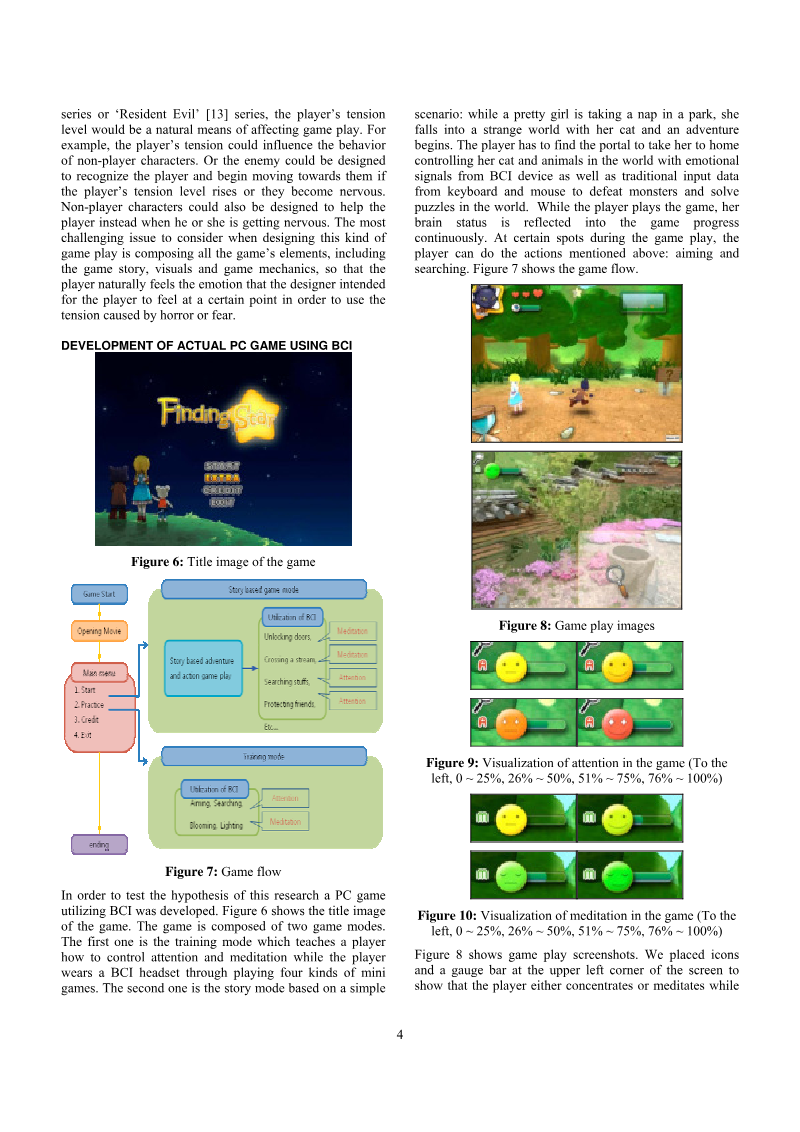
- The prototype maps two brainwave-derived states onto game mechanics: attention reduces crosshair jitter for steadier aiming, while meditation speeds character recovery and aids searching for hidden objects.
- In a comparison of two versions of the same game with 20 participants split evenly, the BCI version scored higher on convenience, fun, and intuitiveness (149 total vs. 102; means 14.9 vs. 10.2), a difference reported as statistically significant (t ≈ 5.605 at the 0.05 level).


Game Developer Index: Sweden 2008
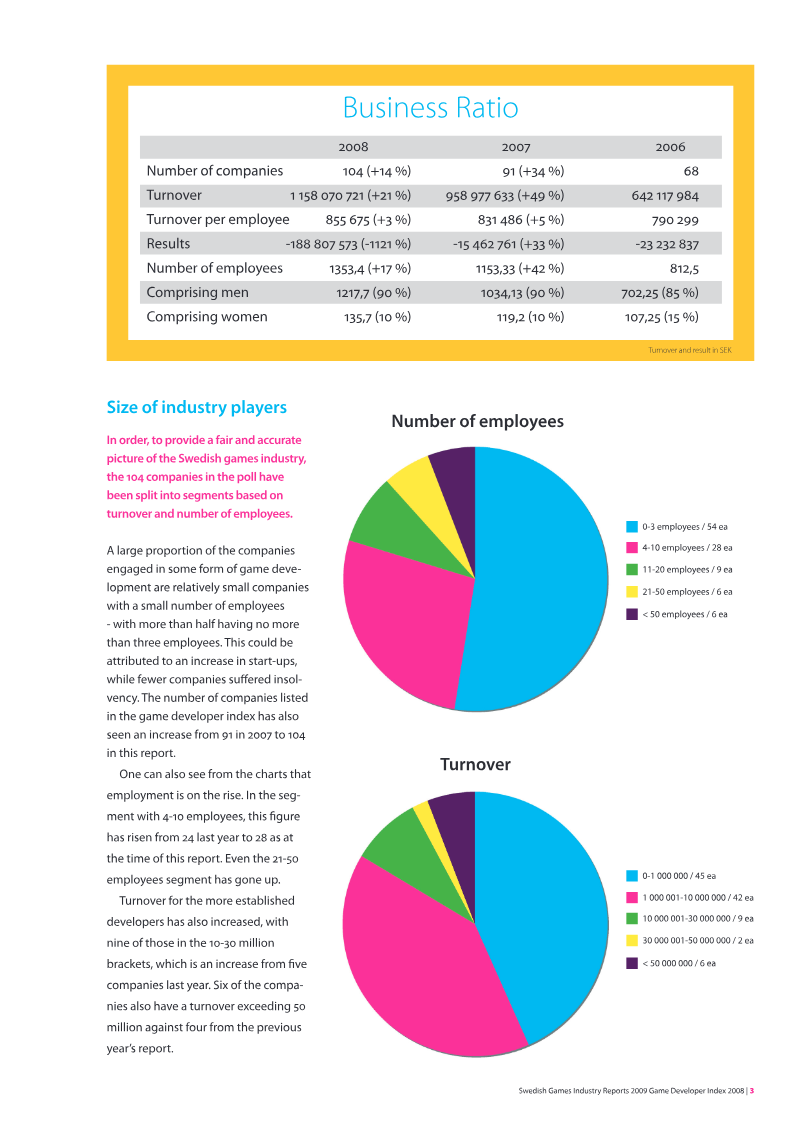
The "Game Developer Index 2008" provides an annual compilation of financial statements for Swedish game development companies, aiming to highlight the industry's performance and position globally.
- The Swedish game industry experienced significant growth in 2008, recording a 21 percent increase in turnover and a 17 percent rise in employment.
- Industry activity is highly polarized, with the five largest companies generating 64.2 percent of total turnover and accounting for 52.2 percent of total employment.
- Despite individual successes, the industry reported an aggregate negative financial outcome in 2008, driven by high costs for large-scale console development and the presence of many pre-revenue startups.
Writers
Games and companies
Games