1 free read left. Create a free account for unlimited reading + AI research.
Create free accountWhitepaper DiGRA
1 free read left. Create a free account for unlimited reading + AI research.
Create free accountWhitepaperDiGRA
The proposal argues that education shapes creative capacity and, by extension, the health of the game industry.
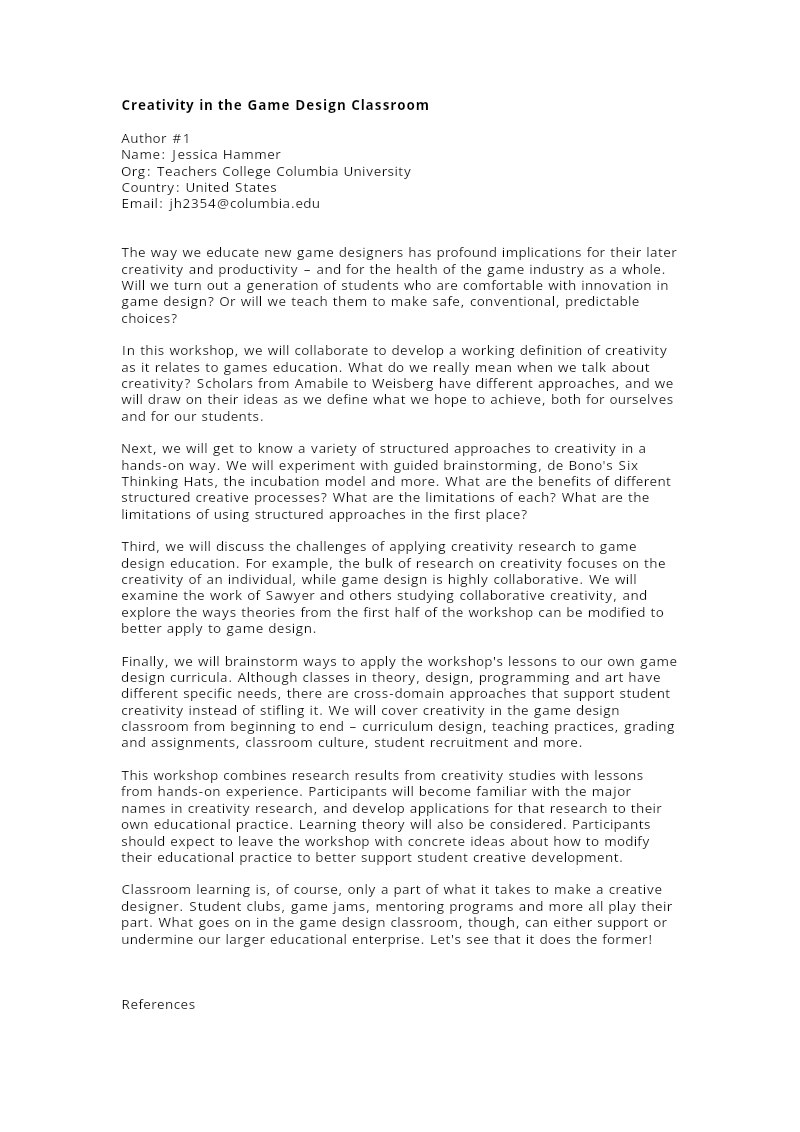
This document is a workshop proposal by Jessica Hammer of Teachers College, Columbia University, addressing how creativity should be taught and supported in game design education. Its central thesis is that the way new game designers are educated has lasting consequences for their creative capacity and, by extension, for the health of the game industry. The author frames the core question as whether educators will produce graduates comfortable with innovation or teach them to default to safe, conventional, and predictable design choices.
The workshop is structured around four stages. Participants first work toward a shared working definition of creativity drawn from established scholarship, including the work of Amabile and Weisberg. They then experiment with structured creative methods such as guided brainstorming, de Bono's Six Thinking Hats, and the incubation model, weighing the benefits and limitations of each. A third phase addresses a significant challenge: most creativity research concerns individual creators, whereas game design is highly collaborative, so the discussion draws on Sawyer and others who study group creativity to adapt existing theories. The final stage focuses on applying these lessons across curriculum design, teaching practice, grading, classroom culture, and student recruitment, with attention to the differing needs of courses in theory, design, programming, and art.
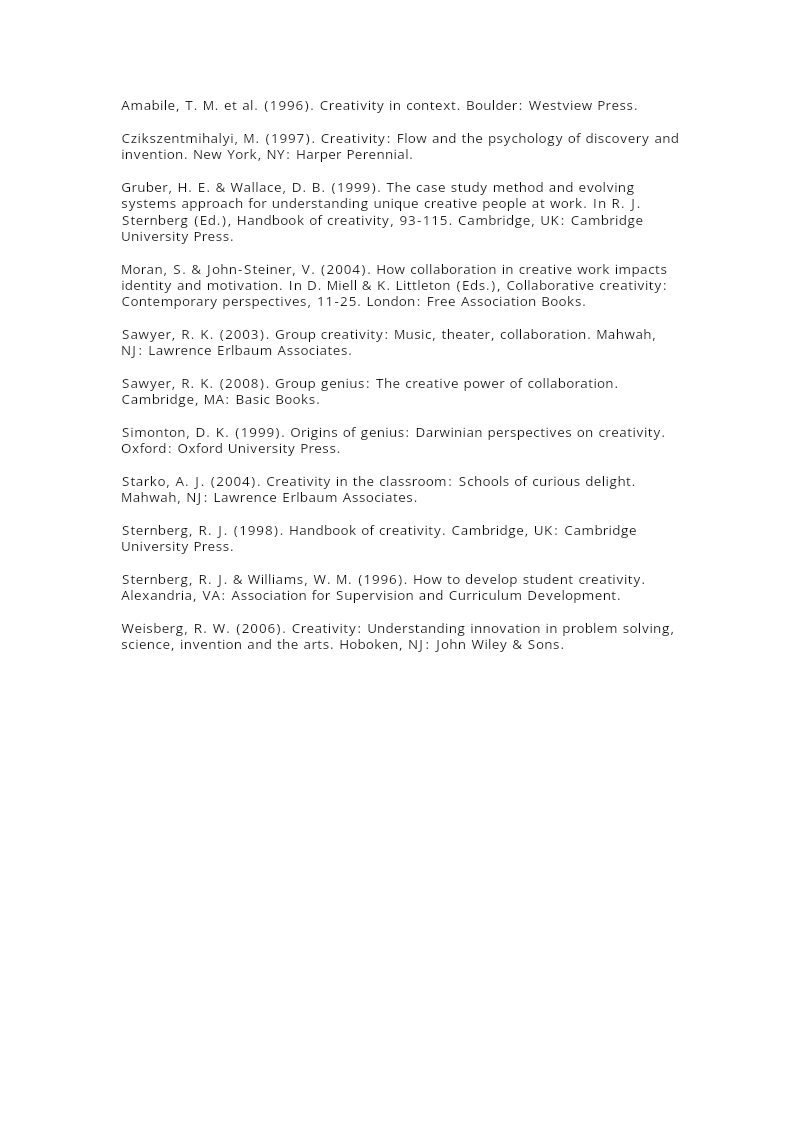
The document emphasizes that formal classroom instruction is only one component of developing creative designers, alongside student clubs, game jams, and mentoring programs. It argues, however, that what happens within the classroom can either reinforce or undermine these broader efforts. The proposal draws on a reference list of roughly a dozen works spanning creativity studies, collaborative creativity, and classroom creativity, including foundational texts by Sternberg, Csikszentmihalyi, and Simonton. The piece is a practitioner-oriented proposal rather than an empirical study, so it presents no survey data or quantitative findings.

DiGRA · 2026

DiGRA · 2026



DiGRA · 2026



DiGRA · 2026



DiGRA · 2026



DiGRA · 2026



DiGRA · 2026



DiGRA · 2026

DiGRA · 2026



DiGRA · 2026



DiGRA · 2026

DiGRA · 2026
DiGRA · 2025