Game Development reports and market data
Documents



Ubisoft Annual Report 2009
The Ubisoft Annual Report 2009 provides a comprehensive overview of the company's financial performance, strategic initiatives, and corporate governance for the fiscal year ending March 31, 2009.
- Ubisoft surpassed €1 billion in annual revenue for the first time in the 2008-2009 fiscal year, achieving €1.06 billion in sales, a 14% increase over the previous period.
- Net income declined significantly to €68.8 million from €109.8 million, driven by a strategic shift toward lower-margin casual titles and increased marketing expenditures.
- The company expanded its global workforce to 5,765 employees across 28 countries, supported by the strategic acquisitions of Massive Entertainment and Hybride Technologies.

Game Developer Index 2009: Sweden
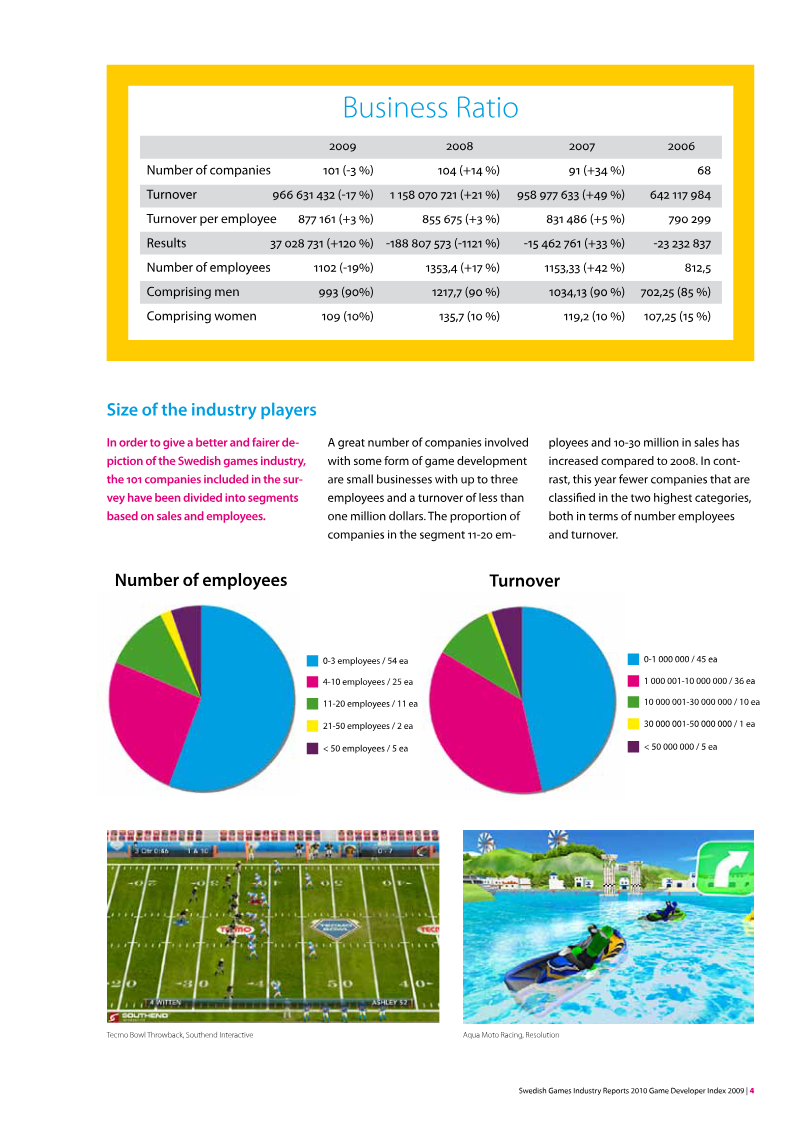
The "Game Developer Index 2009: Sweden" provides an annual financial overview of the Swedish game development industry, highlighting its status as a significant global exporter of high-quality games despite a challenging economic year.
- The Swedish game industry experienced a 19 percent decline in employment and a 17 percent decrease in total turnover during 2009 due to the broader economic downturn.
- The sector is highly concentrated, with the five largest companies accounting for over 60 percent of both total industry employment and total turnover.
- Despite the overall revenue decline, the industry improved its operational efficiency, marking the third consecutive year of rising turnover per employee.



CESA Game Development Technology Roadmap: 2009
The "CESA Game Development Technology Roadmap: 2009" outlines current and future technological trends relevant to game development, aiming to serve as a guide for developers, industry professionals, researchers, and students.
- The industry is shifting toward automated, scalable development systems, emphasizing the integration of sophisticated asset management and automated testing to increase productivity.
- Programming efforts are prioritizing multi-core optimization and the adoption of higher-level languages to handle increasing technical complexity.
- Visual arts production is transitioning toward procedural generation, physical simulation, and real-time rendering techniques.

System for Automated Interactive Lighting (SAIL)
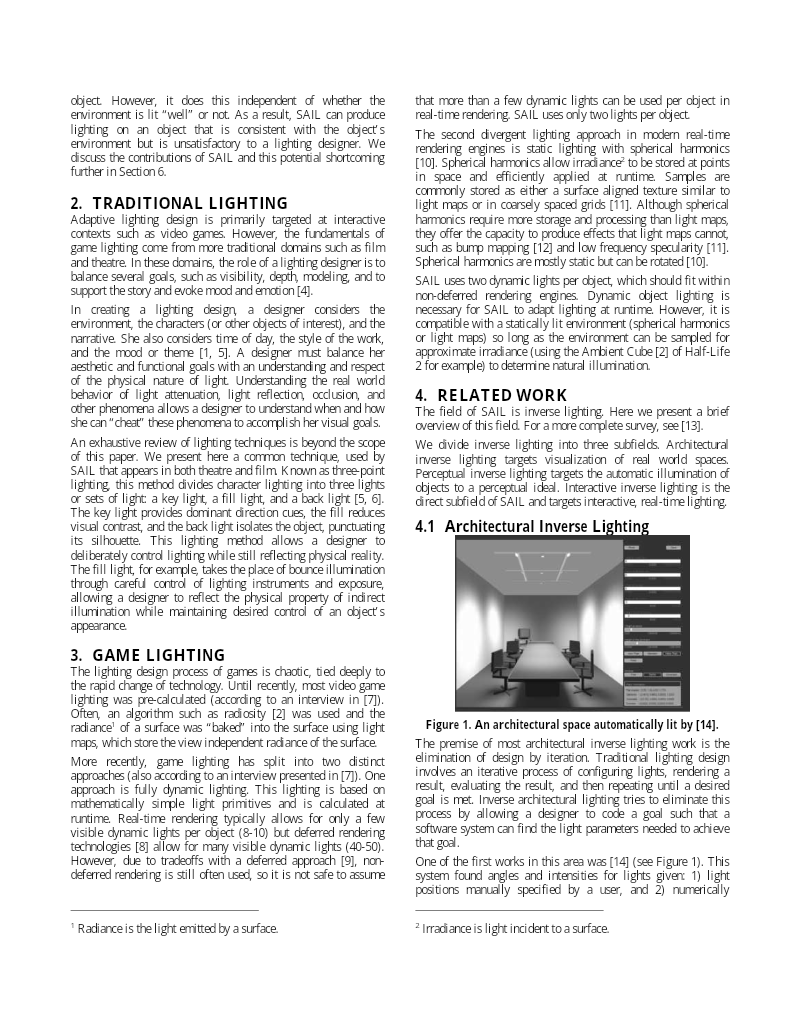
The paper, by Joseph Zupko of Penn State University and Magy Seif El-Nasr of Simon Fraser University, presents the System for Automated Interactive Lighting (SAIL), an adaptive lighting system for interactive experiences such as video games.
- Participants in the qualitative study were lighting experts, with 19 responses out of 19 participants recorded for expertise, and the authors used images as an interface for specifying lighting goals.
- The authors found that images can be an effective interface for lighting experts to specify lighting goals, though whether this extends beyond a simple lit-sphere metaphor is left open.
- SAIL successfully adapted to context by mimicking the natural lighting state, but many participants found that natural state unacceptable aesthetically or functionally.
Services in Game Worlds: A Semantic Approach to Improve Object Interaction
The primary objective of this research is to address the lack of functional depth in virtual game environments by introducing a semantic framework for object interaction.
- A new semantic framework introduces 'services'—defined as an entity's capacity to perform actions based on specific requirements—to transform static game objects into functionally interactive elements.
- The methodology utilizes the WordNet database and inheritance-based ontologies to build reusable libraries, ensuring consistency and efficiency across different game development projects.
- By embedding service-awareness into objects, developers can create complex, inherent behaviors, such as vending machines that require currency or heaters that dynamically alter environmental temperature.
Artificial Intelligence for Computer Games
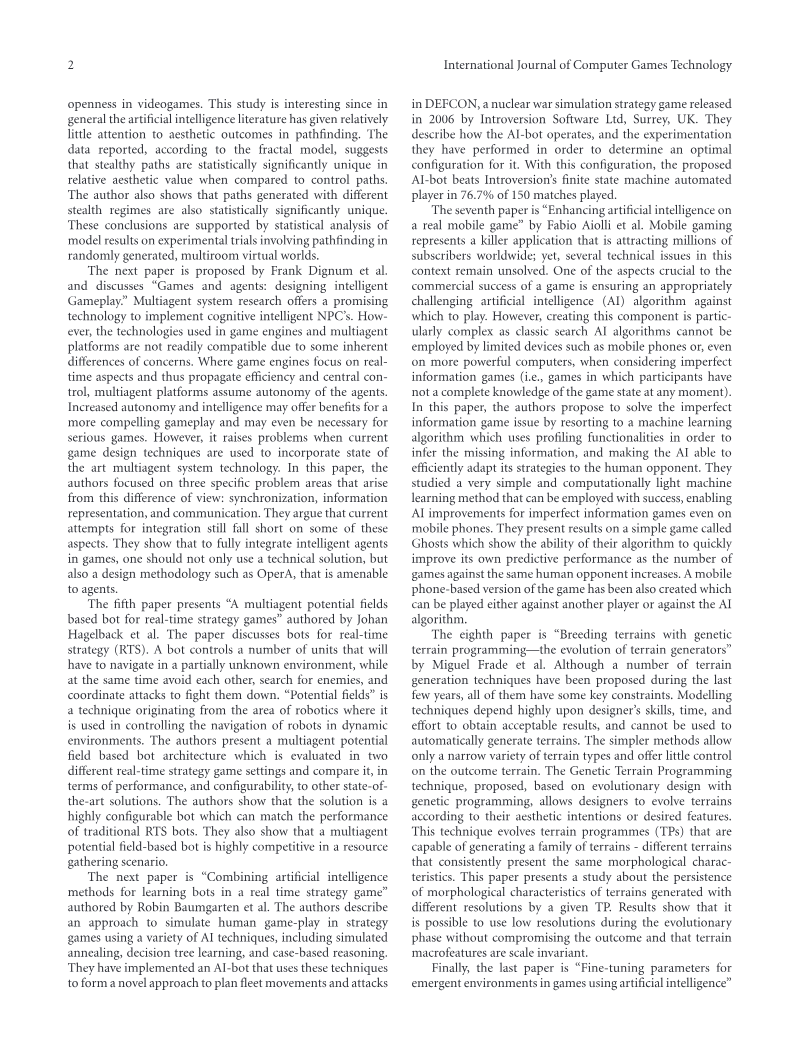
This editorial collection explores the current state of artificial intelligence (AI) in computer games, focusing on the transition from traditional rule-based systems to more advanced, adaptive, and autonomous methodologies.
- Advanced AI methodologies like machine learning, multiagent systems, and evolutionary algorithms are replacing traditional rule-based scripts to improve NPC behavior and development efficiency.
- New abstraction-based moving target search algorithms allow for high-performance AI decision-making within large, complex game environments.
- Multiagent potential field architectures have been proven to rival traditional bot performance in real-time strategy gaming scenarios.
Games and Agents: Designing Intelligent Gameplay
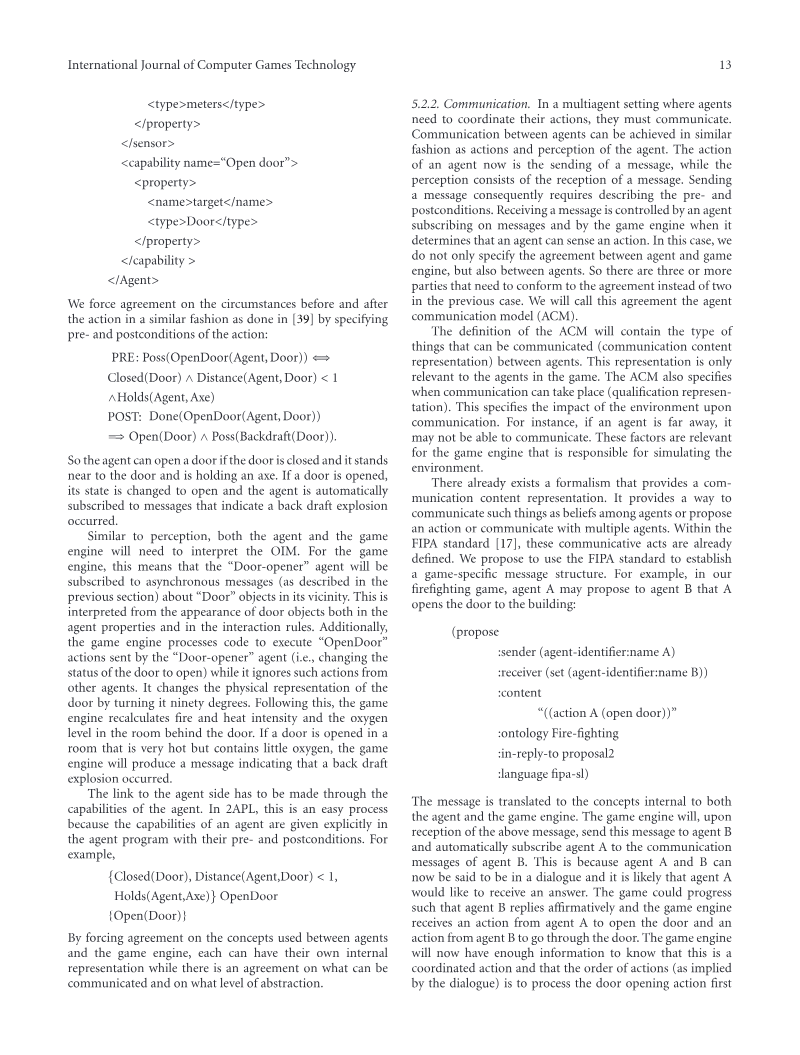
The paper, by F. Dignum, J. Westra, W. A. van Doesburg and M. Harbers of Utrecht University and TNO Defence, Security and Safety, examines how intelligent software agents can be integrated into game engines.
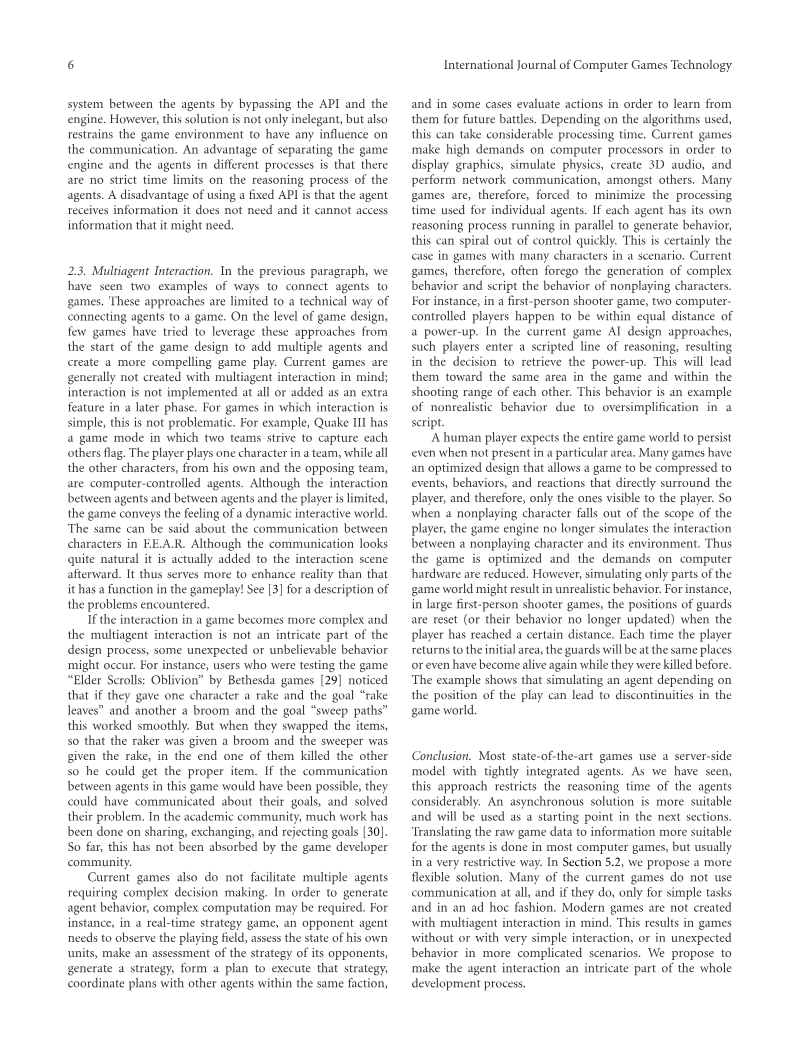
- The authors argue that current game engines and multiagent platforms differ in core concerns, with game engines favouring real-time efficiency and central control while agent platforms assume autonomy.
- Server-side integration in Quake III limits agent reasoning, because agent decisions must be made within one time step of the game loop.
- The authors propose treating game engine and agents as asynchronous processes, with actions passed through a queue from which the engine can select based on its own criteria.
Design and Implementation of a Mobile Exergaming Platform
The Mobile Exergaming Platform (MEP) is a framework designed to encourage physical activity and social interaction through location-based role-playing games.
- The Mobile Exergaming Platform (MEP) successfully integrates geolocation services with game mechanics to incentivize physical activities like walking and cycling.
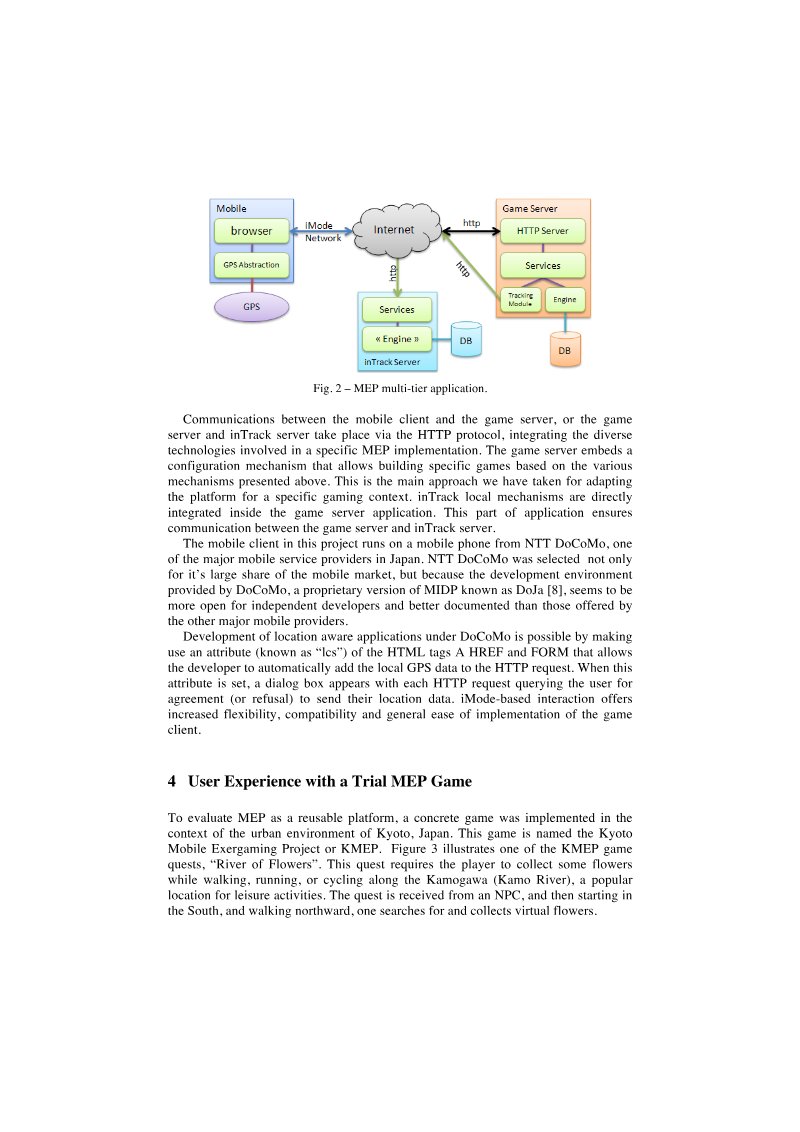
- The platform utilizes a multi-tier architecture that combines inTrack middleware for location services with an XML-based engine for managing quests, NPCs, and inventory.
- The Kyoto Mobile Exergaming Project (KMEP) pilot, conducted using NTT DoCoMo handsets, confirmed that collaborative game mechanics effectively foster social interaction and real-world movement.
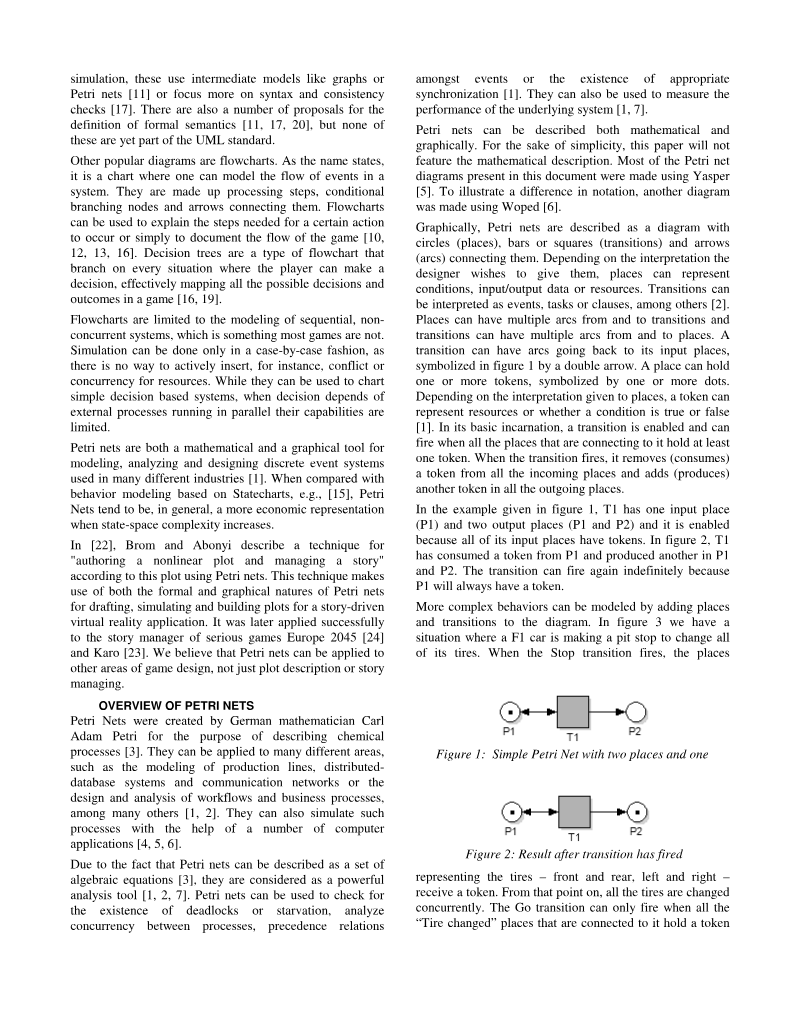
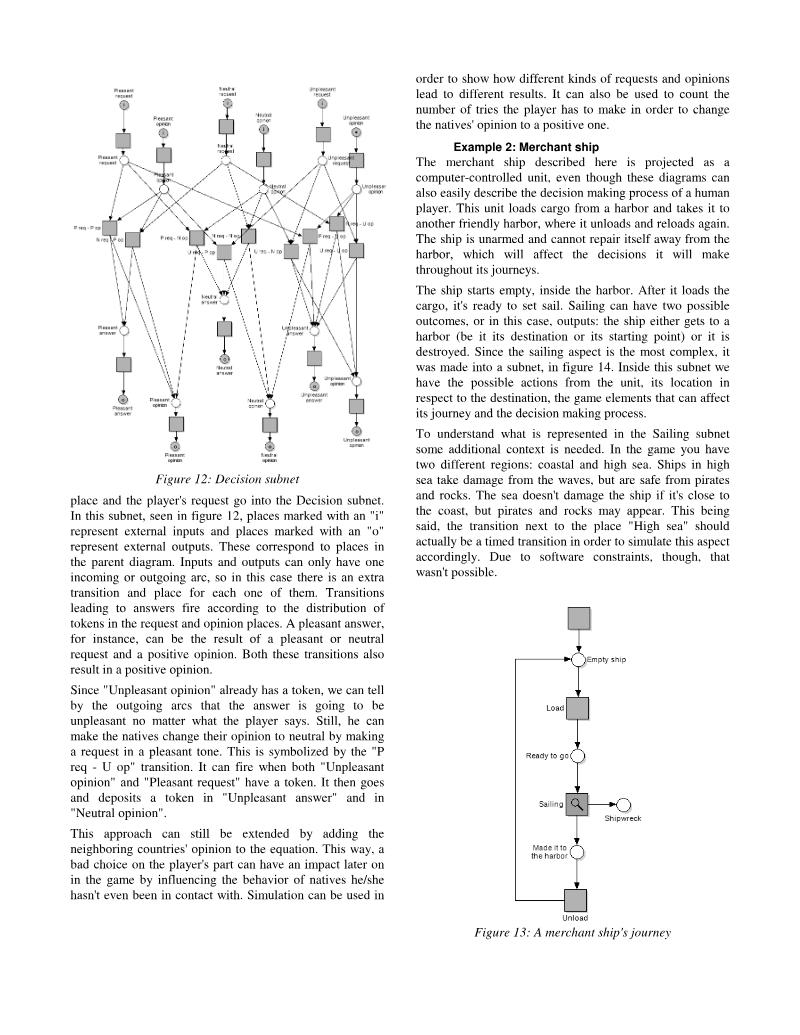
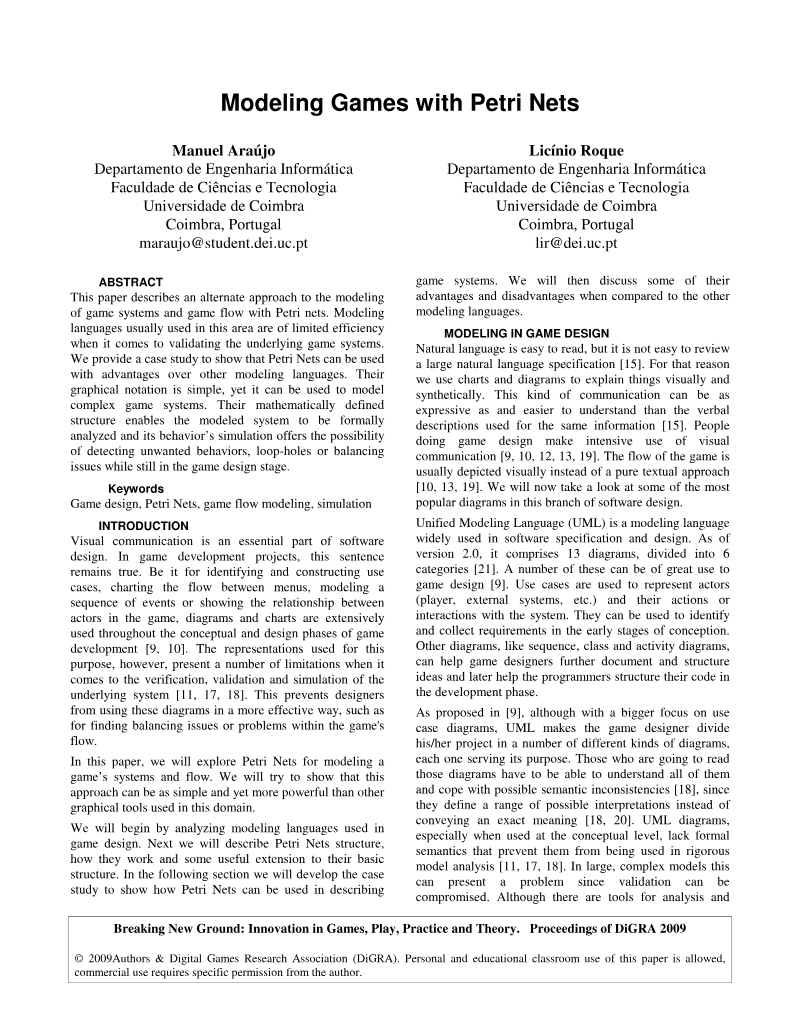
Modeling Games with Petri Nets
This paper proposes Petri Nets as an effective alternative for modeling game systems and game flow, emphasizing their advantages over traditional modeling languages like UML and flowcharts, particularly in validation and simulation.
- Petri nets are argued to be a viable and in some respects superior alternative to UML and flowchart notations for modeling game systems and game flow, especially where concurrency, conflict, and resource management are involved.
- Most common game-design visual notations lack formal semantics, so they cannot be rigorously validated or simulated, allowing unwanted behaviors, balancing problems, and loopholes to go undetected until playtesting.
- Petri nets pair a simple graphical notation with a mathematically defined structure that supports formal analysis for deadlocks, starvation, and precedence, as well as simulation during the design stage.

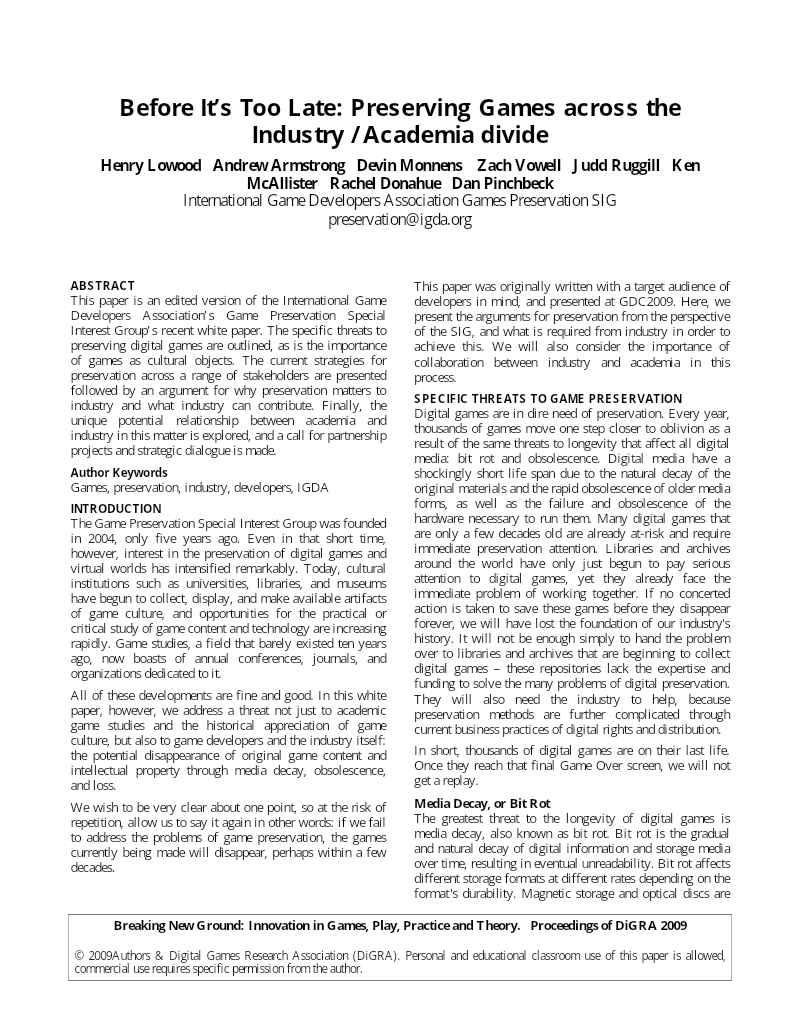
Before It's Too Late: Preserving Games across the Industry/Academia Divide
Digital games are at risk of irretrievable loss, and the authors argue that preserving them requires a sustained partnership between the games industry and academic and archival institutions.
- Digital games face irretrievable loss within a few decades unless preserved, and the authors argue preservation must cover far more than software, including design documents, source code, correspondence, and marketing materials.
- Media decay such as bit rot threatens magnetic media, EPROMs, optical discs, and battery-dependent storage, with many 1980s and 1990s games already in jeopardy.
- Even supposedly durable formats are unreliable: the report cites reported coating deterioration in Blu-ray discs, laser rot in Dreamcast discs, and Library of Congress research on CD longevity.
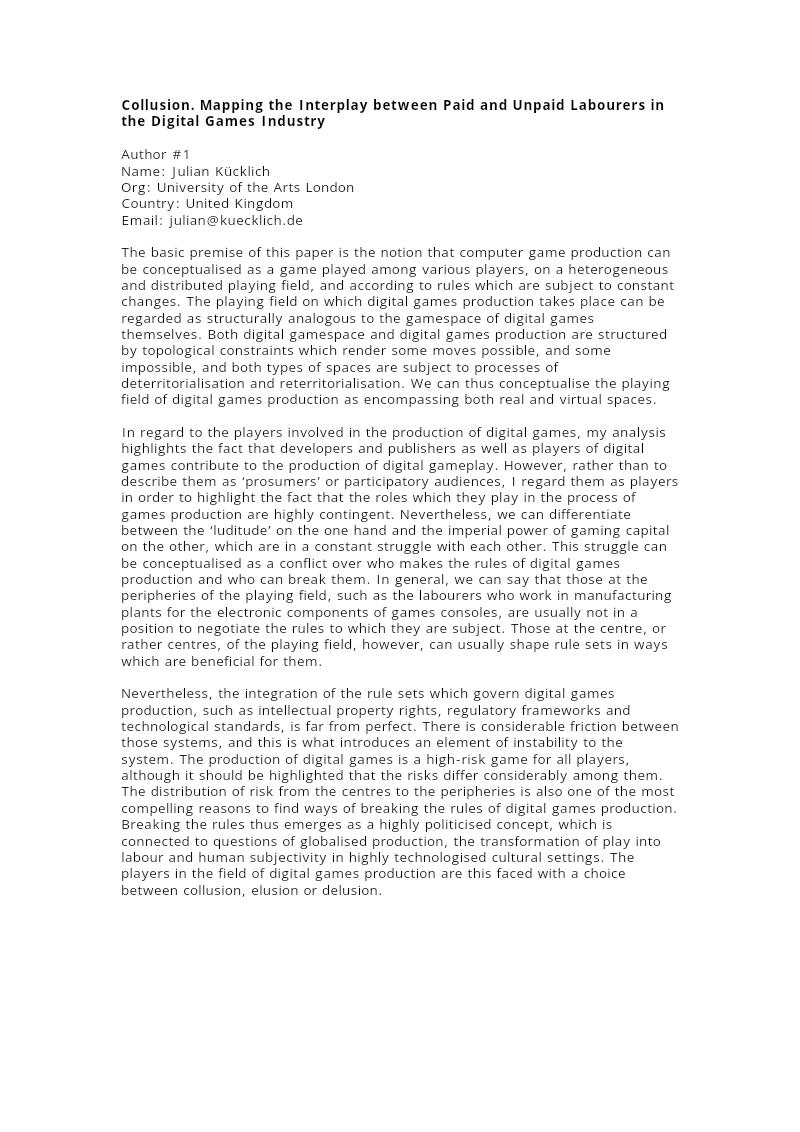
Collusion: Mapping the Interplay Between Paid and Unpaid Labourers in the Digital Games Industry
The document, "Collusion: Mapping the Interplay Between Paid and Unpaid Labourers in the Digital Games Industry," proposes a conceptual framework for understanding digital game production as a dynamic "game" played by various actors on a heterogeneous and distributed field.
- Digital game production is framed as a game in itself, played among heterogeneous actors across both real and virtual spaces, with developers, publishers, and players treated as contingent players rather than passive prosumers or audiences.
- The central conflict is a struggle between 'luditude' and the imperial power of gaming capital over who writes the rules of games production and who is able to break them.
- Power over rule-setting is unevenly distributed: peripheral actors, such as workers in manufacturing plants building games console components, have little capacity to negotiate the rules governing them, while central actors can shape rule sets to their advantage.
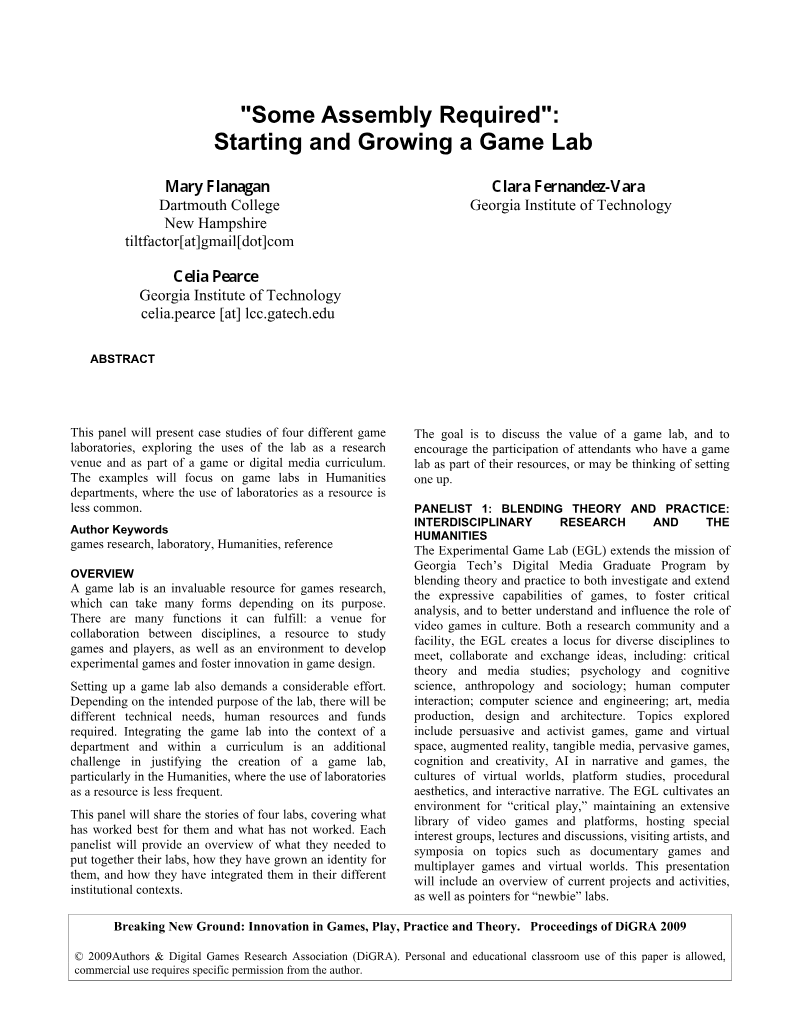
Some Assembly Required: Starting and Growing a Game Lab
The document outlines the purpose, challenges, and successful models for establishing and growing game laboratories, particularly within Humanities departments where such resources are less common.
- A game lab is presented as a valuable research resource that serves as a venue for interdisciplinary collaboration, a site for studying games in culture, and an environment for experimental game development and design innovation.
- The report's central recurring theme is the value of integrating theory and practice, with the Experimental Game Lab at Georgia Tech blending critical theory with practice and a 'critical play' orientation.
- Four labs were profiled: Georgia Tech's Experimental Game Lab, Tiltfactor (founded 2005 as one of the first US game research labs, known for Darfur Is Dying and Hush), the USC Electronic Arts Game Innovation Lab, and the Singapore-MIT GAMBIT Game Lab (developer of Grow-a-Game and VEXATA).
Writers
Games and companies
Games