1 free read left. Create a free account for unlimited reading + AI research.
Create free accountWhitepaper DiGRA
1 free read left. Create a free account for unlimited reading + AI research.
Create free accountWhitepaperDiGRA
The whitepaper adapts Alan Cooper's human-computer interaction persona framework to games. It introduces play-personas as clusters of preferred interaction and navigation behaviors.
"Patterns of Play: Play-Personas in User-Centred Game Development" proposes an adaptation of Alan Cooper's human-computer interaction persona framework to game design, introducing "play-personas" as clusters of preferred interaction and navigation behaviors. The central thesis is that game designers, who must retain authorial control over the experiences they craft, can nonetheless give players meaningful agency by modeling how players actually behave. The authors argue that personas should move beyond narrative-driven, committee-designed archetypes toward data-driven models validated against observed play, drawing on cognitive and literary theory such as the human pattern-seeking drive and Iser's concept of the implied reader to justify why designers should anticipate and shape player sense-making.
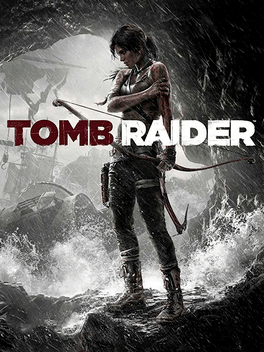
The framework operates in two complementary modes: as design metaphors that encode designers' expectations of player behavior, and as analytical lenses derived from gameplay metrics. Metrics are treated as objective, high-frequency instrumentation data, and the work illustrates this through a case study of Tomb Raider: Underworld, mapping core mechanics such as jumping, shooting, and puzzle solving to measurable indicators including accuracy, deaths, completion time, puzzle help requests, and navigation paths drawn from over a million players. A key finding is that most players occupy positions between behavioral extremes, so personas are better understood as segments along variable axes than as fixed types. Comparing intended personas with observed behavior can reveal whether a game in fact supports the experiences its designers planned.
The data-driven methods are reinforced by a cited analysis of 1,365 Tomb Raider: Underworld players, which used clustering to identify four behavior groups covering over 90% of the sample. The authors conclude, however, that metrics reveal what players do but not why they do it, so qualitative research must accompany quantitative modeling. They also acknowledge the approach's limits, noting that play-personas offer little value in linear, single-solution narrative games where player behavior has minimal room to vary.
Each row is a game or company this document names, each column a document, oldest first. A mark means that document names it. Select a row to see those documents.
DiGRA · 2019
DiGRA · 2019

DiGRA · 2019
DiGRA · 2019
DiGRA · 2019
DiGRA · 2019
DiGRA · 2019
DiGRA · 2019


DiGRA · 2019

DiGRA · 2019
DiGRA · 2019
DiGRA · 2019