1 free read left. Create a free account for unlimited reading + AI research.
Create free account
Understanding Game Dev in China with Sam Wey | GduX.me
Key insights
7 takeaways- 01Success in the Chinese market necessitates a local partner to navigate complex bureaucratic hurdles, government censorship, and the technical constraints of the Great Firewall.
- 02Market entry requires bridging Western design principles with specific local monetization models while maintaining the agility to adapt to a rapidly evolving regulatory climate.
- 03The industry is dominated by Tencent and NetEase, which prioritize high-velocity, profit-driven cloning over original intellectual property.
- 04Intellectual property theft is a pervasive risk for independent developers, leading many to finalize projects in isolation before engaging with publishers.
- 05Regulatory volatility, including unpredictable licensing processes and platform restrictions, remains the primary obstacle for developers operating in China.
- 06While the government provides financial incentives for VR and AR development, these sectors face profitability challenges due to widespread software piracy and weak enforcement of licensing.
- 07Developers can gain a competitive edge by using advanced engines like Unreal to differentiate their mobile offerings from the saturated Unity-based market.
Ask AI about this video
Transcript
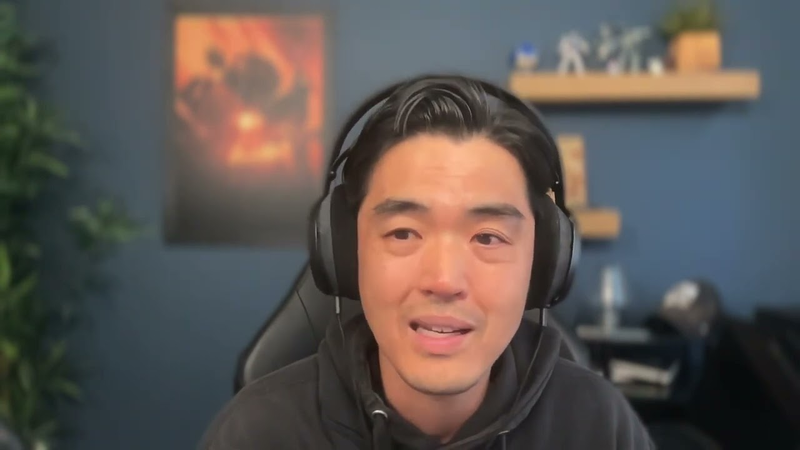
[Music] China's kind of buying up a little bit of everything right now in the states at least if they're not the primary owner they're the biggest silent partner yeah everything that you know and love yes so uh with a short introduction let's introduce Sam way same way actually we have a history we actually worked at Sparkle limited together and on Lost Planet 3 here's the environment artisan he was an environment artist and that's a whole different podcast but we did write he he went from her artist to fall into designer and went on to work at giant squid went over to China to work at a VR company and now he has his own company called interact and impressive trajectory is what I can say just makes me feel late I remember the day like sales like you know I want to do some design like give me some design Rodney so riders like art you could do this sounds like cool and then the next job I'm a designer they're like he's we're doing design games now and then he's like cool things like you know what our creative director now I'm doing creative
direction is like cool you know what I've learned I got this Sam started his own damn company I'm so proud of you Sam shout out all the way from America man like he couldn't have happened to a better person and obviously we wish you and everyone had coal interactive the absolute best small things of high value yeah I think that's the tagline that's the tagline well that's when Sam was doing all that I was putting together this nice little photo shot but uh Sam lives out here running companies and we're doing yeah yeah Sam I'm gonna pipe them in right through this all right let me transfer him over say way how you doing Sam hey how are you long time no see brother good yeah that was a the internet speed it's good going okay audios coming so that at least I mean like that's the bare middle we understand this China noise USA yeah yeah not on the Elon little
satellites yet so what's that because available in our area will work this right out alright alright Sam thanks so much for that generous introduction of course well me ask you this was any of it a lie nope so why are you doing our eyes that's all you that's all you thanks there of course with o so as you are pulling up your slides we'll go ahead and yeah it started and this is a talk that I'm very much looking forward to obviously I have no idea what's going on in China but I just know they own like everything over here we're talking away all the way from all right basically ten cent and then all the other companies are all right so sama this is a mic mic is yours cool it is uh my powerpoint showing up okay like
yo really here's to cool alright alright my my talk is a little bit more scripted than Cecil's like mine I have a lot to go over it's like China's a big country so here we go so my talk is called understanding game dev in China and LA game devs insights into culture game dev and VR in China so I've been a character modeler environment artist level designer game designer and creative director I was a character mother for two years at Nickelodeon animation studio on shows like the Kung Fu Panda TV series I've contributed as a designer to games like Friday the 13th Abzu star citizen and Lost Planet 3 I started transitioning professionally into VR and AR about three years ago since then I've done design work on
Jurassic world VR expedition and follow me dragon and AR app for iOS a a year ago I moved to Beijing where I've been a creative director at a VR studio called Sandman studios while I was there I directed a cute horror story about baby carrots being eaten called fresh out which premiered at Venice Film Festival I've recently started my own studio and I'm currently working on a slow motion our shooter game called bullet time AR for ios and android so as I prepared for this talk I realized I had more and more to say well I'd still don't claim to be an expert on China China is huge and diverse and I've only been here a year not not quite a year and a half sometimes I feel like Bill Murray and lost in translation except I'm in China with that said being dropped into the deep end of such a dramatically different culture provides some unquestionable truths confirmed by research my first-hand experience and
experiences of others I've talked to I'm gonna start more generally talking about my experience here and then talk about work culture across industries in China from there I'll get into specifics about the state of game dev here including the town pool clones censorship publishing and the indie scene finally I'm going to go over the Chinese government support of VR and challenges specific to VR content development in China I hope you come away from my talk with some insights into culture the game industry and VR in China as China's impact on the world continues to grow I hope these insights can inform how you work or do business here even if tangentially so first let me go over some typical things people ask me about my experience here I've lived here in Beijing about a year and four months I moved here because my wife tricked me into it
but also that she wanted to be closer to her parents and wanted to see how China was developing and she's from Beijing originally and for for me I was down for the adventure and I felt like I needed a change of scenery after mostly being in LA since 2006 just hang tight guys we'll get him right back as soon as we can yeah I think he's just dipping in and out don't hear his voice all right we got him back okay here you go can you pick up from why I moved to China okay cool so I moved to China because my wife tricked me into it but also she's originally from Beijing and she wanted to be close to her parents and wanted to see how China was developing and for me I was down for the adventure and felt like I needed a change of scenery after mostly being in
LA since 2006 so I was born in Chicago and my parents are from Taiwan so I grew up speaking Mandarin with them but it really didn't realize how limited my vocabulary was until I moved here so what's awesome here the food is awesome here you don't realize how diverse Chinese cuisine is and in such an enormous country until you live here ever since every province has its own specialty also sightseeing is amazing there's so much history here and there's so much to learn about the culture each region has its own customs and characteristics and there's also a definite sense of dynamism and opportunity here things change so fast and there's just a sense that there's so much room for growth because the size the market as and as Western developers there's also a great sense of opportunity here because we're a high value coming from a generally more mature and experienced market but what
sucks here a pollution is extreme and intolerable in China depending on the day the the summer has many more clear days and in the winter on the worst days you can't even see across the street because the pollution so bad another thing that sucks you see China he say suck the hey Sam welcome back what's that I think the last main part we had was pollution is so dark you can't barely see you across the street on some days yeah okay okay got it thanks for yeah cool so yeah pollutions terrible another thing that sucks is as a westerner tied into the Western internet ecosystem moving to China and be behind
the Great Firewall has been really excruciating you can you can get around it with VPN but it adds so much friction to your daily life to be constantly turning on and off VPN every time you want to use Google YouTube Instagram Twitter LinkedIn or whatever I'll read it so some some cultural differences can be really challenging to frustrating everything everyday things here like squat toilets people cutting you off in line route service people and more can really add up but despite all these challenges I've really had a really epic year here and I really owe it all to my wife Ruby okay so I'm gonna talk about the most like pervasive aspect of business culture here in particular so what one of the most pervasive aspects of doing business in China is idea of
guanxi or connections and relationships which is central to how business is done in China there's a great Forbes article which explains how this has deep rooted historical reasons in a society where business and societal relationships relied more heavily on networks of trust and mutual obligations than on strong codified laws depending on the industry and region the concept of guanxi can make or break you I personally saw situations where navigating cumbersome bureaucracies were dramatically smoothed over and rules were bent by people having deep-rooted connections in another example specific to the game industry I heard rumors that Capcom's monster hunter world published by $0.10 was banned because their competitor Nettie's had a bet relationship with government censors it's just a rumor but if it's true it's an example of how lacking Guan Qi can cost you millions of dollars as a westerner if you don't have Guan XI in China it's easy to fall into unreliable business relationships
because it's these pre-existing relationships which tend to hold parties accountable rather than contracts or laws especially new business relationships Chinese businesses tend to put up a good front in presenting themselves as having a strong track record only to fail to live up to expectations it's important than to meticulously verify and continuously hold other parties accountable for example if your meeting with the Chinese arts or outsourcer meet and speak with the specific artists who will be creating content for you if you're interviewing for a job make sure you meet the team that you'll be working with one Chinese developer I chatted with said there's an art to honoring the letter of an agreement but not the spirit of it in the absence of Guan XI it's important to find a Sherpa or a guide who does have Quan Chi and start building your own network from there in Beijing I've only just begun to build this network for myself I've been told it's really hard to ever be considered in the in-crowd as a westerner here for this reason in various industries I see
groups of expats banding together and supporting each other which provides a great sense of community the lack of a rules-based society and reliance on relationships sounds really bad but the flip side of this is that it creates an enormous sense of dynamism if you do have the right connections it can dramatically compound your ability to navigate bureaucracies bend rules and get things done this situation can also open up incredible opportunities if unlike you're talkative competitors you can actually do what you say can do suddenly you become a very big fish in a small pond of Hustler in the biggest consumer market in the world again again the degree to which all of this is true can vary depend on the industries regions and the companies and companies but these are my broad conclusions now I'd like to talk about my impression specific to the game dev scene here it's well-established that China has the largest games mark the world and the development scene here
is much more skewed toward mobile and PC this infographic from 2016 shows consoles at only 2% of the market since China had only legalized the sale of consoles the year before in 2015 culturally then people of my generation in China didn't necessarily grow up on the console games that were cultural touchstones for our generation in the West and instead got into gaming culture through PC games the talent pool and companies still tend to use the Unity engine because of the dominance of the mobile market but Unreal Engine which is my engine of choice is gaining traction game development tends to be located around tech hubs like Shanghai Shenzhen and Beijing Hangzhou is also growing the universities and trade schools produce programmers artists and animators however there's a complete lack of game design curriculums this exasperates the problem of lack of designers in rampant cloning in games in China devs I've talked to bemoan the lack of creativity
in the game industry here and blame the blame it on an oppressive school system where students don't have time for individuals pursuits this lack of creativity leads us to the topic of cloning and the climate of games publishing in China when I recently asked a games marketing guy about worries of cloning in China he flat-out said you will get cloned some notable examples of major games getting cloned are $0.10 making calibre of spirit which is a clone of League of Legends which is by a company that they own Riot Games I heard this didn't go over so well another one is net use cloning Friday the 13th as a game called identity 5 for mobile he went on to explain to me how China isn't a place for innovation and games games publishers are focused on profitability and reducing a risk so they only want to know what successful game you're copying and how you're going to make it slightly better these large companies like 10 cent and that he's also seemed to soak up all the good game
development talent by being able to outbid small studios on top talent and then either squeezing them out or buying them out all this hurts innovation when this top talent is you to merely clone other games the indie dev scene here in China does produce some gems though the screenshot on the right is of an interesting game called Chinese parents which provides some social commentary about being a Chinese parent who pushes their child to succeed but not so hard that they kill themselves games like these are released on Steam which is a legal gray area where Chinese censors are not regulating and it's not blocked by the Great Firewall however this method of releasing games abroad to avoid censorship may avoid maiya and soon valve is currently working with the Chinese company perfect world to create a version of steam specifically for the Chinese market when when this is released it's a student that regular steam may get blocked in China
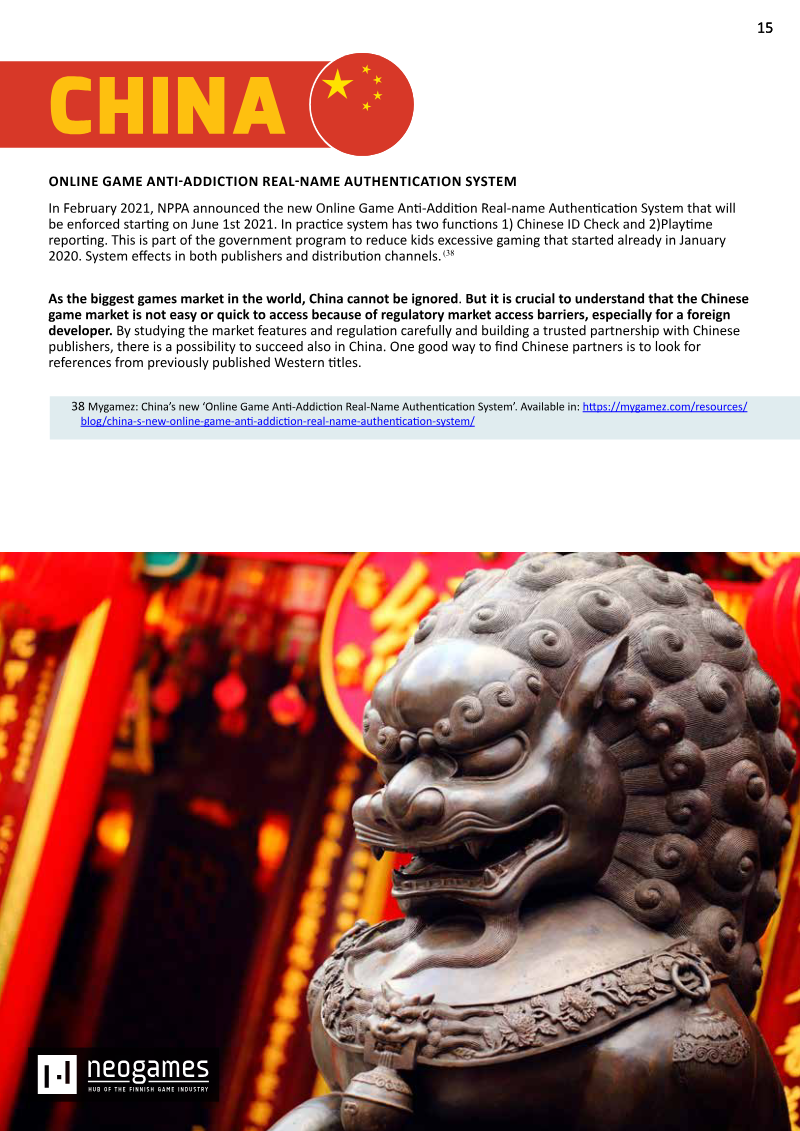
censorship is another huge topic inside in China the censorship of games was recently consolidated from two government agencies into one now called the State Administration of press and publication in 2017 game approvals were halted for eight months due to this restructuring which caused huge problems for publishers publishers are required to get a publishing license from the si PP which can be denied if they deem that the game contains inappropriate elements these restrictions recently became more strict and now banned blood of any color corpses skeletons skulls and anything that portrays China in a negative light there also limit starting to limit the number of cheap and obvious clones and the overall number of poker and mahjong games release foreign-owned companies can't release games in China so they frequently partner with local companies who will publish for them and navigate the parole process it's also interesting
to note that there's a secondary black market for publishing licenses as with anything in China certain companies have a better guanxi with censors and are able to obtain a publishing license for games of a certain genre early they will sometimes sell this publishing license at a high cost to third parties but the game they release will roughly need to be in the same genre that the publishing license was originally for on the right is a classic example how they how they change World of Warcraft to appease sensors and the following video is of how they changed pub G recently instead of dying your downed enemy's wave to you and give you a loop box I think this is pretty hilarious and I'm sort of looking forward to the ridiculous ways developers will work around these restrictions are you guys I can't I can't tell if you guys are
streaming the thing so yeah if you click the play button we should be able to see it I can see your match okay I'll just play myself cool I'm assuming this is what's up there sorry uh that's a youtube link yeah but it's like really low-quality because they totally ripped it from Twitter okay I was gonna say we might be able to play it ourselves but it might be best to describe it right that time okay oh yeah it's it's just a video of a in pub G where the guy a guy gets downed and when the guy finishes him off the guy gets Ike up and waves at him and
gives him a box it's kind of ridiculous alright so video from here yeah it's my mind too I love it so from here I'm gonna talk a little bit about VR development in China which is what I've been doing so there's a huge amount of government support in VR and AR in China the Chinese government sees it as an important part of their global competitiveness in technology it was a big component in their central government's recent five-year plan which was surprisingly detailed it sets out high-level goals for supporting the entire ecosystem from very specific software and hardware objectives to methods of promoting adoption across industries by setting these high-level goals it'll be up to the local provincial governments to do their best to execute on them another example of
government support was Jiang Shi Province announcing 460 million in XRD investment as well as grades au government building there 1.5 billion dollar theme park and development complex these provinces see these investments as ways to modernize and develop their economies the numbers are mind-blowing right but as a developer it's as just it's a decision to be made whether the trade-off of free rent and possibly substantial investment is worth the lack of access to talent in quality of life you'd get in China's tech hub cities I personally took a tour of one of these giant development campuses in Qingdao that was geared more toward just a moment folks he'll be right back yeah once we hear his voice we'll switch back but a lot of the things that he's
talking about is uh it's kind of scary yes especially the part which I never thought about because we're very familiar with Chinese developers stealing and copying or American games and it gets going with it I mean that's pretty much their business model and there's Tom go ahead Sam sorry we we had to cut out but we if you can just start back like about two three minutes a year I think you're somewhere around the huge amount of government support for VR AR and the four hundred okay okay okay so yeah so examples of huge amounts of government support is jang-shik province announcing 460 million in X our investment as well as quite so government building there 1.5 billion dollar theme park and development complex so these provinces see these investments as ways of modernizing and
developing our economies the numbers are mind-blowing right but as a developer it's a decision to be made whether the trade-off of free rents and possibly substantial investment is worth the lack of access to talent and the quality of life you'd get in China's bigger tech hub cities I personally took a tour of one of these giant tech development campuses in Qingdao that was more geared toward moviemaking and it was kind of a creepy ghost town although the facilities were amazing a lot of startups may need this government vacuum to derive the to survive though because the profitability isn't really there yet for VR the one place where VR is profitable is in location-based entertainment which is much more ubiquitous than in the West it seems like every small in China either has a VR arcade or kiosk and there's tons of malls in China they're like everywhere
in China however this doesn't necessarily translate to profitability for us as game developers since many of them simply use pirated software or let customers play games off of steam which aren't licensed for this kind of use the investment in the custom game experience is mostly isn't worth it if no one's willing to pay licensing fees and there's no enforceability so the market is both hungry for quality content but also not willing to invest in it for lack of profitability which is a big problem big companies like 10 cent and Nettie's are beginning to dabble in VR though and there's a few indie Studios doing VR like the one I was at Sandman studios so I recently left Sandman studios to start my own company called Kol interactive I paired the company name with a diamond logo because I like the idea that under pressure we can create small things of immense value I'm currently working on a visceral slow-motion shooter for mobile AR called
bullet time AR it's definitely inspired by slow-motion shooters like superhot and Max Payne mixed with melee mechanics from old FPS brawlers like condemned here's some older footage of the initial prototype [Music] all the potential
putting a game layer on top of the world right [Music] yeah so I guess looks like one of the people in twitch was listening to me ask you what we could do to help you and it's I can barely read the name altered a briefs it looks like his suggesting you apply for global top round global top round comm so I'm gonna pass that on to you because if it Houston awesome I haven't even heard of that very awesome awesome that that's another grant or something it is is that another grant or something or I have just as much information about it at this point as you do so I assume so they probably
they might have up another comment yes people are saying yep yeah yeah that's another alright yeah cool thanks guys whole like live video with twisting thank you thank you okay [ __ ] yeah this is dope yeah well I'm sorry to interrupt but continue on your presentation everyone got to see it if they didn't see the link it's mainly from people who didn't want to close the disc or the alright yeah so that was a pretty much my cup presentation if I'd love to get your feedback on my presentation China is like a huge place and I'm just starting to wrap my head around it if you guys like head like have questions or if you disagree with the point totally hit me up like if you have other insights like that be great to hear also yeah closing connections
like add me on twitter and instagram my instagram tends to be like Chinese food picks which is awesome if you're into that but if you're in a game to have stuff that's mostly my Twitter stuff and I started an account for my my full time a our project in particular and if you're interested in following the development it'd be awesome too if you guys signed up for my mailing list which I totally just set up at bullet-time AR calm and yeah at some point I'll probably open it up to like beta testing on like test flight on iOS or early access on at the Google Play Store so it would be awesome to get help like testing on different devices eventually but not quite ready yet for that but it'd be awesome to have people on
mailing lists to ask about that when it's time well I'm quite positive and that's it support yeah you got at least Brent yeah we want to play it yeah this is the Q&A part right and this is a lot of questions that Alaric I have about games of Chapman we were as you were cutting in and out during the presentation we were asking ourselves how scary on the thought that we never really thought about we were used to Chinese developers kind of cloning everything that we make in the United States it's kind of like run of the mill they do it every other industry what different about games if your game is good or not but a China developer closing a Chinese to hope for III imagine it's the wild wild west as you have mentioned before it is restr oh my god the Wild West here yeah you know yeah yeah it's the Wild West man yeah that's kind of scary you know like if
you you put that heart and soul into something and you're excited about it you put it out there at least here I know that we have like right recourse that we can take so there's damages right right I guess what's right you're a happy owner there now I guess what would your strategy be it's like uh yeah our money's gone because we've now been cloned four times right right honestly like that honestly like right honestly that's why I've kind of been a little hesitant to approach big companies like ten cent and that use right because like they have like an enormous team right and if they were really interested in me in my project and I wasn't interested in working with them they could clone me in like a week right with the size of their dev team right so definitely I'm a little
cautious like it see it's uh yeah it's something to be to feel out all right man so I guess the one strategy you could take is you make your whole game and then you just go look for our publishing partner with a complete product yeah because if they try to rip you off they are too bright know that you have such a head start because yours is done but I mean who can exactly yes definitely a king a big game yeah and the huge aspect right I'm just I'm used to living here in the states like you know your slides talking about the reality check living in China sitting in squat toilets but I mean that is the way you should be squatting all right they sell these porta potti you're not 45 right step stools at Costco nobody knows what I'm talking about those step stools that they sell Costco you're supposed to put your leg up right that is the way you should be doing your business yes it's a step that anyways I digress man yes body parties exactly
that in in addition of so many things like has to affect you as the game developer like it's not you know it's it's a culture shock but on top of learning the business side of things and man like you going through and creating your own studio what was the major decision you saw you must have seen despite of all these issues a lot of opportunity with game development over there in China as a US sir yeah yeah yeah so I what really start pushed me in this direction was just like maybe some discontent with my day job right and wanting to really own something that was of a small manageable
scope and like as game developers you know like how easy it is to over scope your project right we all won't make the coolest biggest thing we can right and so this was me like kind of going back to like create and focus on something small that I can achieve on my own if I need to but also has like can scale up if I need to if I can write and FPS azar like a proven well-worn path right and and there but also it getting PS is like are such a is such a flexible genre also and so I don't know where I was going that in terms of being in China this is also a way for me to like keep myself
busy but my wife just got a good job at a big pharmaceutical company so I'm this is also a way to keep myself busy and do something that I really own myself while I'm here while she explores her career stuff too you know Congrats I found the new job by the way yeah yeah yeah she's kicking ass it seemed like you were saying that there's like a clamoring for learning about game design in China yeah being a certified game designer at this point in your career is there any like hey you know what maybe I'll offer some like curriculum or offer a product that could help tag Nate some of that because you bring like traditional western style development over there right right right so I've that's been a consideration right like if my my self funding runs out on this project and and I don't get a other external project funding then and I just need to pay the bills that's
totally an option to like teach game development here definitely like I know some people at like beta which is like the big University in Beijing that might be able to make some open some doors for me but like for now like my initial goal is to make something that like I own myself you know so that's definitely a consideration in the future oh yeah all right so I will just leave it off with one less question from the twitch audience YouTube audience anyone that's watching just want to remind you that you can ask us questions we have moderators over there filming them so this question from any develop question is how has developing a our VR content
on mobile deferred from creating for desktop and traditional game experiences controller the most obvious difference is of course like your performance limitations and memory perform memory limitations right there are a lot stricter in terms of inputs like I mentioned like how rich of an input device iPhones are with like swipe gestures and you can shake it you can talk you can use the mic and have voice inputs if within a are it becomes a six degree of freedom controller right where you can it knows where the phone is spatially and that you can use that for like for me in my game like your phone is basically mmm what you're using to
like dodge bullets right so like it's basically your your face your head you know and basically what you'd use like a VR headset or motion tracking for what for you know yeah cellphones are like so follow me dragon which is free on iOS stories check it out plug go for it it was the first it was the first it was the first AR and goes on my first mobile app that I worked on and coming from triple-a it was pretty interesting experience because of these different input affordances and also like I think as
Unreal developers there's not that most unreal most mobile development is on unity right so if you're an unreal developer putting stuff out on opal you can kind of your game already inherently has a different look to it than like 90% of games out there on mobile right and definitely unreal has different strengths unreal has I think I think looks better and has different affordances like met has nice stock ai functionality right among other features that are fun to leverage on mobile well Sam what's next for your brother not necessarily immediately but more long-term where do you want to see your company grow um we
will steam and like I'm gonna what's next is like me keeping my head down and china crank crank like a bare-bones version of this game out and uh and then release it and see how it performs get people's feedback and if I can and if can afford to iterate on it and kind of learn about I think the one of the big things I'm personally learning about is mobile monetization which is a completely different beast for us coming from Triple A right it's like a different mindset it's a different it's a lot of different design philosophies it's a lot to learn but it's exciting and it's a if
it seems like it well it's something that a big chunk of the market is a it's the majority of the gaming market not actually like nowadays so it's worth it to understand this stuff you know well Sam we hope to come see you in person in China you can you know walk us around and show us what's what but for now we have to say goodbye to your brother [Music] [Music]
Summary
The Chinese gaming industry operates as a high-velocity, mobile-first ecosystem defined by intense competition, rapid consolidation, and a unique reliance on personal networks rather than traditional legal frameworks. Success in this market requires Western developers to secure local partners who can navigate complex bureaucratic hurdles, including strict government censorship and the technical challenges posed by the Great Firewall. While the landscape is dominated by industry giants like Tencent and NetEase, which often prioritize profit-driven cloning over original intellectual property, significant opportunities exist for those who can provide specialized expertise and high-value technical differentiation.
The regulatory environment remains a primary obstacle, as developers must contend with unpredictable licensing processes and the constant threat of platform restrictions. Although the government actively incentivizes modernization through financial support for virtual and augmented reality, these sectors frequently struggle with profitability due to pervasive software piracy and weak enforcement of licensing agreements. Consequently, innovation is often constrained by the necessity of aligning content with rigid state standards and the overwhelming market influence of large publishers.
Independent developers face acute risks regarding intellectual property theft, prompting many to finalize their projects in isolation before engaging with publishers to protect their competitive advantage. To succeed, developers must adopt lean project scopes and leverage advanced engines like Unreal to distinguish their mobile offerings from the saturated Unity-based market. Ultimately, the industry rewards those who can bridge the gap between Western design principles and the distinct monetization models required by the Chinese audience, provided they remain agile enough to survive in a volatile, rapidly evolving regulatory and commercial climate.












Comments