Game Development reports and market data
Documents
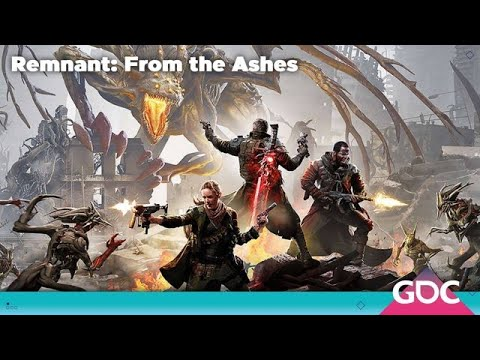
GDC plays Remnant: From the Ashes with design director John Pearl
Remnant: From the Ashes establishes a unique niche in the action-RPG landscape by synthesizing the high-stakes, deliberate combat of the Souls-borne genre with the tactical depth of a third-person shooter.
- Gunfire Games utilized procedural generation to create replayability, allowing developers to drop new content into existing worlds that players encounter upon re-rolling campaigns or adventure modes.
- The game's level design relies on large, hand-crafted 'tiles' rather than purely random generation, ensuring that combat encounters maintain tactical depth and environmental storytelling similar to Souls-like titles.
- To maintain player agency, the team prioritized frame-perfect responsiveness in character movement and weapon handling, ensuring that player deaths feel like a result of personal error rather than system latency.
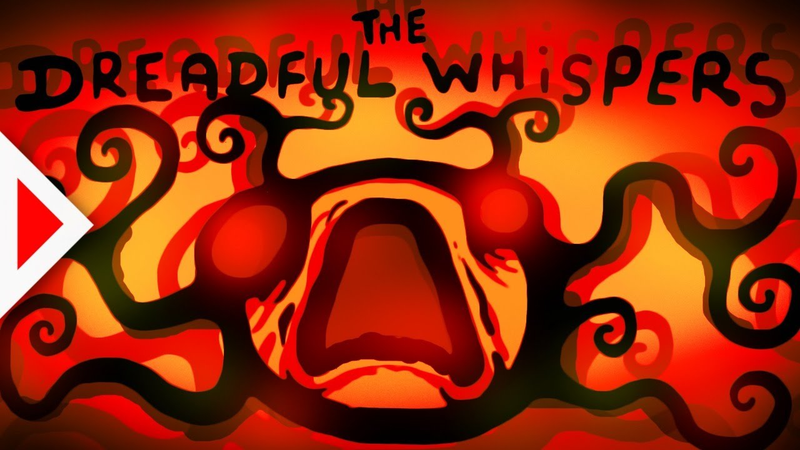
Playing The Dreadful Whispers by Blackthornprod
The Dreadful Whispers, a solo-developed puzzle-platformer created by Noa Calice under the Blackthornprod banner, serves as a compelling case study in independent game design.
- The Dreadful Whispers, a solo-developed puzzle-platformer by Noa Calice (Blackthornprod), was completed within an eight-month development cycle.
- The game utilizes a design structure of short, consumable levels to eliminate common indie pitfalls like excessive backtracking and player frustration.
- Core gameplay mechanics revolve around character-switching and color-based environmental manipulation, which evolve in complexity to mirror the game's narrative themes of existential struggle.

GDC plays Knights And Bikes with Rex Crowle
Knights and Bikes, developed by the independent studio Foam Sword, captures the essence of childhood independence and the coming-of-age spirit through a cooperative action-adventure experience.
- Rex Crowle and Moo Yu founded Foam Sword Games to develop Knights and Bikes, with Crowle handling art, animation, and lighting while Yu manages the technical and business operations.
- The game's art style is designed to reflect the perspective of children, utilizing painterly textures and materials like chalk and pastels to mimic the tools a child might use to document their own adventures.
- The developers moved away from turn-based combat early in production, opting for a more active, exploration-focused gameplay loop that better suits the mischievous and curious nature of the child protagonists.
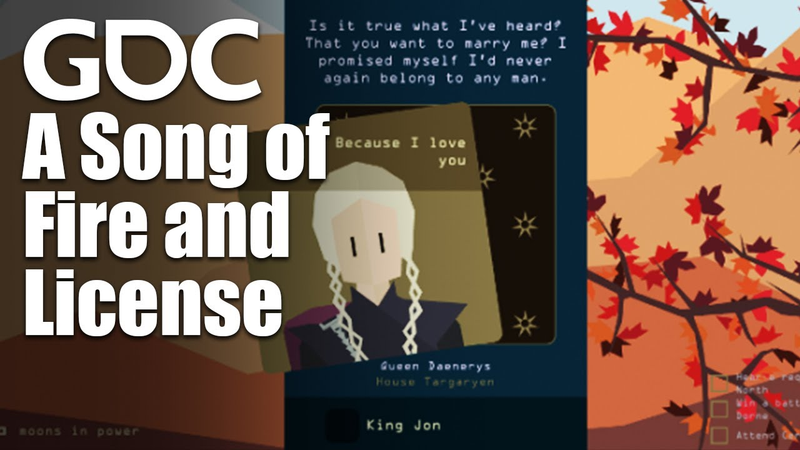
Reigns: Game of Thrones: A Song of Fire and License
The collaboration between Devolver Digital, Nerial, and HBO to produce Reigns: Game of Thrones serves as a strategic model for how independent developers can successfully integrate global intellectual property into niche gaming experiences.
- Success in licensed gaming requires positioning the product as an additive narrative extension rather than generic merchandise to avoid brand dilution.
- The development of Reigns: Game of Thrones involved managing over 1,600 narrative cards through a highly iterative process to ensure strict adherence to the source material's canon.
- Navigating the partnership with HBO required a year-long negotiation process that included rigorous legal requirements, such as actor likeness approvals and narrative consistency checks.
Growing the Core Team with Pete Bottomley | Game Dev Unchained Episode 203
Building a high-performing game development studio requires a strategic shift from informal, friendship-based hiring toward a focus on complementary skill sets and structured operational frameworks.
- Scaling a studio from six to eleven members requires shifting from informal, friendship-based hiring to a focus on complementary skill sets and structured operational frameworks.
- Teams should implement six-week Objectives and Key Results (OKR) cycles to maintain iterative management and ensure consistent progress toward project milestones.
- Static game design documents should be replaced with playable prototypes, high-level vision documents, and production spreadsheets to prevent creative stagnation and documentation obsolescence.

5 TIPS I've learned after a DECADE of making indie games!
Drawing from a decade of experience in the independent game industry, this analysis outlines five fundamental lessons for developers aiming to build sustainable careers.
- Prioritize long-term revenue streams like ongoing sales, bundles, and platform promotions over the singular impact of launch day momentum.
- Limit technical and design scope early in development to ensure cross-platform compatibility and maintain budget sustainability.
- Avoid over-investing in influencer marketing, as high-profile endorsements do not guarantee a direct, one-to-one correlation with sales spikes.
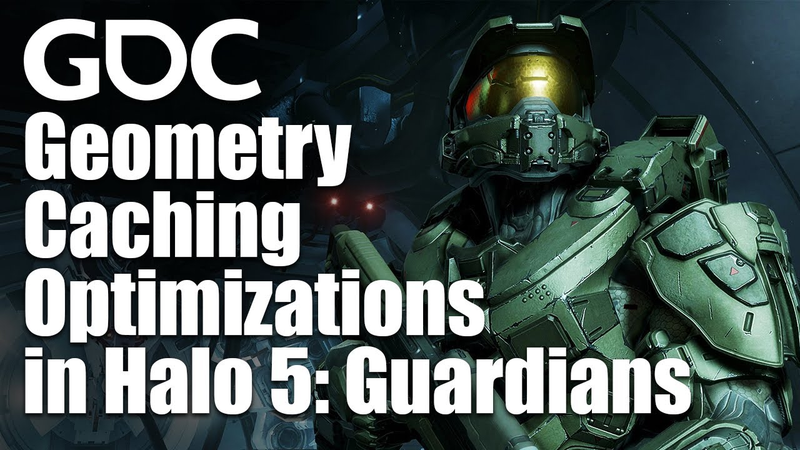
Geometry Caching Optimizations in Halo 5: Guardians
Achieving high-fidelity destruction and complex kinematic motion in Halo 5: Guardians requires a robust geometry caching pipeline capable of managing over a million GPU transforms at a consistent 60 frames per second.
- The Halo 5 geometry caching system manages over one million GPU transforms at 60 FPS by categorizing assets into static, rigid, soft, and skinned types.
- Prioritizing rigid geometry as 'clouds of transforms' allows 90% of assets to be processed with a baseline performance cost of under two microseconds.
- Asset import times were reduced from 45 minutes to 30 seconds by moving away from temporal coherence algorithms to an Alembic-based pipeline that utilizes exported attribute data.
How To Animate In Unity 3D
This tutorial provides a comprehensive guide to the fundamentals of animation within the Unity 3D engine, focusing on practical applications such as moving platforms, interactive bridges, and patrolling enemies.
- To prevent conflicts between animation data and physics components like Rigidbodies, animate a child object relative to an empty parent object rather than animating the parent directly.
- The Animator window manages state transitions using logic-driven parameters such as triggers, integers, and floats to control when specific animations occur.
- Animation curves should be adjusted to achieve precise linear movement for mechanical objects like platforms and elevators.

Day in the Life at a Games Conference | GameDaily Connect 2019
The GameDaily Connect 2019 conference, held in Anaheim, California, serves as a professional gathering for industry leaders to discuss the evolving landscape of mobile gaming, live operations, and user acquisition.
- The mobile gaming industry is shifting away from static, one-size-fits-all experiences toward highly specialized, data-driven user acquisition strategies.
- Developers are increasingly adopting 'agency-in-a-box' platforms and SaaS solutions to automate technical acquisition processes, allowing them to prioritize player retention and monetization.
- Market intelligence firms emphasize that data analytics are now essential for accurate revenue forecasting and informed product development within the global gaming ecosystem.
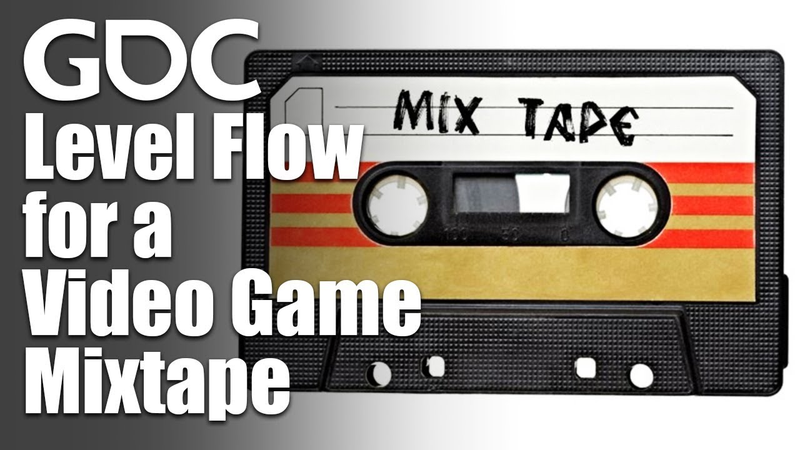
Level Design Workshop: Level Flow for a Video Game Mixtape
The video game mixtape functions as a deliberate, curated collection of vignette-style experiences that prioritize thematic cohesion over the traditional structure of long-form development.
- The game mixtape format prioritizes thematic cohesion over long-form development by curating a series of vignette-style experiences.
- Modular design allows developers to manage player pacing by transitioning between distinct mechanics before repetition or difficulty fatigue sets in.
- This approach functions as a rapid, iterative experimentation framework that enables creators to test novel gameplay concepts without the burden of sustained mechanical complexity.

GDC Plays The Church in the Darkness with Richard Rouse III
The Church in the Darkness functions as a top-down infiltration game centered on the rescue of a relative from a 1970s religious cult.
- The Church in the Darkness features a procedural design where the cult's dogma remains consistent, but the leaders' level of danger and the game's narrative state vary across playthroughs.
- The game is designed for high replayability, with the developer suggesting that players experience the core content by completing four or five distinct endings.
- To maintain a realistic tone, the game avoids traditional shooter mechanics, instead utilizing stealth systems where the consequences of being captured depend on the player's previous violent actions.

Content Curation - Why Digital Game Stores Are So Selective - Extra Credits
Digital game storefronts utilize content curation primarily as a strategic business decision rather than a moral one, aiming to define the user experience and align platform offerings with specific brand identities.
- Digital storefronts curate content as a strategic business decision to define brand identity and manage user experience, rather than as a moral or censorship-based initiative.
- Platform holders categorize curation into four distinct pillars: functionality (technical stability), quality (baseline value), content (brand safety), and relevance (niche alignment).
- Console manufacturers like Sony and Microsoft enforce strict functionality standards, whereas platforms like Steam historically maintain more open, less restrictive policies.
Writers
Games and companies
Games