Game Development reports and market data
Documents
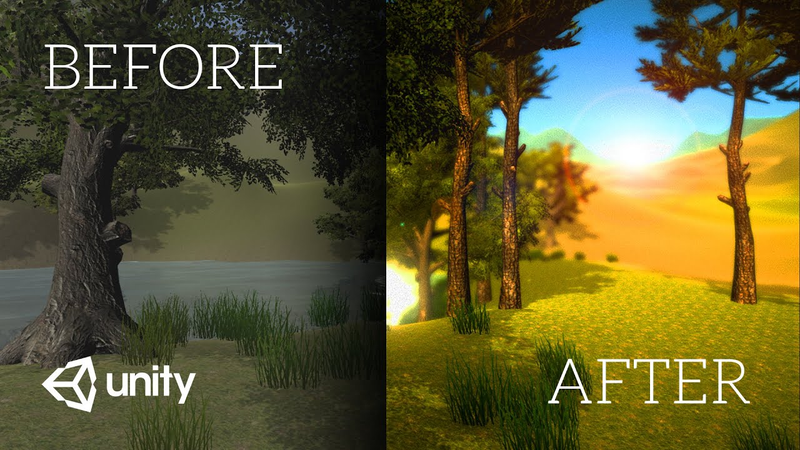
Your game 100x prettier in 10 seconds (Unity Image Effects Tutorial)
The implementation of post-processing effects serves as a highly effective method for enhancing the visual fidelity and professional aesthetic of video games developed within the Unity engine.
- The Unity Post-Processing Stack allows developers to rapidly enhance visual fidelity and cinematic quality without requiring extensive manual asset adjustments.
- Strategic use of post-processing is a critical factor in the success of game pitches, crowdfunding campaigns, and overall player reception.
- Key technical effects include ambient occlusion for edge shadows, bloom for high-dynamic-range lighting, and color grading for precise atmospheric control.
Math for Game Programmers: Predictable Projectiles
This analysis outlines the mathematical and design principles for implementing predictable projectile systems in action games, specifically focusing on linear and ballistic trajectories.
- Predictable projectile systems should prioritize player agency and counter-play over strict physical simulation by using AI that predicts future player positions rather than relying on hit-scan mechanics.
- Linear projectile trajectories are calculated by solving a quadratic equation based on the player’s movement and the projectile’s constant speed.
- To prevent AI from functioning as an unavoidable aimbot, developers should implement accuracy offsets via a randomized cone and vertical tilt parameters to avoid environmental obstacles.
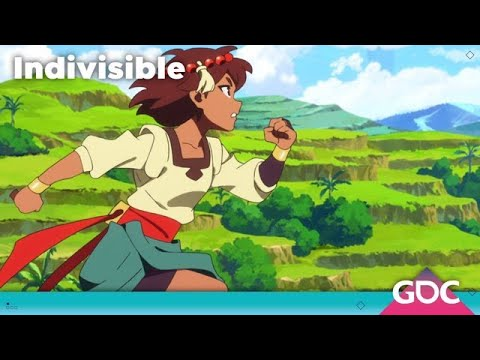
GDC Plays indivisible with Mike Z and Mariel Cartwright
The development of Indivisible serves as a case study in balancing ambitious creative vision with the practical realities of independent game production.
- Lab Zero Games chose IndieGoGo over Kickstarter for their crowdfunding campaign because IndieGoGo charged lower overhead fees, though they noted that Kickstarter holds significantly more brand recognition and reach in the industry.
- The team prioritized open development by hosting multiple backer previews, which provided valuable public feedback but required significant extra work to ensure early builds did not spoil the game's story.
- To optimize performance for the Nintendo Switch, the developers cut content and character screens to reduce memory usage, ensuring the console only needed to load active NPCs and party members rather than entire level assets.

Gorgeous terrain is SUPER EASY (Unity Tutorial)
The Unity terrain tool serves as a foundational asset for game developers seeking to build immersive, high-quality 3D environments efficiently.
- Unity’s built-in terrain tools allow developers to construct complex landscapes like mountains and water features without building individual assets from scratch.
- Maintaining scale accuracy requires using a reference object to calibrate the environment relative to the player character.
- Performance is managed by utilizing the tree tool’s Level of Detail (LOD) groups, which dynamically adjust object complexity based on distance from the player.
Roads Less Traveled: Specialized Careers in Game Dev
Professional success in the modern game industry is increasingly defined by non-linear career trajectories that prioritize specialized, interdisciplinary expertise over traditional development roles.
- Modern game industry success is increasingly driven by interdisciplinary expertise from fields like psychology, law, and theater rather than traditional, linear development roles.
- Specialized roles in narrative design, intellectual property management, and user research are essential for addressing complex production challenges that standard development teams cannot solve.
- Freelancing and project-based work serve as viable alternatives to full-time employment, offering opportunities for cross-disciplinary collaboration through prototyping and hackathons.
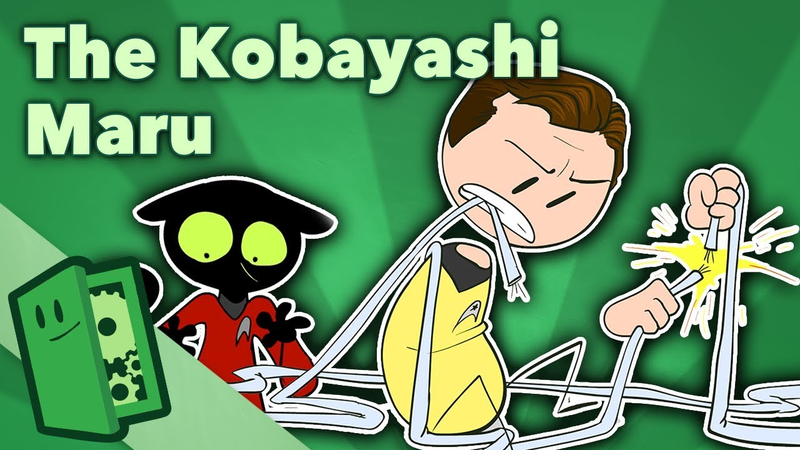
The Kobayashi Maru - No-Win Scenarios in Games - Extra Credits
The concept of the no-win scenario, famously exemplified by the Kobayashi Maru, is a prevalent yet often overlooked element in game design, particularly within titles that utilize procedural generation.
- Unwinnable game states are an inherent trade-off in procedurally generated titles, where randomness is prioritized to provide vast, scalable content without the need for manual oversight.
- In Klondike Solitaire, approximately 21 percent of all deals are mathematically impossible to complete, illustrating that unwinnable scenarios are a common feature in games relying on initial seeds.
- While unwinnable states are often categorized as design flaws, they can function as tools for psychological growth by forcing players to confront situations beyond their control.
Math for Game Programmers: Solving Nintendo's CodinGame Challenge
Reverse-engineering complex encoding functions requires a systematic transition from empirical observation to rigorous mathematical modeling.
- Reverse-engineering obfuscated encoding schemes relies on identifying XOR operations on shifted data segments through iterative hypothesis testing and input analysis.
- Encoding logic in these challenges functions as polynomial multiplication over the Galois Field GF(2), where bitwise AND acts as multiplication and XOR acts as addition.
- Solving these encoding problems requires implementing Berlekamp’s algorithm to perform polynomial factorization, which necessitates tools for derivatives, polynomial division, and greatest common divisor calculations.
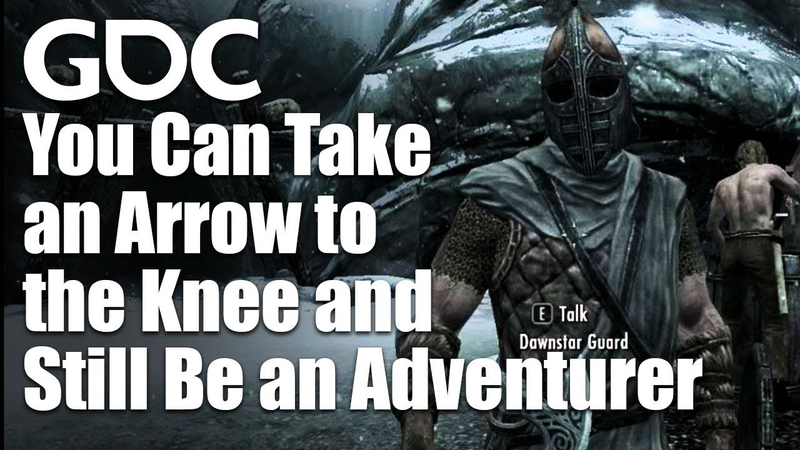
You Can Take an Arrow to the Knee and Still Be an Adventurer
The game industry currently faces a significant disconnect between its player base and its character design, as individuals with disabilities represent 25 to 30 percent of the gaming population but account for less than one percent of on-screen characters.
- While individuals with disabilities comprise 25 to 30 percent of the gaming population, they are represented by less than one percent of on-screen characters.
- Game developers must move away from using disability as a narrative trope for horror, villainy, or tragedy, which currently reinforces social stigmas and alienates a significant portion of the player base.
- Authentic representation requires normalizing disability as a standard human experience rather than a plot device or a condition that must be cured.
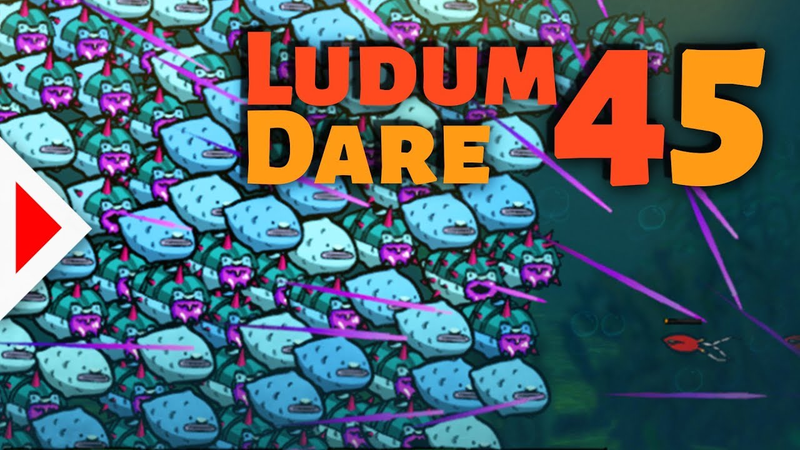
Ludum Dare 45 | FLUBBY FARM
Flubby Farm serves as a practical demonstration of rapid game development within the constraints of the Ludum Dare 45 game jam.
- Flubby Farm was developed by a four-person team within a 48-hour timeframe for the Ludum Dare 45 game jam.
- The core gameplay loop is a card-based defense system where players manage resources to deploy and upgrade fish units.
- Players evolve featureless creatures into specialized defenders by applying modular upgrades such as mouths, armor, and spikes.
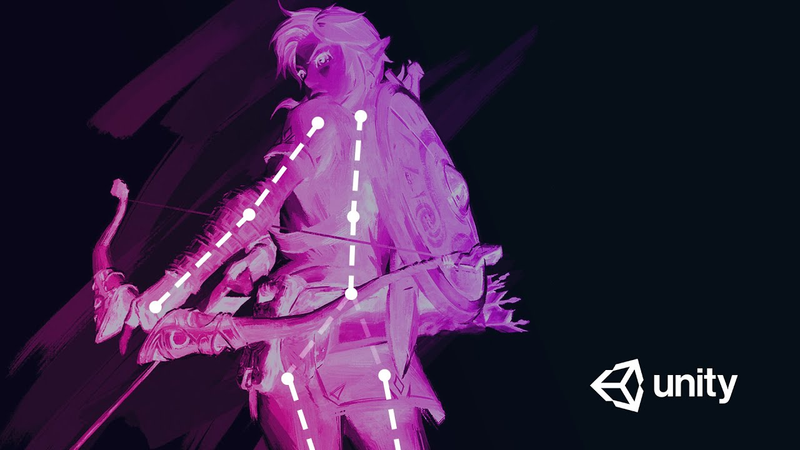
Animating a 2D Character in Unity (Rigging Basics Tutorial)
The process of rigging a 2D character within the Unity game engine has become significantly more accessible due to integrated tools that eliminate the need for external plugins.
- Unity’s 2D Animation and 2D PSD Importer packages allow developers to rig characters entirely within the engine, eliminating the need for external plugins.
- Layered artwork in PSB format can be imported to automatically generate a functional prefab, streamlining the transition from design to animation.
- The Skinning Editor enables the creation of bone hierarchies and character meshes directly within the development environment.
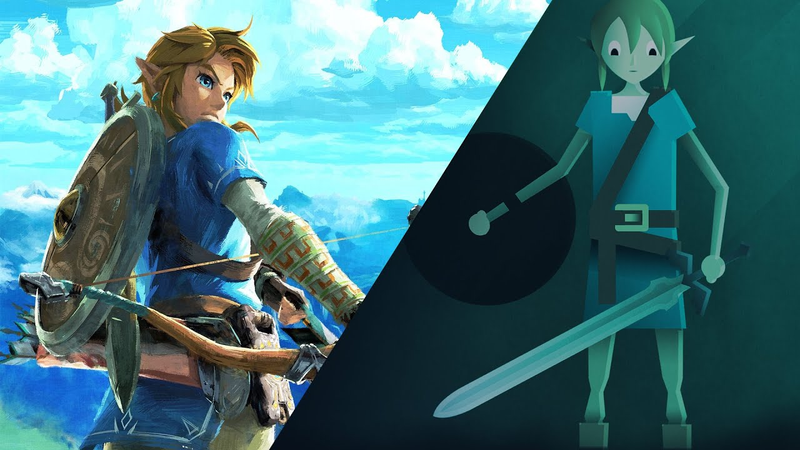
Redesigning Link for 2D (Unity Character Design Tutorial)
This tutorial outlines a systematic approach to translating complex 3D character designs into simplified 2D assets suitable for game development.
- Effective 2D character design prioritizes graphic design principles, specifically using basic geometric shapes and silhouettes to ensure visual clarity and readability at small screen scales.
- The 'caricature' design approach involves identifying and emphasizing a character's most iconic features while discarding unnecessary details that create visual noise.
- Designers should construct characters using primitive shapes like circles and rectangles while working in a T-pose to simplify the future rigging and animation process.

Shoot for the Sky: The Ambitious HDR Time-Lapse Skies of Forza Horizon 3
The development of Forza Horizon 3 marked a significant shift in open-world environmental rendering by replacing traditional procedural sky simulations with high-fidelity, HDR time-lapse photography captured on location in Australia.
- Forza Horizon 3 replaced procedural sky simulations with 25 distinct HDR time-lapse sequences captured on location in Australia to achieve superior lighting realism and physical accuracy.
- The development team engineered a custom three-camera rig to record 24-hour sequences, resulting in 1.2 terabytes of raw data per shoot.
- To optimize performance, the team used motion vectors to interpolate between two-minute capture intervals, reducing the final data footprint from over a terabyte to under 2 gigabytes.
Writers
Games and companies
Games