Game Development reports and market data
Documents
Superstar Session: From Impossibility to Relatability: How we Define What an Ustwo Games Game is
Ustwo Games defines its studio identity and development philosophy by prioritizing meaningful, human-centric experiences over data-driven trends.
- Ustwo Games maintains a studio identity by prioritizing premium, human-centric experiences over data-driven trends like hyper-casual or free-to-play models.
- The studio limits project team sizes to between 8 and 12 members to ensure high individual investment and creative accountability.
- Development methodology relies on a 'Trojan horse' strategy, using visually striking mechanics to engage players before introducing deeper emotional narratives.

Stop Believing Benchmark Metrics for Your Game
Standard industry benchmarks for mobile game performance—such as the widely cited 40/20/10 retention model for days 1, 7, and 28—are often misleading and should not be used as universal indicators of success.
- Generic industry benchmarks, such as the 40/20/10 retention model for days 1, 7, and 28, are misleading and should not be used as universal indicators of project viability.
- Developers should replace external averages with custom models that integrate daily installs, retention duration, and net ARPDAU to determine actual product sustainability.
- A game with lower retention can remain highly profitable if it maintains high organic install volumes or superior monetization efficiency compared to titles that meet standard benchmarks.
Trailers - Sell Your Game
High-end cinematic trailers serve as a critical marketing tool for mobile games, helping titles distinguish themselves in an increasingly saturated marketplace.
- High-end cinematic trailers are now essential for mobile games to compete in a saturated market, closing the production quality gap previously held by PC and console titles.
- Production costs are primarily driven by the complexity of assets, specifically the number of characters, environmental variety, and the requirement for advanced simulations like fluid dynamics, destruction, or hair physics.
- Client-provided assets are often low-poly proxies, requiring studios to perform extensive look development, including re-topology, 8K texturing, and advanced rigging to meet professional standards.
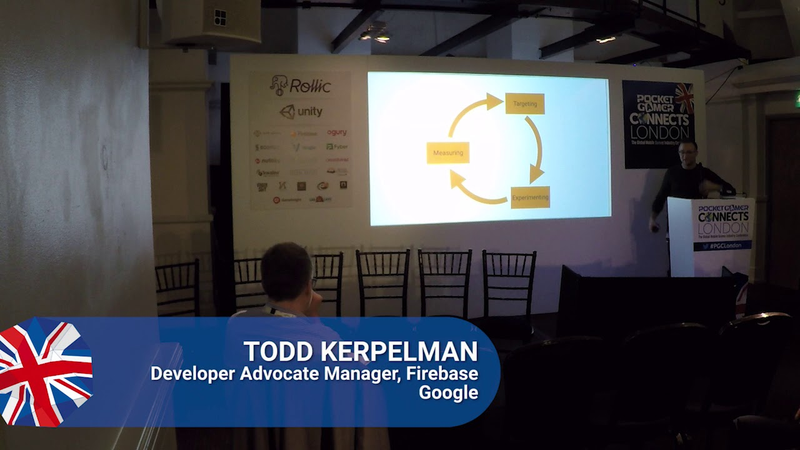
Firebase, Analytics, Google, and Understanding How They Work Together
Firebase provides a comprehensive suite of backend-as-a-service tools designed to assist game developers in building, managing, and optimizing mobile games.
- Firebase integrates backend infrastructure, quality assurance, and user engagement tools into a centralized console to support the full lifecycle of mobile game development.
- The platform utilizes an event-driven Google Analytics model instead of legacy session-based tracking to identify specific user segments, such as high-value players or those at risk of churning.
- Developers can use Remote Config to adjust game variables in real-time without requiring new app store updates, facilitating immediate optimization of the user experience.
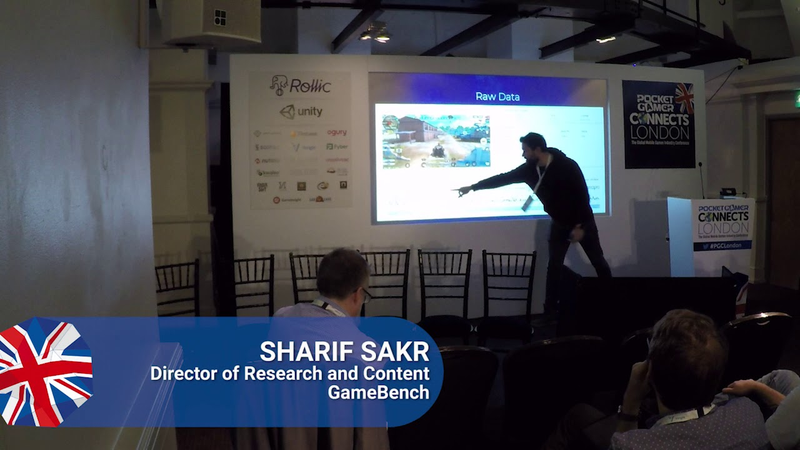
Superstar Session: How to Spot Performance Problems that Gamers Hate & Even Major Studios Often Miss
Mobile game development faces significant challenges regarding hardware fragmentation, which often leads to performance issues such as poor frame rates, excessive battery consumption, and long load times.
- Mobile developers must shift from reactive testing to ecosystem-wide intelligence by collecting raw performance data—including power draw in milliamps, frame rate stability, and load times—throughout the entire development lifecycle.
- Hardware fragmentation in the mobile market requires studios to move beyond limited testing environments and utilize a combination of manual testing, automated device farms, and embedded SDKs to identify bottlenecks before public release.
- Studios should implement genre-specific performance thresholds and color-coded rating systems to convert complex technical metrics into actionable insights for non-technical staff.

Panel: Keeping Your Community Happy
Maintaining a healthy gaming community requires a commitment to transparent, two-way communication that prioritizes long-term trust over short-term appeasement.
- Prioritize long-term trust over short-term appeasement by maintaining transparent, consistent, and two-way communication with the player base.
- Mitigate toxic behavior and cheating by sequestering disruptive players into isolated shards, which protects the general user experience while allowing developers to study exploits.
- Balance player feedback with the studio’s core creative vision by discerning between constructive, representative input and the noise of vocal minorities.
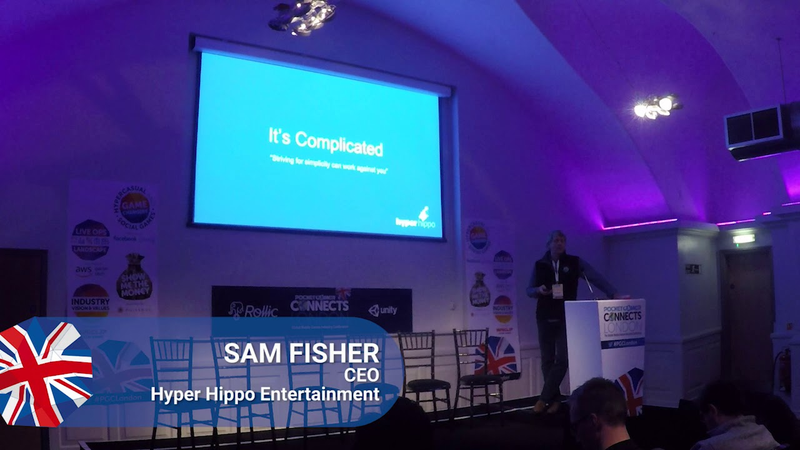
How Hyper Hippo's Live Ops Operations Maintain its Success in Different Cultures and Locales
Hyper Hippo Entertainment emphasizes the necessity of a robust global strategy for mobile game developers, particularly as growth in traditional North American, UK, and Australian markets slows compared to emerging regions.
- Developers must prioritize expansion into emerging markets like India, China, and Latin America, as growth in traditional regions like North America, the UK, and Australia continues to slow.
- India represents a significant growth opportunity for mobile developers, with 20 million new users entering the Google Play ecosystem every month.
- Successful global scaling requires a unified, scalable backend infrastructure that supports diverse front-end experiences while avoiding the operational overhead of reinventing core systems.

Level Design Workshop: The Illusion of Choice
This presentation explores the psychological and biological mechanisms behind player choice, arguing that effective level design relies on creating an "illusion of choice" rather than providing unlimited options.
- The Paradox of Choice demonstrates that while autonomy is essential, excessive options overwhelm the player's brain, making them happier and more focused when choices are constrained.
- The availability heuristic dictates that players prefer familiar elements, meaning designers can influence player behavior by using recognizable patterns, colors, or architectural cues to guide navigation.
- The sunk cost fallacy causes players to remain committed to a chosen path or strategy even when a better alternative exists, as the brain becomes psychologically invested in the initial decision.

GDC Plays IGF Nominee Eliza with Matthew S. Burns
Eliza serves as a critical examination of the intersection between mental health and automated technology, specifically critiquing how modern corporations gamify human interaction.
- Eliza critiques the intersection of mental health and automated technology by highlighting how corporate reliance on metrics and AI-driven interfaces often prioritizes efficiency over genuine therapeutic outcomes.
- The game intentionally rejects branching paths and complex moral systems in favor of a linear, character-driven narrative to maintain focus on emotional introspection rather than mechanical complexity.
- To prevent scope creep and ensure narrative cohesion, the development team finalized the entire script before beginning production.
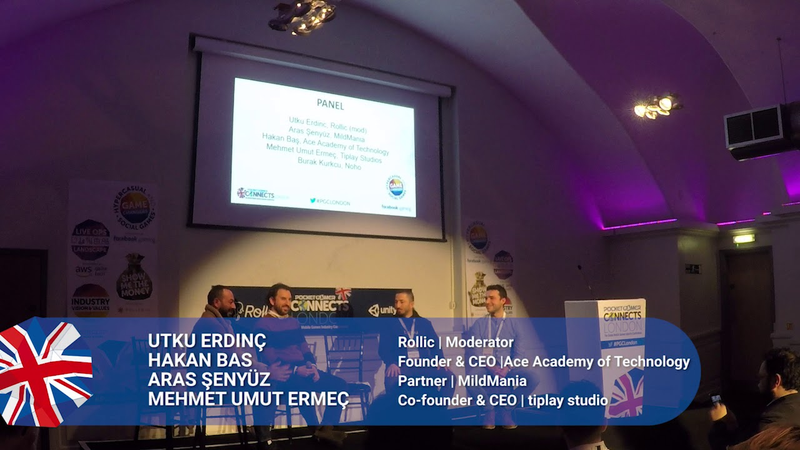
Panel: Hypercasual: Different Backgrounds at One Common Place
The hypercasual gaming sector represents a strategic pivot from traditional core gaming, prioritizing agility, rapid prototyping, and cost-efficiency over the multi-million dollar budgets and lengthy development cycles typical of legacy titles.
- The hypercasual sector prioritizes rapid prototyping and cost-efficiency, shifting away from the multi-million dollar budgets and long development cycles characteristic of traditional core gaming.
- Success in the hypercasual model is driven by a high-velocity development environment that relies on data-driven testing and the scalability of in-game advertising to reach global audiences.
- The industry is currently transitioning toward hybrid-casual models that combine in-app purchases with advertising revenue to increase long-term player value beyond simple download volume.

What Makes a Game Hypercasual?
Hypercasual gaming success relies on a repeatable framework centered on three core principles: mass appeal, bite-sized gameplay, and short-term stickiness.
- Hypercasual success is defined by a 40 percent Day 1 retention benchmark, achieved through a satisfying core loop and clear progression systems.
- Mass appeal is measured by a target Cost Per Install (CPI) of approximately 50 cents in the US market.
- Effective hypercasual ads must communicate the core gameplay mechanic within the first three seconds to drive high-volume downloads.

Superstar Session: Building a Future-proof Ecosystem for Hypercasual
The hypercasual gaming sector requires a rigorous balance between creative ideation and data-driven optimization to achieve commercial success.
- Automated AI-driven feedback systems, such as Rollic's 'Elephant' tool, have increased production speed by three-fold and achieved a 92% success rate in positive-metric iterations.
- Hypercasual success relies on a high-volume testing model; for example, Rollic tested 472 games in 2019 to identify 13 global hits.
- Individual-level optimization allows games to dynamically adjust difficulty and ad frequency based on specific user behavior, directly improving player retention.
Writers
Games and companies
Games