1 free read left. Create a free account for unlimited reading + AI research.
Create free account
Firebase, Analytics, Google, and Understanding How They Work Together
Key insights
6 takeaways- 01Firebase integrates backend infrastructure, quality assurance, and user engagement tools into a centralized console to support the full lifecycle of mobile game development.
- 02The suite includes Crashlytics for stability monitoring and Test Lab for automated testing across a wide library of physical and virtual devices.
- 03The platform utilizes an event-driven Google Analytics model instead of legacy session-based tracking to identify specific user segments, such as high-value players or those at risk of churning.
- 04Developers can use Remote Config to adjust game variables in real-time without requiring new app store updates, facilitating immediate optimization of the user experience.
- 05Firebase Predictions applies machine learning to historical analytics data to forecast future player behaviors, specifically predicting the likelihood of in-app purchases or churn.
- 06Firebase supports cross-platform development for Unity and C++, enabling both technical and non-technical staff to manage A/B testing and game performance metrics.
Ask AI about this video
Transcript
[Music] all right well thank you for coming it's really early and I am super jet-lagged so that's gonna be a great combination my I'm just hoping the words that come out of my mouth make sense when you put them one after the other that is the high bar I'm setting for this presentation all your in the back come on in sit down there's some seats or you know can linger back there that's cool too so yes this is a sponsored talk I'm gonna talk a little bit about firebase and analytics and Google and how they all work together but hopefully I'll try and make it worth your while where we all learn a little something and if not well at least I will talk fast because you know we've been chatting with game developers out there and some have never even heard of firebase which is sad but you know that's okay some folks maybe heard the name but
don't really know what firebase is and you know some folks may be like checked it out three years ago and kind of don't know what we've been up to lately and I know maybe some of you are here because we said we would sort of clear up the difference between Google Analytics and Google Analytics for mobile and firebase analytics which has also now been called Google Analytics and we will get into that later but first let me back up here and tell you about firebase which is a suite of tools and services from Google that make it easier for you to build more successful games and how do we do that with like a whole bunch of products there's like 19 of these things here and I think I have 16 minutes left so I'm not gonna get to talk about all of them in depth but you know let me talk about sort of some of my favorites we sort of grouped this into three categories this first one on the Left are sort of a number of tools that make it easier for your engineers just simply get your game up and running these are kind of like the back end as a service tools that generally make it easier for you to like store data in the cloud and that kind of thing so a couple of my favorites you got the real-time database which is sort of the original product that you know firebase when it was a startup launched with it's what a lot of people
think of when they hear about firebase and it's good for sort of easily syncing your game game state sort of across different clients in close to real time with sort of very little work required on your part the idea is you sort of make a change in one client and sort of our libraries and services automatically propagate that to all the other clients that are listening to that value I should point out here real-time because you know game developers have a different sense of real time we mean sort of a couple of tenths of a second here so you wouldn't use it to like power say a first-person shooter but you could totally use it to power a poker game or like a clash type game or you know add in-game chat to whatever you're doing fun fact it was actually used to power the Google Lotteria doodle this was a Mexican bingo game that launched on the Google front page in like over a dozen countries including the US and the real-time database kind of handled like the matchmaking and calling out the bingo squares and showing you like your opponent's moves as they filled out their cards and you know we went from like basically zero usage to literally overnight you know
many many many users they won't tell us exact numbers but it was unlike the Google front page there was a lot of people and the whole thing just kind of worked like you know we were able to sort of just handle all that massive usage you know literally overnight which was kind of neat we often talked about cloud firestore as the next generation of the real-time database this is sort of a more heavy-duty solution it's a heavy-duty sort of no sequel database in the cloud it's got like better querying capabilities and more structured data and multi-region strongly consistent databases which is like a thing database nerds care about so any database nerds in the audience yeah however there's no unity or C++ support yet for the client libraries so I'm not gonna talk too much more about it here but you know like keep an eye out it maybe some upcoming game developer conferences and maybe we'll have some announcements here hosting this is sort of there's actually one of our more popular products because it's sort of very easy simple hosting of your website you know it's SSL by default we got a global CDN you know for it's it's really
popular cuz sort of a lot of developers or marketing folks need like a quick one-off marketing site to promote whatever in firebase hosting is really good at that really inexpensive so give it a look and extensions is fairly new these are sort of prepackaged customizable solutions that perform a number of common tasks that you as game or app developers might want to do like if you want to sort of automatically integrate with MailChimp when like a user creates an account or like automatically translate any text that gets uploaded to our database for sort of magically translated chat so all your users can understand each other like we have extensions to handle all that stuff and you know basically just kind of you just say hey I want to enable this and we do mostly work for you so it's kind of the first grouping the second grouping here are sort of the services to your games quality I'm gonna call out two of my favorites the first one is firebase crashlytics wait Oh click Wow do I need to jiggle this do we try it
again oh wait Oh Mandy keno crack you know wasn't crying I really let's try that again alright yay the second grouping it's great for quality crashlytics alright cool so basically this is actually a lot of large game companies actually use crashlytics in their games the idea here is if your game were to crash Oh am I did I open the fire door alright we'll keep talking just say a day here is like there we go yeah if your game were to crash we would go ahead and upload like a stack trace of that crash to our server so when you go to like the firebase console you get really important information like how stable your game is and you know sort of what crashes your users are encountering groups by cause prioritized by the ones
that are affecting the most users so you know kind of which ones you should probably you know be tackling first and for any individual crash we give you like a ton of information like you know what version your app people are using when they encounter this crash what devices they're using how much memory they have left on those devices and you know like a nice human readable stacktrace so that hopefully you can sort of debug these issues as fast as possible so you know when your users write reviews like hey your game crashed on me fix it and you're like well that was a really helpful bug report we can give you the information that actually maybe helps you sort of debug those issues so if you have a game and you know you don't want it crashing check out crashlytics test lab also you know definitely of interest to a lot of game developers basically we can sort of run your game on like a whole bunch of different devices we have like over a thousand real physical test devices sitting in our data centers and you know thousands more virtual ones in a variety of like screen sizes and OS versions and manufacturers and so the idea is you as a game developer would write like a predefined game loop for your game that would sort of run it interpret double manner we can go ahead and run
this test loop on sort of any device you want and you'll get like log files and screenshots and videos of test lab interacting with your game and we'll tell you if we run into crashes or performance issues or it hangs or even sometimes it's like UI elements are rendered off-screen so like when you find that your phone doesn't work unlike some three year old model that's only available in Asia or something like that you don't have to go to eBay to find that phone you know we can probably run it in the cloud for you so it's kind of useful but the last category I'm going to talk about here is sort of the drive user engagement grouping I guess I really kind of think of these as like improving your attention and ARPU and you know I'm kind of assuming that's what most people are interested in so I'm gonna spend a little more time talking about these but if you're interested in any of these others we have a booth just right upstairs come talk to us we got some we got me and like some engineers who know way more than me who can probably give you a lot more information but I'm gonna start by talking about analytics because that's what drives a lot of these features and I know it's a little confusing because we've recently gone through a couple of rebrandings and maybe you know confuse
some people in the process I see some nodding so I'm gonna start by you know talk about classic Google Analytics this was designed for websites back in 2005 and it was sort of focused on things that web developers in 2005 cared about like sort of page views and sessions and and and that kind of stuff right and that were great for a while and then people start building apps and they said hey you know what we'd like analytics too and so we released the Google Analytics for mobile SDKs which sort of tried to fill that gap for like the you know the mobile app developers but it was kind of tough because the backend is still essentially focused on sessions in pageviews so this was always a little bit of an awkward fit and so this specific initiative has essentially been deprecated so if you kind of hear like Ogier from ole has been deprecated know that it's kind of this older version of the SDK is talking to like this older version of the backend I should say classic and part of the reason this was deprecated is in 2015 the team announced firebase analytics which was sort of a new analytic system designed from the
ground up to support games and apps with a focus on like events and users instead of sort of the 2005 sessions in pageviews model now this was later rebrand to Google Analytics for firebase which is a product name that absolutely nobody use because it's like just too long to say and then sort of a few months ago as the team added a bunch of new features and also added support for more kind of web apps that felt more like apps than websites they rebranded it again to just Google Analytics and they change the logo to these overly looking things now you know personally I'm not a huge fan of this rebranding because I think it's kind of confusing you sort of have these two products both called Google Analytics that have served two very different models and paradigms with how sort of a they consider analytics data so what I think of as firebase analytics is basically now called Google Analytics for app and web properties that's the way you will see it labeled in the Google Analytics website the old kind of classic 2005 Google Analytics is just referred to as Google Analytics for web
properties so that's that's kind of the difference between the two but just know that sort of for all intents and purposes this Google Analytics app and web property thing is what most people are thinking of when they say firebase analytics and what you are probably interested in as game developers so let's cover sort of what you get when you add firebase Google Analytics app and web properties excuse me to your game I get a bunch of dashboards probably a lot of this should look pretty pretty standard we've got like sort of your active users and like what your top conversion events are your daily user engagement and you can see sort of in-app revenue and if you're using crashlytics you can get some of you know stability reports retention cohorts and some basic audience information that kind of stuff and you know you can sort of get more in-depth information on any of these will give you reports on events that you're recording within your app like some of these events the library records automatically for you like sort of first open and you know in-app purchase and that kind of thing but then there's gonna be a whole bunch of other events that you're gonna report manually like
you know game started and game failed and you know game succeeded and you know user visited my in-app store and user added item to cart that sort of thing and sort of by looking at these event reports you can start to figure out sort of where your users are spending time and your app and what they're doing of course some of these events you can label as conversion events and then we get you sort of nice attribution information and post backs and that kind of stuff so you can see you know which ad campaigns bringing you users that do things that you care about within your game you get details about your latest release how quickly people are upgrading to the latest version how stable it is if there's any retention problems there that kind of thing the extreme view which is kind of this nice real-time view of what's happening in your game right now it's just kind of just kind of fun and of course all this can be filtered by like various groups or user properties that you're defining within your game so if you want to find out if like more women than men initiate it or purchase you know you can go ahead and like filter this report by like you know just the users that we have identified as probably male and then you know get just sort of that filtered report and then you can sort of compare it with the general population and then if you were
to actually leave the firebase website and head on over to the Google Analytics website you get a few more advanced reports things like sort of side by side breakdowns of your user audience and closed funnels which is the thing we didn't have for a while and now we have and people are very happy because they've been asking about this for a while and so you know all these reports are nice but really what you want to be doing is kind of taking action on this stuff you know it's not just sort of seeing the reports it's going ahead and like you know making changes in your game or experimenting and seeing if they can sort of improve certain aspects of your game and you know sometimes you want to do that too like all the users that are using your your game but sometimes you know you want to sort of target specific sets of users you know whether it's sort of first-time players or people that are spending money in your game or like you're hardcore competitive you know multiplayer users that kind of thing and so you know we let you build audiences to help sort of target these these users these are basically sort of groups of of people that you can sort of configure based on their behavior within your app audiences was actually something that wasn't very good a year or two ago in firebase
analytics but as of about May of last year it got significantly better so you know now you can say things like hey I would like to find the users who have you know played more than ten rounds in the last seven days or like find users who have visited my in-app store five times but haven't yet made a purchase you know what's up with them maybe I need to send them a you know coupon or something or like you know folks with the lifetime value of more than 60 euros ok these are the players that really care about and want to make sure you know they feel they feel loved and then you know once you've defined these groups there's a couple of main ways you can take action the first is actually just kind of changed the way your app behaves for these users and you that using a remote config if you haven't used remote config it kind of think of it like a key value store that lives in the cloud which you can essentially use to override any variable that you have defined within your app so it's sort of a nice way of making changes within your game without having to release a new version and push it out to the world so a lot of game developers use this to kind of tweak gameplay settings on the fly like you think about like a tower defense game if one of your units is like way overpowered well that's going to kind of completely ruin
your in-game you know your the balance of your game and could make it too easy or too hard and so using your remote config you can do things like sort of adjust those settings again without having to push out a new version of your game we just serve download those settings from the cloud but going back to what we were talking about earlier you can also configure remote config to sort of deliver different experiences to different groups of users so if you want to make like your in-app store more prominent for users who you know actually visit your store and buy stuff you can totally do that or you know if you want to show ads less frequently to users that are spending money and just show ads to the users that haven't spent anything you can totally do that or if you have like a new feature and you know maybe you want to try it out with sort of a small percentage of your users and then kind of gradually roll that out to more and more of your users that's also something you can do with remote config and these kind of gradual rollouts that's actually sort of one of the most popular uses of remote config a lot of developers like sort of I'm just gonna you know turn this flag on for 5% of my users and then once they're sure they haven't like you know ruined their
in-game economy or made you know the game super crash your that sort of thing then they kind of can roll it out to a larger and larger percentage of their population until everybody's using it so it's you know again it's a really nice way of testing out a new feature if you're not sure how well it's gonna be received of course the other way to influence your users is to use notifications we have firebase cloud messaging for this you know delivers messages natively on Android and you know routes any any appropriate messages to APNs to talk to your iOS users and you're just like with remote config you can send these messages globally or you can send them to sort of a segmented part of your population based on what you defined in audiences so like if you have a new multiplayer feature but you only want to send it to your users that have played a multiplayer game in the last 30 days you can do that right so you don't not bugging your users with notifications that they don't care about and how do you know if these changes work well hey look you can a/b test it right we've got an AV testing system that's essentially powered by all these other systems I talked about right remote config for sort of making changes within your game cloud messaging for
sending notifications and analytics for measuring those results you can do something like say hey you know what I want to create an a/b test with like you know 20% of my population who has the latest version of my game you know let's go ahead and try and increase our seven-day retention and I'm gonna do that by like experimenting with how much time our users have when they first start our new round like is it you know will they stick around longer if it's harder or will they get frustrated let's let's find out right and we can do the hard work of sort of randomly distributing your audience into the right groups sending them different in-game experiences using remote config measuring those results and then sort of giving you those results side by side so you can see you know if any of these changes had any effect on you know the stuff that you care about and the last product I am going to touch on briefly is firebase predictions because we are a part of Google and I am contractually obligated to talk about machine learning and any presentation I give because we love machine learning if you think about it a lot of these examples we've been looking at audiences where we're grouping users based on their past behavior and that's fine but you know if you really think about it these groups
are often proxies for future behavior right like you know here we're saying I want to find people that have played you know more than 10 games in the last seven days but really what we're looking for here is users who we think are probably going to keep playing in the future right like that's kind of what we're really doing here and so that's sort of what firebase predictions does is basically we sort of apply a whole bunch of machine learning to your analytics data that gets recorded within your app and using that information we can create groups of users based on how likely they are to perform actions in your game in the future so you know like you can predict you know find me groups of users that are going to spend money or turnout in my game or hit some conversion event so we can go ahead and you know for instance find people who we think are pretty likely to keep playing our game you know folks that are unlikely to turn out and then do things like you know asking the writer review for us or you know share the game with their friends or whatever we think we want to do with these sort of users who are likely to keep playing our game so those are the high points of the sort of user engagement / improve our poo and you know products
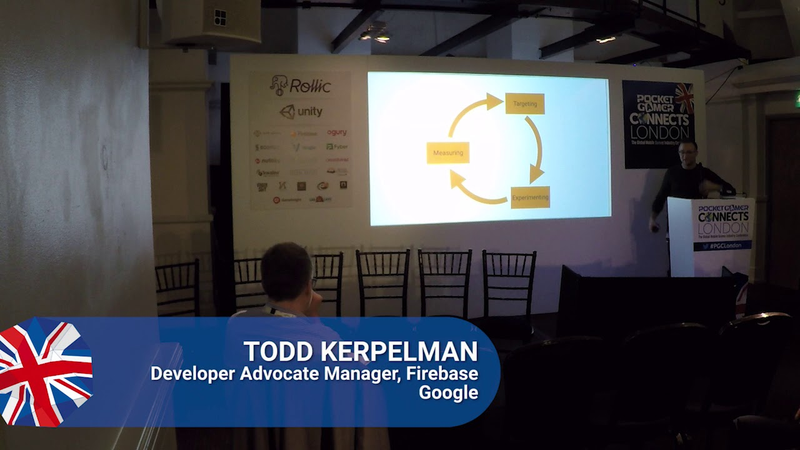
serve a nice set of tools that basically helps you with that whole cycle of sort of analyzing and segmenting and experimenting and taking action that that whole cycle I should point out you know pretty much everything I talked about today is available for unity and C++ and you know once your engineers have done sort of the initial kind of set up work to get like analytics remote config working you know we have API is available if you want to sort of ping them remotely but we also everything is available for you to sort of run in the firebase console so you know your your analytics folks can go ahead and run an a/b test and not have to bug your engineers that probably has something they want to focus on in their latest sprint so I realized that was it an incredibly fast and maybe not particularly deep dive into everything that we have to offer but our whole point in flying out here and being really jet lagged is it for us to blather on to all of you but really for us to hear what you have to say to us so you know if you've tried any of our services and you know you like them that's great you know let us know let us know what you're using and how we can make it better if you've tried any of our stuff in the past but stopped because you ran into some
problem the inner let us know we'd sort of love to know sort of what those obstacles were what the deal-breakers are for you and if any of this just kind of sounds vaguely interesting but you're you know not quite sold yet or suspicious or have follow-up questions you know come by and talk to us and maybe we can answer some of those questions and put you at ease and so with that I'm you say thank you very much for sitting through this presentation you know enjoy the rest of the conference I think there's a bunch of good talks coming up I'm excited to listen in on some of them and I hope you are too so go listen to some good presentations and then in between come talk to us in the booth I think we're like right upstairs if when you first come in and with that I'm gonna say thank you very much [Applause] you [Music]
Summary
Firebase provides a comprehensive suite of backend-as-a-service tools designed to assist game developers in building, managing, and optimizing mobile games. The platform’s core functionality is categorized into three primary areas: backend infrastructure for game development, quality assurance tools, and user engagement services. Key infrastructure products include the Realtime Database for syncing game states and Cloud Firestore for structured, scalable data storage. For quality assurance, the platform offers Crashlytics to monitor stability and provide detailed stack traces for debugging, alongside Test Lab, which allows developers to run automated tests across a vast library of physical and virtual devices.
The platform’s user engagement suite centers on a rebranded analytics system, now unified under the Google Analytics name. This system, specifically designed for app and web properties, moves away from legacy session-based metrics to an event-driven model that tracks user behavior. By leveraging this data, developers can create specific user audiences, such as high-value players or those at risk of churning. These segments can then be targeted through Remote Config, which allows for real-time adjustments to game variables without requiring new app updates, and Firebase Cloud Messaging for personalized notifications.
Methodologically, the platform integrates these tools to facilitate A/B testing, enabling developers to experiment with gameplay changes and measure their impact on retention or monetization. Furthermore, the platform incorporates machine learning through Firebase Predictions, which analyzes historical analytics data to forecast future user behavior, such as the likelihood of making in-app purchases or churning. These services are cross-platform, with support for Unity and C++, allowing both engineers and non-technical staff to manage game performance and user experience through a centralized console. The overarching goal is to provide a continuous cycle of analysis, segmentation, and experimentation to improve game performance and average revenue per user.