Game Development reports and market data
Documents

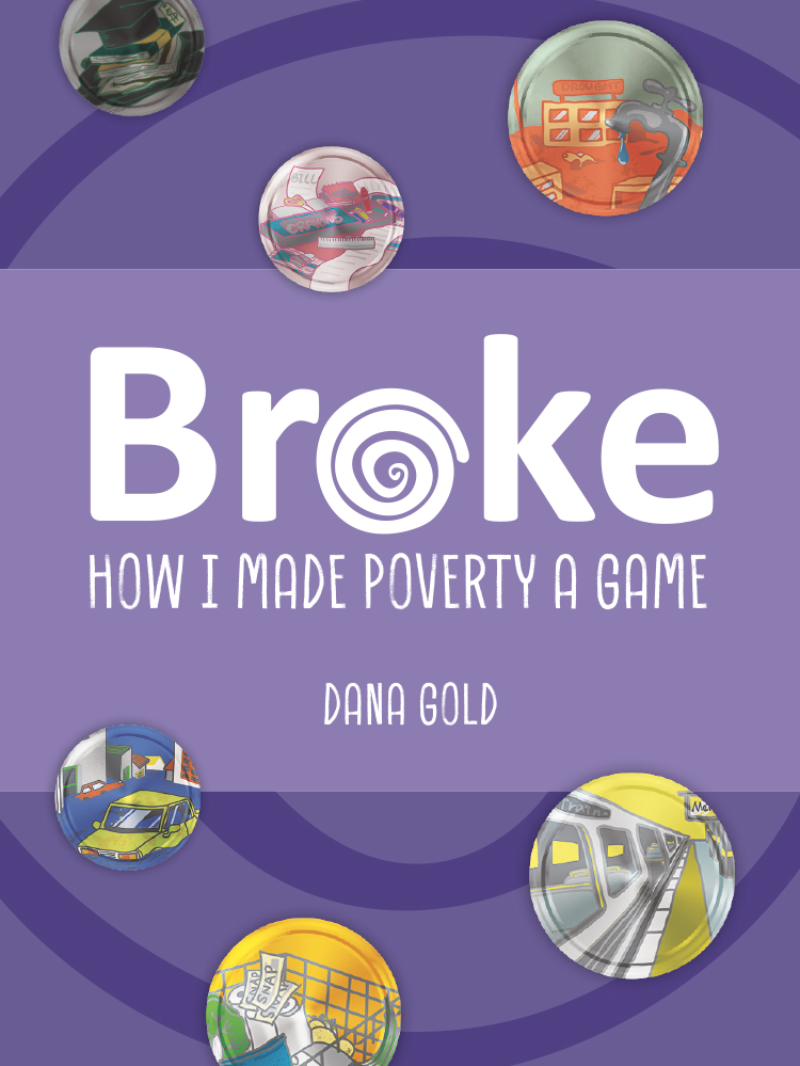
Broke: How I Made Poverty a Game
Broke: How I Made Poverty a Game is a short book by Dana Gold, published by Carnegie Mellon University's ETC Press.
- Gold cites a Princeton study in which lower-income participants showed an average thirteen-point drop in cognitive test scores after a hypothetical $1,500 car repair was posed, while higher-income participants showed no significant change.
- The author argues that money is the single biggest factor to consider when overcoming the challenges of poverty, and that the way out of poverty mostly depends on attaining adequate income.
- Gold reports that welfare reform reduced many recipients to receiving only three months of income each year, and that formerly housed individuals were pushed onto the street.

Engage, Retain, & Delight Players with Live Ops on AWS | PGC Digital #1
Modern game development necessitates a shift toward integrated live operations as a foundational element of design rather than an afterthought.
- Live operations must be integrated as a foundational design element from the start of development rather than treated as an afterthought.
- Real-time data pipelines and streaming technologies are essential for detecting player behavior anomalies and triggering dynamic, personalized in-game encounters.
- Studios should utilize machine learning and automated communication tools to execute segmented player outreach, which is critical for long-term retention.

Analytics from a Live Ops Perspective | PGC Digital #1
Successful Live Ops strategy centers on the integrity of foundational data, prioritizing robust server-side tracking to ensure that decision-makers operate on reliable metrics rather than anomalies.
- Prioritize server-side tracking to ensure data integrity, as decision-making based on unreliable metrics or anomalies undermines Live Ops strategy.
- Shift from excessive A/B testing toward the simulation of game mechanics to provide designers with actionable feedback on balance and content updates.
- Utilize Monte Carlo simulations to identify complex feedback loops and progression imbalances that are frequently missed by manual testing.
IP / Brand Crossover Development | PGC Digital #1
Intellectual property functions as a collection of foundational assets and ideas, whereas branding serves as the emotional shorthand that communicates the value of those assets to consumers.
- Successful brand expansion requires prioritizing audience alignment and authenticity over transient trends to prevent brand dilution.
- Long-term market viability is best achieved through organic community development and high-quality execution rather than aggressive, hype-driven marketing.
- Intellectual property functions as a collection of foundational assets, while branding serves as the emotional shorthand that builds consumer trust through consistent engagement.
Microprose: 40 Years in 15 Minutes | PGC Digital #1
JW Bill Stealey, a veteran of the gaming industry and founder of MicroProse, provides a retrospective on his forty-year career, detailing the evolution of flight simulation and the foundational principles of successful game design.
- The core of successful game design involves creating experiences that force players to make time-critical decisions based on limited information, rewarding them for strategic accuracy.
- MicroProse, founded in the early 1980s by Bill Stealey and Sid Meier, achieved commercial success with titles including Hellcat Ace, Strike Eagle, Gunship, and Civilization.
- Effective product development requires balancing technical realism with accessible gameplay, often by pairing a focus on the 'fun factor' with dedicated designers who manage complex documentation and depth.
DICE & Effective Prototyping | PGC Digital #1
Prototyping serves as a critical risk-mitigation strategy in game development, functioning as the process of creating functional, low-fidelity models to validate core gameplay mechanics before committing to full-scale production.
- Prototyping acts as a primary risk-mitigation strategy by validating core gameplay mechanics through low-fidelity models before full-scale production begins.
- Teams should prioritize resources by mapping features on a matrix based on their criticality and level of uncertainty, focusing exclusively on essential but unproven elements.
- Strict time-boxing and a hypothesis-driven approach are required to prevent development bloat and the accumulation of technical debt.
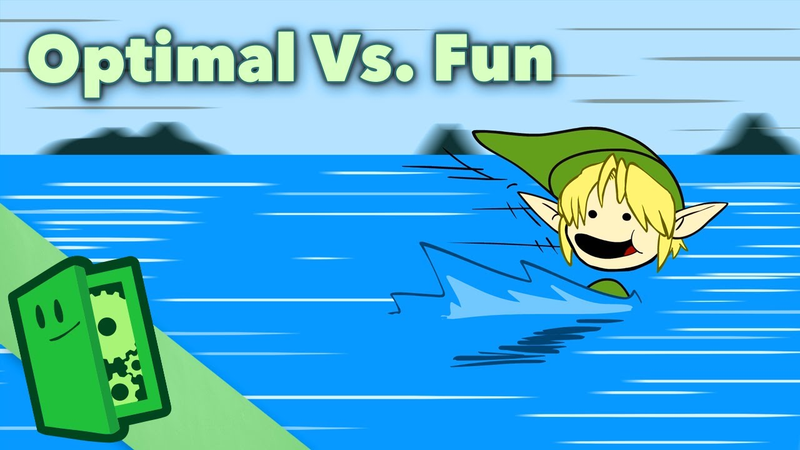
Optimal vs Fun - Designing for Different Playstyles - Extra Credits
The tension between optimal play and player-defined fun represents a fundamental challenge in game design.
- Game design must balance the tension between 'optimal play,' which prioritizes statistical success, and 'fun,' which focuses on subjective player preferences like role-playing or creativity.
- Forcing players into rigid, optimized builds to overcome late-game challenges diminishes player agency and can alienate those who prioritize thematic expression over raw efficiency.
- Effective design acknowledges that for many players, the process of crunching numbers and testing builds is a primary source of enjoyment rather than a chore.
The Science of Decision Making: How to use Data to Make Better Decisions | PGC Digital #1
Hyper-casual game development hinges on a data-driven approach that prioritizes marketability and long-term profitability.
- Validate game potential early by testing cost per install, click-through rates, and conversion rates before committing to full-scale development.
- Maximize lifetime value by balancing rewarded video engagement and interstitial frequency to prevent player churn.
- Optimize revenue performance using technical strategies like in-app bidding and country-specific waterfall configurations to increase effective cost per mille while reducing latency.

AR Game Design 101 | PGC Digital #1
Augmented Reality (AR) game design requires a shift in perspective from traditional screen-based development to a model that integrates digital assets into the physical world.
- Successful AR design requires integrating digital assets into the physical environment through environmental awareness, specifically by matching ground planes, lighting, and shadows to the real world.
- To prevent physical fatigue from holding devices at arm's length, AR sessions should be limited to short bursts of 30 seconds to two minutes, followed by resting periods using traditional screen-space interfaces.
- Designers must prioritize situational awareness and social context to ensure gameplay does not cause physical danger or social stress in public environments.

Enabling Creators: The Unreal Ecosystem | PGC Digital #1
The Unreal ecosystem functions as a comprehensive support framework designed to democratize high-end game development by providing creators with professional-grade technology, financial backing, and distribution infrastructure.
- The Unreal ecosystem provides independent developers with the same professional-grade tools and technology used in large-scale internal projects like Fortnite.
- The Epic Games Store supports developer profitability by offering a competitive 12 percent revenue share model.
- The Unreal MegaGrants program provides direct financial capital to support game development, educational initiatives, and open-source projects that demonstrate technical viability.

How to Build & Maintain Successful Highly Distributed Teams | PGC Digital #1
Building and maintaining high-performing, distributed game development teams requires a strategic investment in both operational mechanics and human-centric management.
- Maintain productivity by focusing on project milestones and clear task tracking rather than micromanaging individual working hours.
- Establish a core overlap window, such as 10 a.m. to 5 p.m., to ensure team collaboration across different time zones.
- Support distributed staff by providing essential resources, including ergonomic equipment and robust software tools like Jira and Slack.

Forging Your Path - Standing out from the Crowd | PGC Digital #1
The primary objective of this presentation is to provide game developers with actionable strategies for establishing a distinct professional identity to attract publishers and investors.
- To secure partnerships, studios must define a unique value proposition by identifying a specific specialization in genres, narrative styles, or technical expertise.
- A studio’s 'creative DNA'—the intersection of design, narrative, and art—is the primary differentiator required to stand out in a crowded marketplace.
- Quality is defined by a studio's ability to consistently deliver products within the constraints of their specific budget and resources, rather than chasing universal critical acclaim.
Writers
Games and companies
Games