Game Development reports and market data
Documents
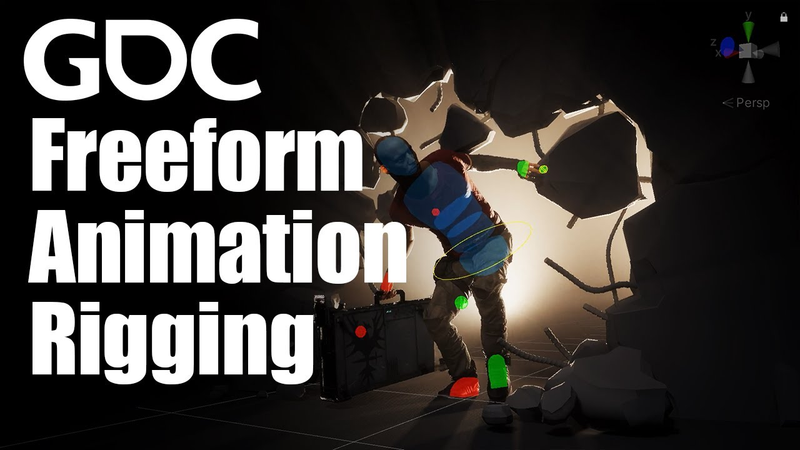
Freeform Animation Rigging: Evolving the Animation Pipeline
Modern animation pipelines are undergoing a fundamental shift toward freeform rigging, a methodology that prioritizes non-destructive, in-scene modifications over traditional, rigid workflows.
- Freeform rigging decouples control rigs from skeletal structures, allowing animators to dynamically adjust character proportions and rig configurations without losing existing animation data.
- The shift toward modular, reusable rigging systems replaces monolithic, one-size-fits-all workflows, enabling artists to iterate on complex motions independently of technical support.
- Bi-directional motion transfer facilitates the seamless movement of skeletal data into control rigs and back, supporting efficient refinement of motion capture through keyframe reduction and layered animation.
Talking Burnout, Making Art With Drinkbox's Gabby DaRienzo
Professional success in the independent game industry requires a strategic balance between creative output and the administrative demands of business management.
- Freelance artists must treat their careers as enterprises by balancing creative output with dedicated time for networking, self-marketing, and portfolio diversification.
- Transitioning from freelance work to a structured studio environment can mitigate burnout by providing organized production pipelines and enforced work-life boundaries.
- Burnout is often exacerbated by an industry culture that mistakenly equates overwork with professional dedication and manifests through persistent frustration and unhealthy perfectionism.
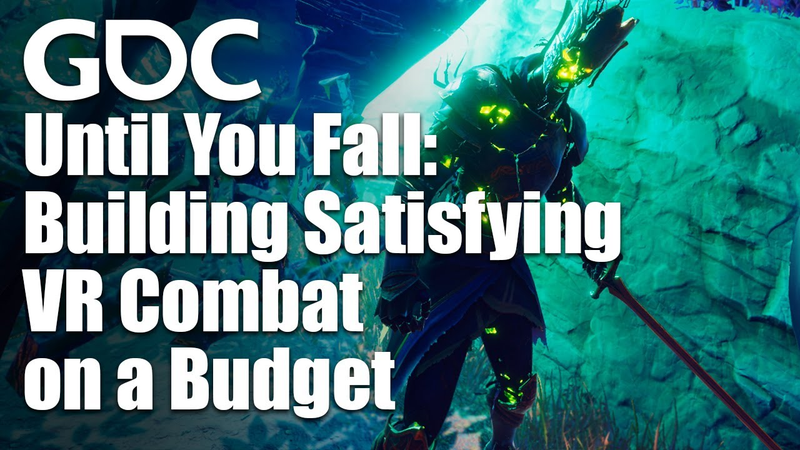
Until You Fall: Building Satisfying VR Combat on a Budget
Effective virtual reality combat design relies on prioritizing the core gameplay loop over high-fidelity, physics-based interactions that often introduce unnecessary friction.
- Prioritize the core player fantasy over universal interactivity by cutting secondary VR features that do not directly serve the primary gameplay loop, such as picking up environmental objects or enemy weapons.
- Combat the 'waggle' effect by mechanically incentivizing exaggerated, high-effort movements, ensuring that the most effective way to play the game is also the most physically engaging and visually rewarding.
- Avoid the 'immersion trap' by establishing a baseline for interaction fidelity and removing any features that fall below that threshold, which helps control development scope and prevents gameplay friction.
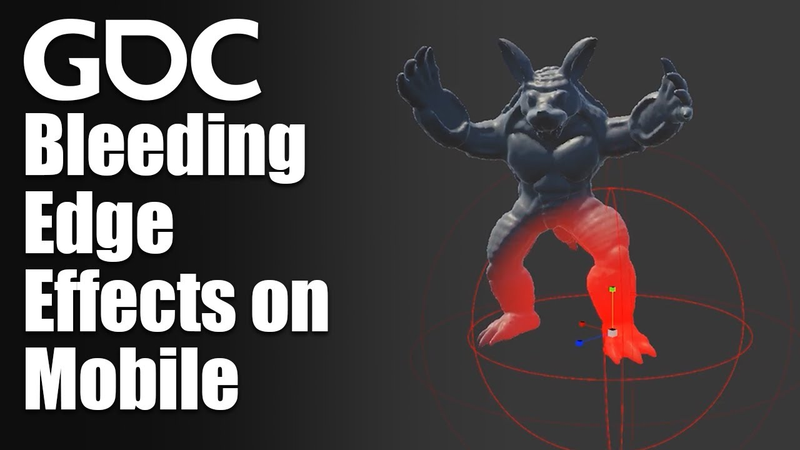
Bleeding-Edge Effects on Mobile
This presentation outlines technical strategies for implementing high-fidelity visual effects (VFX) within the performance constraints of mobile hardware.
- High-fidelity VFX on mobile hardware is achievable by offloading complex simulations to the GPU and utilizing modular shader functions to maintain performance.
- Persistent, interactive fluid simulations, such as blood trails, are implemented using a texture ping-ponging technique between two render textures.
- Dynamic UV space masking utilizes a dilation shader pass to eliminate UV seams and ensure seamless coverage across mesh surfaces.

Intrinsically Motivated Teams: Applying Self-Determination Theory
Self-Determination Theory (SDT) serves as a foundational framework for fostering high-performing, intrinsically motivated teams within the game development industry.
- Intrinsic motivation is driven by three universal psychological needs: competence (mastery), autonomy (meaningful choice), and relatedness (shared purpose).
- Managerial support has a threefold impact on team motivation, significantly outweighing the influence of individual talent alone.
- Extrinsic motivators like financial incentives often hinder performance in creative and complex problem-solving tasks, whereas intrinsic motivation correlates with superior cognitive performance and lower turnover.

Indie Game Marketing Tips With Failbetter's Hannah Flynn - GDC Podcast Ep. 5
Marketing in the independent game industry functions as a foundational development pillar rather than a secondary promotional task.
- Integrate marketing as a foundational development pillar from the earliest stages of production rather than treating it as a secondary promotional task.
- Prioritize sustainable, long-term growth through data-driven insights and niche audience targeting instead of relying on the volatile pursuit of viral hits.
- Diversify revenue models by combining subscription-based services with premium narrative-driven titles to mitigate financial risk and stabilize studio income.

I just clicked "LAUNCH" for my game on Steam...
The primary objective of this analysis is to outline an effective, self-directed marketing strategy for independent game developers launching on the Steam platform.
- Reaching a threshold of 20,000 to 25,000 wishlists is the primary benchmark for achieving the high-velocity sales necessary to trigger the Steam algorithm.
- Developers must take full ownership of their marketing strategy to create a sustained 'tidal wave' of interest, regardless of whether they have publisher support.
- A successful pre-launch outreach campaign involves distributing press kits and keys to a curated list of journalists and creators, targeting a 10% response rate.
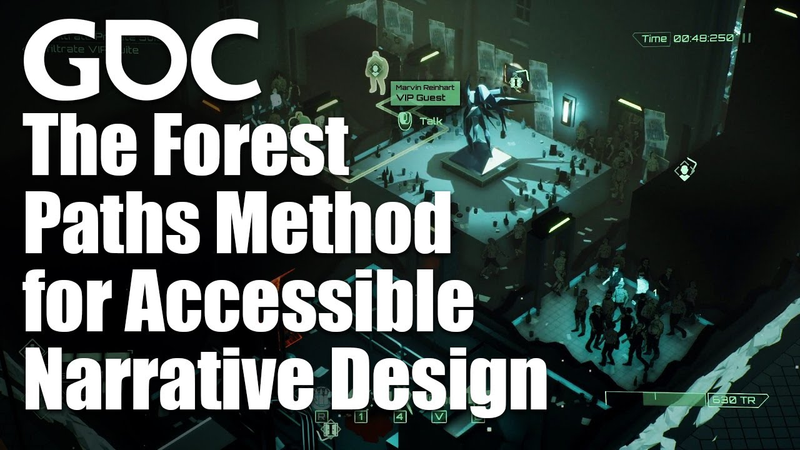
The Forest Paths Method for Accessible Narrative Design
The Forest Paths method provides a structured framework for integrating narrative design with core gameplay mechanics, ensuring that thematic goals remain aligned with functional player activities.
- The Forest Paths method aligns narrative design with core gameplay by mapping dramatic questions and player objectives simultaneously to prevent disconnects between story beats and mechanical execution.
- A visual matrix is used to track character transformation, resource management, and thematic escalation, ensuring narrative arcs evolve in tandem with the game's internal logic.
- Designers link specific gameplay loops, such as resource gathering or vehicle maintenance, to emotional states like isolation or mortality to create a rhythmic, immersive player experience.
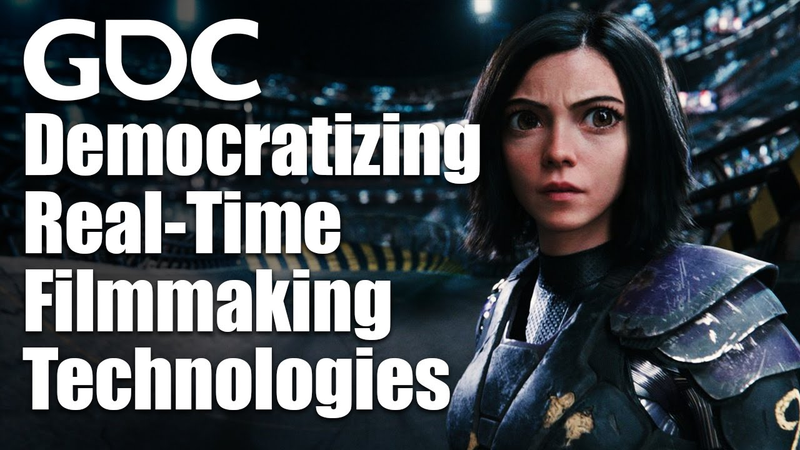
Democratizing Real-Time Filmmaking Technologies for Indie Game Developers
The democratization of real-time filmmaking technologies represents a significant shift in content creation, driven by the convergence of cinema and game engine capabilities.
- Real-time rendering technology has reached a level of quality that approximates pre-rendered cinematics, allowing independent developers to achieve visual fidelity previously restricted to major studio productions.
- The shift toward virtual production is driven by the convergence of game engine capabilities and affordable, consumer-grade hardware that replaces expensive, bespoke studio equipment.
- Virtual cinematography and performance capture tools allow creators to digitize actor movements and emotions while viewing rendered scenes interactively.

Staying Connected with Perforce in a COVID World with Brad Hart | Game Dev Unchained Episode 225
The global game development industry has undergone a fundamental transformation, shifting from centralized, office-based workflows to distributed, cloud-reliant models.
- The game development industry has successfully transitioned from centralized, office-based workflows to distributed, cloud-reliant models, proving that physical proximity is not a requirement for creative collaboration or security.
- Studios are increasingly replacing physical server hardware with global replication tools, which allow teams to maintain high productivity levels regardless of their geographic location.
- The shift to remote and hybrid work has fostered a results-oriented culture that improves employee well-being and sustains output by eliminating daily commutes and providing flexible work arrangements.

How many game objects are in my Steam game? | Let's Play Neversong Episode 5
This analysis examines the technical architecture and development process of the 2D indie game Neversong, specifically focusing on scene management and object hierarchy within the Unity engine.
- A single forest level in Neversong contains approximately 2,400 total game objects, with roughly 1,200 objects actively loaded into memory at any given time.
- The game utilizes a scene management strategy where a significant portion of the 2,400 objects remain disabled in the Unity hierarchy until triggered by specific gameplay events.
- The project's architecture relies on a complex hierarchy of prefabs, static objects, and parent-child relationships to manage the density of assets within individual screen boxes.
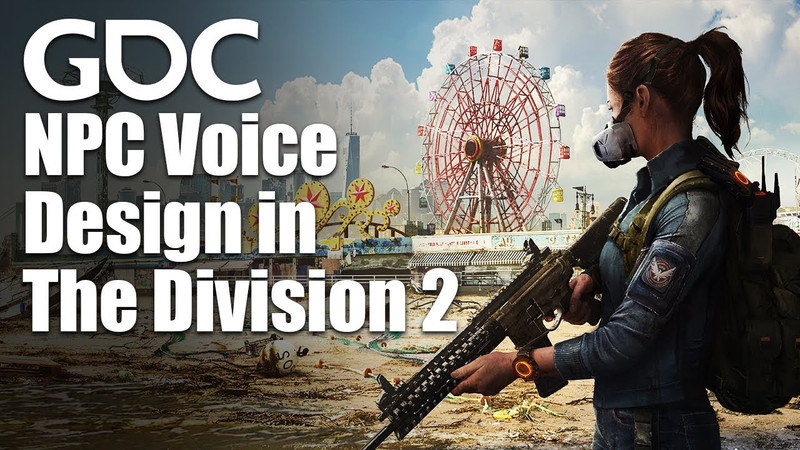
NPC Voice Design in The Division 2
The development of The Division 2 prioritized the creation of systemic, AI-driven voice barks to enhance player immersion and provide essential gameplay feedback.
- The Division 2 utilized a stimulus-based architecture for NPC voice barks, replacing rigid, timer-based dialogue with dynamic, context-aware reactions to combat and player behavior.
- The project managed a massive scale of over 93,000 lines of dialogue per language, distributed across 364 unique characters.
- Development efficiency and localization quality were improved by replacing hard-coded logic with a centralized, data-driven tag system using modular starter and response matrices.
Writers
Games and companies
Games