1 free read left. Create a free account for unlimited reading + AI research.
Create free account
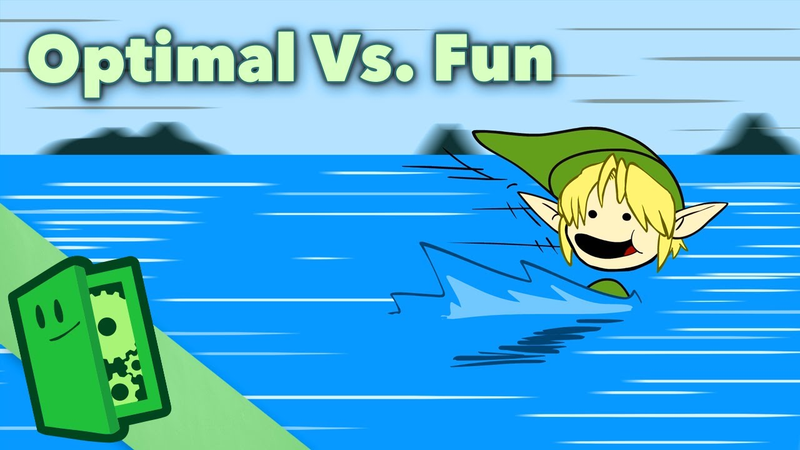
Optimal vs Fun - Designing for Different Playstyles - Extra Credits
Key insights
6 takeaways- 01Forcing players into rigid, optimized builds to overcome late-game challenges diminishes player agency and can alienate those who prioritize thematic expression over raw efficiency.
- 02Developers should aim to make the most efficient strategies inherently enjoyable while ensuring that non-standard, 'fun' playstyles remain viable for progression.
- 03Warframe serves as a successful model for providing a spectrum of engagement, allowing players to pursue technical, damage-focused builds alongside those who prioritize mobility or social interaction.
- 04Game design must balance the tension between 'optimal play,' which prioritizes statistical success, and 'fun,' which focuses on subjective player preferences like role-playing or creativity.
- 05Effective design acknowledges that for many players, the process of crunching numbers and testing builds is a primary source of enjoyment rather than a chore.
- 06Broadening a game's appeal requires creating an inclusive ecosystem where both perfection-driven players and those seeking unique, personalized gameplay can find satisfaction.
Ask AI about this video
Transcript
In a great many games, the player is given the opportunity to develop their own strategy. From Magic to League of Legends to Warframe to a ton of others. Part of the fun of joining a games world or community is developing your own style and strategies. But what happens when all strategies are not created equal? What happens when your fun cat tribal deck keeps losing to optimized ones the internet has determined to have the highest percentile chance of winning in the current meta? Well, friends, it's then you found yourself right in the middle of the gap between the fun and the optimal. Before we begin, I'd like to point out the amazing journey this episode took to get on your screens today. If you're not familiar, our resident streaming overlord Will has been running a show over on our Twitch channel called the EC Writers' Room. And with the help of all you fantastic folks in the Extra Credits community, he's been researching, hypothesizing, and writing this episode of Extra Credits. And here it is, hot off the presses.
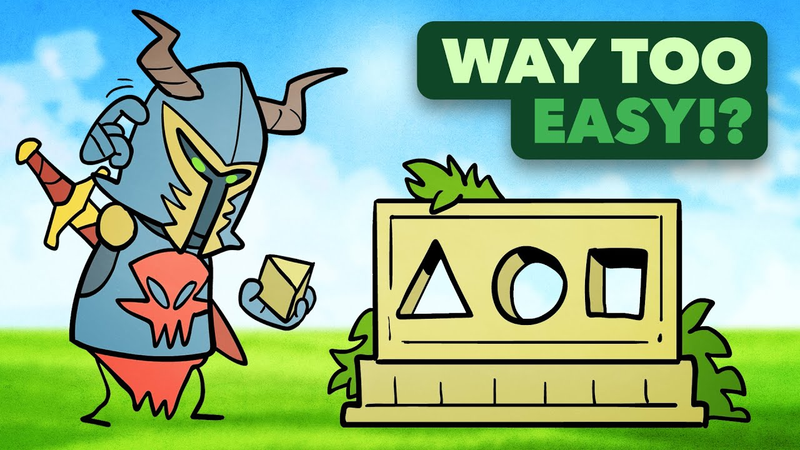
That's right, bud. The community is already helping Will write another episode. And he wanted me to pass on the invitation to all of you to come join him on Twitch to help him choose a topic, do some research, and learn some cool stuff together. Okay, so with the housekeeping achievement unlocked, thank you, let's get to it. First, when we say the word optimal, what we're talking about here is a strategy that succeeds more often than others in a game. However, defining fun is a little bit harder. Or, you know, is it? I mean, if you're having fun, enjoying your time in a game, or getting what you want out of the experience, then that right there is fun. And as Will did research for this episode, one of the things that kept coming up was that having a path to an optimal strategy in a game tends to help players enjoy their play time. But the problem arises when the only way to perform any task, usually at the highest levels, furthest reaches, or at the biggest boss fights, is to play the game as optimally as the game will allow. Because when the player loses out on choice, that can lead to less ways for
them to make their own fun while experiencing the game. So, the challenge then becomes making optimization difficult to achieve and rewarding to pull off, but also fun throughout the process. Just as long as there's been ways to make strategies in games, people have also found the fun in playing less than optimally to add variety to gameplay and increase their personal enjoyment. I mean, just last week Will was telling me about a less than optimal men in shirts tribal commander deck in Magic the Gathering. And during my last play through of Skyrim, number nine, I believe. I don't have a problem, you have a problem. I opted for a cleric type character, which is far from optimal as maces and healing definitely aren't the best choice for early game dragons mining. But, enough theories and definitions. Let's focus on a single example of each end of the spectrum. In games that use randomized statistics to generate loot, like Will's new favorite monster taming game Temtem, it's pretty easy to see that a player will get some Tems, which are better than others. And it's equally easy to see that there will be an optimal strategy for that player using the most powerful Tems based solely on statistics and types. However,
none of that accounts for the player's preference and desire to have fun in a unique way. No matter how much a trainer wants to use a Lumina Tataru or Skrunch in high-level competitive play, they're just never going to be adequate to the challenges of PvP. And right there, the player's fun has been thwarted by the need to optimize their team to meet the circumstances laid out by the game. But, there are also games centered around that gradual quest for optimization. Working for harder and tougher goals built so that only the most efficient, most statistically superior strategies can prevail. And for some people, this very process of optimization is what they find joy in and therefore what constitutes their fun. So, we should be careful when we talk about this topic not to diminish the joy players find in crunching the numbers and finding frighteningly efficient new ways of playing. Heck, sometimes that even leads to redefining the game for its entire player base, kind of like rocket jumping in FPS games. One example of this quest for optimization can be found in a game that many of us here at Extra Credits are quite enamored with, Warframe.
Because each mission has unique challenges, but those challenges can be approached in a myriad of ways. And there's always a goal to get more optimal and more powerful, but what that means and how each player prioritizes it is up to them. Some might choose to be healers, others invincible tanks, and still others damage dealing mages. Each of these roles has many different paths to an optimized solution, and each of those optimized solutions has a few different ways of remaining fun and flexible in the face of the many challenges that the game offers, even at the highest levels. And this is pretty easy to see if we compare the ways that Will and I each play Warframe differently. Myself, I just love being a space ninja. I want to bullet jump all over the place, stab evil aliens with weird melee weapons, and have fun with my friends and Kavat Zoe. Will, on the other hand, has explained to me how he wants to reroll a Riven to get critical chance to push his new Kubrow Brack over the threshold so he could get guaranteed crits, and then build for corrosive and radiation to maximize damage for late game Grineer and armor stripping. And while my eyes may have glazed over during that last part, I think I just
noticed Will's twinkle with the delight of possibilities. And that illustrates the point pretty well. We can both enjoy the game in our own ways, despite how different they may be. Just as there's no one way to have fun or to get enjoyment out of a game, there are also many ways to design with this dichotomy in mind. Some games appeal to those who find their fun in crunching the numbers, making an optimal build, and squeezing every little bit of power they can get out of their play. Others reward flexibility and innovation, creating new ways to play, new absurd memes, and combinations of style. And with that balance in mind, if you can design your game to make the optimal fun and the fun optimal, then chances are that the game will appeal to a wider audience and allow for players to enjoy it in their own way. But what do you all think? Do you prefer games that are more in the crunchy optimized side of the spectrum or more fun and goofy games where you can blaze your own path to a good time? Maybe like me, you're somewhere in the middle. Whatever your preference though, head on over to our Twitch channel and talk to Will about what you thought about this episode. He's probably
working on the next one of these already and playing games with chat while he does it. Hope to see you over there. Legendary thanks to Ahmed Ziad Turk, Alicia Bramble, Casey Musgraves, Dominic Valenciana, Gunnar Clovis, Kyle Murgatroyd, Moulay Chickaoui, and Orioles once.
Summary
The tension between optimal play and player-defined fun represents a fundamental challenge in game design. Optimal play refers to strategies that statistically maximize success, often dictated by the current meta or high-level competitive requirements. Conversely, fun is subjective, encompassing personal preferences, role-playing, or unconventional strategies that may not align with the most efficient path to victory. The core design dilemma arises when games force players to abandon their preferred playstyles in favor of rigid, optimized builds to overcome late-game challenges or competitive barriers.
When optimization becomes the only viable path to progress, player agency is diminished, potentially alienating those who prioritize creativity or thematic expression over raw efficiency. However, for many players, the process of optimization—crunching numbers, testing builds, and pushing statistical boundaries—is the primary source of enjoyment. Effective game design must therefore acknowledge both perspectives. Games like Warframe demonstrate that it is possible to provide a spectrum of engagement, where players can pursue highly technical, damage-focused builds while others prioritize mobility, role-playing, or social interaction, all within the same ecosystem.
The ultimate goal for developers is to bridge the gap between these two approaches. By making the process of optimization rewarding and ensuring that fun, non-standard playstyles remain viable, designers can broaden a game's appeal. When the most efficient strategies are also inherently enjoyable, or when the game provides enough flexibility to allow for "fun" builds to succeed, it creates a more inclusive experience. Balancing these elements allows a diverse player base to find satisfaction, whether they are driven by the pursuit of perfection or the desire for unique, personalized gameplay.















Comments