1 free read left. Create a free account for unlimited reading + AI research.
Create free account
DICE & Effective Prototyping | PGC Digital #1
Key insights
6 takeaways- 01Prototyping acts as a primary risk-mitigation strategy by validating core gameplay mechanics through low-fidelity models before full-scale production begins.
- 02Strict time-boxing and a hypothesis-driven approach are required to prevent development bloat and the accumulation of technical debt.
- 03Prototypes must be treated as disposable assets to avoid over-polishing, which creates emotional attachment and hinders the ability to discard unsuccessful mechanics.
- 04Maintaining a clear separation between experimental builds and the final production pipeline ensures that only robust systems advance to full development.
- 05Teams should prioritize resources by mapping features on a matrix based on their criticality and level of uncertainty, focusing exclusively on essential but unproven elements.
- 06Operational resilience in remote environments requires proactive infrastructure planning, including early implementation of secure VPNs and logistical hardware support to maintain testing schedules.
Ask AI about this video
Transcript
hello everybody my name is Fozzie I'm gonna talk to you today about effective prototyping let me tell you a little bit about myself first before we dive into it so I'm originally from Jordan I'm a game designer I work I've been working in video games and I originally from Jordan they're working a bunch of independent companies and working a bunch of different types of games worked in PC 360 games i worked on facebook browser games i worked on music trivia games i worked in a very stereotypical farming game and then i collaborated with atlas for a while and we worked on the persona franchise i worked on the persona three iteration with our offices in bangkok from jordan i took a small detour to new zealand where I joined Gameloft I was the principal game designer there this is a picture of me as a pie little pony team and the prime minister of and he's even at the time mr. Joong Ki well we worked with the team there probably worked on a bunch of IP based games as well I worked on Ice
Age adventures he's a picture of me with some penguins worked on littlest pet shops pastry paradise amazing spider-man 2 and then we collaborated with our Studios in Spain on minion rush based on despicable Me movies Isis that game at the time was almost the top-10 most downloaded iOS games of all time I think still is and it's one of two games that worked under its are on that list from game lawful took another detour to Japan where I worked at English subsidiaries where we did collaboration with Square Enix gree and a Glu Mobile worked in the Tokyo office was the only person on my team there's no Japanese work on a lot of games are mostly owned for the Japanese market was the creative director at the city at the time what kind of bunch of games are for Japanese market only you probably wouldn't know many of them but I will tell them about anyway we worked and send in ok Shane twelve Odense urakami and crouton amongst others from Japan it
took another detour to Germany where was the head of design and production for the Qing office in Berlin we were looking after the the candy crush franchise work Anna candy crush Julian candy question original we were also known as the studio with the slide and here's a picture of Angela Merkel trying to create a candy crush level in our city from Jeremy at the smallest detour so far I moved to Sweden where I joined ice so currently I am the head of design of dice so I'm looking after all of the designers in the studio with a level design UX design I game design etc it's a large group of people around 80 plus designers and I'm also looking after both franchises the battlefront franchise and battlefield franchises so I'm responsible for the design and the creative development I'm also part of the studio leadership team over there
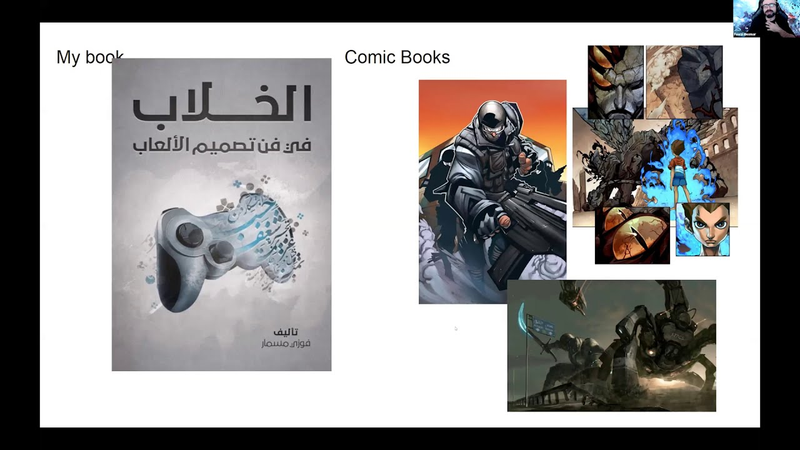
last year I launched my book was called the collab and the art of game design it's the first book to be written on game design in Arabic it's a text book that aims to teach young youth in the Middle East about game development with resources that don't require them to learn another language I also written a bunch of comic books back in the day around nine of them those meant to create super heroes in the Middle East I co-authored nine of them this way I went to sell around 5 million copies across the MENA region I also like to talk and speak in conferences quite a bit similar to this one I teach in universities have game design in any country I live in I just finished the course we feature game here in Stockholm I'm a jury member of the international mobile games Awards I'm also a member of the M developers Choice Awards I'm a Google mentor and I work with those guys quite a bit and like helping indie developers and youth
and smaller companies get their projects off the ground and also Co established the idd a chapter in Berlin while I was there ah so enough about me let's talk about prototyping so let's go with some simple introduction about what is prototyping so a prototyping is basically creating a working model of an idea so be able to test it and make sure that it works before we start implementing it in the game so the idea of prototyping is that if we're only playable we need to make up rough approximation of what we're trying to test out whether it's artwork sound and features why do we need to do prototyping because in the prototyping phase you get to test the riskiest part of the things that you're working on or the gameplay ideas that you're more concerned with without worrying about perfecting technology or the look or how the art is going to look like so it's basically focusing on the fundamental mechanics and making sure that these mechanics sustain the interest of people so that we make sure that when we go
into production and we're actually building these things that we're not going to spend a lot of time and effort into building something that will cost us a lot and people would hate basically many different types of prototyping that you can utilize in building games from physical prototyping to visual prototyping video and software everybody favorite digital prototypes physical prototyping is the easiest type of photo typing that means that most game designers will be able to construct these things on their own be based using slips of paper cardboard household objects pretty much anything you can get your hands on and they use hand-drawn markings to test these things physical prototype things are pretty good because they allow you to focus on the gameplay rather than the technology or how to build the game allows you to build and to iterate quickly you can some often time be able to respond in real time to the feedback to players if they're testing the physical prototype it's pretty cheap it doesn't cost you much
the team is less likely to be attached to their idea since this is still a physical prototype that is roughly a throw away a hunter a hunk of junk and it also allows the non-technical team members to also participate in a design process themselves there are many examples of physical prototypes like the thing on the left is probably the most common examples sheets of paper dice and physical objects in cubes to kind of illustrate an idea the picture on the right this is hideo kojima during the development of Metal Gear 2 is one of their more extreme examples of physical prototyping when you were making the first metal gear he was kind of frustrated with how many maybe his programs were more frustrated with him but he wanted to do a lot of revisions to the shots in which the cinematic shots of the game in which you're starting the story because you wanted to change the camera angle or something like that so in the development of Metal Gear 2 they rebuilt the entire levels using Legos and they
developed this technology that allowed them to use the camera horn hello camera which is this thing on the by his right arm there so basically frame the shots using the physical prototype to be able to translate into the game easily and that allowed them to do a lot more changes later on it's it's not that common to physically prototype level design and Lego but I thought it's an amusing example of of a successful game that did that as well so when you're doing physical prototyping please don't pay much attention to the quality of the artwork make sure that you play test the game yourself first before you put it in front of others then invite them to test it and make quick iterations as they're going you were more likely to see that there are issues with your prototype as you're testing it with others and you can make their the changes oftentimes students and others ask me about how do you translate some real-time mechanics into a physical prototype so how do we so how do I represent random elements or
time so basically you can use dice or card decks to simulate random elements you can use grid spaces to represent movement and you can reproduce turns to represent time you can also combine all three to have a combination of grids and random elements to represent the movement during time for example vigil prototyping is a different aspect of it so if you ever stood on a whiteboard and sketched something to a team member to try to illustrate an idea you've done some form of visual prototyping so you could could start from using a piece of paper on a whiteboard to a very rough diagram a representation of core actions in a games prototype is a form of visual prototyping it can go into different types we can do a detailed step by step interaction or a storyboard of what would have and as you're working towards a certain set of events and a storyboard fashion
similar to what its applied in the movie industry a different way in like games is to apply a concept arts instead of spending a lot of time into actually going into the game and building the scenes yourself the concert part will help you set out some of the aspects of the tone and lighting and level creations and that kind of stuff way before you start building in the game engine and it helps you set the scene and you can iterate on the Khans but until you get the feel and look that you're looking to achieve and also different departments and use different type of techniques and prototyping and animatic is a way to visualize how things would look like in motion without really investing a lot of time interaction be putting them in motion this will probably be a conversation in its own right so that will take a lot to car to converse I'm just gonna touch base on this quickly and move on more
important types of visual prototyping will include you testing the usability and the feasibility of your UI there are many software that will enable you to quickly prototype interactive elements and layouts and see what works the best and with this the easiest to understand by your user base and then it's everybody's favorite like I mentioned earlier digital prototyping is basically building things that are and interactive elements and core systems and anything that you have questions about such as your logics or special physics or environment or something like that so jumping directly into software to try to simulate some of those ideas Digital prototyping it should be made with as little an art or sound or investment until making it look pretty as possible you don't have to worry about everything around the gameplay should be focusing around the things that you want to test out the more so the gameplay aspect is not complete and focusing only on the unanswered questions part of their design you need to look at different
ways to do digital prototyping so sometimes if you're like prototyping an economy based system you probably don't want to build that in an engine you can probably get a lot of these tests done in an excel sheet that you put together and an advice that I give to a lot of people just try to prototype in a different language or a different system than the one you're actually building the game to that will help you avoid a common pitfall of eventually evolving the prototype into the game and then you're gonna have to deal with the spaghetti code that you basically put in to begin with and some of the hacky processes that you put in as throw away and then becomes part of your system that you need to deal with going forward so the idea of prototyping is to be able to especially in digital prototyping is that when you could be able to do small and fast throwaway projects so instead of constantly iterating on one project you want to do a small project do a couple edges and
then flow in a way and then come up with something else this is the essence of rapid prototyping it means that you need to come up with a potential solution try it out if that doesn't work come up with another one and then move on but eventually you need to work quick and dirty so that you can find out if the solutions that you're proposing or your hypotheses are correct or not uh many different types of tools that you can use in digital prototyping from programming languages to game engines the level editor so actually you can even like prototype some things in 3d software's or sketch or Maya or whatever thing you have in the tool itself doesn't matter it's all about finding out what is the thing you want to test out and evaluate first and then going and attempting to do that as quick as possible so going through like some of the the major prototyping types I think it's from my experience of like working with a lot of teams and working a lot of
different are supported I think these are common mistakes that I've seen a lot of people make and I've seen a lot of these mistakes being made by amateur developers or students all the way to people have been doing this for decades so these are common prototyping mistakes I would urge you to please note this yourself as you're doing them and try to avoid them going forward so a second number one is not allocating time for prototyping so that scheduling a direct jump from theoretical or paper design immediately into building the game that means that there's a lot of unanswered questions or things that you were very certain of in theory but you never test it up that means that you will have to answer these questions during development and it depends on the scale of your development process that could be quite expensive and quite costly you could also face a situation that as you're trying to test these things or make them work during development that those things actually don't work and if
they work or to your development or to your project then that could have a disastrous effect on your game the second part is no time boxing - no time boxing - the prototyping process and that means like having an open-ended prototyping process a creative endeavor is never complete once someone once said a game is like any piece of art it's never finished but abandoned that means that you can always make something better and even in a prototype we can always iterate and come up with new hypotheses to try to solve for issues and oftentimes you don't find solutions and their solutions will cause different types of problems and they will try to solve for those without the time box you that process might consume a lot of your time and then you would notice that you'll be eating up on your development time and you may not be able to ship time boxing is crucial and it means that even though you can see the finish line of like at the end of the the end of your time boxing and you can see like
maybe if I iterate four or five times I could four solve this problem I think having a time box will allow you to accept that hey this would have taken more time to finish it off maybe it's time to move on to something else other things that I've seen a lot of people a lot of people fall into this mistake is not having clear goal for this prototype so like not knowing exactly what this prototype is supposed to achieve it's important for you every time as you're attempting to go into a prototyping phase to ask yourself why are we prototyping this how do we know that this prototype is a success how do we that success and no checking if this is fun is not a goal this is also a very combination that people go like let's try to prototype this and see if it's fun or not that is not a measurement how would you know that this is fun what is fun for you how do you measure that you've arrived at that finish line without having a strong hypothesis or a small a strong validation about how you're going to attempt to identify what
those issues are then you might be going in circles without really achieving what you want to do you need to know what you're prototyping for this is also a very common issue is that you've you fall in love with your idea and that means you're gonna work desperately and prototype desperately and trying to prove it to work rather than fail so you need to be able to the whole point of the prototype you process it you need to know if something is not working so that you give up on it and give not giving up on something that's working is as if you're talking to a lot of interpreters or independent developers they will tell you that that was one of the downfalls of how they ended up not working out because it just fell in love with an idea ignored the feedback about how it's not working and then just get them going another common mistake that I see is go like Oh in order for us to really collect good feedback from people that prototype needs to be presentable this
is a lot of wasted effort because you're focusing on all the wrong things you're not focusing on what really matters and you're making it harder to throw away later because you've invested so much time in making this look nice you go like yeah well maybe we can build on this and make it the game which will cause you so many problems when you go into production and the whole essence of prototype needs to be throw away so the more effort you put into making it look nice or making it sound nice and all of that the more likely it is for you to fall in love with it which is mistake number four as mentioned before and I've alluded to this multiple time it often happens your prototype so much time you don't that time box yourself you fall in love with YouTube did you polish the prototype so much you go like alright so maybe we just can build on top of so that it becomes the game and then during production you realize that you have a very inefficient pipeline into adding content or your code is not running well or also some other technical issues that you have to face
it mainly because you started off building a happiness and then that happiness became your reality this is why I recommended earlier to try in a different language first so that you don't end up here it happens often the teams end up here and that's that's a big problem this is also very common mistake among game developers at the end of the prototyping the wrong things as often times again developers they're often excited to just prototype the things or build the things there's more fun building games it's fun anyone I build the fun bits first are the things that you're more excited about I'll give you an example about this I was once working with a prototyping team and we were trying to create a new meta around a rhythm game so I wanted to do it like to utilize the basic rhythm game mechanics of a guitar hero or rock band but we tried to have like a more interesting meta game design around that and when the team started prototyping they were very engaged with the project but the first thing the prototype and they built an engine was there the notes
highway similar to what you seen Guitar Hero's the notes coming towards the screen and you have to tap the right combination of elements at the right tempo the developer even though I was working on that project was so invested they were they were working ten hours a day and to building this in a quick amount of time and the developer was so invested he was also a musician he spent the night and a night one time composing a track to be used with the prototype the biggest issue though is that even though it we ran it and it played nice and the music was nice and all of that but we already know how they the notes highway work we know that that's fun so that product I proved nothing it proved that we can build it but that's not what we're trying to test here the key risks of what we're trying to test were not validated in the prototype making that prototype even though functional a complete failure so on that note is probably worth it to talk about how do we determine what the prototype there are many different ways
to do this I'm gonna give you just a small exercise that you can do with your team so that you can like figure that stuff out so you gather your team around and we draw something on the whiteboard this is like the x-axis it goes from all the way to uncertain to certain right and then you pass up some sticky notes to your team members and you tell them all right so every team member grab and write one feature per sticky note and let them write as much as they can so that you have all the features together and then you ask those team members to take their stickiness and distribute them on this axis so the feature that we know that will work or we know that people like it or we know that we function we've seen it work somewhere else before or we've prototyped it before or we have it in our previous products etc it goes closer to the to the certain part of the axis and the things that we're not sure about we move it towards the uncertain part okay then the next step is that we define the y-axis of like how critical it is to the project or not critical to the project
and then we start moving those are those sticky notes while maintaining their their position either upwards and downwards so they have a different distribution on the squadron's right so this way you will identify whether a feature is certain or critical or if it's critical to your project mean that this project or game cannot function without this feature and it's uncertain and that will be the quadrant that you want to prototype first so the features that are uncertain that you are not sure about or you don't know how you're gonna go about them and they're completely critical to the success of your game those are the things you want a prototype first the things that are critical and certain those are the things you can just go ahead and start building the things that are certain but not critical those are like your nice-to-haves editions once we built them and then the part that which is like these are not certain and not critical these are like why are we doing this these are the features you really
need to reevaluate and look at and consider are we doing the right things by building these so to summarize the talk so that you can have some time for Q&A prototyping rules it's awesome but they also need to be abiding by the rules that you put on yourself as you're working towards and use the method that gives you the quickest results the idea is to be quick and dirty as much as possible quick and dirty is good it's not about being presentable it's not about necessarily being functional it's about proving a point and getting there as fast as possible yeah so you need to work fast but you also need to work fast with the purpose so you need to know what you're doing why are you're prototyping it and what parts of the game that you actually need to prototype you want to fail just as much as you want to succeed so you need to focus on on attempting to fail failure in a prototyping process is considered success because you just got
an answer and that's your bottom line that you need to work with and most importantly a prototype it should be fun so have fun and good luck in your prototyping efforts Thank You Austin thank you so much pharisee that was great detailing there um yes I made me feel we've not gone as quite a prototyping core some of the features of our show but still um still um yeah it's fantastic loads of useful bio information and obviously this video will be available for people to pour through later Knoll conference got a couple of questions we'll get to and I'm gonna have to ask you into the digital ether um question I've got here from is how I go about prototyping a game that is mainly focused on story the mechanics or level design it's a it sounds and make sense but a story driven game will depend on things like visuals musical atmosphere would you advise me to do prototyping for a story-driven game absolutely but the thing is like what do you what are you trying to prototype again it's like identifying what what the prototyping aspect is are you trying
to prototype the idea that is the story nice then you can probably achieve that quite quickly by like you know having people read your script and tell you if the story is nice or not are you trying to prototype a cliffhanger mechanic if you want to see if cliffhangers work then if you watch Netflix you already know that that works you don't necessarily need to prototype that what is the mechanic or the the system that you're trying to implement that you are uncertain of and you need to focus on prototyping that Erna okay they're finally finding the way to prototype that it really depends on the thing that you want to burn I mentioned if it's if if it's about finding out if your story is compelling then it's about getting people to read it and get that feedback perhaps but if you want to find ways to prototype how people interact with that particular mechanics where per se can find digital ways to do that there are for example free tools and which you can build your own visual novel that are free to build that allow you to like
break down the story beats in a way to see if those are compelling within a digital way or not so again we're trying to have two quickly to move on and I'll get Adam on so I put ten minutes behind it's my show sit down it's all good so when when prototyping Elder game features what techniques advice to make up for the fact that preset players haven't built up hours of knowledge with your game that makes sense elder game elder I presume it was a term the games industry but obviously in the older game I don't know that's from Thomas Hooper maybe Thomas you know Thomas can you add a little bit more the clarification of what old game features you mean well Thomas is maybe typing that in I'm gonna ask you I've got a question here about what prep work do you do before prototyping you might've answer some that in the talk ask you but what do you sketch user flows or information architecture is a prototyping work done with UX designers it depends on the type of prototype so we're trying to prototype usability unlike how intuitive the project is then
UX designers will obviously have a lot of work a lot of work and working in in that particular field so like they'll be trying to test if things are intuitive and if things are working really well for them however if we're trying to prototype different aspects of the game then that we need to have involve different types of people to work around so like like I said if we're trying to test out if the mood and the lighting of a particular game is where I can realer than we're working a lot more with concept artists if we're trying to identify a quorum what we're trying to do then we're basically drawing our cold loop and we're listing down our core featureless I'm going like all right this is critical to our game we've never seen it in other games before these are the things we need to identify there's an element of research that goes into figuring outputs you need to prototype and like we look at your feature list and consider as any of this something that I can't see in any other game or I can't prototype or like try out myself somewhere else and those are the things
that you probably need to build and test out yourself if you have some of these things elsewhere then you can just try that even example I was working with the teamwork so trying to illustrate they were trying to prototype a mechana can we share a spaceship can take off from the floor all the way to space and I'm like that's an interesting mechanic but I've already seen at the no man's sky so we know that it can work so maybe we're not focusing on the right thing here we can try to focus on other things okay I've got a kind of question as combine as a question here and also as question about current situation so the first question came is where he works the games and she all over the world what would you say the biggest difference is between countries oh that's a very long-winded answer so like I get back to mine I don't know yeah like there's a there's a there's a I used to do about different management styles in different areas or all over the world it's maybe like a 45-minute talk to summarize that I feel that every
every country's applies different management techniques and different engagement techniques between people that is really in taken in from the culture and some of these things can be quite different early in my career I used to think that I liked one more than the other and I've learned over the years to accept that they're different and there there's no right or wrong they're just different perspectives and for a very short question example we took the last 50 days obviously about how the kovetz 19 crisis is affecting people working from home and a lot of small develops mean quite boyish about how they've managed to run their studios but we're seeing bigger companies delaying games pulling back how're we dice obviously pretty big operation how's dice fairing I don't know that we might be nice details but how is it all kind of still working adduction is no more oh so far so good so like I think by today this is a week four of us working from home I need if there's anybody listening I
need to give a shout out our IT team who just did amazing work we had like the entire studio fully operational from like day one of working from home which for me is mind-blowing the trickiest part for us was you know like our games are like heavy multiplayer games - getting a lot of play testing involved was a little bit tricky to get together first but also our our IT guys really managed to get together here shout out those people we kind of like saw it coming as the leadership team so we started working really early on making sure that we get the the right groundwork in place so we've already collected the information from everybody make sure that you got your VPNs working you get your work machines scripted and ready to go and then we had our teams pack them up and ship them to people's homes the entire team is functional so far it does seem the games industry he seems more mobile panthous and various governments have been but I am gonna thank you so much for your donors time
this morning I'm gonna let you get back you shouldn't have a War break out behind you
Summary
Prototyping serves as a critical risk-mitigation strategy in game development, functioning as the process of creating functional, low-fidelity models to validate core gameplay mechanics before committing to full-scale production. By utilizing physical, visual, or digital methods, developers can test hypotheses quickly and affordably. The primary objective is to isolate uncertain features and determine their viability without the burden of high-fidelity assets or sound design. Avoiding the common pitfall of failing to allocate dedicated time for this phase prevents the accumulation of technical debt and costly mid-production pivots that often plague projects lacking a rigorous testing foundation.
Effective prototyping relies on strict time-boxing and a hypothesis-driven approach to prevent development bloat. Teams should categorize features on a matrix based on their criticality and level of uncertainty, focusing resources exclusively on elements that are both essential to the game’s success and unproven. It is vital to treat these models as disposable, as over-polishing early iterations fosters emotional attachment and technical debt, which complicates the decision to discard unsuccessful mechanics. By maintaining a clear separation between experimental builds and the final production pipeline, studios ensure that only the most robust systems advance to development.
Operational resilience remains a key component of maintaining these development standards, particularly during transitions to remote work environments. Proactive infrastructure planning, such as the early implementation of secure VPNs and logistical support for hardware, allows studios to maintain full functionality even when faced with significant shifts in working conditions. By prioritizing early leadership planning and robust IT support, development teams can continue to execute complex multiplayer projects and maintain rigorous testing schedules regardless of physical location.






















Comments