Game Development reports and market data
Documents
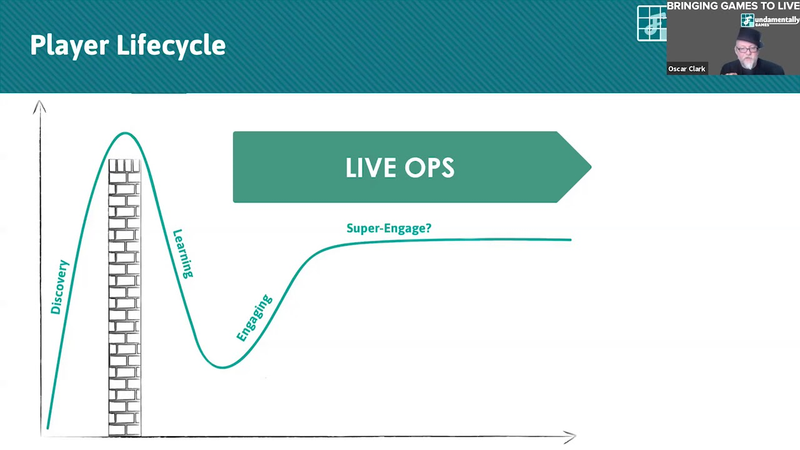
What does Live Ops mean Anyway? PG Connects Digital #2
Live operations, or Live Ops, is defined as the strategic process of maximizing player engagement and retention by continuously delivering value, content, and community-driven experiences.
- Live Ops is the strategic process of prioritizing player retention over user acquisition to ensure long-term game viability and revenue growth.
- Effective Live Ops requires a shift to a service-oriented model, necessitating robust backend infrastructure built during the initial concept phase to support agile updates and bug fixes.
- Developers should implement a predictable pipeline of content, including daily challenges and seasonal events, to build player trust and manage expectations.
Live Ops in Small Teams PG Connects Digital #2
The presentation outlines a strategic framework for implementing Live Ops within small game development teams, emphasizing that success relies on iterative product development, data-driven decision-making, and a commitment to long-term sustainability.
- Koron Studios achieved a 40 percent increase in average daily revenue per update by transitioning to a structured, monthly, objective-focused release schedule.
- Small teams can achieve profitability by prioritizing disciplined, objective-based updates over simple content expansion to balance revenue growth with cost management.
- The post-launch phase requires defining specific key performance indicators (KPIs) to accurately assess product health before initiating design iterations.
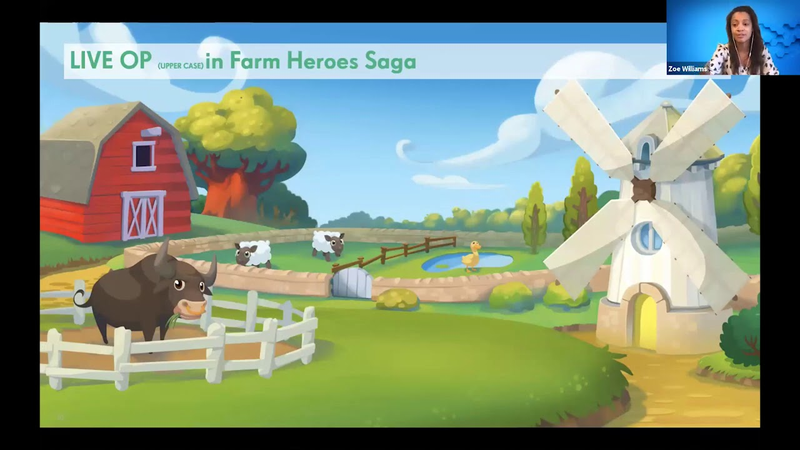
Keynote: From Live Ops to LIVE OPS PG Connects Digital #2
Modern game development requires a transition from basic, recurring content updates to a sophisticated, cross-functional model of Live Ops.
- Modern Live Ops requires restructuring studios into cross-functional, agile pods that integrate event management, CRM, business performance, and UX design.
- Sustainable engagement is achieved by deploying high-impact content that introduces new mechanics and narrative layers without disrupting the core gameplay loop.
- Success depends on a dual-pronged approach that balances rigorous quantitative A/B testing and performance tracking with qualitative analysis of player sentiment.
Extreme SIMD: Optimized Collision Detection in Titanfall
Optimizing collision detection for Titanfall requires a fundamental shift toward data-oriented design, specifically through the implementation of a four-way Axis-Aligned Bounding Box tree structure.
- Titanfall's collision detection was optimized by implementing a four-way Axis-Aligned Bounding Box (AABB) tree structure, which replaced traditional binary trees to improve traversal efficiency.
- The team utilized SSE3 SIMD instructions to perform four-way collision tests in parallel, significantly reducing the computational overhead of ray-box intersection checks.
- By leveraging IEEE 754 floating-point properties, the engine treats plus/minus zero and infinity as limits, allowing the collision code to naturally handle edge cases without explicit branching.

Panel: The Return of Interactive Fiction PG Connects Digital #2
Interactive fiction is currently undergoing a significant resurgence, fueled by a maturing gaming industry and a growing demographic of players who prioritize narrative depth over mechanical complexity.
- Interactive fiction is experiencing a resurgence driven by a demographic shift toward players who prioritize narrative depth over mechanical complexity.
- Modern narrative design is increasingly treated as a data-driven loop, utilizing A/B testing and granular user research to optimize player retention and plot progression.
- Developers are integrating natural language processing and voice-driven AI to create context-aware interactions that move beyond simple transactional gameplay.
Using Accuracy & Realism to Attract New Gaming Audiences PG Connects Digital #2
Integrating scientific accuracy and historical realism into game design serves as a potent strategy for expanding reach beyond traditional gaming demographics.
- Integrating scientific accuracy and historical realism into game design serves as a strategic alternative to expensive licensed intellectual property, helping to differentiate titles from generic fantasy tropes.
- Authentic data sources, such as NASA-based planetary mapping or verified historical contexts, provide a foundation for game mechanics that increases player immersion and gravitas.
- Realism should be prioritized as a gameplay mechanic rather than a simulation, ensuring that authentic data enhances narrative depth and challenge rather than becoming tedious edutainment.
Got Games on Your Apple Watch? PG Connects Digital #2
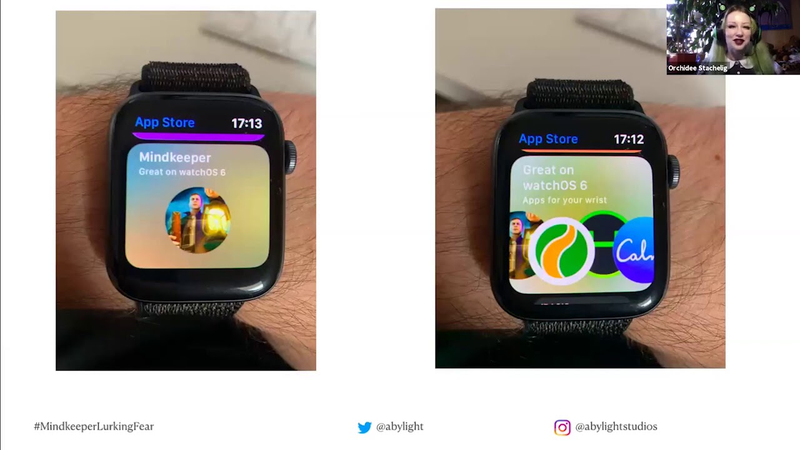
Abylight Studios, a Barcelona-based developer established in 2004, highlights the potential for high-quality 3D gaming on the Apple Watch through the development of their title, Mind Keeper: The Lurking Fear.
- The Apple Watch represents an underutilized market for standalone 3D gaming, offering indie developers a less crowded platform to reach dedicated audiences.
- Abylight Studios developed the 'Providence Engine,' a custom lightweight visual editor, to bypass the limitations of standard tools like Unity when building for the Apple Watch.
- Successful Apple Watch game design requires building standalone experiences that do not rely on an iPhone, specifically optimizing for the device's unique hardware constraints.
Unseen: How Non-gamer Input can Change & Improve Art & Storytelling in Games PG Connects Digital #2
The integration of non-gamer perspectives is essential for the evolution of game design, art, and storytelling.
- Integrating non-gamer perspectives is essential for game developers to remain competitive as interactive media increasingly shares digital platforms with film and television.
- Non-gamers often perceive high-fidelity photorealism as uncanny or toy-like, suggesting that non-photorealistic art styles can better reduce the 'uncanny valley' effect and improve emotional resonance.
- Complex control schemes requiring multiple sticks and numerous buttons act as significant barriers to entry, necessitating a return to intuitive, 'pick-up-and-play' arcade mechanics.

The Evolution of Dynasty Games PG Connects Digital #2
Toplitz Productions is redefining the simulation genre by integrating deep narrative and life-management mechanics into traditional functional gameplay.
- Toplitz Productions is evolving the simulation genre by blending traditional functional tasks like farming and logging with deep narrative, social interaction, and decision-tree mechanics.
- The 'Dynasty' series, specifically 'Medieval Dynasty' built on the Unreal 4 engine, serves as the primary example of combining open-world sandbox structures with survival and village-building progression.
- The studio utilizes an incremental development philosophy, breaking complex projects into manageable layers to refine foundational mechanics based on direct community feedback.

Knowing Ze Dschermans PG Connects Digital #2
The German video game market represents one of the top five global territories, generating approximately $6 billion in annual revenue.
- The German video game market is a top-five global territory generating approximately $6 billion in annual revenue.
- As of 2020, Germany had 34 million players with an average age of 37.5 years and a nearly even gender split of 52% male and 48% female.
- Historical socio-political headwinds, including strict regulations on violent content and Nazi imagery, have long hindered the industry's growth and institutional support.

Building Your Game's UX Strategy Using a Scientific Approach PG Connects Digital #2
User experience in game development functions as a comprehensive, team-wide mindset dedicated to aligning a creator’s design intentions with the actual reality of the player’s journey.
- UX in game development must be treated as a team-wide mindset that aligns design intent with the objective reality of the player's journey rather than relying on developer assumptions.
- Developers must account for the limitations of human cognition, specifically acknowledging that perception is subjective, attention is a finite resource, and memory is fallible.
- Teams should adopt a scientific approach to playtesting to move beyond gut feelings and use iterative feedback to identify where design intent fails to translate into intuitive gameplay.

T1000’s, Trex’s & Eyebrow Mites PG Connects Digital #2
Steve Williams, a veteran computer graphics pioneer and former chief animator at Industrial Light & Magic (ILM), provided an analytical retrospective on the evolution of computer-generated imagery (CGI) during his session at Pocket Gamer Connects Digital #2 in June 2020.
- The transition from stop-motion to digital assets in films like Jurassic Park proved that CGI could replicate physical realism—such as breathing and weight—that was previously deemed impossible by industry experts.
- Technological breakthroughs in visual effects are driven by a synergy between creative curiosity and the inevitable progression of hardware capabilities.
- Modern real-time rendering, exemplified by Unreal Engine and productions like The Mandalorian, represents the next phase of visual evolution where any imagery is theoretically possible given sufficient computational power.
Writers
Games and companies
Games