1 free read left. Create a free account for unlimited reading + AI research.
Create free account
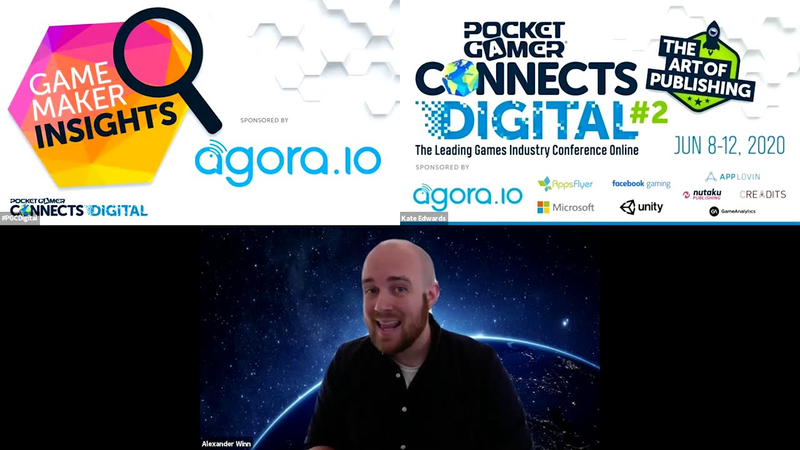
Using Accuracy & Realism to Attract New Gaming Audiences PG Connects Digital #2
Key insights
5 takeaways- 01The use of real-world physics and scientific data attracts a broader demographic by appealing to both casual players and subject-matter enthusiasts.
- 02Realism should be prioritized as a gameplay mechanic rather than a simulation, ensuring that authentic data enhances narrative depth and challenge rather than becoming tedious edutainment.
- 03Integrating scientific accuracy and historical realism into game design serves as a strategic alternative to expensive licensed intellectual property, helping to differentiate titles from generic fantasy tropes.
- 04Authentic data sources, such as NASA-based planetary mapping or verified historical contexts, provide a foundation for game mechanics that increases player immersion and gravitas.
- 05Collaborating with subject-matter experts, including geographers and cultural historians, throughout the development lifecycle is essential to maintaining cultural integrity and avoiding misrepresentation.
Ask AI about this video
Transcript
so next up is we have a we have a talk called using accuracy and realism to attract new gaming audiences so with that I would love to introduce Alexander win from edge works entertainment who will present this topic hello hello all right thank you for thank you go for it I will excuse myself I mean just when I got promoted to panelist it rearranged my windows here alright yeah so first off thanks for having me my name is Alexander win and I'm gonna be talking to you about my experience making a game
called terrigenesis which I originally made and released in 2016 and is still going strong so yeah talk about some of the experiences that I've had working on that and finding some pretty surprising success for a game that a lot of people thought was gonna be a pretty niche so first off like I said my name is Alexander Winn I was a just sort of a go into the office iOS developer and in my spare time I made other kinds of apps I actually made 25 apps on the App Store and my 25th was a game called terrigenesis and this was back in the summer of 2016 I released here Genesis I have made it all by myself and tear Genesis is a game about the real science of landing on Mars and other planets building cities and eventually
terraforming the planet and if anybody here isn't familiar with the phrase Terra for with the word terraforming terraforming is where you take a planet like Mars or the moon where you need a spacesuit to survive and you thicken the atmosphere you add oxygen you add water and the goal is to eventually turn it into a planet like Earth where you can just live out in the open so terrigenesis is a game about terraforming Mars and other planets originally released the summer of 2016 and to be perfectly honest even I didn't actually think that it was necessarily going to be that huge I wanted to play it but you know I'm a nerd so but when we released it when when I released it we ended up getting such an incredible response and we had ever since we actually got over a million downloads in our first year just on iOS my wife and I ended up starting a
company called edge works entertainment we hired a couple more developers and some marketing people we ended up signing with a publisher and now four years later we have passed 17 million downloads on iOS and Android and we just recently came to Windows so it's been a really wild ride but it's been an absolute dream come true and one of the things that always surprises people about terrigenesis and sort of delights the audiences but surprises the game industry people is how much real science there is in terrigenesis you know we have all the all the surface maps of the different planets are actual maps based on NASA data all of the surface stats like temperature and air pressure oxygen levels are all based on how things really are we measure everything using real units
you know when you think in the atmosphere of Mars you're aiming for a hundred thousand Pascal's of pressure why because Earth's atmosphere is 100,000 Pascal's it was really important to me when I was developing it to base everything and how this really works and that has become since the success of terrigenesis really sort of the guiding light of our entire company is injecting authenticity and realism into our games and our other products and we have found that that really increases the size of the audience and the passion with which our audience responds to our products so it's something that I've started kind of going out and telling people about because I really think that this is something that a lot of people have a misunderstanding around that if something is based on real science that it it's edutainment that it's necessarily going to be kind of boring
or that it's necessarily for kids or aimed for educational spaces and that sort of thing and really it's not ever since terrigenesis came out I've been telling people it's really not you can do large-scale things like the gameplay of terrigenesis where you know the core gameplay is based on real science or you can even just do little Easter eggs all throughout the game and that kind of thing really can energize your audience so that's that's the premise that I'm gonna be talking about right now that authenticity and nuance on the subject matter of your game can really help increase the size of your audience and also increase engagement within that audience and now this isn't really a new idea whenever I say this to people they always get a little dubious but really in certain areas everybody's on the same page about this and the first one that is really obvious to a lot of people is historical games and
movies and TV shows and everything if something is based on a true story people want to know is it accurate that's one of the first things they reach for is did you do it right you know oftentimes when we see a movie or a video game based on real history people won't even talk about whether it's good or bad they'll talk about whether it's right or wrong you know if you make a movie set in World War two and such-and-such battle it plays out in a way that is not in real history people have a problem with that and you'll get called out for that because people see an inherent value in the accuracy of that kind of thing and you can look in the video game world at the Assassin's Creed franchise it's probably the best example of this they have you know every Assassin's Creed game is set in a different historical era and ever every single one has dozens or scores of real historical characters that are often represented very accurately despite the fact that Assassin's Creed
is a sci-fi franchise bank basically they really put a lot of work into rendering the environments and rendering the characters with a lot of authenticity another great example is HBO's Run which walks us through to the lives of Julius Caesar and Augustus Caesar and all their contemporaries and again the fact that this is what really happened lends that show a lot of gravitas another one that I point out to a lot of people is the West Wing which is not really a historical show but the fact that it deals with how government really works is another example of you know you can look at any number of political TV shows that don't have that kind of authenticity that don't get into how certain committees work and that sort of thing and they just don't work as well they don't have the kind of gravitas that the West Wing has and then the last example that I'll toss out for history is the musical Hamilton which is obviously not at all historically accurate in certain respects but there
are a lot of lyrics and the songs of Hamilton that are pulled straight from the historical record and again it gives it a lot of gravitas another example that's closer to the video game industry of this kind of thing is licensed IPs so when people talk about hey they're making a new Batman videogame or hey you know spider-man on ps4 and that sort of thing people want accurate representations of these worlds they want to see Arkham Asylum as they have imagined it and if the creators take too much license it starts to turn people off the authenticity is part of the selling point and again licensed IPs in other mediums the Harry Potter movies were often lauded for how accurate they were to the books you can just look at Lord of the Rings versus The Hobbit and how people responded to those film adaptations one of them was a lot closer to the books and people responded to it and again in the video game world even areas like one of the reasons that SimCity had the staying power did is
because it was about urban planning it wasn't just some weird resource management system it made you feel like you were really building a city and you had to deal with stuff like plumbing you had to deal if the electrical grid you had to deal with crime rates all that sort of thing it didn't get in the way of gameplay it informed gameplay and so that's what terrigenesis does for science and astronomy and we're not the only ones another example is Kerbal space program Kerbal space program has built a lot of its brand on the realistic engineering that you are building real rockets that you are building things that could actually fly and you're facing a lot of the challenges that NASA actually faces and really at its core that's all that gaming is gameplay is is facing challenges and so as much fun as it is to invent a new scenario like Mario there are things out in the world that
present challenges as they are and that was what we tried to capture with terrigenesis but with all of these examples the effect is always the same the people respond to the authenticity and what we've seen with terrigenesis is that people really get excited about the real science and every time we roll out a new update that brings more realism we see a spike in engagement so for example just a last week we rolled out a new update that included lava for the first time in terrigenesis if you heat your planet up beyond a certain point it's gonna start to melt you can actually return the earth to a molten state and players went nuts for it it doesn't really inform the core gameplay of terrigenesis it doesn't really influence any of the existing things that you do in the game but the fact that it allows you to play out a scenario that can actually exist that
players can play out this idea and see how it would really work even within the context of a mobile game they get really excited the other thing that we've seen that is hugely beneficial is we get entire new audiences I can't tell you how many people of the 17 million players that we've had over the last four years have messaged us and said this is my first video game ever I'm not only not a hardcore gamer I'm a you know 75 year old man or a 14 year old girl who has never played a video game before in my life but I love astronomy I love space and so I wanted to play this you know there are plenty of instances of teachers who have emailed us and said I use your game in my classroom and again terrigenesis is not entertainment I didn't set out to make a game that was
educational for its own sake this is about using the realism to enhance the gameplay experience and one example that I've used several times in the past is the movie Apollo 13 when Ron Howard was making Apollo 13 he was really worried about how to do zero-g how to portray people in space so that they're floating around and the story is that he reached out to Steven Spielberg and said how would you approach this and they heard about a jet that you can actually hire that will fly up and up and up and up and up and then just go into freefall and for about 23 seconds you're in zero-g and that's how they found Apollo 13 they it was a lot more expensive but it lent this feeling of authenticity that you were watching Tom Hanks float around in zero-g and it made the product better the fact that it was authentic and accurate made it more entertaining and that's the thing that I keep trying to drive home that so many people
wrestle with because it doesn't feel like it would be true that something that is accurate and educational is also more fun but it really is and you know ever since terrigenesis came out it spent four years there have been other games about landing on Mars about building cities on Mars you know games like surviving Mars there's another one called planet base there are several out there that involve transforming planets or building cities on other planet but what you'll notice is that they often have a fairly cartoony art style and that is another thing that our players have really said is that they value the gravitas they value the fact that this is taken seriously because they want to take it seriously they like the idea of landing on Mars and so they want to play out how that would freely feel you know the sort of the Buck Rogers experience of the curvy spaceship
and the family of four in their shiny silver spacesuits is kind of played out people want to know what it would really be like and so approaching it from this realistic standpoint adds a lot of value to the player without really taking much from the developer you know there's one of my favorite quotes of all time is from Winston Churchill and he says I love to learn but I hate being taught and I feel like that's how a lot of people these days is they've got sort of low-grade PTSD from from their school days about being taught and a lot of them have internalized the idea that they're bad at science or they're bad at math and so the whole idea of math or science stresses that they don't want to they want to go there so they would have no interest in an educational game about Mars but if you present it as fun if you present it as just another game like SimCity SimCity was fun yeah let's check
it out the amount of enjoyment that they can get from that feeling of how it really works they're not being taught they're learning without being taught and that has huge value both from a gameplay standpoint but also from the ability to influence the world I can't tell you how many people we have I mean literally scores of people we've gotten emails and letters from who have said I changed my major I'm a college student and I changed my major because of terrigenesis this kind of thing really influences people's lives because it's real and that is just the most exciting feeling so a few examples of how this in terrigenesis it's available as a free download on iOS and Android and the Windows Store so for the Microsoft Store so feel free to check it out but just to give you some examples like I said we use real maps for Mars and all the other planets from NASA NASA is a public
domain agency so you can just use NASA textures go play a bunch of games set on Mars and you would be surprised how few of them actually had a location on Mars generally you're just playing on a generic rolling red landscape and yeah it's red so sure Mars but it could just as easily be Arizona but we use real Maps you know these are the real surface features of Mars we use real units of measurement like I was saying we measure the temperature and millikelvin so we measure the oxygen level in parts per million the facilities that you build in terrigenesis are all based on real ideas that have been floated by NASA or SpaceX we even when NASA discovered a new system of earth-like planets called Trappist one we even added Trappist one as playable worlds in the game we're always looking for new ways to bring that sense of authenticity to the game and it has absolutely paid off so like I
said I'm spreading the word to any developer I can this is real potential so the the last thought that I'll share with you here is one of the ways that I've started thinking about this is everybody understands viscerally in the entertainment industry the value of a licensed IP I think if you walked up to any indie developer and said hey we're interested in giving you the rights to Star Wars do you want it or we're interested in giving you the rights to the Marvel Universe do you want it pretty much everyone would say yes because not only are they probably fans but because they recognize the value of that IP they recognize that it will bring in players who like Star Wars and then they can fall in love with your game it's a way of getting people in the door and the way I'm sorry describing this is if I told you that there was an IP out there the Hat hundreds of fully fleshed out characters
that people already know about an RT enjoy that had all sorts of scenarios and all sorts of storylines already written for you and you could license it for free I think most people would jump at that chance and it's true the IP that you can license is the real world is history is science is all of these different areas that people act like are intimidating but man none of us have ever played a video game as challenging as landing on Venus would be and nobody has ever tacked so many corners of Earth's history you know if you're gonna make a game set in the Middle Ages why make the main character some generic knight in shining armor make it Charles the hammer Martell the hammer of Christendom like this guy already exists and you can just use him it's not an IP
that you have to license you know how many games have we seen that are based in Greek and Roman and Egyptian and Norse mythology nobody touches Aztec mythology or Japanese mythology or Maori mythology all of these areas are just open and ready to be used ready to be brought to the players and you don't have to buy them it's tons of free content the only requirement is that you represent them authentically and if you do I am living proof that players will respond so that's my message it looks like we've got a couple couple of minutes that was great yeah so it's your preference do you want to read them yourself you want me to read them to you looks like we've got a couple here for questions now so which other projects would you like to see this realistic approach apply what world or system would you love to realize to be honest
there are so many different ones if you start looking into history or looking at science I mean I'm big on space as you can tell from background literally just pick a planet or moon and there's something fascinating about it you know Mercury rotates at about the speed of a brisk walk which means you can literally outrun the sunrise and you'd better because it's so close to the Sun that it will kill you if the Sun is able to fully rise how has nobody made a freerunning game set on Mercury where if you slow down too much the sun's gonna catch up to you you know Venus is ready to kill you at any moment the IO the moon of Jupiter has a hundred and fifty volcanoes erupting every second of every day just pick a planet or moon and there is something interesting about it and then the same thing with history you know we've gotten so many movies and TV shows and video games set in European history but I promise there are just as many
interesting stories in Indian history or African history or Chinese history it doesn't have to be a political statement to make a show or a video game that isn't European there's interesting stuff there's so many characters from these other parts of the world that no one is doing you would be the only game in town if you made a game about Incan mythology no one will be competing so you could do that or you could make another game about Greek mythology which everyone is doing and that's just an obvious choice the only thing you have to do is learn enough about Incan mythology to make an interesting game so really it's just a matter of kind of throw a dart board at you know a school curriculum or a map in the world and you can find interesting things unless a designer think the same appeal helps triple a series like assassin's creed succeed does that appeal to non gamers who happen to love
pirates and Greek myths absolutely I can tell you for sure that some of my friends never played a video game until you know Assassin's Creed origins because they love ancient Egypt that kind of thing I think is a big part of why Assassin's Creed is Assassin's Creed there are plenty of other games that have pretty much the same Assassin's Creed but this one has history and every time a new game is announced people get excited about where where's this one gonna be said who I think the next one's gonna be Vikings oh that's cool you know it that becomes a part of the franchise and you can look at games like shadow of Mordor which in many ways is very similar to Assassin's Creed and it's in its gameplay mechanics but that one has authenticated the Lord of the Rings franchise Assassin's Creed has authenticity to history and again the Lord of the Rings franchise somebody had to write history you just have to go look it up it's written for you let's
see here [Music] and children more in six to twelve years also need exposure to realistic games tweens seem to prefer faster paced gameplay how are you addressing the tween audience for terrigenesis to be perfectly honest terrigenesis is what I call a Goldilocks game the idea is balancing things between different poles so the idea is that a planet that's too cold is no better than a planet that's too hot you need it to be right in the middle so terrigenesis can be as fast-paced as you want it to be the faster you play a swing here it is and the harder it is the more patient you are the easier it is to kind of hit the mark so it can be fairly fast-paced I think it's all just comes down to what you what kind of game you want to make you know pretty much any genre can be applied to anything aside from probably
platformers but you know if you're making an action game if you're if your character is swinging swords that can be applied just as easily to European history as it can be to any other part of history so yeah how long do we have is it 10 45 or yes we still have time actually we got about you know six seven more minutes to go yeah five or six minutes but yeah okay so one person says when you make an aspect of games extremely realistic for example graphics you run the risk of making them bland and anonymous there was a big splurge of very realistically Brown looking games in the 2000s how do you tell when the realism is actually fun and not just correct that's a really good question the thing that I have often found is if you are making it realistic in a way that isn't fun then you're focusing on the wrong kind of realism you know one good
example is in games like Assassin's Creed Odyssey or Red Dead Redemption you end up riding the horse if you have to like feed your horse at if at a realistic pace if the map was actually the size of the American West so that it took you two weeks to write across to the other side of the map that's not fun that is focusing on realism for realism sake the kind of real ilysm that I'm talking about is more reaching back for things that can inform gameplay so for example in terrigenesis we have you know as you thicken the atmosphere it also warms up the planet that's why Venus is so hot so that kind of thing can inform gameplay if I were to tell a game designer hey Venus and Mars have very different gravity levels instead any game designer worth their salt starts thinking a goo that would be interesting how could how can that inform gameplay this this mission takes
place on Venus this mission takes place on Mars the gravity is lower on Mars that's what can we do with that you know that's the kind of thing where you're reaching for authenticity in a way that informs the experience and makes it more interesting so that that I think is the key you know if you look at and it's especially easy to see parallels with history because at the end of the day a battle in Europe in the Middle Ages is not that different from a battle in China in the Middle Ages or a battle in Iran in the Middle Ages there are specifics that change but if you have a game mechanic that is fun for deploying troops or swinging a sword it can be used just as well for swinging you know green stone Club in New Zealand so yeah that kind of thing is very is can be used to inform gameplay rather than to dull it down because I agree it is possible to do authenticity in a way
that is and then it looks like we've got two more one that says why do you think the developers tend to focus on fantasy and fiction than real life is there some kind of fear yes I think it's twofold first I think that a lot of people just don't know if I were to say hey what's the most interesting character from you know Europe in the Middle Ages I think a lot of people would reach for specific characters some of them are mythological like Robin Hood or King Arthur but you know people have heard of Richard the Lionheart people have heard of you know those kind of people but people don't really know that much about you know the figures of African history or the figures of Indian history or Native American history and so a lot of the time I think it's just that they don't realize you know everybody knows Zeus and Hera and Dionysus and confess'd as' and Athena not very many people know about Ishtar and Baal so they just don't
have those ideas but the other side I think is this fear that authenticity is eternal the realism will scare people away and that is the thing that I've sort of made it my life's mission to dispel because there are so many examples especially if you widen your view outside of just video games you know you look at movies like the Marshall was incredibly science heavy an incredibly jargon and yet it was also so much fun you did not need a PhD to watch the Martian and I say the same thing with Assassin's Creed you could play multiple games of that franchise and never even recognize that the characters you're talking to you are historical figures but they are and it's so much cooler when you realize that or if you come in with a little bit of pre knowledge and you're like holy crap that's Calico Jack I know him it makes the whole experience more entertaining and writing Calico Jack programming Calico Jack into that videogame was no harder than doing the
same thing for a fictional character it takes no extra effort and it adds a lot of value so the last one yeah this is it this is a big question so yet but we don't have much time for a big answer seem a bit quick so the question is there are so many discussions about cultural appropriation is there any way developers can talk about different cultures and mythologies without being criticized and the short answer is yes involve them for example we have several characters of different nationalities and terrigenesis one of them is a Muslim woman from Syria and we were discussing whether or not to have her wear a headscarf and so we simply reached out to Muslim scholars and Muslim advisors and they actually came back and said now that's actually at this point it's kind of a stereotype it would be kind of refreshing to see a Muslim woman who and so she doesn't have it in the game in the same way we reached out to some Maori advisors when naming some of our Polynesian characters that sort of thing so the trick with appropriation is when
you do it wrong and the easiest way to not do it wrong is to involve the experts yeah excellent excellent answer and it's a geographer who does culturalization work in this industry yeah I very much appreciate that so yeah great topic that was fantastic so so yes thank you and we are going to move on and and if you have additional questions for Alexander please follow up with him and like I mention before we have a discord channel where speakers and others are in there having all kinds of follow-up discussions so please take advantage of it you
Summary
Integrating scientific accuracy and historical realism into game design serves as a potent strategy for expanding reach beyond traditional gaming demographics. By grounding mechanics in authentic data—such as NASA-based planetary mapping or verified historical and geographical contexts—developers can cultivate a sense of gravitas that resonates with broader audiences. This approach effectively differentiates titles from generic fantasy tropes, providing a compelling, cost-effective alternative to expensive licensed intellectual property while fostering deeper player immersion.
The successful implementation of realism hinges on prioritizing gameplay mechanics over tedious simulation. Rather than functioning as mere edutainment, authentic data should serve as a foundational element that enhances the challenge and narrative depth of the experience. When executed correctly, this methodology attracts both casual players and subject-matter enthusiasts, as evidenced by the widespread success of titles that leverage real-world physics and planetary science to create unique, high-stakes environments.
Maintaining cultural and scientific integrity requires the active involvement of subject-matter experts throughout the development lifecycle. Collaborating with professionals, such as geographers and cultural historians, is essential to ensure that diverse histories and mythologies are represented with precision and respect. By embedding these expert perspectives into the creative process, developers can avoid common misrepresentations and ensure that their commitment to realism translates into a polished, authentic, and globally accessible product.
















Comments