Game Development reports and market data
Documents
Creating a Development Culture that Embraces Change
Fostering a resilient development culture requires viewing organizational change as an iterative, behavioral practice rather than a static implementation.
- Jagex transitioned RuneScape from a waterfall development model to an agile scrum framework by piloting changes in small, isolated teams before scaling successful processes to the wider organization.
- To foster a culture of transparency, Jagex makes all individual performance objectives and product data—including conversion, retention, and monetization metrics—accessible to every employee in the company.
- The studio empowers teams by delegating full ownership of feature development, including visual identity, marketing, and release planning, while maintaining control through four core constraints: budget, expected return, quality standards, and player satisfaction.
Inspiring Creativity through Internal Game Jams
Internal game jams function as essential catalysts for innovation, cross-disciplinary collaboration, and professional development within the gaming industry.
- Internal game jams act as catalysts for innovation by providing a low-stakes environment that bypasses the paralysis of long-term production cycles.
- Teams must aggressively cut scope to ensure the delivery of a functional, playable product within a strict 48-hour window.
- Successful jams require diverse, cross-disciplinary teams of engineers, artists, and producers to break down departmental silos.

YOUR ART redrawn by PROFESSIONAL GAME ARTIST
High-quality digital game art is achievable through methodical layering and fundamental design principles rather than reliance on expensive hardware or innate artistic talent.
- High-quality game art is primarily driven by methodical layering, iterative refinement, and disciplined composition rather than expensive hardware or innate talent.
- Establishing a consistent light source, such as a moon or lantern, is the foundational step for logically placing shadows and highlights to unify a composition.
- Visual depth and scale are achieved by applying motion blurs to atmospheric elements like clouds and reflections while incorporating foreground details such as vines or grass.

The Lighting Technology of Detroit: Become Human
Achieving visual consistency in Detroit: Become Human required a fundamental transition to a physically based rendering pipeline grounded in photometric units and linear space shading.
- The engine utilizes a physically based rendering pipeline grounded in photometric units and linear space shading to ensure consistent material and lighting interactions.
- To maintain performance within a strict 280MB memory budget, the engine employs a hybrid system featuring a high-performance shadow atlas with static caching and dynamic resolution.
- Global illumination is managed via an adaptive sparse octree of light probes, which store second-order spherical harmonics in volume texture atlases to support both static and dynamic objects.
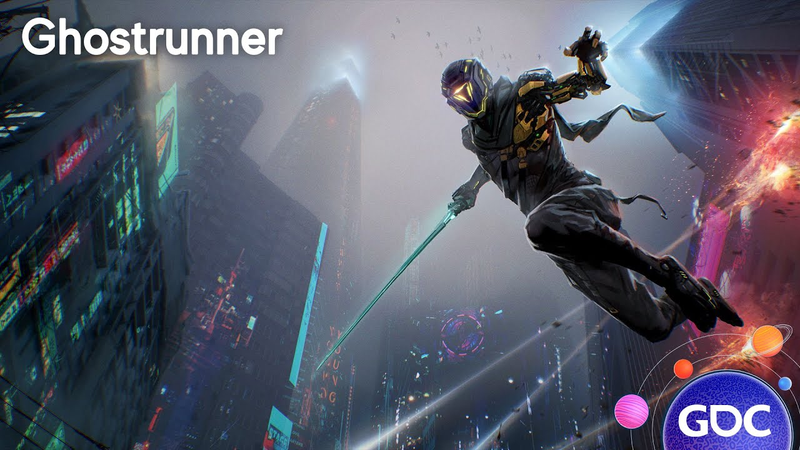
GDC Plays Ghostrunner with One More Level
The development of Ghostrunner represents a strategic shift toward high-fidelity, first-person action, moving away from the studio’s previous top-down design roots.
- Ghostrunner centers on a 'one-hit, one-kill' mechanic, which the developers adapted into a first-person perspective to differentiate the title from traditional action games.
- To maintain gameplay momentum, the developers designed levels to be 'waterproofed'—ensuring fluid movement and navigation while allowing for multiple player-chosen routes without stopping the action.
- Narrative exposition is delivered primarily through in-game dialogue rather than face-to-face interactions, utilizing quieter, non-combat platforming sections to ensure players can absorb the story without interrupting the game's pace.

Build Great Tools: Workflow Guidelines from Vicarious Visions
Engineers must prioritize human-centered design to transform game development utilities from mere functional requirements into cohesive, efficient ecosystems.
- Prioritize human-centered design to align complex engine architectures with the conceptual models of content creators, transforming functional utilities into efficient ecosystems.
- Reduce technical friction by implementing intuitive task clustering, seamless context switching, and keyboard acceleration to ensure tools augment rather than impede the creative process.
- Implement robust, universal features such as comprehensive undo/redo, automated source control, and actionable error messaging to eliminate reliance on tribal knowledge and reduce cognitive load.

Beta test my next major game project?
The platform Full-Time Game Dev serves as a comprehensive educational resource designed to transition aspiring developers into full-time careers within the independent game industry.
- The 'Full-Time Game Dev' platform posits that technical coding skills are secondary to mastering marketing, business operations, and funding strategies for a sustainable indie career.
- The curriculum is built on the creator's decade of experience launching titles such as 'Pinstripe' and 'NeverSong'.
- Core modules integrate technical instruction in 2D illustration, C# programming, and Unity with business-focused training on social media growth, game design bibles, and Steam launch execution.

Crunching with CD Projekt Red on Cyberpunk 2077 | Roundtable News | Episode 239
The video game industry remains deeply entrenched in a cycle of mandatory overtime, commonly referred to as crunch, which persists despite significant public backlash and documented health consequences for developers.
- The gaming industry continues to rely on mandatory overtime, with developers at studios like CD Projekt Red reporting 12-to-15-hour workdays despite public backlash regarding health consequences.
- Management frequently ties performance reviews and discretionary bonuses to overtime participation, effectively penalizing staff who prioritize efficiency over total hours logged.
- Financial incentives like profit-sharing bonuses are insufficient to address systemic burnout and the long-term erosion of developer well-being caused by the current labor model.

My son was born
This reflection explores the intersection of professional ambition and parenthood, specifically addressing the concerns of independent game developers who fear that starting a family will hinder their career growth.
- Parenthood acts as a catalyst for professional success by shifting the developer's focus from self-serving artistic pursuits to the creation of long-term financial security and a lasting legacy.
- The perceived conflict between family life and career growth is often a result of personal discipline and time-management choices rather than the presence of children.
- Successful integration of a demanding indie game development career and parenthood requires intentional scheduling and a supportive partner.
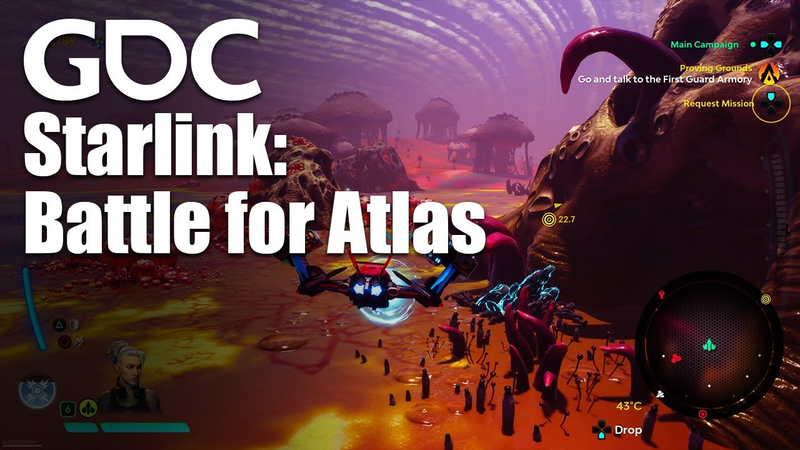
From Game Jam to the Creation of Starlink: Battle for Atlas
The development of Starlink: Battle for Atlas serves as a case study in balancing radical creative experimentation with the rigid demands of AAA production.
- To overcome the challenges of a wide-open innovation mandate, the Ubisoft 'Tomcat' team utilized a two-week iterative cycle consisting of brainstorming, pitching, voting, planning, and rapid prototyping.
- The team scaled brainstorming by starting with individuals, moving to pairs, and then groups of four, which allowed the team to generate hundreds of unique ideas rather than relying on the limited output of individuals.
- The team utilized a 'validate by any means necessary' approach during the one-week prototyping phase, employing diverse methods such as paper prototypes, existing game engines, and physical hardware hacks to prove concepts quickly.

I Built an Infinite Bathroom In Unity
The development of an infinite, procedurally generated public restroom within the Unity game engine serves as a practical exploration of the Wave Function Collapse (WFC) algorithm.
- The Wave Function Collapse (WFC) algorithm enables the creation of complex, self-consistent 3D environments by treating level design as a logic puzzle governed by adjacency and rotation rules.
- Successful implementation of the WFC system required the creation and precise labeling of 75 distinct modular 3D puzzle pieces, including toilets, cabinets, and structural elements.
- Infinite space is achieved by generating modular segments that are duplicated and arranged in a continuous loop, utilizing camera wrapping to create a seamless, endless environment.

Give Up Control: Zen and the Art of Leadership
Traditional command-and-control leadership models in the game development industry are increasingly viewed as unsustainable, often fostering toxic work environments and chronic burnout.
- Criterion Games achieved a record-low 3% cultural entropy score by abandoning rigid production dogmas in favor of servant leadership.
- Transitioning from command-and-control models to servant leadership replaces fear-based management with a focus on autonomy, mastery, and purpose.
- Effective leadership in game development requires abandoning the 'hero archetype' to act as a facilitator who synthesizes collective vision rather than dictating tasks.
Writers
Games and companies
Games