Game Development reports and market data
Documents
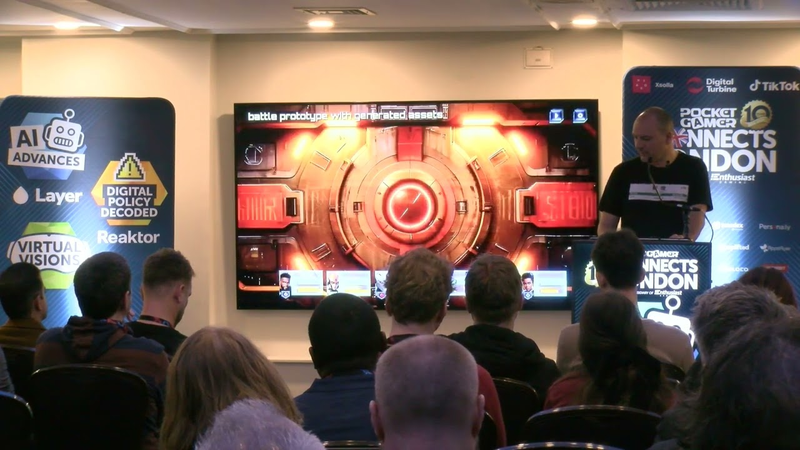
Gen AI First Leap to Generating Game Content, Stop Producing It! - Davy Chadwick, PopScreen Games.
The primary objective of this presentation is to demonstrate how generative artificial intelligence can transition from a brainstorming tool to a core production engine for mobile game development.
- Generative AI can function as a core production engine rather than just a brainstorming tool, enabling studios to automate the creation of complex assets like battlegrounds, character sheets, and narrative elements.
- Integrating generative workflows significantly reduces production costs, exemplified by promotional teaser creation costs dropping to approximately 2,000 euros through internal automation.
- Maintaining stylistic consistency across thousands of game units requires senior artists to fine-tune custom models, such as LoRAs, to ensure high-quality output.
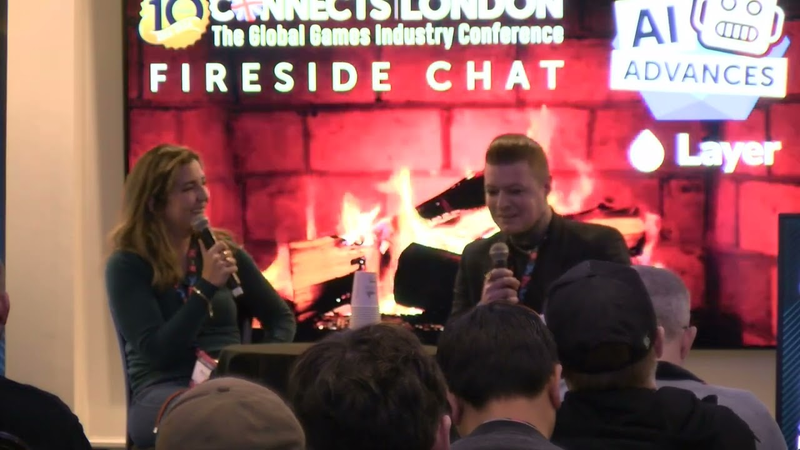
Fireside Chat: Supercharge Your Game art Production - Volkan Gurel, & Andriy Matviychuk.
This discussion explores the integration of generative AI into professional game art pipelines, focusing on a partnership between Layer AI and Tripledot Studios.
- Tripledot Studios reduced the production time for specific game assets from two weeks to a matter of minutes by integrating Layer AI into their pipeline.
- By training custom AI models on proprietary assets, Tripledot Studios was able to eliminate most of its external outsourcing while maintaining a 60-person internal art team.
- Fine-tuning private, model-agnostic workspaces requires only 20 to 25 assets per model to ensure output remains stylistically consistent with a studio's existing brand identity.
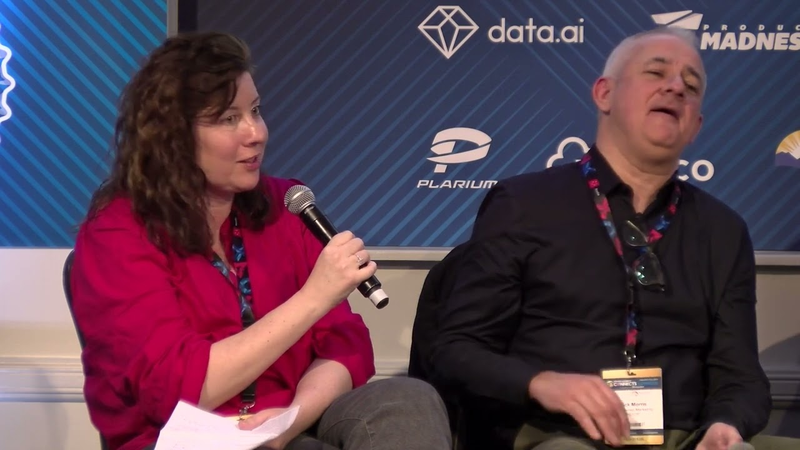
Panel: Can Allyship Confront Toxicity?
Systemic toxicity within the games industry has evolved from overt discrimination into nuanced, pervasive behaviors that undermine professional environments and stifle talent retention.
- Systemic toxicity in the games industry has shifted from overt discrimination to nuanced behaviors that undermine professional environments and drive talent attrition.
- Industry leaders must move beyond passive observation by implementing rigorous internal metrics and proactive codes of conduct to dismantle entrenched 'bro culture'.
- Inclusive culture is a strategic business imperative that enables organizations to attract a broader, more diverse player base and sustain long-term growth.
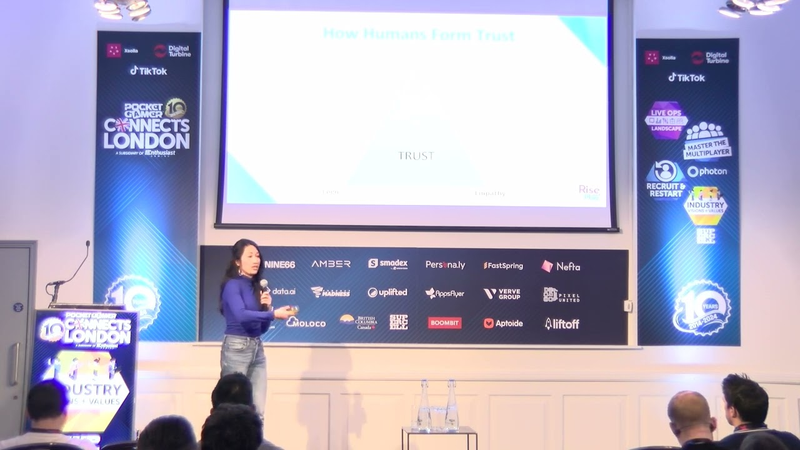
Unleash Your Team's Potential Through The 4 Stages Of Psychological Safety - Sophie Vo, Rise & Play.
Psychological safety serves as a critical foundation for high-performing teams within the creative gaming industry, where innovation and rapid market evolution necessitate the effective distribution of knowledge and creativity.
- Psychological safety is a critical performance driver for gaming teams, defined as an environment where members can take risks, admit mistakes, and share ideas without fear of punishment.
- The concept gained prominence following 2016 research by Google, which identified psychological safety as a foundational element of high-performing teams.
- Building a safe culture begins with the leader’s internal work, specifically their ability to model vulnerability, self-awareness, and emotional regulation.
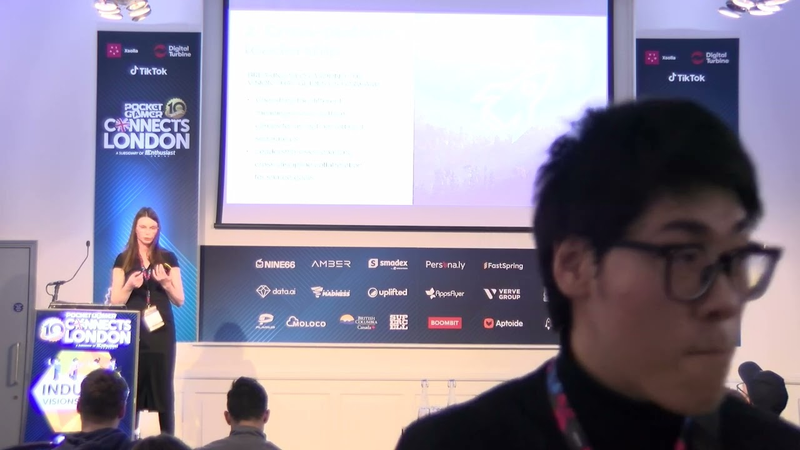
Building Bridges Instead of Silos - Celine Pasula, Ubisoft RedLynx
Celine Pasula, Managing Director at Ubisoft RedLynx, argues that the future of the gaming industry lies in breaking down traditional silos between mobile, PC, and console development.
- Cross-platform development is not merely a technical challenge of porting games between devices, but a strategic imperative to embrace diverse player preferences and reach audiences across mobile, PC, and console simultaneously.
- Industry data indicates that an increasing number of players are actively mixing platforms, creating a solid foundation for developers to prioritize cross-play and unified progression.
- Leaders must foster 'psychological work safety' to enable teams to innovate, speak up, and take risks, which is essential for navigating the complexities of cross-platform development.
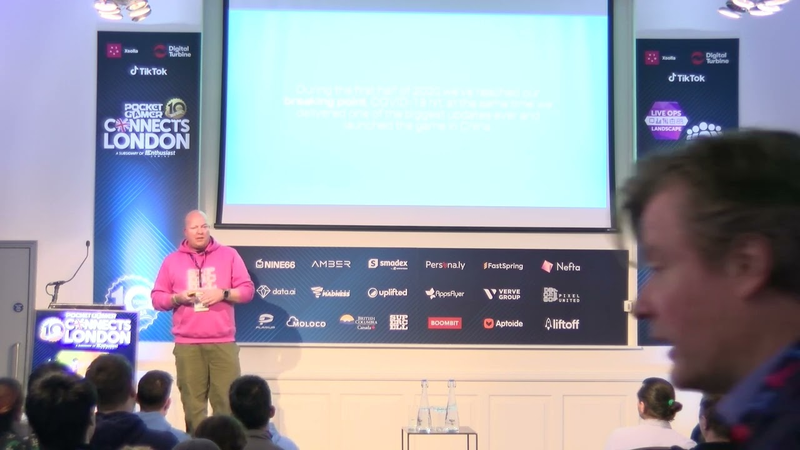
Keynote: Evolving Culture for Player Centric Games - Frank Keienburg, Supercell
Supercell’s evolution from a rigid, small-team structure to a more scalable, player-centric model highlights the necessity of adapting organizational culture to meet modern live-service demands.
- Supercell transitioned away from its long-standing 'small, independent team' model (typically 10–20 people) to accommodate the high content demands of live-service titles like Brawl Stars.
- The Brawl Stars team expanded from approximately 20 people to 45, with plans to add 10–15 more, to address burnout and the unsustainable pressure of maintaining complex, content-heavy updates.
- Supercell’s historical success was built on four major titles that each generated over $1 billion in lifetime revenue, with Clash titles exceeding $10 billion and Hay Day surpassing $2 billion.
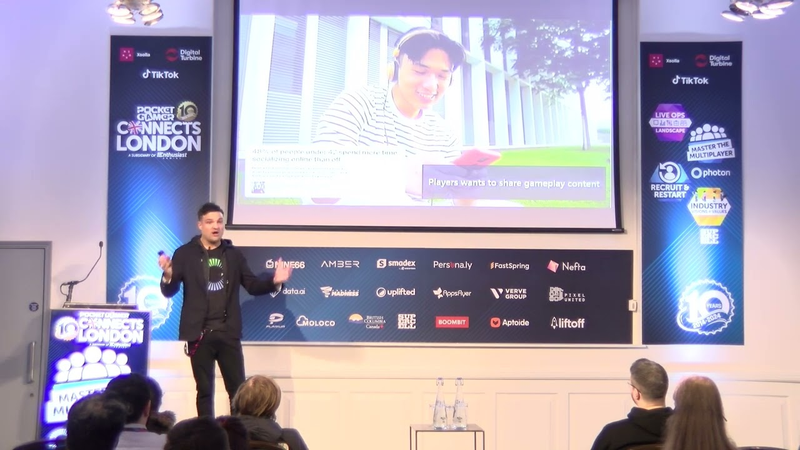
Multiplayer to Maximize Creativity & Revenue - Mark Val, Photon
Multiplayer functionality serves as a foundational pillar for success in the contemporary gaming landscape, acting as a primary driver for both player retention and long-term revenue.
- Multiplayer titles dominate the top-performing games across download volume, consumer spend, and monthly active users, as evidenced by the fact that the most popular games on Steam and mobile app stores are predominantly multiplayer-based.
- Successful multiplayer implementation requires deep community integration; developers must treat their player base as a board-level stakeholder to avoid negative feedback and maintain long-term engagement.
- AI tools, such as those integrated into Photon Quantum, provide essential support for multiplayer development by offering out-of-the-box bot systems that balance match difficulty to ensure players experience both wins and losses.
Panel: LiveOps and Support Strategies to Shape the Future of Your Games.
Successful LiveOps strategies depend on the seamless integration of game development, monetization, and player support into a unified operational framework.
- Integrate game development, monetization, and player support into a single operational framework to transform support from a cost center into a driver of product innovation.
- Utilize support channels as a primary source of product intelligence by synthesizing business metrics, player surveys, and community sentiment to inform content updates and live events.
- Deploy AI-driven tools for automated ticketing, sentiment analysis, and machine translation to scale operations, reduce response times, and improve player satisfaction scores.
Fireside Chat: Rovio's AI Transformation for Improving Player Experience - Rovio & Keywords Studio.
Rovio Entertainment’s recent transformation of its player support infrastructure highlights the strategic shift from traditional email-based systems to AI-driven, in-app automation.
- Rovio increased its player support deflection rate from 20% to 63% by migrating from an email-based system to the Helpshift in-app conversational support platform.
- The migration involved consolidating support operations across 23 games and five different studios to standardize workflows and reduce reliance on manual human intervention for repetitive 'dumb' queries.
- Rovio integrated its centralized data platform with the support tool, allowing agents to view player profiles instantly and enabling AI-driven automations based on specific player spend tiers and history.
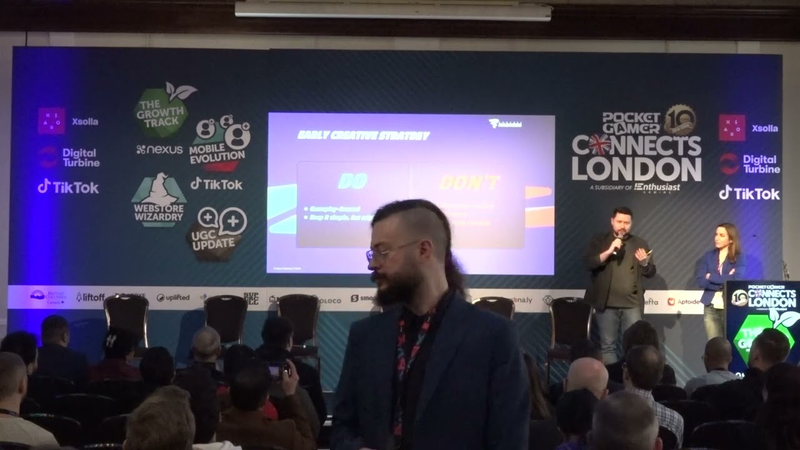
From Prototype to Stardom Early Stage UA Tactics for New Game Prototypes - Product Madness.
The process of transitioning a game from an early-stage prototype to a successful global launch requires a disciplined, data-driven approach to user acquisition (UA).
- Integrate User Acquisition (UA) strategies during the prototype phase to validate marketability and keep product development grounded in player demand rather than internal vision.
- Conduct thorough market analysis before development by identifying genre competitors, their revenue and download shares, and requesting CPI and CPM benchmarks from UA channel managers.
- Use early-stage creative testing—such as gameplay-focused videos illustrating the core loop—to gauge audience interest and validate design choices before a full live build is completed.
Gamesforum Live Special w/ Adam & Gus: Rewarded play, AI in game development. Are UA managers lazy?
The rewarded gaming model has emerged as a dominant strategy for driving profitability, utilizing real-money incentives to encourage user engagement through ad interactions and data-sharing tasks.
- The rewarded gaming model achieves profitability within a three-day window by using real-money incentives to drive high-value user cohorts and rapid capital recycling.
- Modern game development is increasingly subservient to acquisition metrics, where marketing requirements dictate core design choices to function as high-performance affiliate platforms.
- A significant skill gap exists among user acquisition managers who rely too heavily on automated platform algorithms rather than integrating creative strategy with game mechanics.

Games: Once Upon Now in Hollywood
The entertainment industry is undergoing a fundamental shift as video games emerge as the primary source of intellectual property for Hollywood.
- Hollywood is shifting its primary source of intellectual property from comic books to video game franchises, following the commercial success of titles like The Super Mario Bros. Movie and The Last of Us.
- Game developers are increasingly retaining significant creative control, including script and director approval rights, to ensure adaptations remain faithful to their established canon.
- Upfront royalty payments for game-to-film adaptations currently range from $1 million to $20 million per project.
Writers
Games and companies
Games