Game Culture reports and market data
Documents
Statistical Significance Testing at CHI PLAY: Challenges and Opportunities for More Transparency
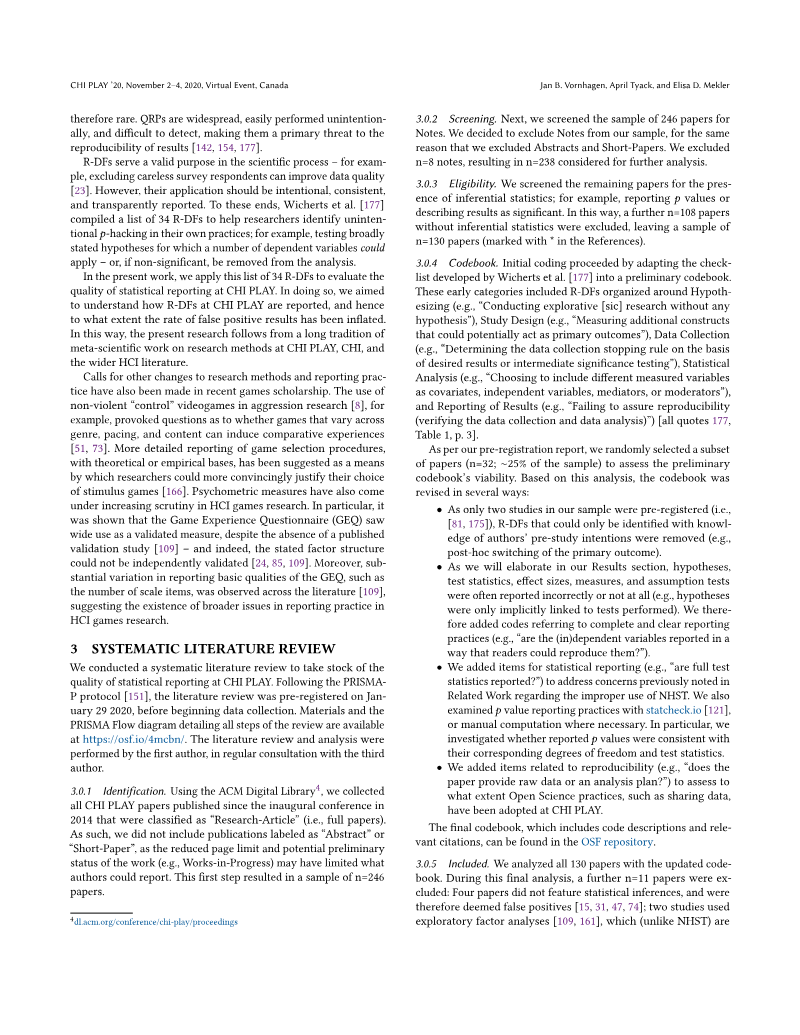
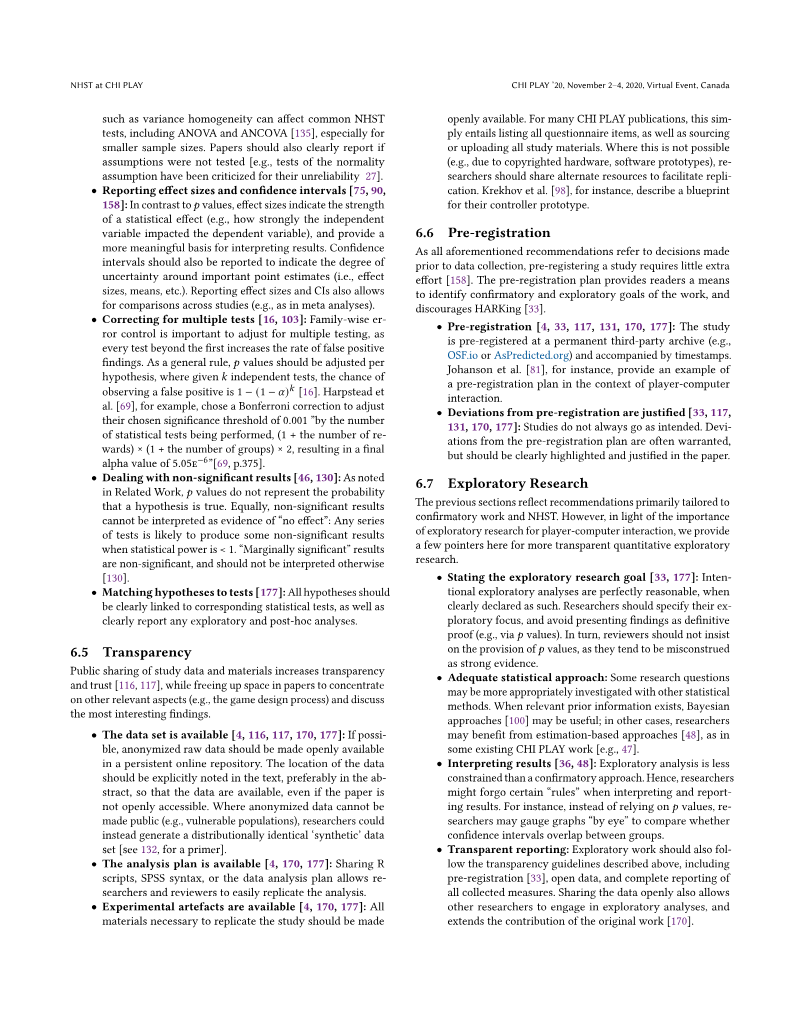
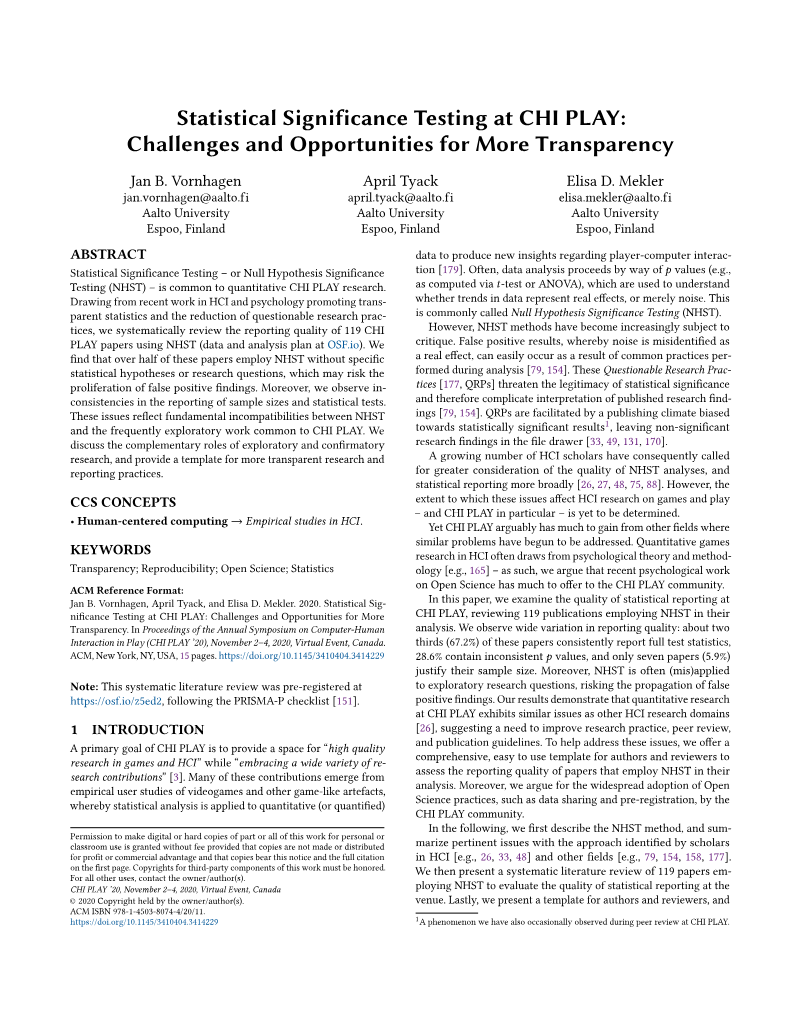
This paper by Jan B. Vornhagen, April Tyack and Elisa D. Mekler, published at CHI PLAY 2020, is a systematic literature review of statistical reporting quality in CHI PLAY full papers that use Null Hypothesis Significance Testing (NHST).
- Only seven of the 119 NHST papers (5.88%) justified their sample size, while only 5 papers (4.2%) made data publicly available.
- Roughly 28.6% of the reviewed papers contained inconsistent reported test values, though the authors note most inconsistencies reflected rounding errors.
- Over half of the reviewed papers (53.78%) stated hypotheses without clearly linking them to confirmatory research goals, and most papers (75.63%) left the distinction between confirmatory and exploratory testing unclear.
Games and Literacy: Remixes in Asynchronous Time
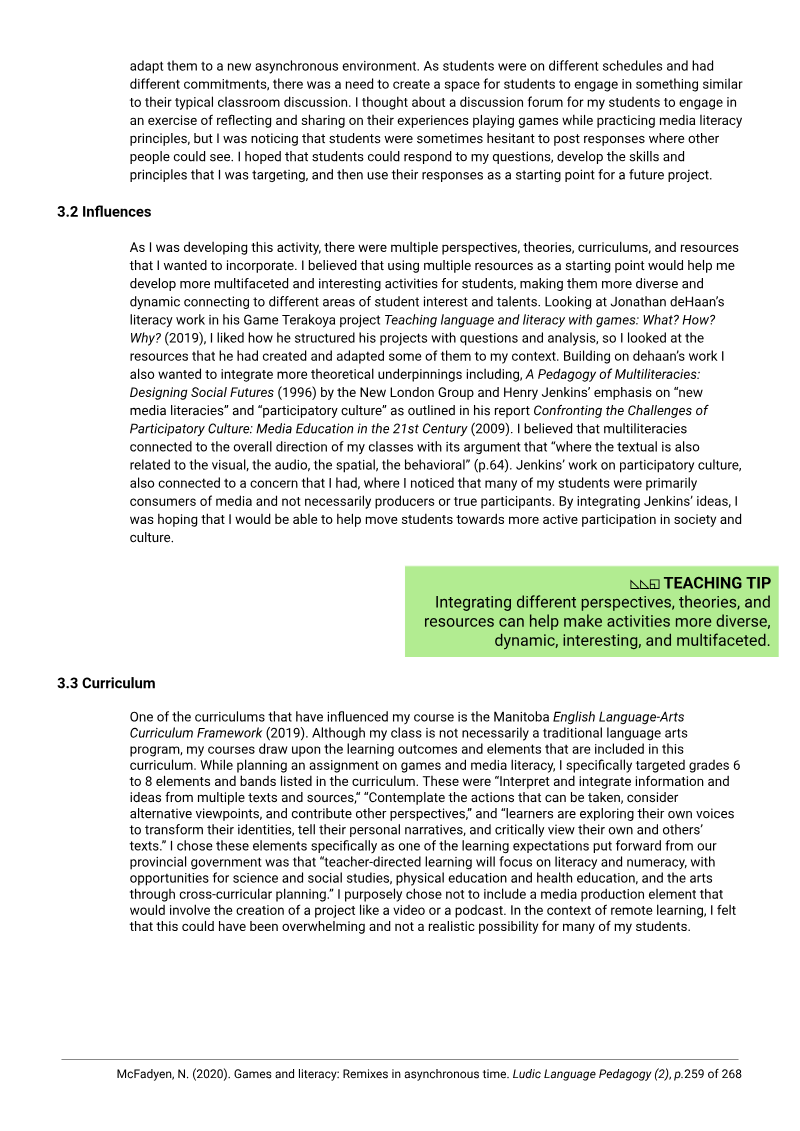
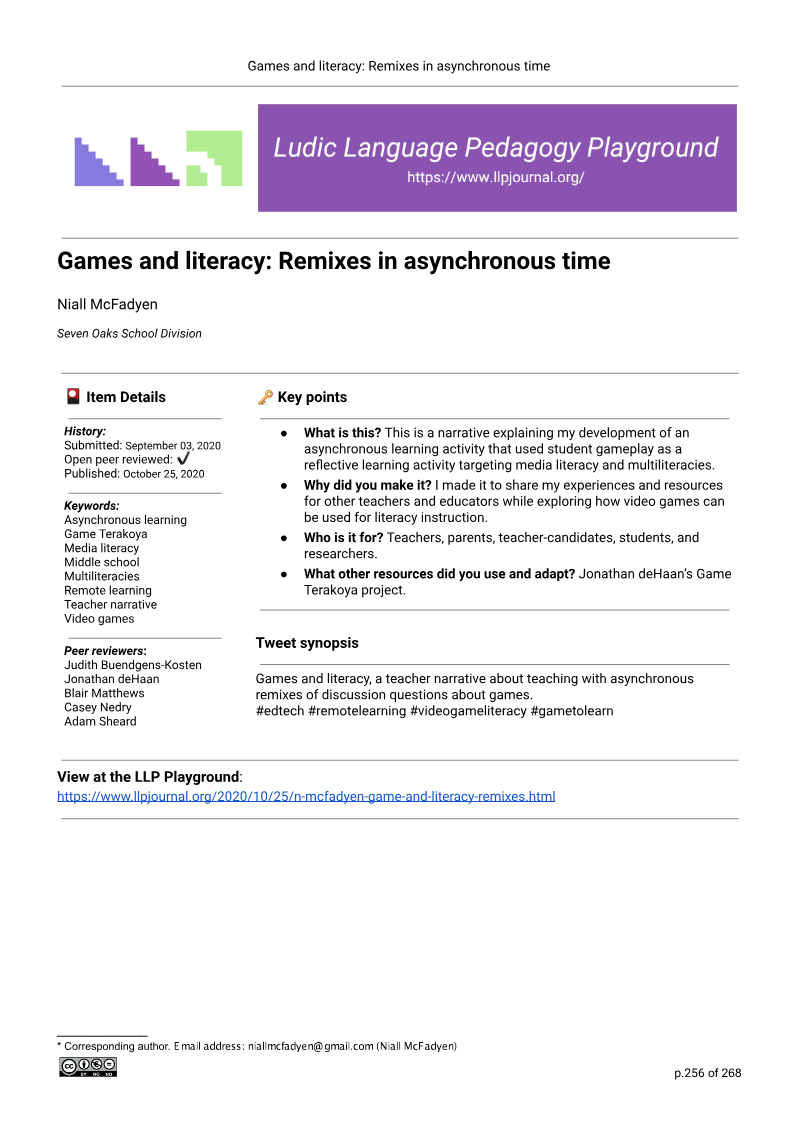
Niall McFadyen, a multimedia and technology teacher at a Canadian grades 6 to 8 middle school in the Seven Oaks School Division, describes an asynchronous learning activity he designed during remote learning between March and June 2020.
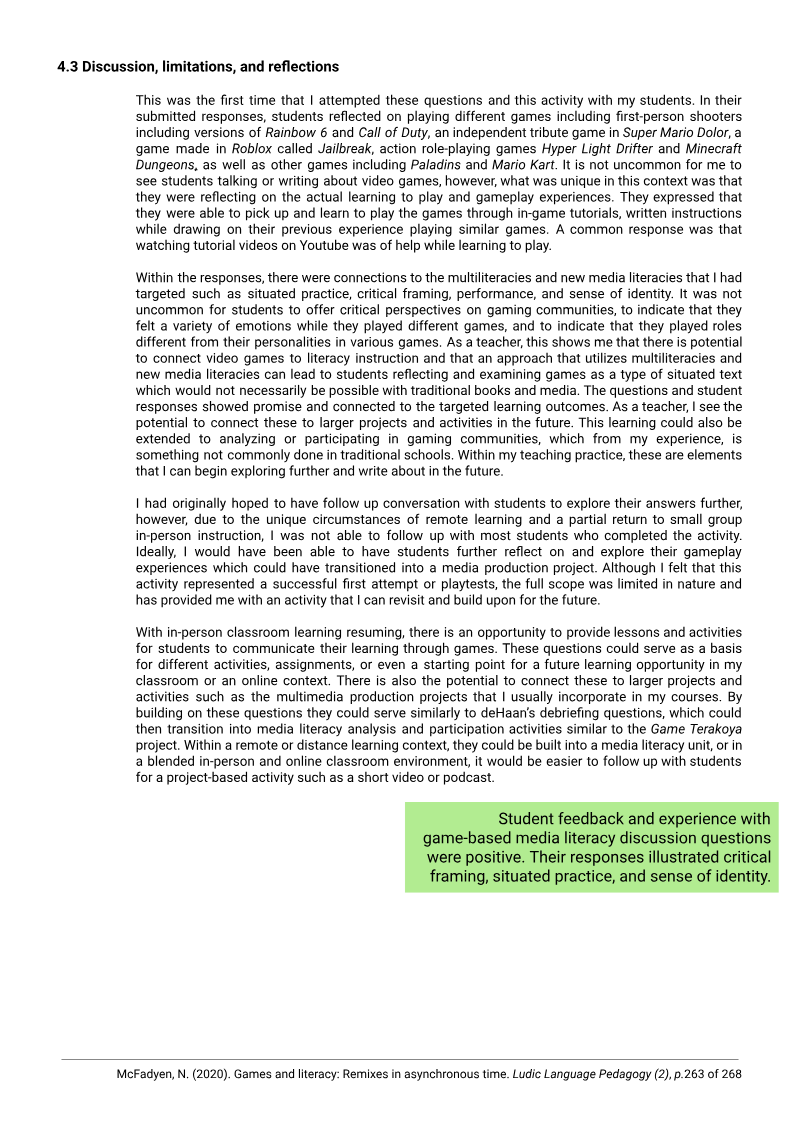
- Students reflected on learning to play games, and a common response was that watching tutorial videos on Youtube was of help while learning to play.
- The author reports that student feedback on the game-based media literacy discussion questions was positive.
- Student responses showed critical framing, situated practice, and sense of identity, which the author links to the targeted multiliteracies and new media literacies.
How to Teach Languages with Among Us
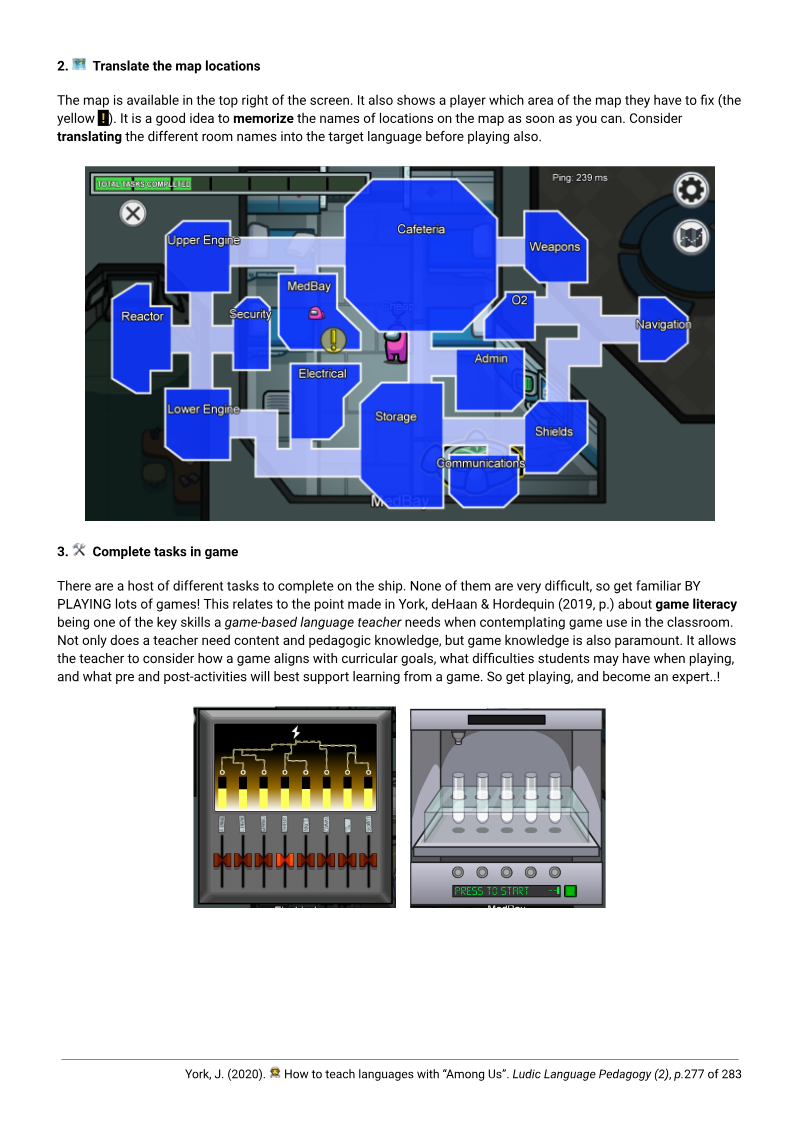
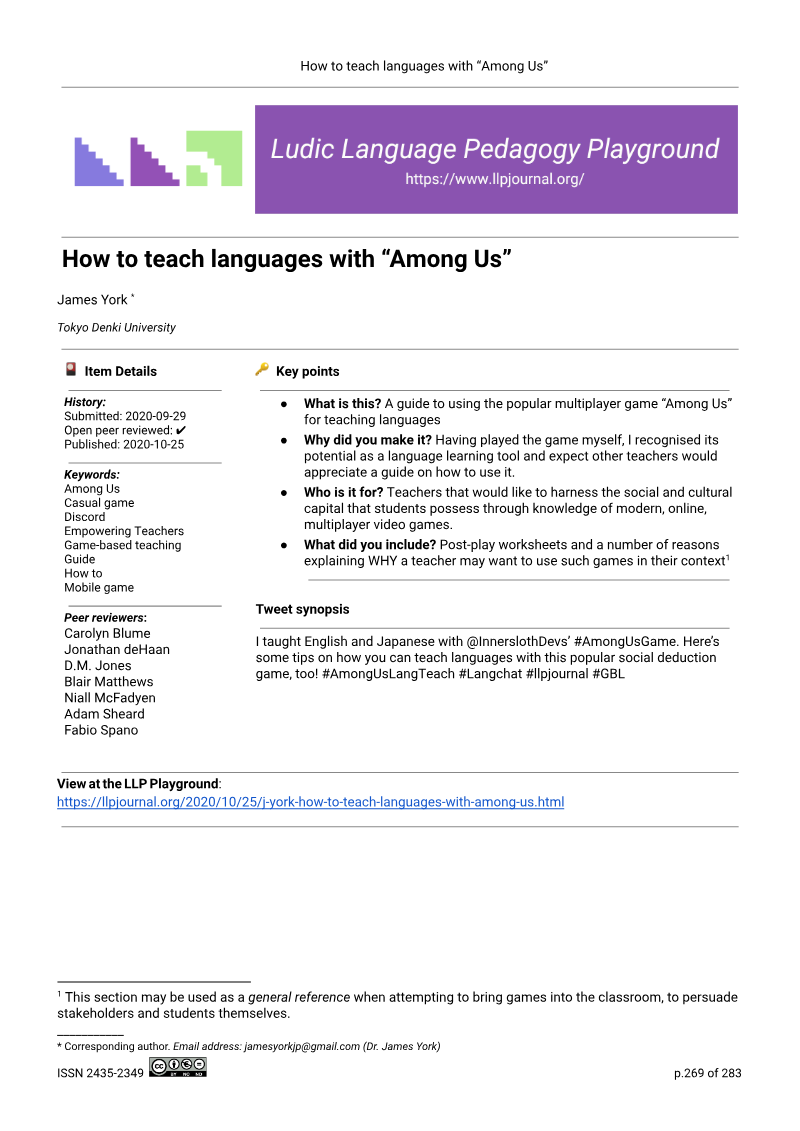
James York, of Tokyo Denki University, wrote a guide to using the multiplayer social deduction game Among Us for language teaching, published in Ludic Language Pedagogy in October 2020 after open peer review.
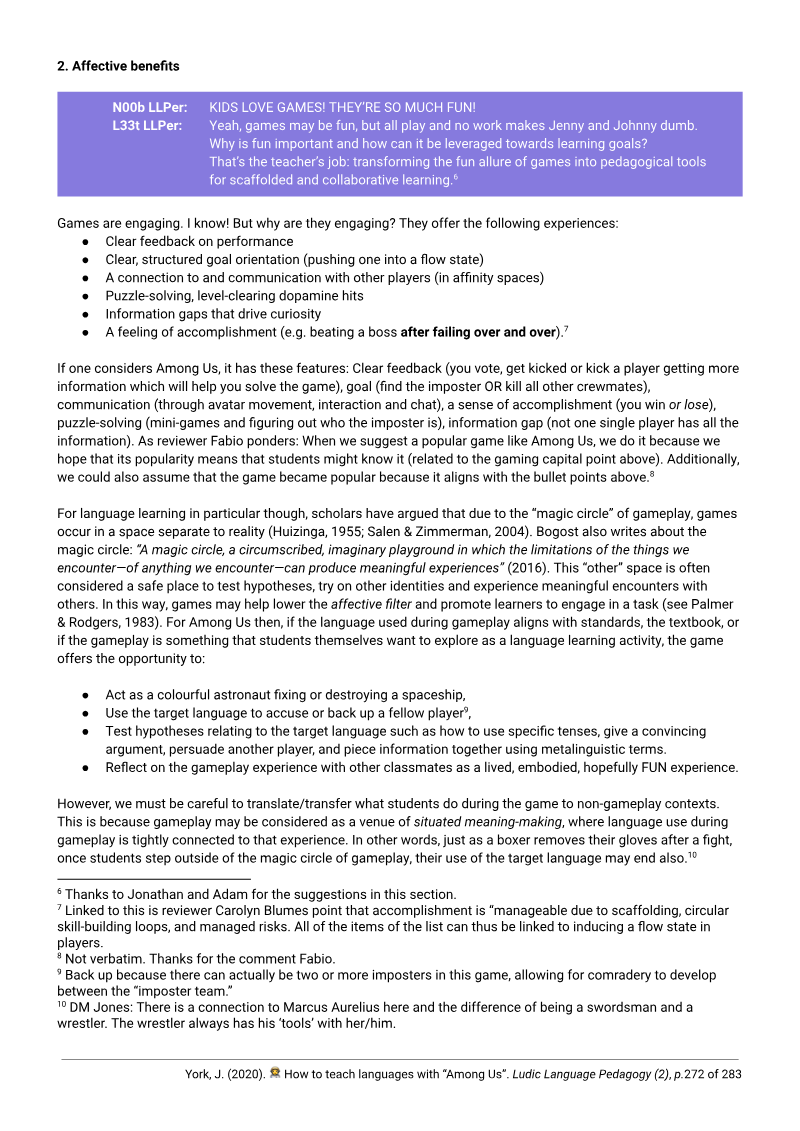
- The author argues that many students have gaming capital, and that using games builds on students' pre-existing knowledge rather than only the teacher's familiar media.
- The author states that gameplay language may stay within the game's context, so post-play activities are needed to carry it into students' real lives.
- The author suggests that students practising the same expressions repeatedly across short games can build a repertoire of formulaic expressions.
A Meta-Synthesis of Agency in Game Studies: Trends, Troubles, Trajectories
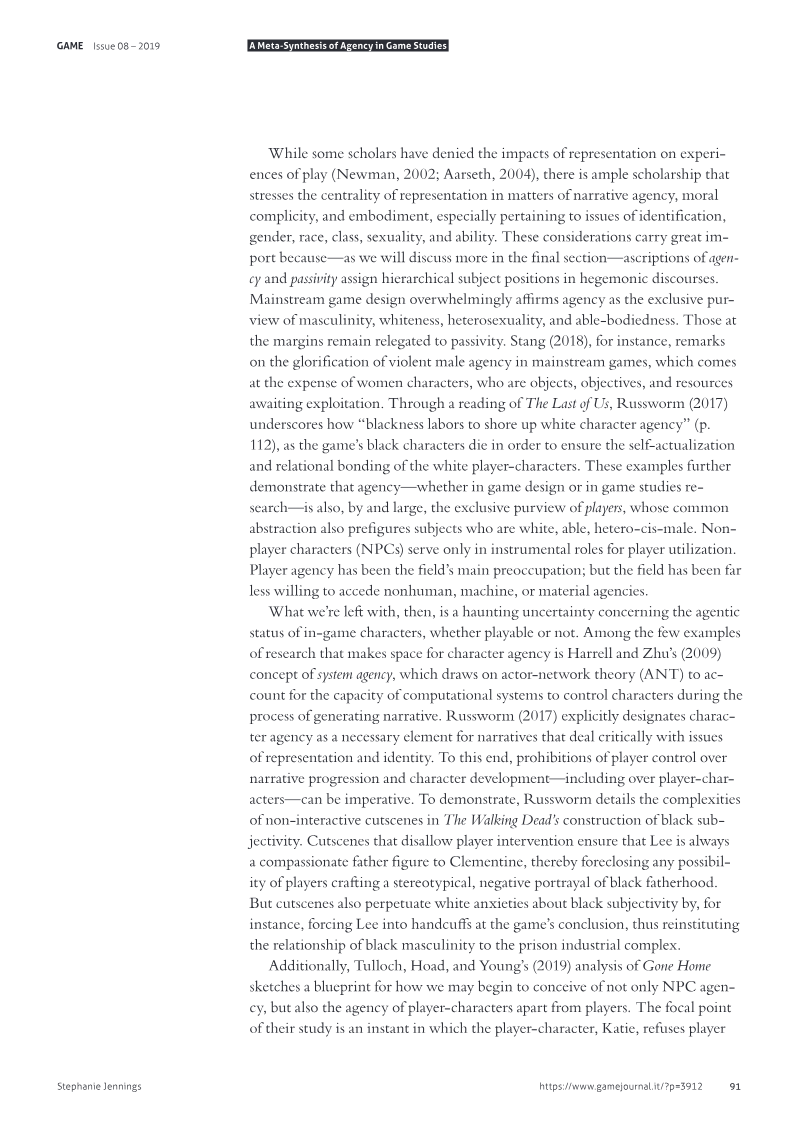
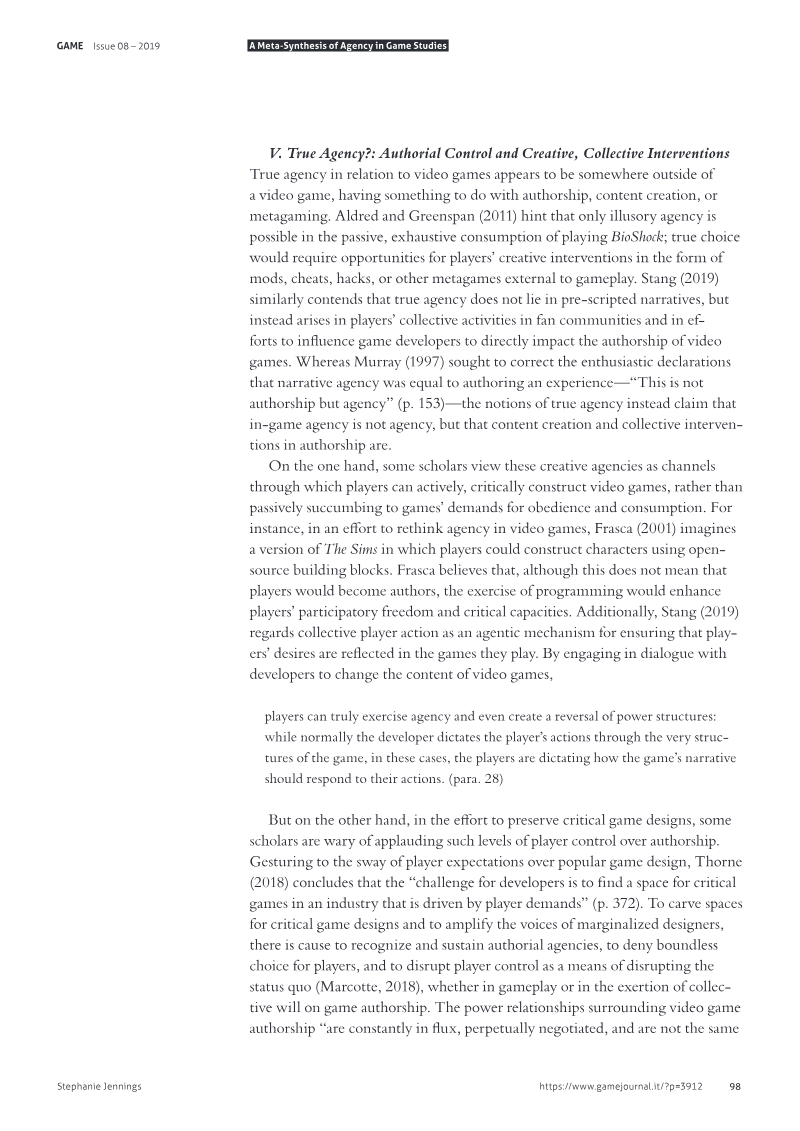
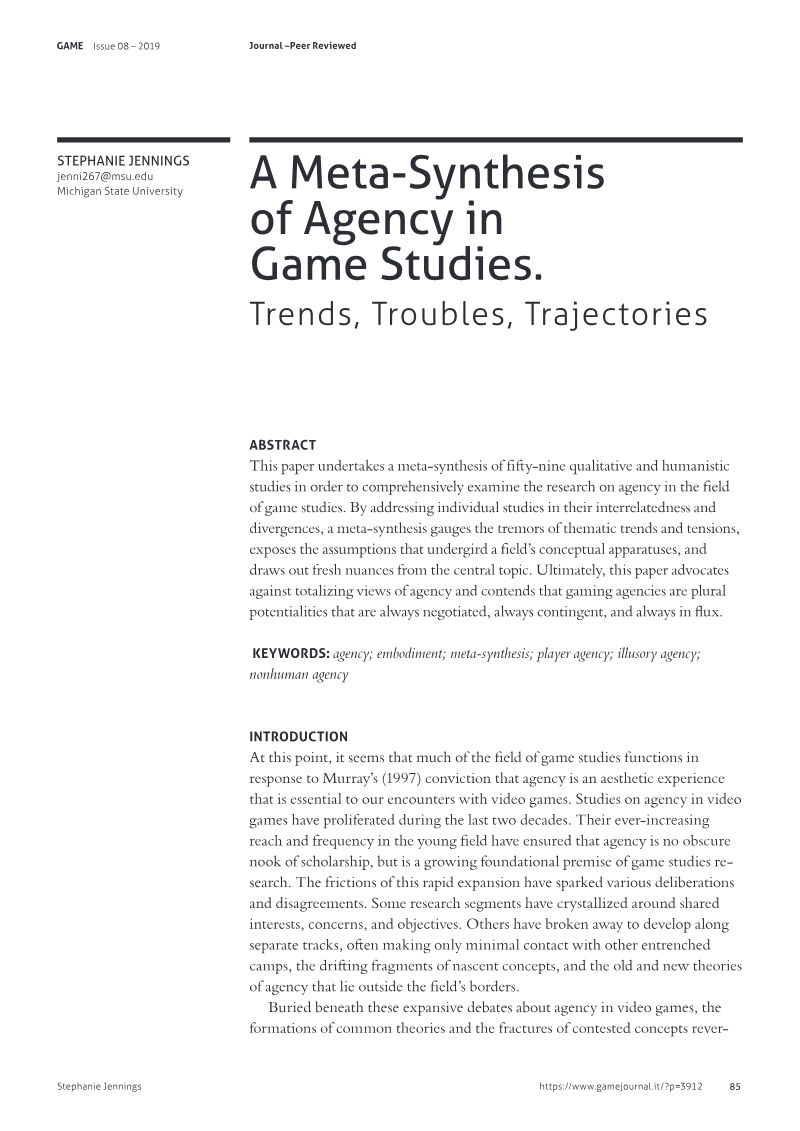
Stephanie Jennings, of Michigan State University, presents a meta-synthesis of fifty-nine qualitative and humanistic studies on agency in game studies.
- The paper reviews fifty-nine sources, fifteen of which use BioShock or BioShock: Infinite as primary case studies.
- Much of the BioShock literature asserts that video game agency is an illusion, though the author questions what true agency would mean.
- The author notes that agency is frequently used without precise definition, partly because Murray's 1997 definition became a common starting point.
Loot Boxes in Video Games: Call for Evidence
The UK Department for Digital, Culture, Media and Sport (DCMS) published a Call for Evidence in September 2020 to gather information on the use and impact of loot boxes in video games in the UK.
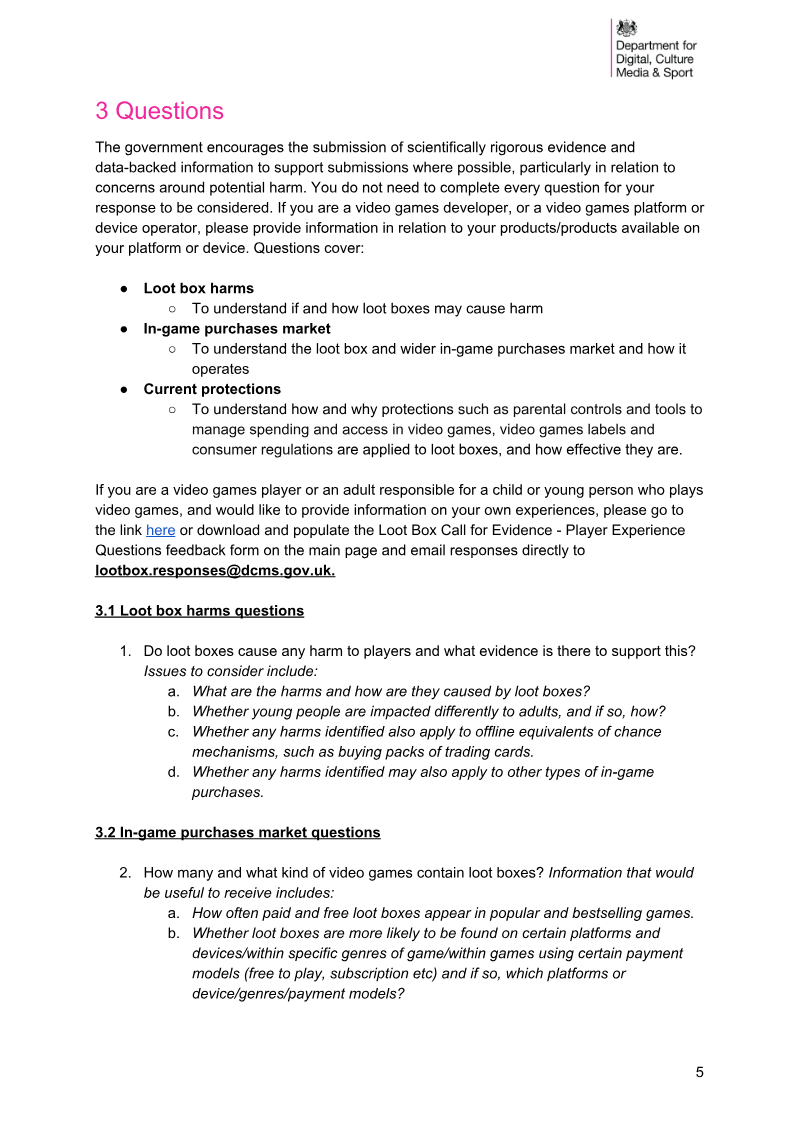
- Loot boxes are defined by their chance mechanism: players receive something from them but do not know what until opened.
- Platform operators Sony Interactive Entertainment, Microsoft and Nintendo announced that from 2020, new games on their platforms must display the relative probability of receiving randomised virtual items.
- Games on the Apple App Store and Google Play are required to display probability rates for loot boxes.
Larp Safety Design Fundamentals
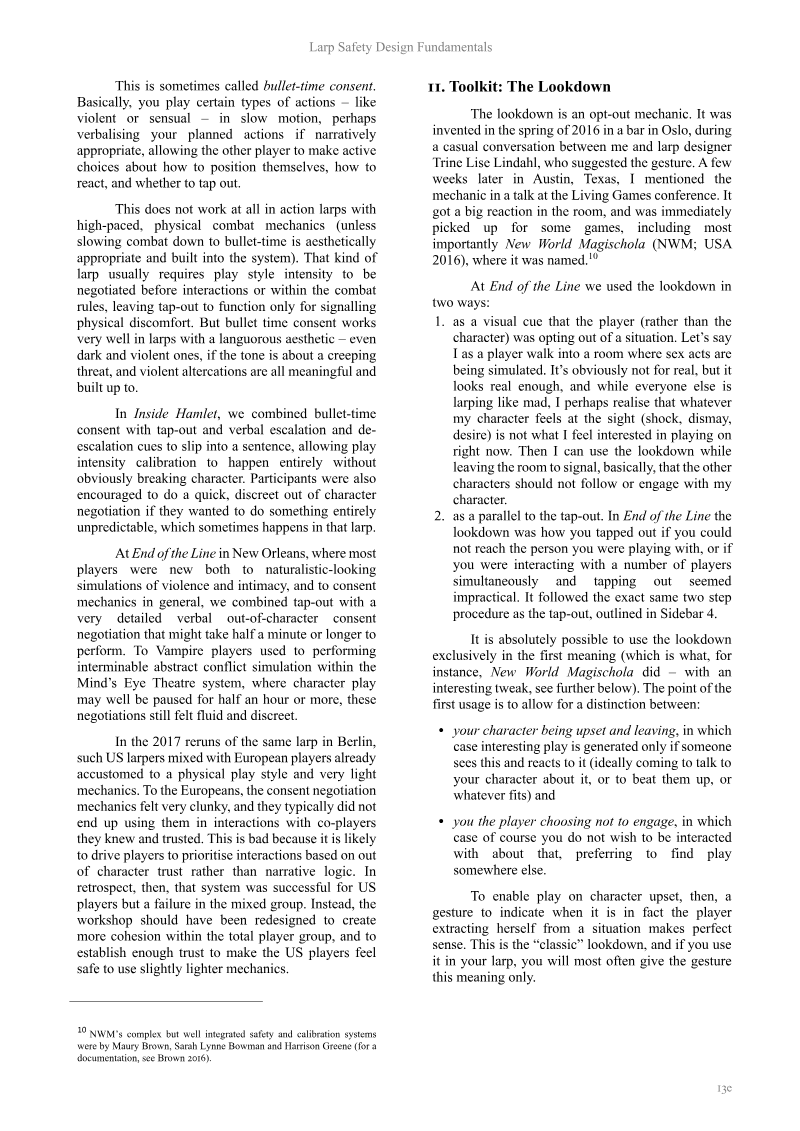
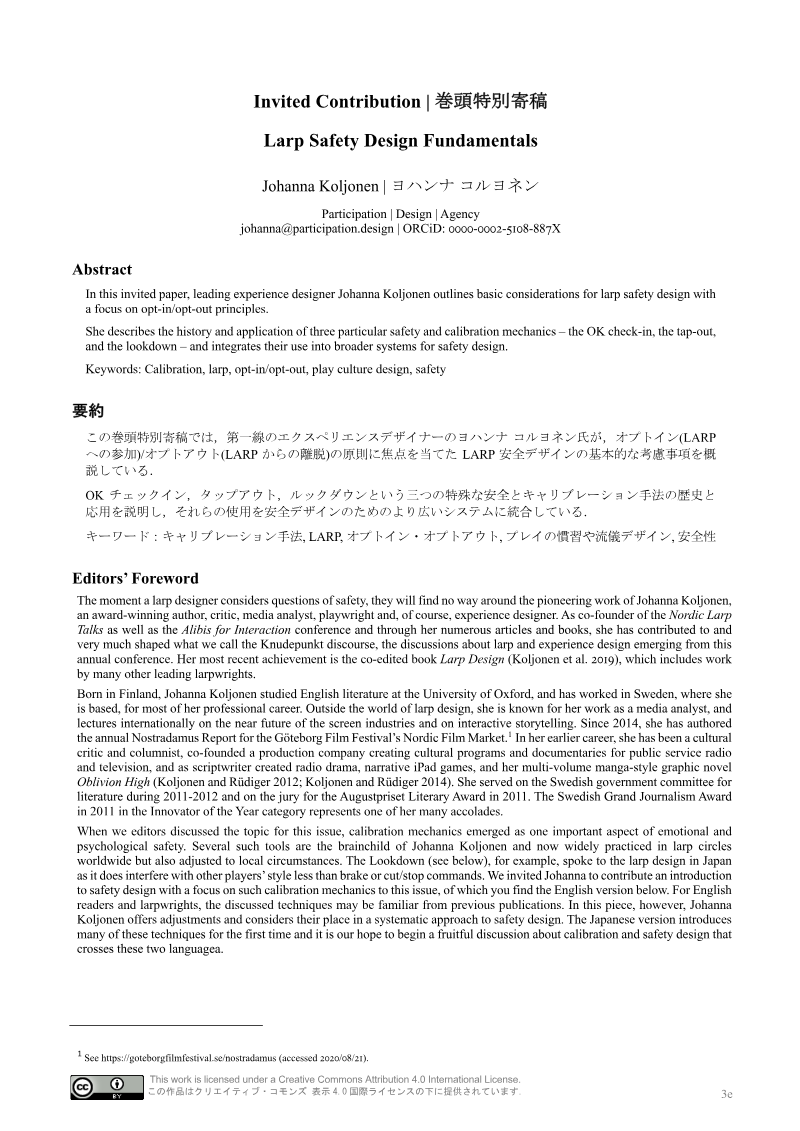
This invited paper by Johanna Koljonen, an experience designer and co-founder of the Nordic Larp Talks and Alibis for Interaction conference, outlines basic considerations for larp safety design, with a focus on opt-in/opt-out principles.
- The author argues that the single most important step in larp safety and calibration is player selection, and that self-selection by participants is as important as gatekeeping by organisers.
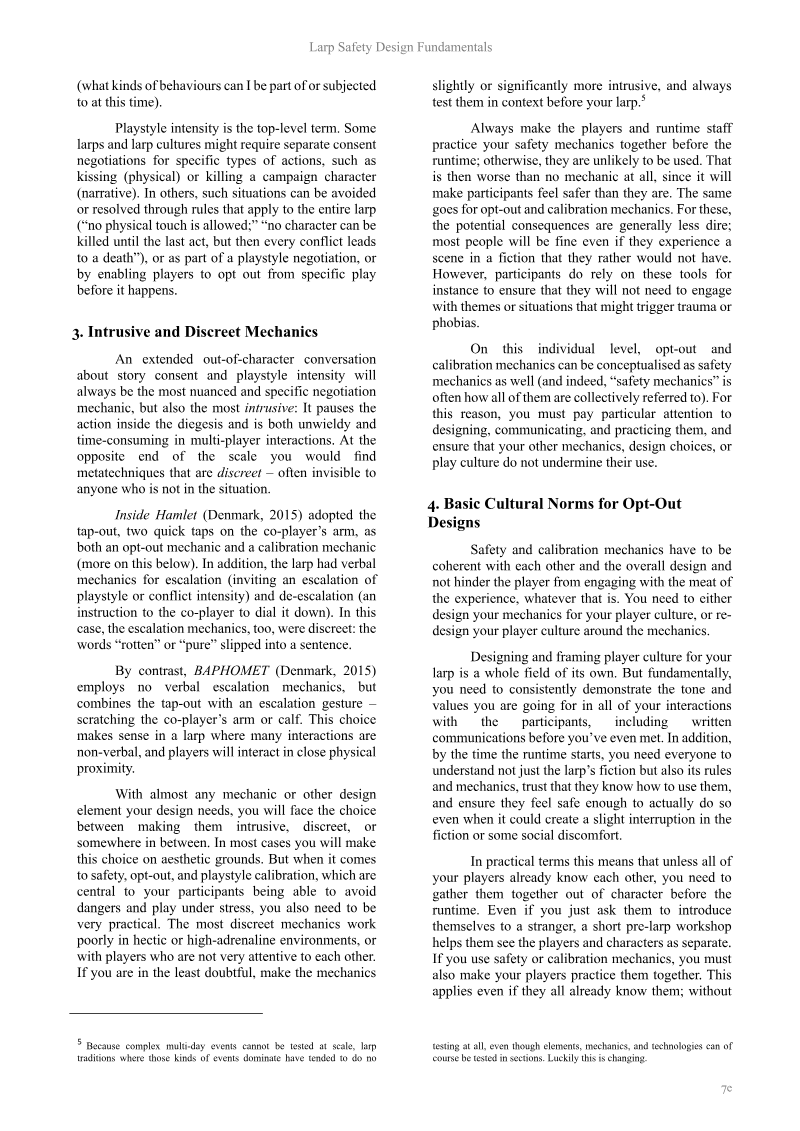
- The author argues that safety mechanics must be practised together by participants before the runtime, since unpractised mechanics are unlikely to be used or used correctly.
- The OK check-in uses three responses: thumbs up means play can continue, a level hand is treated as a thumbs down by the asker, and thumbs down means the player should be extracted from the situation.
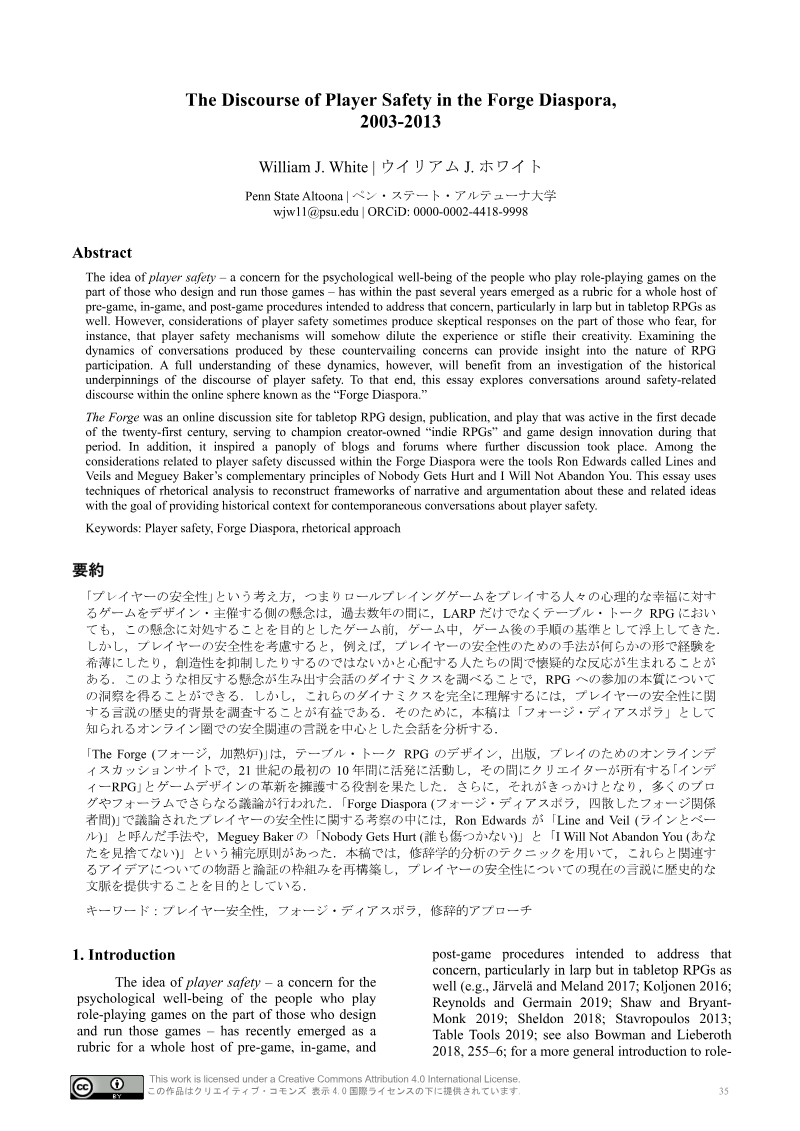
The Discourse of Player Safety in the Forge Diaspora, 2003-2013
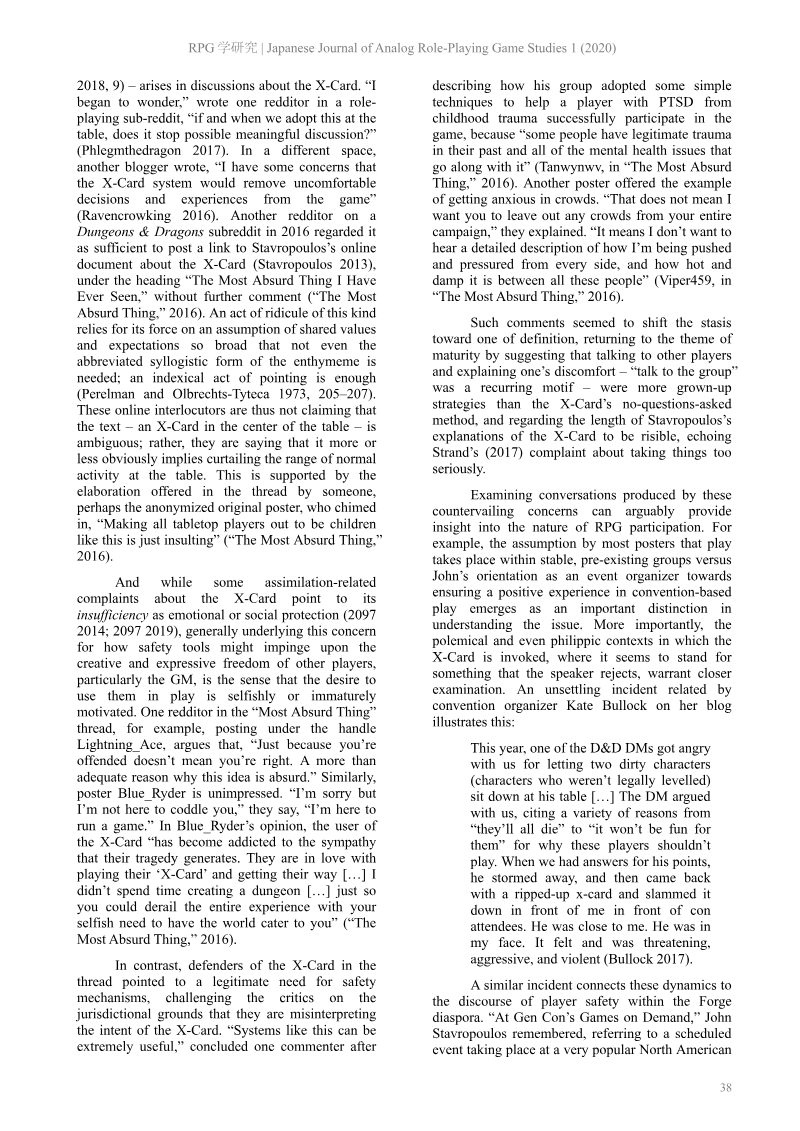
William J. White, of Penn State Altoona, examines conversations about player safety in tabletop role-playing games within the online sphere known as the Forge Diaspora, covering 2003 to 2013.
- The author describes Lines and Veils as tools Ron Edwards introduced in the Sex and Sorcery supplement for Sorcerer, with Edwards defining a Line as limits on content not permitted in the game's play.
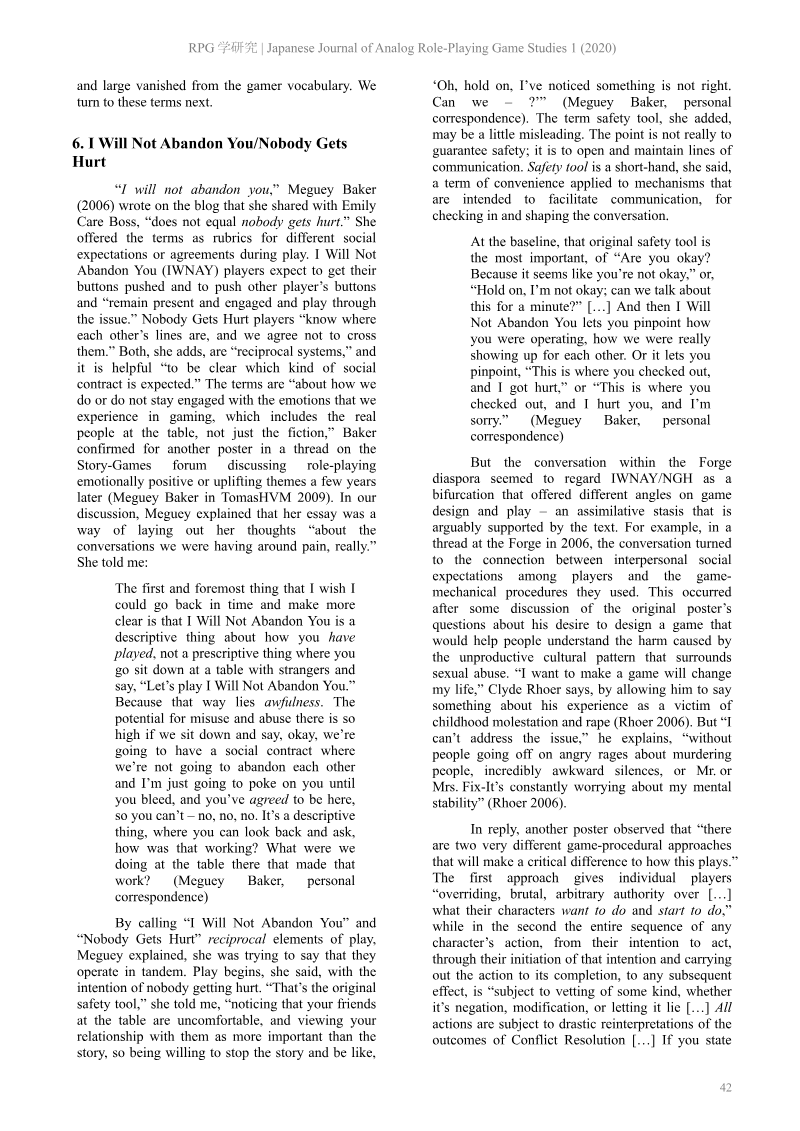
- According to the document, Meguey Baker wrote that "I Will Not Abandon You" does not equal "Nobody Gets Hurt," framing the terms as rubrics for different social expectations during play.
- The X-Card was created by John Stavropoulos, who said he made it primarily in response to feedback from survey information from attendees of in-person events at gaming conventions.
Death Rules: A Survey and Analysis of PC Death in Tabletop Role-Playing Games
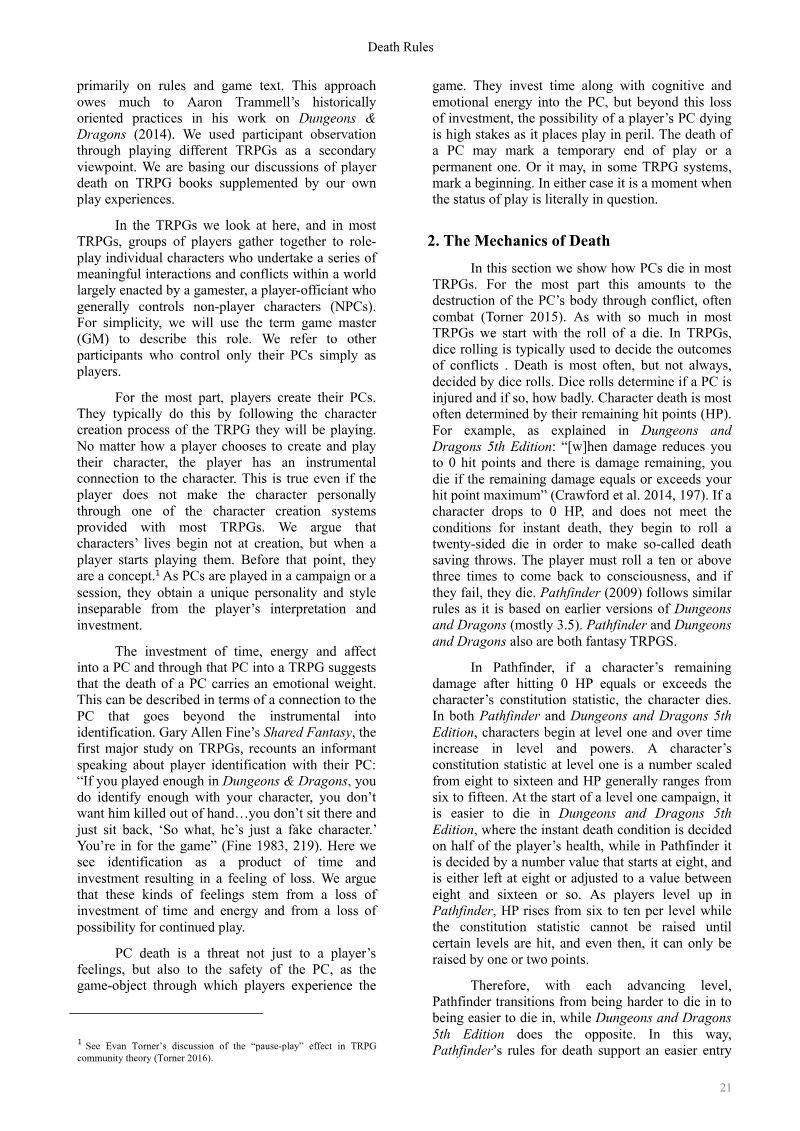
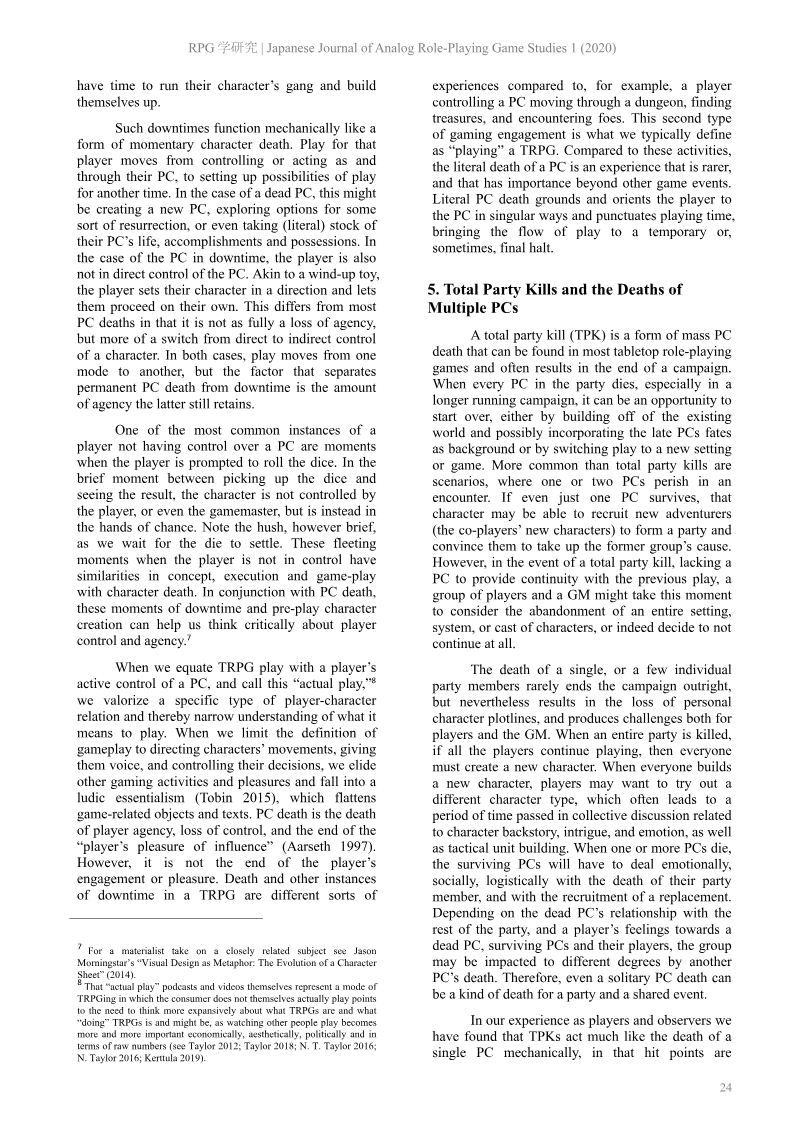
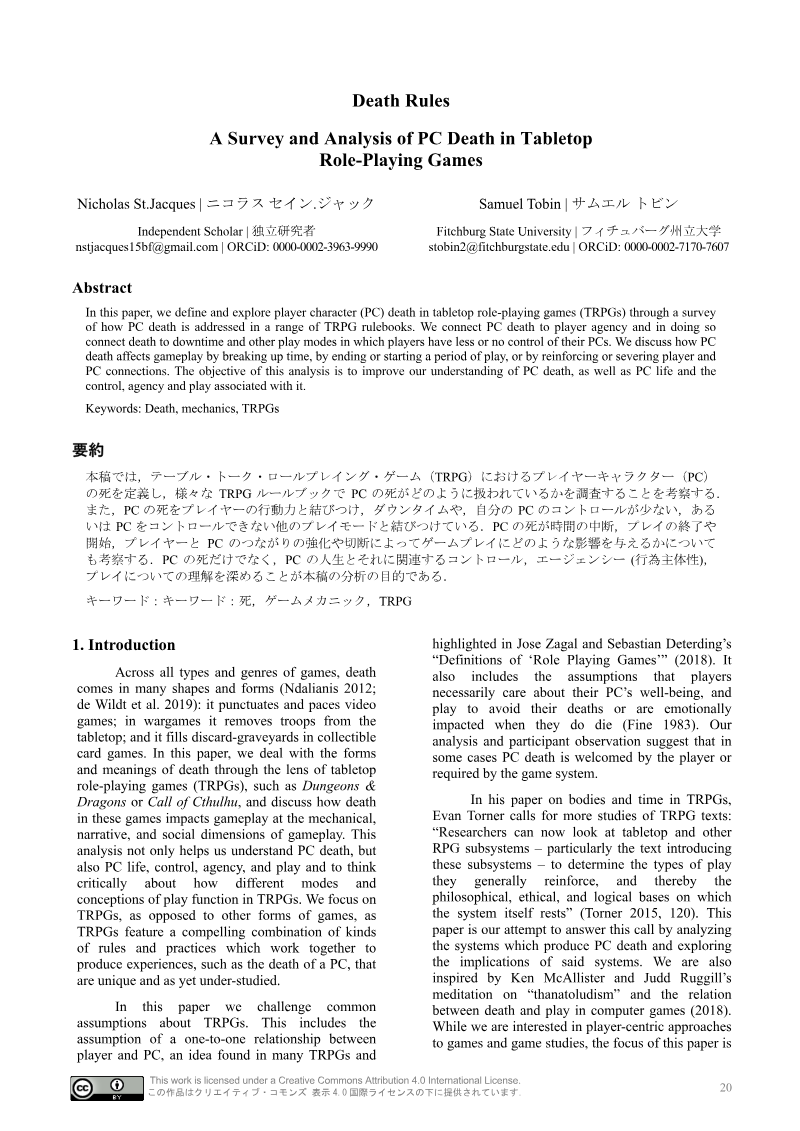
The paper by Nicholas St.Jacques and Samuel Tobin, an independent scholar and a Fitchburg State University researcher, defines player character (PC) death in tabletop role-playing games (TRPGs) and surveys how a range of TRPG rulebooks address it.
- The authors argue that PC death is tied to player investment, so a PC's death can carry emotional weight beyond the loss of a game object.
- In D&D 5th Edition, a level-one character's instant death threshold is half the player's health, whereas Pathfinder uses a constitution value starting at eight, making the two systems opposite in how difficulty changes with level.
- The authors observed that players in Ten Candles took riskier moves than players in D&D 5th Edition, because they knew their characters would die by the end of the game.
The Game Itself?: Towards a Hermeneutics of Computer Games
The paper by Espen Aarseth and Sebastian Möring, published at the 2020 International Conference on the Foundations of Digital Games (FDG '20) in Malta, reassesses hermeneutic approaches to game studies.
- The authors argue that there can be no ludo-hermeneutics as such, because games are not one type of phenomenon and any theory must be a family of models.
- Identifying the game's ontological nature is presented as the first step of ludo-hermeneutics and the only step that is necessarily required.
- The authors assume a game ontology laid out in Calleja and Aarseth, in which a game is a four-dimensional field of mental activity, a semiotic system, a mechanical system and a materiality.


Let's Play! 2020: The European Esports Market
"Let's Play! 2020: The European Esports Market" examines the European esports ecosystem, covering 2019 developments and the first half of 2020 during COVID-19.
- The worldwide esports audience grew by 12 per cent in 2019, from 395 million to 443 million people.
- Global esports transaction volume fell to €1.7 billion in 2019 from a record €3.9 billion in 2018.
- Of the experts surveyed, 77 per cent said their company increased revenues compared to the prior year.
Social Learning and Literacy Affordances in Animal Crossing: New Horizons
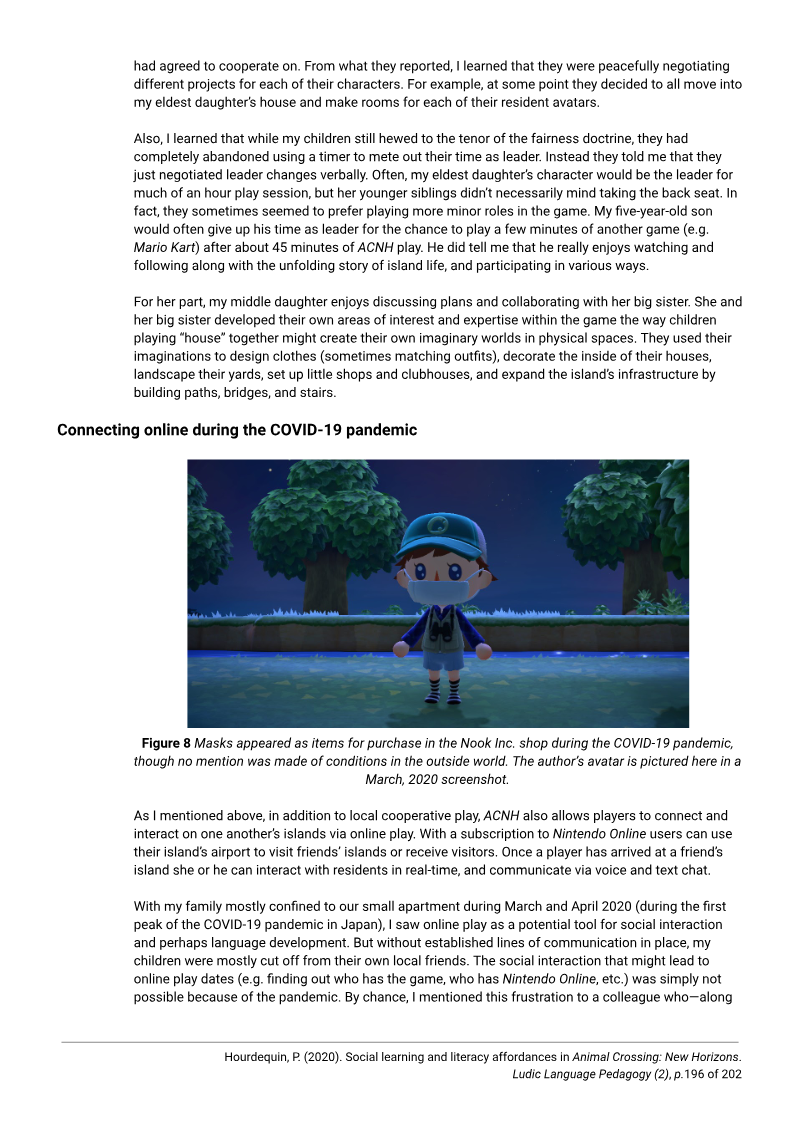
Peter Hourdequin, a university English instructor in Shizuoka, Japan, reflects on how his family used Animal Crossing: New Horizons (ACNH) on the Nintendo Switch as a tool for bilingual literacy, social learning and discussion with his three children, aged 5, 9 and 11 at the time.
- The family drafted a constitution for their virtual island after a conflict over a shared ladder, listing five principles that the children and father agreed upon.
- Children playing in couch co-op mode shared leadership by taking turns, and later negotiated leader changes verbally rather than by timer.
- During the first online visit, the children asked many questions as they explored a more developed island, and the author described the visit as non-stop learning.
Portraying Mental Illness in Video Games: Exploratory Case Studies for Improving Interactive Depictions
This exploratory study examines how three video games portray mental illness through interactive, game-centric techniques: What Remains of Edith Finch, Hellblade: Senua's Sacrifice, and Doki Doki Literature Club.
- The author argues that Edith Finch's split control system, with one hand controlling Lewis' reality and the other his fantasy, invites physical empathy with the character's bifurcation.
- Hellblade presents Senua's psychosis as both a gift and a struggle, with its puzzles using her perception of patterns to advance gameplay.
- Hellblade's designers consulted people with psychosis and professionals in psychiatry, and the game includes a thirty-minute documentary built on interviews with people who experience psychosis.
Writers
Games and companies
Games