Canadian Game Studies Association
63 reports, presentations and talks by Canadian Game Studies Association in the Game Industry Library, the newest “Apophatic Gaming: The Perpetual Journey to ‘Catch ’em All’” (2018).
Documents
Apophatic Gaming: The Perpetual Journey to ‘Catch ’em All’
Apophatic gaming defines a specific design philosophy where the primary player experience is rooted in a perpetual, unbridgeable distance between the user and a final state of completion.
- Apophatic gaming is a design philosophy that maintains long-term player engagement by ensuring a game can never be fully completed or mastered.
- Developers utilize vast, procedural, or mathematically exhaustive environments to create an unbridgeable distance between the player and a final state of completion.
- By intentionally limiting player agency and withholding total mastery, games foster a state of constant longing that transforms traversal into the primary objective.
Touring the Animus: Assassin's Creed and Ludotopical Movement
The Assassin’s Creed series functions as a complex simulation of historical space, utilizing the concept of the ludotope to bridge the gap between virtual playgrounds and the staged nature of modern mass tourism.
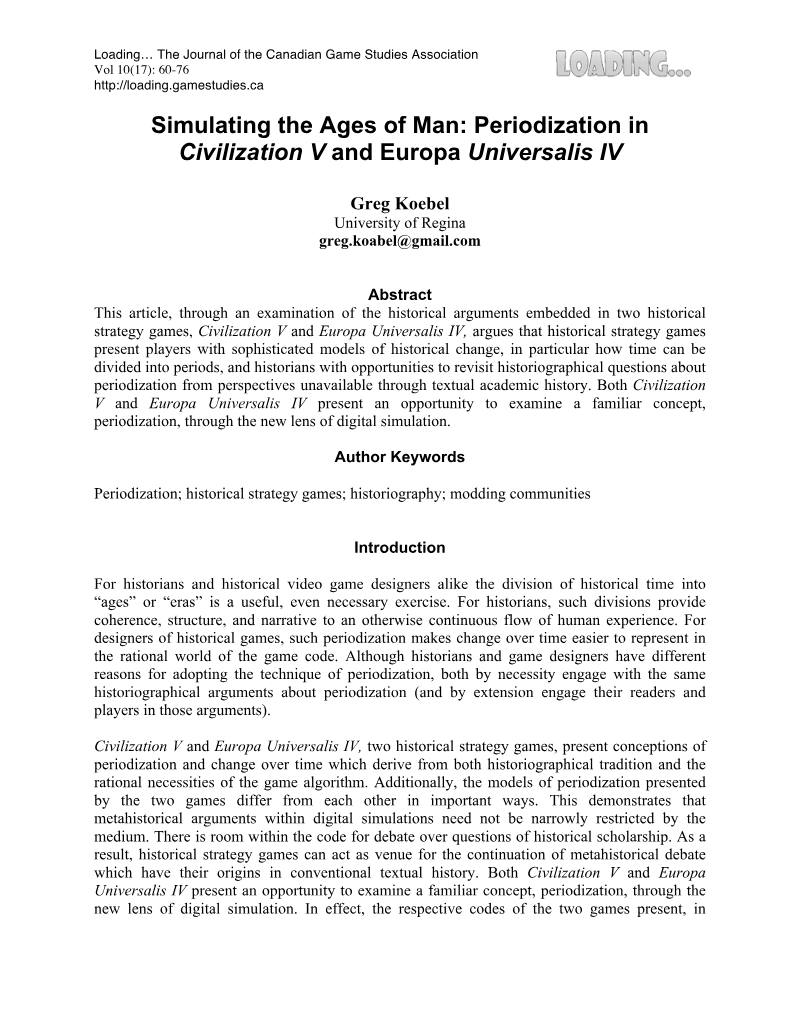
Simulating the Ages of Man: Periodization in Civilization V and Europa Universalis IV
Historical strategy games serve as sophisticated digital historiographical tools that utilize procedural rhetoric to model complex theories of human development.
- Civilization V and Europa Universalis IV function as digital historiographical tools that use procedural rhetoric and game mechanics to model competing theories of human development.
- Civilization V utilizes a positivist, teleological framework that depicts history as a continuous, universal progression driven by environmental exploitation and measurable growth.
- Europa Universalis IV rejects universalism in favor of an epochal model, using era-specific coding to represent history as a series of distinct, systemic shifts rather than a singular trajectory.
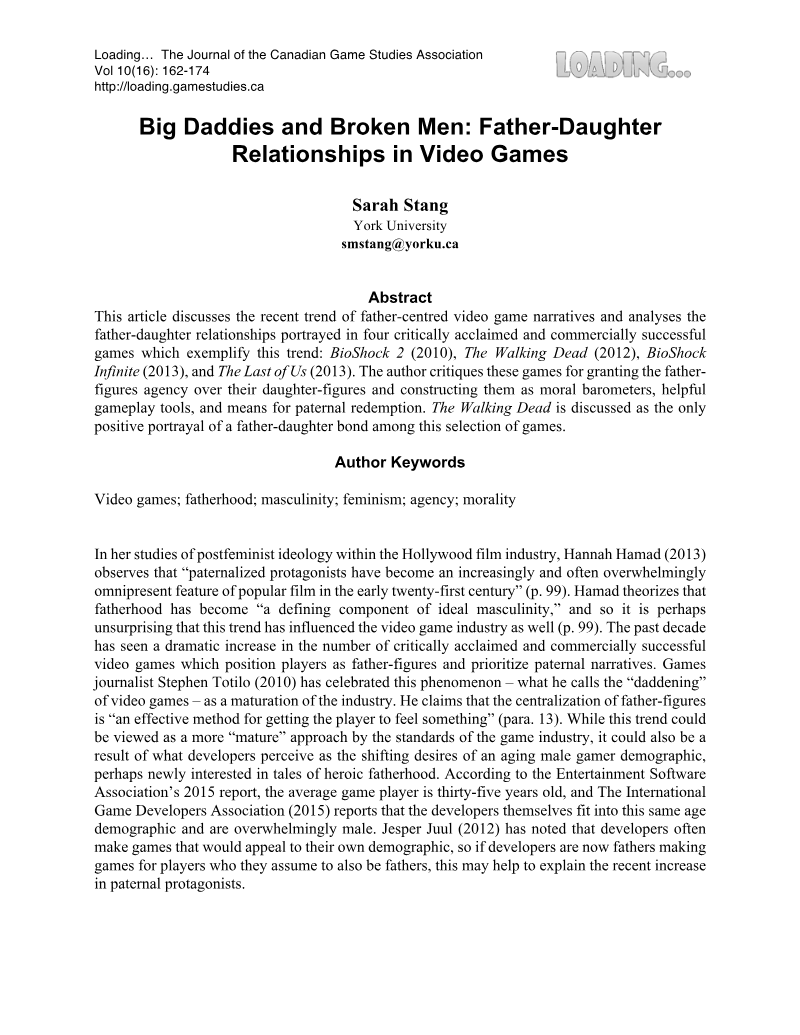
Big Daddies and Broken Men: Father-Daughter Relationships in Video Games
The contemporary gaming landscape is increasingly defined by the "dadification" of narrative, a trend where critically acclaimed titles center on the relationship between a protective father figure and a vulnerable daughter.
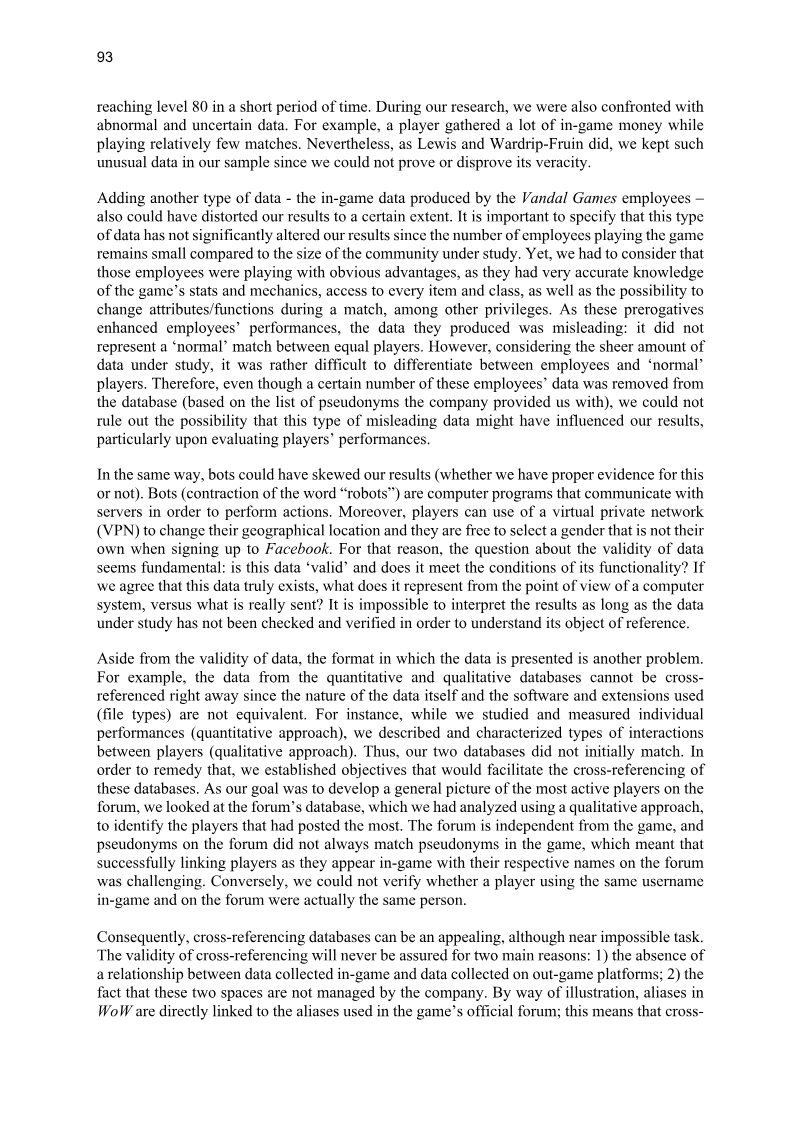
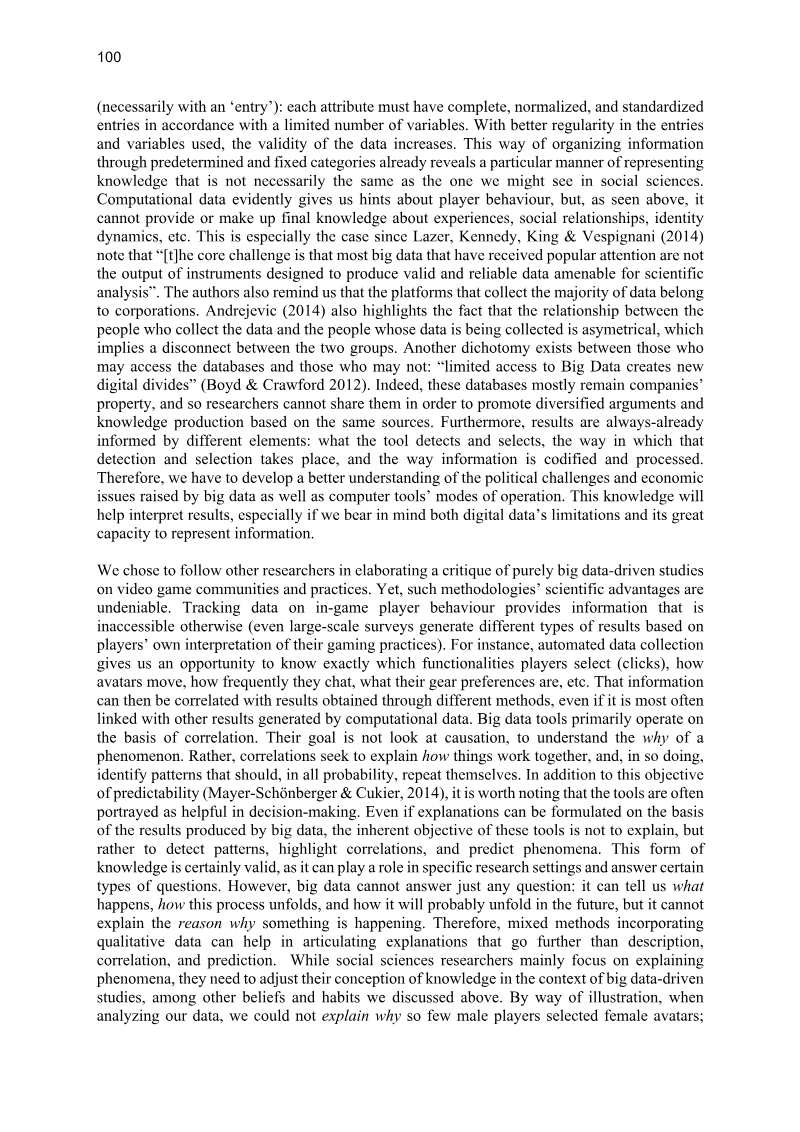
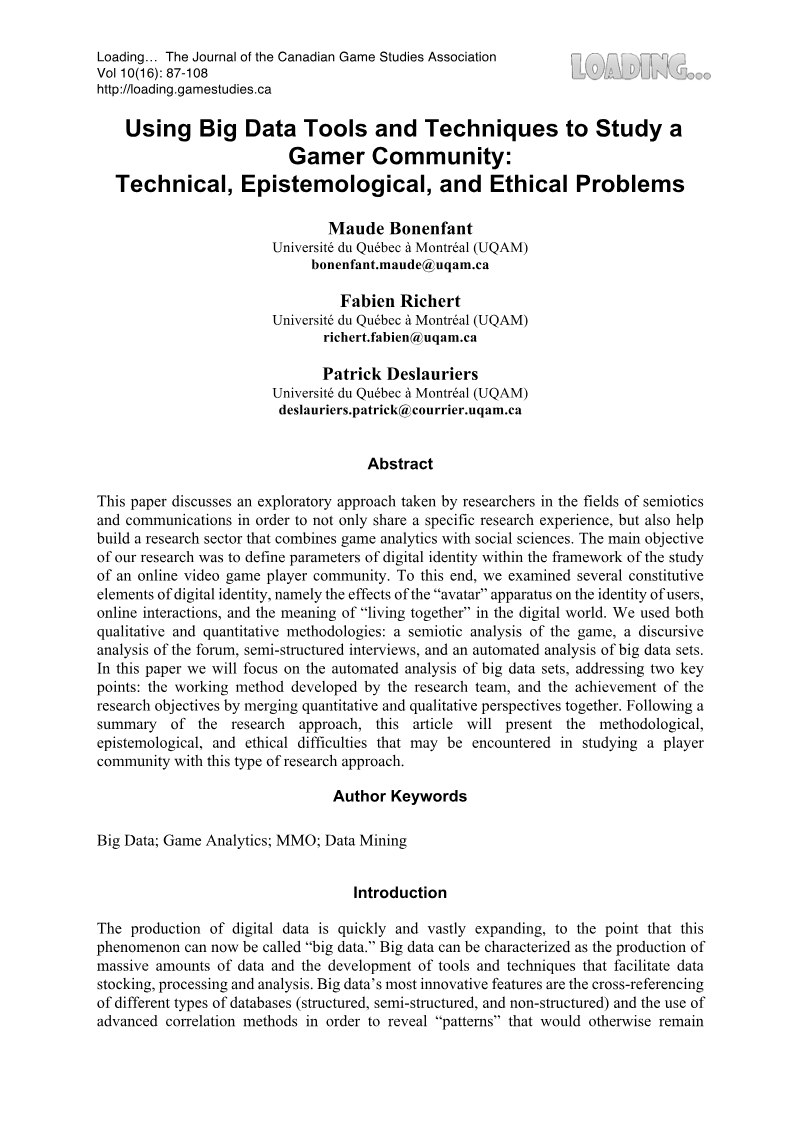
Using Big Data Tools and Techniques to Study a Gamer Community: Technical, Epistemological, and Ethical Problems
The integration of big data analytics with traditional social science methodologies offers a powerful, albeit complex, framework for examining digital identity and player behavior within online gaming communities.
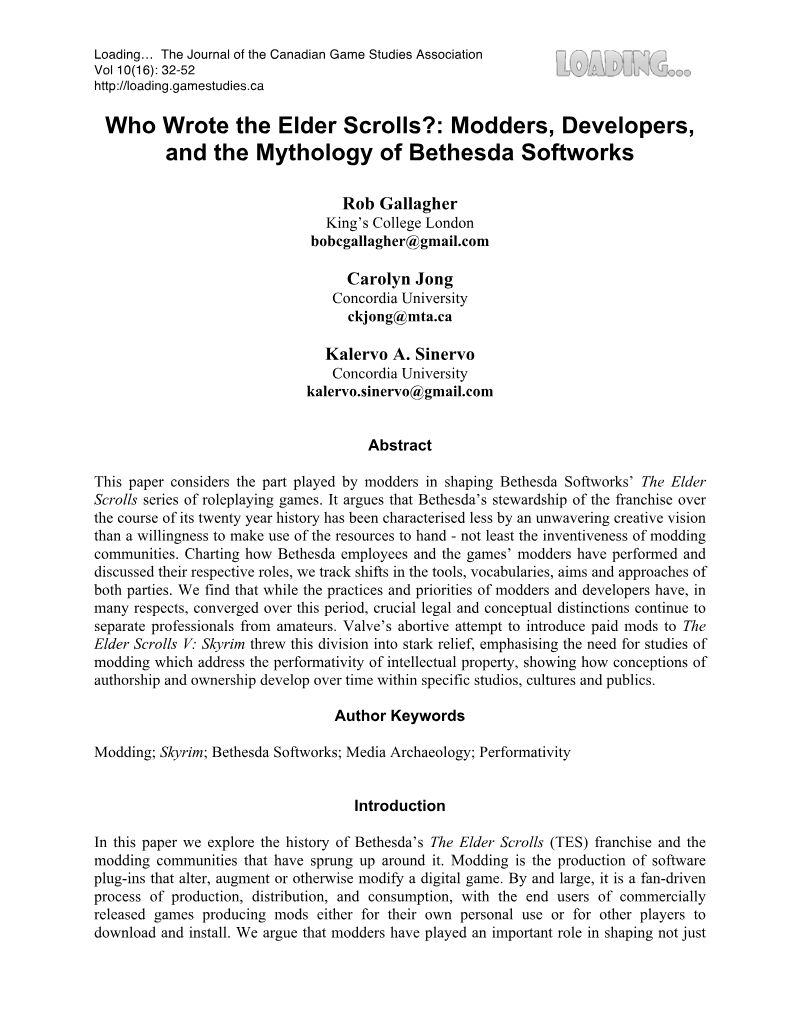
Who Wrote the Elder Scrolls?: Modders, Developers, and the Mythology of Bethesda Softworks
The Elder Scrolls franchise serves as a primary case study for the evolving, symbiotic relationship between major game developers and amateur modding communities.
- Bethesda Softworks has intentionally blurred the lines between professional development and amateur modding by providing accessible tools like the Construction Set to extend the commercial lifespan of The Elder Scrolls franchise.
- The studio leverages unpaid fan labor to maintain long-term player engagement and franchise relevance, effectively treating the modding community as a resource for industrial gain.
- Bethesda utilizes a 'fan-turned-developer' narrative, exemplified by figures like Todd Howard, to foster consumer goodwill while maintaining absolute control over intellectual property.
Universe of Teleological Illth: A Critique of StarCraft 2
StarCraft 2 serves as a primary case study for the concept of teleological illth, a framework rooted in the theories of John Ruskin and Lewis Mumford.
- StarCraft 2 functions as a closed system where all mechanical processes, including resource extraction and technological advancement, are exclusively directed toward the industrialization of destruction.
- The game’s architecture prioritizes total war as the sole objective, rendering societal flourishing impossible and framing the production of misery as the only viable horizon of existence.
- Real-time strategy mechanics are not neutral, as they normalize the commodification of life and validate destructive socio-economic and military processes found in contemporary global society.
Cyborg Games: Videogame Blasphemy and Disorientation
Cyborg games represent a transformative movement within independent game development, utilizing intentional disorientation to challenge the white, heteronormative, and masculine status quo of the medium.
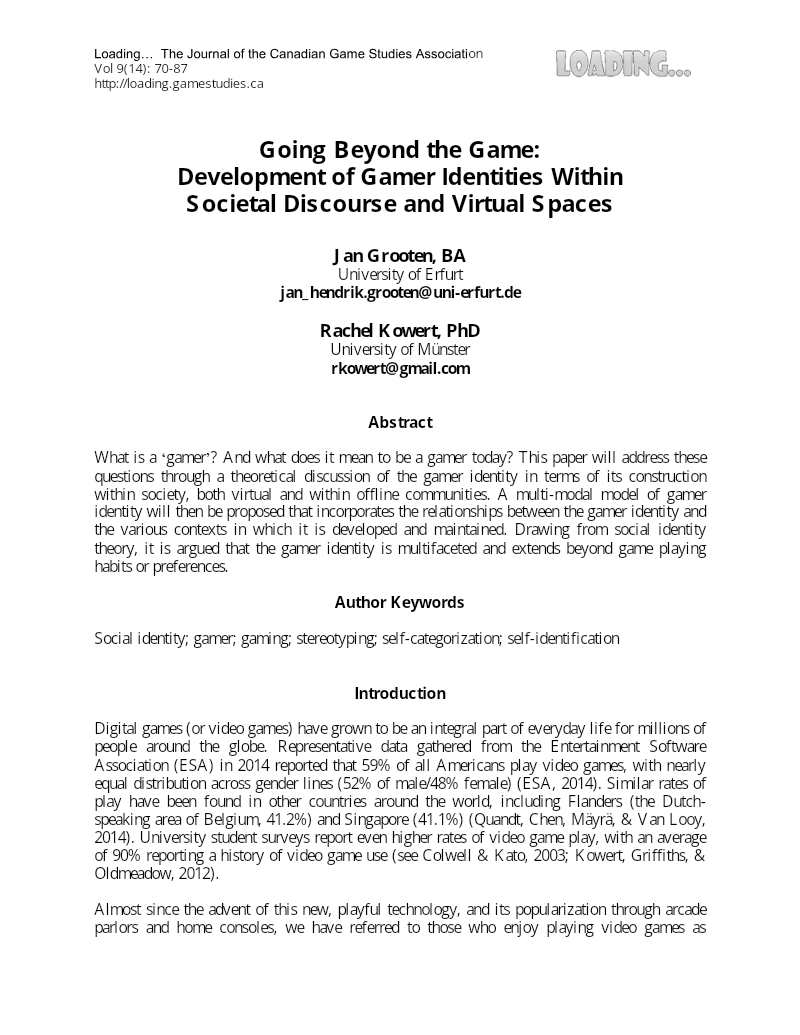
Going Beyond the Game: Development of Gamer Identities Within Societal Discourse and Virtual Spaces
The gamer identity has evolved from a functional descriptor of play into a multifaceted social and personal construct that defies traditional, narrow categorization.
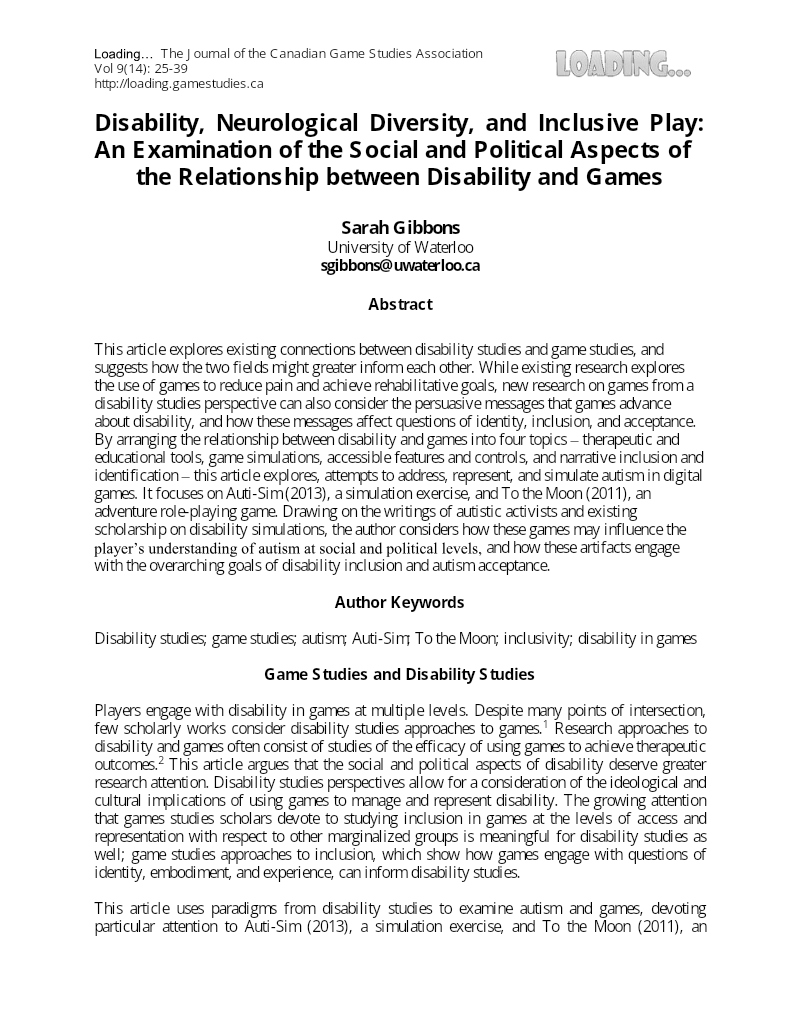
Disability, Neurological Diversity, and Inclusive Play
Game studies must pivot away from clinical, rehabilitative, and deficit-based frameworks to address the social and political dimensions of disability within digital media.
- Game design must shift from clinical, deficit-based frameworks that treat disability as a condition to be cured toward models that address the social and political dimensions of neurodiversity.
- Industry practices that rely on disability simulations often reinforce negative tropes and pity, whereas autobiographical games like 'To the Moon' successfully foster genuine empathy by centering lived experiences.
- Current 'hardcore' gaming culture frequently prioritizes mechanical mastery, which creates exclusionary standards that pressure disabled players to conform to neurotypical norms.
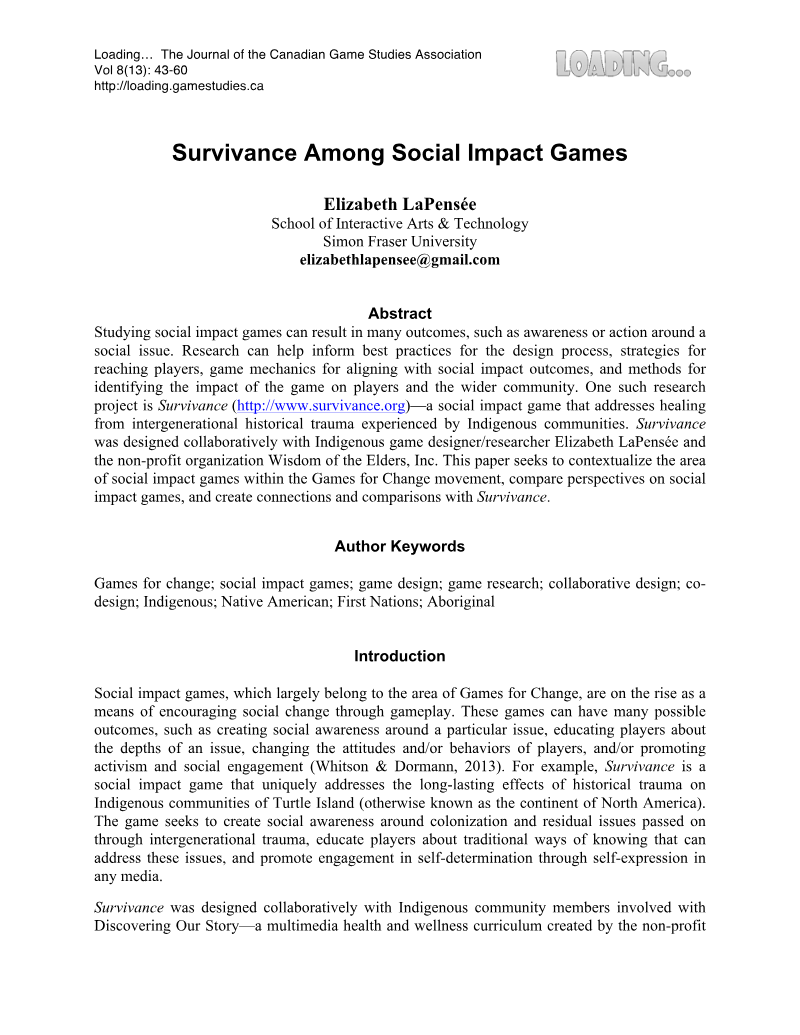
Survivance Among Social Impact Games
Social impact games serve as a critical mechanism for fostering education, social awareness, and real-world activism within the broader Games for Change movement.
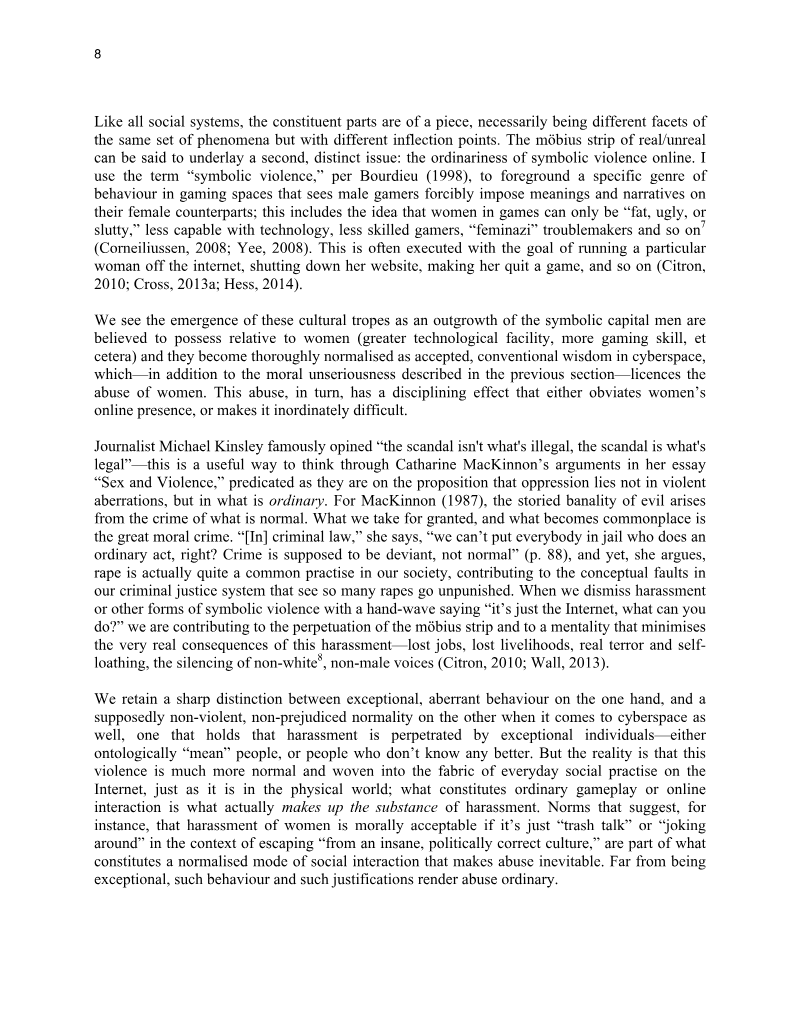
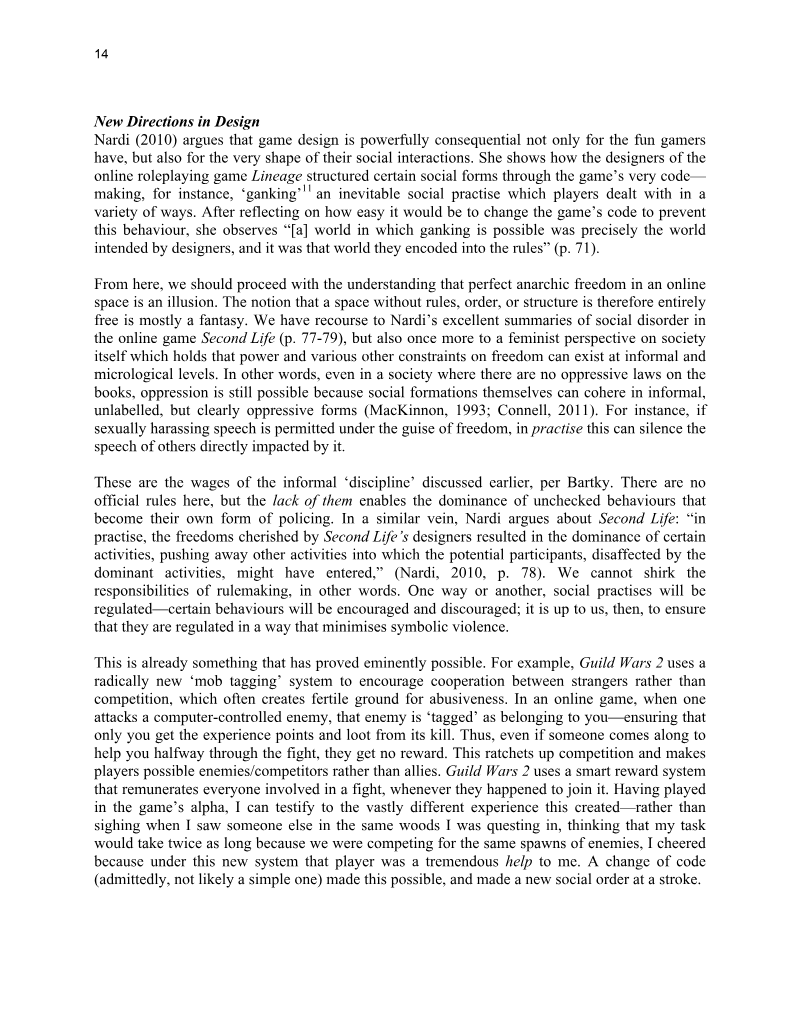
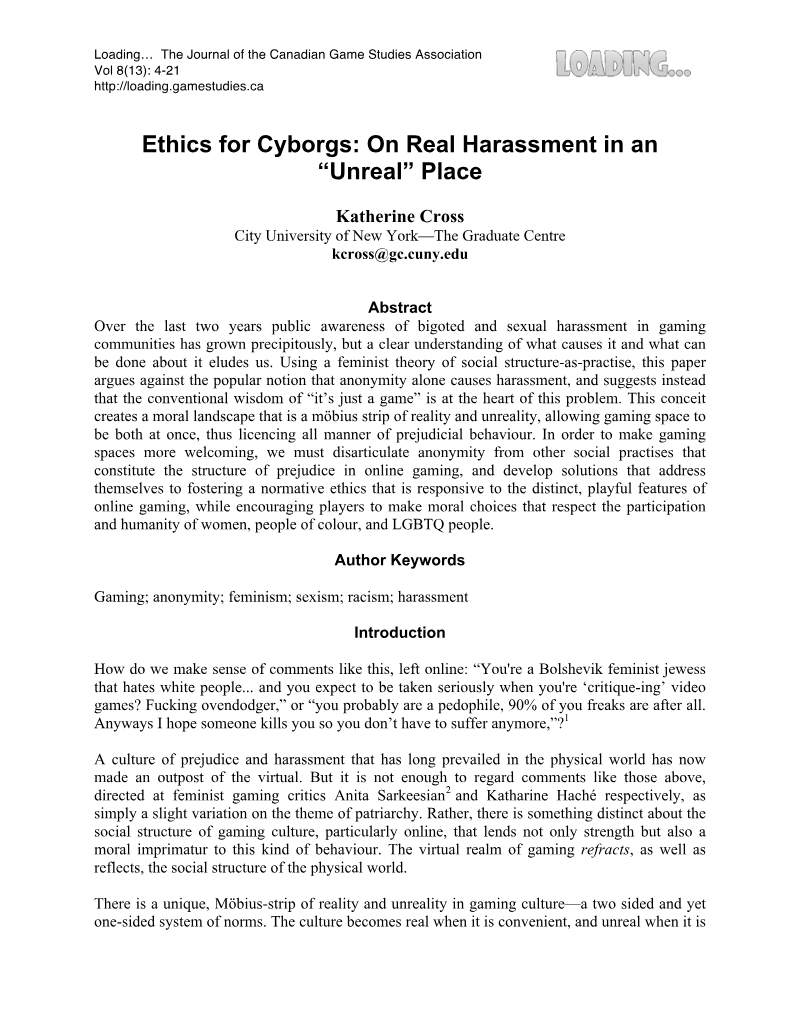
Ethics for Cyborgs: On Real Harassment in an Unreal Place
Online harassment within gaming environments is a systemic issue rooted in patriarchal social structures rather than a mere byproduct of digital anonymity.