1 free read left. Create a free account for unlimited reading + AI research.
Create free accountWhitepaper Ludic Language Pedagogy
1 free read left. Create a free account for unlimited reading + AI research.
Create free accountWhitepaperLudic Language Pedagogy
The game integrates authentic netspeak and global gaming culture. This allows students to practice language in a contemporary and relevant context.
Bridging Gap. Among Us helps bridge informal digital interaction with formal academic language objectives.
The social deduction game Among Us serves as a potent pedagogical tool for language acquisition by leveraging the inherent engagement of digital gaming culture. By utilizing the game’s mechanics—specifically its reliance on information gaps, collaborative goal-setting, and persuasive communication—educators can create a low-stakes environment that encourages students to practice complex linguistic structures such as tense usage, interrogation techniques, and argumentative discourse. This approach effectively taps into the existing gaming capital of students, transforming recreational play into a structured learning experience that bridges the gap between informal digital interaction and formal academic objectives.
To maximize these benefits, a cyclical pedagogical framework consisting of pre-task preparation, active gameplay, and structured reflection is essential. This methodology ensures that the linguistic skills developed within the game’s immersive magic circle are reinforced and transferred to real-world contexts. Furthermore, the integration of authentic netspeak and global gaming culture allows students to engage with language in a contemporary, relevant manner. Educators must cultivate a high degree of game literacy to align specific mechanics with curricular goals, ensuring that the play sessions remain focused on target language development rather than mere entertainment.
The choice of communication medium significantly influences the learning experience, with synchronous voice platforms like Discord or Zoom fostering active, real-time engagement. However, text-based chat remains a critical component for inclusive instruction, as it provides a layer of anonymity that reduces anxiety for non-native speakers and marginalized students. By balancing these communication modes within a well-facilitated debriefing process, teachers can create a supportive, interactive environment that promotes both linguistic proficiency and sociocultural competence across diverse student populations.
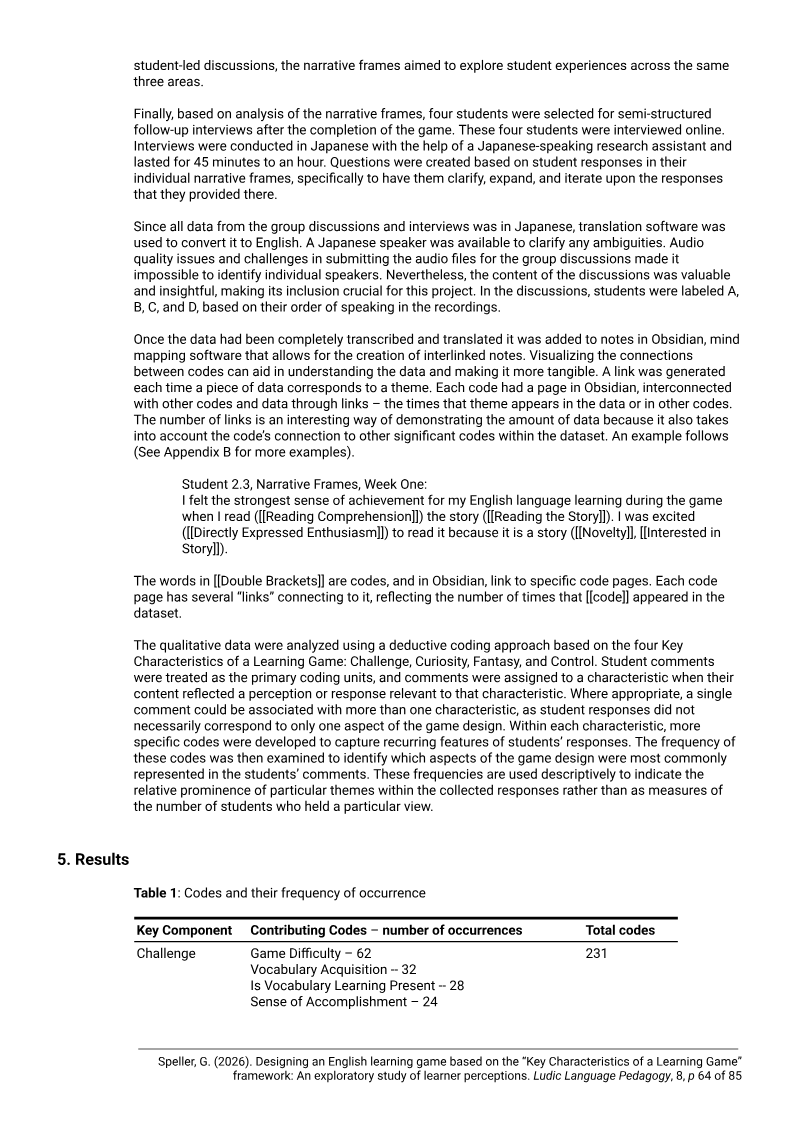
Each row is a game or company this document names, each column a document, oldest first. A mark means that document names it. Select a row to see those documents.
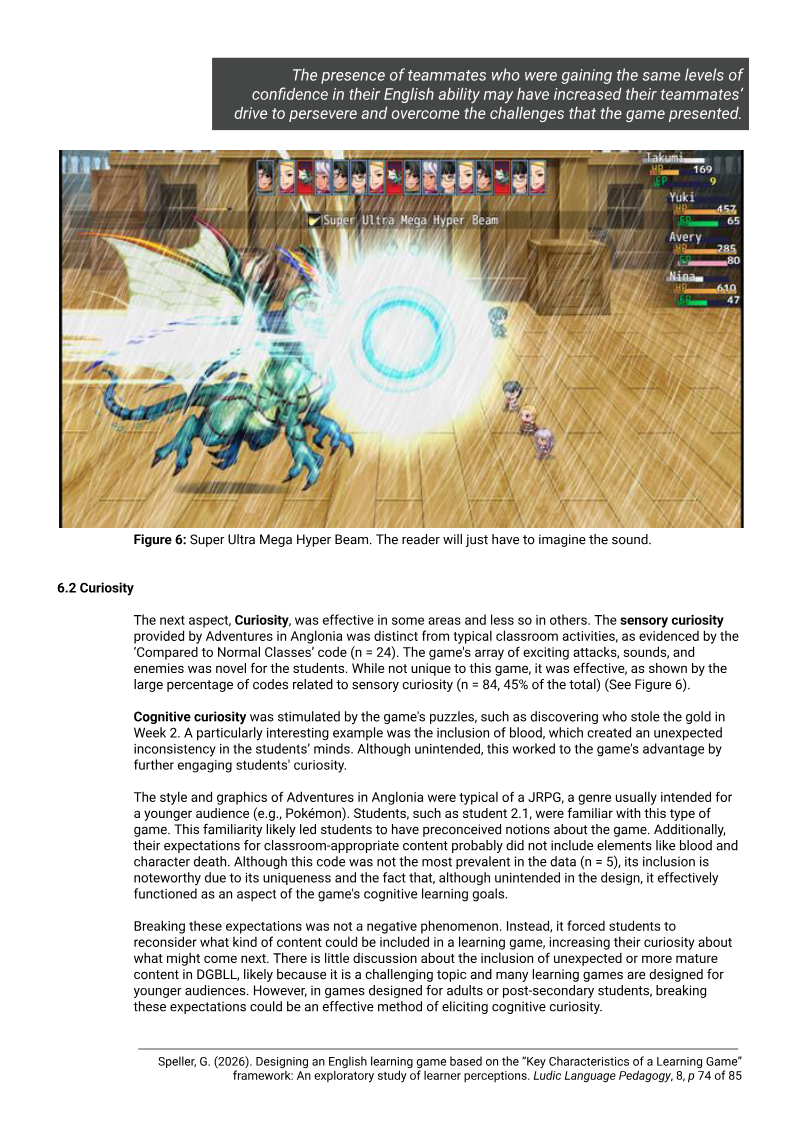
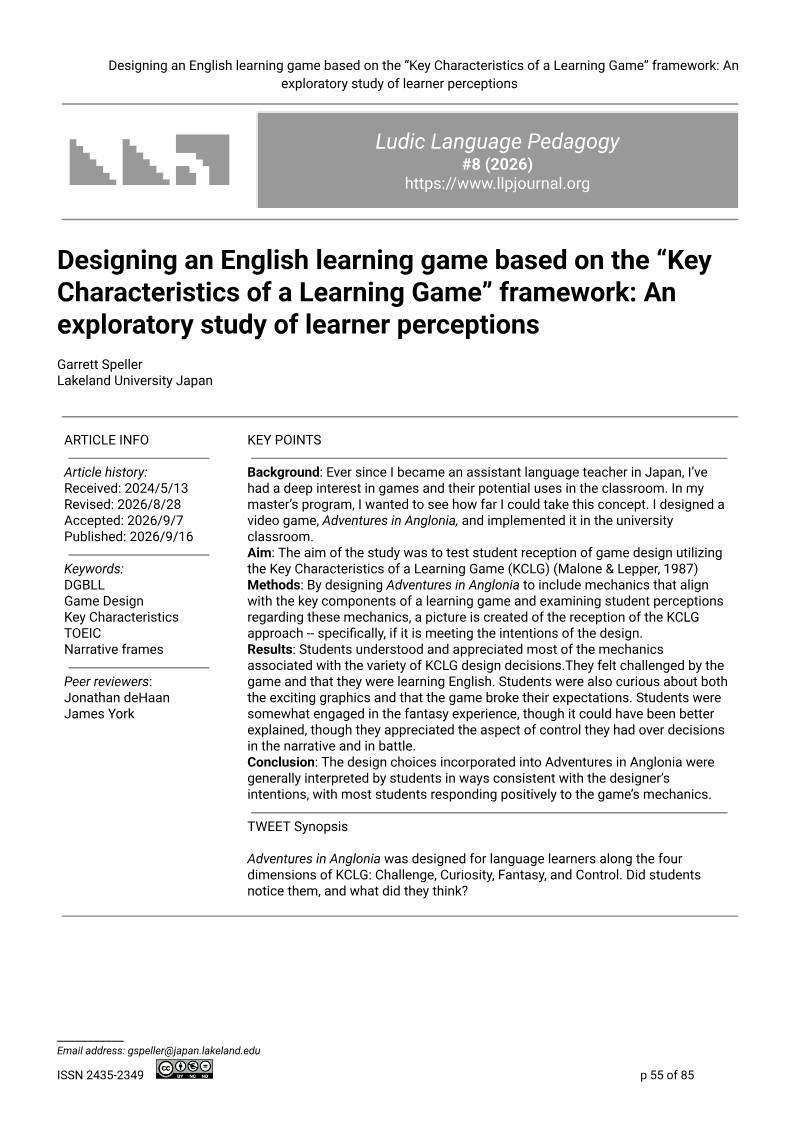
Ludic Language Pedagogy · 2026
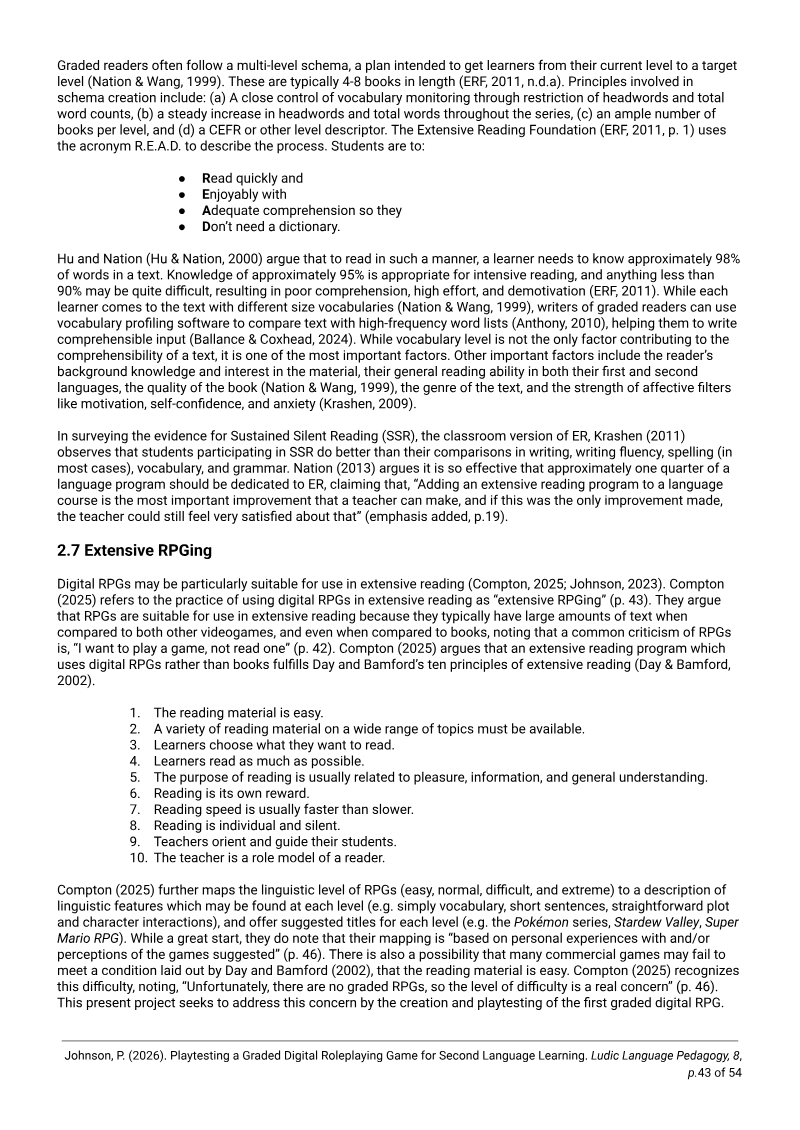
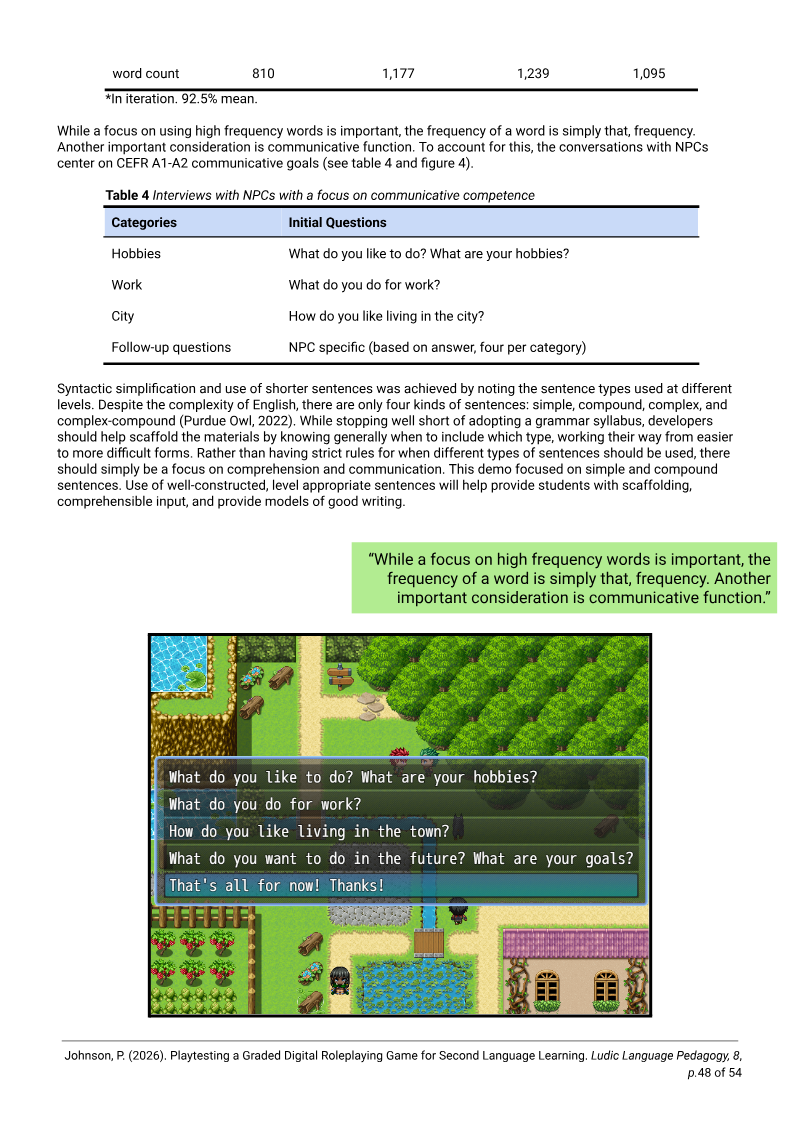
Ludic Language Pedagogy · 2026
Ludic Language Pedagogy · 2026
Ludic Language Pedagogy · 2026
Ludic Language Pedagogy · 2026
Ludic Language Pedagogy · 2026
Ludic Language Pedagogy · 2026
Ludic Language Pedagogy · 2026
Ludic Language Pedagogy · 2026
Ludic Language Pedagogy · 2026
Ludic Language Pedagogy · 2026
Ludic Language Pedagogy · 2026
DiGRA · 2026