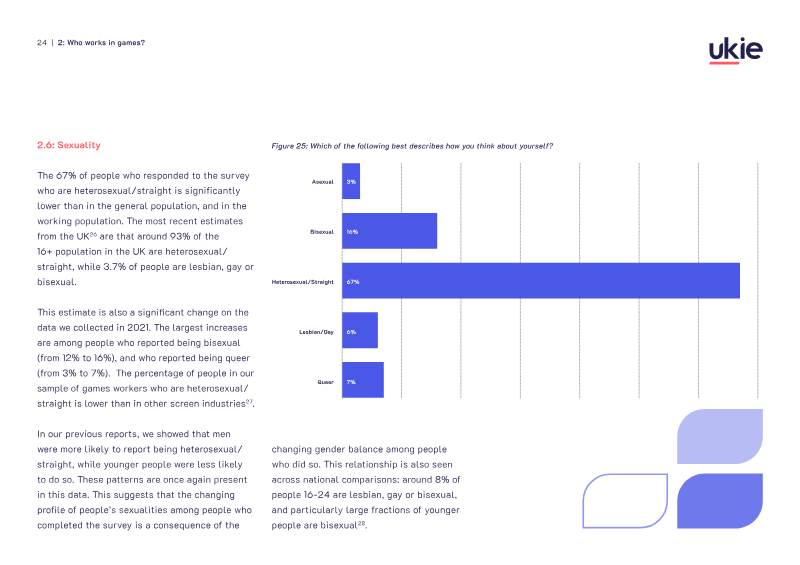
North America 62%
Source: State of the Game Industry 2023Media platforms (Netflix, TikTok, etc.) $2 %$
Source: State of the Game Industry 2023AR Hardware 4%
Source: State of the Game Industry 2023Nintendo Switch $18 %$
Source: State of the Game Industry 2023Paid in-game currency 19%
Source: State of the Game Industry 2023Premium tier subscriptions (e.g. Fallout 76) 4%
Source: State of the Game Industry 2023Playdate <1%
Source: State of the Game Industry 2023South America 3%
Source: State of the Game Industry 2023
2024

REVENUE

Share price development 2024, indexed

This image displays a grid-based collage of various mobile game icons, developer logos, and branding elements, likely representing the portfolio or partner network of a gaming company featured in their 2024 annual and sustainability report. The layout serves as a visual showcase of the diverse titles and studios associated with the organization.

This image serves as a conceptual illustration for a report on entrepreneurship, using an isometric building labeled "MTG" to represent a hub for international talent and collaboration. The flags of Sweden and Germany, combined with the surrounding environment, suggest a focus on cross-border business, diverse skill sets, and the cultivation of new ideas within the gaming industry.

This illustration serves as a visual map of a gaming company's corporate ecosystem, representing various subsidiaries or studios as distinct buildings within a unified city. It highlights the company's global reach and organizational structure by associating specific brands—such as InnoGames, Hutch, Snowprint, and PlaySimple—with their respective geographic origins and operational roles within the broader corporate network.
The statement establishes MTG’s commitment to a comprehensive sustainability agenda for 2025, integrating environmental stewardship, social responsibility and robust governance across its entire value chain. The company’s board maintains a 29 % female composition, and ESG oversight is embedded in the audit/ESG committee with executive pay linked to performance. Science‑Based Targets drive a 46.2 % reduction in Scope 1–2 GHG emissions by 2031 and a 20‑point rise in the S&P Global CSA score by 2027, while a 5 % executive pay linkage to ESG outcomes reinforces accountability. Operationally, MTG targets Scope 1–3 emissions through energy‑efficiency upgrades, renewable procurement and low‑carbon digital services. Climate risks are quantified via IEA/IPCC scenarios, revealing significant temperature rises in India, Israel and Spain but no severe droughts or flooding; indirect Scope 3 emissions dominate the materiality assessment. The company’s 2031 decarbonisation roadmap aligns with EU Fit for 55, and a 40 % GHG cut in scopes 1–2 and 25 % in scope 3 by 2030 is monitored annually against a 2024 baseline. Human‑capital strategies emphasize flexible work, DE&I, health and safety, and AI‑driven productivity. Annual engagement surveys, performance reviews (93 % participation) and a 22.7 % gender‑pay gap are tracked, with no discrimination incidents reported. Governance frameworks address anti‑corruption, whistleblowing and cyber‑security, while data privacy is upheld through GDPR‑compliant DPIAs, “privacy by design” and age‑gating mechanisms for digital titles. Geographically, the focus spans Poland with operations in India, Israel and Spain; temporally, the scope covers 2025 with forward‑looking targets to 2031. The statement aligns with CSRD/ESRS requirements, mapping disclosures and ensuring compliance across environmental, social and governance dimensions.
Modern Times Group (MTG) maintains a comprehensive corporate responsibility strategy centered on media integrity, employee welfare, environmental stewardship, and ethical business governance. During the 2013 fiscal year, the organization prioritized digital development and the protection of young audiences, achieving recognition in the Dow Jones Sustainability Europe Index. With a workforce of 3,361 employees and net sales reaching 14,129 MSEK, the company leveraged its extensive media reach to contribute over 42 million TSEK in combined financial and media-time donations to charitable causes, most notably through the Reach for Change social entrepreneurship foundation. Operational performance in 2013 reflected a mix of progress and systemic challenges. Environmental efforts yielded a strong score of 88 out of 100 in the CDP report, supported by energy-efficient infrastructure and carbon disclosure initiatives, despite a 7% rise in total carbon emissions linked to corporate expansion. Internally, the company implemented rigorous anti-bribery policies and updated editorial standards. However, workforce metrics revealed persistent disparities, including a gender pay gap where female remuneration averaged 70% of male earnings, alongside a decline in return-to-work rates following parental leave. The reporting process, conducted in accordance with GRI G4 Core standards and independently assured by Ethos International, identified customer data integrity and child protection as the most material issues for the business. While the company successfully established a new Corporate Responsibility Advisory Group to oversee governance, auditors noted significant limitations in existing data collection systems. Future strategic objectives focus on harmonizing human resources data, improving supply chain management, and refining internal reporting mechanisms to better track labor and training metrics across the company’s global operations.
The Modern Times Group (MTG) 2008 Modern Responsibility Report outlines the company’s strategic commitment to integrating social, environmental, and ethical considerations into its international broadcasting and entertainment operations. The primary thesis posits that sustainable and responsible business practices are essential for long-term commercial success and community development. By formalizing its corporate responsibility program, which was originally introduced in 2004, the company seeks to maximize the positive influence of its media platforms while minimizing potential negative societal impacts. The report covers MTG’s diverse operations across 30 countries, including Scandinavia, the Baltics, Central and Eastern Europe, Africa, and North America. The company’s business segments—Viasat Broadcasting, MTG Radio, Online, and Modern Studios—reach an audience of 125 million viewers and over three million daily radio listeners. Key performance data for 2008 highlights significant charitable engagement, with the company donating 78 million Swedish krona in airtime and helping to raise 56 million Swedish krona for various social causes. Environmental initiatives included the implementation of a strict travel policy, the adoption of energy-efficient office practices, and the calculation of carbon emissions for operations in Scandinavia and the UK, which totaled 4,223 tonnes of CO2. Methodologically, the report relies on internal data collection, including employee training metrics, carbon footprint calculations based on the Greenhouse Gas Protocol, and stakeholder engagement feedback. The company maintains a workforce of 2,810 employees, with 46% of staff receiving formal training through the internal MTG Academy in 2008. Governance is managed by senior leadership, supported by a central coordinator and local ambassadors, with a newly established committee tasked with overseeing future objectives. The report serves as a foundational disclosure of the company’s commitment to transparency, with plans to expand reporting scope and data collection systems in subsequent years.
MTG’s 2011 corporate responsibility strategy centers on integrating ethical business practices, environmental stewardship, and social engagement across its operations in 39 countries. By aligning its governance with the Global Reporting Initiative framework and securing a position in the FTSE4Good Index, the company demonstrates a commitment to transparency and high-level sustainability standards. The primary objective is to balance commercial success with a robust social mandate, ensuring that broadcasting and production activities contribute positively to the diverse markets in which the company operates. Operational performance in 2011 was marked by the successful achievement of 14 out of 15 short-term sustainability goals. Environmental efforts proved particularly effective, as the company exceeded its carbon reduction target by achieving a 6% decrease in emissions per employee through enhanced energy efficiency and facility management. Simultaneously, the company prioritized internal governance by updating anti-bribery and corruption policies and ensuring 100% employee participation in regulatory training. Workforce development was further bolstered by the launch of the Modern People career platform and expanded training through the MTG Academy, which aims to address gender representation in management and foster professional growth. Social impact remains a core pillar of the company’s mission, evidenced by significant charitable contributions and community-focused programming. In 2011, the company donated 146 million SEK in airtime and raised 37 million SEK for health and welfare initiatives. Beyond financial support, the company utilized its media reach to promote social cohesion through projects like the United for Peace football tournament. Furthermore, the organization maintained a strong focus on consumer protection, particularly regarding child safety in digital and traditional media, while increasing accessibility through expanded subtitling services. These combined efforts reflect a comprehensive approach to corporate citizenship that emphasizes both internal compliance and external community development.
MTG’s 2010 Modern Responsibility initiative establishes a comprehensive framework for integrating economic, environmental, and social accountability across its global media operations. Spanning 33 countries, the company’s strategy centers on four pillars: responsible business conduct, broadcasting integrity, employee relations, and community engagement. By adopting the Global Reporting Initiative framework and conducting a formal materiality analysis, the organization has aligned its internal governance with stakeholder priorities, specifically emphasizing anti-corruption, regulatory compliance, and fair employment practices. Operational performance in 2010 reflects a dual focus on professional development and social impact. The company invested heavily in human capital through the MTG Academy, which emphasizes leadership and sales training, while simultaneously promoting diversity and female representation in management. Beyond internal operations, the company leveraged its media influence to drive social change, donating 111 million SEK in airtime to charitable causes and launching foundations such as MTG United for Peace and Playing for Change. These efforts underscore a commitment to using broadcasting platforms to support disaster relief, cancer research, and youth development. Environmental stewardship remains a critical, albeit challenging, area of focus. Total climate impact reached approximately 15,000 tons of CO2e in 2010, driven largely by business travel and facility energy consumption. Despite a 36 percent increase in travel-related emissions, the company has implemented rigorous mitigation strategies, including the adoption of ISO 14001 standards and a mandate to reduce CO2 emissions per employee by 5 percent by early 2012. Through the integration of green training for 59 percent of its staff and the expansion of video conferencing, the organization seeks to balance its international growth with a measurable reduction in its corporate carbon footprint.
Modern Times Group (MTG) integrates sustainability and ethical governance into its core business strategy to drive long-term growth across its global entertainment operations. During the 2012 fiscal year, the company maintained a workforce of 3,012 employees and generated net sales of 13,336 MSEK. Operating across more than 30 broadcast markets, the organization utilizes a four-pillar framework—business, colleague, broadcast/marketing, and community responsibility—to ensure regulatory compliance, promote diversity, and uphold editorial integrity. The company’s commitment to corporate responsibility is evidenced by measurable progress in environmental and social performance. In 2012, MTG achieved a 6% reduction in CO2 emissions per employee and secured a "B" rating from the Carbon Disclosure Project. Social impact initiatives were equally prominent, with the company raising 49 million SEK for charitable causes and supporting programs such as "Reach for Change" and the "School of Tolerance." Furthermore, the organization prioritized consumer safety through enhanced parental controls and expanded accessibility services, including subtitling and audio descriptions, to better serve its diverse audience. Adhering to the Global Reporting Initiative (GRI) G3.1 guidelines at a C+ application level, the company maintains a transparent approach to its operations, supported by independent assurance from Ethos International. While the 2012 performance reflects significant advancements in anti-corruption training, internal communication, and community engagement, the organization acknowledges the necessity for future improvements in supply chain management and human resources data collection systems. By aligning its broadcasting reach with strategic sustainability goals, MTG continues to leverage its media platforms to promote social awareness and mitigate climate-related business risks.
MTG’s 2014 operational strategy centered on the integration of corporate responsibility into its core business model, prioritizing digital data protection, the rights of minors, and the preservation of freedom of expression. By aligning operations with UN Global Compact and OECD guidelines, the company achieved net sales of 16,746 MSEK while maintaining a rigorous ethical framework. This governance structure included the implementation of a new supplier code of conduct, mandatory anti-bribery training, and the introduction of an external whistleblower system, resulting in zero confirmed cases of corruption during the fiscal year. The company’s commitment to social and environmental stewardship was evidenced by a 33% reduction in energy consumption per employee since 2010 and an improved CDP score of 90B. Beyond internal efficiency, MTG leveraged its media platforms to double donated airtime for social and environmental causes. HR initiatives focused on decentralizing operations to empower local markets, fostering a diverse workforce of 4,111 employees representing 44 nationalities. While the company successfully promoted initiatives like Women in Tech, it acknowledged ongoing challenges regarding gender pay parity and high turnover rates in sales-intensive roles, leading to the restructuring of certain internal development goals. Operating across diverse geographic regions, MTG maintained strict neutrality and regulatory adherence through robust content rating systems and parental controls. Independent assurance provided by Ethos International confirmed that the company’s performance indicators met the Core level of the Global Reporting Initiative G4 guidelines. While the organization successfully met most targets regarding data protection and environmental impact, auditors recommended the adoption of advanced digital management systems to enhance the accuracy of future human resource data collection, ensuring continued transparency and operational efficiency in subsequent reporting periods.
MTG’s 2015 corporate responsibility strategy centers on navigating a strategic transition into a global digital entertainment powerhouse while upholding rigorous ethical standards and sustainability commitments. The company prioritizes transparency, governance, and social impact, aligning its reporting with GRI G4 standards to ensure accountability across its diverse operations. By integrating a zero-tolerance policy toward corruption and enforcing a mandatory supplier code of conduct, the organization seeks to mitigate risks associated with its evolving digital and live-event portfolio, including cyber-resilience and intellectual property protection. Environmental and social performance metrics reveal a complex landscape of progress and ongoing challenges. While total energy consumption and carbon emissions saw a slight uptick, the company successfully reduced emissions per employee by over 2% and improved long-term energy efficiency by 13% since 2010. Air travel remains the primary driver of the company’s carbon footprint, prompting a shift toward virtual collaboration and renewable energy reliance. Socially, the company leverages its media influence to support global causes, donating over €9 million in airtime and fostering social entrepreneurship through initiatives like Reach for Change. Workforce development remains a critical focus, characterized by a diverse staff of nearly 4,000 employees representing 38 nationalities. Despite a 24% turnover rate and a persistent gender gap in leadership, the company has formalized a commitment to achieve gender parity in management by 2020 through targeted mentorship and internal policy adjustments. As the company expands its digital footprint, it continues to refine its risk management and compliance frameworks, ensuring that its growth is balanced by a commitment to ethical content production, child protection, and robust data privacy standards across its European and global markets.
Modern Times Group (MTG) navigated a pivotal digital transformation in 2016 by embedding corporate responsibility into its core business strategy. The organization focused on four primary pillars: media responsibility, social impact, business ethics, and environmental stewardship. By aligning its operational evolution with these values, the company secured recognition in the Dow Jones Sustainability Indices and established a framework for long-term growth. This strategic shift prioritized the integration of ethical standards into digital entertainment services, ensuring that the company’s transition remained consistent with its commitment to regulatory compliance and stakeholder accountability. Operational performance throughout 2016 reflected a dual focus on internal culture and external resilience. The company successfully reduced its total carbon emissions by 7% and increased its reliance on renewable energy to 16.6%. Simultaneously, MTG bolstered its cybersecurity and anti-corruption frameworks, achieving an 81% completion rate for mandatory information security training and maintaining a record of zero confirmed corruption incidents. Governance was further strengthened through the Corporate Responsibility Advisory Group, which oversaw the implementation of rigorous data protection measures and preparations for upcoming regulatory shifts like GDPR. Human capital management and social engagement remained central to the company’s mission, despite a workforce reduction to 3,805 employees. MTG actively pursued gender parity in leadership through the "Women Up" initiative, aiming for a 50/50 management split by 2020. Furthermore, the company leveraged extensive consumer research and partnerships, such as "Reach for Change," to ensure content alignment with viewer preferences and broader social impact. While the company acknowledged limitations in HR data granularity, its disclosures adhered to the GRI G4 Core level guidelines, confirming a transparent and disciplined approach to corporate governance across its international operations.
Following its 2019 corporate spinoff, MTG established a comprehensive environmental, social, and governance framework to align its operations with the unique risks and opportunities inherent in the global gaming and esports sectors. The primary objective of this strategy is to foster long-term profitability and sustainable entertainment by prioritizing ethical conduct, the protection of minors, and the mitigation of industry-specific hazards. By implementing a revised Code of Conduct, which achieved a 94% adoption rate among employees and contractors, the company has successfully reinforced its commitment to anti-corruption, privacy compliance, and standardized governance across its international operations. Social responsibility efforts center on improving diversity and inclusion within a historically male-dominated industry, where women currently comprise 22% of the workforce. To address these disparities and combat toxicity, MTG utilizes targeted recruitment, mentorship programs, and strategic partnerships with organizations like AnyKey and UNICEF. Furthermore, the company maintains a rigorous focus on event safety, employing standardized security protocols and risk assessments at its global tournaments and festivals. These initiatives are complemented by community-focused programs, including support for computer science education and hospital-based gaming initiatives for children. Environmental stewardship remains a critical operational challenge, as 95% of the company’s 27,390-tonne carbon footprint is attributed to travel associated with global esports events. In response, MTG has established a new carbon emissions baseline and implemented digital tracking tools to monitor environmental impact more effectively. While the spinoff of the Nordic Entertainment Group complicates year-over-year comparisons, the company is actively transitioning toward sustainable event practices, including the use of eco-certified venues. Moving forward, MTG intends to refine its supply chain oversight and continue its commitment to transparent, GRI-compliant reporting to ensure the ongoing integrity of its corporate responsibility initiatives.
Modern Times Group (MTG) concluded the 2024 fiscal year as a focused European mobile gaming entity, reporting net sales of SEK 6,015 million, representing a 3% currency-adjusted growth. Despite achieving an adjusted EBITDA of SEK 1,666 million, the group recorded a net loss of SEK 210 million. The company maintains a strong liquidity position with SEK 3,543 million in cash and equivalents and no utilized external debt, supported by a disciplined capital allocation strategy that includes active share buybacks and a commitment to long-term, evergreen game franchises. The company’s strategic trajectory is defined by its "Gaming Village" model, which emphasizes organic growth and accretive M&A to bolster its portfolio of studios, including InnoGames, Hutch, and Ninja Kiwi. A transformative development in this period was the acquisition of Plarium Global Ltd, finalized in early 2025, which significantly scales the group’s mid-core gaming capabilities and adds the flagship title *RAID: Shadow Legends* to its offerings. This expansion is supported by the "Flow Platform," a centralized infrastructure designed to share business intelligence and user acquisition tools across the group’s subsidiaries. Sustainability and governance remain central to the company’s operational framework. In 2024, MTG transitioned its reporting to align with the Corporate Sustainability Reporting Directive (CSRD) and European Sustainability Reporting Standards (ESRS). While this methodological shift resulted in a reported 118.2% increase in location-based greenhouse gas emissions due to expanded accounting scopes, the company has committed to a 50% reduction in value chain emissions by 2032. Furthermore, the group maintains a robust governance structure, reporting no incidents of corruption or bribery, and continues to prioritize consumer safety through transparent odds disclosure and data protection measures. The board remains focused on long-term shareholder value, integrating ESG metrics into executive incentive schemes while maintaining a stable, low-leverage financial foundation.
Atec 2024 Corporate Responsibility Report 2024 Corporate Responsibility Report Sustainable progress for an enduring enterprise Sustain s for an enduring enterprise 2024 Corporate Responsibility Report Message from leadership 4 Social 39 Governance 69 Our company 5 Empowered employees 40 Governance framework 70 Building and sustaining Safety and health 46 Cybersecurit...