Employment reports and market data
Documents

No Country for Old Devs with Des Gayle | GduX.me
The gaming industry is characterized by inherent instability, where mid-tier studios frequently face closure due to publisher consolidation and shifting corporate strategies.
- Long-term career viability in the gaming industry requires acknowledging that professional loyalty is rarely reciprocated, necessitating a focus on adaptability and an understanding of cyclical industry economics.
- Reaching an 8-to-10-year experience threshold provides the professional authority required to navigate industry volatility, provided developers continuously evolve their skill sets alongside technological shifts.
- A tenure of approximately five years at a single organization is the ideal benchmark for mastering full console cycles and platform transitions before moving to freelance or independent work.

How to Make Games Until We're 80 with Joel Hakalax | GduX.me
Sustaining a career in game development requires a fundamental shift in how professionals approach project lifecycles and workplace culture.
- Long-term career sustainability requires aligning project scope with team capacity to prevent the burnout caused by unsustainable growth patterns.
- Developers should recognize the 'contentment curve'—the inevitable decline of creative excitement during production—as a standard phase of development rather than a personal failure.
- Leadership must replace performative work cultures with structured, intermittent work models that prioritize recovery cycles to mitigate the productivity losses associated with crunch.
Overcoming the Fear of Changing with Lucas Gonzalez | GduX.me
The game development industry is defined by perpetual volatility, necessitating a shift in professional mindset from static technical mastery to fluid adaptability.
- Long-term career viability in game development requires prioritizing transferable core design principles over rigid, platform-specific technical skills.
- Professionals must shift their mindset to view continuous learning, networking, and the diversification of expertise as essential, ongoing components of their career.
- In the mobile gaming sector, monetization must be integrated directly into the core gameplay loop rather than treated as a secondary or post-development concern.
Socialist Revenue Sharing in a Indie Studio with Matthew Viglione | GduX.me
SomaSim utilizes a decentralized, socialist-inspired revenue-sharing model to maintain financial independence and creative autonomy within the independent game development sector.
- SomaSim operates as a collective of independent contractors who are compensated based on total hours contributed to a project rather than traditional fixed salaries.
- The studio utilizes a decentralized, socialist-inspired revenue-sharing model that grants every contributor full access to financial data and a pre-defined percentage of earnings.
- By funding future development through the proceeds of previous titles since 2014, SomaSim maintains financial independence and avoids the pressures of external venture capital or stakeholders.
Working in the Margins with Meg Jayanth | GduX.me
The games industry requires a fundamental shift toward sustainable career models that prioritize the well-being and financial security of marginalized developers.
- Marginalized developers must prioritize long-term financial security by securing profit-sharing and royalty agreements rather than relying solely on flat-fee freelance contracts.
- Industry professionals should actively practice pay transparency with peers to establish standardized compensation benchmarks and prevent systemic exploitation.
- Diversity must be treated as a core requirement for high-quality craft and world-building rather than an optional or performative add-on.

Creative Life in Game Dev: It’s Not Personal with Emily Grace Buck | GduX.me
The game development industry is currently undergoing a critical shift as professionals move away from a culture that conflates personal identity with professional output.
- The game industry’s historical 'family' culture is frequently used to normalize excessive crunch and exclusionary social dynamics, leading to high rates of burnout and attrition.
- Data shows that productivity significantly declines after 55 hours of work per week, proving that the industry's traditional reliance on long hours is counterproductive to project quality.
- Academic settings often condition students to accept unsustainable labor practices as a standard requirement for entry, perpetuating a cycle of overwork early in a developer's career.

Bernie Sanders Calls for Unionization and EA's Surprise Mechanics | Games ReCAP Episode 007
The video game industry is currently undergoing a critical transformation characterized by a fundamental tension between aggressive, short-term profit maximization and the long-term sustainability of its workforce and product quality.
- The gaming industry is experiencing a fundamental conflict between short-term profit maximization and the long-term sustainability of its workforce and product quality.
- Frequent layoffs and at-will employment models are driving a surge in unionization efforts as employees seek collective bargaining for equitable profit sharing and standardized severance.
- Electronic Arts and other industry players face mounting regulatory scrutiny for using 'surprise mechanics'—a rebranding of loot boxes—which critics equate to predatory, unregulated gambling.
Biggest Takeaways from E3 2019 | Games ReCAP Episode 005
E3 2019 served as a critical lens for evaluating the current state of the global gaming industry, highlighting a stark divide between successful creative strategies and systemic operational failures.
- Amazon Game Studios faces potential dissolution due to a lack of coherent leadership and the strategic failure of mandating the proprietary Lumberyard engine over industry-standard tools like Unreal or Unity.
- The gaming industry is increasingly pressured to abandon 'crunch' culture in favor of sustainable development models that utilize tighter project scopes to mitigate burnout in AAA production.
- Square Enix and Nintendo demonstrated that leveraging established nostalgia and innovative mechanics remains a highly effective creative strategy for market success.
Leveraging key learnings in UA to happily grow your studio
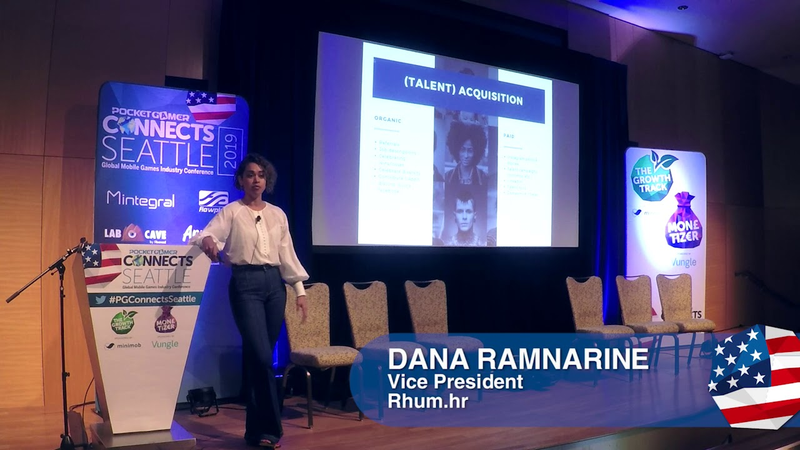
The primary thesis of this presentation is that mobile game studios should treat talent acquisition with the same strategic rigor and messaging consistency as user acquisition.
- Mobile game studios should apply the same strategic rigor and messaging consistency to talent acquisition as they do to user acquisition.
- A studio's mission and core values are more effective at attracting and retaining high-quality talent than technical skill requirements alone.
- Traditional job boards are often inefficient; one example showed a $700 investment in a job board yielded only two irrelevant resumes.

Narrative Design and Working on Your Own Terms with Rhianna Pratchett | GduX.me
The modern landscape of game narrative design demands a delicate balance between creative autonomy and the collaborative realities of interactive media.
- Narrative design must be deeply integrated into gameplay mechanics, art, and animation from the outset rather than treated as a peripheral addition to the development process.
- Transitioning to a freelance model allows writers to bypass corporate distractions, enabling more efficient and iterative creative workflows.
- Successful narrative designers must act as flexible collaborators who can effectively weave stories around pre-existing assets and rigid gameplay constraints.
The State of Game Labor 2019 with Emma Kinema | GduX.me
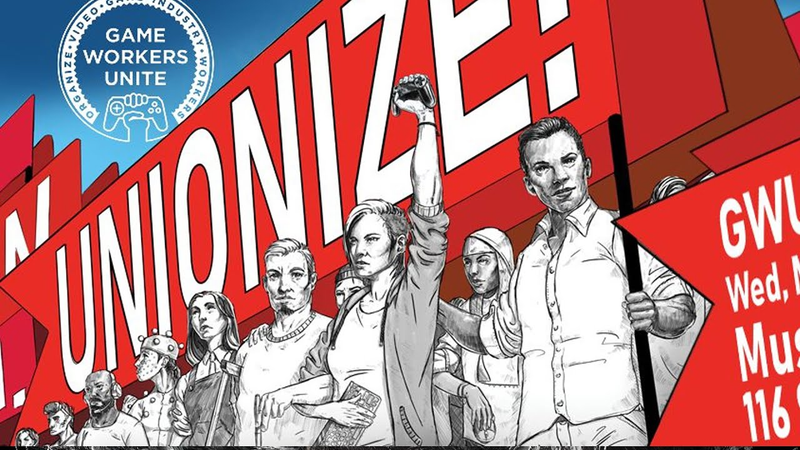
The global game industry, despite its immense profitability, is currently defined by systemic labor instability characterized by chronic crunch, widespread burnout, and the frequent misclassification of contract workers.
- Unionization is presented as the primary mechanism to address systemic industry instability, including chronic crunch, burnout, and the misclassification of contract workers.
- Data indicates that unionized workforces can experience pay increases of approximately 27% and improvements in product quality ranging from 15% to 20%.
- Organizations like Game Workers Unite are facilitating the transition toward collective bargaining by providing labor education, international knowledge sharing, and support for local chapters.
10 must-know business tips for games industry freelancers
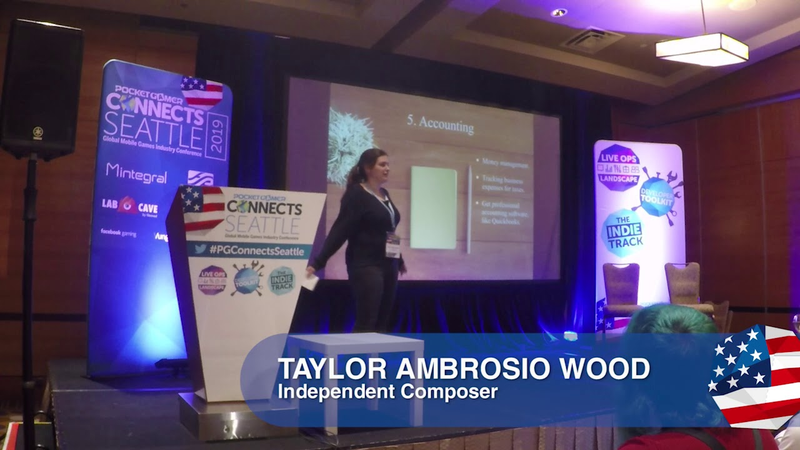
This presentation outlines ten essential business strategies for freelancers in the games industry, emphasizing the necessity of treating creative work as a professional business entity.
- Treat freelance work as a formal business entity rather than a creative hobby to ensure long-term financial stability and professional standards.
- Utilize dedicated software for accounting, invoicing, and task management to automate administrative burdens and maintain professional operations.
- Mandate detailed contracts for every project to explicitly define payment terms, intellectual property rights, and specific limits on revision requests.