CHALLENGING PROJECTS Want to re-skill 3%
Source: Games & Interactive Salary & Satisfaction Survey 2023No longer feel challenged 3%
Source: Games & Interactive Salary & Satisfaction Survey 2023Want to re-skill 3% CHALLENGING PROJECTS
Source: Games & Interactive Salary & Satisfaction Survey 2023NORTH AMERICA 12.0%
Source: Gamedev Salary Pulse 2026: North America, Western Europe, Nordics, Central and Eastern EuropeLocation change - same country 1%
Source: Games & Interactive Salary & Satisfaction Survey 2023Better/more challenging projects 17% FINANCIAL
NORTH AMERICA 12.0%
Source: Gamedev Salary Pulse 2026: North America, Western Europe, Nordics, Central and Eastern EuropeChange of location 6%
Source: Games & Interactive Salary & Satisfaction Survey 2023The image displays a map of the United States with different colors representing the percentage of employees who work for each studio location
A bar graph showing the percentage of people who play games in their leisure time
The seniority levels of the employees in the company are displayed on a pie chart
The image displays a bar graph with the title "Industry Tenure"
Current Employment Status
Mostly separate, with occasional short overlaps (e.g., quick meetings/context switches)
wynagrodzenia róznicowana jest w zaleznosci od petnionej funkcji czy zajmowanego stanowiska). Wynagrodzenia uzyskiwane przez osoby zarzadzajace oraz osoby zarzadzajace wyzszego szczebla w Spótce obejmuje wynagradzanie akcjami, opcjami na akcje lub innymi prawami nabycia akcji, jak równiez wynagrodzenie nie jest ustalane w oparciu o zmiany cen akcji. PISMO ZARZĄDU WEWNETRZNEJ I ZARZADZANIA RYZYKIEM Szanowni Akcjonariusze i Inwestorzy raportów finansowych.
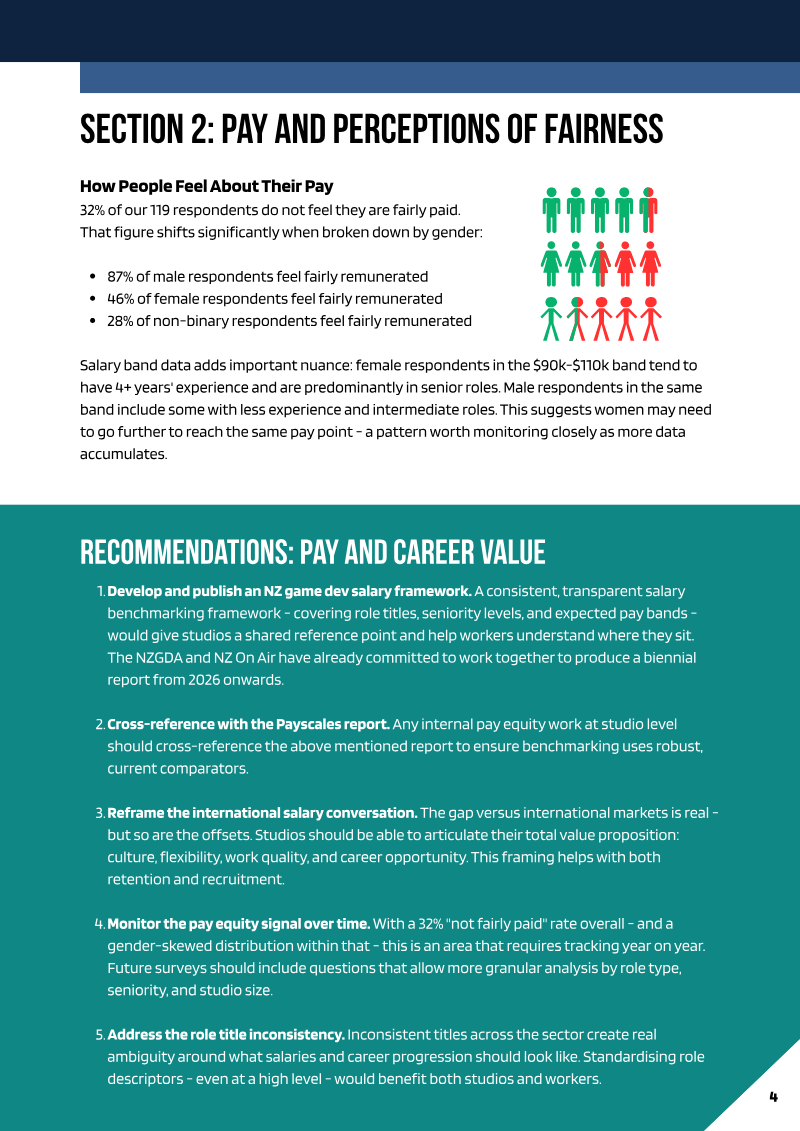
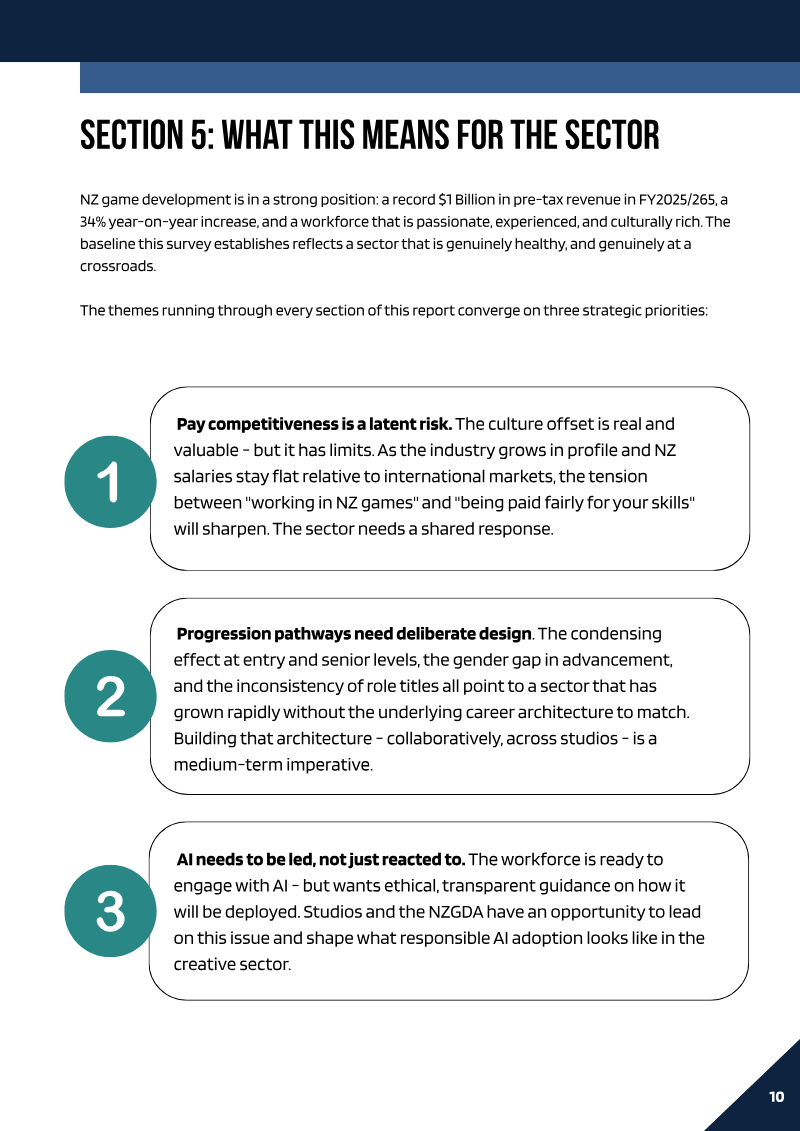
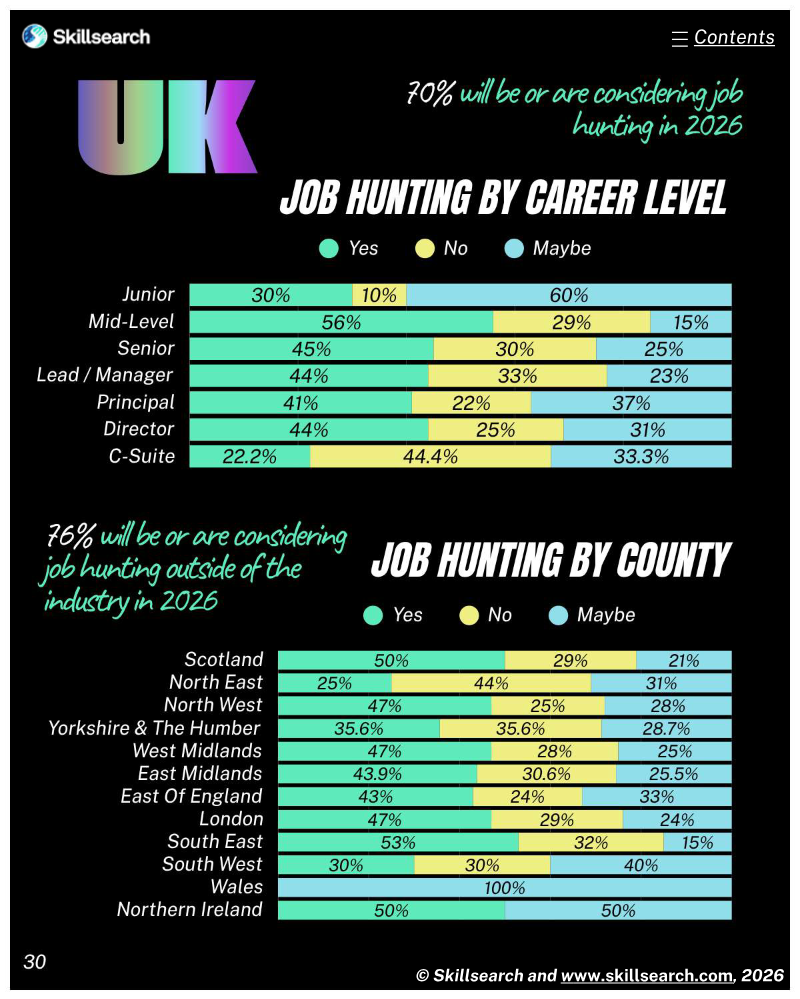
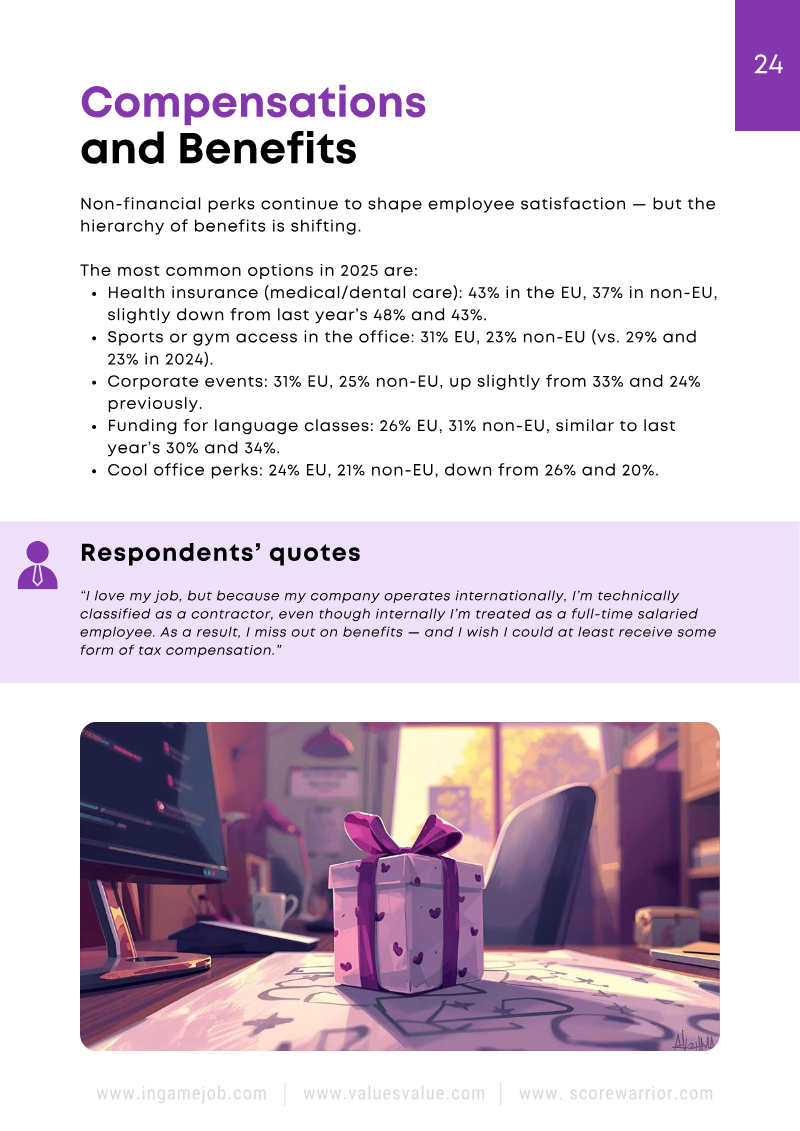
The game development industry is currently navigating a period of profound structural instability, characterized by widespread workforce reductions and a pervasive sense of professional anxiety. Despite the rapid integration of artificial intelligence, the primary driver of current career displacement remains studio restructuring rather than technological replacement. While the majority of the workforce remains employed in hybrid or remote roles, a significant portion of professionals are actively reassessing their career trajectories. This climate of cautious realism is reflected in market sentiment, where nearly 40 percent of industry participants anticipate further decline, leading to increased emotional fatigue and a shift in priorities toward time-based benefits, such as the four-day workweek, over traditional office perks. Geographically, the industry maintains a clear hierarchy in compensation, with North America consistently commanding the highest salary tiers across all seniority levels. In contrast, Central and Eastern Europe continue to function as the most cost-effective hubs for talent acquisition. This regional disparity underscores a broader trend of geographic diversification, as studios balance the need for specialized expertise with the economic realities of global operations. Although the workforce remains mobile, the prevalence of remote work has effectively anchored many professionals, creating a distinct divide where on-site employees demonstrate a significantly higher propensity for international relocation compared to their remote counterparts. The current landscape is defined by a maturing workforce dominated by mid-to-senior level professionals, accompanied by a concerning decline in new entrants. This demographic shift, coupled with the ongoing volatility in employment, has necessitated more flexible recruitment strategies. Studios are increasingly moving away from traditional hiring models, favoring diverse solutions that range from subscription-based flat-fee packages to comprehensive recruitment process outsourcing. As the industry continues to evolve, these data-driven benchmarks serve as a critical framework for both studios and professionals attempting to navigate the complexities of global compensation and shifting labor market dynamics.
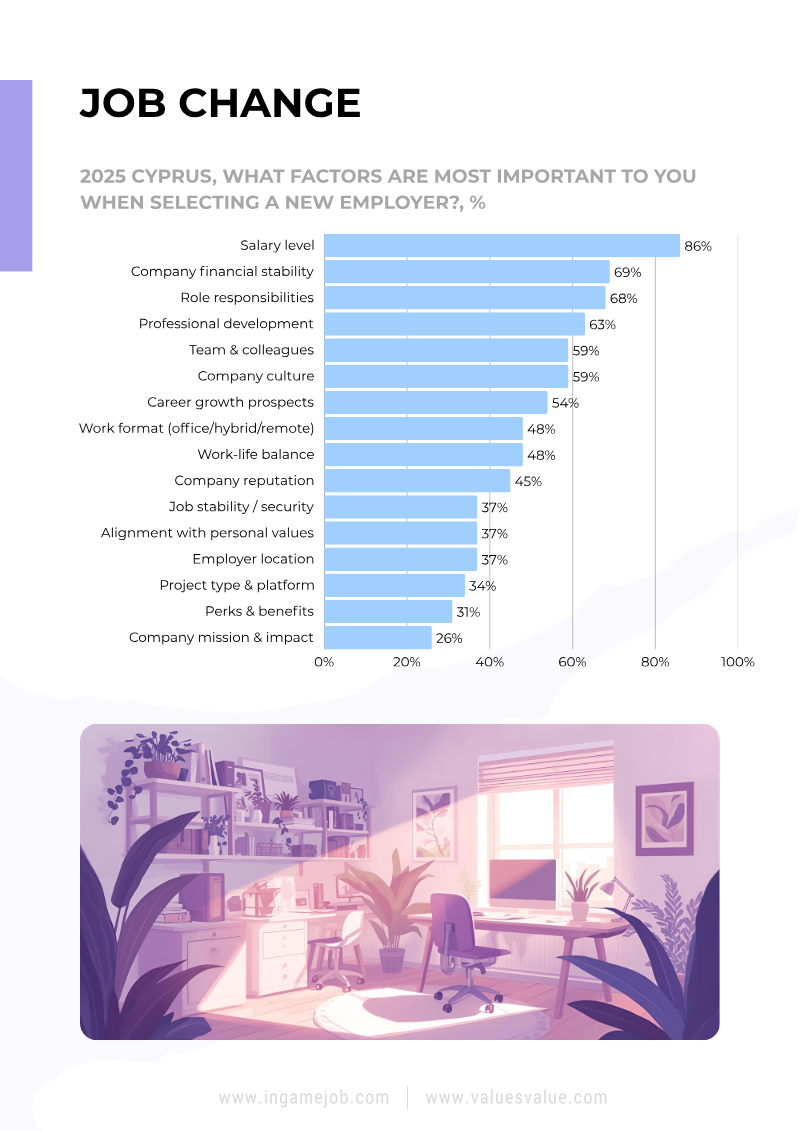
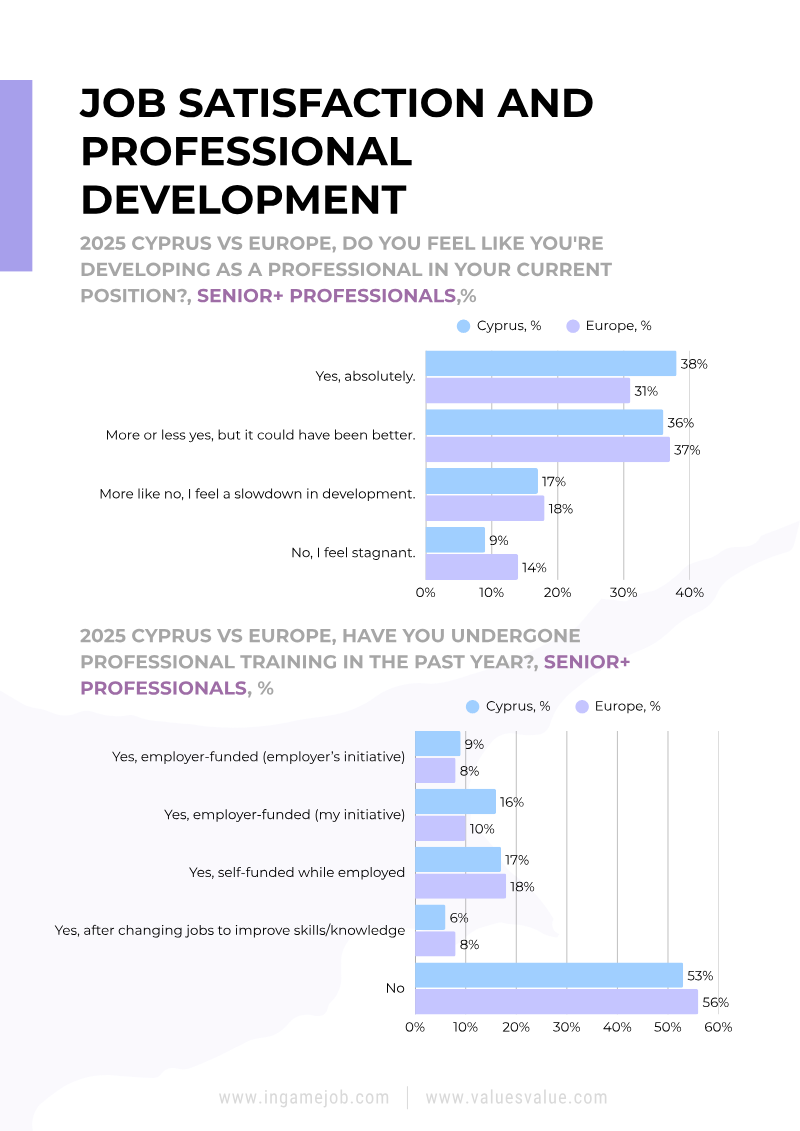
The study examines the senior‑level employment landscape in Cyprus’s game industry for 2025, drawing on an anonymous survey of 113 professionals and a comparative analysis with European peers. Findings reveal that senior‑plus talent in Cyprus exhibits low job mobility, with 71 % reporting no change in the past year and only 20 % moving voluntarily. When moves occur, they are largely strategic, aimed at improving compensation or scope rather than reacting to instability. Senior professionals prioritize financial reliability, clear role definitions, and predictable work environments over brand visibility or rapid career acceleration. Lifestyle factors—including climate, taxation, and family considerations—reinforce long‑term retention and reduce relocation willingness. Job security perceptions are higher in Cyprus (average 2.68 on a 5‑point scale) than across Europe, yet the expected risk of job loss in the next year is also higher for many roles. Burnout and limited professional development opportunities emerge as key structural risks, with 66 % reporting burnout and only 53 % receiving employer‑funded training. Overtime is common, with 27 % working one to two times a month and 45 % accepting it as part of leadership duties, contributing to long‑term fatigue. Salary data show Cyprus median salaries for senior roles (e.g., €98 k for top management) below European averages, while desired salaries are substantially higher (e.g., €135 k for top management). Relocation openness is moderate, with 36 % not open and 32 % very open; visa support, health insurance, and relocation bonuses are the most valued benefits. Overall, the market is mature but faces challenges in retaining talent through sustained engagement and development rather than short‑term compensation incentives. The primary risk for employers is gradual burnout and skill stagnation hidden behind long tenure, rather than sudden turnover.
The Computer Entertainment Society (CESA) announces a recruitment drive for contract personnel and outsourced partners to support its expanding human‑resource development initiatives within Japan’s video‑game sector. The role centers on planning and operating creator training programs, facilitating the introduction of game‑based curricula in schools in collaboration with government bodies, and acting as a liaison for industry‑wide issues. Additional responsibilities include coordinating with public agencies, conducting research on the gaming industry, managing outreach and publicity, overseeing committee activities, and handling web, event, and social‑media communications tied to commissioned projects. Candidates are expected to possess at least five years of professional experience, demonstrable negotiation and coordination skills, and a strong interest in gaming. Preferred backgrounds include prior interaction with governmental entities, experience driving contract‑based projects, and familiarity with educational or certification activities related to games. Basic PC proficiency in spreadsheet, word‑processing, and presentation software is required, while prior employment in game companies or teaching roles is advantageous. Employment is offered either as a full‑time contract employee with a standard 9:00‑17:30 schedule in Shinjuku, Tokyo, or as an outsourced partnership negotiated according to individual expertise. Contract terms are annual, renewable up to three years, with an hourly wage starting at ¥1,800, subject to experience. Benefits encompass health, pension, unemployment, and workers’ compensation insurance, a complete two‑day weekend, and a smoke‑free office environment. Applications are to be submitted via the CESA inquiry form, followed by a two‑stage interview process conducted online and in person.
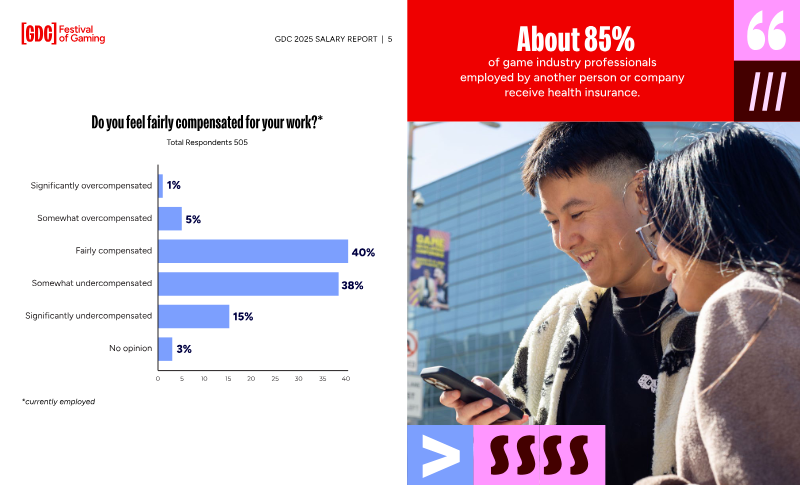
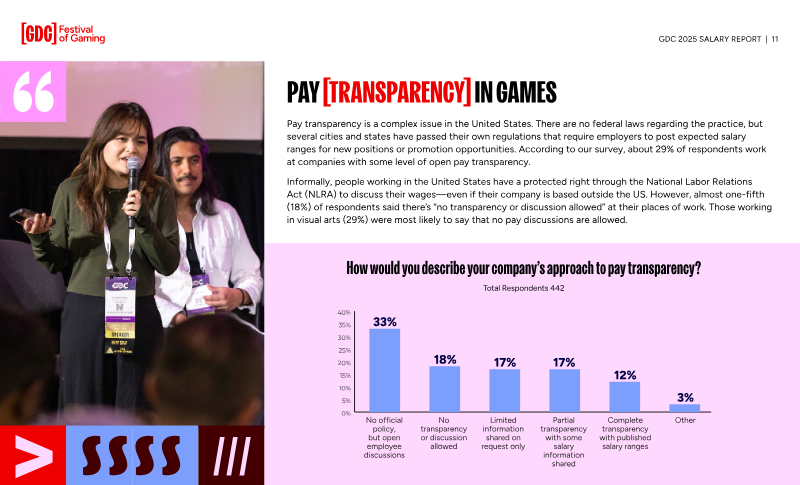
The 2025 Game Industry Salary Report provides a comprehensive analysis of compensation, job security, and workplace sentiment among video game professionals in the United States. Based on a July 2025 survey of 562 industry professionals, the findings reveal a landscape defined by high average earnings contrasted against significant instability. The study maintains a 3% margin of error at a 95% confidence level, covering various industry segments including AAA, indie, and co-development studios. The average annual salary for U.S. game professionals reached $142,000 in 2025, with a median of $129,000. While 60% of respondents saw pay increases over the previous year, a profound sense of financial and professional dissatisfaction persists. Over half of the workforce feels undercompensated, a sentiment that is more pronounced among women, non-binary individuals, and non-white workers. Data highlights a persistent wage gap, with non-white workers earning 27% less than their white peers and women earning 24% less than men. Industry stability remains a primary concern following a period of intense volatility. One-fourth of respondents experienced a layoff within the past two years, and nearly half of those individuals remain unemployed. Consequently, 80% of professionals view game development as less secure than other career paths. Despite these fears, 82% intend to remain in the industry for the next five years. The report also tracks emerging labor trends, noting that 64% of workers support unionization and 56% are interested in joining a union. Remote work remains dominant, with approximately 60% of developers in programming and design roles working fully remotely. While 85% of employees receive health insurance, other benefits like childcare subsidies remain rare, leading 11% of the workforce to take on side hustles to meet financial needs or seek creative fulfillment.
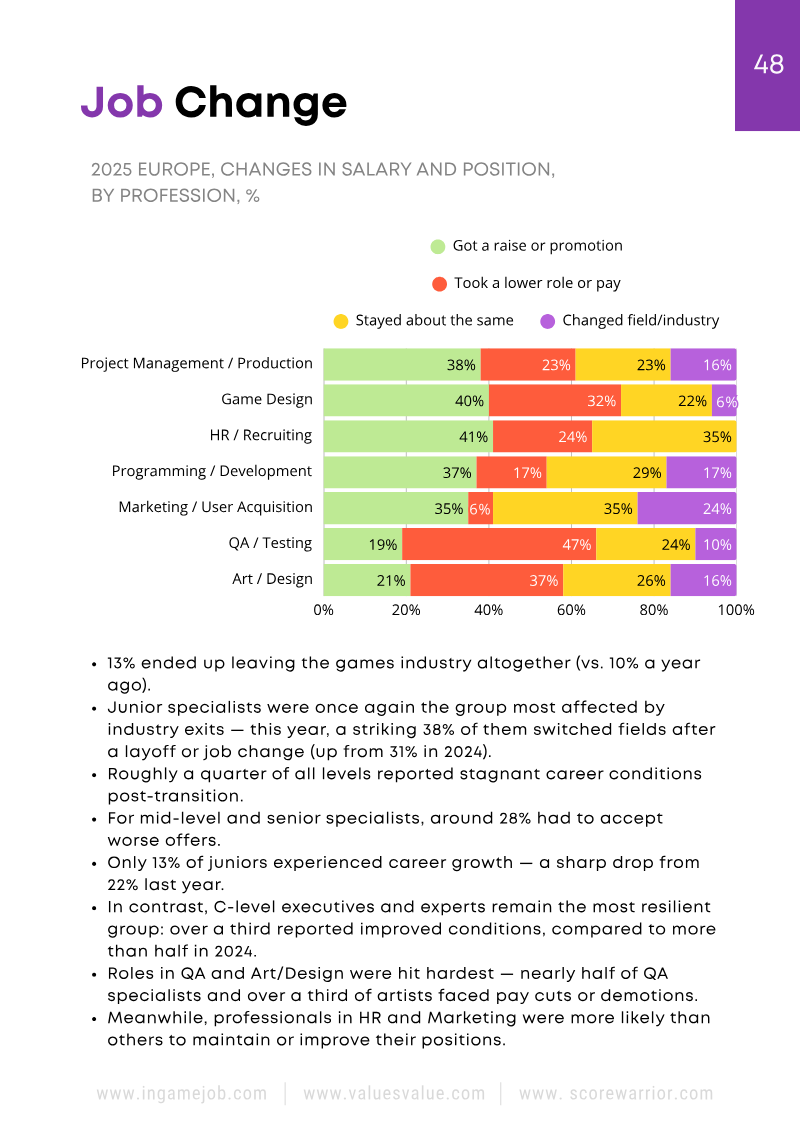
The European games industry entered 2025 in a state of significant distress, characterized by widespread layoffs, stagnant wages, and a sharp decline in employee well-being. Approximately 26% of professionals across the continent experienced layoffs, with junior-level talent bearing the brunt of the instability as 39% exited the sector entirely. This contraction has shifted the labor market from a growth-oriented environment to one focused on cost optimization. Consequently, employee engagement scores have plummeted, and over half of the workforce reports suffering from professional burnout. Financial stability has replaced company mission as the primary motivator for 87% of workers, many of whom are now accepting inferior contract terms or pay cuts to remain employed. Compensation trends reveal a deepening divide based on geography, seniority, and specialization. While median salaries remain highest in the Fighting and MMO genres, reaching up to €90,000 in the EU and UK, a persistent gender pay gap continues to affect technical and C-level roles. Programmers have seen a downward trend in compensation due to increased competition and the rapid integration of artificial intelligence. AI adoption has surged, with over 60% of professionals now using these tools regularly, particularly in analytics and management. However, creative fields like art and quality assurance remain more resistant to AI integration, even as these specific roles face the highest risks of unemployment and long-term job searches. Workplace culture is currently defined by a regression in structured support and a rise in management inefficiency. The number of companies lacking dedicated diversity and inclusion specialists has increased to 67%, while nearly one-third of developers report stagnant professional growth. Although remote flexibility remains a high priority, the shift toward pragmatic relocation suggests that workers are increasingly making career decisions based on cost-of-living calculations rather than traditional ambition. This environment of instability has doubled the rate of long-term unemployment, leaving the European games industry with a workforce that is increasingly disillusioned and prioritized toward survival over innovation.
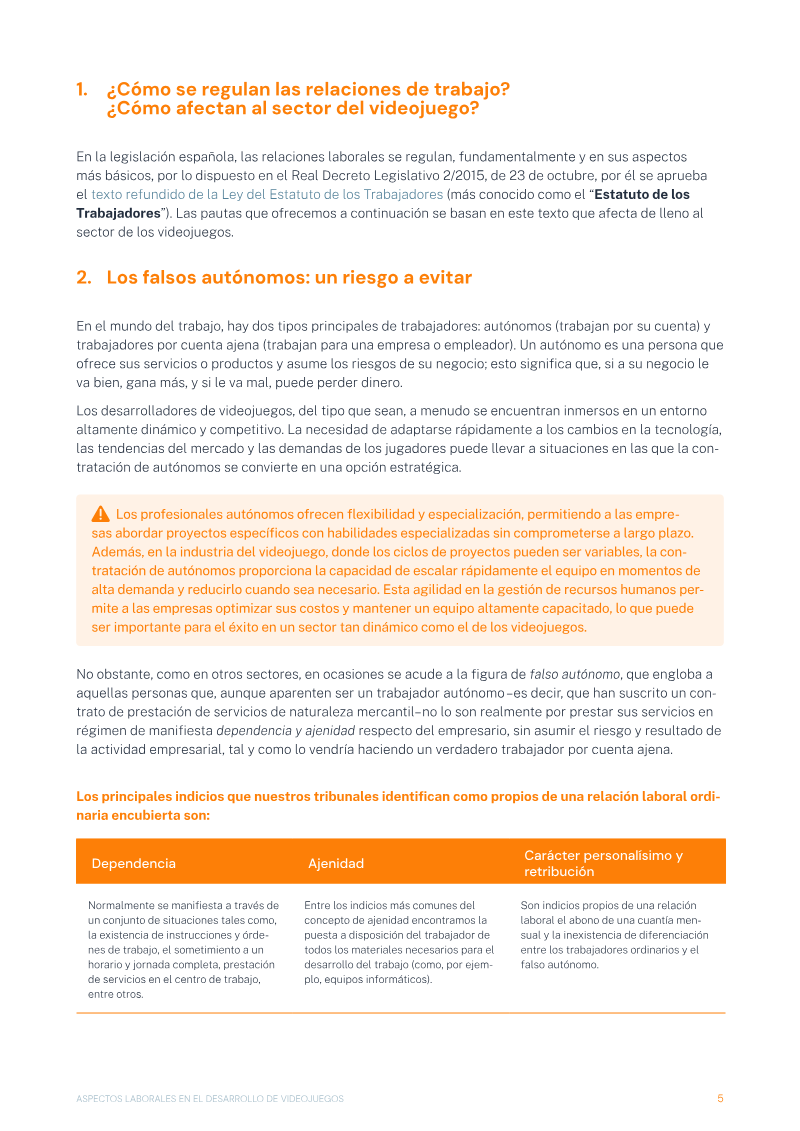
The guide aims to equip professionals in the Spanish video‑game sector with a practical framework for complying with national labour legislation while fostering safe, flexible and sustainable work environments. It stresses that employment relationships must be governed primarily by the Estatuto de los Trabajadores and the 2022 labour reform, positioning indefinite contracts as the default model and limiting temporary contracts to production‑related needs or substitution of specific workers. Key legal risks are highlighted, notably the use of “falso autónomo” arrangements. Indicators such as dependence, lack of entrepreneurial risk, fixed remuneration and provision of equipment can reclassify a contractor as an employee, exposing firms to Social Security back‑payments of up to €50 000, fines ranging from €3 750 to €12 000 per case and additional penalties of 100‑150 % of the owed contributions. Incorrectly formalised temporary contracts trigger automatic conversion to permanent status and fines between €751 and €7 500 per affected worker. The document outlines the regulatory regime for teleworking, requiring a voluntary agreement, employer‑borne provision costs of roughly €25‑35 per month, and detailed specifications on schedules and monitoring tools. Non‑compliance is penalised as a grave infringement with fines identical to those for improper temporary contracts. Prevention of occupational risks, especially the “crunch” phenomenon, is mandated under the 1995 Prevention of Risks Law; violations can attract fines from €45 up to €983 736, and employers may face civil liability for work‑related injuries or illnesses. Additional obligations include mandatory daily working‑time records introduced in 2019, the use of irregular‑hour distribution up to 10 % of total hours with five‑day notice and strict rest‑period safeguards, and the implementation of digital‑disconnection protocols, equality plans for firms with more than fifty employees, whistle‑blowing channels and digital‑device usage policies. The guide, authored by legal experts and industry consultants, synthesises statutory provisions and recent reforms to provide a comprehensive compliance checklist for developers, publishers and marketing teams operating within Spain’s
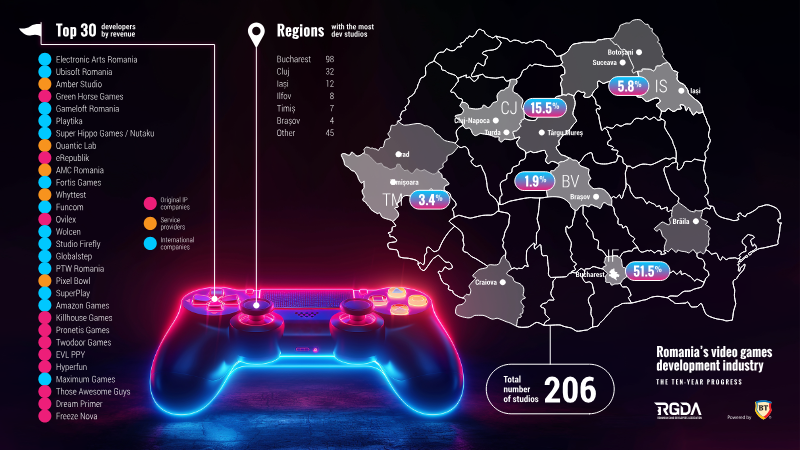
The analysis presents a comprehensive overview of Romania’s video‑game development sector, focusing on revenue performance, geographic concentration, and workforce trends over the past decade. Its central thesis is that the industry has experienced rapid expansion, with total turnover rising from roughly €119 million in 2015 to more than €340 million in 2024, while the number of active studios grew by 70 % within the same period. Revenue concentration is illustrated by a ranking of the top thirty developers, highlighting that multinational publishers such as Electronic Arts Romania (Bucharest) and Ubisoft Romania (Cluj‑Napoca) dominate the market, together accounting for a substantial share of the €340 million total. Mid‑size studios—including Amber Studio (Iași), Green Horse Games (Ilfov), and Playtika (Brașov)—contribute notable percentages, ranging from 5 % to 15 % of overall earnings. The data also maps studio locations, revealing a strong clustering in Bucharest, Cluj‑Napoca, Iași, and Brașov, with emerging hubs in Timișoara, Turda, and Arad. Workforce figures show headcount increasing from 279,986 employees in 2015 to a projected 343,160 in 2024, reflecting a 12 % annual growth rate in personnel. Productivity, measured as turnover per employee, rose by 7.4 % over the ten‑year span, indicating that revenue gains are not solely driven by hiring but also by higher efficiency. Service‑oriented companies and international providers together represent 51.5 % of the sector, underscoring the importance of outsourcing and cross‑border collaborations. The scope encompasses the entire Romanian market, covering all development, publishing, and service activities from 2015 through 2024. Figures appear to be compiled from company‑reported revenues, employee registers, and regional studio counts, suggesting a mixed methodology of financial reporting and industry surveys. Overall, the evidence points to a robust, diversifying ecosystem that is increasingly integrated with the global video‑game supply chain.
The 2023 global game development landscape is defined by a period of intense economic contraction and employment volatility, marked by the highest rates of layoffs and terminations recorded since 2014. While the workforce remains predominantly composed of highly educated men in their thirties, there is significant representation from neurodivergent and LGBTQ+ communities. Despite a broad consensus on the importance of workplace diversity, a profound disconnect exists between corporate policy and reality. Two-thirds of developers report that equal opportunity does not exist within the industry, and fewer than half believe that existing equity policies are adequately enforced. Labor conditions remain a primary concern as "crunch" culture persists, with nearly one-third of developers working over 60 hours per week during peak production cycles. This instability has fueled a growing interest in unionization, particularly through national sectoral unions, as workers seek to address a lack of transparency in crediting and disciplinary procedures. Financial disparities are also widening between full-time employees and precarious workers. While a majority of full-time staff earn over $50,000 annually with access to healthcare and retirement benefits, 66% of freelancers earn below that threshold and lack basic protections such as paid sick leave or vacation time. The industry’s overall benefit structure is in decline, with health coverage gaps more than doubling over the past year. Self-employed developers and small studio owners face particularly acute financial instability; many frequently forgo their own salaries to cover business overhead, and nearly one-third earn less than $15,000 USD annually. Ultimately, the sector is characterized by a tension between high levels of creative autonomy and a precarious economic environment where frequent layoffs, inadequate enforcement of equity initiatives, and a lack of protections for non-traditional workers undermine long-term sustainability.
Canada’s video‑game industry is portrayed as a mature, high‑value sector that now consists of 821 firms employing roughly 34,000 full‑time workers and delivering a $5.1 billion economic impact. While the overall number of companies has contracted by 9 % since 2021, the decline is confined to micro‑studios of two to four staff; larger studios with 51 or more employees have remained stable or expanded, underscoring a concentration of activity in more sizable operations. In the 2023‑24 fiscal year the sector generated a $356 million operating surplus, representing a 7 % margin, and direct labour income rose 21 % to $3.5 billion, with indirect and induced effects adding another $600 million. Flexible work arrangements dominate, especially in firms with 100+ employees, where 83 % of staff follow hybrid schedules. Larger studios report longer time‑to‑market—about five months more—while smaller studios move faster, and nearly half of all companies are employing generative AI primarily for ideation. Funding access hampers small firms, talent shortages constrain the very largest, and market discoverability is a universal obstacle. A refined economic‑impact model introduces finer size categories and a custom induced‑impact multiplier based on Canada’s marginal propensity to consume and import. Applying this methodology retroactively to 2021 data raises total full‑time‑equivalent employment to 35,250 (a 9 % increase) and labour‑income to C$3.88 billion (up 6 %), while total GDP contribution adjusts downward to C$5.5 billion, reflecting more precise accounting of indirect and induced effects. The analysis covers the national landscape, focusing on the period from 2021 through 2024 and encompassing firms of all sizes within the video‑game development and publishing ecosystem.
The 2024 Canadian video‑game sector is presented as a mature, high‑value industry that contributes $5.1 billion to national GDP and sustains 34 010 full‑time‑equivalent positions, with an average compensation of $102 000. The analysis underscores a pronounced geographic concentration, as 83 % of the 821 operating studios are located in Ontario, British Columbia and Québec, reflecting the continued clustering of talent and infrastructure in these provinces. Compared with 2021, the total number of firms declined by 9 %, a contraction driven largely by the disappearance of micro‑enterprises, while larger studios either remained stable or expanded. Ownership patterns have shifted markedly, with foreign‑owned companies now accounting for 88 % of total employment, indicating deepening international integration and reliance on external capital. Industry spending reached $4.8 billion in 2024, an 11 % increase over the 2021 level, and labour costs now represent 72 % of total expenditures, up from roughly 66 % three years earlier. This rising labour share highlights the sector’s intensifying dependence on skilled human capital. The study classifies studios into eight size categories—from solo developers to firms with more than 200 employees—using survey‑derived averages to estimate spending, revenue and wage structures across each segment. By scaling these averages to the number of firms in each tier, the analysis provides a nuanced picture of economic activity across the full spectrum of the industry. Overall, the findings portray a Canadian video‑game ecosystem that is consolidating around a few large, often foreign‑owned players, expanding its overall financial outlays, and increasingly reliant on a highly paid workforce, all within a geographically limited core that dominates national output.
The analysis aims to map the composition, demographics, career trajectories, and income streams of South Korea’s professional e‑sports workforce, drawing on Statista surveys conducted between June and November 2024. It covers domestic players across major titles, Korean competitors active in overseas leagues, and the age, tenure, and earnings profiles of a sample of 138 active professionals, providing a snapshot of the industry’s structure during the current competitive season. Domestic data identify 361 professional gamers, heavily clustered around four titles: League of Legends (58 players), Valorant (56), PUBG (54) and PUBG Mobile (48). Smaller but notable presences include Rainbow Six Siege (37) and Eternal Return (32). Internationally, 372 Korean e‑sports athletes were reported competing abroad, with League of Legends accounting for 169 participants and Overwatch 2 for 108, while StarCraft II, Valorant and other games each contributed fewer than 30 players. Age distribution reveals a predominance of young adults, as 37.7 % fall within the 22‑24 year bracket, followed by 29.7 % aged 25 and older, 23.9 % aged 20‑21, and 8.7 % under 19. Career length shows a polarized pattern: 29.7 % have six or more years of experience, while the