Report25 pages
The State of Mobile Gaming in India: A Look at India's Casual, Hyper-Casual, and Real Money Gaming App Industry Trends
This analysis examines the rapid expansion and evolving user behavior within the Indian mobile gaming market, focusing on the casual, hyper-casual, and real-money gaming (RMG) segments. The primary thesis asserts that while the COVID-19 pandemic and increased smartphone penetration triggered a massive "gold rush" in installs and engagement, the industry now faces a critical inflection point. As organic growth stabilized in 2022, the focus for developers has shifted from simple acquisition to sophisticated, insights-led retention and monetization strategies to sustain long-term profitability.
Key findings value the Indian gaming industry at $2.6 billion, with projections to reach $8.6 billion by 2027. Data indicates that India has surpassed the United States in terms of user base, exceeding 300 million gamers. During the 2021 pandemic waves, casual games saw a 90% uplift in installs, while RMG apps experienced significant revenue fluctuations, including a 35% increase in April 2021. However, the data reveals a downward trend in "stickiness" and installs moving into 2022, highlighting a retention crisis where 68% of users engage with an app fewer than ten times.
The scope of the research covers the Indian market from 2021 through the first quarter of 2022, utilizing data from over 100 gaming brands. The methodology relies on a combination of market analysis from MoEngage, AppTweak, and AppsFlyer, incorporating normalized trends in installs, In-App Advertising (IAA), and In-App Purchases (IAP).
The conclusions emphasize that technical optimization and personalized engagement are mandatory for survival. Effective strategies identified include App Store Optimization (ASO) to improve discoverability, RFM (Recency, Frequency, Monetary) segmentation to target "champion" players, and the use of predictive AI to prevent churn. The findings suggest that brands utilizing multi-channel engagement platforms can achieve push notification conversion rates as high as 91%, which is essential for navigating India's highly competitive and maturing digital landscape.
- The Indian gaming industry is projected to grow from $2.6 billion in 2022 to $8.6 billion by 2027, supported by a user base exceeding 300 million gamers.
- The industry is facing a significant retention crisis, with 68% of users engaging with a gaming app fewer than ten times.
- Following a pandemic-era surge where casual game installs rose 90% and RMG revenue grew 35% in April 2021, organic growth stabilized and declined throughout 2022.
- Brands utilizing multi-channel engagement platforms can achieve push notification conversion rates as high as 91%.
- To combat churn and sustain profitability, developers must shift from acquisition-focused models to strategies like RFM (Recency, Frequency, Monetary) segmentation and predictive AI.
+2
MoEngageJan 2023

Report50 pages
Mobile App Trends: 2023 Edition
The mobile application market entered a period of significant transition in 2023, navigating a complex landscape defined by economic volatility and evolving privacy regulations. Despite these headwinds, the industry achieved a record half-trillion dollars in combined advertising and consumer spending. While global advertising growth slowed to 14% and consumer spending experienced a marginal 2% decline, the sector demonstrated remarkable resilience through strategic adaptations. Key shifts include a rising App Tracking Transparency (ATT) opt-in rate of 29% and an increased reliance on media mix modeling and Connected TV (CTV) to optimize return on investment in a privacy-centric environment.
Sector-specific performance reveals a stark contrast between industries. Fintech and e-commerce emerged as primary growth drivers, with fintech in-app revenue surging over 90% between late 2022 and early 2023. E-commerce sessions grew by 12%, supported by record-breaking revenue peaks in late 2022. Conversely, the mobile gaming industry faced its most challenging year on record in 2022, marked by a 12% decline in installs and a 9% drop in consumer spending. However, early 2023 data indicates a nascent recovery for gaming, with installs and sessions rebounding by 10% and 11% respectively over previous averages.
The current market environment necessitates a shift from broad acquisition strategies toward long-term user retention and sophisticated measurement. As retention and "stickiness" remain persistent challenges across all verticals, developers are increasingly prioritizing reattribution campaigns, personalized onboarding, and loyalty programs. Success in the coming years depends on the adoption of advanced analytics and cross-platform insights to navigate data-privacy requirements. By leveraging these tools, stakeholders can effectively drive user acquisition and maximize lifetime value in an increasingly competitive global marketplace.
- The mobile app market reached a record half-trillion dollars in combined advertising and consumer spending in 2023, despite a 2% decline in consumer spending and a cooling of advertising growth to 14%.
- Fintech in-app revenue surged by over 90% between late 2022 and early 2023, while e-commerce sessions grew by 12%.
- After a difficult 2022 that saw a 12% decline in installs and a 9% drop in consumer spending, the mobile gaming sector showed early 2023 signs of recovery with a 10% increase in installs and an 11% rise in sessions.
- App Tracking Transparency (ATT) opt-in rates reached 29%, forcing developers to shift toward media mix modeling and Connected TV (CTV) to maintain ROI in a privacy-centric landscape.
- Market strategy is pivoting from broad user acquisition toward long-term retention, utilizing personalized onboarding, loyalty programs, and reattribution campaigns to combat persistent stickiness challenges.
+3
AdjustJan 2023
Report27 pages
From Hyper to Hybrid: Hypercasual Gaming Trends 2023
The mobile gaming landscape is undergoing a significant structural shift as developers transition from hyper-casual models toward hybrid-casual strategies. This evolution is driven by a marked decline in ad revenue profitability, influenced by the implementation of App Tracking Transparency on iOS, shifting post-pandemic user behaviors, and increased selectivity from major publishers. To maintain sustainability, developers are increasingly integrating in-app purchases and meta-gameplay components into their titles while opting for self-publishing models to retain greater control over their assets.
Data from 2022 reveals a downward trend in ad impressions and eCPMs across both Android and iOS platforms. Conversely, the volume of in-app purchases grew on both operating systems, signaling a successful pivot toward diversified monetization. Geographically, the United States remains the dominant market, ranking first for both ad revenue and in-app purchases across platforms. India emerged as the leading territory for total installs on Android, highlighting the importance of emerging markets for scale, even as monetization remains concentrated in Tier 1 regions.
The competitive landscape for ad networks and monetization channels shows distinct leaders. Apple Search Ads dominates the iOS ecosystem, securing the top position in multiple categories including retention and lifetime value. On Android, AppLovin and ironSource lead the market. AppLovin specifically stands out as the top monetization channel by total ad revenue on both operating systems. For eCPM performance, Meta Audience Network and ironSource lead on Android and iOS respectively.
These findings are based on anonymized data collected throughout the 2022 calendar year, utilizing a weighted average methodology. The analysis focuses on high-scale performance, only including countries and ad networks that exceeded a threshold of 25 million installs. This comprehensive view underscores a broader industry movement where the traditional reliance on pure advertising is being replaced by a more balanced, hybrid approach to game design and revenue generation.
- The mobile gaming industry is shifting from hyper-casual to hybrid-casual models, driven by declining ad revenue profitability and the impact of iOS App Tracking Transparency.
- Developers are increasingly adopting in-app purchases and meta-gameplay components to replace the traditional reliance on pure advertising revenue.
- Data from 2022 shows a consistent downward trend in ad impressions and eCPMs across both Android and iOS platforms, while in-app purchase volume grew.
- The United States remains the primary market for both ad revenue and in-app purchases, while India leads in total Android installs, emphasizing the split between scale in emerging markets and monetization in Tier 1 regions.
- AppLovin is the leading monetization channel by total ad revenue across both iOS and Android platforms.
+1
TenjinJan 2023

Report32 pages
Mobile Gaming Loyalty Report 2023
The Mobile Gaming Loyalty Report examines the drivers of player engagement, retention, and spending across the mobile landscape. By combining a longitudinal benchmark of 500 games with a survey of 3,000 mobile gamers in the US and Canada during 2023, the analysis establishes a Loyalty Index based on six key monetization and engagement KPIs. The findings emphasize that while user acquisition remains expensive, maximizing the lifetime value of existing players through loyalty-centric design is essential for sustainable growth.
Role-Playing Games (RPGs) emerge as the most loyal genre, scoring 75 out of 100 on the index due to deep gameplay loops and compounding monetization systems that encourage high-value, frequent spending. Strategy games follow closely, excelling in repeat purchases and session frequency. Conversely, Lifestyle games lead in average sessions per user, utilizing bite-sized tasks and emotional storytelling to drive incremental spending. Data indicates a significant gap between average and top-quartile performers in genres like Casino and Sports, suggesting substantial room for optimization in retention and spender conversion.
Consumer behavior insights reveal a disconnect between play and spend habits; while over 77% of spenders rotate between two to seven games weekly, 53% concentrate their spending on a single title. Progression is the primary motivator for both continued play and in-app purchases, whereas "pay-to-win" mechanics and poorly received updates are leading causes of churn. Notably, 39% of players will abandon a game if a bad update is not corrected within a week. High-value spenders, defined as those spending over $100, exhibit more demanding standards for app store ratings and customer service.
Marketing effectiveness is heavily influenced by authenticity and social proof. Over 71% of gamers demand real gameplay footage in advertisements, and 60% consider app store ratings and reviews crucial for downloads. While digital ads remain the primary discovery tool, word-of-mouth ranks as a top-three acquisition source. Additionally, there is a strong interest in play-and-earn mechanics, with 84% of respondents open to trying games that offer tangible rewards.
- Progression is the primary driver for both retention and in-app spending, while 'pay-to-win' mechanics and poorly received updates are the leading causes of player churn.
- 53% of mobile spenders concentrate their financial investment on a single title, even though 77% of spenders rotate between two to seven games weekly.
- RPGs are the most loyal genre with a 75/100 Loyalty Index score, driven by deep gameplay loops and compounding monetization systems.
- 39% of players will abandon a game if a negative update is not corrected within one week, highlighting the critical need for rapid response to player feedback.
- Marketing effectiveness relies on authenticity, as 71% of gamers demand real gameplay footage in advertisements and 60% rely on app store ratings for discovery.
+3
MistplayJan 2023
Report68 pages
The State of Mobile Gaming 2023: Mobile Gaming Market Trends and Top Titles in the U.S., Europe, and Asia
The global mobile gaming landscape underwent a significant structural transition in 2022, characterized by a 14% decline in total player spending from its 2021 peak alongside a stabilization of download volumes at approximately 13.8 billion per quarter. While major markets such as the United States, Japan, and South Korea experienced revenue contractions, China emerged as the second-largest market globally, and India solidified its position as the leader in download volume, accounting for 17% of total installs. This period marked a definitive shift away from the hypercasual genre, which saw an 18% decline in downloads due to rising user acquisition costs and broader economic pressures.
In response to these market pressures, the industry is pivoting toward a hybridcasual model that blends accessible core mechanics with sophisticated mid-core monetization and meta-progression features. This emerging segment grew by 13% and generated $1.4 billion in revenue, driven by significantly higher player engagement than traditional casual titles. Success in the current environment is increasingly dictated by the effective use of Live Ops, which now accounts for 97% of revenue among top-grossing games. Features such as character collection and social clan systems have become essential for maintaining high engagement levels and driving long-term player retention.
While established genres like RPGs and shooters faced revenue declines, the action genre grew by 9%, and subscription-based models gained momentum, exemplified by the expansion of ad-free gaming catalogs. Conversely, the crypto and NFT gaming sector experienced a sharp downturn, with downloads falling from 46 million to 29 million and revenue dropping by 35%. Despite the overall contraction in spending, the market remains larger than pre-pandemic levels, with legacy titles like Honor of Kings and Subway Surfers maintaining dominance in revenue and download rankings, respectively, across a diversifying global audience.
- Global mobile gaming revenue declined 14% in 2022 from its 2021 peak, though total market size remains above pre-pandemic levels.
- The hypercasual genre saw an 18% decline in downloads, while the hybridcasual model grew by 13% to reach $1.4 billion in revenue.
- Live Ops are now critical to commercial success, accounting for 97% of revenue among top-grossing titles through features like character collection and social clans.
- India leads the global market in volume, accounting for 17% of total mobile game installs, while China has solidified its position as the second-largest market by revenue.
- The crypto and NFT gaming sector faced a significant downturn in 2022, with downloads falling to 29 million and revenue dropping by 35%.
+2
Sensor TowerJan 2023
Report58 pages
PC & Console Gaming Report 2023
The PC and console gaming market entered a corrective phase in 2022, generating $92.3 billion in revenue despite a 2.2% year-on-year decline and a 15% drop in playtime. This contraction represents a stabilization toward pre-pandemic levels rather than a long-term downturn, as the market still outperformed pre-COVID forecasts by more than $32 billion. While total engagement fell, particularly among hardcore players who reduced playtime by 37%, the industry maintains a massive global audience of 1.1 billion PC and 611 million console players. This foundation is increasingly defined by a shift toward recurring revenue, with microtransactions and downloadable content now accounting for nearly half of all consumer spending.
Market dynamics are currently shaped by the dominance of established live-service titles and the successful integration of transmedia strategies. Games like Fortnite and Roblox continue to lead in monthly active users, while media adaptations have proven effective at revitalizing older intellectual properties. The player base has also become more diverse and socially driven, with women comprising 40% of the audience and 72% of users engaging across multiple platforms. Beyond traditional gameplay, three-quarters of players participate in social activities or content creation, indicating that gaming has evolved into a broader lifestyle ecosystem where multi-platform "core gamers" represent the highest-value consumer segment.
The outlook for 2023 and beyond suggests a robust recovery fueled by stabilized hardware supply chains and a dense schedule of highly anticipated blockbuster releases. While PC revenue is expected to grow steadily, console gaming is positioned as the primary driver of market expansion over the next three years. High consumer awareness for upcoming major titles, combined with the continued pivot toward hybrid monetization and cross-media expansion, points toward a resilient industry capable of sustaining growth well above historical norms. This trajectory reinforces the transition of the sector from a product-based model to a service-oriented landscape defined by long-term engagement and social connectivity.
- The PC and console market generated $92.3 billion in 2022, representing a 2.2% year-on-year decline that signals a stabilization toward pre-pandemic levels rather than a long-term downturn.
- Microtransactions and downloadable content now account for nearly 50% of total consumer spending, reflecting a fundamental industry shift from product-based sales to a service-oriented model.
- Engagement metrics saw a significant contraction in 2022, with total playtime dropping 15% and hardcore player activity falling by 37%.
- The industry maintains a massive reach of 1.1 billion PC players and 611 million console players, with 72% of users now engaging across multiple platforms.
- Console gaming is projected to be the primary driver of market expansion over the next three years, supported by stabilized hardware supply chains and a dense pipeline of blockbuster releases.
+2
NewzooJan 2023
Report57 pages
Gaming Report 2023
The global gaming industry in 2023 is defined by a strategic shift toward development efficiency and long-term player retention. Studios are increasingly prioritizing speed to market, with 62% of indie developers now shipping titles in under a year. This acceleration is largely fueled by the widespread adoption of premade assets and a reduction in average developer hours. While large studios are expanding their reach through a 16% increase in multiplatform development, indie studios remain predominantly focused on single-platform desktop releases. Simultaneously, there is a notable pivot toward mobile production, where global daily active users have risen by 8% despite a slight decline in the number of paying players.
Monetization strategies are evolving to address this shift in player behavior, moving toward a balanced model where ad-supported structures and in-app purchases hold nearly equal weight. To ensure financial viability, 70% of studios now integrate monetization and LiveOps within the first 30 days of development. This early focus on the product lifecycle has contributed to a 33% increase in the average game lifespan, supported by frequent core content updates and a 27% rise in battle pass adoption. Emerging markets, particularly in regions like Kazakhstan, are driving a 15.7% year-over-year increase in total game builds, signaling a lower barrier to entry for new creators.
Looking forward, the industry is embracing generative AI and user-generated content to streamline workflows and deepen engagement. The rise of "hybrid-casual" mobile games reflects a broader trend of blending accessible mechanics with sophisticated retention loops. Success in the current economic climate requires rigorous scope control and a transition from simple user acquisition to the maintenance of long-term player relationships. By leveraging achievements, community building, and real-time operational updates, developers are successfully extending the relevance and profitability of their titles in an increasingly competitive global market.
- To ensure financial viability, 70% of studios now integrate monetization and LiveOps within the first 30 days of development, contributing to a 33% increase in average game lifespans.
- Development efficiency has accelerated, with 62% of indie developers now shipping titles in under a year by utilizing premade assets and reducing average developer hours.
- Monetization models are shifting toward a balance between ad-supported structures and in-app purchases, supported by a 27% rise in battle pass adoption.
- Mobile gaming daily active users have grown by 8%, even as the industry sees a slight decline in the number of paying players.
- Large studios have increased multiplatform development by 16%, while emerging markets like Kazakhstan are driving a 15.7% year-over-year increase in total game builds.
+2
UnityJan 2023

Report36 pages
A New Era of Engagement in Media & Entertainment
The media and entertainment landscape is undergoing a fundamental generational shift toward active engagement, characterized by a seamless blend of physical and digital activities. Younger audiences, particularly Gen Z, are leading this transition by prioritizing interactive experiences over passive consumption. For the first time, Gen Z spends more time on video games and virtual worlds, averaging 12.2 hours per week, than on traditional broadcast or subscription television. This demographic also demonstrates a high level of creative participation, with 68% identifying as digital creators and spending three times more hours on user-generated content than Gen X.
Video games have emerged as the primary driver of this engagement, commanding a 72% active participation rate among US consumers. While movies and series still lead in total weekly volume at 17 hours, the gap is narrowing as gaming platforms like Fortnite and Roblox evolve into holistic entertainment hubs. These virtual spaces now serve as venues for socializing, attending concerts, and digital commerce, effectively functioning as early iterations of a persistent metaverse. This shift is further evidenced by the success of transmedia franchises and cross-media intellectual property strategies that bridge the gap between gaming, film, and music.
The future of the industry lies in the convergence of physical and digital worlds through interoperable 3D spaces that foster deeper fandom. Brands are increasingly integrating into these ecosystems through digital collectibles and in-game partnerships to capture the attention of younger consumers. High-profile investments in virtual fashion and NFTs underscore the growing economic value of digital assets within these environments. Ultimately, the industry is moving away from a model of passive viewership toward one defined by persistent, interactive, and creator-driven experiences that unify physical and virtual identities.
- Gen Z now spends an average of 12.2 hours per week on video games and virtual worlds, surpassing the time they dedicate to traditional broadcast or subscription television.
- Video games command a 72% active participation rate among US consumers, narrowing the volume gap with traditional media, which currently averages 17 hours of weekly consumption.
- 68% of Gen Z identify as digital creators, spending three times more hours on user-generated content than Gen X.
- Gaming platforms like Fortnite and Roblox are evolving into holistic entertainment hubs that facilitate socializing, live concerts, and digital commerce.
- Industry growth is increasingly driven by transmedia strategies and the integration of brands into virtual ecosystems through digital collectibles and in-game partnerships.
+1
NewzooJan 2023
Report33 pages
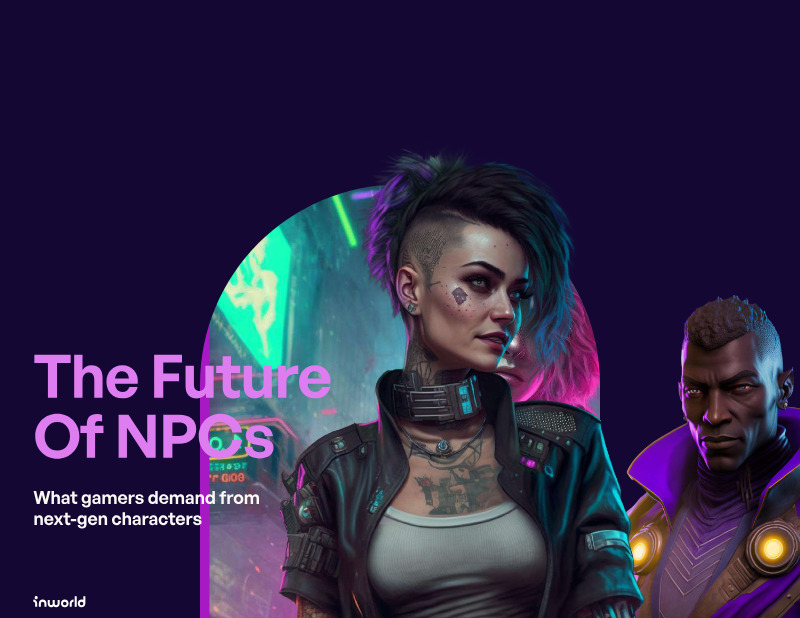
The Future of NPCs
This analysis explores the evolving role of non-playable characters (NPCs) in the video game industry, arguing that while graphical and narrative technologies have advanced, NPC interactivity has remained stagnant. The central thesis posits that integrating advanced AI—specifically large language models and machine learning—is essential for maintaining player immersion and driving commercial growth. By moving away from static dialogue trees toward dynamic, situational awareness, developers can address long-standing player frustrations regarding repetitive behaviors and scripted limitations.
Key findings indicate a significant market demand for sophisticated AI integration. Data shows that 84% of gamers view NPCs as vital to their experience, yet 52% are frustrated by repetitive dialogue. The transition to advanced AI NPCs appears to offer a clear financial incentive: 81% of players expressed a willingness to pay more for games featuring intelligent characters, and 79% stated they would be more likely to purchase a title with such features. Furthermore, 88% of respondents believe advanced AI would improve overall gameplay and immersion, suggesting that these technologies could increase player retention and session length.
The scope of the research focuses on 1,002 U.S.-based gamers aged 16 to 50 who play at least five to eight hours per week across PC, console, mobile, and VR platforms. Methodology involved a 20-minute survey conducted by Bryter Research, which included a demonstration of generative AI NPC capabilities to gauge participant reactions. The findings suggest that while role-playing and sandbox genres stand to benefit most, there is a near-unanimous consensus (99%) among surveyed gamers that advanced AI NPCs represent a positive value add for the industry.
- 99% of gamers view the integration of advanced AI into NPCs as a positive value add for the industry.
- 81% of players are willing to pay more for games that feature intelligent, AI-driven characters.
- 79% of gamers report an increased likelihood to purchase titles that incorporate advanced AI NPC capabilities.
- 52% of players express frustration with current NPC limitations, specifically citing repetitive dialogue as a primary pain point.
- 88% of players believe that advanced AI integration would directly improve overall gameplay and immersion, potentially boosting retention and session length.
+1
Inworld AIJan 2023

Report33 pages
Gaming Spotlight 2023: The Year in Review
The 2023 Gaming Spotlight provides a comprehensive analysis of the global gaming landscape, focusing on market shifts across mobile, PC, and console platforms during the first half of 2023. Utilizing data from data.ai and IDC, the analysis highlights that while mobile remains the largest market opportunity, it faces a projected 2% year-over-year decline in consumer spend to $108 billion. This softening is attributed to macroeconomic instability, privacy regulations like Apple’s App Tracking Transparency (ATT), and stricter regulations on adolescent gaming in China. In contrast, home console and PC/Mac spending are expected to rise by 3% and 4% respectively, driven by increased hardware availability and subscription-based revenue.
Geographically, the Asia-Pacific region remains a primary revenue driver, with South Korea showing significant market share gains. The report identifies a shift in handheld gaming; while the Nintendo Switch Lite faces declining interest, newer devices like the Steam Deck are gaining traction, albeit with distinct demographic profiles. Mobile gaming success in H1 2023 was defined by titles like Monopoly GO and Honkai: Star Rail, which leveraged strong intellectual property and sophisticated monetization strategies, such as high-value in-app purchases and social engagement features.
A significant portion of the analysis examines user acquisition and monetization challenges. Findings indicate that US gamer sentiment toward in-game advertising is deteriorating, with negative sentiment toward banner and video ads rising significantly. Rewarded video remains the most tolerated format due to its clear value exchange, though even its popularity has dipped. The report concludes that as acquisition costs rise and tracking becomes more difficult, publishers must optimize creative strategies—particularly through playable ads for action genres—and diversify monetization models beyond traditional ads to include subscriptions and battle passes to maintain growth in an increasingly competitive and privacy-conscious environment.
- Mobile gaming consumer spend is projected to decline 2% year-over-year to $108 billion in 2023, driven by macroeconomic instability, Apple’s App Tracking Transparency, and Chinese regulatory constraints.
- Home console and PC/Mac gaming spending are bucking the mobile trend with projected growth of 3% and 4% respectively, fueled by improved hardware availability and subscription-based revenue models.
- User acquisition is becoming more difficult and costly, forcing publishers to shift toward playable ads for action genres and diversify revenue through battle passes and subscriptions.
- US gamer sentiment toward traditional in-game advertising is deteriorating, with rewarded video remaining the most tolerated format despite a general decline in its popularity.
- The handheld gaming market is shifting as interest in the Nintendo Switch Lite wanes, while devices like the Steam Deck gain traction among distinct demographic segments.
+2
data.aiJan 2023
Report47 pages
Game Development Report 2023
The global game development landscape is currently undergoing a fundamental transition driven by escalating project complexity and the widespread adoption of live service models. With 95% of studios now pursuing or planning live service strategies, the industry faces a critical mismatch between traditional production pipelines and the need for rapid, iterative release cycles. Rising development costs affect 77% of studios, fueled by consumer demands for AAA quality and the technical debt inherent in maintaining custom middleware. Consequently, 88% of developers are actively seeking new technological solutions to address systemic inefficiencies, particularly regarding long build times and fragmented collaborative 3D art pipelines.
To mitigate these challenges, there is a significant shift toward a "buy vs. build" philosophy, with 65% of studios prioritizing off-the-shelf tools over proprietary systems to accelerate time-to-market. Modern development is increasingly adopting SaaS-inspired DevOps practices, modular architectures, and automated testing to improve developer velocity and ensure the stability required for live operations. These infrastructure investments are viewed as vital business drivers, as technical outages or defects in a live service environment result in immediate player churn and revenue loss.
The industry's future growth depends on the integration of emerging technologies such as cloud infrastructure and artificial intelligence to streamline content creation and enhance player experiences. As market saturation and production risks intensify, the move toward agile, software-centric engineering practices represents a necessary departure from legacy norms. Studios that successfully leverage these innovations to reduce technical debt and improve production sophistication are positioned to become the next generation of category leaders in an increasingly competitive global market.
- 95% of studios are now pursuing or planning live service strategies, creating a critical mismatch with traditional, non-iterative production pipelines.
- 88% of developers are actively seeking new technological solutions to resolve systemic inefficiencies, specifically targeting long build times and fragmented 3D art pipelines.
- Rising development costs, driven by AAA quality demands and technical debt from custom middleware, are currently impacting 77% of studios.
- 65% of studios are shifting to a 'buy vs. build' philosophy, prioritizing off-the-shelf tools over proprietary systems to accelerate time-to-market.
- Studios are increasingly adopting SaaS-inspired DevOps, modular architectures, and automated testing to prevent the immediate revenue loss and player churn associated with live service outages.
+1
Rendered VCJan 2023

Report28 pages
Newzoo’s Global Gamer Study 2023
Gaming engagement in 2023 has evolved into a multidimensional experience that extends far beyond active play to include viewing, socializing, and content creation. Data indicates that 79% of the total online population are game enthusiasts, with over half of all consumers engaging with games in more than one way. This trend is most pronounced among younger generations; 94% of Gen Alpha and 90% of Gen Z are classified as enthusiasts, frequently participating in "other" engagement activities like visiting online gaming communities or attending conventions.
The research highlights a significant shift toward multi-platform play, with 47% of gamers utilizing at least two platforms. A particularly high-value cohort, "tri-platform players" (15% of the player base), averages over 11 hours of play per week and shows a high propensity for spending, with 85% having made in-game purchases in the last six months. While mobile remains the most accessible entry point due to low hardware barriers, console gaming maintains the highest player-to-payer conversion rate, driven by subscriptions and pay-to-play models. Across all platforms, 57% of players are payers, motivated primarily by special offers and the desire to unlock exclusive content or customization options.
Gaming platforms have also emerged as powerful marketing channels. Approximately 50% of players and viewers report discovering new brands through gaming, and players generally hold more positive attitudes toward brands—particularly in the sports, beverage, and technology sectors—compared to non-players.
This analysis is based on Newzoo’s 2023 Global Gamer Study, which utilized Computer-Assisted Web Interviewing (CAWI) between February and May 2023. The methodology involved a representative sample of 74,295 respondents aged 10 to 65 across 36 global markets, covering North America, Europe, MEA, Latin America, and Asia-Pacific.
- Gaming is now a multidimensional ecosystem where 79% of the online population are enthusiasts, with over 50% of consumers engaging through a mix of playing, viewing, socializing, and content creation.
- Younger demographics show the highest engagement levels, with 94% of Gen Alpha and 90% of Gen Z participating in gaming activities beyond just active play.
- Multi-platform gaming is a significant trend, with 47% of gamers using at least two platforms and a high-value 'tri-platform' cohort (15% of players) averaging over 11 hours of play per week.
- Across all platforms, 57% of players are payers, with 85% of tri-platform players having made in-game purchases in the last six months to access exclusive content or customization.
- While mobile remains the most accessible entry point, console gaming maintains the highest player-to-payer conversion rate due to subscription and pay-to-play models.
+1
NewzooJan 2023
Report34 pages
State of the Game Industry 2023
The global game development landscape in 2023 is characterized by a return to established platforms and a growing skepticism toward speculative technologies. PC remains the primary focus for the majority of developers, while the PlayStation 5 has emerged as the preferred console for both current projects and future interest. Conversely, enthusiasm for blockchain and the metaverse has waned significantly, with a vast majority of studios reporting no interest in the former and nearly half of the workforce doubting the long-term viability of the latter. This shift coincides with a workforce demographic that is increasingly concentrated in smaller indie studios and composed of professionals with a decade or less of experience.
Operational priorities are shifting toward social responsibility and internal structural reform. Diversity, equity, and inclusion initiatives, alongside sustainability and accessibility measures, have become standard considerations for more than half of the industry. However, significant labor tensions persist, evidenced by a majority of developers supporting unionization and widespread concern regarding the impact of large-scale studio acquisitions on the market. While hybrid work models have become the norm, the industry continues to struggle with self-imposed pressure to work extended hours and a reliance on traditional discovery methods, such as word-of-mouth and storefront promotions, over emerging social media platforms.
The industry also faces critical challenges regarding workplace safety and demographic representation. Player harassment remains a pervasive issue, affecting 40% of the workforce and disproportionately impacting community managers and marginalized groups. While most companies have issued statements addressing these incidents, developers are calling for more robust enforcement policies and mental health resources. Demographically, the industry remains largely white and male, though a significant 20% of respondents identify as LGBTQ+. These findings suggest an industry in a state of transition, balancing technological pragmatism with a heightened focus on cultural and structural accountability.
- The industry is pivoting toward technological pragmatism, with PC as the primary development focus and PlayStation 5 as the preferred console, while interest in blockchain and the metaverse has significantly declined.
- Workplace culture is under scrutiny as 40% of the workforce reports experiencing player harassment, with community managers and marginalized groups being the most affected.
- Labor tensions are rising, characterized by majority support for unionization among developers and widespread concern regarding the market impact of large-scale studio acquisitions.
- Diversity, equity, and inclusion, alongside sustainability and accessibility, have become standard operational considerations for over 50% of the industry.
- The workforce is increasingly composed of professionals with ten years or less of experience, with 20% of respondents identifying as LGBTQ+ despite the industry remaining predominantly white and male.
+1
Game Developers ConferenceJan 2023

Report13 pages
Essential Facts About the U.S. Video Game Industry: Power of Play 2023
The global video game industry, represented by various national trade associations, highlights the multifaceted benefits of gaming beyond mere entertainment. Drawing on a 2023 survey of nearly 13,000 players across 12 countries—including the United States, Brazil, South Korea, and several European nations—the findings demonstrate that video games serve as vital tools for mental health, social connection, and cognitive development. The data is further supported by approximately 15 academic studies that validate player experiences with scientific research on psychological and physiological well-being.
Key findings indicate that while fun remains the primary motivator for play, 71% of global players use games to relieve stress and 62% use them to reduce anxiety. The social dimension of gaming is equally significant; 67% of respondents believe games bring people together, and nearly half have met a significant other or close friend through gaming platforms. Beyond emotional support, players report improvements in creativity, problem-solving, and cognitive skills. Academic research cited in the report corroborates these claims, suggesting that action games can improve reading skills and attention control, while specific titles like Tetris or "exergames" can mitigate trauma symptoms or reduce loneliness in older adults.
The scope of the research is global, covering diverse markets in North America, Europe, Asia, and Oceania. Methodology involved an interactive online survey conducted by AudienceNet, utilizing demographically representative samples of active gamers aged 16 and older who play at least one hour per week. By combining large-scale consumer data with peer-reviewed academic literature, the analysis concludes that video games provide a unique, high-quality environment for social interaction and mental stimulation that is not easily replicated by other forms of media.
- 71% of global players use video games to relieve stress, while 62% utilize them as a tool to reduce anxiety.
- 67% of gamers believe that video games foster social connection, with nearly 50% of players having met a close friend or significant other through gaming platforms.
- The 2023 survey of nearly 13,000 players across 12 countries confirms that fun remains the primary motivator for gaming, followed by significant mental health and social benefits.
- Academic research indicates that action games can improve reading skills and attention control, while specific titles like Tetris or exergames help mitigate trauma symptoms and reduce loneliness in older adults.
- Players consistently report that gaming enhances cognitive development, specifically citing improvements in creativity and problem-solving skills.
Entertainment Software AssociationJan 2023
Report51 pages
The Xsolla Report: The State of Play
The global gaming market is undergoing a structural transformation driven by multiplatform integration and the rapid evolution of financial technologies, with total revenues projected to reach $211.2 billion by 2025. A significant catalyst for this growth is the rise of real-time payments, which are expected to account for 28% of global electronic transactions by 2027. This shift is particularly pronounced in emerging markets across the MEA and LATAM regions, where systems like India’s UPI and Brazil’s PIX are facilitating new revenue streams. To bypass traditional platform commissions and rising acquisition costs, developers are increasingly adopting mobile web shops and hybrid monetization models, including Buy Now, Pay Later services, which are forecasted to reach a $309 billion market value by 2030.
Technological advancements in cloud gaming and artificial intelligence are further reshaping the industry landscape. Cloud gaming is anticipated to reach 2.5 billion users by 2024, though it continues to face technical challenges regarding latency and infrastructure. Simultaneously, generative AI is becoming a fundamental development pillar, with over 50% of top studios expected to utilize the technology by 2024 to improve efficiency by up to 30%. Within the next decade, AI is projected to support more than half of the entire game creation process, significantly reducing production timelines and costs.
The industry is also pivoting toward a more interconnected ecosystem where cross-platform capabilities are a primary consumer demand, supported by 87% of multiplayer gamers. This integration, combined with advancements in virtual reality and blockchain, is fueling the expansion of the metaverse, which is forecasted to reach a $710 billion valuation by 2027. As privacy regulations and shifting ad efficiencies challenge traditional growth strategies, the sector is prioritizing flexible payment solutions and immersive, cross-play environments to maintain global momentum.
- The global gaming market is projected to reach $211.2 billion in revenue by 2025, driven by multiplatform integration and the adoption of real-time payment systems.
- Real-time payment systems like India’s UPI and Brazil’s PIX are expanding rapidly, with real-time payments expected to account for 28% of global electronic transactions by 2027.
- Generative AI is becoming a core development pillar, with over 50% of top studios expected to use the technology by 2024 to improve production efficiency by up to 30%.
- Cross-platform capabilities are a primary consumer demand supported by 87% of multiplayer gamers, fueling an interconnected ecosystem that contributes to a projected $710 billion metaverse valuation by 2027.
- Developers are increasingly utilizing mobile web shops and hybrid monetization models, such as Buy Now, Pay Later services, to bypass platform commissions and mitigate rising acquisition costs.
+1
XsollaJan 2023
Report22 pages
State of Game Development & Design Report 2023
The 2023 State of Game Development & Design Report provides a comprehensive analysis of the current trends, technological preferences, and operational hurdles facing the global gaming industry. Based on an annual survey of creators ranging from indie developers to AAA studios, the findings highlight a significant shift in industry priorities. While funding was previously the primary concern for developers, talent acquisition and retention have emerged as the leading challenge in 2023, cited by 32% of respondents. This labor shortage is compounded by development velocity issues, particularly for AAA studios, where 49% of respondents identify time-related bottlenecks—such as lengthy build times—as their greatest obstacle.
The geographic and sectoral scope of the data reveals a consolidation toward established markets and platforms. Despite previous forecasts suggesting a surge in immersive technology, interest in AR and VR has declined sharply, with only 13% of developers currently working on VR projects compared to 28% the previous year. PC remains the dominant platform, utilized by 90% of developers, while 45% of studios now opt for self-publishing, frequently utilizing Steam for distribution.
Technologically, the industry shows a clear preference for specific toolsets. Unreal Engine remains the most popular game engine at 57%, while Unity saw a significant drop in usage. Perforce Helix Core has solidified its position as the industry standard for version control, used by 73% of respondents. Looking forward, the report identifies generative AI as the most anticipated technological advancement, with creators expecting it to revolutionize the creative process. Simultaneously, there is a growing industry-wide push for improved work-life balance, reduced "crunch" culture, and a shift away from profit-driven monetization models in favor of original gameplay experiences.
- Talent acquisition and retention has overtaken funding as the industry's primary challenge, cited by 32% of developers as their leading hurdle.
- Development velocity is a critical issue for AAA studios, with 49% of respondents identifying time-related bottlenecks and lengthy build times as their greatest operational obstacle.
- Unreal Engine is the industry's leading game engine with 57% usage, while Perforce Helix Core has become the standard for version control, utilized by 73% of developers.
- Interest in immersive technology has waned, as developer engagement in VR projects dropped from 28% in 2022 to 13% in 2023.
- PC remains the dominant development platform at 90% usage, with 45% of studios now choosing to self-publish their titles.
+1
PerforceJan 2023
Report17 pages
Hyper-Casual Games Benchmark Report: Q4 2022
The benchmark focuses on hyper‑casual mobile games during the fourth quarter of 2022, comparing performance metrics across iOS and Android and highlighting shifts from the previous quarter. Data are drawn from GameAnalytics, which tracks more than 100 000 titles and reaches roughly one‑third of the global mobile player base, providing a broad, cross‑regional view of the segment.
Cost‑per‑install (CPI) reached an all‑time high of $0.20 median on both platforms, with the overall median CPI rising to $0.42. Android’s median CPI grew by $0.05 while iOS saw a larger increase of $0.17. Among the top ten ad‑spending countries, the United States posted the highest iOS median CPI at $0.80, overtaking France and Germany, while Brazil dropped out of the ranking. South Korea and Canada recorded the steepest CPI hikes on Android, each climbing $0.06 from Q3 2022. The report covers major markets in North America, Europe, Asia‑Pacific and Latin America, reflecting a worldwide scope.
Retention benchmarks reveal a consistent advantage for iOS. In the top‑2 % of games, Day 1 retention was 45 % on iOS versus 38 % on Android, and Day 7 retention stood at 19 % versus 14 %. For the top‑25 % tier, Day 1 rates were 33 % (iOS) and 28 % (Android), with Day 7 at 10 % and 6 % respectively. Across all titles, median Day 1 retention was 24 % on iOS and 23 % on Android, while median Day 7 retention was 7 % versus 4 %. The gap between elite, good and average games is pronounced, underscoring the importance of early‑stage player engagement.
Overall, Q4 2022 saw rising acquisition costs and modest but platform‑dependent retention
- Hyper-casual median CPI reached an all-time high of $0.42 in Q4 2022, with iOS experiencing a significant $0.17 increase compared to the previous quarter.
- iOS consistently outperformed Android in retention, with top-tier (top 2%) games achieving 45% Day 1 retention on iOS compared to 38% on Android.
- The United States recorded the highest iOS median CPI among top ad-spending countries at $0.80, while Brazil fell out of the top ten ranking.
- Android median CPI grew by $0.05 in Q4 2022, with South Korea and Canada seeing the steepest regional increases at $0.06 each.
- Day 7 retention for the top 25% of games reached 10% on iOS versus 6% on Android, highlighting a widening performance gap between platforms.
+3
TenjinDec 2022
Presentation14 pages
Results Presentation: First Nine Months 2022
This analysis outlines the financial and operational performance of PCF Group S.A. (People Can Fly) for the first nine months of 2022. The primary thesis centers on the company’s strategic transition toward a self-publishing model and the expansion of its global production capabilities, despite facing financial headwinds due to the termination of a major development agreement with Take-Two Interactive.
Financial data indicates a year-over-year decline in key metrics. Revenue for the first nine months of 2022 reached 130.9 million PLN, compared to 131.8 million PLN in the same period of 2021. EBITDA fell from 54.9 million PLN to 40.3 million PLN, while net profit decreased from 46.4 million PLN to 42.1 million PLN. These declines are attributed largely to the conclusion of the Take-Two partnership. However, the balance sheet shows a significant increase in development work in progress, rising from 25.9 million PLN at the end of 2021 to 95.7 million PLN by September 30, 2022. This shift reflects higher internal resource allocation toward self-published titles.
The geographic and operational scope covers nine locations across Europe and North America, including studios in Warsaw, New York, and Montreal. The workforce grew substantially from 425 employees in September 2021 to 614 by September 2022. The group’s portfolio currently consists of seven projects, including major IPs such as Gemini, Dagger, and Bifrost, alongside VR titles like Thunder and Red. Four of these projects are in the pre-production phase.
Methodologically, the findings are based on consolidated financial results and internal management reporting. The data highlights a pivot from purely work-for-hire contracts to a hybrid model emphasizing intellectual property ownership and independent publishing, supported by a growing international team and the integration of specialized studios like Incuvo for VR development.
- People Can Fly is aggressively pivoting from a work-for-hire model to self-publishing, evidenced by a surge in development work in progress from 25.9 million PLN at the end of 2021 to 95.7 million PLN by September 30, 2022.
- The company experienced a financial contraction in the first nine months of 2022, with EBITDA falling to 40.3 million PLN from 54.9 million PLN and net profit dropping to 42.1 million PLN, largely due to the termination of a major development agreement with Take-Two Interactive.
- The studio is scaling its global operations rapidly, increasing its total headcount by 44% from 425 employees in September 2021 to 614 by September 2022 across nine locations in Europe and North America.
- Revenue remained relatively flat year-over-year at 130.9 million PLN for the first nine months of 2022, compared to 131.8 million PLN during the same period in 2021.
- The current development pipeline consists of seven active projects, including major IPs titled Gemini, Dagger, and Bifrost, as well as VR titles Thunder and Red.
+1
PCF GroupNov 2022

Report3 pages
UK Games Jobs Summary: November 2022
The United Kingdom games industry experienced a notable contraction in recruitment activity during November 2022, continuing a downward trend observed throughout the second half of the year. Open vacancies decreased by several hundred positions compared to the previous month, leaving the market with over 500 fewer available roles than in June 2022. This decline aligns with broader global and domestic technology sector layoffs. While major development hubs such as London, Guildford, Leamington Spa, Cambridge, Edinburgh, and Manchester remain the primary centers for recruitment, these locations have seen a significant reduction in active job postings.
The downturn has impacted various industry segments and disciplines unevenly. Mobile studios recorded the highest proportional reduction in open roles, often attributed to the fulfillment or removal of positions following major corporate mergers. Despite the general decline in volume, the market shows resilience in specific areas; two less prominent geographic regions bucked the national trend by increasing their job offerings. Furthermore, while senior and experienced roles remain prevalent, there was a recorded increase in advertised junior positions, suggesting a continued interest in developing entry-level talent despite broader economic headwinds.
Data indicates that Software Engineers, Producers, and Senior Environment Artists are among the most sought-after titles. Programming, Art, and Design remain the dominant hiring categories, though most disciplines have seen a net loss in postings. The age of available jobs suggests a mix of immediate needs and long-term vacancies, with over 600 new jobs added in the month preceding the summary. This analysis is based on a comprehensive database of UK game studios, which expanded by eight new companies during this period, providing a representative snapshot of the hiring landscape across AAA, AA, mobile, indie, and service-based sectors.
- UK games industry recruitment contracted significantly in November 2022, resulting in over 500 fewer open vacancies compared to June 2022.
- Mobile studios experienced the highest proportional reduction in job postings, largely driven by the completion or cancellation of roles following corporate mergers.
- Despite the broader market decline, the industry added over 600 new job postings during the month, and the total number of tracked studios grew by eight companies.
- While hiring volume dropped across major hubs like London, Guildford, and Manchester, two smaller geographic regions bucked the national trend by increasing their job offerings.
- Market demand remains concentrated in Programming, Art, and Design, with Software Engineers, Producers, and Senior Environment Artists identified as the most sought-after roles.
+1
Games Jobs LiveNov 2022

Report29 pages
Analyzing the Consumer and Market Impacts of Chinese Games Market Policies
China’s gaming market, the largest in the world by revenue and player count, is currently defined by a complex and increasingly restrictive regulatory environment. Primary governmental concerns center on minor protection and the mitigation of gaming addiction, which officials often characterize as a negative social influence. Key mandates include strict playtime limits for users under 18—restricted to one hour on weekend and holiday evenings—and the implementation of mandatory real-name verification systems. While minor spending accounts for less than 2% of revenue for major firms like Tencent and NetEase, these regulations threaten long-term market growth by reducing the future pipeline of engaged players and esports talent.
The administrative process for securing game licenses has become a significant barrier to entry. Following a nine-month freeze on approvals ending in early 2022, the government has adopted a rigorous scoring system that evaluates titles on societal values, cultural propagation, and original design. Foreign entities face additional hurdles, as they must partner with local publishers and navigate an approval process that is often slower than that for domestic titles. Consequently, many developers have shifted focus toward multi-platform releases, as a single license now covers mobile, PC, and console versions, streamlining the path to market.
Despite these restrictions, a robust grey market persists. Players frequently utilize virtual private networks (VPNs) and game accelerators to access international platforms like Steam, while console users often purchase hardware and software from overseas markets to bypass local content limitations. Additionally, some mobile developers utilize ad-based monetization models to operate without formal licenses, though regulators have recently begun cracking down on this practice.
In response to domestic pressures, Chinese gaming giants are aggressively expanding internationally. This strategy involves establishing overseas development studios, acquiring global talent, and launching international publishing labels. By leveraging their expertise in free-to-play mechanics and live operations, Chinese companies are successfully capturing market share in Western and other Asian markets, effectively diversifying their revenue streams away from the unpredictable regulatory landscape at home.
- Chinese gaming giants like Tencent and NetEase are aggressively expanding internationally through studio acquisitions and global publishing labels to mitigate domestic regulatory volatility.
- Government regulations restrict users under 18 to one hour of gaming on weekend and holiday evenings, a policy that threatens the long-term pipeline of players and esports talent despite minor spending accounting for less than 2% of major firms' revenue.
- The game licensing process now utilizes a rigorous scoring system evaluating societal values and cultural propagation, following a nine-month approval freeze that ended in early 2022.
- Foreign developers face significant barriers to entry, requiring local publishing partners and navigating a slower approval process compared to domestic titles.
- Developers are increasingly utilizing multi-platform releases to streamline market entry, as a single license now covers mobile, PC, and console versions.
+1
NewzooNov 2022