Report7 pages
European Online Game Survey 2012
The European Online Game Survey 2012 provides a comprehensive analysis of the European game development landscape, focusing on industry trends, technical infrastructure, and gamer behavior. Conducted by the European Games Developer Federation and i2 Media Research, the study utilizes quantitative data from 93 industry members and qualitative insights from 1,154 gamers across Germany, Spain, France, Finland, Denmark, and Norway. The primary objective is to evaluate the operational realities of European studios and identify opportunities for enhancing community-driven gaming experiences.
Key findings indicate that the industry is heavily invested in Massive Multiplayer Online Games (MMOGs), with 58% of surveyed studios having worked on an MMOG in their three most recent projects. Developers prioritize community interaction and user-generated content, viewing these as essential components of modern game design. To support these goals, the research highlights the development of peer-to-peer architectures and in-game graphical insertion technology, which allow for enhanced social features without requiring costly modifications to existing game code or central server infrastructure.
The survey also details the technical profiles of European studios, noting that the sector is dominated by small-to-medium enterprises, with nearly half of all studios employing fewer than 10 people. Production environments are characterized by a strong preference for high-performance hardware, with a clear trend toward prioritizing processing speed over cost. Furthermore, the research segments the gaming audience into distinct categories—ranging from casual players to community-minded fanatics—to help developers optimize product development and monetization strategies. Ultimately, the findings underscore a shift toward integrated, high-performance social gaming experiences that minimize technical friction for the end user.
- 58% of surveyed European studios have worked on a Massive Multiplayer Online Game (MMOG) within their three most recent projects, signaling a strong industry focus on the genre.
- Nearly 50% of European game studios are small-to-medium enterprises employing fewer than 10 people.
- Developers are increasingly adopting peer-to-peer architectures and in-game graphical insertion technology to integrate social features without the need for expensive central server infrastructure or extensive code modifications.
- Industry production environments prioritize high-performance hardware, consistently favoring processing speed over cost-saving measures.
- Modern game design strategies are heavily centered on community interaction and user-generated content as essential pillars for player engagement.
European Games Developer FederationJan 2012
Report100 pages
Gamesmonitor '12: Gamesindustrie Onderzocht
Sinds entertainment games ook de smartphones en tablets hebben ver - overd dankzij hits als Wordfeud en Angry Birds, staat de gamesindustrie volop in de schijnwerpers. Met deze casual games is het spelen van com - puterspelletjes doorgedrongen tot het grote publiek en tot elk moment van de dag. Een laagdrempelig, onderhoudend tijdverdrijf, waarmee mensen zich op een speelse manier kunnen meten met tegenstrevers.
- Amsterdam remains the leading city for the games industry in the Netherlands, with nearly 800 jobs in 2011, followed by Hilversum (over 500 jobs) and Utrecht (270 jobs).
- The traditional computer games industry, dominated by US and Japanese platforms like Sony, Nintendo, and Microsoft, is seeing limited growth (2% annually for console gaming) and a shrinking market for PC games, due to the rise of casual games.
- Mobile apps, particularly for iOS (iPhone 63%, iPad 60%) and Android (Phone 60%, Tablet 44%), are highly popular platforms in the Dutch games industry.
- The Dutch games industry is not yet mature; high expectations from a few years ago have not been met, with challenges including intense international competition and difficulty in monetizing single games.
- The traditional publisher model, involving pre-financing, distribution, and marketing, is being supplanted by alternative self-publishing methods, with digital distribution increasingly replacing physical sales.
+1
Dutch Games AssociationJan 2012
Report51 pages
Corporate Responsibility Report 2012
The 2012 Modern Responsibility report positions sustainability as a central driver of long‑term growth for MTG, outlining a strategic agenda that integrates environmental, social and governance objectives across its broadcast, radio and digital operations. The company set 2012 targets that focus on benchmarking training, revising supplier policies and tightening anti‑corruption controls, while maintaining net sales of roughly SEK 13 billion and seeing operating income decline to SEK 2.1 billion.
Corporate responsibility is organized around four pillars—Business, Community, Colleague, and Broadcast & Marketing—and is anchored in the UN Global Compact, OECD guidelines and local legislation. A publicly available Code of Conduct, anti‑corruption and whistle‑blower policies, and supplier principles support implementation across more than 30 broadcast markets. Content accessibility is emphasized, with 85 % of programming offered in subtitles, dubbing or voice‑over, and continuous e‑learning, including the MTG Academy’s sales and leadership programmes, is provided to staff.
Environmental performance improved markedly: CO₂ emissions fell 6 % per employee, surpassing the 5 % reduction goal, and 80 % of employees completed green‑thinking training. Power‑down measures limited standby consumption to under 0.5 W, while the Carbon Disclosure Project score rose from a D‑grade to a B‑grade. Partnerships with NGOs such as London Wildlife Trust, Earth Hour and Latvia’s “Big Clean‑up” mobilised 210 000 volunteers and removed 100 t of litter, illustrating the use of MTG’s media reach to promote greener consumer behaviour.
External assurance by Ethos International under AA1000AS granted a C+ rating, confirming overall confidence in the self‑reported data while noting minor data‑entry errors, incomplete site‑level reporting and a need for deeper stakeholder engagement and materiality analysis. The report therefore concludes that MTG largely met its 2012 sustainability targets, identified climate‑related risks, and instituted processes to mitigate them, reinforcing its commitment to responsible growth across a global, multi‑segment media portfolio.
- MTG maintained net sales of approximately SEK 13 billion in 2012, though operating income declined to SEK 2.1 billion.
- Environmental initiatives exceeded targets as CO₂ emissions per employee fell by 6%, surpassing the 5% reduction goal.
- The company improved its Carbon Disclosure Project score from a D-grade to a B-grade through power-down measures and staff training.
- MTG leveraged its media reach to mobilize 210,000 volunteers for environmental NGO partnerships, resulting in the removal of 100 tonnes of litter.
- Accessibility efforts resulted in 85% of programming being offered with subtitles, dubbing, or voice-over.
Modern Times GroupJan 2012
Report18 pages
Essential Facts 2012: Canada
Essential Facts 2012: Canada provides a comprehensive statistical overview of the Canadian video game industry and consumer landscape. Commissioned by the Entertainment Software Association of Canada (ESAC), the findings are based on 2012 custom research by the NPD Group involving over 4,000 participants, alongside 2011 economic data from Secor Consulting Group. The report establishes that gaming is a mainstream activity in Canada, with 90% of children and teens identifying as gamers and an average player age of 31.
The data reveals a significant shift in platform preferences. While 61% of households own a console and 95% own a computer, computer usage for gaming dropped by 12% since 2010. Conversely, mobile gaming has surged, with 80% of households owning a mobile device and 25% of Canadians citing it as their primary gaming platform. Demographically, the player base is nearly balanced at 54% male and 46% female, though genre preferences vary; for example, teen boys favor shooters while adult women prefer puzzle and mental challenge games.
Economically, Canada ranks third globally in video game employment, supporting approximately 16,000 direct jobs across 348 companies. The industry contributed an estimated $1.7 billion to the Canadian economy in 2011, with a projected growth rate of 17% for 2012. While large firms (150+ employees) employ 59% of the workforce, the industry is characterized by a high volume of micro and small businesses, particularly in Ontario. Quebec remains the dominant hub, accounting for over 8,000 industry jobs. Despite the rise of mobile and social platforms, traditional console development still commands 68% of the industry's labor resources. Finally, the report highlights the role of the ESRB, noting that 93% of parents find the rating system useful for managing their children's media consumption.
- The Canadian video game industry contributed $1.7 billion to the economy in 2011 and supports approximately 16,000 direct jobs across 348 companies.
- Gaming is a mainstream activity in Canada with an average player age of 31, and 90% of children and teens identifying as gamers.
- While 68% of industry labor remains focused on console development, mobile gaming has surged, with 25% of Canadians now citing mobile as their primary gaming platform.
- The industry is projected to grow by 17% in 2012, with Quebec serving as the primary hub, employing over 8,000 of the total workforce.
- The player demographic is nearly balanced at 54% male and 46% female, though genre preferences diverge significantly between teen boys and adult women.
ESAC – Entertainment Software Association of CanadaJan 2012

Report18 pages
Faits Essentiels 2012: Profil de l'industrie canadienne du jeu vidéo
The 2012 Essential Facts report provides a comprehensive profile of the Canadian video game industry, highlighting its significant economic impact and the evolving habits of its diverse player base. Data was synthesized from a 2012 study of over 4,000 Canadians conducted by the Entertainment Software Association of Canada (ESAC) and market research from the NPD Group and Secor Consulting Group. The findings reveal that 58% of Canadians identify as gamers, with an average age of 31. While 90% of children and adolescents play, the demographic is nearly balanced by gender, with women making up 46% of the player population.
The industry represents a vital pillar of the Canadian economy, contributing approximately $1.7 billion in direct impact. Canada ranks third globally in video game employment, supporting 348 companies and roughly 16,000 direct jobs. The sector is characterized by high-value labor, with an average annual salary of $62,000—more than double the national average for the general economy. Growth remains robust, with an 11% increase recorded between 2009 and 2010 and a projected 17% increase for the 2011-2012 period.
Geographically, the industry is concentrated in Quebec, Ontario, and British Columbia. Quebec holds a dominant position, accounting for 86 companies and 8,236 jobs, while Ontario hosts the highest number of micro and small enterprises. Methodologically, the report notes a shift in platform preference; while 68% of employees still focus on traditional consoles, there is rapid diversification into mobile and social gaming. Furthermore, the report emphasizes the importance of the ESRB rating system, noting that 93% of parents find these classifications useful for managing their children's media consumption.
- The Canadian video game industry contributes $1.7 billion to the economy and supports 16,000 direct jobs across 348 companies, ranking Canada third globally in industry employment.
- Industry growth is accelerating, with an 11% increase between 2009 and 2010 and a projected 17% growth rate for the 2011-2012 period.
- The sector provides high-value employment with an average annual salary of $62,000, which is more than double the Canadian national average.
- The Canadian player base is broad and gender-balanced, with 58% of the population identifying as gamers, 46% of whom are women, and an average age of 31.
- Industry operations are geographically concentrated in Quebec, Ontario, and British Columbia, with Quebec leading the sector by hosting 8,236 jobs across 86 companies.
+1
ESAC – Entertainment Software Association of CanadaJan 2012
Report9 pages
Observatorio de Piratería y Hábitos de Consumo de Contenidos Digitales: Primer Semestre de 2011
The study evaluates the evolution of online piracy of paid cultural digital content in Spain, focusing on music, video games, films and books during the first half of 2011 and comparing the results with the same period in 2010. By measuring the gap between legal consumption and unauthorized copying, it aims to quantify the scale of the illicit market and track changes in user behavior.
Legal sales of digital content generated €1.538 billion, a modest 0.5 % decline from the previous year. The weighted average piracy rate rose to 77.3 %, up 0.4 % year‑on‑year, implying that pirated consumption was valued at €5.229 billion—almost four times the legal market size. Segment‑specific losses were most pronounced in music (€2.746 billion), followed by films (€1.402 billion), books (€0.793 billion) and video games (€0.288 billion). Overall, the legal market base for the analysis stood at €1.561 billion, reflecting a 1.4 % contraction.
The research covers the domestic Spanish consumer market, limited to online users aged 16 to 55, and excludes content that is freely available (e.g., broadcast TV, radio, free‑to‑play games, streaming services). Data were collected through a semi‑annual online survey of 3,000 respondents drawn from a panel of 72,000, with quotas ensuring representation by gender and autonomous community. The sample provides a 95 % confidence level with a 1.8 % margin of error, and the online user universe is defined by Nielsen Online measurements.
Findings highlight a persistent and growing piracy problem despite a slight dip in legal sales, suggesting significant untapped potential for a legitimate market if effective anti‑piracy measures and alternative business models are introduced.
- In the first half of 2011, the value of pirated digital content in Spain reached €5.229 billion, which is nearly four times the size of the €1.538 billion legal market.
- The weighted average piracy rate for digital content in Spain rose to 77.3% during the first half of 2011, representing a 0.4% year-on-year increase.
- Music piracy accounted for the largest share of losses at €2.746 billion, followed by films at €1.402 billion, books at €0.793 billion, and video games at €0.288 billion.
- Legal sales of digital content experienced a modest decline of 0.5% compared to the same period in 2010, while the overall legal market base contracted by 1.4%.
- The study, which surveyed 3,000 online users aged 16 to 55, indicates that the persistent piracy gap represents significant untapped potential for legitimate business models.
International Data CorporationNov 2011
Report21 pages
El Videojugador Español: Perfil, Hábitos e Inquietudes de Nuestros Gamers
The study commissioned by the Spanish Association of Distributors and Publishers of Entertainment Software aims to map the profile, habits and concerns of Spanish video‑game players as of 2011, positioning Spain within the broader European market. Spain ranks as the fourth largest European video‑game market, with sales exceeding €1.245 billion in 2010, while the continent records a 25.4 % adult gaming penetration (79.2 million regular players). In Spain, 24 % of adults play regularly, and the most active segment is aged 7‑34, representing 45.3 % of the population.
The typical gamer is 32 years old, with women accounting for 40 % of players over 15 years. Over half are married or cohabiting, and 43 % devote between one and five hours per week to gaming. Lifestyle data show that 70 % of gamers frequently engage in outdoor activities such as walking, café visits or restaurant meals, while 61 % exercise regularly. Health awareness is high: 57 % prioritize nutritious food, and 75 % actively practice environmental stewardship through recycling and energy‑saving habits.
Values analysis reveals a predominance of hedonistic (≈25 %) and authentic (≈19 %) orientations, followed by social‑rational and aspirational profiles (each around 15 %). Expectations for the next decade are strong: 90 % foresee gaming becoming a universal pastime, with 55‑88 % anticipating virtual‑reality immersion, multisensory experiences and a shift toward educational, medical and professional applications. The research draws on GfK Emer Ad Hoc surveys conducted across Europe in 2009‑2010, combining sales figures, penetration rates and attitudinal questionnaires to deliver a comprehensive portrait of Spanish gamers.
- Spain is the fourth-largest video game market in Europe, generating over €1.245 billion in sales during 2010.
- Gaming penetration among Spanish adults stands at 24%, with the 7–34 age demographic representing 45.3% of the population.
- The typical Spanish gamer is 32 years old, with women comprising 40% of the player base aged 15 and older.
- Gaming habits are moderate, as 43% of players dedicate between one and five hours per week to the activity.
- Spanish gamers lead active, health-conscious lifestyles, with 61% exercising regularly and 70% frequently engaging in outdoor activities.
+1
AEVISept 2011

Report52 pages
MTG Corporate Responsibility Report 2011
The 2011 Modern Responsibility Report demonstrates how Modern Times Group (MTG) has integrated a comprehensive sustainability framework across its operations in 39 countries, targeting employee welfare, anti‑corruption, climate action and community engagement. By the end of 2011 the company achieved a 5 % reduction in carbon footprint per employee—equating to a 16 % total cut in emissions—and a 6 % per‑employee decline in CO₂ versus the 2009 baseline, while overall office energy use fell by the same 16 % margin. These environmental gains were accompanied by a record‑low incidence of work‑related accidents (zero) and consistently low absenteeism around one percent.
MTG’s expansion strategy in 2011 combined geographic and product growth, acquiring stakes in TV Prima, Darial TV and Balkan Media Group, launching Viasat HD, History HD and Nature HD in 22 Central‑ and Eastern‑European markets, and entering four African nations (Ghana, Uganda, Tanzania, Kenya). The broadcasting arm, including Strix, continued to produce and co‑produce TV formats sold in more than 80 territories, while its gambling subsidiary Bet24 remained a marginal revenue source subject to strict responsible‑gaming controls.
Stakeholder dialogue was institutionalised through a GRI‑aligned materiality analysis, enabling MTG to meet 14 of 15 short‑term sustainability targets for the year. Employee turnover averaged 18 % among 3,031 staff (mean age 34) and training participation rose, though the rollout of anti‑bribery e‑learning was deferred for policy refinement. The whistle‑blower system recorded only two operational reports, underscoring a relatively clean compliance environment.
Community contributions
- MTG achieved a 16% total reduction in carbon emissions and office energy use by the end of 2011, resulting in a 6% decline in CO2 per employee compared to the 2009 baseline.
- The company expanded its geographic footprint in 2011 by entering four African nations—Ghana, Uganda, Tanzania, and Kenya—and acquiring stakes in TV Prima, Darial TV, and Balkan Media Group.
- MTG maintained a strong safety record with zero work-related accidents and an absenteeism rate of approximately 1% among its 3,031 employees.
- The broadcasting division, including Strix, successfully produced and co-produced TV formats for distribution across more than 80 territories.
- MTG met 14 of its 15 short-term sustainability targets for 2011, supported by a GRI-aligned materiality analysis and a whistle-blower system that recorded only two operational reports.
+2
Modern Times GroupJan 2011
Report27 pages
Observatorio de Piratería y Hábitos de Consumo de Contenidos Digitales: España
The study quantifies the scale of digital‑content piracy in Spain during the first half of 2011 and demonstrates that illicit consumption far exceeds legitimate market activity. Pirated material was valued at €5.23 billion, representing roughly 77 % of the legal turnover of €1.54 billion and approaching four times the revenue generated by lawful sales. The incidence of piracy varies markedly across sectors: music reaches a 98.2 % piracy rate amounting to €2.75 billion, films register 73.9 % (€1.40 billion), and video games show 61.7 % of their market value being pirated, with books trailing behind the other categories.
The analysis draws on a statistically representative online panel of 3,000 Spanish adults aged 16‑55, balanced by gender (49 % men, 51 % women) and regional distribution. The sample achieves a ±1.8 % margin of error at the 95 % confidence level, with weighting and bias‑correction procedures applied through iterative proportional fitting and adjustments for demographic, capture‑probability, and source‑selection effects. Recruitment employed a multi‑partner random‑digit‑dialing telephone approach, and participants were incentivised to ensure high engagement, providing a robust foundation for assessing consumption and piracy behaviours.
Survey instruments captured device penetration, the split between peer‑to‑peer and direct‑download mechanisms, and detailed recall of download and streaming volumes for music, film, video‑games and books on a quarterly or bi‑weekly basis. Findings reveal pervasive use of both P2P networks and direct‑download sites, underscoring the breadth of illegal access across multiple device types. The high piracy ratios, especially in music and film, suggest that traditional revenue models are being undermined, prompting a need for revised industry strategies, stronger enforcement, and alternative distribution frameworks to align consumer habits with sustainable market growth.
- In the first half of 2011, digital piracy in Spain reached a total value of €5.23 billion, which is nearly four times the €1.54 billion generated by legitimate market sales.
- Music piracy is the most severe sector, with a 98.2% piracy rate accounting for €2.75 billion in lost potential revenue.
- Film piracy accounts for 73.9% of the market, representing a value of €1.40 billion in illicit consumption.
- Video games show a 61.7% piracy rate, indicating that more than half of the sector's potential market value is lost to illegal activity.
- Illicit consumption across all digital sectors is driven by the pervasive use of both peer-to-peer networks and direct-download websites.
IDC EspañaJan 2011

Report19 pages
Essential Facts: About the Canadian Computer and Video Game Industry
The 2011 overview of Canada’s entertainment software sector presents a comprehensive portrait of an industry that employs roughly 16,000 people across nearly 350 firms and generates an estimated $1.7 billion in direct economic impact. Growth has accelerated, with an 11 % increase in size over the previous two years and a projected 17 % expansion in the next two‑year horizon, underscoring the sector’s rising significance within the national economy.
Industry composition is diverse: 59 % of employment resides in large firms (over 150 staff), while small and medium enterprises account for the remainder, averaging 16 employees each. Traditional console development remains dominant, absorbing 68 % of the workforce, though resources for social (2 %), casual (2 %) and mobile (7 %) gaming are expanding rapidly. Development costs vary by platform, with traditional console projects averaging C$10.1 million and mobile titles around C$0.17 million, reflecting differing risk and time‑to‑market profiles.
Provincial analysis highlights Quebec as the primary hub, hosting 86 companies, 8,236 employees and $733 million in spending, and achieving a 13 % annual growth rate. Ontario follows with 96 firms, 2,600 staff and $238 million in revenue, posting 20 % historical growth and 21 % expected expansion. British Columbia, with 83 companies and 3,882 employees, records flat recent growth but anticipates a 10 % rebound, while Saskatchewan is excluded due to lack of survey responses.
Consumer insights from a 2,579‑adult, 398‑teen and 547‑child NPD sample reveal that
- The Canadian video game industry employs approximately 16,000 people across 350 firms, generating $1.7 billion in direct economic impact as of 2011.
- The sector experienced 11% growth over the previous two years and is projected to expand by an additional 17% in the next two-year horizon.
- Quebec serves as the primary industry hub with 8,236 employees and $733 million in spending, while Ontario shows the highest growth potential with a projected 21% expansion.
- Traditional console development dominates the industry, employing 68% of the workforce and requiring an average project investment of C$10.1 million.
- While console gaming remains the primary focus, resources are shifting toward emerging sectors, with mobile gaming currently accounting for 7% of the workforce.
ESAC – Entertainment Software Association of CanadaJan 2011

Report19 pages
Faits Essentiels 2011 sur le Secteur Canadien des Jeux Vidéo et Informatiques
The study evaluates the Canadian entertainment‑software industry in 2011, outlining its structure, economic contribution, and consumer profile to illustrate why the sector ranks third worldwide in revenue and first in jobs per capita. Quantitative data show roughly 16 000 workers employed by about 350 firms, generating an estimated direct impact of C$1.7 billion and delivering an 11 % growth rate over the previous two years, with a projected 17 % increase in the next two. Traditional console development still dominates, employing 68 % of the workforce, while mobile, social and casual games together account for just under 12 % of resources, reflecting a rapid diversification of platforms.
Regional analysis reveals Quebec as the sector’s hub, housing 8 236 employees, 70 % of large firms and C$733 million in spend, and posting a 13 % annual growth rate. Ontario follows with 2 600 employees, 96 firms and a higher growth trajectory (20 % historic, 21 % forecast) driven by numerous micro‑ and small‑size companies. British Columbia’s 3 882 employees and C$393 million in spend show modest growth, while Saskatchewan is omitted due to lack of survey responses. Company‑size distribution indicates that 59 % of employees work for large enterprises (151+ staff), with the remainder spread across medium, small and micro firms.
Consumer insights, derived from an NPD Group survey of 2 579 adults, 398 teens and 547 children (margin of error ± 1.6 %), indicate that 48 % of Canadians identify as gamers, with a median age of 33 and a gender split of 62 % male to 38 % female. Thirty percent play daily,
- Canada’s video game industry generated C$1.7 billion in direct economic impact in 2011, ranking third globally in revenue and first in jobs per capita.
- The sector employed approximately 16,000 workers across 350 firms, with an 11% growth rate over the previous two years and a projected 17% increase for the following two.
- Quebec serves as the industry hub with 8,236 employees and C$733 million in spending, while Ontario exhibits the fastest growth trajectory at 20–21%.
- Large enterprises (151+ staff) dominate the labor market, accounting for 59% of total industry employment.
- Console development remains the primary focus, employing 68% of the workforce, while mobile, social, and casual platforms represent 12% of resources.
+1
ESAC – Entertainment Software Association of CanadaJan 2011
Report24 pages
El Futuro del Videojuego: Informe de Resultados (España)
The study set out to explore how Spanish video‑game players envision the medium’s evolution, focusing on genre development, social dimensions, technological advances, and the role of online and mobile gaming. It surveyed internet users aged 14‑44 who play at least once a month, using a quota‑based online questionnaire administered to a nationally representative sample of 332 respondents, with a 95 % confidence level and a 5.2 % margin of error. The sample reflects the regional distribution of Spain and is balanced by gender and three age brackets.
Findings show that gaming is as routine as sport or social outings, with 56 % of participants engaging in video games several times a week. Men play more frequently than women (65 % versus 42 % regular play). A striking 90 % anticipate that by 2020 gaming will be ubiquitous across all ages, including grandparents, and 78 % expect it to become highly social, with solitary play becoming rare. Nearly nine out of ten respondents believe most games will be rendered in 3D and that conventional controllers will be replaced by motion‑detecting devices, while older players (35‑44) express the strongest confidence in full‑immersion virtual reality.
The most appealing VR scenarios involve traveling to fantastical locations and learning new skills, interests that are especially pronounced among women, whereas men favor sports‑oriented experiences. Respondents also foresee extensive non‑gaming uses for VR, such as surgical simulation, virtual real‑estate tours, e‑commerce, and education from primary to university levels. Regarding online play, 72 % predict increased activity, with men leaning toward competitive environments and women toward social interaction. Parallel trends include a rise in home‑based cinema, social‑media use, and overall digital entertainment.
- Gaming is a routine activity for 56% of Spanish players, with a notable gender gap where 65% of men play regularly compared to 42% of women.
- 90% of respondents expect gaming to reach ubiquity across all age groups, including older generations, by 2020.
- 78% of players anticipate a shift toward highly social gaming experiences, predicting that solitary play will become a rarity.
- Nearly 90% of participants expect 3D rendering to become the industry standard and predict that motion-detecting devices will replace conventional controllers.
- 72% of respondents foresee an increase in online play, with men primarily favoring competitive environments while women prioritize social interaction.
ADeSeJun 2010
Report69 pages
Informe de Resultados: Cómo se proyecta el videojuego del futuro
The study, conducted in May 2010, projects the evolution of video‑games through the 2020‑25 horizon, arguing that immersive virtual‑reality experiences will become the dominant technological driver of the sector. By analysing current player demographics, consumption habits and emerging distribution channels, the research maps how the industry will restructure its business models while preserving the fundamental motivations and genre preferences that have long defined gaming.
Present‑day online play is still largely the domain of “hardcore” gamers, yet a significant share of moderately hardcore users—53 %—report connection latency as a primary pain point. This dissatisfaction is expected to accelerate the shift toward higher‑bandwidth, low‑latency networks that can support the projected surge in immersive content. The forecast anticipates that roughly 68 % of all game sales will be conducted through virtual stores or server‑based platforms, eliminating the need for physical distribution.
Future revenue streams are projected to diversify across several complementary models: periodic free expansions, low‑cost add‑ons priced around three euros, flat‑rate monthly subscriptions that may be tied to specific devices, micro‑transactions, and ad‑supported versions. Despite these commercial innovations, core genres, narrative settings and player motivations are predicted to remain largely stable, with the home environment continuing to serve as the principal venue for play, albeit increasingly complemented by mobile and cloud‑based access points.
Overall, the analysis underscores a transition toward fully digital acquisition and consumption, driven by advances in immersive technology and network infrastructure, while the cultural and experiential foundations of gaming persist across the coming decade.
- Approximately 68% of all game sales are projected to transition to virtual stores or server-based platforms, effectively phasing out physical distribution.
- Immersive virtual reality is identified as the primary technological driver for the industry through the 2020-25 period.
- Network latency is a critical barrier for 53% of moderately hardcore gamers, necessitating a shift toward high-bandwidth, low-latency infrastructure to support immersive content.
- Future revenue models will diversify into a mix of periodic free expansions, low-cost add-ons, monthly subscriptions, micro-transactions, and ad-supported versions.
- Despite technological shifts, core gaming genres, narrative settings, and player motivations are expected to remain stable over the coming decade.
AEVIMay 2010

Report24 pages
MTG Corporate Responsibility Report 2010
The 2010 Modern Responsibility report presents Modern Times Group’s first GRI‑aligned disclosure, expanding the reporting perimeter to encompass all subsidiaries and leased assets that employ staff. It establishes a comprehensive materiality analysis, stakeholder survey, and a crisis‑support team, framing corporate responsibility as a strategic pillar that underpins responsible broadcasting across MTG’s television, radio and digital platforms. The document’s thesis is that transparent governance, measurable sustainability targets, and inclusive social initiatives can drive long‑term value for both the business and its broader stakeholder community.
Governance is overseen by a seven‑member board—six independent non‑executives, five men and two women—supported by audit, remuneration and Modern Responsibility committees. The report sets concrete performance goals, including training 50 % of relevant staff on compliance by the end of 2010 and achieving full coverage by 2012, reducing per‑employee CO₂ emissions by 5 % versus the 2009 baseline by February 2012, and extending a supplier self‑check system to half of MTG’s partners. Parallel gender‑equity objectives launch a women‑in‑leadership network in Sweden and benchmark gender‑pay gaps in Scandinavia by June 2011 and globally by February 2012.
Operational outcomes for 2010 demonstrate strong social and environmental stewardship. MTG achieved 100 % subtitling/closed‑captioning for Swedish output, delivered 110 hours of compliance training, recorded only 21 internal complaints and incurred no fines. Philanthropic activity leveraged media assets to donate roughly 111 million SEK of airtime and raise over €58 million for health, disaster relief and child‑health campaigns across more than 20 countries. The United for Peace football tournament engaged 130 youths from 12 nations, with 88 % reporting new friendships and a near‑universal endorsement of sport as a conflict‑resolution tool, while the Playing for Change initiative secured a Social Capitalist award and raised 160 k SEK.
Environmental performance shows a 7 % rise in total greenhouse‑gas emissions to 15,032 t CO₂e, driven mainly by facility energy (5,496 t) and business travel (8,727 t), raising per‑employee emissions to 5.6 t CO₂e. In response, MTG plans greener travel options, country‑specific green‑action lists, 80 % employee training in “green thinking,” and supplier CO₂ assessments to meet the 5 % per‑employee reduction target. The report thus captures a global, multi‑segment (broadcasting, digital, philanthropy, sports) snapshot of MTG’s 2010 responsibility performance and its forward‑looking commitments through
- MTG launched its first GRI-aligned corporate responsibility report in 2010, establishing a formal materiality analysis and crisis-support framework across all subsidiaries.
- Philanthropic efforts leveraged media assets to donate 111 million SEK in airtime and raise over €58 million for global health and disaster relief campaigns.
- Total greenhouse gas emissions rose 7% to 15,032 tonnes of CO2e in 2010, with business travel and facility energy as the primary drivers, leading to a new target of a 5% per-employee reduction by February 2012.
- Governance objectives include achieving 100% staff compliance training by 2012 and benchmarking gender-pay gaps globally by February 2012.
- Operational performance in 2010 included 100% subtitling for Swedish output, 110 hours of compliance training, and zero regulatory fines.
+1
Modern Times GroupJan 2010
Report17 pages
¿Cómo Se Proyecta el Videojuego del Futuro?: España
The study commissioned by ADESE explores how video games are expected to evolve, focusing on technological, social and market dynamics and projecting scenarios up to 2025. It seeks to understand current player behaviours, perceived barriers to online play, and the aspirations of different user segments for future gaming experiences.
Research combined three perspectives—regular gamers, industry experts and parents—through focus groups organized by Buzz Research. Participants were grouped by age (16‑18, 19‑23 and 25‑35) and by playing profile, distinguishing hardcore players, casual players and an emerging “Cani” segment that blends moderate skill with regular play. Findings reveal that hardcore gamers dominate online activity but still rely heavily on offline play, while casual players show limited interest in online modes due to slow connections, language obstacles, trust issues and unfamiliar payment models. Parents mirror casual attitudes, valuing online interaction mainly for its social companionship.
Projected developments for the medium term (around 2015) include cloud‑based distribution, motion‑sensing controls, high‑definition 3D graphics and AI‑driven personalization, with an emphasis on cross‑device compatibility. Long‑term visions (2020‑2025) anticipate immersive virtual‑reality environments, multisensory holographic interfaces, voice‑controlled menus and highly customizable controllers, suggesting a shift toward fully online ecosystems and digital‑only delivery. Experts anticipate that 100 % of future games will be online, driven by anti‑piracy incentives, streamlined matchmaking, enhanced security and ubiquitous broadband.
Beyond entertainment, respondents agree that gaming technology will expand into education, senior‑care, professional training and therapeutic applications, leveraging interactive simulations for language learning, psychomotor skill development, conflict resolution and cognitive rehabilitation. The overall outlook combines cautious optimism about technological breakthroughs with recognition of current infrastructural and cultural hurdles that must be addressed for widespread adoption.
- Industry experts project that 100% of games will transition to online-only ecosystems by 2025, driven by the need for anti-piracy measures, improved matchmaking, and ubiquitous broadband.
- Technological evolution through 2025 will shift from cloud-based distribution and motion-sensing controls toward immersive virtual reality, multisensory holographic interfaces, and voice-controlled navigation.
- Casual players currently resist online gaming due to specific barriers, including slow internet connections, language obstacles, distrust of payment models, and a lack of interest in complex online modes.
- Hardcore gamers remain the primary drivers of online activity, though they continue to maintain a significant reliance on offline gaming experiences.
- Gaming technology is expected to expand beyond entertainment into sectors such as education, senior care, professional training, and therapeutic applications like cognitive rehabilitation.
+1
AEVIJan 2010
Report35 pages
Estudio aDeSe 2009: Usos y Hábitos de los Videojugadores Españoles
The November 2009 aDeSe study set out to map the usage patterns and habits of video‑game players across Spain, providing a statistically robust portrait of the market for stakeholders seeking to understand consumer behavior. A nationally representative sample of 4,254 residents aged fifteen and older was surveyed, delivering results with a ±1.5 % margin of error at the 95 % confidence level. The research encompassed all Spanish households, capturing data on technology ownership, demographic characteristics, and geographic distribution of gamers.
Findings reveal that personal computers remain the dominant platform, with 58 % of households reporting PC ownership, while 35 % possess a dedicated video‑gaming console. This indicates a strong convergence between general computing and interactive entertainment within Spanish homes. The demographic profile shows that the majority of active gamers reside in municipalities ranging from ten thousand to fifty thousand inhabitants, a segment that accounts for 26 % of the gaming population, underscoring the importance of medium‑sized towns as key hubs of gaming activity.
Overall, the study highlights a mature gaming ecosystem in Spain, characterized by widespread access to PC hardware and a substantial, though smaller, console base. The concentration of players in mid‑size municipalities suggests that market strategies should consider regional nuances, while the high penetration of computing devices points to opportunities for cross‑platform content and services.
- Personal computers are the primary gaming platform in Spain, with 58% of households reporting ownership compared to 35% for dedicated consoles.
- The 2009 study surveyed a nationally representative sample of 4,254 residents aged fifteen and older, achieving a ±1.5% margin of error at a 95% confidence level.
- Medium-sized municipalities with populations between 10,000 and 50,000 inhabitants represent the largest segment of the gaming population, accounting for 26% of total players.
- The high penetration of PC hardware in Spanish homes indicates a mature market with significant potential for cross-platform content and services.
- The concentration of gamers in mid-sized towns suggests that market strategies for the Spanish interactive entertainment sector should account for regional demographic distribution.
AEVINov 2009
Report42 pages
MTG Corporate Responsibility Report 2009
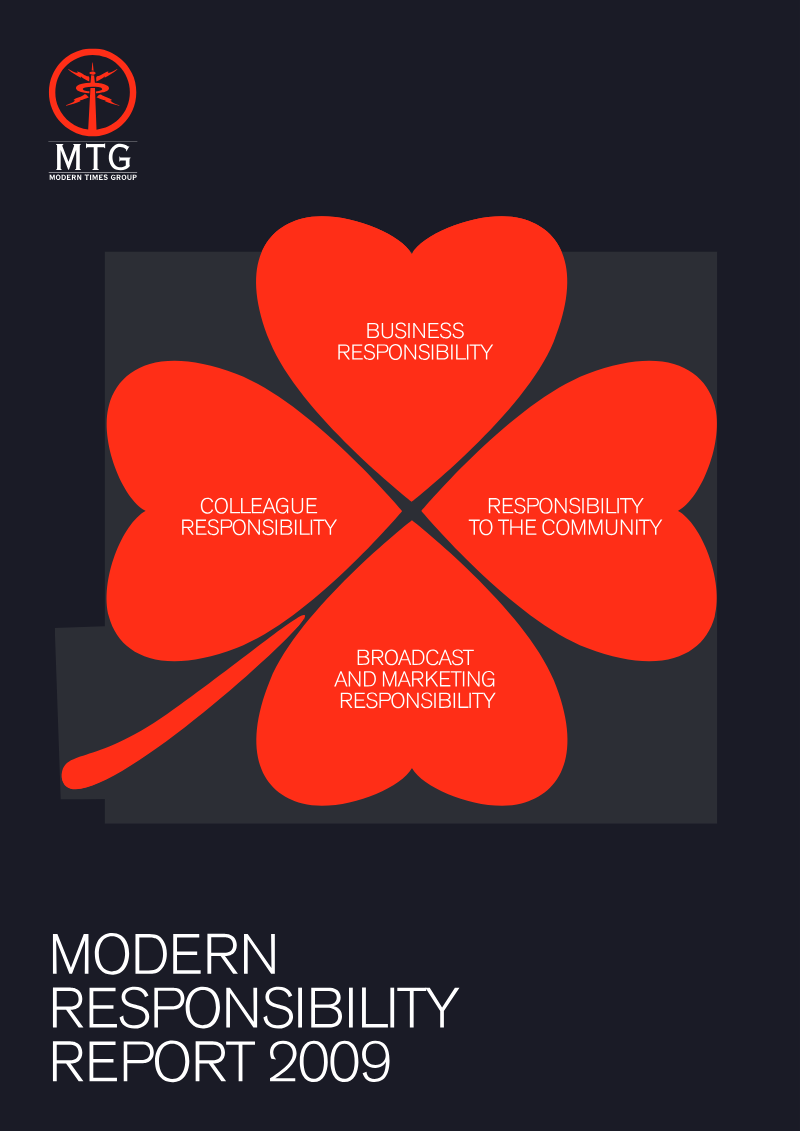
The 2009 Modern Responsibility Report presents Modern Times Group’s (MTG) effort to embed corporate responsibility across its broadcasting and media operations while navigating the aftermath of the 2008‑09 financial crisis. The report’s thesis is that a structured, multi‑pillar responsibility programme can coexist with commercial growth, even as the group expands its channel portfolio and geographic reach.
In 2009 MTG recorded net sales of SEK 14.2 billion and launched three new channels—TV3 Puls, Prima COOL and Viasat Hockey—while completing a major restructuring of its Bulgarian assets. Despite revenue growth, operating income fell to a loss of SEK 1.4 billion and basic earnings per share turned negative at ‑30.86 SEK. The responsibility framework, introduced in 2004, is now governed by the CEO, board directors, a central committee and local “Green Ambassadors,” with KPIs, internal audits and external consultancy guiding progress. Targets for 2010 include broader KPI coverage, reduced carbon emissions and enhanced stakeholder communication across business, broadcast‑marketing, colleague and community dimensions.
Employee engagement proved strong: 86 % of the 2,906 staff across 38 national markets completed the annual survey, 88 % expressed enthusiasm for their work and 90 % embraced the company’s three lead words. Gender balance approached parity overall (52 % male, 48 % female) though managerial levels remained skewed (63 % male, 37 % female). Internal recruitment accounted for 40 % of hires.
The carbon footprint for 2009 amounted to roughly 13 000 t CO₂e across 19 countries, split evenly between facilities and office‑supply material use, with an intensity of 4.2 t CO₂e per employee (0.9 t per MSEK turnover). ISO 14001 certification for the Swedish radio division and energy‑efficient headquarters illustrate concrete mitigation steps. Partnerships with WWF and Sweden’s BLICC, together with expanded carbon‑footprint audits, underscore MTG’s commitment to environmental stewardship within the
- MTG reported 2009 net sales of SEK 14.2 billion, though operating income resulted in a loss of SEK 1.4 billion and earnings per share fell to -30.86 SEK.
- The company expanded its portfolio during the 2008-09 financial crisis by launching TV3 Puls, Prima COOL, and Viasat Hockey, alongside a major restructuring of Bulgarian assets.
- Employee engagement remained high, with 86% of the 2,906-person workforce participating in the annual survey and 88% reporting enthusiasm for their work.
- Gender parity across the total workforce was nearly achieved at 52% male and 48% female, though management roles remained male-dominated at 63%.
- The company's 2009 carbon footprint totaled approximately 13,000 t CO2e, representing an intensity of 4.2 t CO2e per employee or 0.9 t per MSEK of turnover.
+3
Modern Times GroupJan 2009
Report31 pages
Hábitos e Iniciación a los Videojuegos en Mayores de 35 Años: Diciembre de 2008
I’m ready to synthesize the material, but I need the remaining section summaries to produce a complete, accurate overview. Could you please provide the rest of the section-by-section information?
- The report, published in December 2008, focuses on video game habits and initiation among individuals over 35 years old.
- Among those aged 35-44, 43.4% play video games on weekends, 27.8% daily, and 28.8% did not specify.
- For individuals aged 65 and older, 68.4% play video games on weekends, 7.9% daily, and 23.7% did not specify.
- Entertainment/distraction is the primary appeal of video games for 50% of 35-44 year olds, 40% of 45-54 year olds, 30% of 55-64 year olds, and 20% of those 65 and older.
- A significant portion of older gamers are new to video games: 76.3% of those 65+ started less than 3 years ago, and 41.5% of 55-64 year olds started less than 3 years ago.
+1
AEVIDec 2008
Report13 pages
MTG Corporate Responsibility Report 2008
Modern Times Group’s Modern Responsibility programme, launched in 2004, is presented as a strategic framework for leveraging entertainment to create social and environmental value across the company’s global operations. The initiative is positioned as core to MTG’s mission to “maximise the power of entertainment,” with responsibility articulated through five measurable pillars: community, environment, colleagues, broadcasting standards, and marketing.
In 2008 the group reached 125 million viewers in 30 countries, operating 70 brands across television, radio, online retail and production. Financial performance showed net sales rising to SEK 13.2 billion and operating income to SEK 2.6 billion, while basic earnings per share more than doubled to SEK 43.25. Employee data indicate an average workforce of 2 810, with 35 % female representation, a 22 % turnover rate and 461 training days delivered to 46 % of staff. Community engagement generated 78 million SEK of donated airtime and raised 56 million SEK for charities, while environmental actions reduced office energy use by 28 % relative to national standards and produced a total carbon footprint of 4 223 tonnes CO₂ (3.0 t per employee), calculated under the Greenhouse Gas Protocol with external verification.
Stakeholder governance is overseen by senior management, a dedicated coordinator and a Modern Responsibility Committee, supported by local ambassadors in each market. Reporting draws on internal data, carbon accounting from Tricorona Climate Partner, and regular stakeholder feedback through surveys and focus groups. The 2008 snapshot underscores MTG’s expanding footprint, its commitment to ethical broadcasting, and its ambition to deepen responsibility reporting in subsequent years.
- In 2008, MTG achieved strong financial growth with net sales of SEK 13.2 billion, an operating income of SEK 2.6 billion, and basic earnings per share of SEK 43.25.
- MTG’s community engagement efforts in 2008 resulted in SEK 78 million worth of donated airtime and SEK 56 million raised for charitable causes.
- The company maintained a workforce of 2,810 employees across 30 countries, with 35% female representation and a 22% staff turnover rate.
- MTG reduced office energy consumption by 28% relative to national standards and recorded a total carbon footprint of 4,223 tonnes of CO2, averaging 3.0 tonnes per employee.
- The Modern Responsibility programme is governed by a dedicated committee and senior management, utilizing external verification from Tricorona Climate Partner to track carbon accounting.
+1
Modern Times GroupJan 2008