Key insights
6 slides
Key number
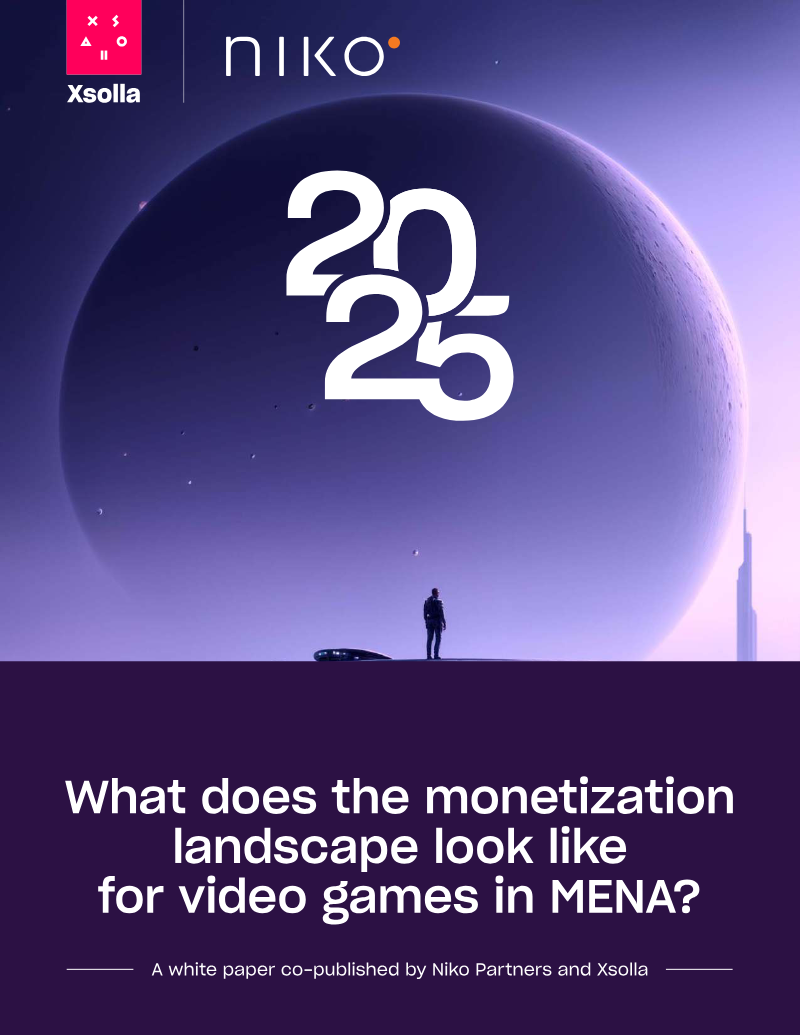
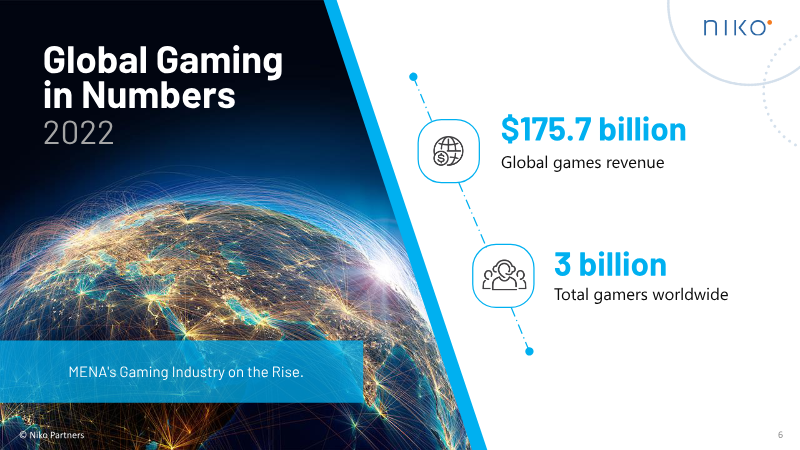
MENA-3 generated $1.8 billion in gaming revenue in 2022.
The region supported 67.4 million gamers as of 2022. Growth is driven by a mobile-first ecosystem.
What changed
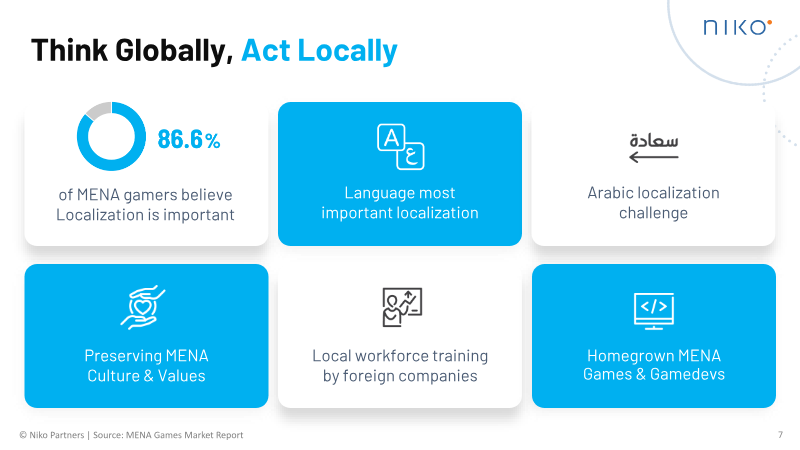
86.6% of regional gamers prioritize language localization.
Successful titles integrate regional celebrities, cultural themes, and Arabic-language support. The market is fostering a domestic development pipeline through workforce training.
Strategic shift
The region is transitioning from a consumer market to a development hub.
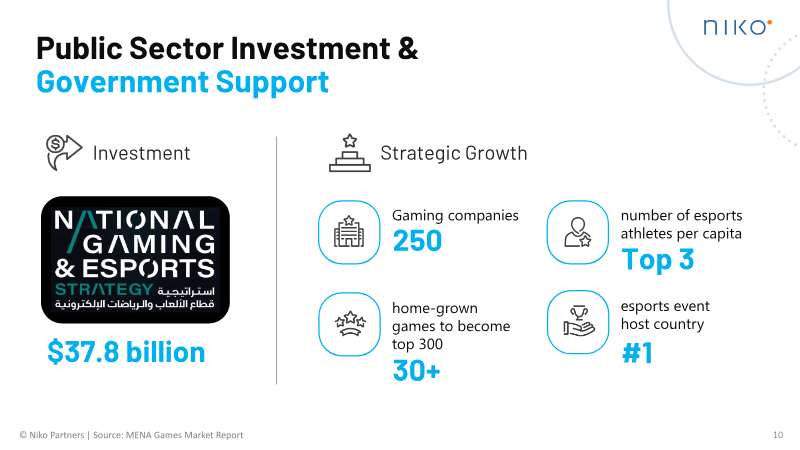
Saudi Arabia’s National Gaming and Esports Strategy and Savvy Games Group M&A activity support this shift. These efforts aim to build a global hub for game development.
Page 17 of the report- 01Consumer marketMENA-3 generated $1.8 billion in revenue in 2022.
- 02Strategic initiativesSaudi Arabia’s National Gaming and Esports Strategy and Savvy Games Group M&A.
- 03Development hubAim to transition into a global hub for game development and esports.
Engagement driver
73% of regional gamers participate in competitive gaming.
Esports benefits from high engagement rates and substantial public sector backing. Local influencers and massive prize pools create a self-sustaining cycle of fan engagement.
Global strategy
International firms from China use MENA as a strategic growth market.
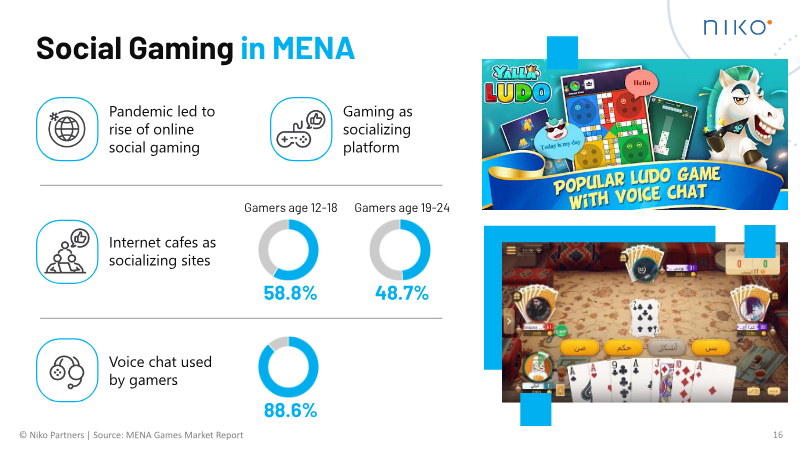
These firms capitalize on high social gaming engagement and voice chat trends. The region is increasingly viewed as a strategic partner for international firms.
Market composition
MENA-3 revenue and gamers are distributed across three countries.
The region comprises Saudi Arabia, the United Arab Emirates, and Egypt.
Page 4 of the reportEgypt10.6
Saudi Arabia58.7
United Arab Emirates30.7
1 / 6
Ask AI about this report