Star Wars
Game
Documents about Star Wars
Microsoft E3 Press Conference | Games ReCAP Episode 002
Microsoft’s E3 2019 presentation signaled a strategic pivot toward long-term ecosystem building, characterized by aggressive studio acquisitions and a focus on service-based growth.
- Microsoft is aggressively acquiring studios, including Obsidian, Ninja Theory, and Double Fine, to build an exclusive content library for the upcoming Scarlett console launch.
- The industry is shifting toward double-A development as a sustainable financial alternative to the high-risk, blockbuster-scale projects that currently dominate the market.
- Microsoft’s E3 2019 presentation prioritized service-based growth through the Game Pass model, though it faced criticism for lacking the surprise announcements needed to drive momentum for Gears 5 and Halo Infinite.

Could Episode 9 SAVE Star Wars? — Trailer Reaction
The provided text captures a critical reaction to the trailer for Star Wars: The Rise of Skywalker, framed through the perspective of a narrative-focused game developer.
- The Rise of Skywalker trailer functions as a strategic course correction designed to address audience dissatisfaction with the narrative direction of The Last Jedi.
- The film attempts to restore franchise continuity by re-centering the plot on the Skywalker family legacy and addressing inconsistencies in character development.
- Production utilized existing b-roll footage of Carrie Fisher rather than CGI to maintain authenticity in the portrayal of her character.
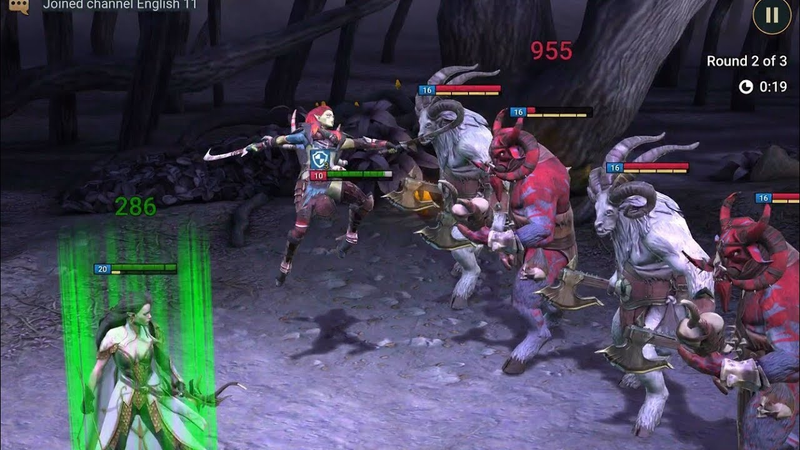
RAID: SHADOW LEGENDS | Gameplay
Raid: Shadow Legends is a squad-based mobile RPG developed by Plarium, a studio historically recognized for its expertise in 4X strategy titles.
- Plarium, a studio historically focused on 4X strategy, entered the character-collection RPG market with Raid: Shadow Legends to compete with established titles like Star Wars: Galaxy of Heroes and Marvel Strike Force.
- The core gameplay loop centers on managing a squad of four champions through turn-based combat, utilizing an energy-based system to progress through campaign missions, dungeons, and PvP arena modes.
- The game prioritizes meta-game progression over twitch-based reflexes, offering auto-battle modes with speed multipliers to facilitate the systematic grinding required for character optimization.
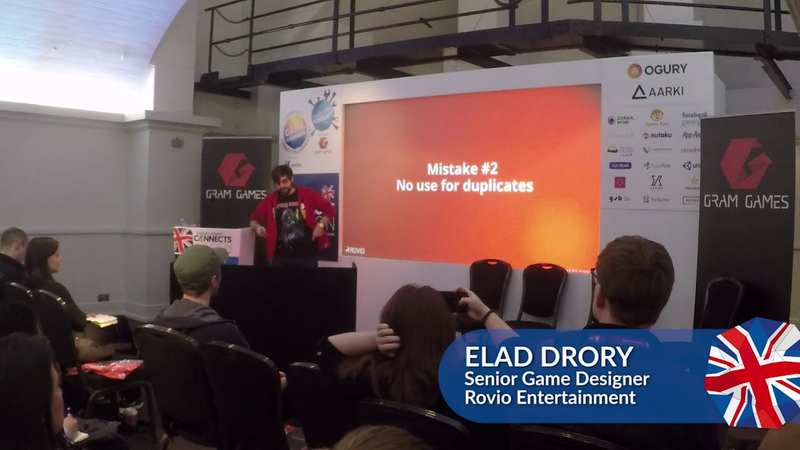
Top 5 mistakes designing free-to-play collectibles
This analysis outlines five critical design mistakes in free-to-play (F2P) collectible games, drawing on industry experience from titles like Angry Birds Evolution, Clash Royale, and Star Wars: Galaxy of Heroes.
- Prioritize long-term retention by making characters easy to acquire while gating their full potential behind significant time and resource-heavy upgrade paths.
- Prevent stagnant meta-games by enforcing collection diversity through attribute-based content gates, performance-based event boosts, and unit-specific counters.
- Mitigate player frustration in random drop systems by implementing 'safety nets' such as pity counters and currency-based exchange paths to anchor the value of digital goods.
Real Time Rendering for Feature Film: Rogue One
The integration of real-time rendering into the production of Rogue One: A Star Wars Story represents a pivotal shift in visual effects workflows, proving that high-fidelity game engine technology can meet the rigorous aesthetic standards of feature film production.
- The Advanced Development Group successfully integrated Unreal Engine into the production of 'Rogue One' to render the character K-2SO, proving game engine technology can meet high-end feature film aesthetic standards.
- The workflow utilized open standards like Alembic and Material X to import complex ILM assets into a real-time environment without requiring custom rebuilding.
- By employing custom solutions for geometry caching and temporal super-sampling, the team achieved film-quality beauty renders at 9K resolution.
Star Wars: The Old Republic - Creating A True Competitor in the AAA MMO Space
The development of Star Wars: The Old Republic was driven by the ambition to challenge the established AAA MMORPG market through a strategy of product differentiation and massive scale.
- To manage the massive scale of Star Wars: The Old Republic, BioWare employed a workforce of 30 producers, 75 designers, and 120 engineers, with 40 of those engineers dedicated solely to platform management and infrastructure.
- The project set a Guinness World Record for the largest voiceover project ever completed, featuring six times the dialogue of Dragon Age and nine times that of Mass Effect.
- BioWare transitioned from a discipline-based organization to a matrix structure to prevent knowledge silos, using 'strike teams' to manage up to 40 concurrent development groups.
Autonomy, Mastery, Purpose - Building a Hyper-Engaged Team
The transition from traditional, high-crunch production models to a philosophy centered on autonomy, mastery, and purpose represents a fundamental shift in managing AAA game development.
- Shift from top-down management to a framework based on autonomy, mastery, and purpose to improve morale and efficiency in AAA development.
- Operational success is driven by a structured seven-week milestone cadence supported by three specific review processes: update, steering, and quality.
- Maintain team integrity during growth by keeping units small and cross-disciplinary, distributing work across multiple spaces or subcontractors rather than expanding individual team sizes.

Why Star Wars: Galaxy of Heroes' small changes add up to something big
Star Wars: Galaxy of Heroes, a long-running mobile RPG, demonstrates how incremental quality-of-life updates can significantly enhance player retention and engagement.
- Implementing multi-sim functionality reduces friction in daily gameplay loops by allowing veteran players to bypass repetitive manual battles and instantly claim rewards.
- Developer responsiveness to community feedback through quality-of-life updates is a primary strategy for increasing long-term player retention in mobile RPGs.
- The game balances accessibility for newcomers with strategic depth for veterans by layering complex systems like character mods, gear tiers, and guild activities over core progression.
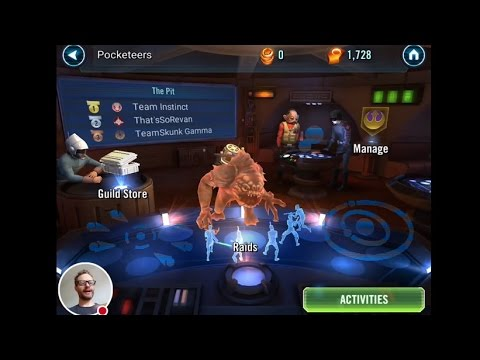
My failure to run a guild in Star Wars: Galaxy of Heroes
The introduction of guild systems in Star Wars: Galaxy of Heroes serves as a critical mechanism for long-term player retention and monetization within the free-to-play mobile gaming landscape.
- Guild systems are essential for long-term player retention and monetization in free-to-play mobile games by incentivizing daily engagement through collective goals.
- Social structures like guilds allow developers to gate exclusive content, such as unique character shards for units like Han Solo, behind collaborative raid events.
- The transition to guild-based play was a strategic evolution for Star Wars: Galaxy of Heroes, which had already achieved top-ten grossing status in the U.S. prior to their implementation.
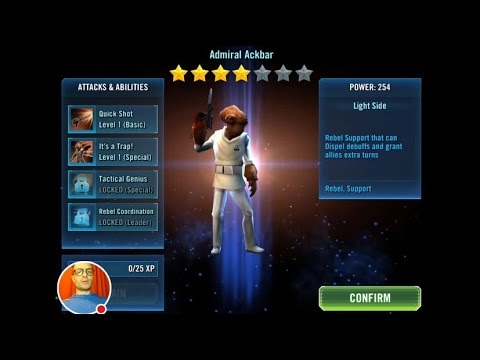
Unlocking Admiral Ackbar in SW: Galaxy of Heroes
Star Wars: Galaxy of Heroes serves as a case study in the mechanics of character progression and player retention within the mobile RPG genre.
- Star Wars: Galaxy of Heroes utilizes a hybrid model of card collection and tactical combat, requiring players to manage teams of five characters through missions.
- Progression is gated by three core systems: collecting character shards for rank-ups, using training droids for leveling, and equipping gear to boost combat attributes.
- The game’s economy forces players to balance limited resources, specifically soft currency (credits) and energy, which creates significant friction in late-stage progression.
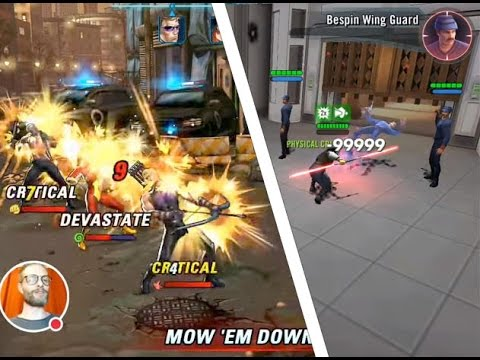
Marvel: Avengers Alliance 2 vs Star Wars: Galaxy of Heroes
Marvel: Avengers Alliance 2 and Star Wars: Galaxy of Heroes represent two distinct approaches to the mobile turn-based squad RPG genre, both leveraging major Disney-owned intellectual properties.
- Marvel: Avengers Alliance 2 and Star Wars: Galaxy of Heroes both utilize a three-wave combat structure and character-based progression, yet they target different segments of the mobile RPG market.
- Marvel: Avengers Alliance 2 focuses on tactical depth by requiring manual input for complex class-based mechanics, buffs, and debuffs without an automated combat option.
- Star Wars: Galaxy of Heroes prioritizes accessibility and time-efficiency through a streamlined combat system with fewer ability choices per character.

FTUE: Marvel Avengers Alliance 2
Marvel Avengers Alliance 2 represents Disney’s transition of its successful social media franchise into the mobile squad-based role-playing game market.
- Marvel Avengers Alliance 2 marks Disney's strategic pivot from social media to the mobile squad-based RPG market.
- The game utilizes a three-by-three grid combat system, mirroring the design architecture found in competitors like Star Wars: Galaxy of Heroes.
- The first-time user experience prioritizes narrative immersion and a hands-off tutorial structure that emphasizes early strategic decision-making and turn-order management.
Companies behind it

As the documents state it.