Vicarious Visions
CompanyUnited States
2 documents in the library are about Vicarious Visions, from writers such as Game Developers Conference and The Game Business. Each has a summary and key insights with the page they come from.
Connections
The documents about Vicarious Visions on the inner ring, the other games and companies they name on the outer one. Select a cover to see it up close and open it in a new tab; drag to move, pinch or Ctrl + scroll to zoom.
On Steam
Steam estimates as of 9 Oct 2026. Revenue is premium revenue on Steam only: game sales, without DLC.
- Revenue as developer
- $23.8M
- 2 games
- Units sold
- 943K
- as publisher or developer
- Headquarters
- United States
Vicarious Visions’s best-selling games on Steam
| Game | Released | Share of the best seller | Revenue | Units |
|---|---|---|---|---|
| Crash Bandicoot™ N. Sane TrilogyDeveloper | 2018 | $20.8M | 802K | |
| Tony Hawk's™ Pro Skater™ 1 + 2Developer | 2023 | $3.0M | 140K |
Documents about Vicarious Visions

Star Fox developer Velan: How to survive as a North American game studio
Operating within the high-cost North American game development landscape requires a strategic shift away from the traditional, multi-year development cycles that often stifle innovation.
- Studios should adopt a lean, agile development model that prioritizes rapid prototyping and tight feedback loops to avoid the financial risks of multi-year, large-scale projects.
- Financial stability is best achieved by balancing a portfolio of stable, partner-funded AA-scope projects with smaller, self-funded original intellectual properties.
- Operational efficiency relies on maintaining a compact core team of highly skilled talent for creative direction while utilizing strategic outsourcing to manage production scaling.
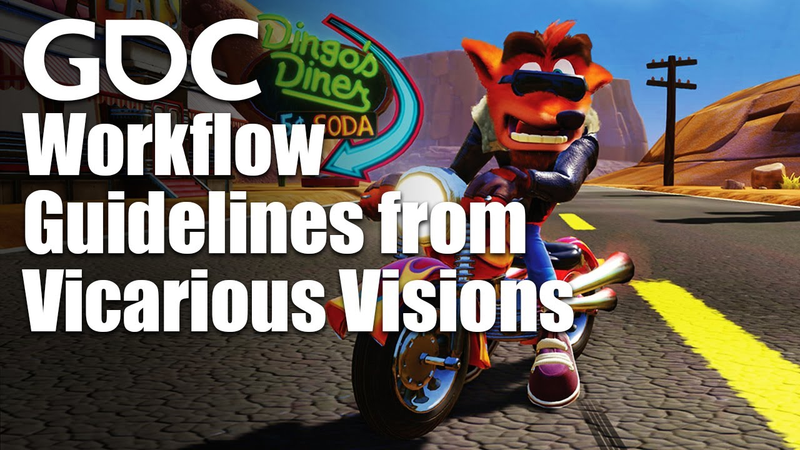
Build Great Tools: Workflow Guidelines from Vicarious Visions
Engineers must prioritize human-centered design to transform game development utilities from mere functional requirements into cohesive, efficient ecosystems.
- Prioritize human-centered design to align complex engine architectures with the conceptual models of content creators, transforming functional utilities into efficient ecosystems.
- Reduce technical friction by implementing intuitive task clustering, seamless context switching, and keyboard acceleration to ensure tools augment rather than impede the creative process.
- Implement robust, universal features such as comprehensive undo/redo, automated source control, and actionable error messaging to eliminate reliance on tribal knowledge and reduce cognitive load.