Star Wars
Game
Documents about Star Wars
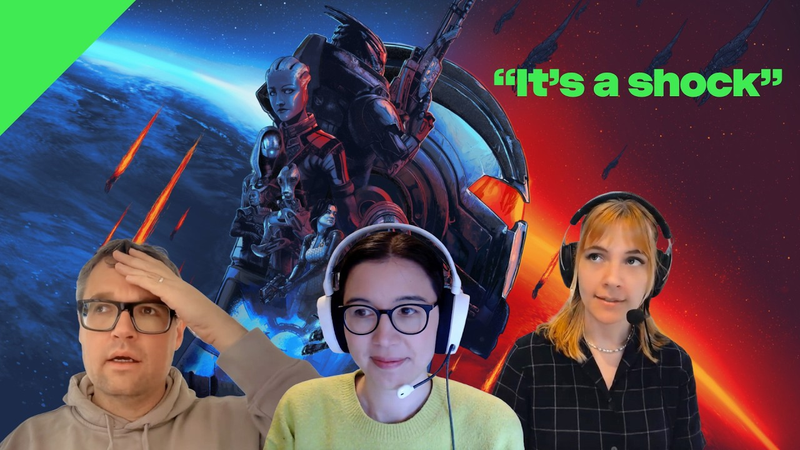
Where now for Mass Effect? Plus, Ken Kutaragi’s console fears and the rise of Poki
The gaming industry is currently navigating a period of profound structural transition, marked by the consolidation of major publishers and the emergence of alternative distribution models.
- Major publishers like Electronic Arts are pivoting toward live-service titles like EA Sports FC and Apex Legends, leading to studio closures such as BioWare and the cancellation of the Mass Effect franchise.
- Web-based gaming platform Poki has reached 100 million monthly users by utilizing an ad-supported, low-friction browser model that bypasses traditional mobile app store fatigue.
- Industry veteran Ken Kutaragi has expressed concerns regarding the long-term viability of high-end hardware, suggesting a shift toward lightweight, network-based systems that prioritize accessibility over raw processing power.
EA Shuts Down BioWare
Electronic Arts has officially shuttered the legendary game studio BioWare as part of a broader corporate reorganization and workforce reduction.
- Electronic Arts has officially closed BioWare as part of a corporate reorganization that includes 400 total job cuts, with 50 positions eliminated at the studio.
- The closure of BioWare results in the cancellation of the next entry in the Mass Effect franchise, which was in early-stage development.
- Dragon Age: The Veilguard sold approximately 1.5 million copies, failing to meet Electronic Arts' internal performance targets.

How one Star Wars actor became the CEO of Commodore
Commodore, under the leadership of CEO Christian Simpson, is executing a dual-track business strategy that blends retro-computing nostalgia with modern digital minimalism.
- Commodore has successfully pivoted from a niche hobbyist brand to a multifaceted publisher, selling over 27,000 Commodore 64 units since its relaunch.
- The 'Comeback 8020' flip phone, which promotes digital minimalism by excluding social media, achieved first-weekend sales volume equal to the first three months of Commodore 64 hardware sales.
- The company is executing a dual-track business strategy that balances retro-computing nostalgia with modern digital minimalism to capture a broader market beyond traditional gaming enthusiasts.
Epic Games Goes All In On AI For Disney Shooter
Epic Games has initiated a significant strategic pivot, transitioning its upcoming collaborative project with Disney—an extraction shooter featuring Marvel and Star Wars intellectual property—into an AI-first production.
- Epic Games has delayed its upcoming Disney-licensed extraction shooter and mandated an 'AI-first' production strategy, requiring staff to replace handwritten code and traditional art workflows with generative AI tools.
- CEO Tim Sweeney is aggressively positioning Epic Games as a leader in the AI transition, viewing the technology as essential for the company's survival and future competitiveness in game development.
- The project, which features Marvel and Star Wars intellectual property, has faced multiple delays and internal development challenges, including shifting priorities and inconsistent decision-making.

Star Fox developer Velan: How to survive as a North American game studio
Operating within the high-cost North American game development landscape requires a strategic shift away from the traditional, multi-year development cycles that often stifle innovation.
- Studios should adopt a lean, agile development model that prioritizes rapid prototyping and tight feedback loops to avoid the financial risks of multi-year, large-scale projects.
- Financial stability is best achieved by balancing a portfolio of stable, partner-funded AA-scope projects with smaller, self-funded original intellectual properties.
- Operational efficiency relies on maintaining a compact core team of highly skilled talent for creative direction while utilizing strategic outsourcing to manage production scaling.

TWIG #399: GTA VI Breaks Netflix, EU Targets Roblox and Zero Company's Studio Implodes
Gamescom 2024 solidified its status as a premier global event, drawing 368,000 attendees with a significant 72% of exhibitors originating from outside Germany.
- Gamescom 2024 attracted 368,000 attendees with 72% of exhibitors based outside Germany, underscoring the event's evolution into a global, fan-centric industry hub.
- The marketing campaign for GTA VI has reached non-traditional audiences through partnerships like Netflix, driving early pre-order revenue estimates of $500 million.
- The European Union has designated Roblox as a 'very large online platform,' signaling a shift toward stricter regulatory oversight for major gaming platforms.

How to announce a live service game in 2026? Plus, Star Wars, Nex Playground and new Xbox leaders
The gaming industry is currently undergoing a period of structural realignment and strategic recalibration.
- To overcome pervasive player skepticism toward live service games, developers must shift from hype-driven marketing to radical transparency and authentic, two-way community engagement.
- Success in the current market requires studios to remain flexible enough to pivot product development based on direct player feedback, effectively using a core base of advocates to validate titles.
- The gaming industry is undergoing a structural realignment characterized by major corporate shifts, such as Embracer Group deconstructing operations and Xbox restructuring executive leadership to prioritize product strategy.
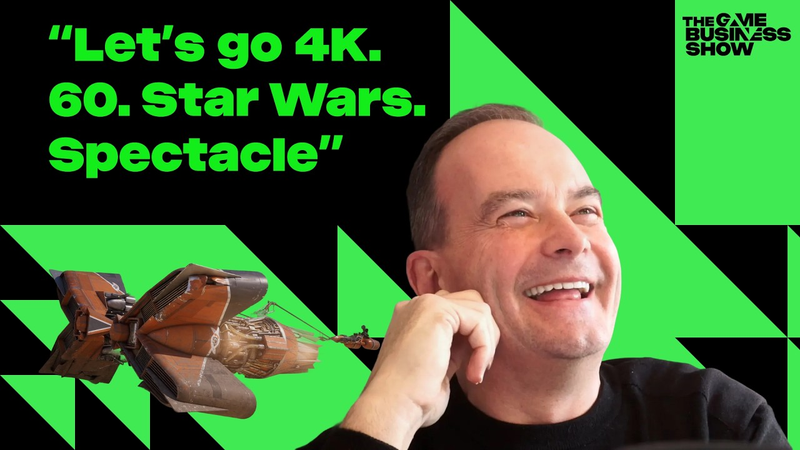
How come Fuse Games gets to make a Star Wars racing game?
Fuse Games, a UK-based independent studio founded three years ago by former leaders from EA’s Criterion Games, is currently developing Star Wars: Galactic Racer.
- Fuse Games, a 75-person independent studio founded by former Criterion Games leaders, is developing 'Star Wars: Galactic Racer' using Unreal Engine.
- The studio employs a distributed development model, partnering with other UK studios to scale capacity and avoid the industry's traditional cycle of project-based hiring and layoffs.
- The game aims to revitalize the racing genre by blending 4K 60fps visuals with 'racing adventure' elements that allow players to inhabit canonical Star Wars characters.

Ubisoft: How to Destroy $15 Billion in Shareholder Value | Pixels & Profits
Ubisoft is currently undergoing a catastrophic collapse in market capitalization, plummeting from a 2018 peak of $16.5 billion to less than $1 billion.
- Ubisoft’s market capitalization has collapsed from a 2018 peak of $16.5 billion to less than $1 billion, despite annual revenue declining by only approximately 20%.
- The company’s revenue-per-employee metric is currently one-fourth that of industry peers like Electronic Arts, highlighting severe operational inefficiencies and a bloated corporate structure.
- Management has consistently diverted resources from core franchises like Assassin’s Creed and Rainbow Six Siege toward underperforming, trend-chasing projects such as Skull and Bones and Star Wars Outlaws.

How Angry Birds reached the stars
The Angry Birds franchise serves as a definitive case study in transforming a mobile game into a global transmedia powerhouse.
- Angry Birds achieved the first-ever 1 billion download milestone in the mobile gaming sector, providing a massive ecosystem that facilitated high-profile partnerships for subsequent titles.
- Strategic partnerships with major entertainment entities like 20th Century Fox (Angry Birds Rio), NASA (Angry Birds Space), and Lucasfilm (Angry Birds Star Wars) allowed Rovio to leverage external marketing muscle and distribution channels without relying on a traditional internal marketing budget.
- The Angry Birds Star Wars licensing model set a premium industry standard by charging a 28% total royalty rate—14% for Rovio and 14% for Lucas Arts—while managing over 1,200 partnership opportunities to maintain brand exclusivity.

TWIG #347 Call of Duty Movie, Google's New Court Case, De-Monetization of Real-Money Gaming
The gaming industry currently faces a period of significant strategic recalibration, marked by the failure of high-profile projects and the volatility of emerging markets.
- The gaming industry is undergoing a strategic shift away from over-scoped, high-budget projects, evidenced by Rec Room cutting its workforce by 50% due to poor capital deployment.
- Regulatory crackdowns on real-money gaming in India have created significant market instability, leading analysts to advise firms to prioritize the more predictable U.S. and European markets.
- A growing divide exists between Eastern and Western markets, where Chinese players show strong demand for mobile shooters like Delta Force, while Western titles like Destiny Rising struggle with poor cultural fit and aggressive monetization.

Week in Mobile Games E61: Zynga's successes and failures, and Moon Active takes the fight to Scopely
The mobile gaming industry is currently defined by a strategic shift toward hybrid-casual models, the dominance of 4X strategy titles, and the ongoing evolution of direct-to-consumer monetization.
- Whiteout Survival has become a dominant 4X strategy title, generating over $3 billion in gross player spending in less than 30 months.
- Rolic successfully transitioned to a hybrid-casual model, with its top title Color Block Jam earning over $100 million by leveraging a challenging difficulty curve to drive retention.
- Publishers are increasingly shifting away from pure hyper-casual mechanics toward hybrid-casual models that prioritize long-term engagement and in-app purchases.
Companies behind it

As the documents state it.