Samsung
Company
Documents about Samsung

China Mobile Market Update: November 2016
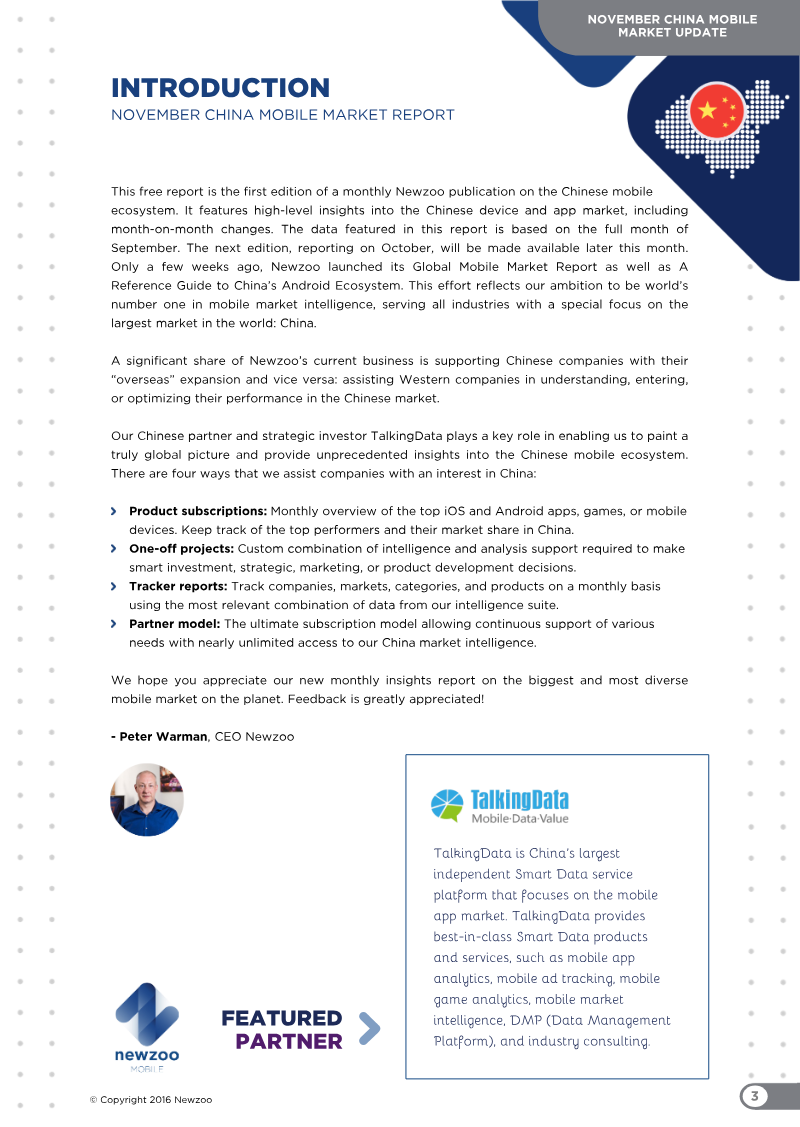
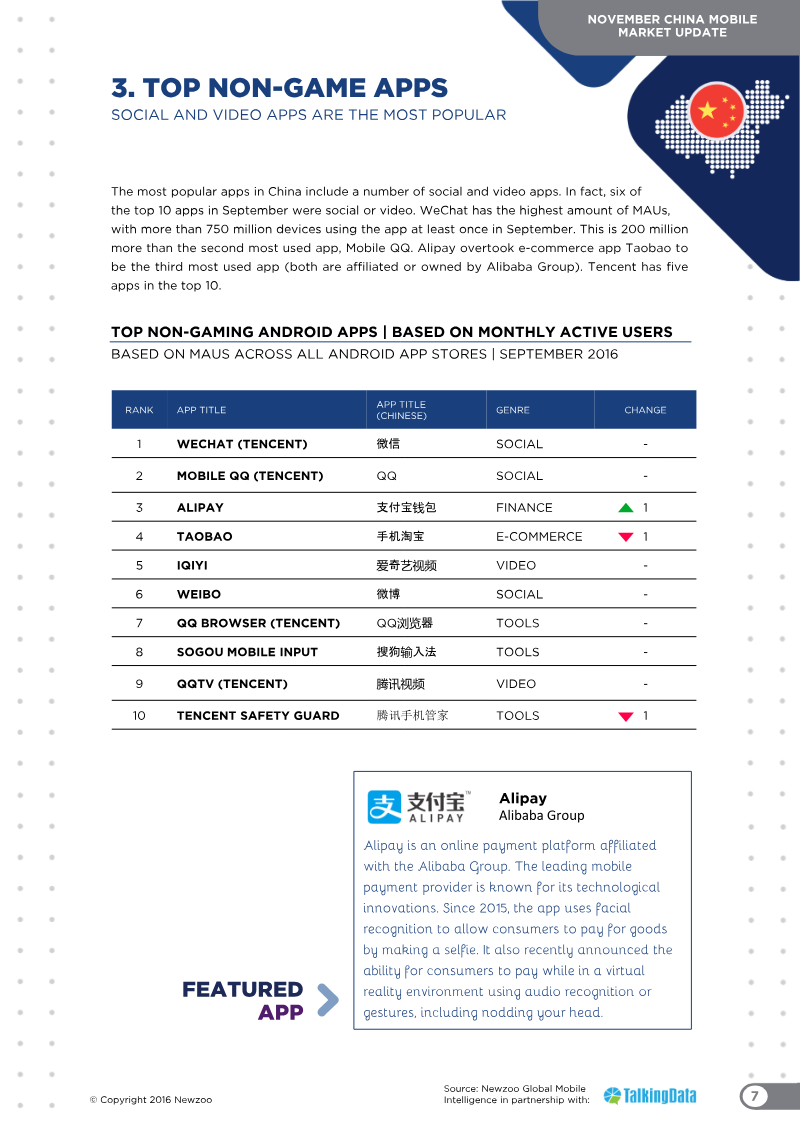
The November 2016 China Mobile Market Update provides a comprehensive analysis of the Chinese mobile ecosystem, focusing on device market share, app store performance, and top-grossing applications for September 2016.
- Tencent and NetEase dominate the Chinese mobile gaming revenue landscape, with Tencent’s 'King of Glory' leading Android and NetEase’s 'Onmyoji' achieving top-grossing status on iOS shortly after its release.
- Apple remains the leading mobile brand in China with a 23.6% market share, while OPPO has displaced Samsung to become the fourth-largest manufacturer behind Huawei and Xiaomi.
- Tencent’s Myapp holds 24% coverage of the Android app store market, while Alibaba’s acquisition of Wandoujia has driven significant growth in that platform's user base.
Get discovered on the Galaxy Apps store
Samsung’s Emerging Platforms division focuses on fostering developer partnerships to revitalize the Galaxy Apps store and expand the company’s presence across mobile, tablet, television, wearable, and virtual reality (VR) ecosystems.
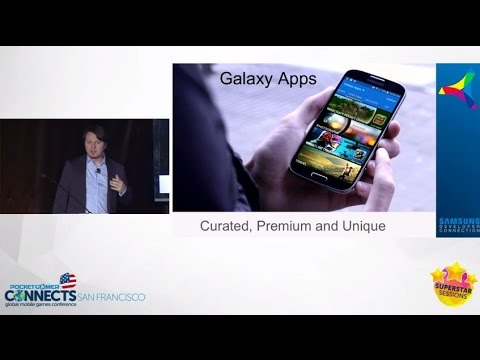
- Samsung is transitioning the Galaxy Apps store into a curated, premium storefront to address app discovery challenges by prioritizing quality over volume through expert-led selection.
- Samsung devices currently generate approximately 65 percent of all revenue within the Android ecosystem, a market share the company aims to increase through exclusive, high-quality content.
- The wearables market is projected to reach over 120 million units shipped annually by 2018, maintaining a 35 percent year-over-year growth rate.

DeNA, Samsung and Disney keynote Pocket Gamer Connects San Francisco 2015
The mobile gaming industry is currently undergoing a strategic shift toward high-value intellectual property, curated distribution, and long-term live operations to combat rising user acquisition costs.
- DeNA plans to launch five mobile games featuring major intellectual properties between late 2015 and March 2017, targeting hundreds of millions of users globally.
- Samsung is shifting its app store strategy toward a curated experience, partnering with reputable media sources to recommend a modest volume of high-quality content rather than hosting hundreds of thousands of apps.
- Disney Interactive utilizes a hybrid development model, balancing in-house production with strategic licensing partnerships, such as their collaboration with Kabam for midcore titles and DeNA for regional expertise.
Guided tour around Nordic Game 2015
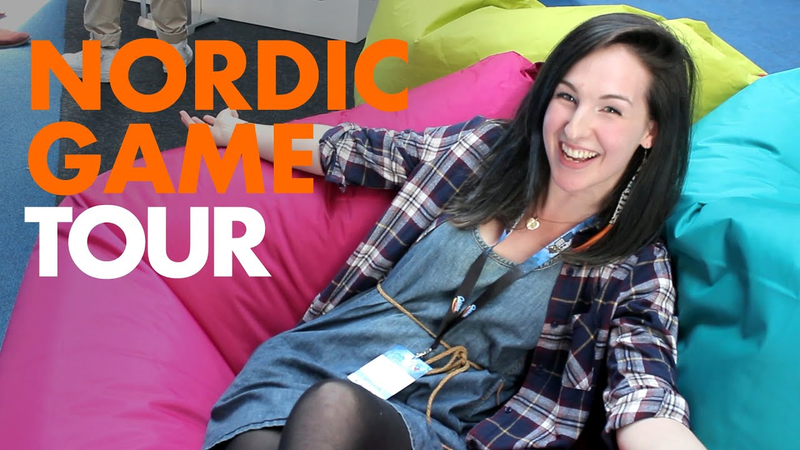
Nordic Game 2015 serves as a premier showcase for the Nordic region’s influential game development sector, highlighting the area’s status as a global hub for major titles and studios such as Minecraft, Rovio, and Supercell.
- Nordic Game 2015 highlights the Nordic region as a global gaming hub, anchored by major industry players including Minecraft, Rovio, and Supercell.
- The three-day conference features 60 industry speakers across three distinct tracks focused on professional development and market trajectory.
- The event functions as a primary networking and exhibition nexus for developers, industry professionals, and hardware manufacturers to facilitate international collaboration.

Patrick O'Luanaigh on nDreams' VR epiphany
Virtual reality represents a transformative shift in the gaming industry, primarily due to its unique ability to generate a sense of presence—the psychological sensation of being physically transported to another location.
- Virtual reality creates a unique sense of presence that amplifies emotional responses like fear and excitement beyond the capabilities of traditional screens.
- Mobile devices serve as the primary entry point for consumer virtual reality, with the Samsung Gear VR currently acting as the industry benchmark for quality and performance.
- Developers must prioritize a consistent 60 frames per second at high resolutions, which requires strict management of draw calls and graphical fidelity.

Does Android Market Share Matter?
The analysis examines whether Android’s dominant global market share serves as a meaningful indicator of success for mobile developers and hardware manufacturers.
- Android’s global smartphone market share reached 84% in Q3 2014, up from 81% the previous year, while Apple’s share declined despite selling 39 million units.
- Android's growth is driven primarily by the low-end hardware market, exemplified by Xiaomi capturing over 5% of global shipments in Q3 2014.
- The disparity in device pricing creates a significant revenue gap, with Google Play app developer payouts significantly trailing Apple’s App Store, despite some narrowing of the delta by H2 2014.
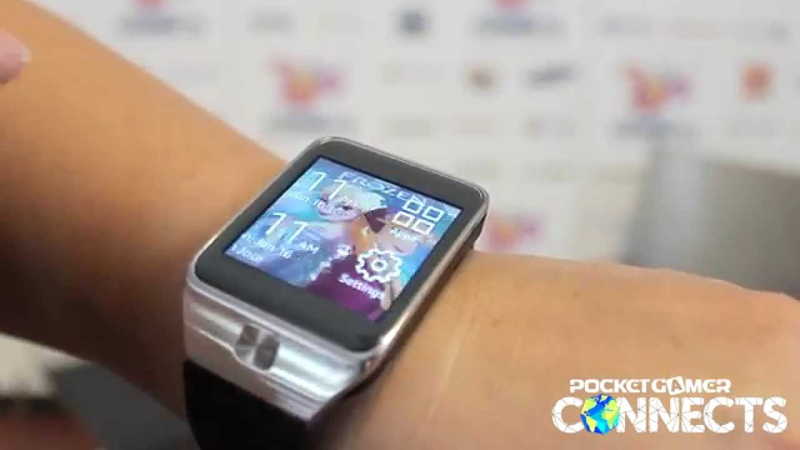
Samsung's Suzanne Nguyen talks the potential of wearables
Wearable technology represents the next major frontier in mobile innovation, shifting the focus from handheld devices to integrated, always-on connectivity.
- Samsung is incentivizing wearable software development through the 'Samsung Gear App Challenge,' which offers a total prize pool of 1.25 million dollars for 200 winners.
- The 2014 strategic vision focuses on the Internet of Things, aiming to integrate mobile and wearable devices into a multi-screen ecosystem that communicates directly with smart appliances and televisions.
- Wearable technology is positioned as the next frontier in mobile innovation, designed to shift user interaction away from handheld devices toward always-on, frictionless connectivity.

Samsung's multi-screen games explained at MWC 2014
Samsung’s multi-screen gaming initiative, showcased at Mobile World Congress 2014, centers on the integration of smartphones as primary input devices for smart TV gaming.
- Samsung’s multi-screen gaming initiative, debuted at MWC 2014, enables smartphones to function as motion-sensing controllers for smart TVs by utilizing tilting and swiping inputs.
- The system relies on a proprietary middleware framework, referred to as BT, which manages data flow and device synchronization between mobile handsets and televisions.
- Games are developed using HTML5 to ensure cross-platform compatibility and minimize latency during gameplay.
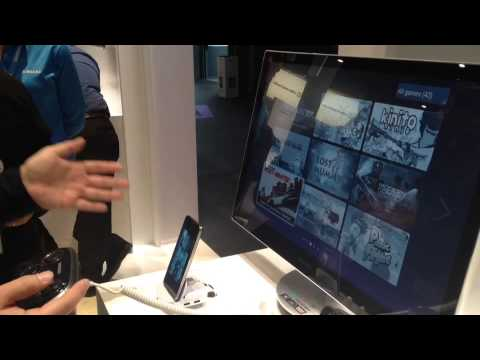
Samsung GamePad and multi-screen gaming demonstration at MWC 2014
Samsung Electronics is expanding its footprint in the mobile gaming ecosystem through the development of a multi-screen gaming platform and the introduction of the S Console game controller.
- Samsung is developing a multi-screen gaming platform that uses Smart TVs as the primary display and up to four mobile devices as controllers connected via Wi-Fi.
- The S Console is a Bluetooth-enabled hardware controller featuring dual directional pads, an analog stick, and shoulder buttons designed to bridge mobile and console-style gaming.
- Users can transition mobile gameplay to a television screen by pairing the S Console with a smartphone, a multimedia dock, and an HDMI connection.

100% Indie explains why you should release for Samsung Apps
The 100% Indie initiative, a collaborative effort between Samsung and Chillingo, serves as a strategic program designed to incentivize independent mobile developers to publish their titles on the Samsung Apps platform.
- The 100% Indie program, a partnership between Samsung and Chillingo, allows independent developers to retain 100 percent of their generated revenue for a six-month period.
- Samsung provides participating developers with personalized business development support, promotional tools, and guidance to increase game visibility on Samsung hardware.
- The platform enforces a rigorous quality assurance process that requires games to be optimized for specific devices, such as the Galaxy S4, to ensure high performance and reliability.
DeNA Q1 FY2011 Operating Results
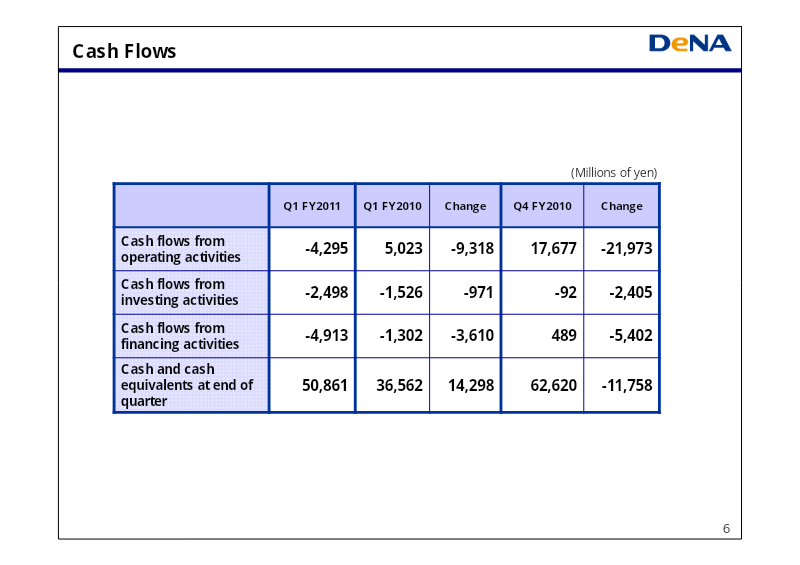
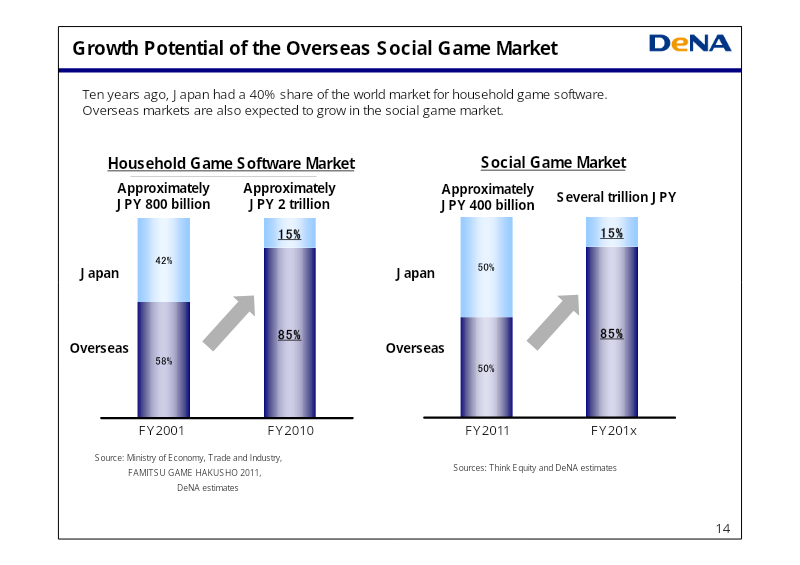
DeNA’s operating results for the first quarter of fiscal year 2011 demonstrate a period of record-breaking financial growth driven by the rapid expansion of its Mobage social gaming platform.
- DeNA reported strong Q1 FY2011 financial growth, with net sales reaching 34,649 million yen (up 43% YoY) and net income rising 45% YoY to 9,456 million yen.
- The Mobage platform reached 29.71 million registered users in Japan, with top-performing third-party titles now generating over one billion Moba-coins in monthly consumption.
- Mobage smartphone usage is scaling rapidly following its December 2010 launch, with ARPU increasing nearly tenfold between December 2010 and June 2011.
Sony Group Form 20-F: FY2004
Sony’s fiscal year 2004 financial reporting details a period of significant structural transition and operational pressure.
- Sony implemented significant restructuring in the Electronics segment during FY2004, resulting in 114 billion yen in personnel-related costs and a reduction of 9,000 employees globally.
- Research and development investment in the Game segment grew by 27.4% to 61.5 billion yen, with a primary focus on next-generation semiconductor architecture and network-related hardware technologies.
- The Music segment continued a multi-year restructuring program initiated in 2001 to address market contraction caused by CD market saturation, piracy, and shifting consumer preferences.