Appcharge
Organization2 documents
Documents
Report17 pages
Direct-to-Consumer: A $17 Billion Market for Mobile Gaming
The mobile gaming industry is undergoing a fundamental structural shift toward direct-to-consumer (DTC) distribution models, a transition that has already established a $17 billion market. By bypassing traditional app store ecosystems, publishers are successfully reclaiming profit margins previously lost to platform fees while simultaneously securing ownership of first-party player data. This evolution represents a strategic pivot from passive reliance on third-party storefronts to the active cultivation of proprietary, data-driven player relationships that foster long-term retention and competitive differentiation.
While the transition presents significant hurdles regarding technical infrastructure and player acquisition, the industry is increasingly adopting a hybrid model. This approach balances internal, player-facing strategies with specialized external partnerships for payment processing and regulatory compliance. Early adopters of these DTC frameworks are already demonstrating superior revenue growth and improved engagement metrics, creating a widening performance gap between firms that have integrated these channels and those that remain tethered to traditional distribution methods.
Looking toward the next decade, the broader digital economy is poised to mirror the success of mobile gaming, with the global in-app purchase market projected to reach $721.4 billion by 2034. DTC strategies are no longer the exclusive domain of large-scale enterprises; they have become a scalable imperative for developers of all sizes. By leveraging personalized experiences and sophisticated marketing analytics, firms can achieve higher year-over-year growth and greater valuation stability. Ultimately, the ability to control the end-to-end user experience has emerged as the primary driver of economic sustainability and long-term success in the modern mobile landscape.
- The mobile gaming direct-to-consumer (DTC) market has reached a valuation of $17 billion as publishers shift away from traditional app store ecosystems to reclaim platform fees.
- The global in-app purchase market is projected to grow to $721.4 billion by 2034, signaling a long-term shift toward DTC distribution across the digital economy.
- DTC models allow publishers to secure ownership of first-party player data, which is being used to drive long-term retention and competitive differentiation.
- Early adopters of DTC frameworks are currently outperforming competitors by demonstrating superior revenue growth and improved engagement metrics.
- Developers are increasingly adopting hybrid models that combine internal player-facing strategies with specialized external partnerships for payment processing and regulatory compliance.
+2
Appcharge
Article
State of the D2C Market in 2026
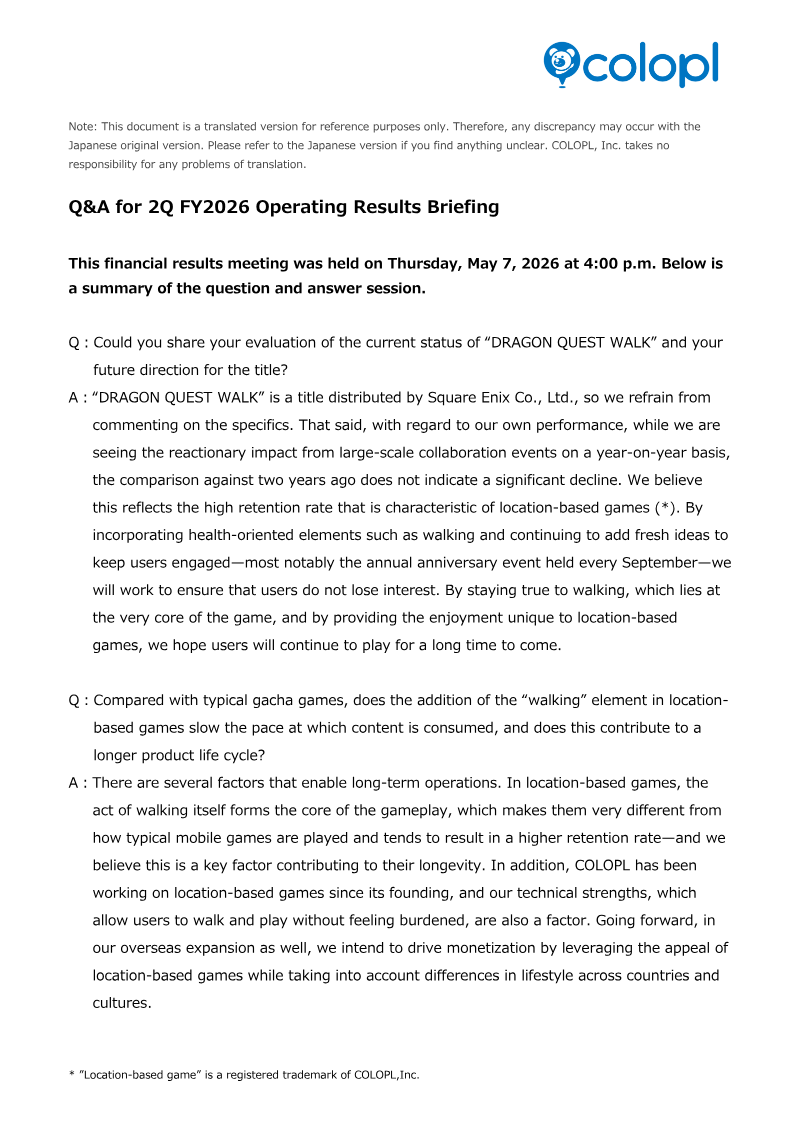
The 2026 state of the direct-to-consumer (D2C) market in mobile gaming reflects a sector in transition, characterized by widespread experimentation but limited operational maturity. While some industry projections estimate the D2C market at $17 billion, these figures are subject to significant debate regarding the methodology used to define incremental versus existing revenue. The primary objectives for studios adopting D2C strategies include driving revenue growth, fostering direct player relationships, and reducing reliance on traditional platform storefronts.
Methodologically, the findings are based on an online survey conducted by the GDC Festival of Gaming between January 19 and February 25, 2026. The sample included 1,206 total respondents, with a refined focus on 281 decision-makers in manager-level positions or higher who possess direct experience with D2C initiatives. Of this subset, 130 respondents are specifically involved in the mobile gaming industry.
Key findings indicate that the majority of companies are still in the early stages of D2C adoption, with 42% exploring the channel and 16% currently testing it. Only 25% of studios report that their D2C operations are scaling or mature. Furthermore, 52% of organizations have yet to adapt their monetization strategies to accommodate direct payments. Operational challenges remain a significant barrier, with 50% of respondents citing player awareness as a primary hurdle, followed by player acquisition and a lack of internal expertise. Despite these obstacles, 38% of companies plan to increase their dedicated D2C headcount in 2026, while 60% intend to maintain current staffing levels. Social media, influencer partnerships, and gaming events are identified as the most effective channels for driving traffic to direct payment platforms.
- The D2C mobile gaming market is in an early stage of adoption, with only 25% of studios reporting mature or scaling operations, while 58% are still in the exploration or testing phases.
- Operational maturity is lagging, as 52% of organizations have not yet adapted their monetization strategies to support direct payment systems.
- Player awareness is the primary barrier to D2C growth, cited by 50% of industry decision-makers, followed by challenges in player acquisition and a lack of internal expertise.
- Despite operational hurdles, 38% of companies plan to increase their dedicated D2C headcount in 2026, with 60% maintaining current staffing levels.
- Social media, influencer partnerships, and gaming events are currently the most effective channels for driving traffic to direct payment platforms.
+1
AppchargeJul 2026