The November 2016 China Mobile Market Update provides a comprehensive analysis of the Chinese mobile ecosystem, focusing on device market share, app store performance, and top-grossing applications for September 2016. The report serves as a strategic intelligence resource for companies navigating the Chinese market, utilizing data derived from a monthly sample of 350 million iOS and Android devices in partnership with TalkingData.
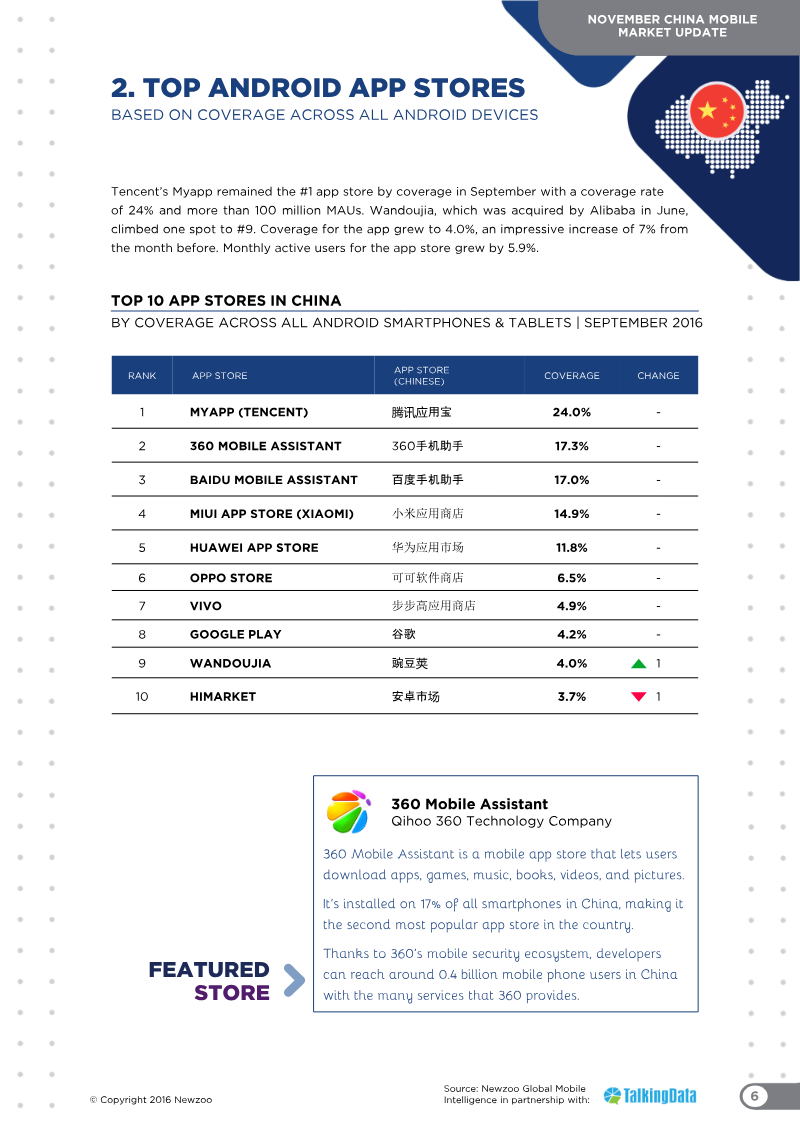
In the hardware sector, Apple maintained its position as the leading mobile brand with a 23.6% market share, despite a decline from the previous month. Huawei and Xiaomi followed as the top Android manufacturers, while OPPO secured the fourth position, displacing Samsung. Within the Android app store landscape, Tencent’s Myapp remained the market leader with 24% coverage. Notably, Wandoujia experienced significant growth in both coverage and monthly active users following its acquisition by Alibaba.
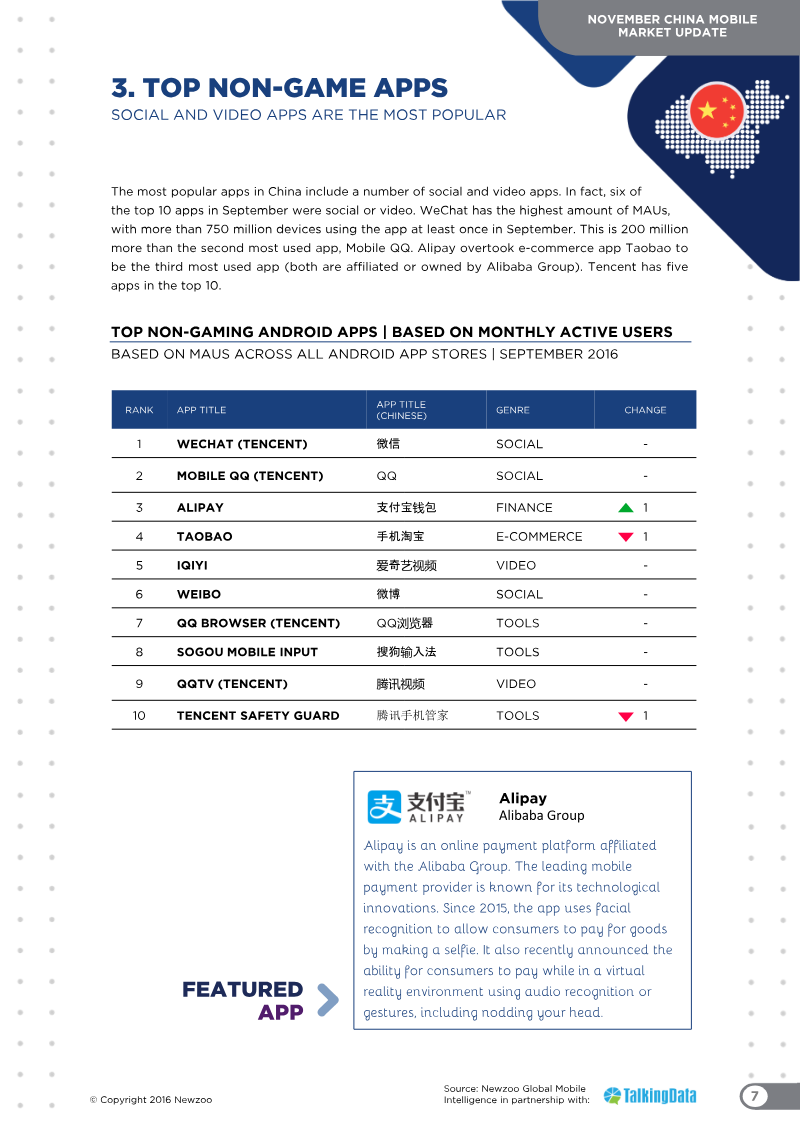
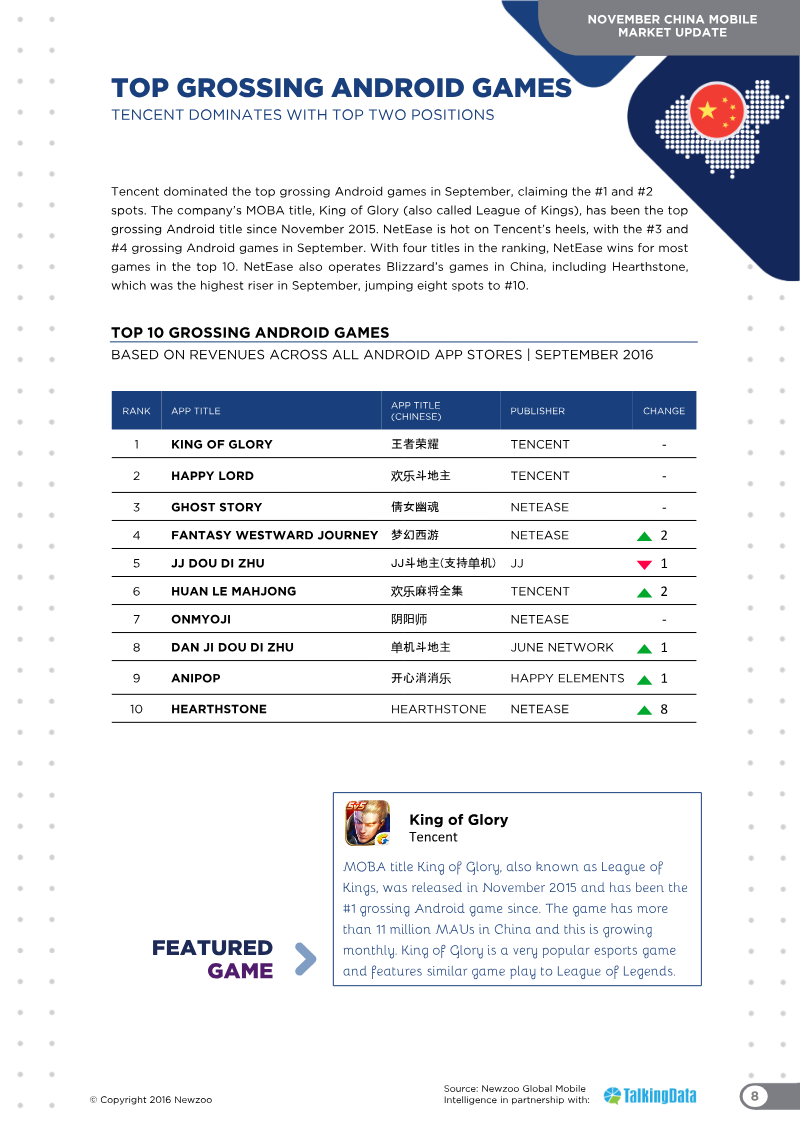
The application market remains heavily influenced by social and video platforms, with WeChat leading the non-gaming category with over 750 million monthly active users. In the gaming sector, Tencent and NetEase dominated revenue rankings across both Android and iOS platforms. Tencent’s King of Glory maintained its status as the top-grossing Android title, while NetEase’s newly released Onmyoji achieved immediate commercial success, ranking among the top-grossing games on iOS within its first month of release.
The report also highlights the consolidation of the ride-hailing market, specifically the acquisition of Uber China by Didi Chuxing. This merger reflects the broader trend of high-cost competition in the Chinese mobile space, where market dominance is increasingly driven by massive user acquisition and strategic investment. These findings underscore a highly competitive, rapidly evolving environment where local giants continue to command the majority of user engagement and revenue.