Digital Games
Company
Documents about Digital Games
The Musical Supradiegesis in JRPG Combat Systems
This Spanish-language article by Alberto Porta-Pérez, published in the Transactions of the Digital Games Research Association (November 2022, Vol. 6 No 1, pp.
- The article's Kingdom Hearts analysis states that the game includes a normal battle track for each location, which the author links to locating the player in space and a distinct atmosphere per location.
- In Persona 5 Royal, the article says Last Surprise is heard when the Phantom Thieves are ambushed, while Take Over is heard when the avatar catches the enemy off guard.
- The author describes the Persona 5 Royal track Take Over as a non-guaranteed pre-victory theme that conveys dynamism and a sense of control over the battlefield.
The “Room” in Text Adventure Games and Analysis of Real Geographical Locations in Aventuras AD Games
The Digital Games Research Association's November 2022 journal article by Juan José Muñoz Falcó and Raúl Montoliu Colás examines the concept of the "room" (location) in text adventure games and the geography of seven games produced by Aventuras AD, a Spanish company based in Valencia that operated from 1988 to 1992 and was…
- Aventuras AD produced seven games selected as case studies, with the company described as the only Spanish video game developer dedicated exclusively to text adventures.
- The authors report that in Jabato the Doric capitals of the Pantheon's columns are shown, whereas the real Pantheon has Corinthian capitals, which they attribute to low graphic resolution.
- The authors state that the Colosseum is located southeast of the Pantheon, while in the game the player moves north and then west to reach it.
Investigating Social Media Potential for Supporting Teachers' Digital Games Literacy
The study by Melinda Máthé, Harko Verhagen and Mats Wiklund from Stockholm University examines how social media resources address the key literacy areas of the Games Literacy for Teacher Education (GLTE) framework.
- The authors found that DGBL resources on social media address the key literacy areas of the GLTE framework at least partially.
- The 150 selected resources were shared by 30 different stakeholder groups and grouped into eight broad topic categories.
- The most commonly shared resources addressed the Instructional Design literacy area, which corresponds to the Design for DGBL topic.
Digital Games in Schools: A Qualitative Study on Teacher's Beliefs
This study examines the beliefs of five teachers in Switzerland regarding digital games in schools.
- Citing the 2020 JAMES study, the paper states that 34% of young people in Switzerland play video games several times a week.
- Citing a meta-study by Qian and Clark (2016), the authors note that the game design approach in schools had a high impact on promoting '21st Century Skills'.
- Teachers report that students frequently use digital games during school breaks.
Facilitating Social Inclusion of Migrant Students through Digital Games: Design Principles and Pitfalls in Wanderers
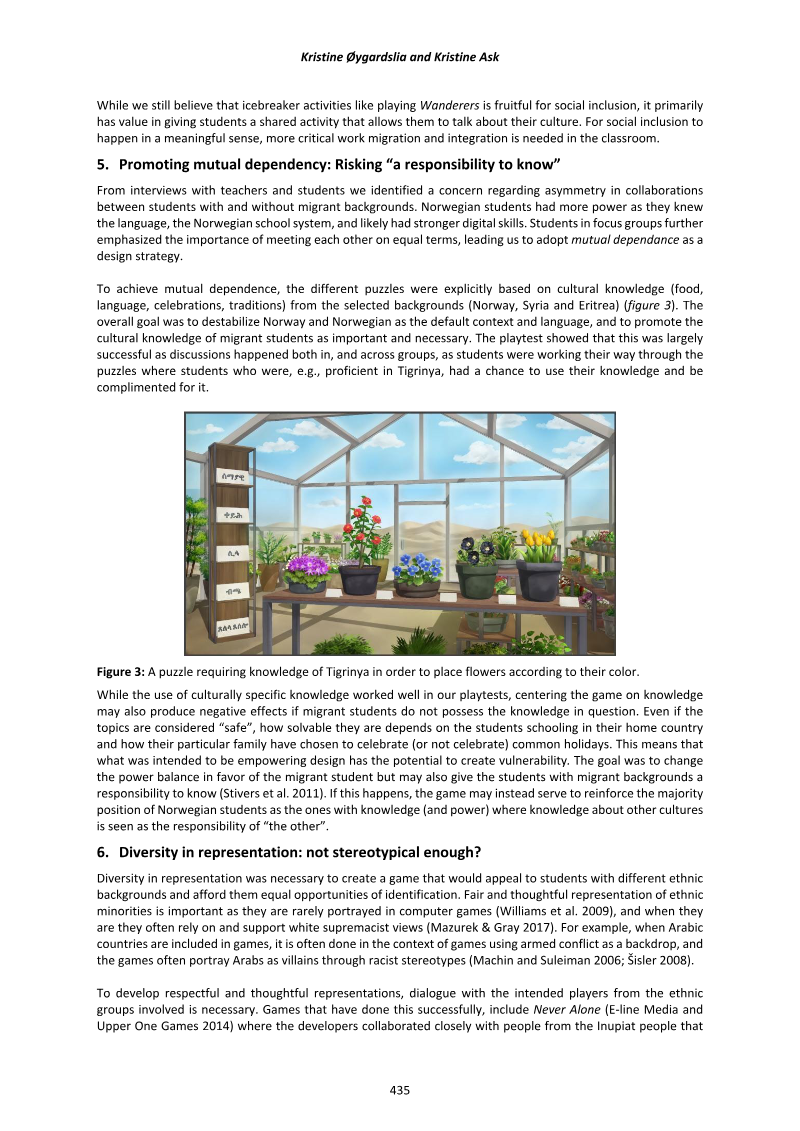
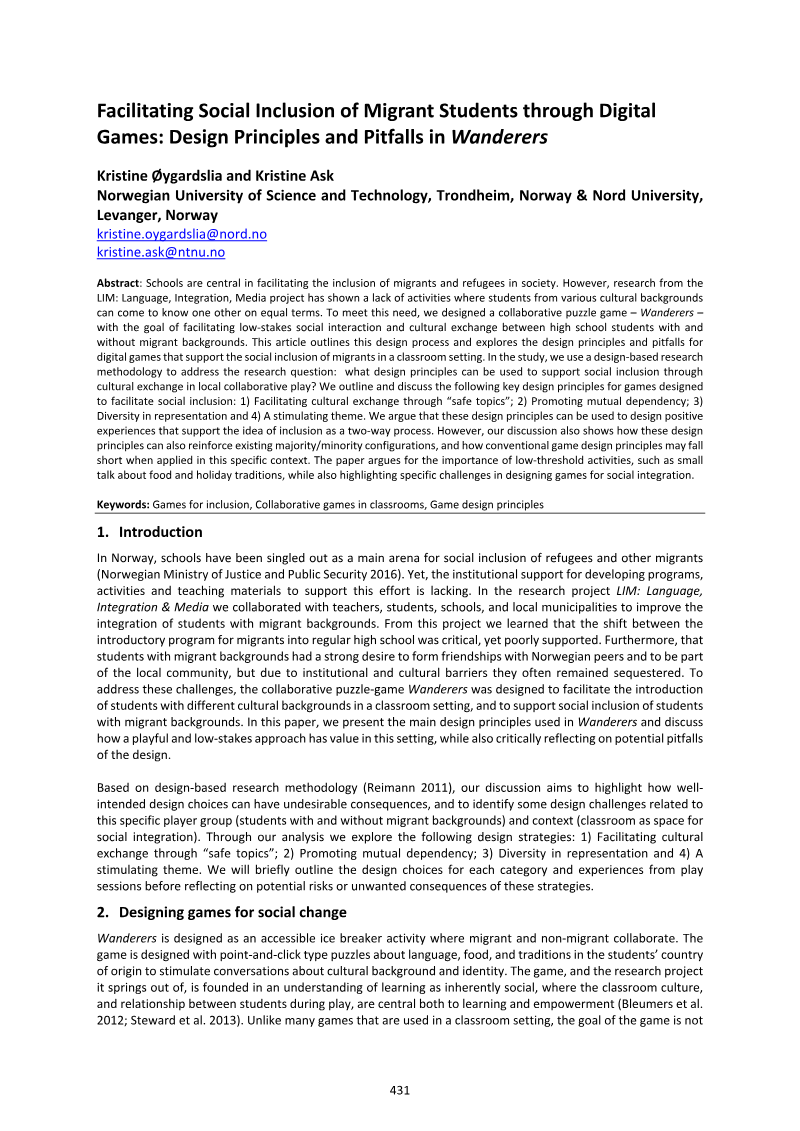
This document explores the design principles and potential pitfalls of digital games aimed at fostering social inclusion and cultural exchange among high school students with and without migrant backgrounds in Norway.
- A central finding is that well-intended design choices produced problematic outcomes: "safe topics" can displace harder conversations about migration, trauma, and racism, and may partly shield designers and teachers from uncomfortable realities.
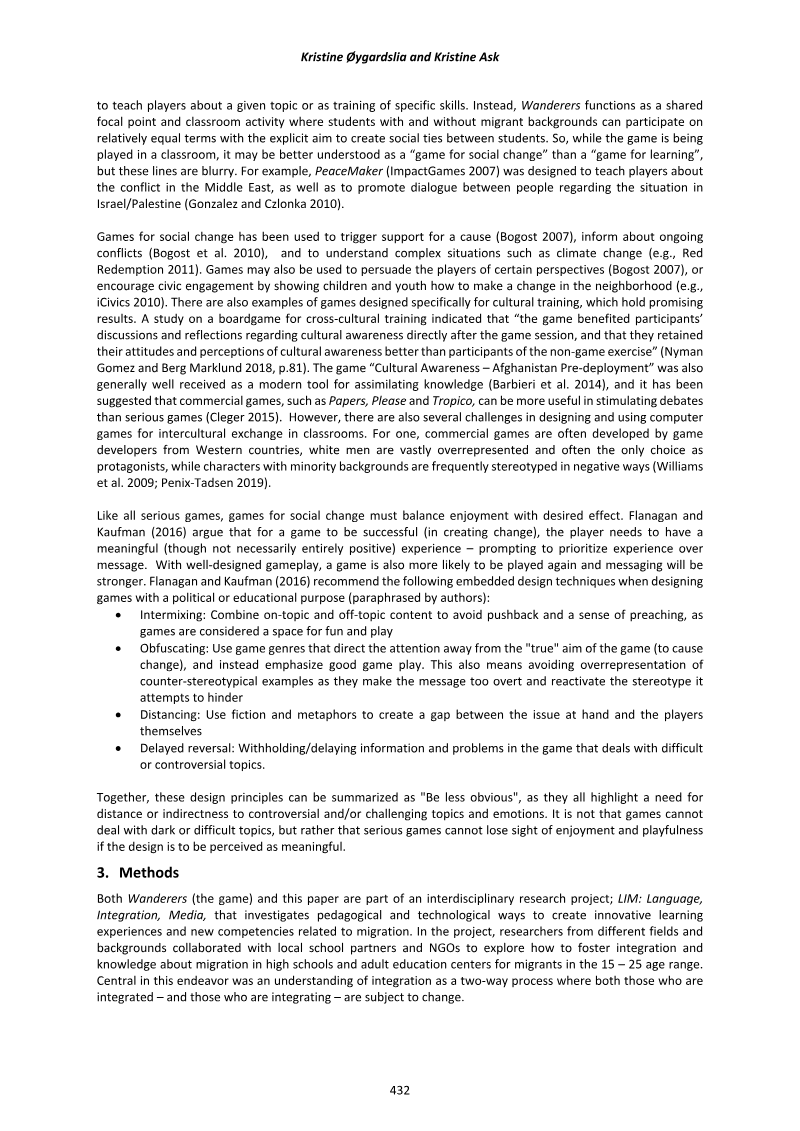
- Culturally specific puzzles were empowering in playtests but risked placing a "responsibility to know" on migrant students whose schooling and family traditions varied.
- Efforts at representation created tension between authenticity and stereotyping, and an extensive narrative proved less accessible to students still learning Norwegian.
Players' Reflections on Digital Games as a Medium for Education: Results from a Qualitative Study
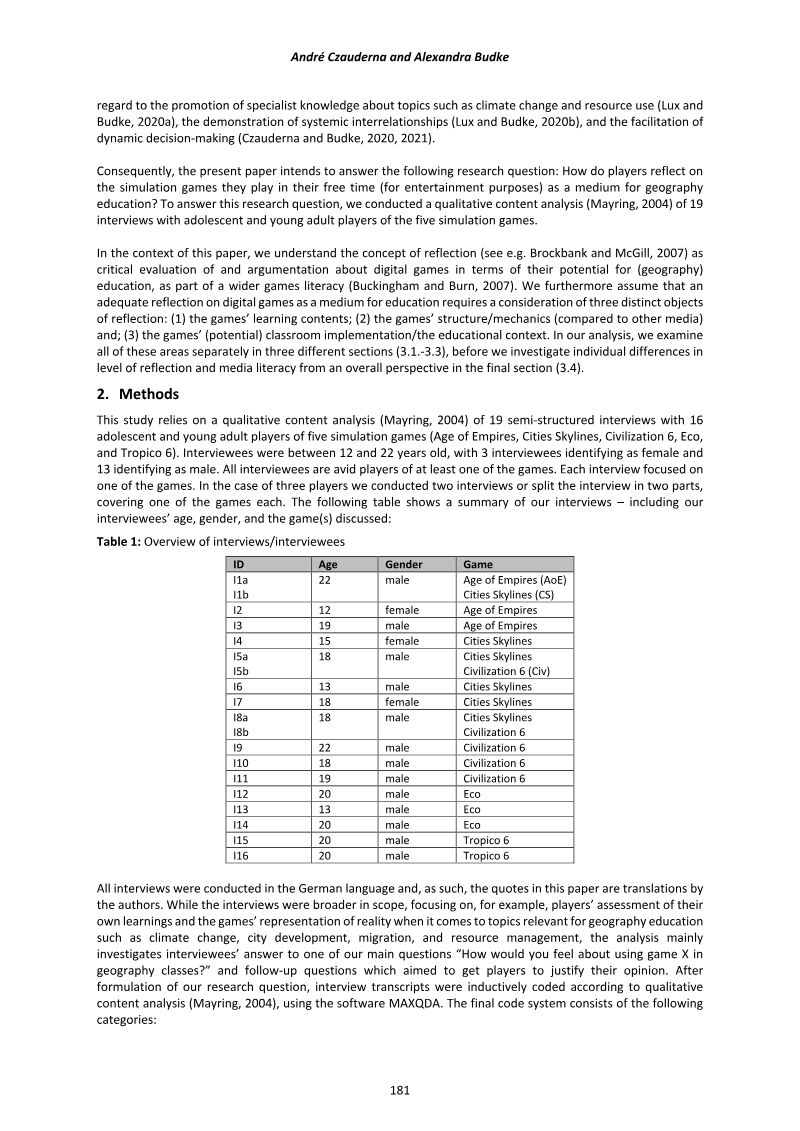
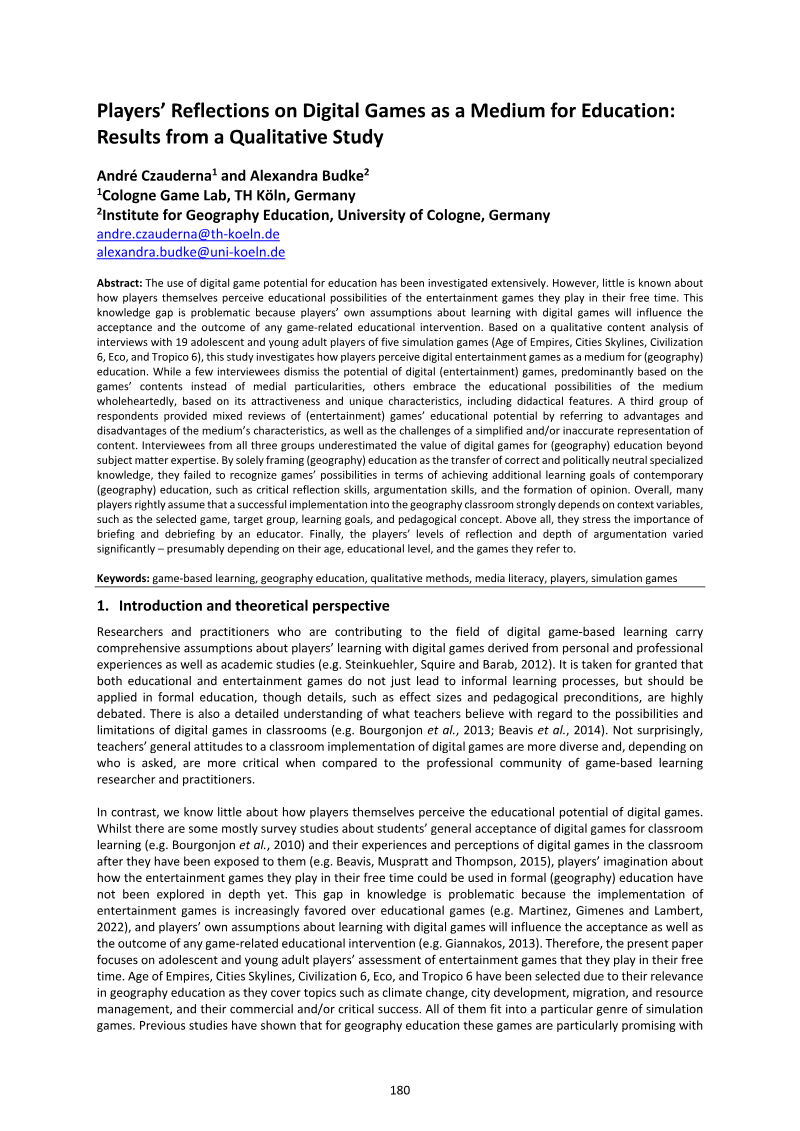
This qualitative study by André Czauderna and Alexandra Budke, from TH Köln and the University of Cologne, examines how adolescent and young adult players perceive digital entertainment games as a medium for geography education.
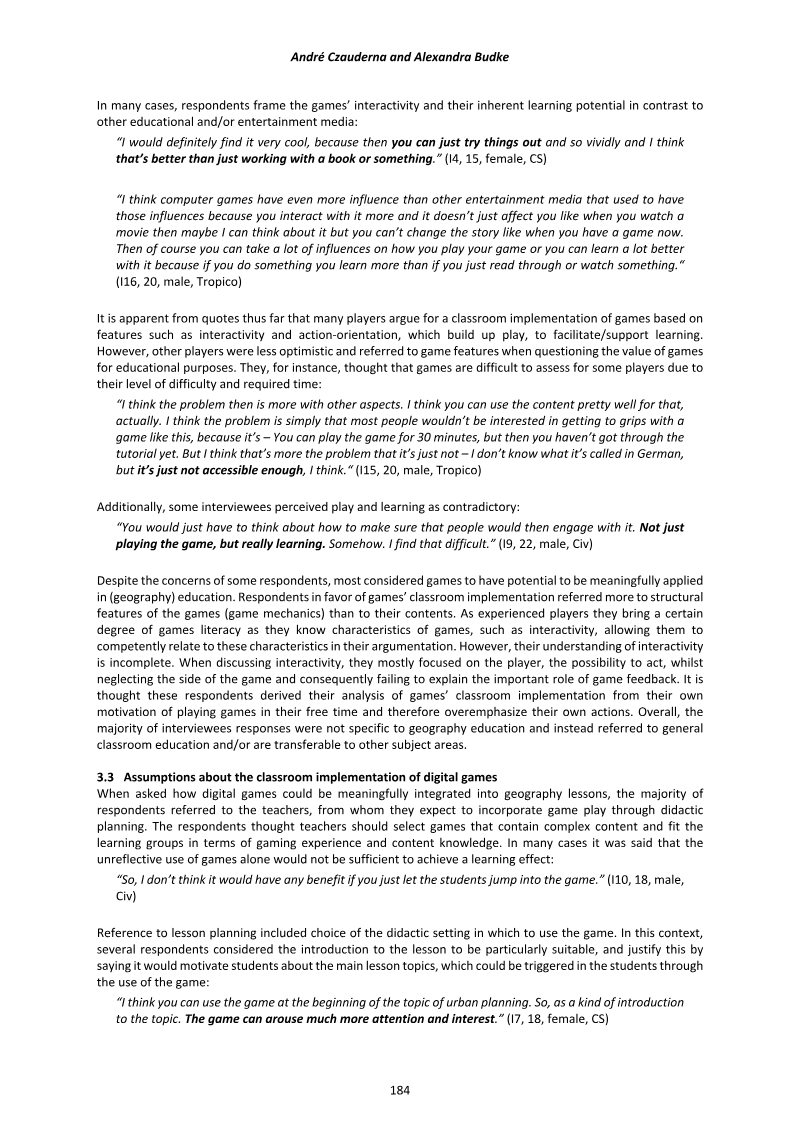
- Players' support for classroom use of games was mostly grounded in game mechanics rather than content, with interactivity and the ability to act as a player cited most often.
- Interviewees frequently saw suitable subject matter in urban development, climate change, and resource use, but another part judged the games' simulation too unrealistic for geography lessons.
- Most interviewees underestimated the value of games for geography education beyond subject matter expertise, failing to recognise potential for critical reflection and argumentation skills.
Generative Personas That Behave and Experience Like Humans
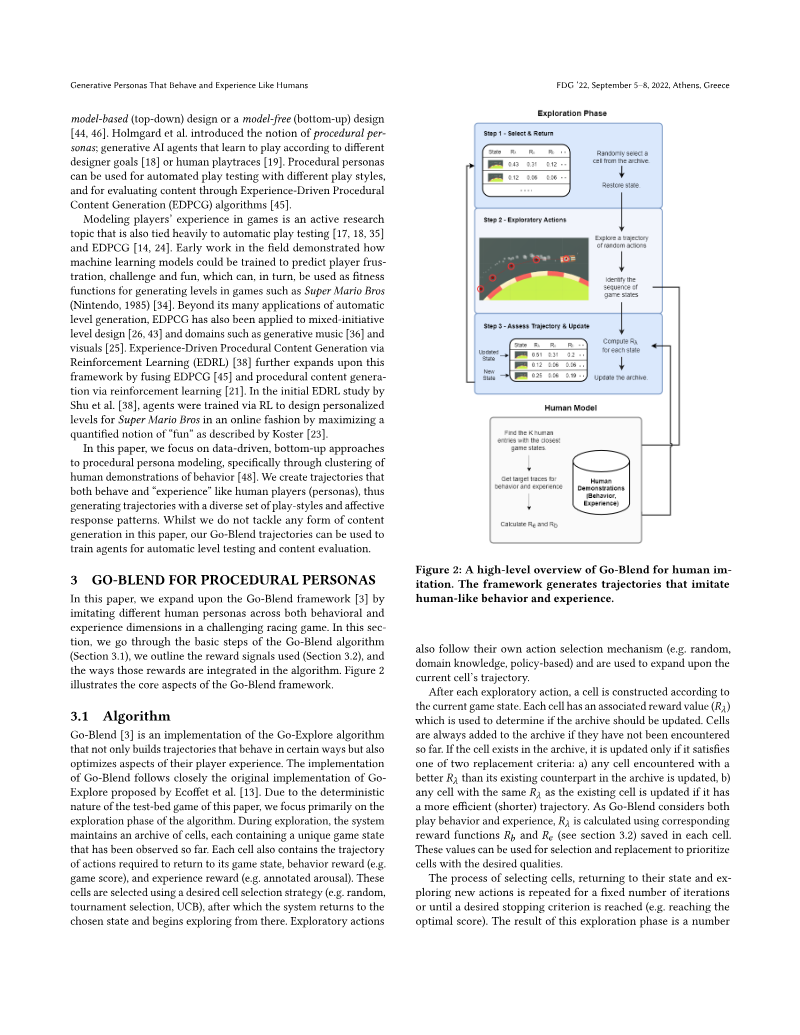
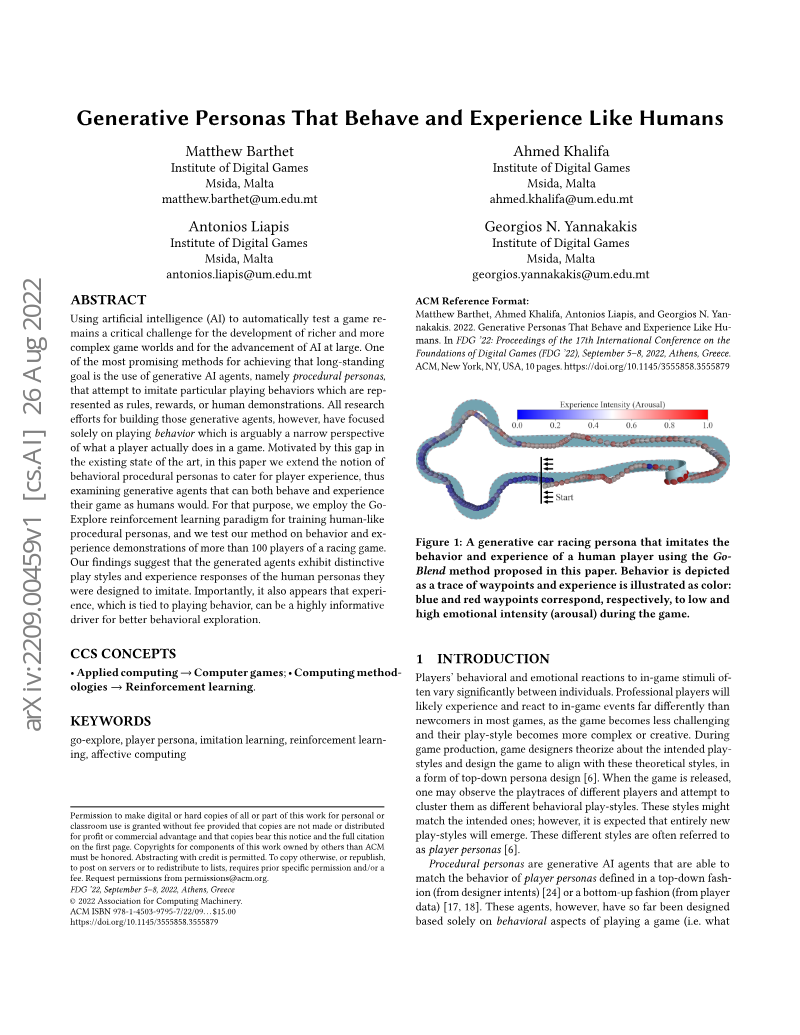
The paper, by Matthew Barthet, Ahmed Khalifa, Antonios Liapis and Georgios N. Yannakakis of the Institute of Digital Games in Msida, Malta, presents a method for training generative procedural personas that imitate both the playing behavior and the experience of human players.
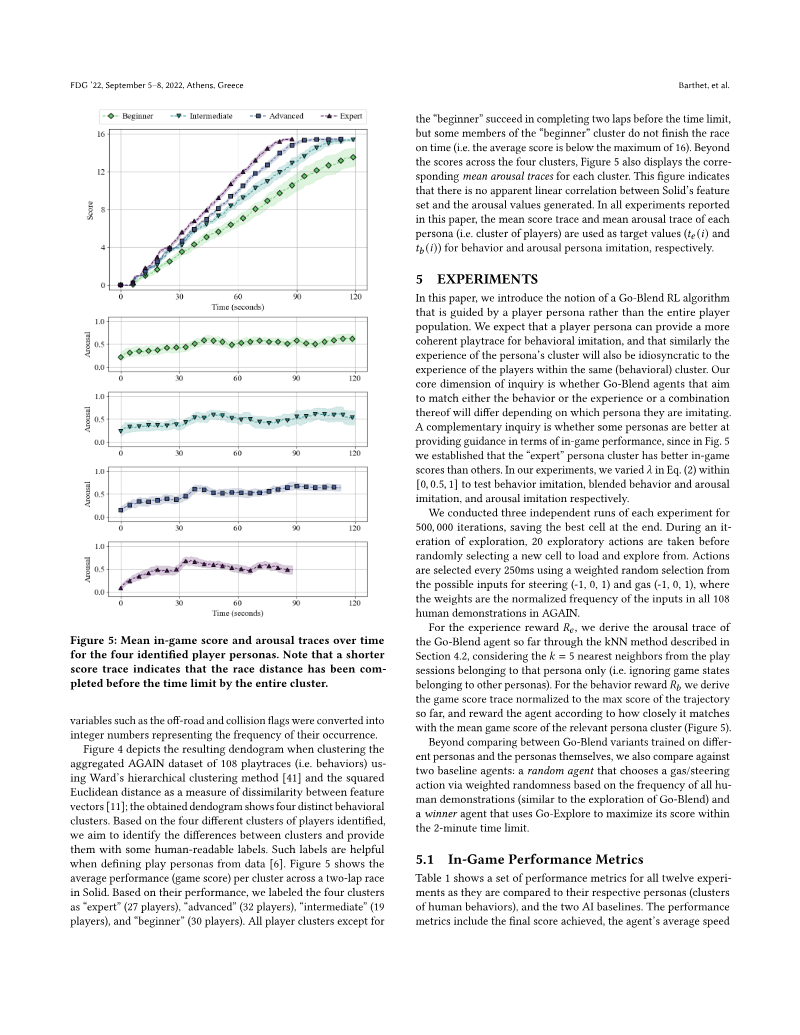
- The authors clustered 108 human play sessions into four player personas, labeled expert (27 players), advanced (32), intermediate (19) and beginner (30).
- Agents trained with λ values of 0.0 and 0.5 produced lap times and average speeds similar to their target personas.
- Agents trained only on arousal (weight 1.0) generally failed to match their persona's behavior, but the expert-persona agent behaved similarly to the expert persona.
The Effectiveness of Adaptive Digital Games for Learning: Calling for a Broader View on Assessment
The primary purpose of this analysis is to address the lack of standardized, comprehensive assessment methods for digital games used in educational settings.
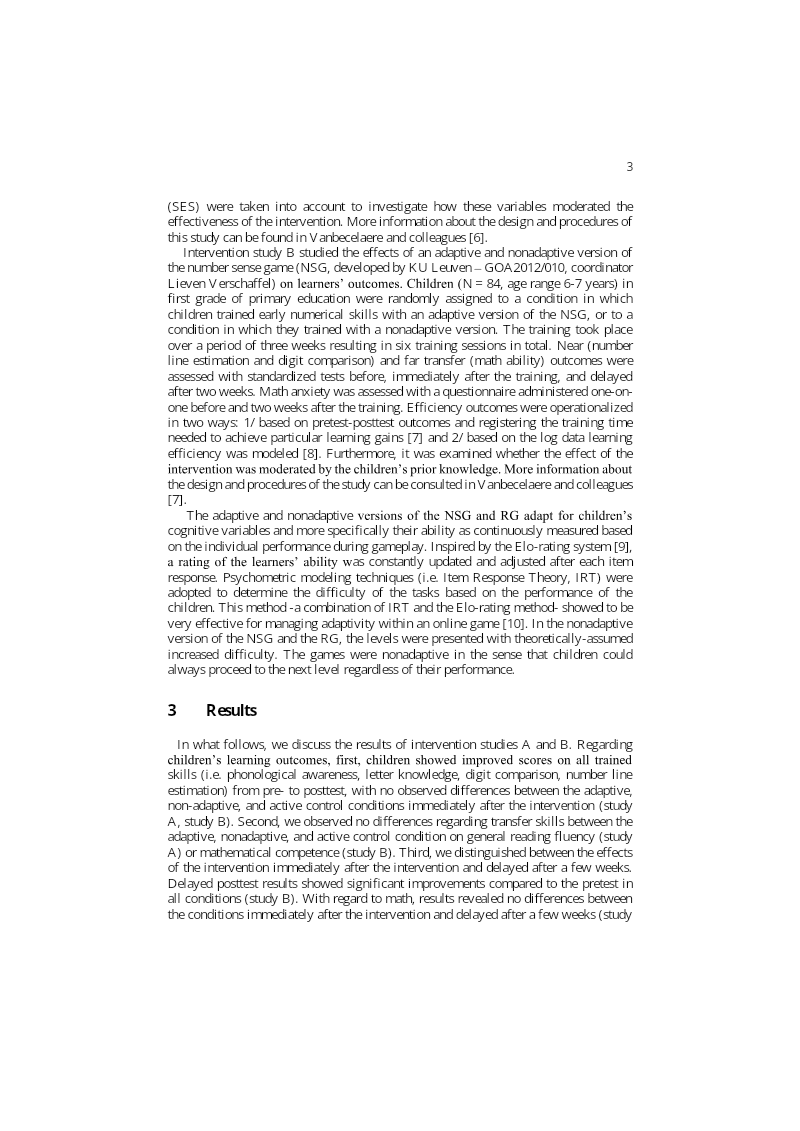
- Adaptive digital games significantly improve learning efficiency, allowing students to achieve educational goals in less time compared to nonadaptive versions.
- Adaptive game features do not necessarily produce superior cognitive gains or better knowledge transfer compared to nonadaptive versions.
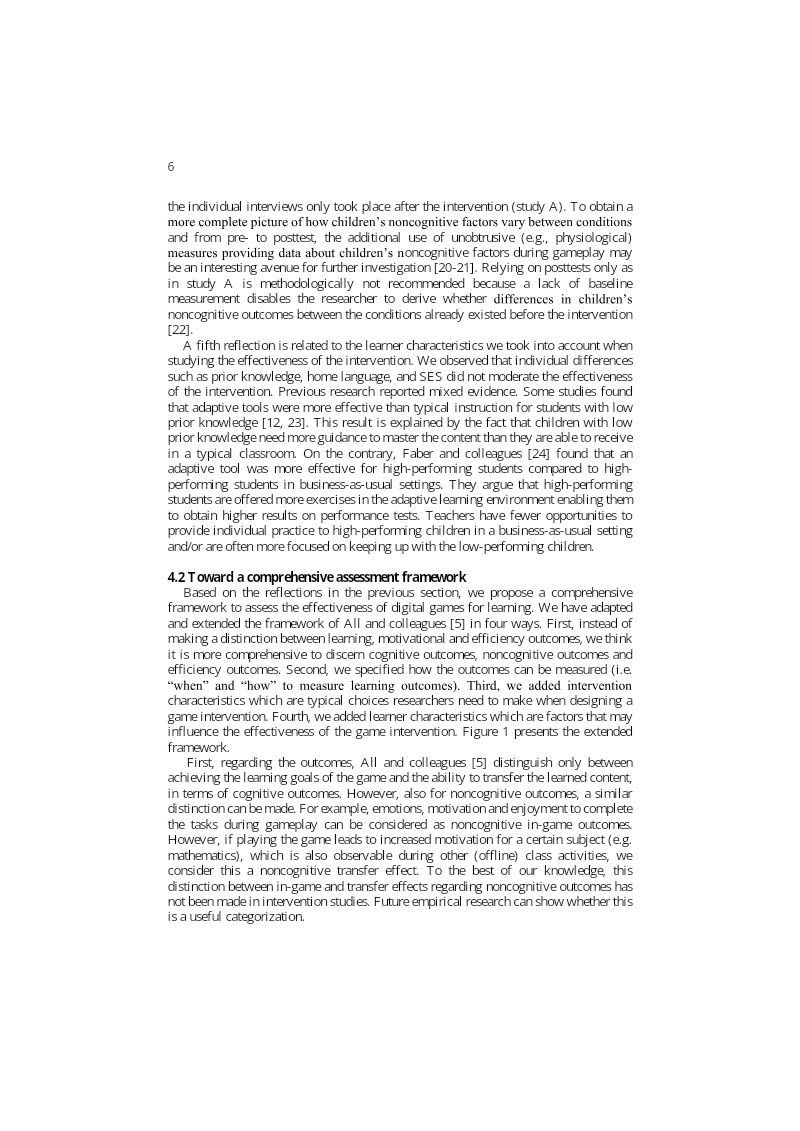
- The efficiency benefits of adaptive game design are not uniform, as the impact varies significantly based on a learner's prior knowledge.


Playing for Keeps: Digital Games to Preserve Indigenous Languages & Traditions
The paper, by Charly Harbord, Dr David Lyons and Dr Euan Dempster of Abertay University, examines whether digital games can preserve and share Indigenous languages and traditions.
- Respondents linked language and culture closely, and the authors report that if a language dies, it can take cultural identity with it.
- The authors state that Indigenous knowledge holders are not sufficiently consulted when outsiders develop solutions for Indigenous concerns, and they propose a co-design model based on Two-Eyed Seeing.
- The authors cite the Māori example of The Mark of Kri, where a male protagonist was given Moko Kauae, a tattoo they describe as sacred and reserved for Māori women.
Key Aspects of Game Design Research: A Scoping Review
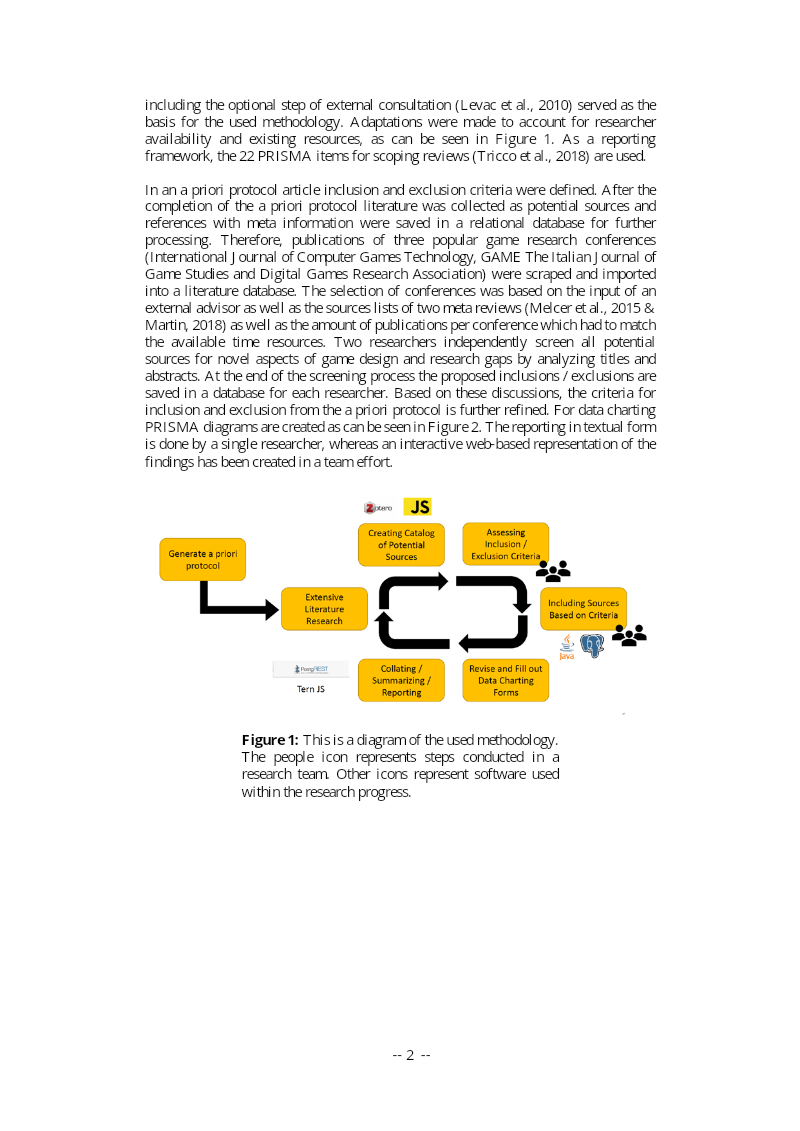
This scoping review aims to provide a holistic perspective on the state of game design research by identifying key aspects and research gaps.
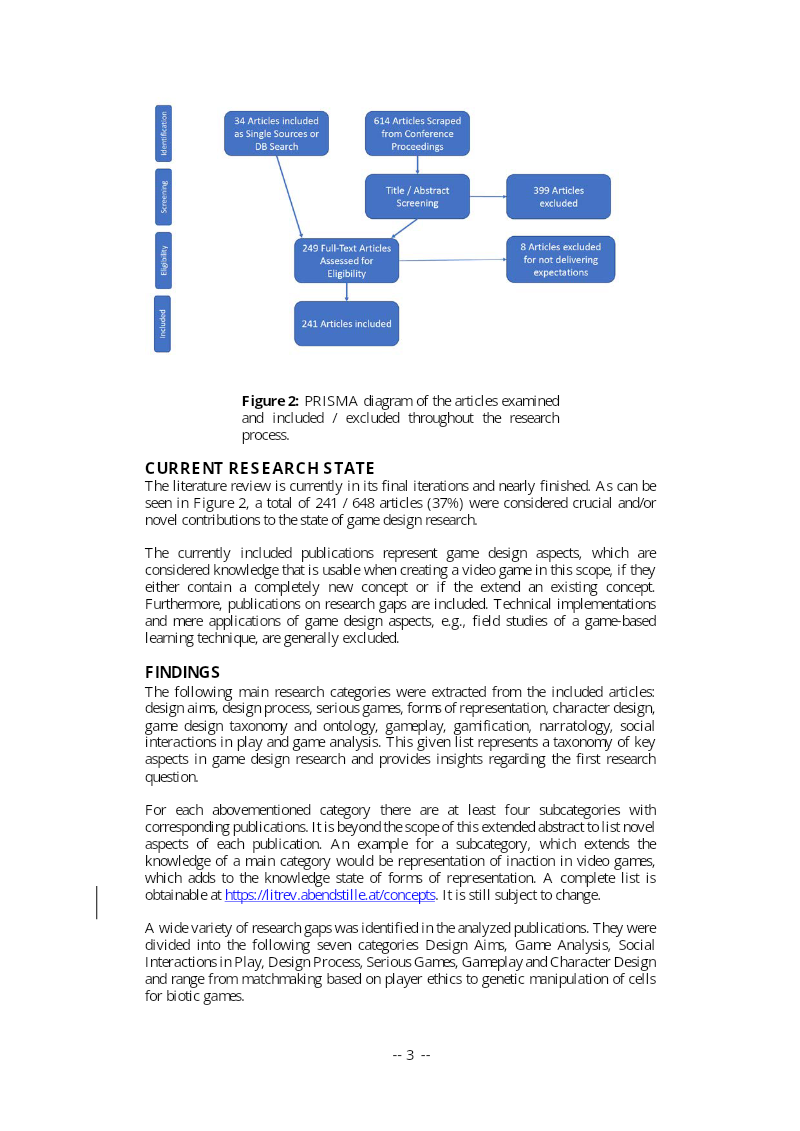
- The scoping review screened 614 articles from three venues (International Journal of Computer Games Technology, GAME: The Italian Journal of Game Studies, and DiGRA proceedings), narrowed them to 249 for full-text assessment, and included 241 articles, about 37 percent of those scraped.
- Included literature was organized into eleven research categories: design aims, design process, serious games, forms of representation, character design, game design taxonomy and ontology, gameplay, gamification, narratology, social interactions in play, and game analysis, each containing at least four subcategories.
- Technical implementations and straightforward applications, such as field studies of game-based learning, were generally excluded in favor of work contributing usable game design knowledge.
Digital Games as Persuasion Spaces for Political Marketing: The Case of Fortnite and Joe Biden's Campaign
This study investigates the integration of political marketing and electoral propaganda into entertainment digital games, specifically examining Joe Biden's "Build Back Better With Biden" campaign within Fortnite during the 2020 U.S. presidential election.
- The study uses Joe Biden's 2020 presidential campaign island "Build Back Better With Biden" in Fortnite as a case study of how commercial entertainment games can be used for political persuasion, an area it describes as under-examined compared with serious games designed for persuasion.
- Preliminary findings suggest electoral propaganda in game environments works on three persuasive levels: signs, system, and context, with the aim of shaping players' beliefs both inside the game and in the physical world.
- The methodology combines a content analysis of the Fortnite island using a persuasive communication model, a discourse analysis of 20 digital press articles, and in-depth interviews with 10 players aged 12 to 28.
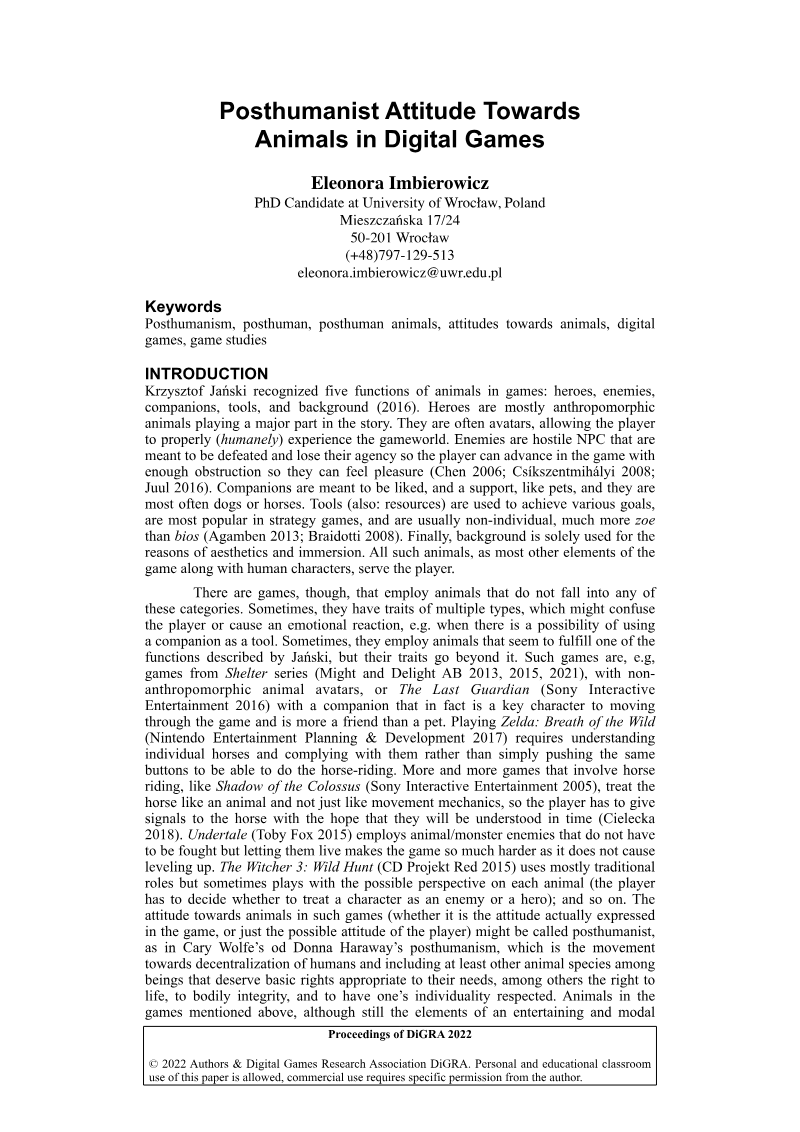
Posthumanist Attitude Towards Animals in Digital Games
The document explores the concept of posthumanist attitudes towards animals in digital games, arguing that certain game designs challenge traditional anthropocentric representations.
- The paper argues that many contemporary games feature animals that resist the standard roles of heroes, enemies, companions, tools, and background (Jański's five-category typology), instead decentering humans and granting animals a measure of standing.
- The central thesis holds that posthuman animal treatment in games rests on at least one of three qualities: agency, subjectivity, and ephemerality.
- Examples such as Shelter, The Last Guardian, Zelda: Breath of the Wild, Shadow of the Colossus, Undertale, and The Witcher 3 are used to show how these qualities alter gameplay obstacles, player control, and the ethical weight of player choices.