Activision
CompanyUnited States
Documents about Activision
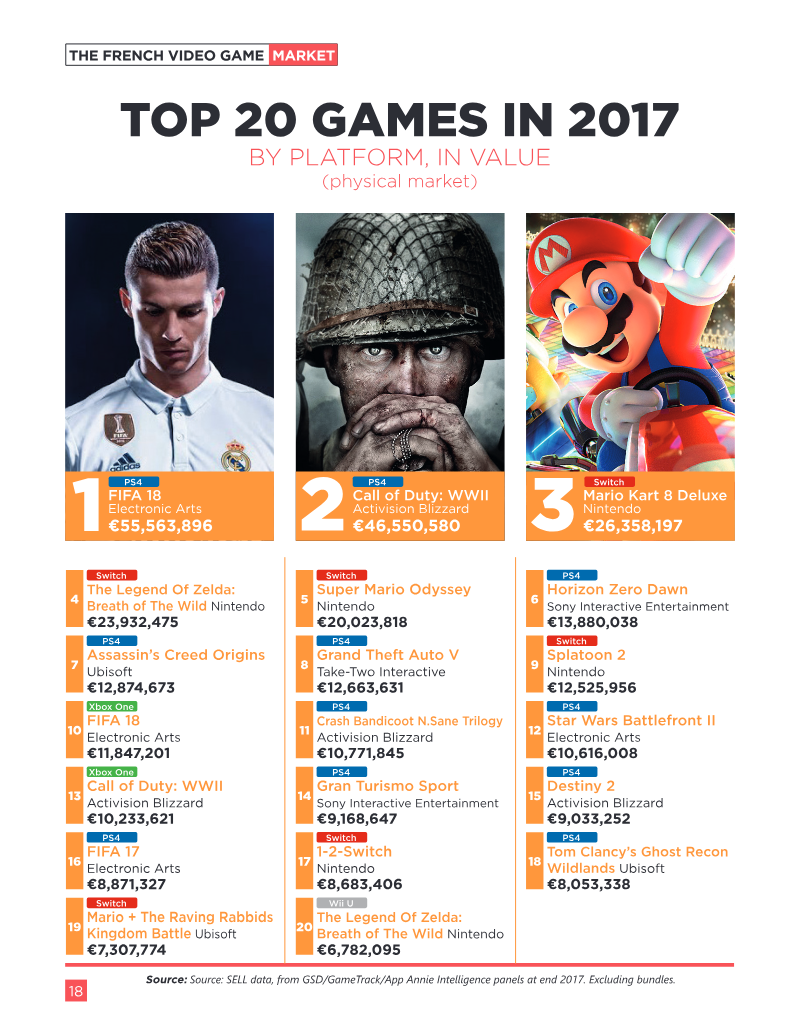
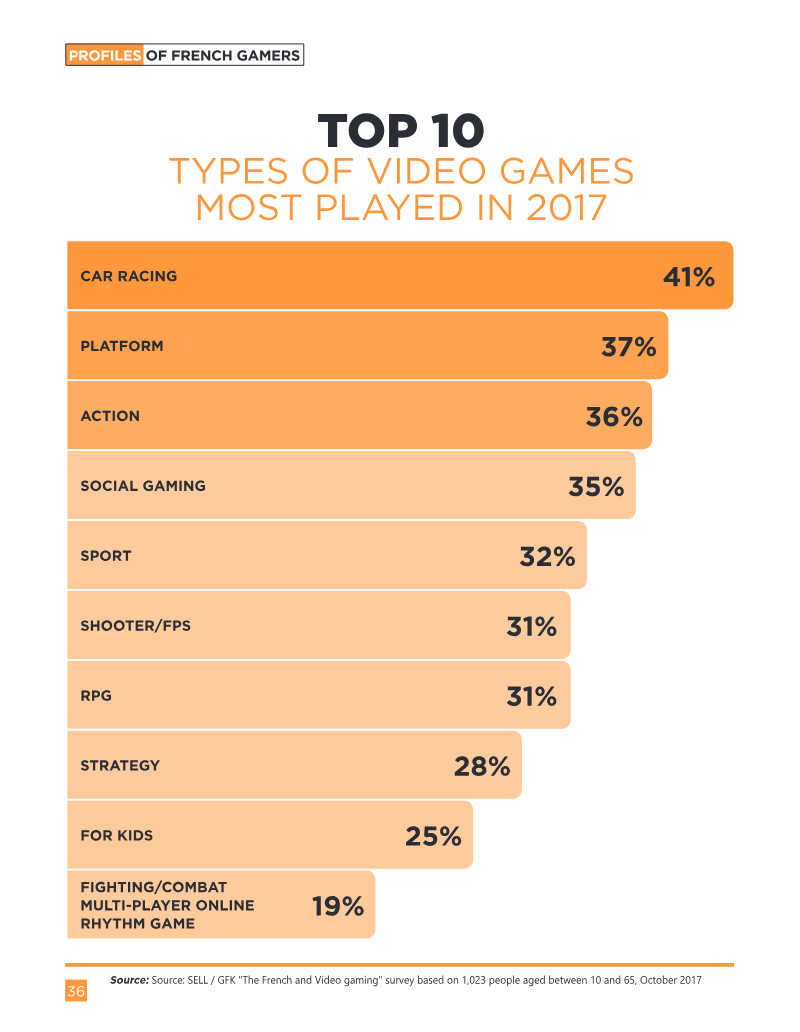
2017 Figures: The French Video Game Market
The French video game market reached a historic milestone in 2017, generating 4.3 billion euros in total turnover and achieving a record growth rate of 18 percent.
- The French video game market reached 4.3 billion euros in 2017, marking a record 18 percent growth rate.
- Consoles dominated the market with 56 percent of total value, driven by a 20 percent increase in software turnover and a 46 percent surge in digital sales.
- Digital distribution is the primary revenue driver for PC gaming, accounting for 95 percent of its software income.
Emotional connections between your fans and your characters
Establishing emotional connections between game characters and players is a critical strategy for building brand loyalty, increasing player retention, and driving long-term commercial success.
- Building emotional connections between players and characters is a primary driver of brand loyalty, player retention, and long-term commercial success in a competitive market.
- Humanizing protagonists by introducing flaws is essential for character resonance, as flawless characters often fail to engage audiences.
- Successful narrative integration allows companies like Rovio, Supercell, and Activision to bridge gaps between game releases and expand into new geographic markets.
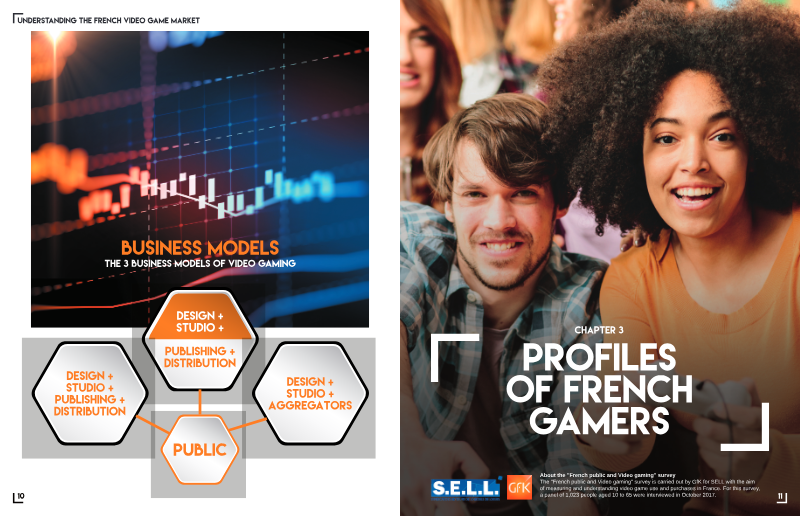

Essential Video Game News: France (October 2017)
The French video game industry demonstrated robust economic health in 2016, achieving a total turnover of €3.46 billion.
- The French video game industry achieved a total turnover of €3.46 billion in 2016, representing a 4% annual growth rate.
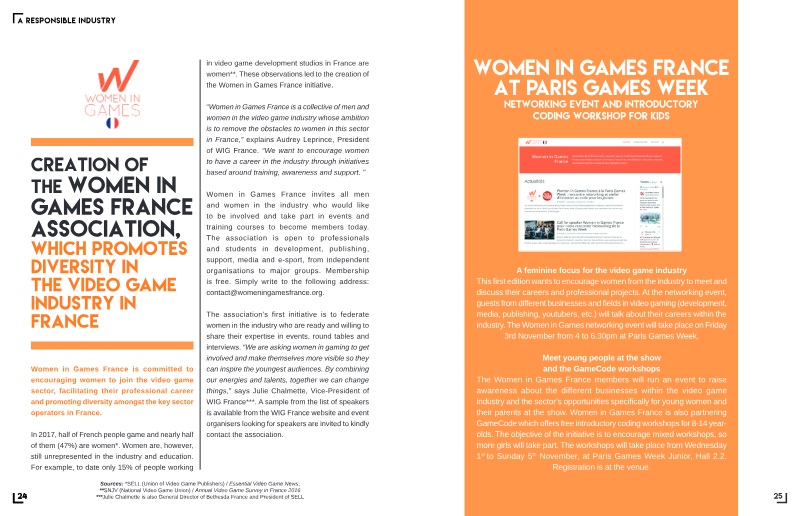
- Women comprise 47% of the French gaming population, yet they represent only 15% of the industry's professional workforce.
- The Women in Games France initiative is actively working to address the gender employment gap through professional development, networking, and technical workshops.
Has King Peaked?
King maintains a dominant position as a mobile gaming powerhouse, yet the company faces significant long-term strategic challenges.
- King remains highly dependent on the Candy Crush franchise, which accounts for 68% of total revenue, with the original Candy Crush Saga alone contributing 46%.
- While King’s gross revenue reached an all-time peak in May 2017, monthly installs have declined by approximately one-third compared to the previous year.
- King has failed to produce a breakout hit since 2014, with newer releases like Bubble Witch Saga 3 and Farm Heroes Super Saga contributing only 7% of total revenue despite receiving significant cross-promotion.
The current M&A market for games & predictions for 2017
The mergers and acquisitions landscape in the games industry experienced a record-breaking year in 2016, characterized by an unprecedented volume of mega-deals.
- The 2016 games industry M&A market reached a record $24.1 billion in disclosed deal value, nearly doubling the previous 2014 record of $12.5 billion.
- Four mega-deals, including Tencent’s acquisition of Supercell and Activision’s purchase of King, accounted for over 80% of the total 2016 market value.
- Market consolidation is being driven by a 'land grab' strategy where large publishers acquire studios to combat rising user acquisition costs and leverage live-ops capabilities.
Why mobile gaming matters to Activision
Activision’s strategy for the mobile gaming market centers on leveraging its established triple-A franchises to engage existing communities across multiple platforms.
- Activision treats mobile as a primary, high-growth business segment that complements its console and PC operations rather than functioning as a secondary companion experience.
- The company’s mobile strategy centers on building titles from the ground up to suit platform-specific constraints and user preferences, explicitly avoiding simple ports of console content.
- Leveraging established triple-A franchises is a core tactic to mitigate the increasingly prohibitive costs of user acquisition in the mobile market.
Toys-to-Life: Collectible Figures Take the Video Game World by Storm
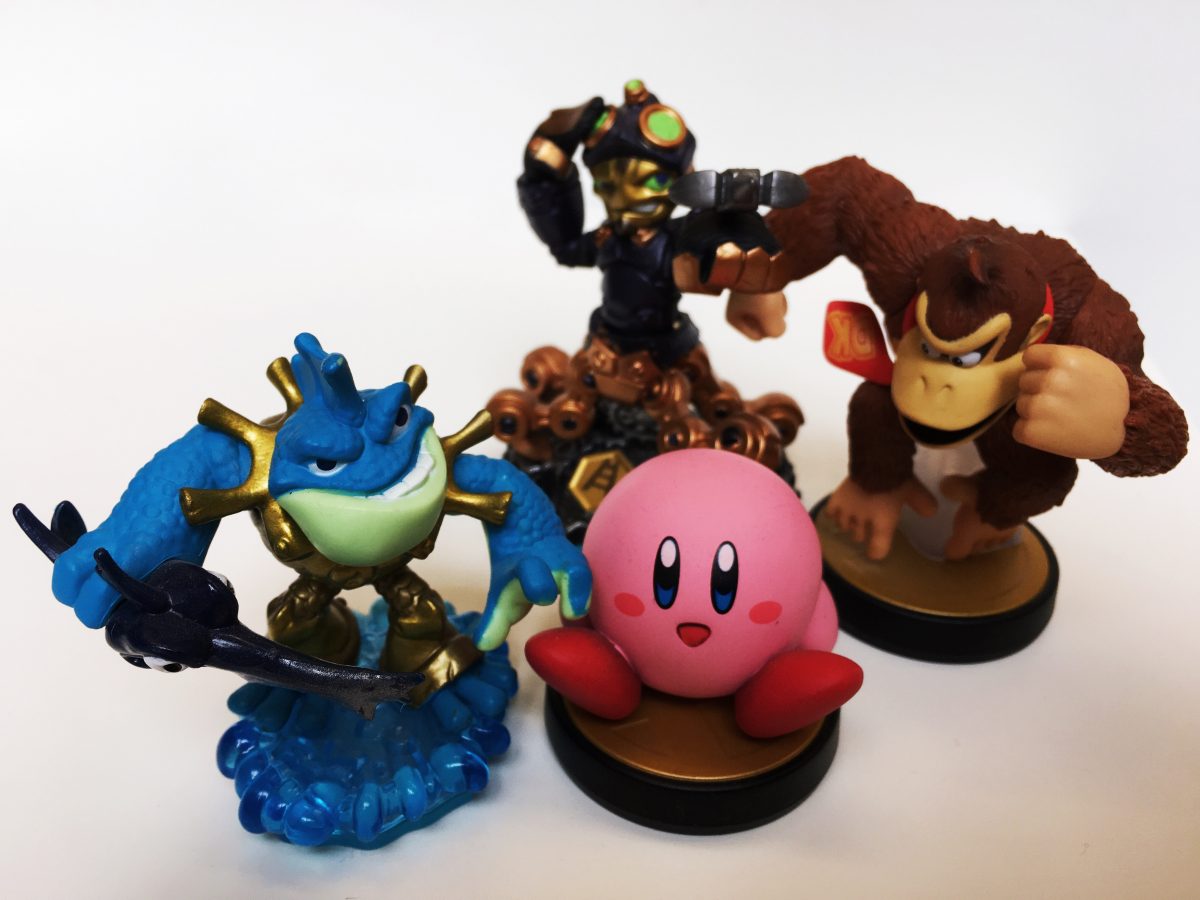
The toys-to-life market segment, which integrates physical collectible figurines with digital video game content via near-field communication (NFC) technology, experienced significant growth in Germany during 2015.
- The German 'toys-to-life' market segment experienced a 45% growth in sales revenue within a single year, rising from 31 million euros in the first nine months of 2014 to 45 million euros during the same period in 2015.
- Total sales for the toys-to-life category in Germany reached 46.6 million euros in 2014, a figure that was nearly matched in just the first nine months of 2015.
- The toys-to-life market is highly seasonal, with more than one-third of annual turnover generated during the Christmas holiday period.
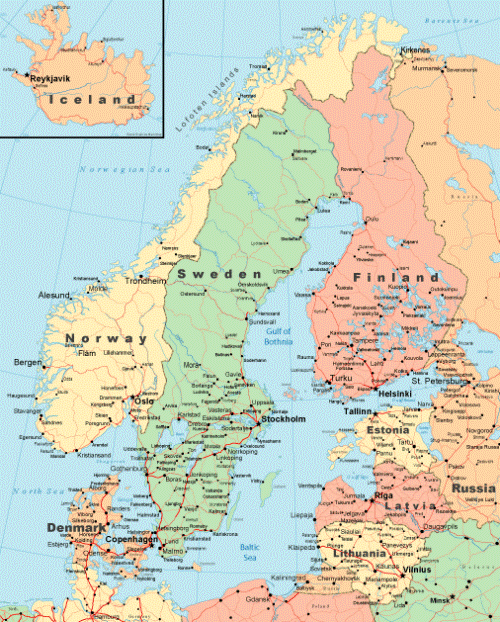
Facts and Figures about Games Industry in Nordic Countries
The Nordic games industry serves as a prominent model for international development, characterized by significant economic growth, high-profile acquisitions, and robust government support.
- The Finnish games industry experienced rapid growth between 2009 and 2015, with employment increasing from 1,020 to 2,700 jobs and annual turnover rising from €900 million to €2.4 billion.
- Sweden dominates the Nordic games market, accounting for 36% of the region's total volume and value, followed by Norway at 25%, and Denmark and Finland at approximately 20% each.
- High-profile acquisitions of Nordic firms include Microsoft’s €2.18 billion purchase of Mojang in 2014 and Activision Blizzard’s €5.15 billion acquisition of King.
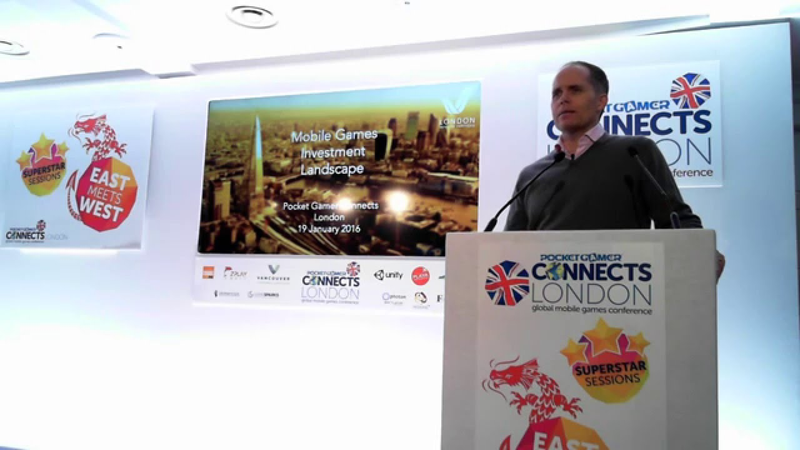
LVP's Paul Heydon on investment, eSports, mobile MOBAs, and Europe's advantage
The mobile gaming investment landscape in 2016 is characterized by rapid growth, with mobile emerging as the fastest-expanding sector within the broader gaming industry.
- Europe is a net exporter of mobile gaming revenue, leveraging lower overhead costs and competitive salary structures compared to Silicon Valley to achieve superior capital efficiency and higher returns on investment.
- The mobile gaming sector is the fastest-expanding segment of the industry, driven by the successful monetization of mobile MOBAs like Clash Royale and the emergence of professional mobile eSports leagues for titles such as Vainglory.
- High-profile acquisitions, including the deals for Supercell and Activision-King, have validated the sector's profitability and are expected to fuel further reinvestment into game development.

The most significant mobile gaming events in 2015
The mobile gaming landscape in 2015 was defined by significant industry consolidation, the rise of Eastern markets, and the strategic pivot of traditional console giants toward mobile platforms.
- Activision acquired King for $5.9 billion in 2015, signaling a major strategic shift by triple-A publishers to capture broader demographics and secure mobile gaming as a primary revenue stream.
- The global mobile gaming market saw a significant geographic shift as China, Korea, and Japan secured three of the top five global market positions, with Southeast Asia also showing rapid growth.
- Monetization models in 2015 matured by moving away from aggressive hard-currency tactics toward more balanced systems that integrate soft currency and advertisements.
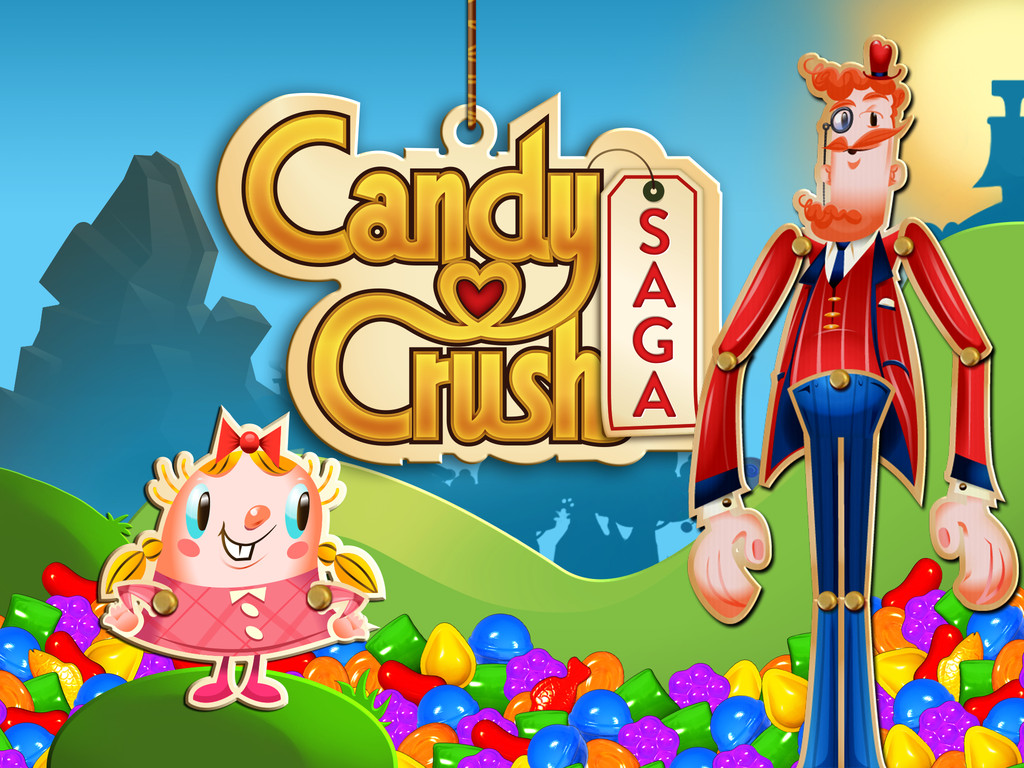
Unpacking the $5.9BN King Acquisition Price
The $5.9 billion acquisition of King Digital by Activision Blizzard, announced in November 2015, represents a strategic move to diversify revenue streams and capture a significant mobile gaming audience.
- Activision Blizzard acquired King Digital for $5.9 billion, representing a 20% premium on King's enterprise value and 8x its projected 2016 EBITDA.
- Activision Blizzard funded $3.6 billion of the purchase price using offshore cash, allowing the company to avoid US repatriation taxes on the transaction.
- The acquisition provides Activision Blizzard with access to King’s 330 million monthly unique users, 60% of whom are female, offering a strategic demographic expansion.
Biz Daily: Why Activision Blizzard bought King
The acquisition of King by Activision Blizzard for $5.9 billion represents a strategic effort to bridge the gap between traditional console and PC gaming and the high-growth mobile sector.
- Activision Blizzard acquired King for $5.9 billion to bridge the gap between its traditional console/PC business and the high-growth mobile gaming sector.
- The deal establishes Activision Blizzard as the largest pure-play gaming company in the Western market, providing immediate access to a global, gender-balanced mobile audience.
- The transaction is valued at $18 per share, a 20 percent premium over King’s pre-deal valuation, and is financed through $3.2 billion in cash and bank loans.